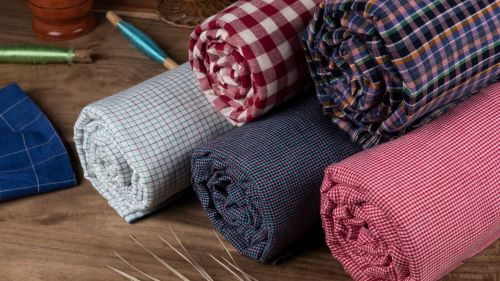
Check Fabric: A Classic Pattern with Timeless Appeal

A Check Pattern Is Formed When Two Series Of Perpendicular Lines/Stripes Intersect Each Other. These Lines May Be Of Different Thickness, With Different Intervals, Different Hues Etc. And The Permutation And Combination Of These Leads To A Plethora Of Check Designs Like Gingham Check Fabric, Tartan Pattern, Plaid Etc. Today, We Are Exploring The 8 Most Popular Kinds Of Checks Pattern.
At Anuprerna, we stand by the enduring appeal of check fabrics, and we're dedicated to providing our customers with the finest quality products that leave a positive impact on both people and the planet. Join us in celebrating the beauty and versatility of check fabrics, and let your creativity flourish with Anuprerna's exceptional offerings.
Across nations and all periods, checks have long been a classic fashion standard. Through distinctive weaves and color contrasts, every pattern—from striking tartans to delicate ginghams - tells a different tale. Let's examine the various types of check patterns that give textiles used for clothing and décor a sense of personality, texture, and adaptability.
HOUNDSTOOTH PATTERN
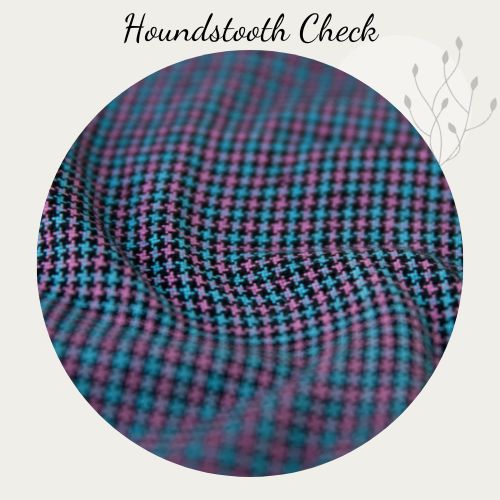
Houndstooth pattern is a pattern formed by broken checks or uneven checks that resemble a dog’s tooth (also 4-pointed stars). The houndstooth fabric is a popular choice for jackets, trousers, and suits. Houndstooth weave can be found in many different patterns and colors. The name comes from the resemblance of the pattern to hunting dogs' teeth.
GINGHAM
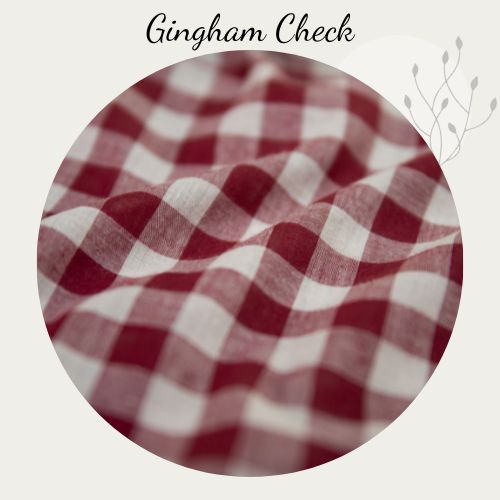
Gingham is the simplest of the checks involving thicker lines, in this case, generally a single color crossing on a white background.
Apparels made of gingham check fabric are often worn with pencil skirts or other tailored garments. Gingham's popularity has waxed and waned through the decades, but it remains one of the most popular print styles for women's clothing.
WINDOWPANE CHECK
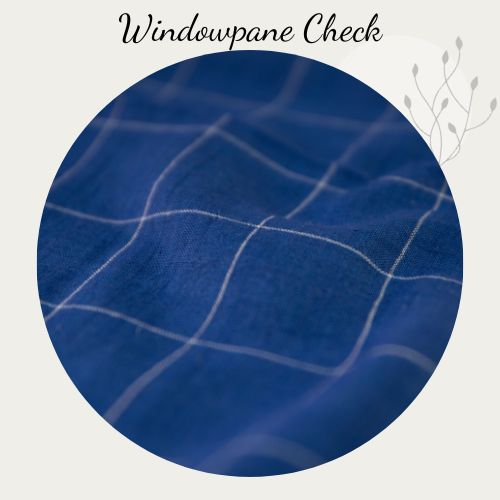
Windowpane Check is a very popular design in the textile industry and a lot of home décor fabrics are available with this pattern. It is used for almost all types of fabrics such as curtains, bed sheets, chair covers, tablecloths etc. It is also known as French windowpane or Brunswick check. The windowpane check pattern makes the fabric resemble window panes with its thin bands of light coloured bands forming checks on a contrasting solid colored background.
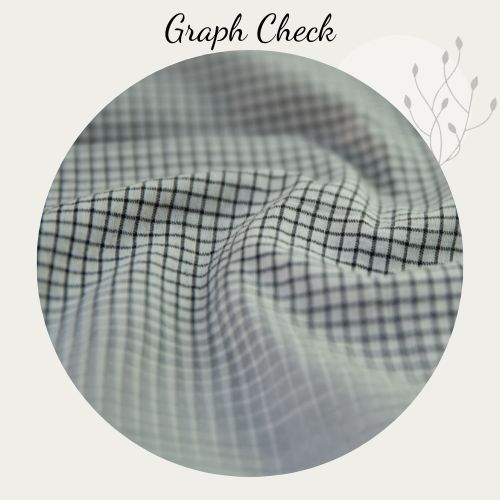
GRAPH CHECK
Small checks fabric features a neat, grid-like pattern created by fine, evenly spaced lines over a white base, resembling classic graph paper. This structured design works especially well for restaurants, hotels, and other commercial spaces. The checks can be produced in various color options to achieve a sharp, visually appealing finish.
MADRAS CHECKS
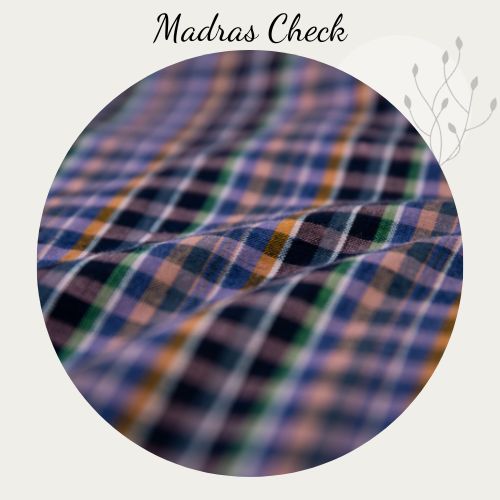
Madras check is a check pattern that uses bands of color with varying thickness to form the design. The check pattern is a bold, graphic pattern that is traditionally used in Indian clothing and textiles.
Madras check fabric are often seen on blazers and sport coats for men. They are also used as trimming for skirts and dresses.
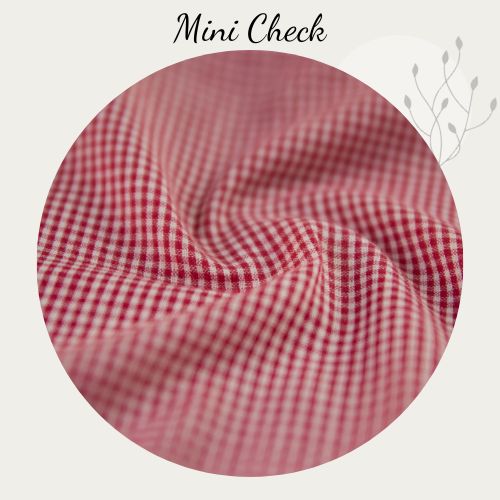
MINI CHECKS
Mini Check is basically a small check pattern sized between the pin check and the Gingham check. It was originally intended to be used as a collar on a jacket or shirt, but it can also be used in other ways.
They are now usually used as a border on garments, and can also be used as a small detail on patterns or apparel.
They are great for those who want to make their fabric patterns smaller or just want to add something different to a design.
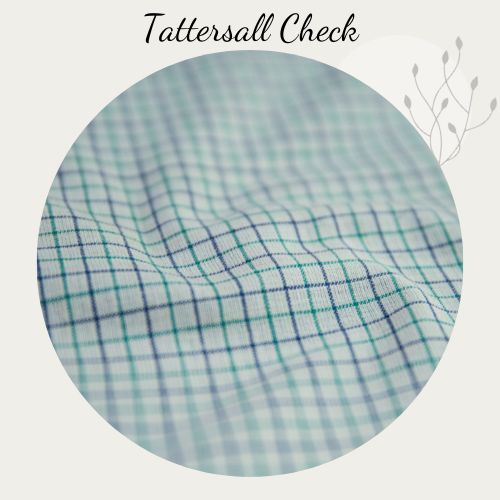
TATTERSALL CHECKS
Tattersall check pattern are a check pattern with regularly spaced checks (very similar to windowpane but smaller) made on white background by thin colored bands. The bands are usually of two colors resulting in a multidimensional effect.
GUN CLUB CHECK
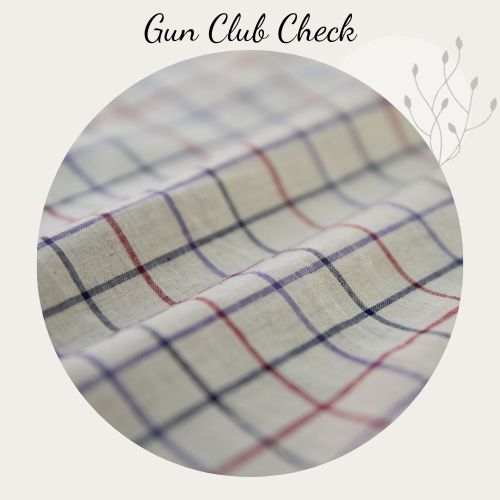
Gun club check pattern is a pattern of double checks. In this pattern, alternating bands in two or more colors intersect on a light background creating checks. The name "gun club" is derived from the fact that it was originally used to decorate gun stocks and other wooden surfaces.
Visual Guide to Common Check Pattern Types
Identifying the right check pattern is essential for achieving the desired aesthetic in a textile project. While many patterns appear similar at a distance, their scale and construction differ significantly:
- Gingham: Even squares in two colors, usually white and a contrasting hue.
- Tartan: Complex, multi-colored grids with varying line thicknesses, often associated with Scottish heritage.
- Windowpane: Large, open squares created by thin, singular lines.
- Houndstooth: Jagged, broken checks that create a textured, abstract appearance.
Each of these checks fabric options serves a specific purpose, from the lightweight and casual feel of gingham to the heavy, structured nature of a wool-blend tartan or houndstooth.
check pattern and fabric faqs
What is the history of check fabric?
Check fabric has ancient roots, seen in cultures like Egypt and Rome. In medieval Europe, checks became prominent, especially in Scottish tartans. They gained popularity in 17th-century fashion, and the Industrial Revolution made checks accessible. Throughout the 20th century, checks remained a versatile and timeless design choice.
What is black and white checkered fabric called?
Black and white checkered fabric is commonly referred to as "checkered fabric" or "checkered pattern." The specific name for this pattern might vary based on the size and style of the checks, but it is often simply described by its color and pattern combination. In some cases, it might be called "black and white gingham" if the checks are small and evenly spaced.
Why is gingham called gingham?
Gingham is believed to originate from the Malay word genggang, meaning striped. As this lightweight checked fabric gained popularity in Europe, the name evolved to gingham.
What is the difference between checks and plaids?
Checks and plaids are both patterns, but checks typically consist of small, evenly spaced, and intersecting horizontal and vertical lines forming squares, while plaids are characterized by larger, repeating patterns with multiple colors and unevenly spaced lines that intersect to create a more complex design.
Which check pattern is best for formal wear?
For formal and semi-formal wear, patterns like the windowpane, tattersall, and houndstooth are highly regarded. These checks fabric styles offer a structured and sophisticated look suitable for blazers, suits, and tailored shirts.
How are check patterns created in handloom weaving?
In handloom weaving, a check pattern is created by carefully alternating the colors of the warp and weft threads. This intersection of colored yarns at right angles forms the distinctive geometric grid seen in various checks fabric types.
More Blogs
how celebrity environmental activists are shaping sustainable fashion trends
summer 2026 textile trends: the season of slow luxury
the color theory hack: instantly upgrade your style with the science of hues
how to improve dressing sense: 5 simple rules for better style
top 5 textures to watch in fashion trends 2025
beyond borders: how fashion designers reimagine indian handloom in global fashion