Hemp vs Linen Fabric: A Designer’s Sourcing Guide

In the evolving landscape of sustainable fashion, designers are increasingly moving away from synthetic blends and thirsty conventional cotton. The search for high-performance, low-impact materials often leads to two giants of the plant-based textile world: Hemp and Linen. Both belong to the "bast fiber" family, fibers derived from the inner bark of the plant stalk—and both carry a rich history of craftsmanship that resonates deeply with the Indian textile heritage.
For a B2B fashion brand or an independent designer, the decision to buy hemp fabric versus linen isn't just about aesthetics; it’s a technical choice that affects garment longevity, dye uptake, and the brand's overall sustainability narrative. As consumers become more discerning, they aren't just looking for "eco-friendly" labels; they are looking for fabrics that tell a story of resilience and quality.
In this comprehensive guide, we will dive deep into the technical nuances of hemp vs linen fabric. We will explore why many designers are now looking to buy hemp fabric online to future-proof their collections and how these materials perform in a professional manufacturing environment. Whether you are looking to buy hemp fabric India-wide or source globally, understanding these technical specs is the first step toward a successful, sustainable fashion line.
Quick Take: Hemp vs Linen Fabric
Linen gives you crispness, elegance and immediate softness.
Hemp gives you strength, longevity, UV resistance, and a stronger sustainability narrative.
That is the simplest way to look at it but simple does not mean enough. Especially not when you are sourcing for production and not just moodboarding on Pinterest like a responsible adult pretending not to panic.
The Fabric Mistake Many Brands Make
Most brands compare hemp and linen only by hand-feel. That is the wrong starting point. Hand-feel matters, but it does not tell you how the fabric will behave after washing, dyeing, printing, folding, shipping and repeated wear.
For B2B sourcing, the better question is:
Which fabric supports the product you are actually trying to build?
Hemp vs. Linen Fabric: The Technical Breakdown
To the untrained eye, hemp and linen can look nearly identical. However, under the microscope and in the hands of a skilled weaver, their differences become clear.
Fiber Strength and Durability
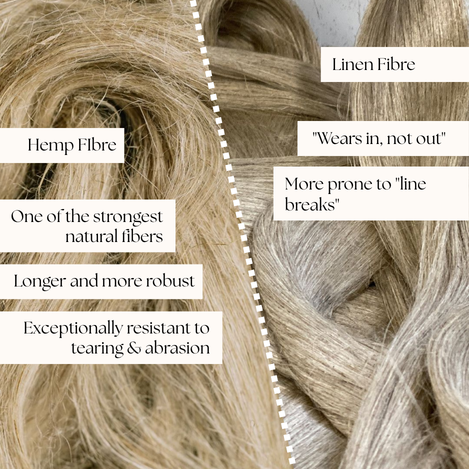
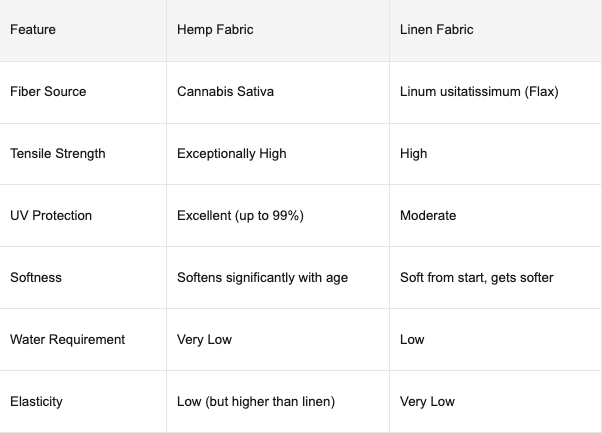
Hemp is widely considered one of the strongest natural fibers on the planet. Technically, hemp fibers are longer and more robust than flax (linen) fibers. Hemp has a tensile strength that is roughly three times that of cotton and significantly higher than linen. This makes hemp fabrics exceptionally resistant to tearing and abrasion.
When you buy hemp fabric, you are investing in a material that "wears in, not out." While linen is also durable, it is more prone to "line breaks" if folded repeatedly in the same spot, a phenomenon less common in hemp due to its superior fiber elasticity and length.
Breathability and Thermoregulation
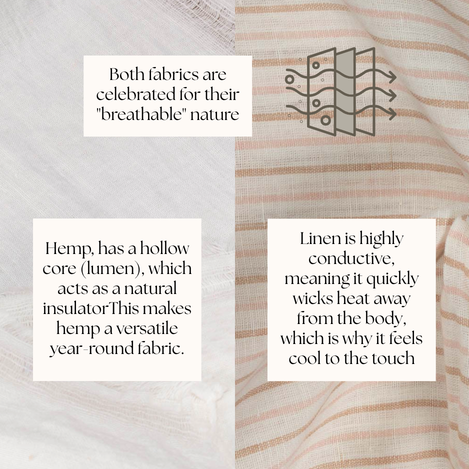
Both fabrics are celebrated for their "breathable" nature, but they achieve this in slightly different ways. Linen is highly conductive, meaning it quickly wicks heat away from the body, which is why it feels cool to the touch. Hemp, on the other hand, has a hollow core (lumen), which acts as a natural insulator. This makes hemp a versatile year-round fabric—keeping the wearer cool in the Indian summer and retaining heat during cooler months.
UV Resistance and Antimicrobial Properties
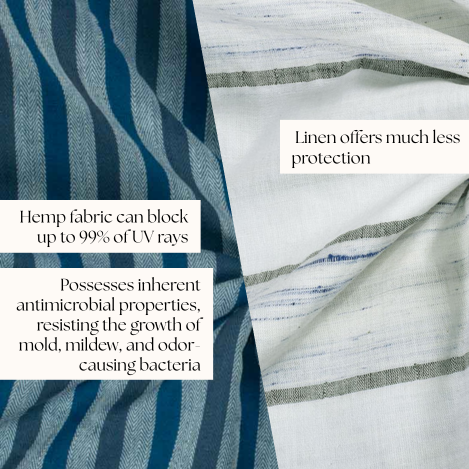
A major technical advantage of hemp is its natural resistance to ultraviolet (UV) light. Hemp fabric can block up to 99% of UV rays, whereas linen offers much less protection. Furthermore, hemp possesses inherent antimicrobial properties, resisting the growth of mold, mildew, and odor-causing bacteria. For designers creating travel wear or outdoor apparel, the decision to buy hemp fabric online provides a functional edge that linen cannot fully match.
Hemp vs Linen Fabric Comparison Table
Why Designers Buy Hemp Fabric India
Sustainability is at the core of Anuprerna’s mission, and when comparing hemp and linen, the environmental metrics are impressive for both. However, hemp often takes the lead in regenerative potential.
Why Hemp Fabric Is Gaining Ground in India
Soil Health and Carbon Sequestration
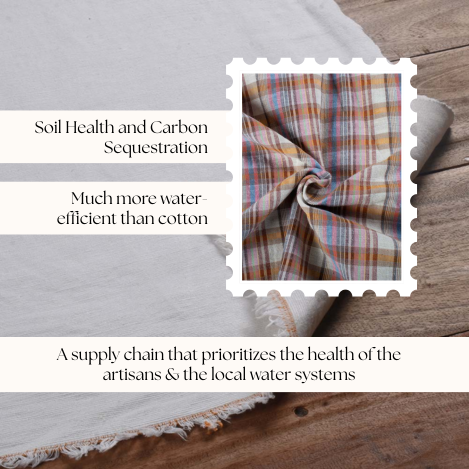
Hemp is a "pioneer plant." It grows densely, choking out weeds without the need for chemical herbicides. More importantly, hemp returns about 60-70% of the nutrients it takes from the soil, making it an excellent crop for rotation. In the context of India’s diverse agricultural landscape, hemp cultivation can help restore depleted soils. Hemp also sequesters more CO2 per hectare than any forest or commercial crop, making it a carbon-negative raw material.
Water Usage
While linen is much more water-efficient than conventional cotton, hemp requires even less water to reach maturity. In many climates, hemp can be rain-fed, requiring no additional irrigation. For B2B brands looking to market "ultra-low water footprint" collections, choosing to buy hemp fabric India sources is a powerful move.
Processing: From Stalk to Fabric
Both fibers require "retting", a process of breaking down the bark to extract the fibers. At Anuprerna, we advocate for dew retting or enzyme retting over chemical retting to ensure the process remains non-toxic. When you buy hemp fabric online from ethical manufacturers, you are supporting a supply chain that prioritizes the health of the artisans and the local water systems.
Designing with Hemp
For a fashion designer, the "hand-feel" and "workability" of a fabric are paramount.
Drape and Hand-Feel
Linen is known for its crispness and its famous "wrinkle." Hemp has a similar tendency to wrinkle, but the wrinkles are often softer and less sharp. Historically, hemp was considered a "rough" fiber used for rope and canvas, but modern textile technology has allowed us to create hemp fabrics that rival the softness of linen and even silk blends.
Dyeing and Color Fastness
Hemp is highly absorbent, which is a double-edged sword. It takes natural dyes beautifully, resulting in deep, rich colors. However, because it is so absorbent, it can also lose color if not treated correctly. For designers, understanding the finishing process is vital. We often recommend looking into garment dyeing vs fabric dyeing to see which method best suits the slightly more porous nature of hemp fibers.
Synergies with Indian Craftsmanship
At Anuprerna, we believe in the fusion of modern sustainable fibers with age-old techniques. Weaving hemp on a traditional handloom adds a unique texture that powerlooms cannot replicate. This "human element" is what sets a premium sustainable brand apart. When you source through us, you aren't just getting a commodity; you are supporting artisan communities across East India who bring generations of expertise to every meter of fabric.
The Hidden Insight
The real value of hemp is not only sustainability. It is product longevity.
A lot of brands use sustainability as a marketing layer. Hemp lets you build it into the product itself.
When a garment lasts longer, softens with time, resists wear, and supports a lower-impact sourcing story, the sustainability claim becomes less decorative and more defensible.
That is the part many brands miss.
MOQ, Sampling, and B2B Sourcing Details
Sourcing fabric for a production run is vastly different from buying a few meters for personal use. Here is what technical designers need to look for when they decide to buy hemp fabric online.
- Weight (GSM): Hemp comes in various weights. A 120-150 GSM hemp is perfect for summer shirts, while 250+ GSM is better suited for trousers and light jackets.
- Certifications: Look for GOTS (Global Organic Textile Standard) or Oeko-Tex certifications to ensure the hemp was grown and processed without harmful chemicals.
- Blend Ratios: Pure hemp is wonderful, but hemp-cotton or hemp-silk blends can offer a better drape and a softer initial feel.
- Authenticity: Especially when looking to buy hemp fabric India, ensure you are working with a transparent supplier. Knowing exactly where the fiber was grown and woven is the only way to guarantee a truly sustainable product. For more on this, read our guide on what authentic handloom really means.
When you are ready to source, remember that the digital marketplace can be overwhelming. We've compiled 5 essential tips for buying fabrics online to help you navigate quality control and shipping logistics.
Hemp Is Built for the Long Game
The choice between hemp and linen doesn't have to be an "either/or" scenario. Both fabrics offer incredible benefits for the sustainable fashion designer. Linen provides that timeless, sophisticated elegance with a superior initial softness. Hemp, however, offers a technical edge in terms of durability, UV protection, and environmental regeneration that is becoming increasingly attractive to the modern, eco-conscious consumer.
If your brand values longevity and a "rugged luxury" aesthetic, it is time to buy hemp fabric and integrate it into your core collection. At Anuprerna, we are committed to helping you bridge the gap between high-performance sustainable materials and the exquisite craftsmanship of Indian artisans.
Are you ready to elevate your next collection with the strength and heritage of hemp? Explore our curated selection and experience the difference of ethically manufactured, artisan-made textiles.
Where and How to Buy Hemp Fabric Online
Finding a reliable source to buy hemp fabric online involves evaluating the transparency of the supplier's supply chain. At Anuprerna, we provide access to hemp fabrics that are woven by skilled artisans, ensuring each meter meets professional standards. When sourcing digitally, always request a technical swatch pack to verify the weave density and color fastness before committing to a full production run.
Pricing and MOQs for Hemp Fabric
The cost to buy hemp fabric reflects the intensive labor required for harvesting and fiber extraction. Minimum Order Quantities (MOQs) vary depending on whether you are sourcing stock fabrics or requesting a custom weave. For small labels, working with suppliers who offer flexible MOQs allows for better inventory management while maintaining a sustainable sourcing model.
Verifying Hemp Fabric Authenticity
To ensure you are working with authentic hemp fabric, look for clear fiber documentation and physical characteristics like uneven slubs in the yarn. Authentic hemp has a distinct tensile strength and a slightly crisp texture that softens over time. Working directly with transparent artisan communities is the most effective way to guarantee the botanical purity of your textiles.
most questions asked
Is hemp fabric scratchy compared to linen?
While raw hemp was historically coarse, modern processing and weaving techniques have made it very comfortable. When you buy hemp fabric today, you will find it feels similar to a heavy linen. Like linen, hemp becomes significantly softer with every wash and wear, eventually achieving a silk-like feel without losing its structural integrity.
Why is it more expensive to buy hemp fabric online than cotton?
The cost of hemp reflects its labor-intensive harvesting and processing, as well as the current scale of production compared to cotton. However, for B2B brands, the cost per wear is lower because hemp garments last for years. Additionally, the environmental benefits—less water, no pesticides, and soil regeneration—add value to your brand that justifies the price point.
Does hemp fabric shrink more than linen?
Hemp has a natural shrinkage rate, typically around 3-5% if not pre-shrunk. This is comparable to linen. We always recommend that designers perform a wash test before cutting patterns or opt for pre-washed fabrics. Using cold water and air drying helps maintain the original dimensions of the garment.
Can I use hemp fabric for digital or screen printing?
Yes, hemp is an excellent substrate for printing. Because of its high absorbency, it takes pigments very well, resulting in deep colors. Because hemp has a more pronounced texture than fine cotton, designers should account for a rustic finish in the print. It is well suited for botanical prints and earthy aesthetics.
Is hemp fabric legal to buy and sell in India?
Yes, it is legal to buy hemp fabric India-wide. While the cultivation of industrial hemp is regulated and requires specific state licenses, the sale and use of hemp fiber and fabric are fully legal. Hemp textiles do not contain THC and are treated like any other natural textile fiber in the fashion industry.
How does GSM affect the drape of hemp fabric?
Lower GSM fabrics offer a fluid, soft drape suitable for flowing silhouettes, while higher GSM fabrics provide stiffness and structure. Designers should match the GSM to the garment design to ensure the fabric behaves as intended during wear.
Can I request custom hemp fabric weights?
Many artisan-led houses can adjust the loom settings to produce specific weights. If you have a unique requirement for your collection, it is best to discuss your specific GSM needs with your supplier during the sampling phase.
How can I verify the quality when I buy hemp fabric online?
Quality verification should include checking for consistent GSM, fiber strength, and the presence of organic certifications. A reputable supplier will provide technical details and allow you to source sample yardage to test the fabric's behavior during the dyeing and construction phases.
More Blogs
raw silk vs tussar silk vs eri silk: key differences & characteristics
jamdani fabric wholesaler: a guide for designers & brands
malmal cloth in english: understanding the global appeal of mul cotton
wholesale cotton fabric: how to choose the right supplier
screen printing on fabric: techniques, process & applications in fashion

linen gym wear: can you really workout in natural fibers?