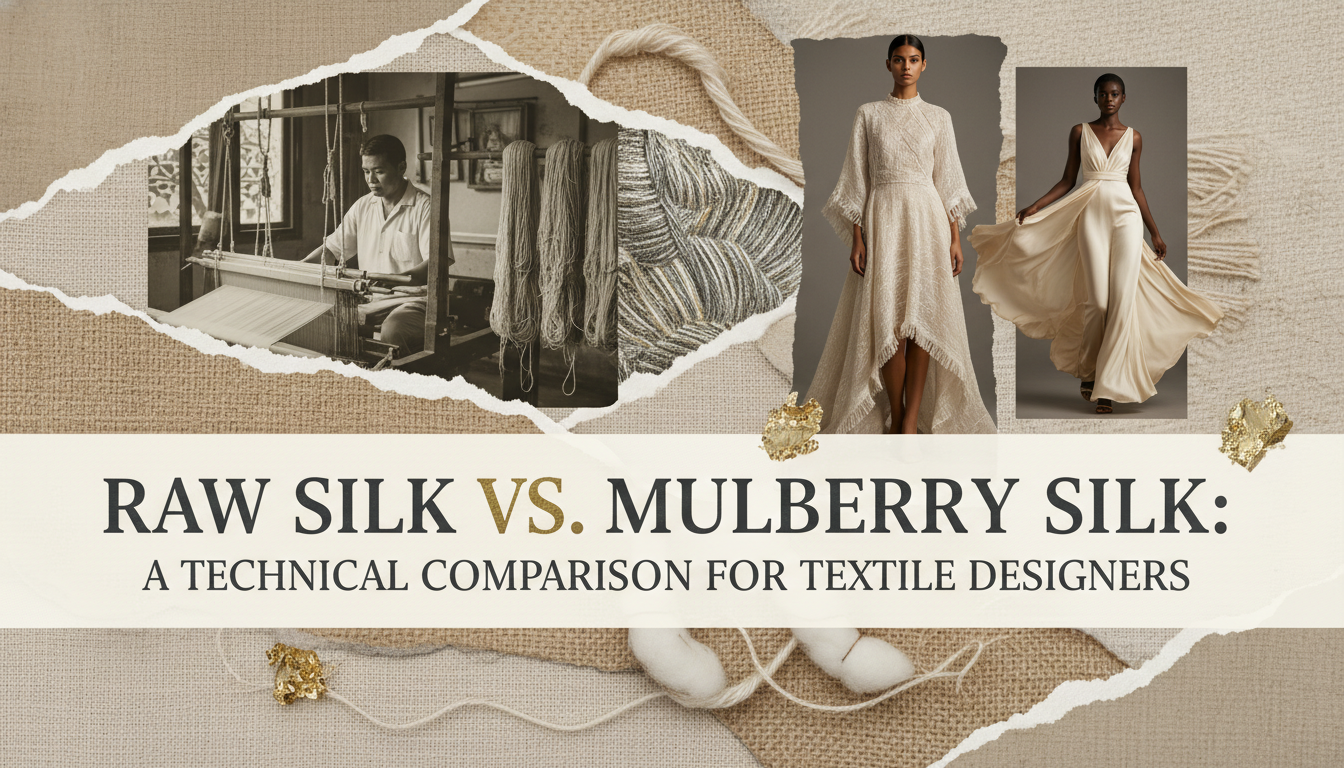
Raw Silk vs. Mulberry Silk: A Technical Comparison for Textile Designers

For the modern textile designer, the choice of fiber is a technical decision that dictates the drape, durability and narrative of a collection. Within the luxury segment, the terms raw silk and mulberry silk are frequently used, yet often misunderstood. Many designers conflate raw with wild or assume that mulberry silk cannot be raw.
In reality, the distinction lies in the processing, specifically the presence or absence of sericin, the natural protein gum that coats the silk fiber. While mulberry silk represents the standard of fiber origin, raw silk represents a specific state of that fiber, characterized by a unique tactile crunch and a matte luster that appeals to brands seeking an organic, artisanal aesthetic.
This guide provides a deep technical dive into the differences between these two states of silk. Whether you are developing a structured bridal line or a fluid resort-wear collection, understanding the raw silk characteristics versus the refined finish of degummed mulberry silk is essential for making informed sourcing decisions that align with sustainable manufacturing values.
Understanding the Fundamentals: What is Raw Silk?
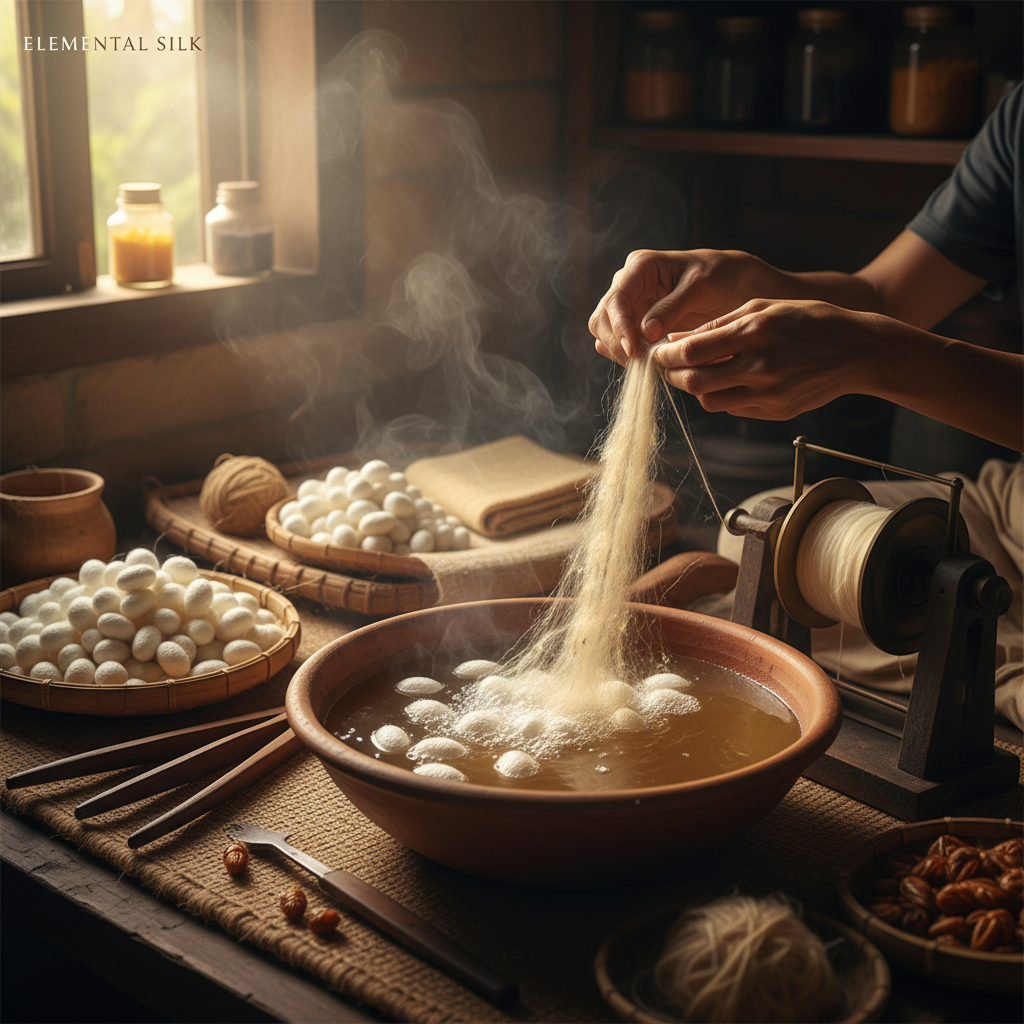
To understand raw silk, one must first understand the anatomy of a silk cocoon. When a silkworm spins its cocoon, it produces two strands of fibroin (the structural protein) held together by sericin (the gummy protein). In the production of standard mulberry silk, this sericin is usually removed through a process called "degumming" to reveal the soft, shiny fiber beneath.
Raw silk is silk that has not been degummed, or has only been partially degummed. Because the sericin remains on the fiber, the resulting fabric possesses a distinctively different hand-feel. It is often referred to as "silk in the gum."
Technical Characteristics of Raw Silk:
- Texture: It has a "nubby" or slightly abrasive surface. This is the primary silk texture difference designers notice.
- Luster: Unlike the high-sheen "liquid" look of processed silk, raw silk has a muted, matte appearance.
- Weight: The presence of sericin adds weight to the fiber, making raw silk fabrics feel more substantial.
- Odor: Raw silk can sometimes retain a faint, organic scent due to the natural proteins.
At Anuprerna, we emphasize the preservation of these natural characteristics in our handwoven collections, as they highlight the Mulberry Silk Fiber in its most authentic form.
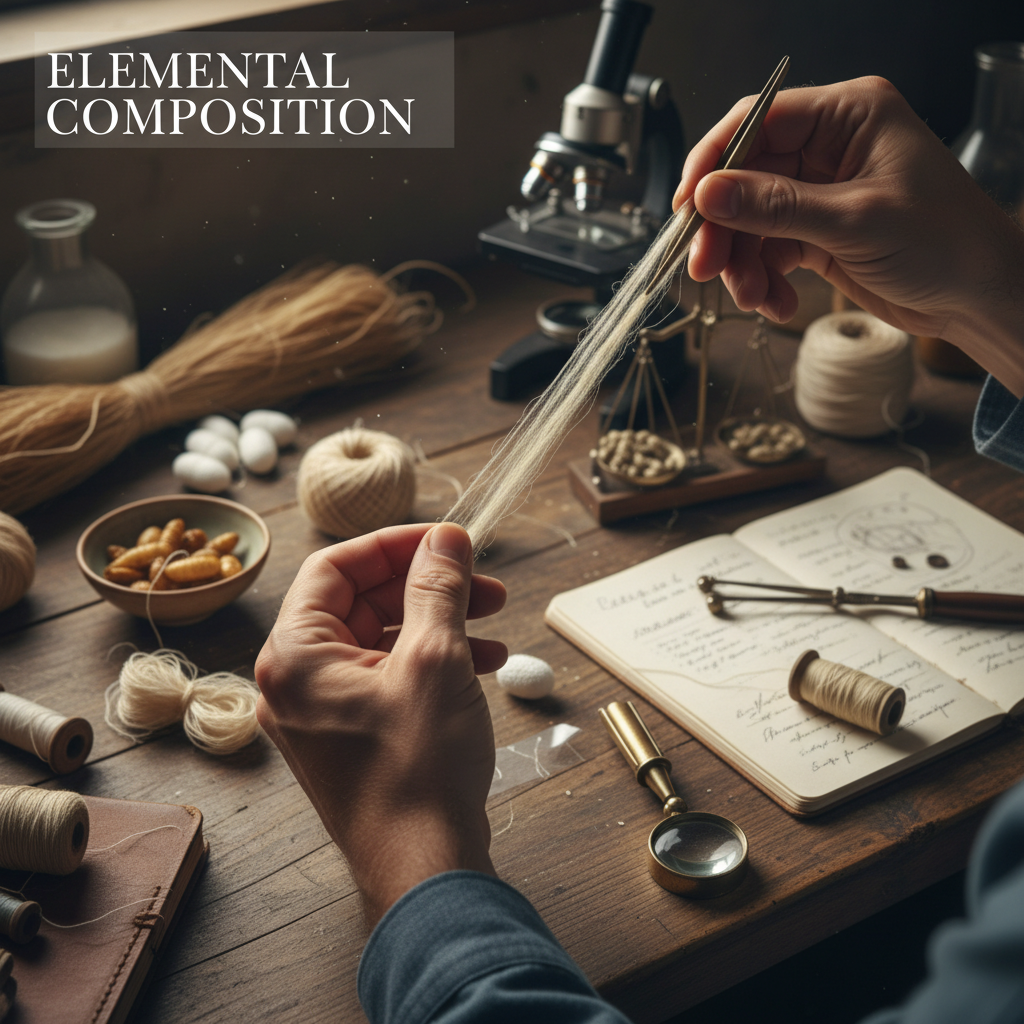
Raw Silk vs. Mulberry Silk: The Technical Breakdown
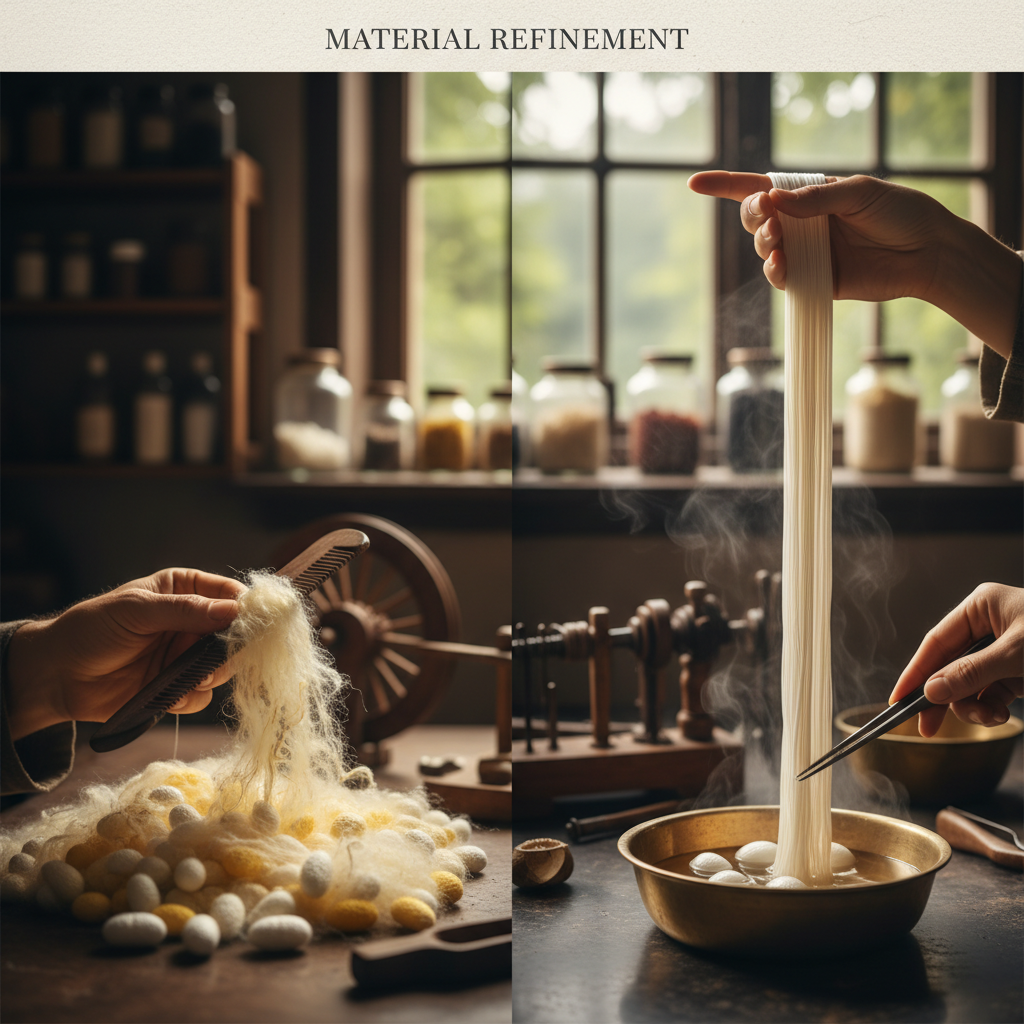
Crisp or Fluid: The Real Difference Between Raw and Mulberry Silk
Crisp or Fluid? The Real Difference Between Raw and Mulberry Silk
When comparing raw silk vs mulberry silk, it is important to note that they are not always mutually exclusive. Most raw silk is actually made from mulberry silkworms (Bombyx mori), but the raw designation refers to the unfinished state of the yarn.
The Degumming Process
The most significant technical difference is the degumming. Refined mulberry silk undergoes a hot soap-and-water bath to strip away the sericin. This results in a fiber that is 20-30% lighter and significantly softer. In contrast, raw silk skips this step, maintaining its structural integrity and crispness.
Tensile Strength and Elasticity
- Protective Layer: The sericin in raw silk acts as a protective layer, which makes the fiber stiffer and provides a different type of durability.
- Fiber Flexibility: Once the sericin is removed in standard mulberry silk, the fibroin strands are more flexible, allowing for the incredible drape associated with high-end fashion.
- Design Application: Designers must choose based on whether they need the body of raw silk or the flow of degummed silk.
Dye Absorption
Sericin affects how the fiber accepts pigment. Raw silk tends to take on dyes in a more variegated, organic way, often resulting in earthy tones. Degummed mulberry silk, being more porous once the gum is removed, allows for deep, saturated and uniform color penetration. For designers working with intricate prints, such as our handwoven silk fabric, a degummed base is often preferred for clarity.
The Role of Craftsmanship in Silk Quality
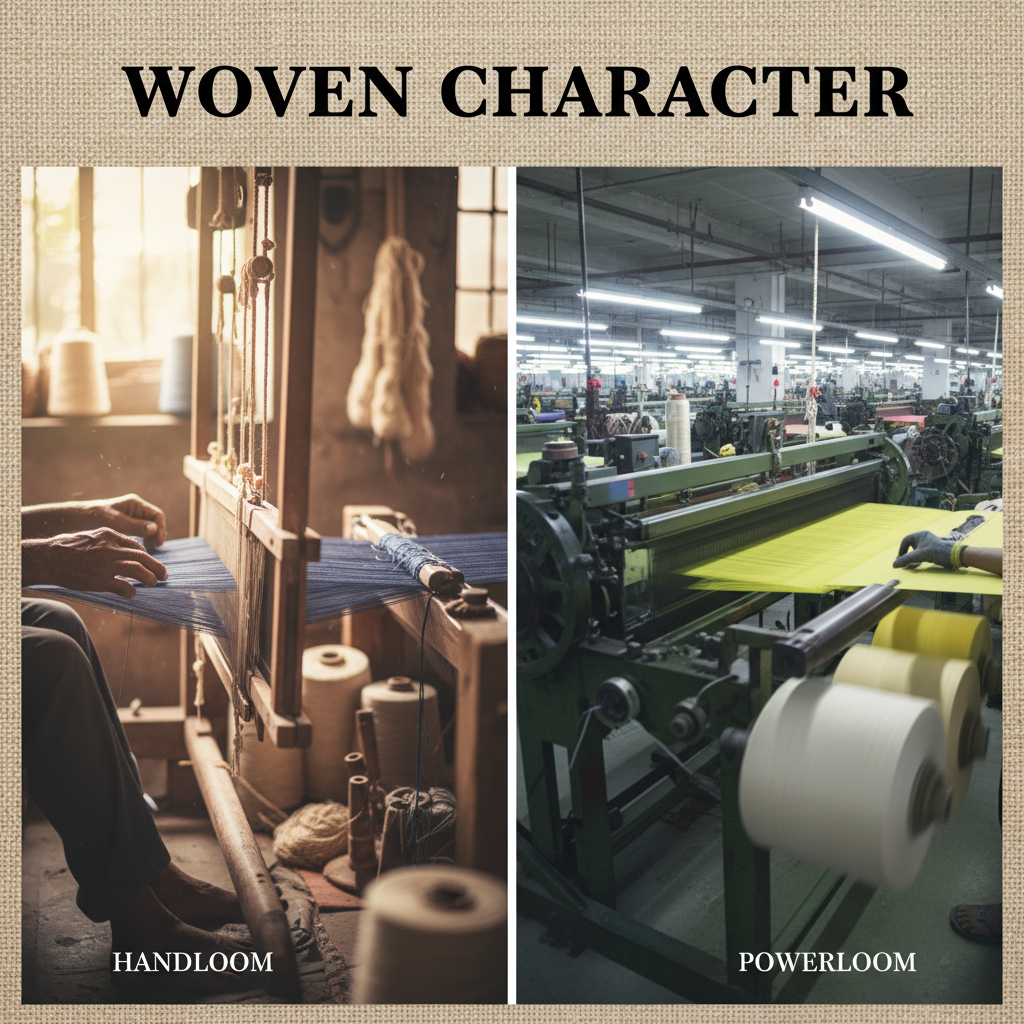
The quality of both raw and refined silk is heavily dependent on the "reeling" and "weaving" processes. In the Mulberry Silk Cluster of East India, artisans use traditional techniques to ensure the fibers are not over-stressed during production.
Handloom vs. Powerloom
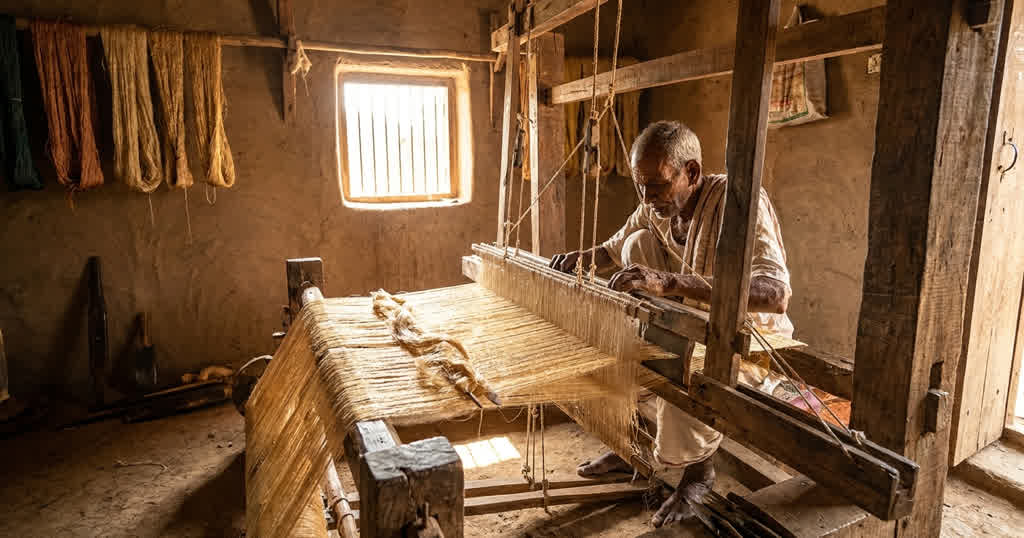
When sourcing raw silk, the method of weaving is as important as the fiber itself. Handwoven raw silk retains the subtle irregularities (slubs) that give the fabric its "soul." In a B2B context, these "imperfections" are actually hallmarks of luxury and authenticity, distinguishing sustainable, artisan-made textiles from mass-produced synthetic imitations.
Many designers struggle with Understanding Mulberry Silk Quality, often missing the fact that the "crunchiness" of raw silk is a technical feature, not a defect.
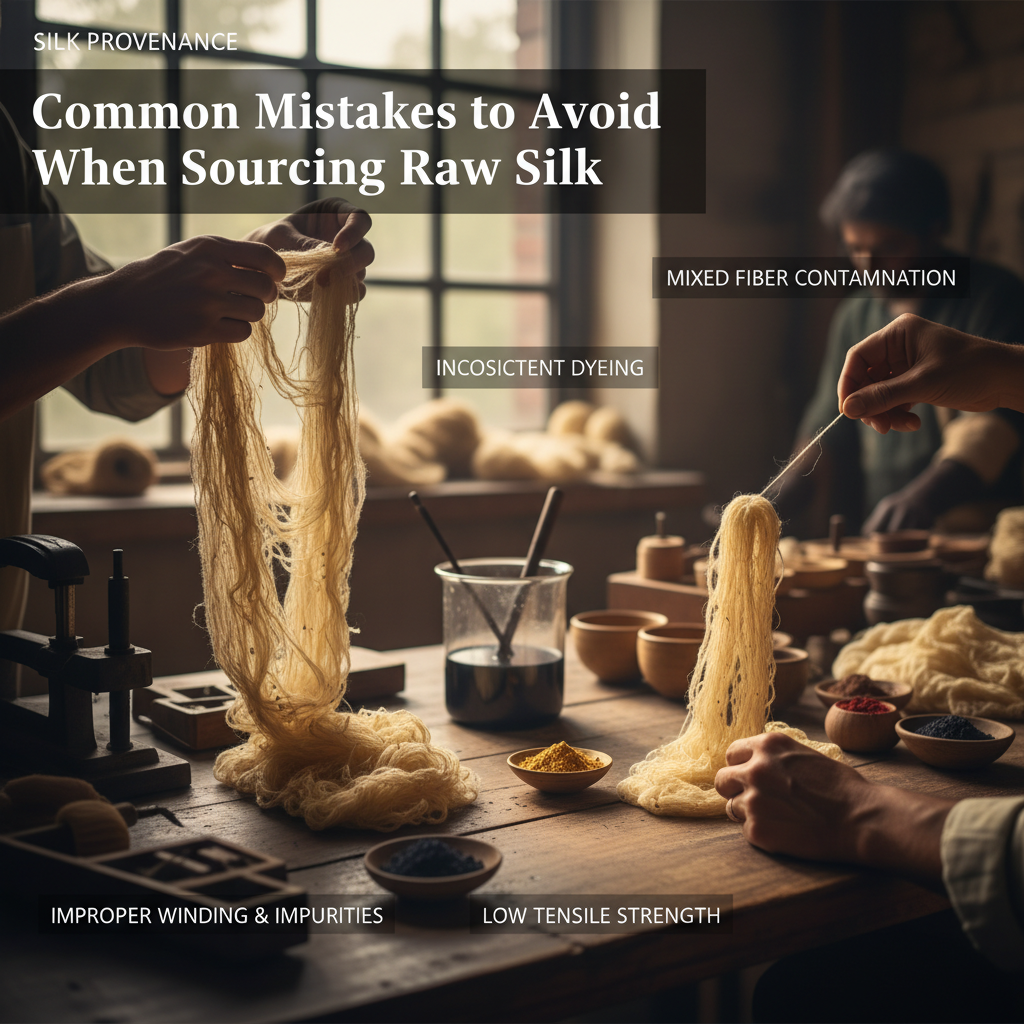
Common Mistakes to Avoid When Sourcing Raw Silk
As a textile designer or brand owner, sourcing the wrong type of silk can lead to production hurdles. Here are common pitfalls:
- Confusing Raw Silk with Tussar Silk: While both are textured, Tussar is "wild silk" (from different silkworm species) and is naturally golden-brown. Raw silk can be creamy white if it comes from mulberry worms.
- Ignoring Shrinkage: Raw silk behaves differently during the first wash because the sericin can contract. Always request pre-washed samples or account for 5-10% shrinkage in your patterns.
- Misjudging the "Scroop": "Scroop" is the rustling sound silk makes. Raw silk has a high scroop. If your design requires a silent, fluid movement (like a slip dress), avoid raw silk.
- Over-processing: Do not attempt to heavily steam or chemically soften raw silk, as this can unevenly remove the sericin and leave the fabric looking blotchy.
One Fiber, Two Personalities: Choosing the Silk That Tells Your Story
The choice between raw silk and refined mulberry silk ultimately depends on the "story" of your garment. Raw silk offers a tactile, architectural, and earthy quality that celebrates the raw state of nature. Refined mulberry silk offers the pinnacle of softness, shine, and drape.
At Anuprerna, we believe that both have a place in a sustainable wardrobe. By supporting our artisan clusters in East India, you are not just choosing a fabric, you are preserving a heritage of hand-weaving that respects the natural properties of the silk fiber. Whether you seek the "nubby" character of the raw state or the "gold standard" of mulberry, our commitment to ethical manufacturing ensures your collection is as responsible as it is beautiful.
most asked questions
Is raw silk more sustainable than refined mulberry silk?
Technically, raw silk can be considered more sustainable in terms of processing because it requires less water and fewer chemicals since the degumming stage is skipped. However, the sustainability of any silk depends on the farming practices and the ethical treatment of the weavers.
Why does raw silk feel scratchy compared to other silks?
The scratchy or crisp feel is due to the sericin still coating the fibers. This is a natural raw silk characteristic that softens over time with wear and washing.
Can I use raw silk for digital printing?
While possible, raw silk is not the ideal substrate for high-definition digital printing due to its uneven surface and the presence of sericin. For intricate prints, a degummed mulberry silk is recommended.
How do I care for raw silk garments?
Raw silk should ideally be dry cleaned to preserve the sericin and the fabric structure. If hand-washed, use a pH-neutral detergent and cool water, avoiding wringing.
What is the price difference between raw silk and mulberry silk?
Raw silk yarn is generally cheaper due to fewer processing steps, but high-quality, hand-loomed raw silk can be more expensive than mass-produced mulberry silk due to labor-intensive weaving.
Does raw silk shrink more than processed mulberry silk?
Yes, raw silk can experience more significant shrinkage during the first wash because the sericin can contract when exposed to moisture and heat. Always account for 5-10% shrinkage in your patterns.
What is the scroop of silk?
Scroop is the characteristic rustling sound silk makes when rubbed together. Raw silk has a higher scroop compared to degummed mulberry silk, which is important to consider for garments requiring silent movement.
Can raw silk be made from fibers other than mulberry?
While raw silk can technically refer to any silk 'in the gum,' it is most commonly associated with mulberry silk silkworms. Wild silks like Tussar are also naturally textured, but their raw state differs in color and chemical composition from cultivated mulberry silk.
More Blogs
why organic fabric suppliers are growing in india
jacquard fabric in modern fashion
how silk manufacturers preserve traditional craftsmanship
indian fabric wholesale: a guide to sourcing handwoven textiles
how indian fabric exporters meet global quality standards
jacquard vs embroidery: what's the difference?