Buying Authentic Khadi Online: 7 Quality Tests for B2B Sourcing

In the world of sustainable fashion, few textiles carry the weight of history and craftsmanship like khadi fabric. Known as the "Fabric of Freedom," Khadi is not just a material and is a philosophy of self-reliance and ethical production. However, for fashion designers and garment manufacturers looking to engage in khaadi online shopping, the digital marketplace presents a significant challenge: how do you verify the authenticity of a hand-spun, hand-woven textile through a screen?
For brands committed to transparency, sourcing the wrong material risks more than quality; it weakens credibility. This guide bridges that gap. Through seven practical quality checks and sourcing insights, it helps you verify organic khadi cotton fabric online, protect your supply chain, and ensure your purchases genuinely support artisan ecosystems.
Understanding the Essence of Organic Khadi Cotton Fabric
Before Testing Quality, it is Essential to Understand What Truly Defines Organic Khadi.
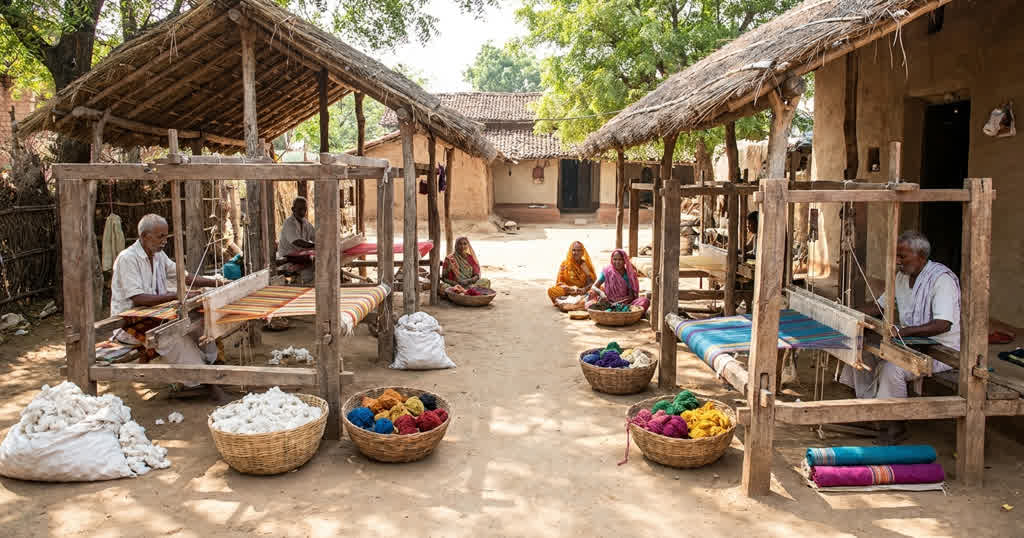
Unlike standard handloom fabrics, khadi is both hand-spun on a charkha and hand-woven. This dual process creates a living textile that breathes, regulates temperature naturally, and carries visible irregularities from human touch.
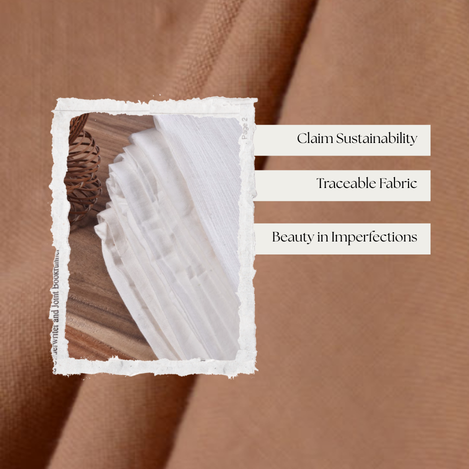
At Anuprerna, our story of organic khadi cotton is rooted in the heritage of East Indian artisans. We believe that for a brand to claim sustainability, the fabric must be traceable to the loom. The beauty of organic khadi cotton fabric lies in its imperfections. These are not defects but are the hallmarks of authenticity. For B2B buyers, this means looking past the label. Check the spinning method, GSM and surface uniformity. Real khadi will never look perfectly even. Uniformity is a mill signature, not an artisan one
Expert Tip: When sourcing online, always ask the supplier if the yarn is hand-spun or mill-spun. Authentic Khadi must be hand-spun. If only the weaving is manual, it is technically "Handloom," not "Khadi."
Why Khadi Online Shopping Requires a Strategic B2B Approach
Sourcing khadi at scale demands a different mindset than retail buying.
Ordering 500 meters of cotton khadi fabric requires predictability in quality, within the natural variation of handcraft. Online platforms are saturated with “khadi-look” materials: power-loom cotton or polyester blends finished to imitate texture without delivering performance or impact.
Successful khadi online shopping for B2B buyers means shifting from browsing to verification. Ask for technical data sheets, swatch sets, and clear proof of production. This is not a transactional purchase, it is a supply-chain decision tied to your brand’s credibility.
The risks of poor sourcing include:
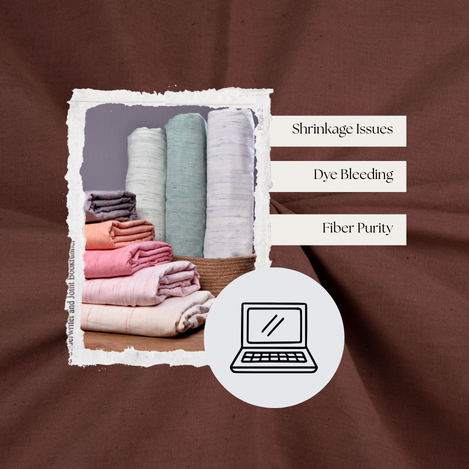
- Shrinkage Issues: Authentic Khadi can shrink significantly if not pre-washed or processed correctly.
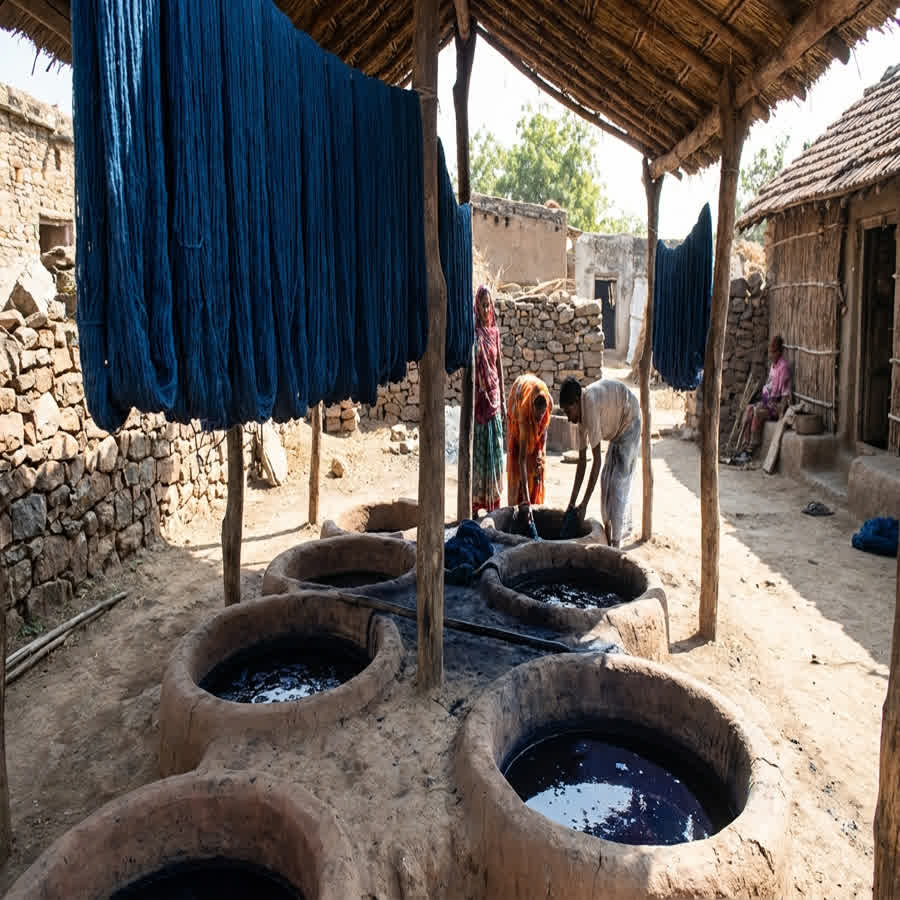
- Dye Bleeding: Natural dyes require specific mordanting; without it, your production run could be ruined.
- Fiber Purity: Blended fabrics are often sold as 100% cotton to lower costs.
By following a structured verification process, you can ensure that your wholesale fabric sourcing aligns with your brand's quality benchmarks.
7 Quality Tests for Buying Authentic Khadi Online
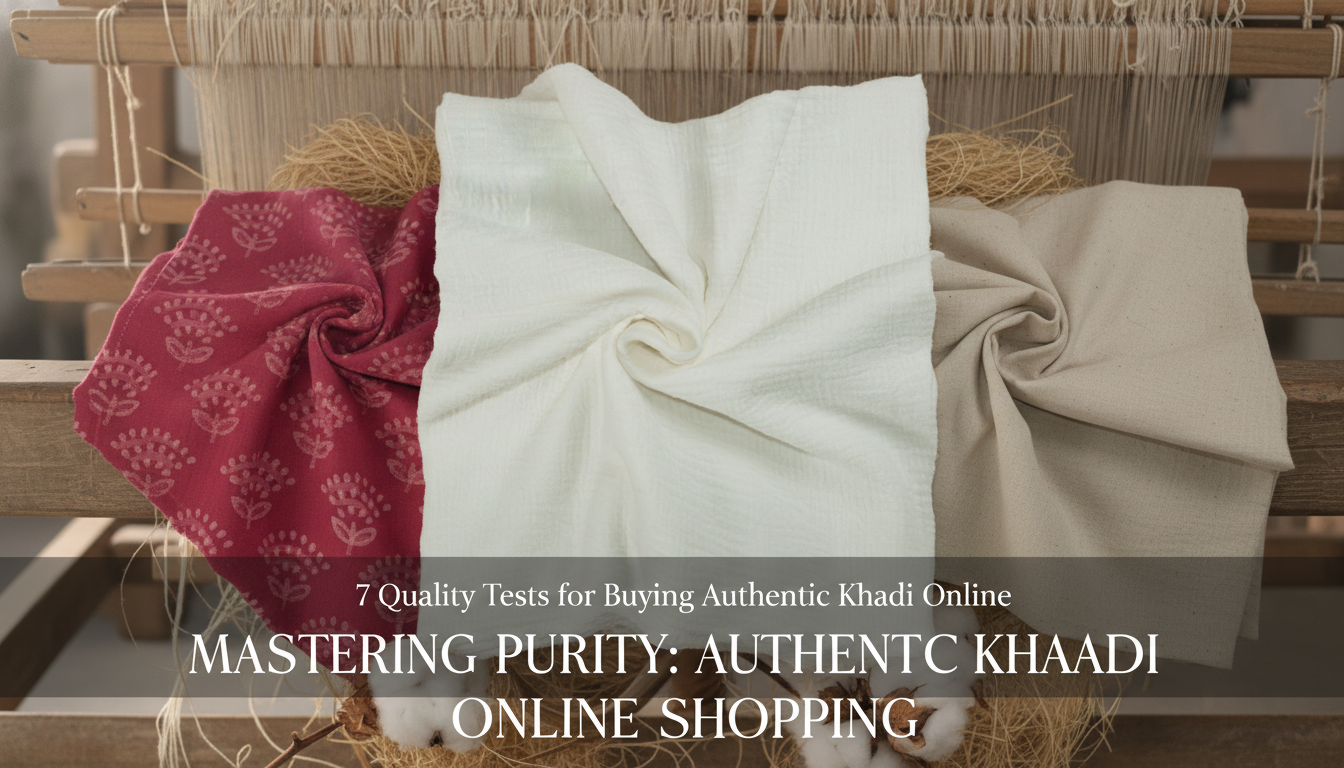
1. The Visual Slub & Irregularity Test
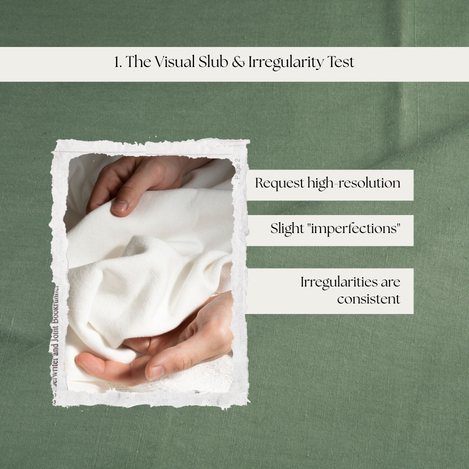
The most immediate way to identify khadi fabric is by looking at the texture. Because the yarn is hand-spun, the thickness of the thread varies throughout the weave. These variations are called "slubs."
- How to do it online: Request high-resolution, macro photos of the fabric. Look for subtle variations in the warp and weft.
- What to look for: If the fabric looks perfectly uniform with no visible changes in thread thickness, it is likely mill-spun. Authentic organic khadi will show slight "imperfections" that create a rich, organic depth.
- B2B Insight: Ensure these irregularities are consistent across the bolt so they don't appear as "stains" or "holes" in the final garment.
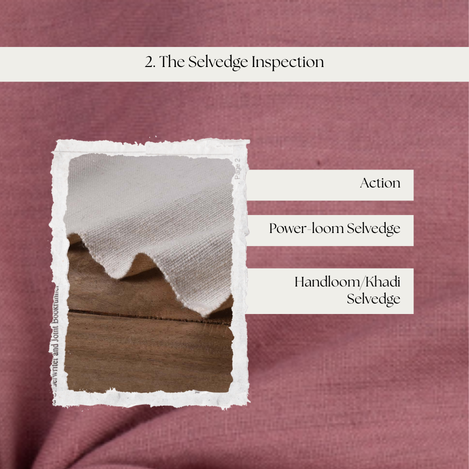
2. The Selvedge Inspection
The selvedge (the finished edge of the fabric) tells the story of the loom.
- Handloom/Khadi Selvedge: Usually has a slightly uneven edge, sometimes with small loops of thread where the shuttle has turned back.
- Power-loom Selvedge: Very clean, often with tiny pin-marks where the machine gripped the fabric.
- Action: Ask for a photo of the full width of the fabric including both selvedges. This is a primary step in buying authentic khadi cotton fabric online.
3. The Transparency and GSM Check
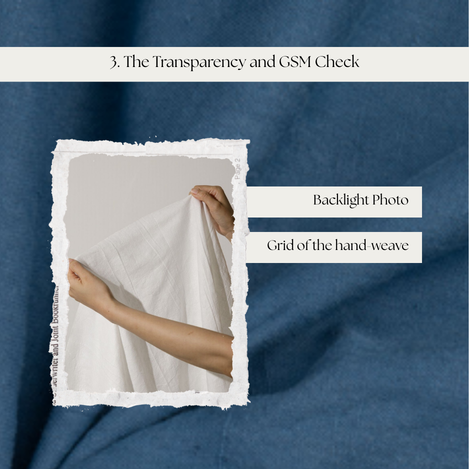
Cotton khadi fabric comes in various weights. For example, a Chambray Red Khadi Cotton 75 Gsm Handwoven Fabric will be lightweight and slightly sheer, perfect for summer shirts.
- The Test: Ask the supplier for a "backlight photo" holding the fabric up to a window.
- What it reveals: You should see the "grid" of the hand-weave. In authentic Khadi, the spacing between threads might vary slightly, whereas mill-made fabric will show a perfect, repetitive grid.
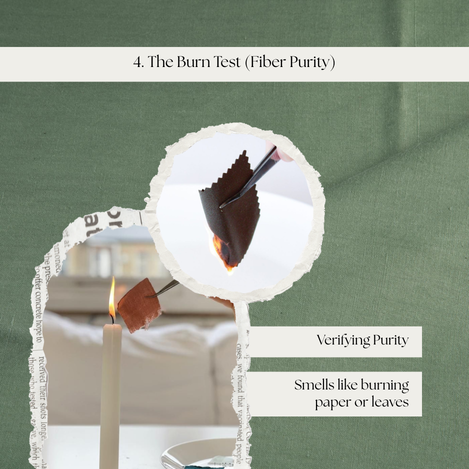
4. The Burn Test (Fiber Purity)
This is the gold standard for verifying organic khadi cotton fabric purity. While you can't do this through a screen, you must perform it on the swatches you receive before placing a bulk order.
- The Process: Take a small snippet of the fringe/yarn and light it with a flame.
- The Result: 100% Cotton Khadi will smell like burning paper or leaves. It will leave a fine, grey ash that crumbles easily. If it smells like burning plastic or forms a hard black bead, it contains synthetic fibers.
5. The Water Absorbency Test
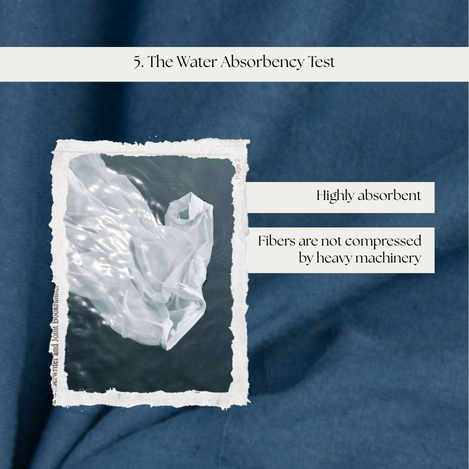
Authentic organic khadi is highly absorbent because the fibers are not compressed by heavy machinery.
- The Test: Place a drop of water on the fabric surface.
- The Result: Genuine Khadi will absorb the water almost instantly. If the water beads up or takes a long time to sink in, the fabric might be treated with heavy starches or contain synthetic blends.
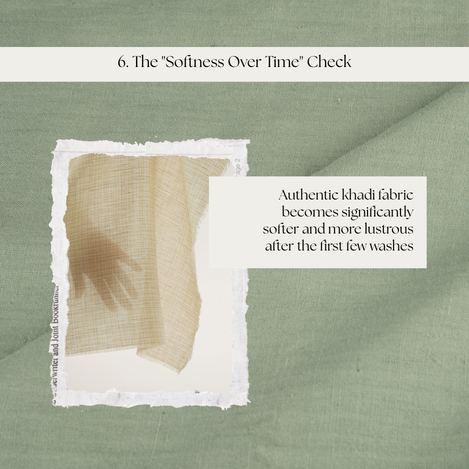
6. The "Softness Over Time" Check
New Khadi can sometimes feel stiff due to natural starch (Kanji) used during weaving to protect the yarn.
- Pro Tip: Wash your sample swatch. Authentic khadi fabric becomes significantly softer and more lustrous after the first few washes. If the fabric remains stiff or loses its structural integrity after one wash, it is poor quality.
7. Certification and Documentation
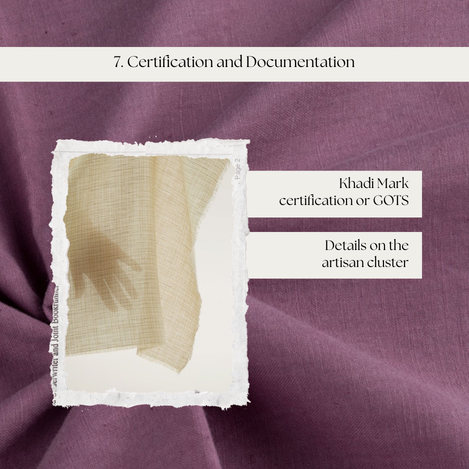
For B2B sourcing, the most reliable "test" is the paper trail.
- What to ask for: Look for Khadi Mark certification or GOTS (Global Organic Textile Standard) for the organic cotton yarn.
- Traceability: A reputable manufacturer like Anuprerna can provide details on the artisan cluster that produced the fabric. This transparency is essential for ethical branding.
Common Mistakes to Avoid When Sourcing Cotton Khadi Fabric Wholesale
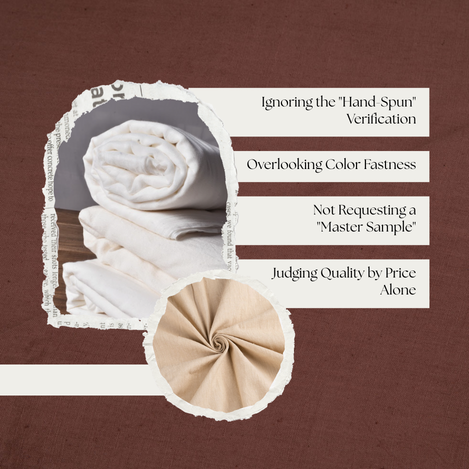
Avoiding These will Save You Time and Capital.
- Ignoring the "Hand-Spun" Verification: Many sellers list "Handloom Khadi," which is a half-truth. Ensure the yarn is hand-spun to get the true benefits of organic khadi.
- Overlooking Color Fastness: Handwoven fabrics, especially those using natural dyes, may bleed in the first wash. Always ask for the color-fastness rating (Crocking test).
- Not Requesting a "Master Sample": Never place a bulk order based on a digital image alone. Digital colors vary by screen. Always approve a physical master sample that will serve as the benchmark for the entire production run.
- Judging Quality by Price Alone: Authentic khadi fabric is labor-intensive. If the price seems too close to mill-made cotton, it almost certainly isn't authentic hand-spun Khadi.
Pro Tip: When sourcing for a collection, ask for the "Loom Capacity." Since Khadi is hand-woven, there is a limit to how many meters can be produced per month. If a supplier promises 10,000 meters in a week, they are likely using power looms.
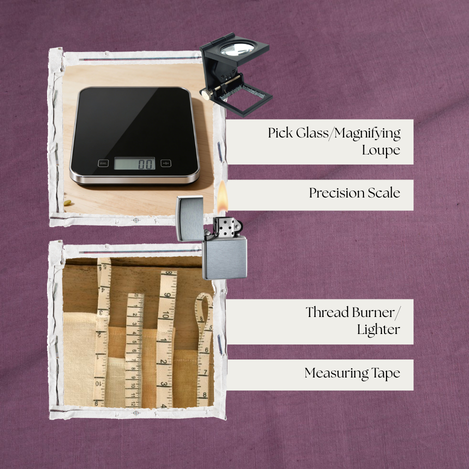
What You'll Need for Your Sourcing Toolkit
To professionally evaluate organic khadi cotton fabric, keep these items ready for when your samples arrive:
- Pick Glass/Magnifying Loupe: To inspect the weave density and yarn irregularities.
- Precision Scale: To verify the GSM (Grams per Square Meter).
- Thread Burner/Lighter: For the fiber purity test.
- Measuring Tape: To check for shrinkage after a test wash.
Where Authenticity, Process and Accountability Meet
Mastering khaadi online shopping means balancing respect for craft with disciplined quality control. Using the seven tests outlined above, B2B buyers can confidently source khadi fabric that is authentic, durable, and truly sustainable.
At Anuprerna, we are committed to preserving the integrity of organic khadi cotton fabric. We provide our partners with full transparency, from the artisan's wheel to the final bolt of cloth. Whether you are interested in plain dyeable organic khadi cotton or custom weaves, our team is here to ensure your sourcing journey is seamless and ethical.
Are you ready to elevate your collection with authentic Indian heritage? Explore our full range of handwoven textiles and let’s build a sustainable future together.
most asked questions
Is all Khadi fabric organic?
Not necessarily. While the traditional process of Khadi is inherently eco-friendly, "Organic Khadi" specifically refers to organic khadi cotton fabric where the cotton was grown without synthetic fertilizers or pesticides. Many Khadi fabrics use conventional cotton but are still hand-spun and hand-woven. At Anuprerna, we emphasize organic khadi to ensure the highest level of environmental sustainability and skin-friendliness for B2B clients.
Why is the price of khadi online shopping higher than regular cotton?
The price of khadi fabric reflects the intensive manual labor involved. Unlike mill-made fabric where a machine produces thousands of meters an hour, Khadi requires an artisan to spin the yarn by hand and another to weave it on a manual loom. This process provides a livelihood to rural communities. When you source cotton khadi fabric, you are paying for craftsmanship, a lower carbon footprint, and a unique textile that cannot be replicated by machines.
How do I handle the shrinkage of khadi fabric in B2B production?
Authentic khadi fabric can shrink between 3% to 10% depending on the weave density. For B2B sourcing, it is recommended to either source "pre-shrunk" or "mercerized" Khadi. If buying raw fabric, always conduct a wash test on a sample and factor the shrinkage percentage into your pattern-making and fabric consumption calculations.
Can Khadi be used for structured garments like blazers?
Yes, absolutely. While many people associate organic khadi with light scarves or kurtas, it is available in heavier weights (higher GSM). A cotton khadi fabric with a GSM of 170-250 is excellent for structured jackets, trousers, and blazers. The natural texture of the hand-spun yarn adds a sophisticated, "quiet luxury" aesthetic to tailored pieces that mill-made fabrics lack.
How can I verify if a supplier is truly supporting artisans?
Transparency is key. When engaging in khaadi online shopping for wholesale, ask the supplier for "Impact Stories" or photos/videos of their weaving clusters. Reputable B2B manufacturers will be able to tell you which region the fabric comes from (e.g., West Bengal or Gujarat) and provide documentation regarding fair wages and ethical working conditions. This data is increasingly important for brands to meet consumer demands for traceability.
More Blogs
why organic fabric suppliers are growing in india
jacquard fabric in modern fashion
how silk manufacturers preserve traditional craftsmanship
indian fabric wholesale: a guide to sourcing handwoven textiles
how indian fabric exporters meet global quality standards
jacquard vs embroidery: what's the difference?