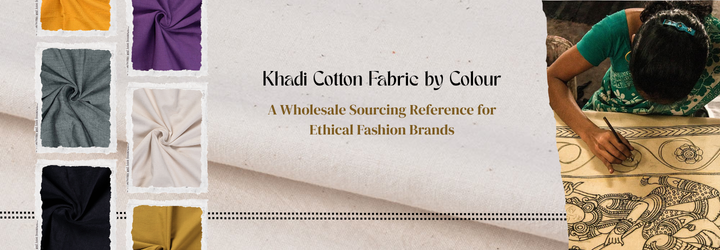
Khadi Cotton Fabric by Colour: A Wholesale Sourcing Reference for Ethical Fashion Brands

TL;DR
When sourcing khadi cotton fabric by colour, colour is more than a design choice. It affects dye method, lead time, MOQ, colorfastness, and fabric performance.
- Ivory / Off-White: shortest lead time, ideal for natural or overdye-ready collections
- Grey: versatile, high-demand neutral for everyday wear
- Indigo: available in natural or azo-free dyed options
- Mustard: strong seasonal colour with artisanal appeal
- Black: most consistent and commercially scalable shade
For wholesale buyers, the smartest starting point is to choose colour first, then confirm dye type, GSM, and sample yardage before bulk ordering.
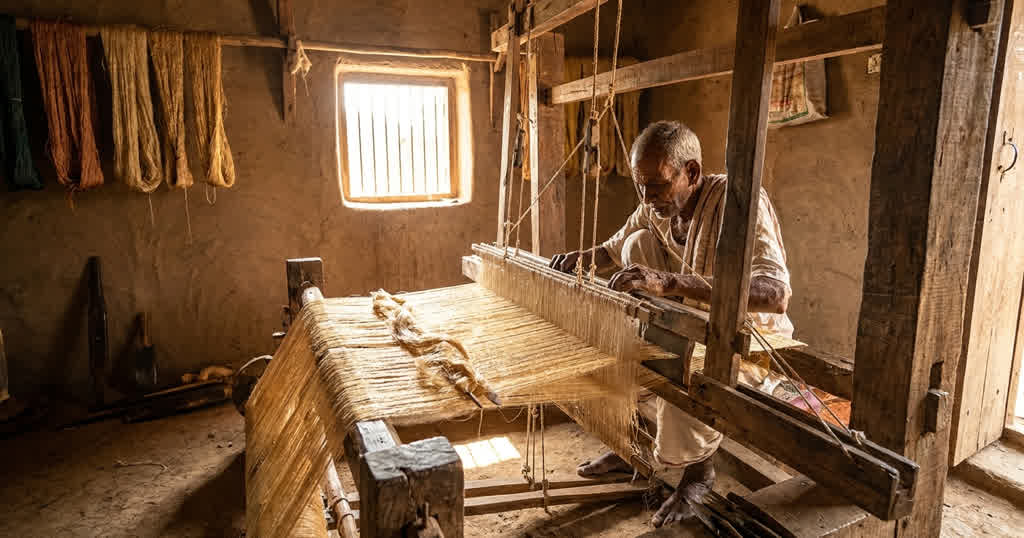
If you are building an ethical fashion collection, your fabric choices are your brand story. And when it comes to khadi cotton — hand-spun, hand-woven, and deeply rooted in India's artisan heritage — colour is not just an aesthetic decision. It determines dye method, lead time, minimum order requirements, and how well the fabric performs across your cut-and-sew process.
This guide is a practical wholesale sourcing reference for sustainable fashion labels, slow-fashion designers, and ethical apparel buyers who need to understand khadi cotton in its full colour range — from undyed ivory to deep indigo — before placing an order.
Market context worth noting: The global sustainable fashion market was valued at USD 10.40 billion in 2024 and is projected to reach USD 22.49 billion by 2032 — a CAGR of 10.25% (Fortune Business Insights, 2024). Within this wave, khadi sits at the premium, purpose-driven end: khadi product sales surged 447% from FY2013–14 to FY2024–25, reaching ₹1,70,551 crore — a signal that demand is structural, not seasonal.
Why Colour-First Sourcing Matters for Khadi Wholesale
Start With Colour, Not Fabric: The Smarter Way to Source Khadi
Most fabric sourcing begins with material — 'I need khadi cotton.' But for seasoned buyers, the workflow should begin with colour, because colour dictates nearly every downstream decision:
• Natural or undyed khadi has the shortest lead time and widest availability
• Azo-free synthetic dyes offer the broadest, most consistent colour palette
• Natural vegetable dyes (indigo, turmeric, madder, myrobalan) add provenance storytelling but require longer production windows
• Colour also affects GSM perception — deeper pigments can make the same weave feel denser and heavier
At Anuprerna, all yarn and fabric dyeing is done using azo-free, low-impact dyes — with a growing natural vegetable dye range of 15-18 shades, primarily for brands seeking full traceable, chemical-free provenance.
The Anuprerna Khadi Colour Range: A Sourcing Reference
The Complete Khadi Colour Palette: What Buyers Need to Know
Below is a buyer-oriented colour reference for Anuprerna's core khadi cotton palette. Each section covers what to expect in terms of dye process, MOQ, and application suitability.
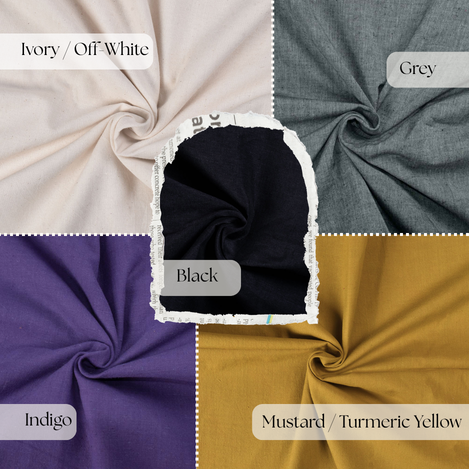
The Khadi Colour Spectrum
How Different Colours Impact Dyeing, Lead Time, and Fabric Performance
1. Ivory & Off-White Khadi
Ivory is khadi in its most natural form — hand-spun cotton with minimal processing, no bleaching, and either undyed or lightly treated. It retains the characteristic slub texture and natural cream tone of raw cotton.
- Dye method: Undyed / natural cotton colour
- Typical GSM range: 120–200 GSM depending on weave density
- Best for: Minimalist collections, base layers, natural dyeable stock for in-house colour work
- MOQ at Anuprerna: Low MOQ available — contact for current minimums
Off-White khadi is also the preferred base for brands that wish to overdye in-house or develop their own colour story on arrival.
2. Grey Khadi Cotton
Grey khadi — particularly medium and dark grey — has become a staple for contemporary sustainable labels. It reads as sophisticated and urban while retaining the raw-edge authenticity of handloom.
- Dye method: Azo-free low-impact dye
- Colorfastness: Good-to-excellent with GOTS-certified dyes; washing and rub fastness tested
- Best for: Everyday wardrobe staples, gender-neutral collections, layering pieces
Grey is consistently one of the highest-demand neutral shades in wholesale orders. Brands building year-round wardrobe essentials typically allocate 15–20% of their fabric budget to grey tones.
3. Indigo Khadi Cotton
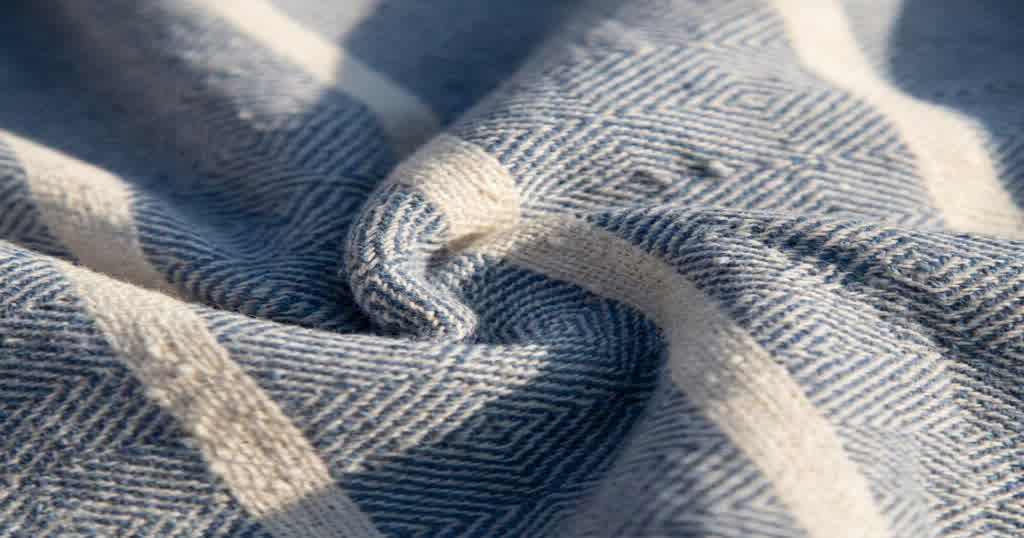
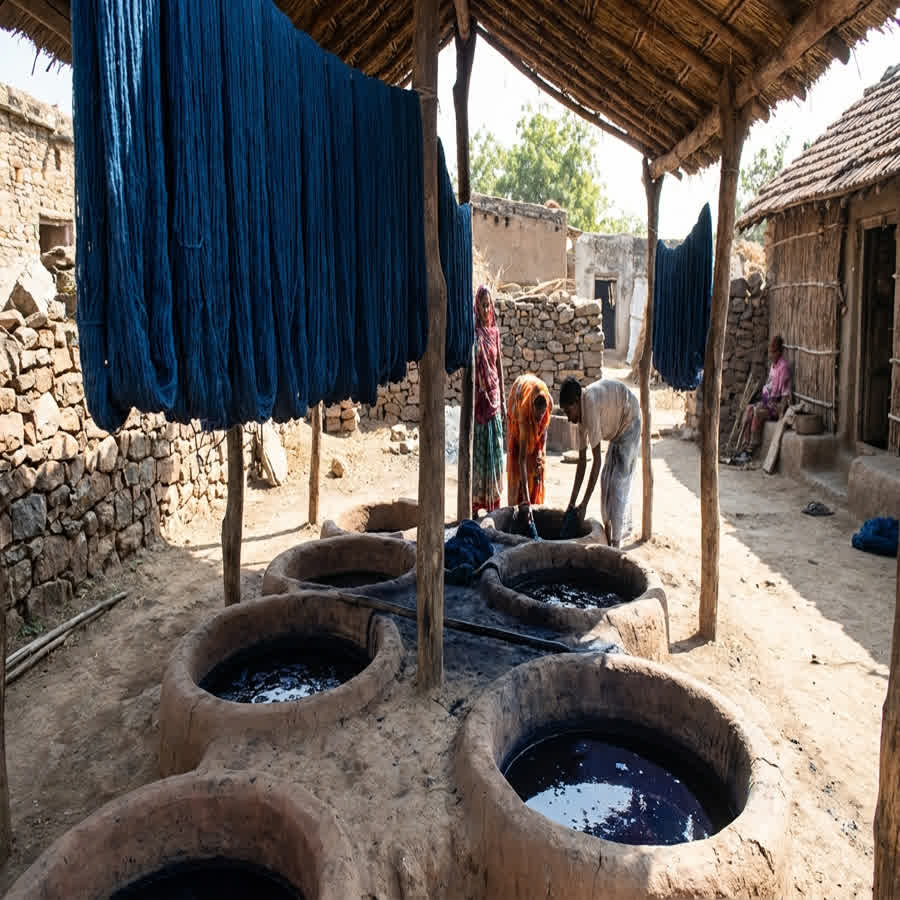
Indigo is one of the oldest and most globally recognised natural dyes, and its presence in a khadi collection signals authenticity to conscious consumers. At Anuprerna, indigo is available in both traditional vat-dyed natural form and as an azo-free synthetic indigo option for brands needing more consistent depth and colorfastness.
- Natural indigo: Deep, slightly uneven tone; fading over time adds character — highly valued in slow fashion
- Synthetic azo-free indigo: Consistent shade across batch, stronger colorfastness
- Typical shades: Light wash indigo, mid indigo, deep denim indigo
- Best for: Denim-alternative collections, Japanese-inspired capsules, utility workwear lines
Indigo's appeal is growing fast: GOTS-certified operations grew to 15,441 across 87 nations in 2024 (up 5.2%), reflecting how buyers are tightening their standards around verified natural dye processes.
4. Mustard & Turmeric Yellow Khadi
Mustard and warm yellow fabrics are seasonally driven — demand peaks in autumn-winter planning cycles — and have been a consistent bestseller for ethical fashion brands targeting European and North American markets.
- Dye method: Natural turmeric (for golden-yellow, lighter wash) or azo-free synthetic for richer, more stable mustard
- Note: Natural turmeric dye has lower colorfastness — best suited for brands that lean into the 'living dye' narrative
- Best for: AW capsule collections, festival or resort wear, standout statement pieces
5. Black Handloom Khadi Cotton
Black natural-dyed fabric presents specific technical challenges that buyers often raise: colorfastness, dye migration in washing, and batch consistency. These concerns are valid and worth addressing directly.
- Dye method: Azo-free synthetic dye (for deep, consistent black); natural iron + tannin mordant (for artisanal black with slight variation)
- Colorfastness: Azo-free synthetic black performs well at Wash Fastness Grade 4–5
- Best for: Classic wardrobe essentials, black-core collections, high-volume repeatable stock
Black is the most universally ordered shade across all B2B categories — apparel, accessories, and home. It typically represents 20–30% of a sustainable brand's fabric procurement.
Colour vs. Dye Method: A Quick Reference Table
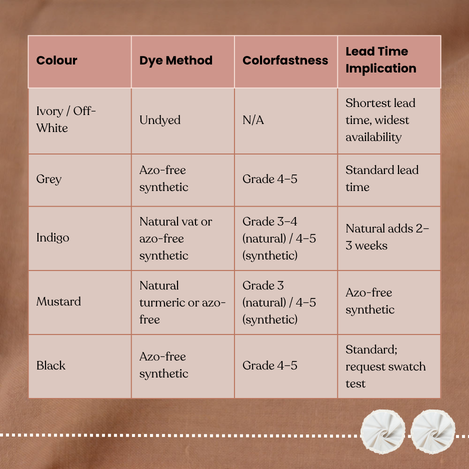
Colour vs Dye Method: What Changes in Performance and Lead Time
For wholesale buyers, understanding the relationship between colour and dye type saves sourcing time. Here is a simplified matrix:
Colour → Dye Method → Colorfastness → Lead Time Implication
- Ivory / Off-White → Undyed → N/A → Shortest lead time, widest availability
- Grey → Azo-free synthetic → Grade 6–7 → Standard lead time
- Indigo → Natural or azo-free synthetic → Grade 3–4 (natural) / 4–5 (synthetic) → Natural adds 2–3 weeks
- Mustard → Natural turmeric or azo-free → Grade 3 (natural) / 4–5 (synthetic) → Plan seasonally
- Black → Azo-free synthetic → Grade 3–4 → Standard; request swatch test
What Makes Anuprerna's Khadi Cotton Different for Wholesale Buyers
Why Buyers Choose Anuprerna: Process, Transparency, and Scale
Beyond colour, wholesale buyers consistently ask about three things: process transparency, artisan traceability, and production consistency.
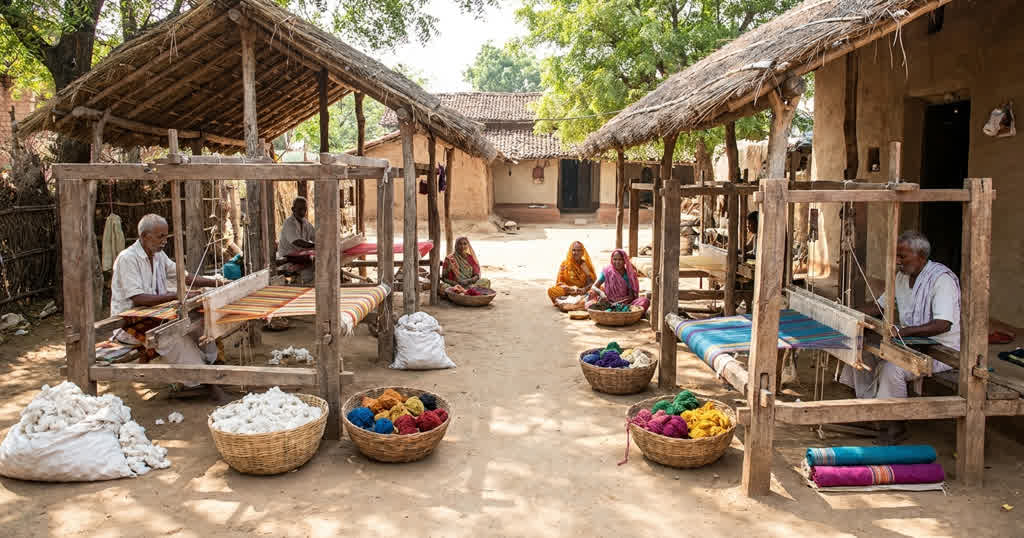
- 500+ skilled Bengal handloom weavers — all employed with fair wages and safe conditions, verified through third-party impact measurement
- Low MOQ structure — designed for sustainable brands launching capsule collections or testing new colour stories before scaling
- ArtisanFlow platform — Anuprerna's proprietary supply chain tool that gives B2B partners real-time visibility into production stages
- Azo-free dyes as standard — with a growing natural dye range for brands requiring fully chemical-free provenance
- Swatch ordering available — critical for colour-matching and fabric handle review before committing to bulk
Industry context: The sustainable fabrics market is forecast to grow by USD 28.9 billion at 8.6% CAGR between 2024 and 2029 (Technavio). Buyers who lock in reliable artisanal supply chains now are better positioned as demand accelerates.
How to Start Your Khadi Wholesale Order by Colour
How to Source Khadi by Colour: A Step-by-Step Buyer Workflow
The recommended sequence for new wholesale partners:
- Step 1 — Order a SwatchKit: Request colour swatches in your shortlisted shades. Evaluate handle, weight, and tone under your studio lighting conditions.
- Step 2 — Specify your dye preference: Inform the Anuprerna team whether you need azo-free synthetic, natural dye, or undyed. This affects pricing, lead time, and certifications available.
- Step 3 — Confirm GSM and width: Different colours may be available in different weave weights. Confirm your technical requirements before sample yardage.
- Step 4 — Request sample yardage: Test in your production environment — wash, cut, and sew a sample garment before committing to bulk.
- Step 5 — Place wholesale order: Once sample is approved, confirm colour, quantity, and delivery schedule with the Anuprerna wholesale team.
Ready to Source Khadi Cotton by Colour?
The Final Checks Before You Commit to Bulk Khadi Orders
Anuprerna's SwatchKit lets you physically evaluate khadi cotton in every shade before placing a wholesale order. Request yours today and see, feel, and test the difference that artisan-made fabric makes in your finished garments.
frequently asked questions
Can I order multiple colours in a single wholesale shipment?
Yes. Anuprerna's low MOQ structure means you can order different colour options within a single shipment, provided each colour meets the minimum per-colour threshold. Contact the team for current minimums by fabric type.
Do you offer custom colour matching for brand-specific shades?
Custom colour development is available for established wholesale partners. This typically requires a minimum commitment and a dye matching process with swatch approval. Inquire via the wholesale contact form.
How do natural-dyed khadi fabrics perform in commercial wash testing?
Natural-dyed fabrics will show some shade evolution over multiple washes — this is inherent to the process and often a desired characteristic for slow fashion brands. If your end-use requires Grade 4+ colorfastness across all wash conditions, azo-free synthetic dyed versions are recommended.
What certifications are available for khadi cotton wholesale orders?
Anuprerna's standard palette uses GOTS-certified, azo-free dyes. Natural dye orders can be supported with additional documentation on dye source and process. Reach out to discuss specific certification requirements for your market (EU, US, UK).
More Blogs
why organic fabric suppliers are growing in india
jacquard fabric in modern fashion
how silk manufacturers preserve traditional craftsmanship
indian fabric wholesale: a guide to sourcing handwoven textiles
how indian fabric exporters meet global quality standards
jacquard vs embroidery: what's the difference?