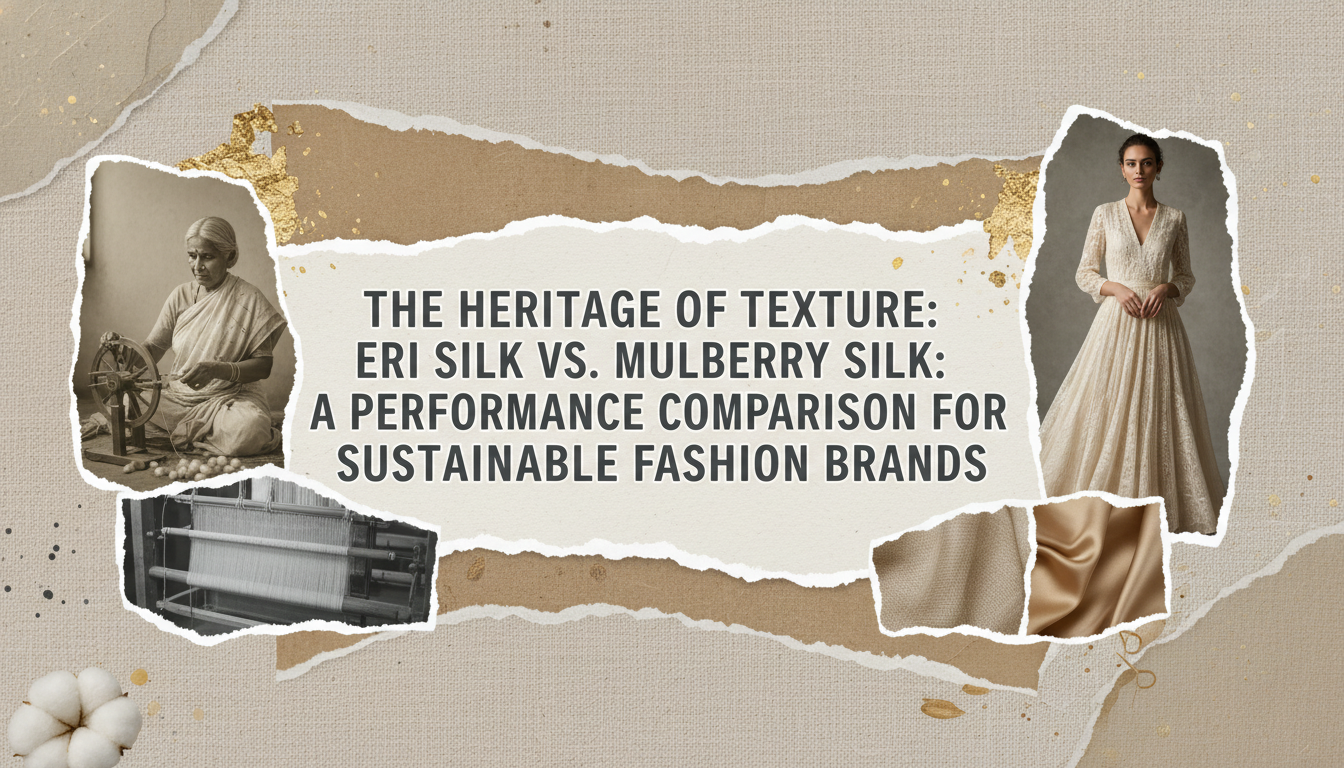
Eri Silk vs. Mulberry Silk: A Performance Comparison for Sustainable Fashion Brands

In the evolving landscape of global fashion, the shift toward radical transparency and ethical sourcing is no longer a niche trend, it is a B2B imperative. For designers and sustainable brands, choosing the right material involves balancing luxury aesthetics with a low environmental footprint and high social impact. Among the most prestigious fibers in the world, silk remains a top choice, but not all silks are created equal.
The debate often centers on Eri silk vs Mulberry silk. While Mulberry silk has long been the industry standard for high-shine luxury, Eri silk, often referred to as “the fabric of peace” is rapidly gaining traction among eco-conscious labels. But how do they truly compare in terms of performance, durability and brand storytelling?
This comprehensive guide delves into the technical and ethical nuances of these two extraordinary fibers. Whether you are looking for silk manufacturers to scale your production or seeking to understand the unique peace silk properties that set Eri apart, this comparison will provide the insights needed to make an informed decision for your next collection.
The Origin Story: Ahimsa vs. Conventional Sericulture
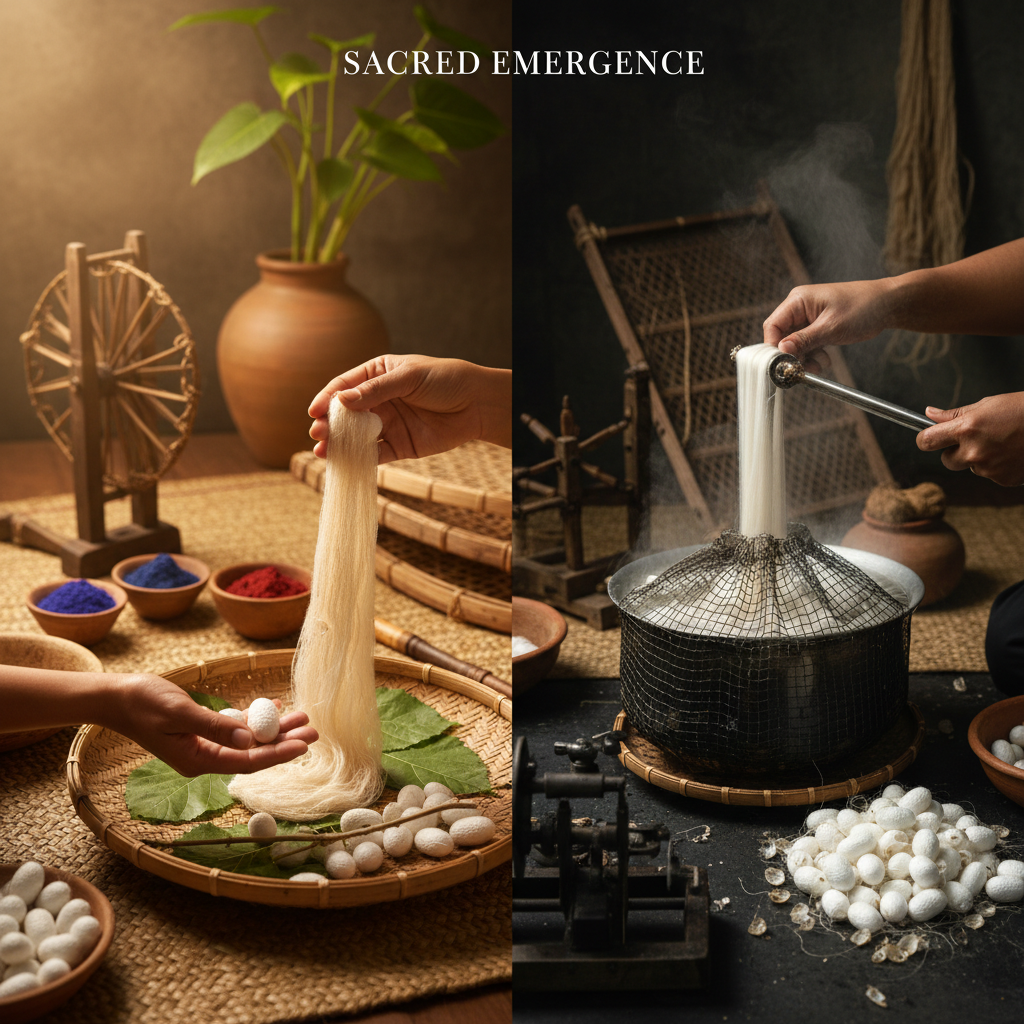
To understand the performance of these fabrics, one must first look at how they are birthed. The fundamental difference between Eri silk vs Mulberry silk lies in the lifecycle of the silkworm and the harvesting process.
Mulberry Silk: The Filament Standard
Mulberry silk is produced by the Bombyx mori silkworm, which feeds exclusively on mulberry leaves. In conventional sericulture, the cocoons are boiled while the pupae are still inside to preserve the long, continuous filament. This results in a perfectly smooth, uniform thread. While this method produces the high-sheen fabric we often associate with "luxury," it has faced scrutiny from ethical brands due to the harm caused to the silkworms.
Eri Silk: The "Peace Silk" Pioneer
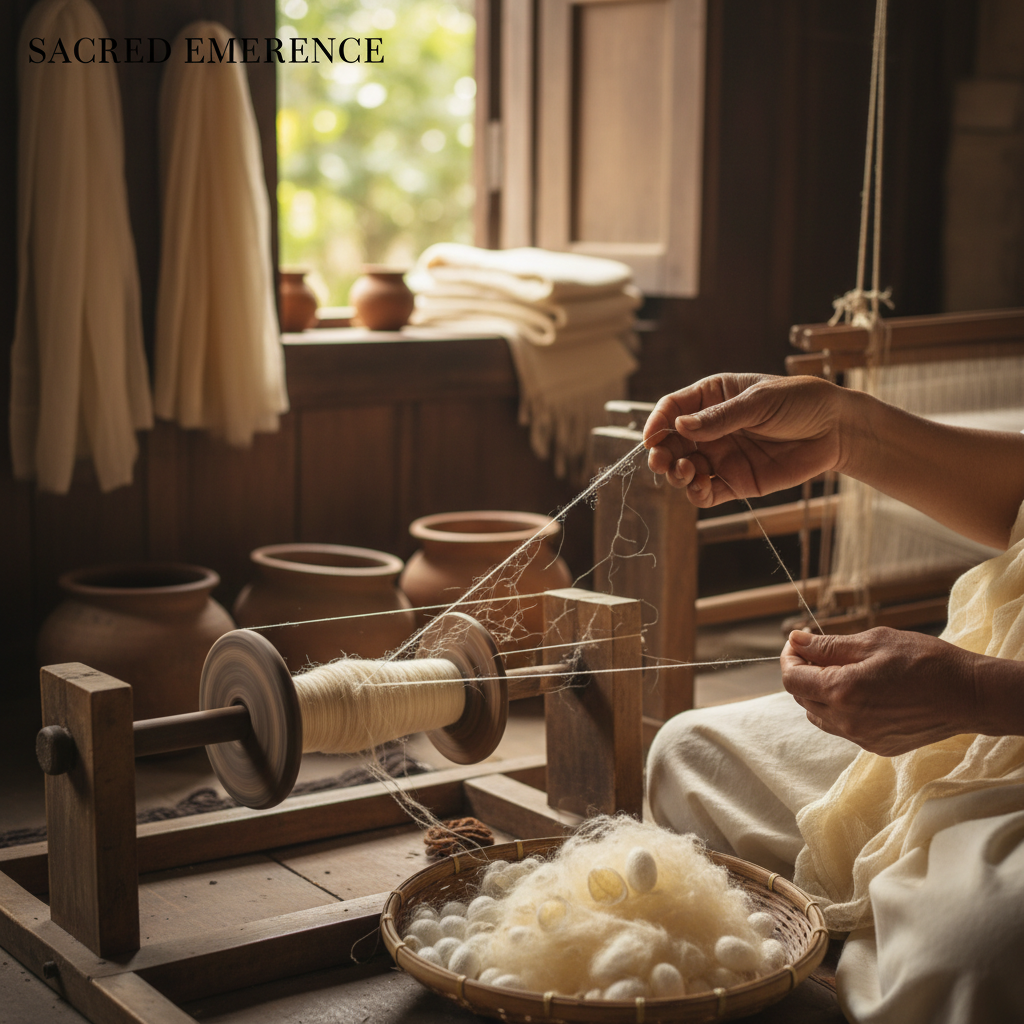
Eri silk, derived from the Samia ricini moth, offers a radically different approach. Unlike Mulberry silk, Eri is a "staple fiber." The moth is allowed to emerge naturally from the cocoon, leaving behind a jagged hole. Because the moth is not harmed, Eri silk is the primary variety of "Ahimsa Silk" or "Peace Silk."
From a B2B perspective, this "Peace Silk" narrative is a powerful marketing tool. Brands sourcing from silk fabric suppliers who specialize in Eri silk can guarantee a cruelty-free supply chain, which resonates deeply with the modern, conscious consumer.
Expert Tip: When sourcing Eri silk, ensure your supplier follows authentic Ahimsa practices. At Anuprerna, we work directly with artisan communities in East India to ensure the "Peace Silk" integrity is maintained from cocoon to loom.
Performance Comparison: Texture, Thermal Properties, and Durability
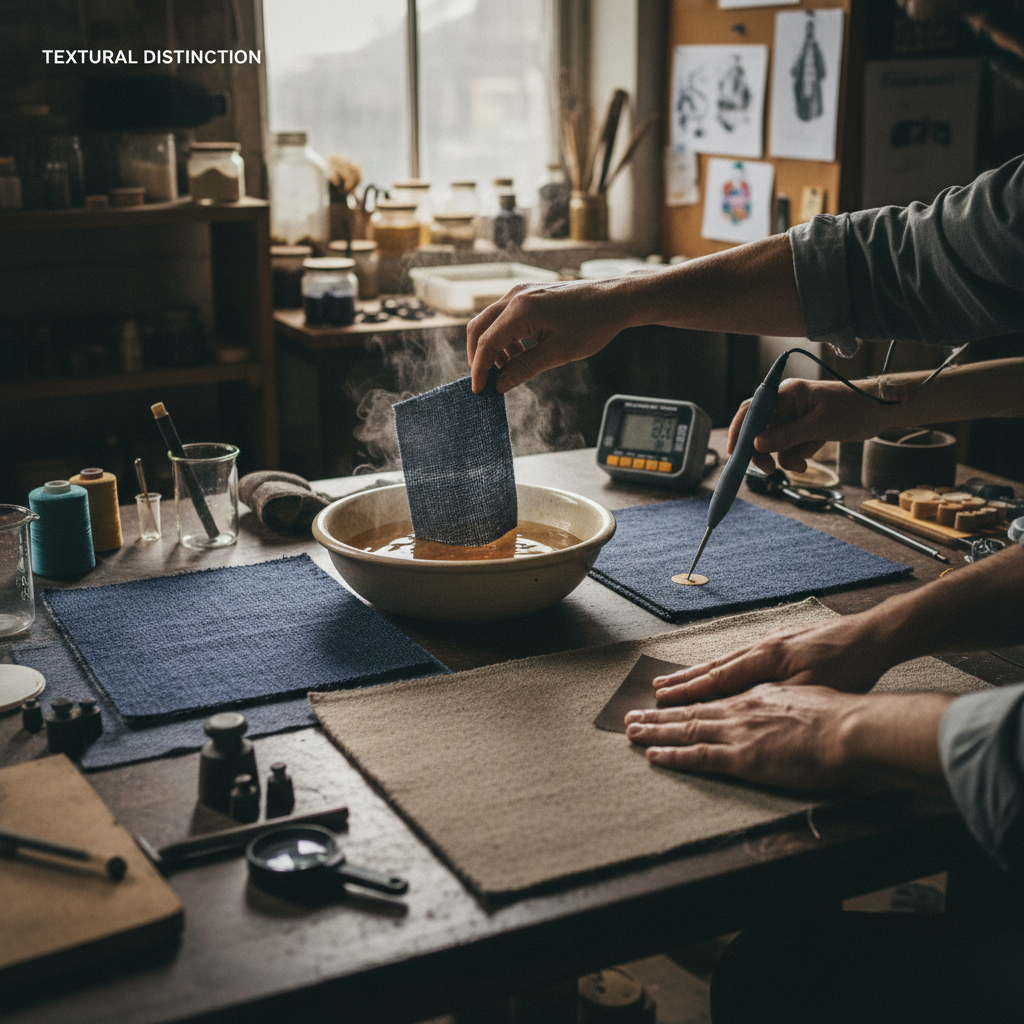
1. Texture and Aesthetic
- Mulberry Silk: Known for its high luster, slippery drape, and "shimmer." It is the go-to for evening gowns, scarves, and high-end lining.
- Eri Silk: Often mistaken for fine wool or heavy cotton. It has a matte finish, a soft, textured hand-feel, and a subtle "rustic" elegance. It does not have the typical "silk shine," making it ideal for contemporary, understated luxury.
2. Thermal Regulation
Eri silk is uniquely isothermal. Due to its porous nature and staple fiber structure, it keeps the wearer cool in the summer and warm in the winter. This makes it a four-season fabric, providing a significant advantage over Mulberry silk, which can sometimes feel clammy in high humidity or fail to provide warmth in cold climates.
3. Durability and Maintenance
Eri silk is one of the strongest and most durable silks available. It is heavier than Mulberry silk and becomes softer with every wash. Unlike Mulberry silk, which often requires dry cleaning to maintain its sheen and structure, many Eri silk blends can be hand-washed, making them more practical for everyday sustainable wear.
For brands interested in exploring these weights, viewing Indian Premium Silk Fabric Swatches can help in understanding the GSM (Grams per Square Meter) differences between these varieties.
Eri Silk vs Tussar Silk: Understanding the Wild Silk Spectrum

Designing for Sustainability: Why Eri Silk Wins for Modern Brands
For a sustainable brand, the choice of eri silk goes beyond the physical fabric, it’s about the socio-economic impact.
1. Low Carbon Footprint
Eri silk production requires significantly less water and chemicals than conventional Mulberry silk. The castor plants that Eri silkworms feed on are hardy and often grown without synthetic pesticides.
2. Supporting Artisan Communities
In East India, particularly in Assam and West Bengal, Eri silk is a cottage industry. It provides a primary source of income for women weavers and tribal communities. By choosing Eri silk, B2B brands contribute directly to the preservation of ancient hand-weaving techniques.
3. Versatility in Blending
Eri silk blends beautifully with other natural fibers. A Plain Natural Tussar Eri Silk Blend offers the best of both worlds: the strength and matte finish of Eri with the subtle luster and drape of Tussar.

Common Mistakes to Avoid When Sourcing Eri Silk

When moving from Mulberry to Eri silk, designers often encounter a few hurdles. Here is how to navigate them:
- Expecting "Silk Shine": Do not source Eri silk if you are looking for a high-gloss finish. Its beauty lies in its matte, organic appearance.
- Ignoring Shrinkage: Like many handwoven natural fibers, Eri silk can have a slight shrinkage rate. Always request pre-washed samples or factor in shrinkage during the pattern-making stage.
- Underestimating Weight: Eri silk is denser than Mulberry. A 60 GSM Mulberry fabric will feel much thinner than a 60 GSM Eri fabric due to the fiber's "loft."
- Assuming Uniformity: Because Eri is often hand-spun and handwoven, slight variations in texture (slubs) are part of its character. These should be celebrated as a mark of authenticity, not treated as defects.
Pro Tip: For high-end shirting or summer dresses, look for Eri silk blended with fine cotton. This enhances the breathability while maintaining the luxurious "silk" label on your garment tag.
Technical Specifications: What You Need to Know
If you are communicating with silk manufacturers, use these technical pointers to ensure you get the right quality:
- Yarn Count: Eri silk is usually measured in Ne or Nm. Hand-spun Eri yarn tends to be thicker (10s to 30s), while mill-spun Eri can be much finer (60s to 80s).
- Weave Type: Eri performs exceptionally well in Plain weave, Twill, and Jamdani techniques.
- Dyeing: Eri silk has a high protein content, making it excellent for acid dyes and natural dyes alike. It holds color better than almost any other silk variety.
Conclusion
Choosing between Eri silk vs Mulberry silk ultimately depends on your brand's identity. If your goal is high-glamour, traditional luxury, Mulberry silk remains a stalwart. However, if your brand stands for sustainability, ethical craftsmanship, and a "quiet luxury" aesthetic, eri silk is the superior choice.
Its unique peace silk properties, combined with its incredible thermal performance and durability, make it a versatile powerhouse for the modern wardrobe. By integrating Eri silk into your collections, you aren't just selling a garment; you are sharing a story of non-violence, artisan heritage, and environmental stewardship.
Ready to experience the texture of authentic Indian silk? Explore our curated range of Tussar Silk and Mulberry Silk or contact us to discuss custom Eri silk developments for your sustainable brand.
most asked questions
Is Eri silk more expensive than Mulberry silk?
Typically, Eri silk can be slightly more expensive or comparable to high-quality Mulberry silk. The cost is driven by the labor-intensive "Peace Silk" process and the fact that it is often hand-spun and handwoven. However, its durability and four-season wearability often provide better long-term value for the consumer.
How can I tell if a fabric is genuine Eri silk?
Genuine Eri silk has a distinct "woolly" feel and a matte finish. It is heavier than Mulberry silk and has a slight "crunch" when squeezed. To be certain, look for the "Silk Mark" or source from transparent silk fabric suppliers like Anuprerna who provide traceability back to the weaving clusters.
Does Eri silk wrinkle easily?
Eri silk is remarkably wrinkle-resistant compared to Mulberry silk and linen. Due to its natural elasticity and staple fiber structure, it recovers from creases quickly, making it an excellent choice for travel-friendly sustainable luxury collections.
Can Eri silk be used for vegan fashion?
While Eri silk is "cruelty-free" and "non-violent" because the moth is not killed, it is still an animal-derived product. Therefore, it is not considered "vegan" by strict standards. However, it is the preferred choice for "PETA-Approved" and ethical fashion advocates who prioritize animal welfare without moving to synthetic petroleum-based fibers.
What are the best care instructions for Eri silk garments?
Eri silk is quite hardy. For best results, we recommend hand washing in cold water with a mild, pH-neutral detergent. Avoid wringing the fabric. Instead, lay it flat to dry in the shade. Ironing should be done on the "silk" setting while the fabric is slightly damp to maintain its soft texture.
More Blogs
why organic fabric suppliers are growing in india
jacquard fabric in modern fashion
how silk manufacturers preserve traditional craftsmanship
indian fabric wholesale: a guide to sourcing handwoven textiles
how indian fabric exporters meet global quality standards
jacquard vs embroidery: what's the difference?