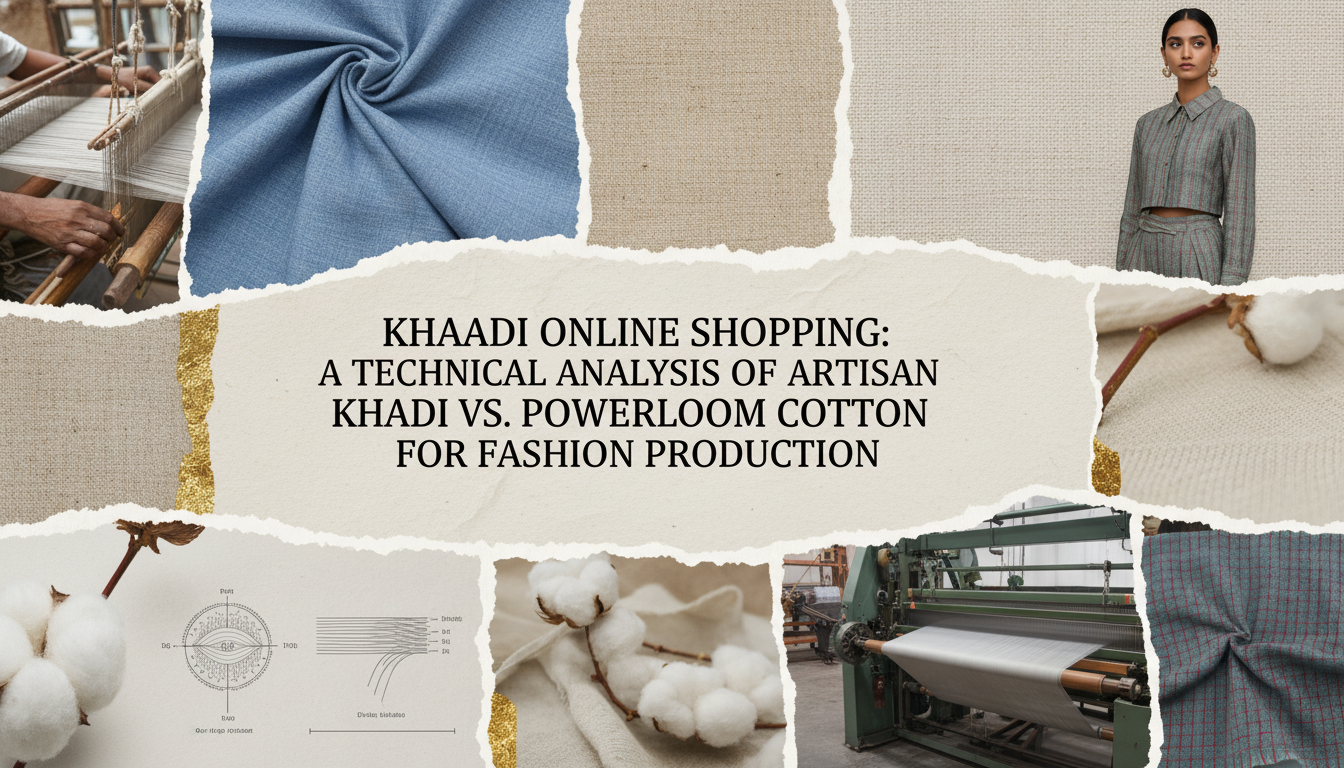
Khaadi Online Shopping: Technical Analysis of Khadi vs. Powerloom Cotton for Fashion Production

In the rapidly evolving landscape of sustainable fashion, designers and B2B buyers are increasingly faced with a pivotal choice: the heritage-rich, artisanal appeal of Khadi or the high-efficiency, uniform output of powerloom cotton. While both fabrics serve the global apparel market, their technical properties, environmental footprints and production logic are worlds apart.
For a fashion brand looking to integrate "slow fashion" values into their collections, the decision isn't merely aesthetic but is a technical one that affects garment longevity, wearer comfort and brand storytelling. As khaadi online shopping becomes more accessible to international designers, understanding the structural nuances between handspun and machine-made textiles is essential.
This guide provides an in-depth technical analysis of Khadi versus powerloom cotton, examining fiber integrity, weave density, and scalability. Whether you are looking to buy khadi fabric online for a boutique capsule or seeking reliable khadi garments manufacturers for a global line, this analysis will equip you with the data needed to make an informed procurement decision.
The Structural Core: Handspun vs. Machine Made Fibers
The primary distinction between Khadi and powerloom cotton begins at the yarn stage. To understand why Khadi behaves differently during the sewing and dyeing process, we must look at how the fibers are twisted.
The Physics of Handspinning
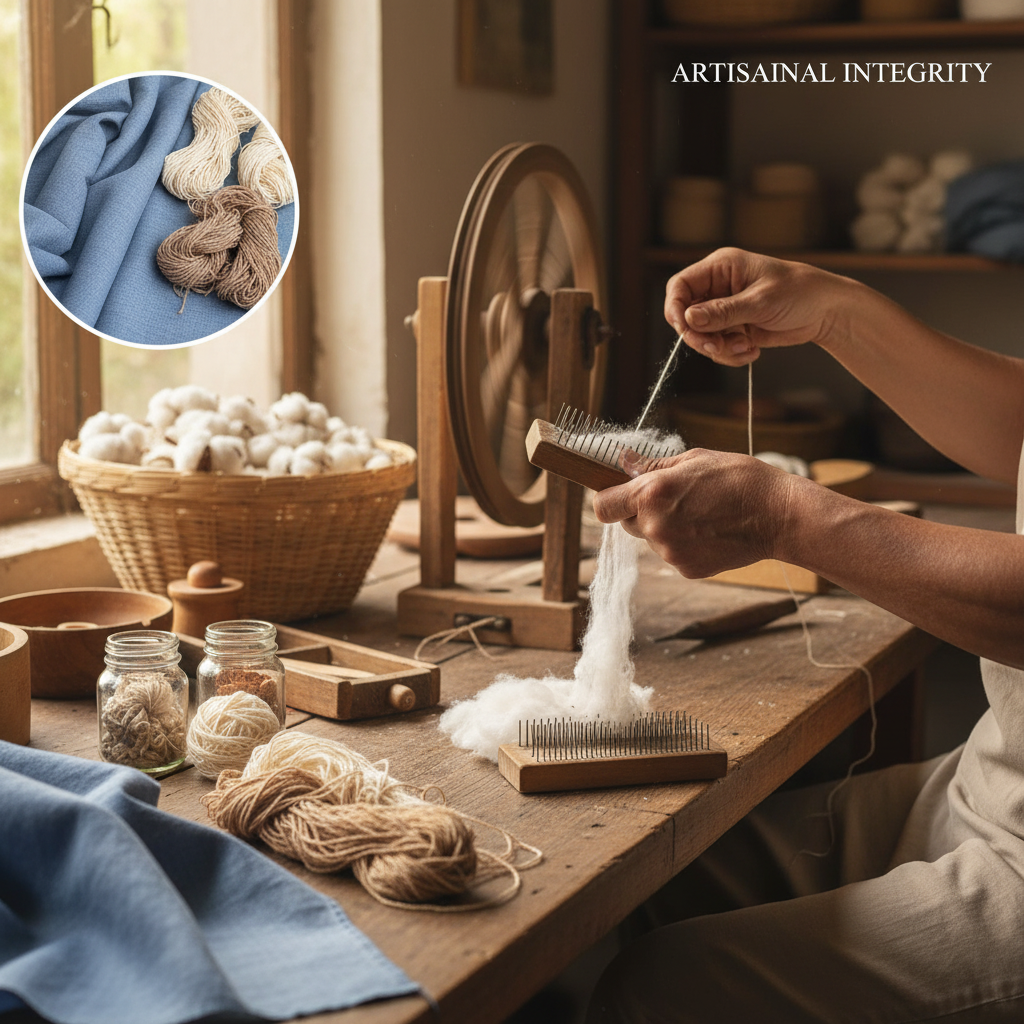
Khadi is defined by its handspun nature. Using a Charkha (spinning wheel), artisans twist raw cotton fibers into yarn. This manual process is inherently low-tension. Because the human hand fluctuates slightly in pressure, the resulting yarn contains "slubs"—natural variations in thickness.
Technically, these slubs are not defects and are functional features. The low-tension spinning preserves the natural staple length of the cotton fiber and allows more air to be trapped between the fibers. This is why Khadi is often referred to as a "breathable" fabric. In contrast, machine-spinning (used for powerloom cotton) involves high-velocity rotors that apply intense tension, often stretching or slightly damaging the fiber's cuticle to achieve a perfectly uniform diameter.
Weave Density and Air Permeability
When comparing Handspun vs machine made textiles, air permeability is a critical metric. Because handspun yarn is rounder and less compressed, the resulting weave, even at a high GSM, remains porous.
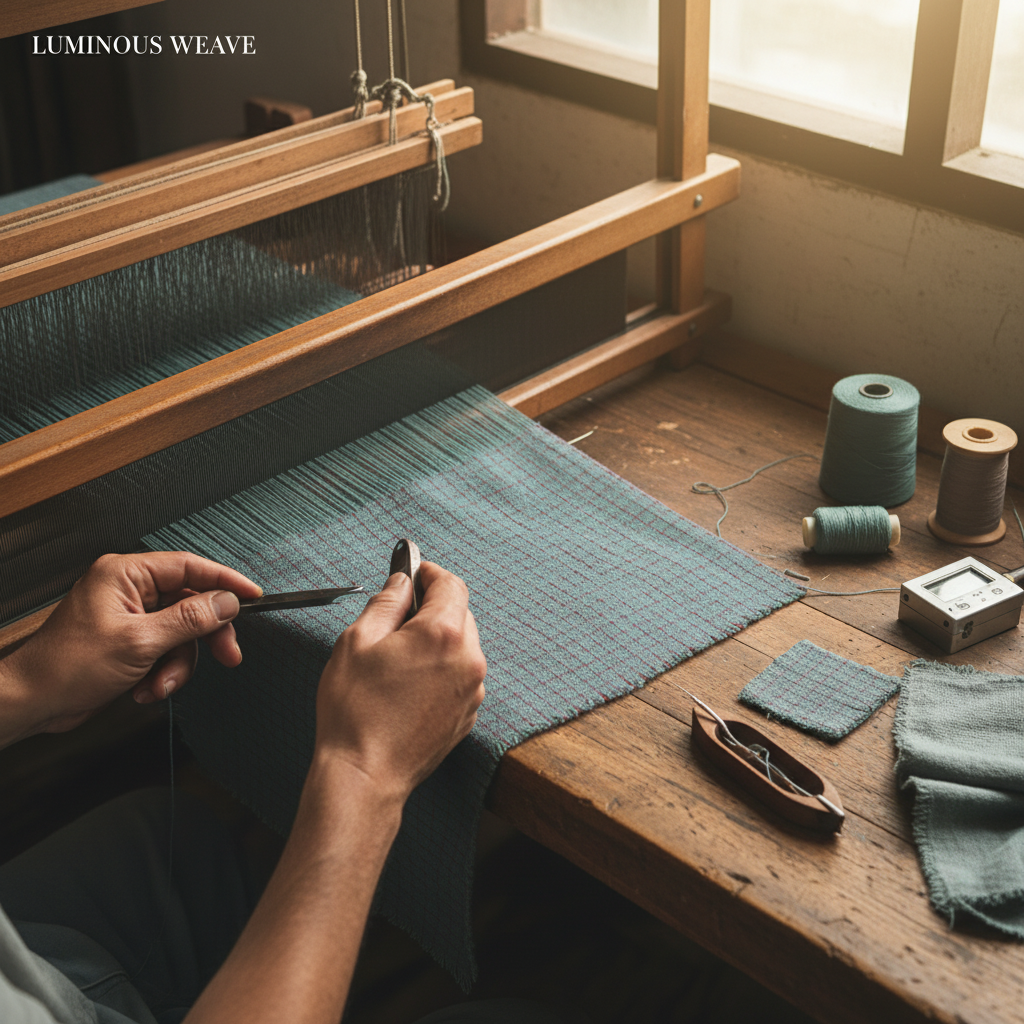
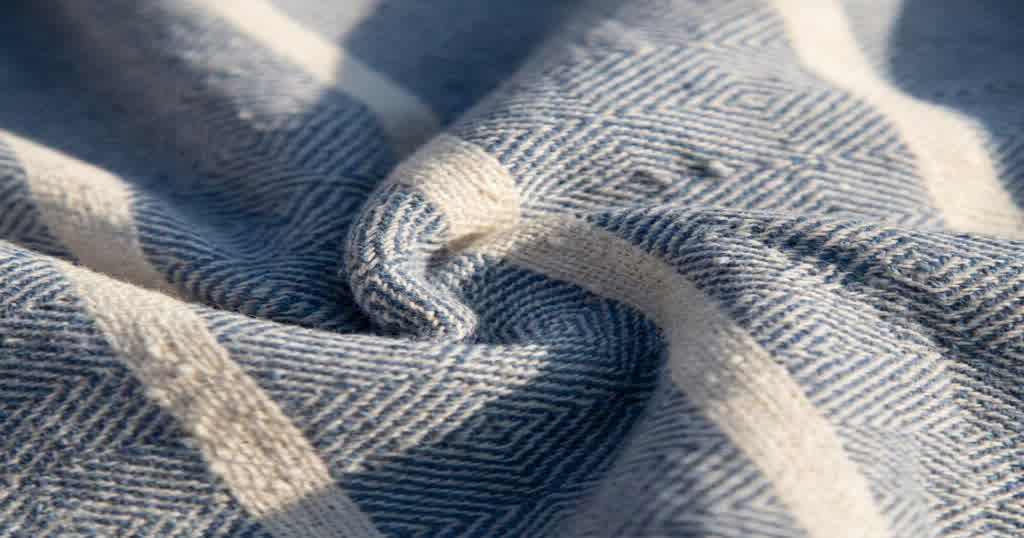
For instance, a Check Teal Khadi Fabric (200 GSM) offers a thermal regulation that powerloom fabrics of the same weight cannot match. The "air pockets" created by the hand-weaving process act as natural insulators, keeping the wearer cool in summer and warm in winter. Powerloom fabrics, woven at high speeds on automated looms, create a much tighter, flatter interlacement that can sometimes feel "plasticky" or stiff if not treated with chemical softeners.
Expert Tip: When sourcing for summer collections, prioritize lower GSM Khadi, such as our Handspun Khadi Yarn Dyed Fabric (75 GSM), which provides maximum translucency and breathability compared to mill-made cambric.
Textile Durability Comparison: Longevity in Fashion Production
Tensile Strength and Stress Recovery
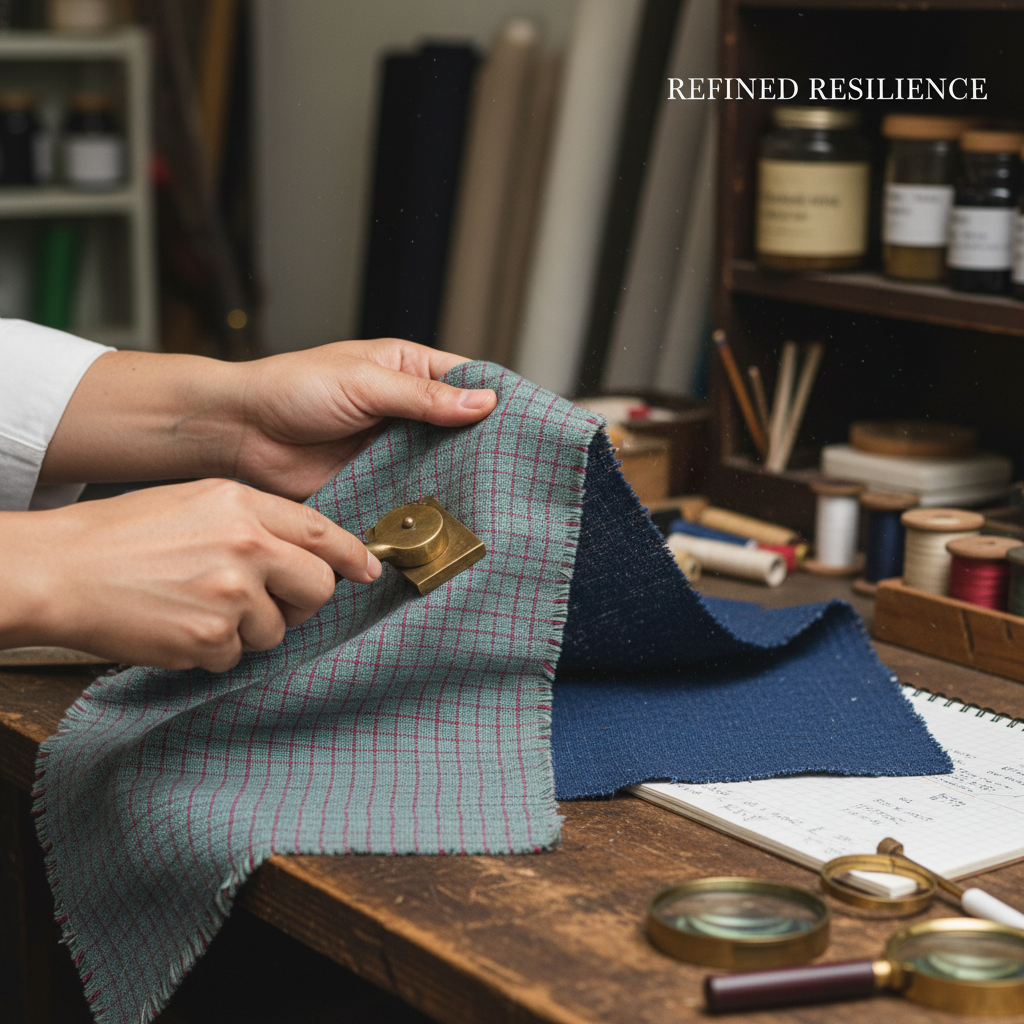
Powerloom cotton is woven under high mechanical tension. While this results in a high initial tensile strength, the fibers are "stressed." Over multiple wash cycles, these fibers tend to lose their elasticity and can become brittle.
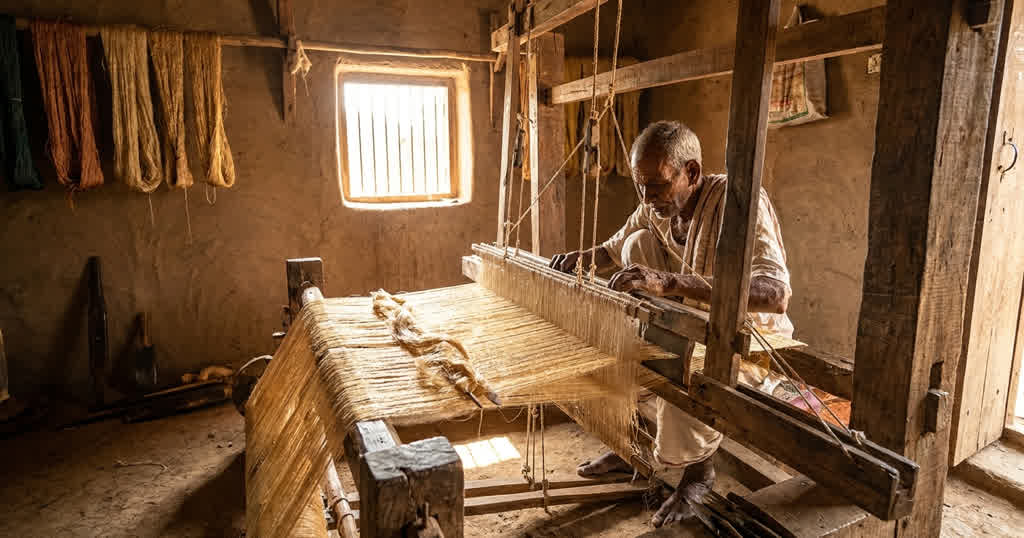
Khadi, being handwoven on a pit loom or frame loom, undergoes significantly less mechanical stress during production. The fibers retain their natural oils and resilience. Interestingly, Khadi is one of the few fabrics that actually improves with age. The more it is washed, the softer and more durable it becomes, as the fibers settle into their interlaced positions without the restrictive "memory" of high-tension machine weaving.
Pilling and Abrasion Resistance
Because powerloom yarns are often treated with "sizing" agents (starches and chemicals) to withstand high-speed weaving, they may look sleek initially but can suffer from pilling after the sizing washes off. Khadi's handspun yarns have a more complex surface area, which, while appearing "rougher" to the untrained eye, is highly resistant to the friction-based pilling common in mass-produced synthetic-cotton blends.
For designers, this means Khadi garments offer a higher "Perceived Value" over time, a crucial factor for brands focusing on sustainability and "buy less, buy better" philosophies. Understanding what authentic Khadi really means is the first step in communicating this value to the end consumer.
Sourcing Challenges: Navigating Khaadi Online Shopping for B2B
Identifying Authenticity in Bulk
When engaging in khaadi online shopping for production, buyers must look for specific technical markers:
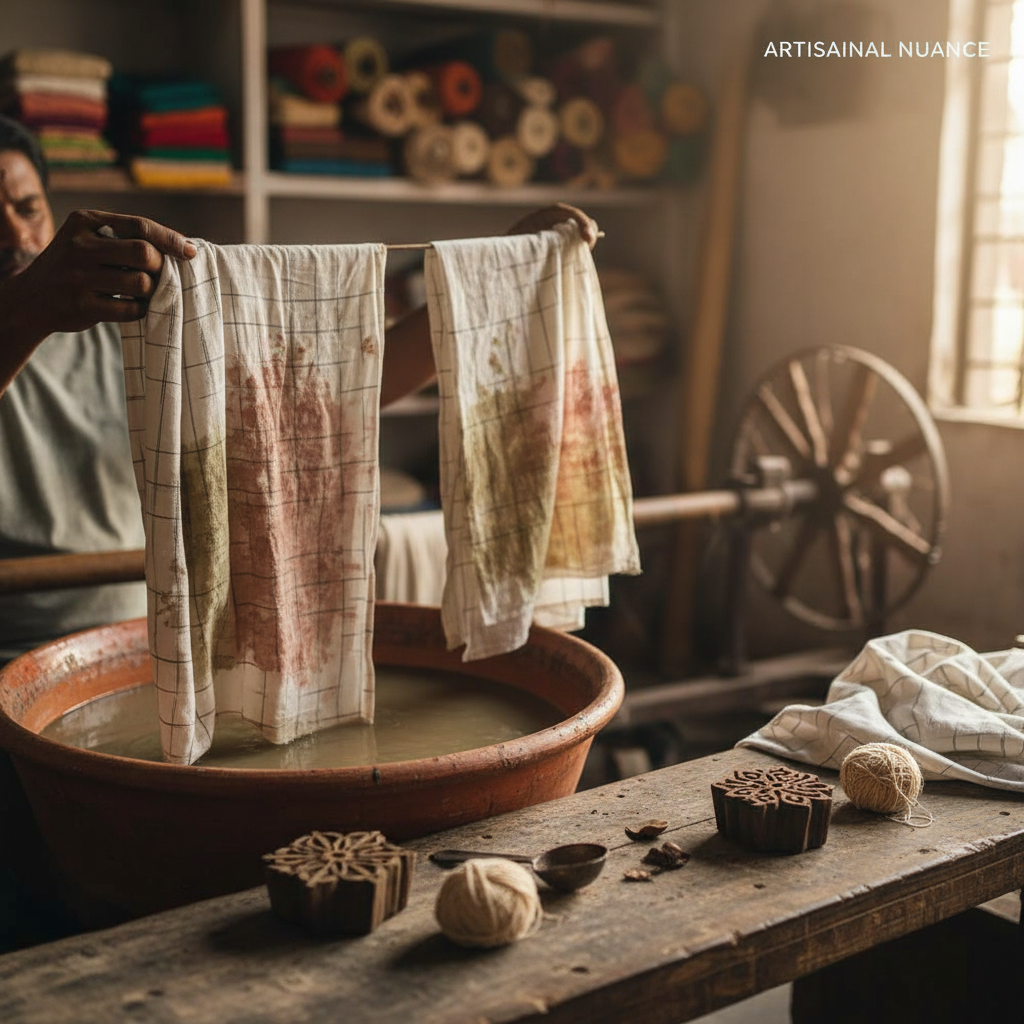
- The Selvedge: Handwoven Khadi often has a slightly uneven or soft selvedge, whereas powerloom fabrics have a very sharp, pin-marked edge from the mechanical loom's grippers.
- The Slub Pattern: If the slubs (thick and thin parts of the yarn) repeat in a perfect mathematical pattern, it is likely a machine-made "slub effect" fabric rather than genuine handspun Khadi.
- Light Penetration: Hold the fabric against light. Handspun, handwoven fabric will show slight variations in the density of the weave, creating a "organic" grid.
To assist B2B buyers, Anuprerna provides 7 quality tests for authentic Khadi sourcing to ensure that the premium paid for hand-craftsmanship translates into genuine artisan-made material.
Common Mistakes to Avoid in Khadi Sourcing
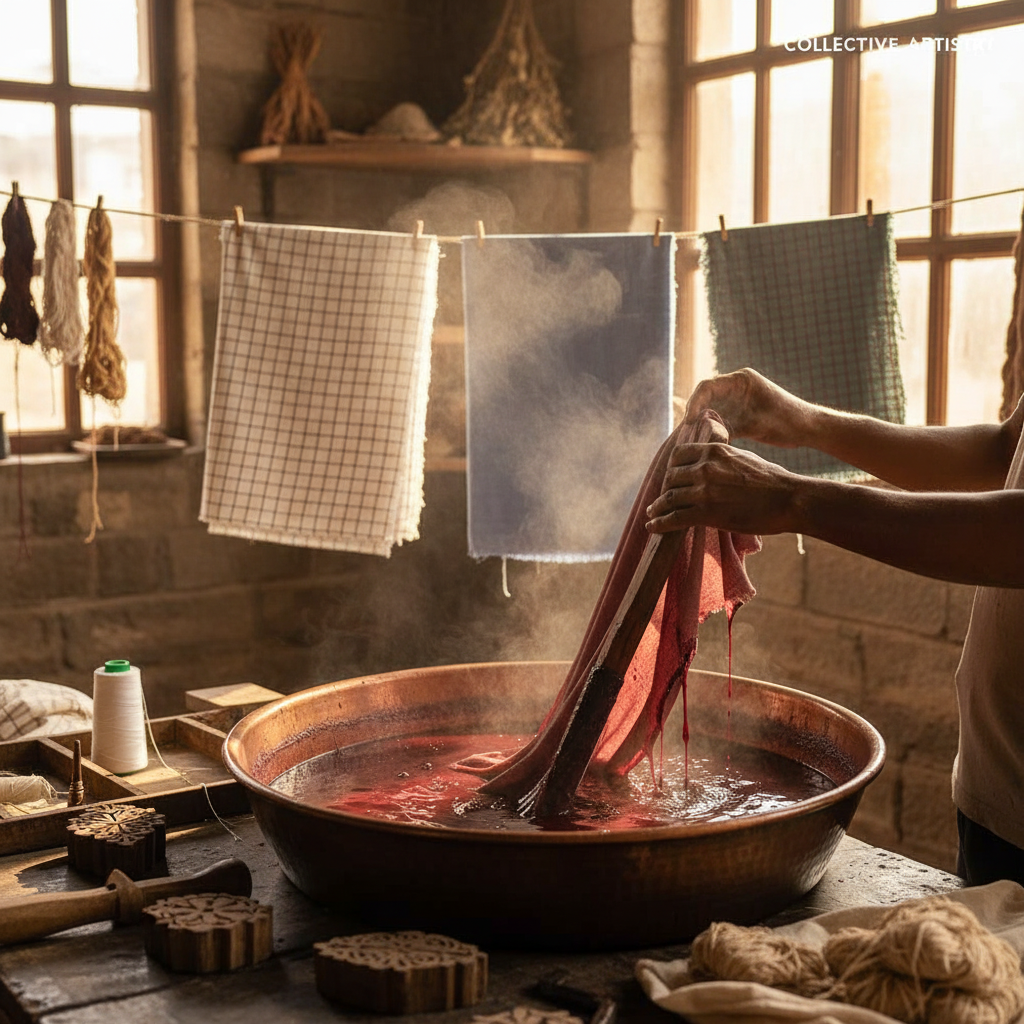
- Expecting 100% Color Uniformity: Khadi is often dyed in smaller vats. If you require 500 meters of the exact same dye lot, you must coordinate with khadi garments manufacturers who specialize in large-batch hand-dyeing or accept the "shading" that adds to the fabric's charm.
- Ignoring Shrinkage: Handspun fabrics have a higher shrinkage rate (typically 5-10%) than pre-shrunk powerloom fabrics. Always account for this in your pattern cutting or request pre-shrunk (sanforized) options.
- Overlooking GSM Variability: A Handspun Cotton Khadi (85 GSM) may feel slightly heavier than an 85 GSM powerloom cotton because of the yarn's volume. Always request swatches before bulk orders.
Scalability and the Role of Khadi Garments Manufacturers
One of the biggest hurdles in the Khadi vs powerloom debate is scalability. Powerlooms can produce thousands of meters a day, whereas a single weaver produces about 4-5 meters of Khadi daily.
Technical Comparison Table: Khadi vs. Powerloom
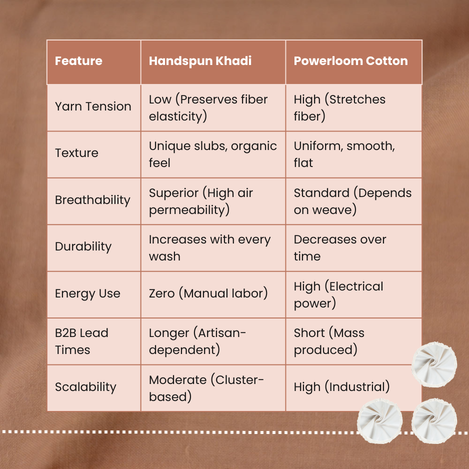
The B2B Solution: Planned Production
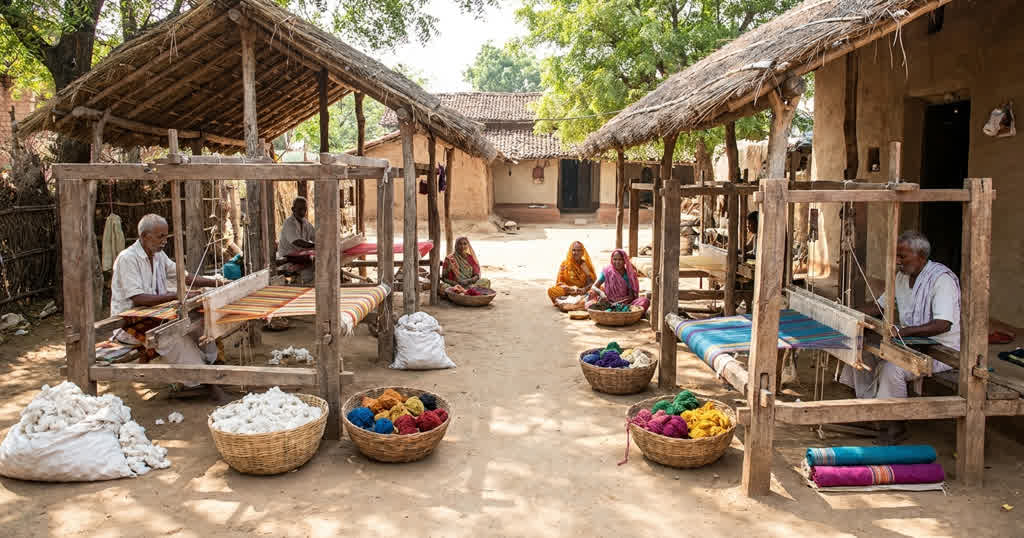
For a fashion brand, the lack of "instant" bulk availability is actually a marketing strength—it signifies exclusivity. However, from a production standpoint, it requires better planning. Leading khadi garments manufacturers like Anuprerna bridge this gap by managing decentralized clusters of artisans. By distributing a large order across 50-100 weaver households, we can achieve production volumes that meet the needs of mid-to-large scale fashion labels while maintaining the hand-made integrity of the cloth.
Environmental Impact: The Carbon Neutral Textile
From a technical sustainability perspective, Khadi is the clear winner.
- Zero Electricity: Hand-spinning and hand-weaving require zero units of electricity.
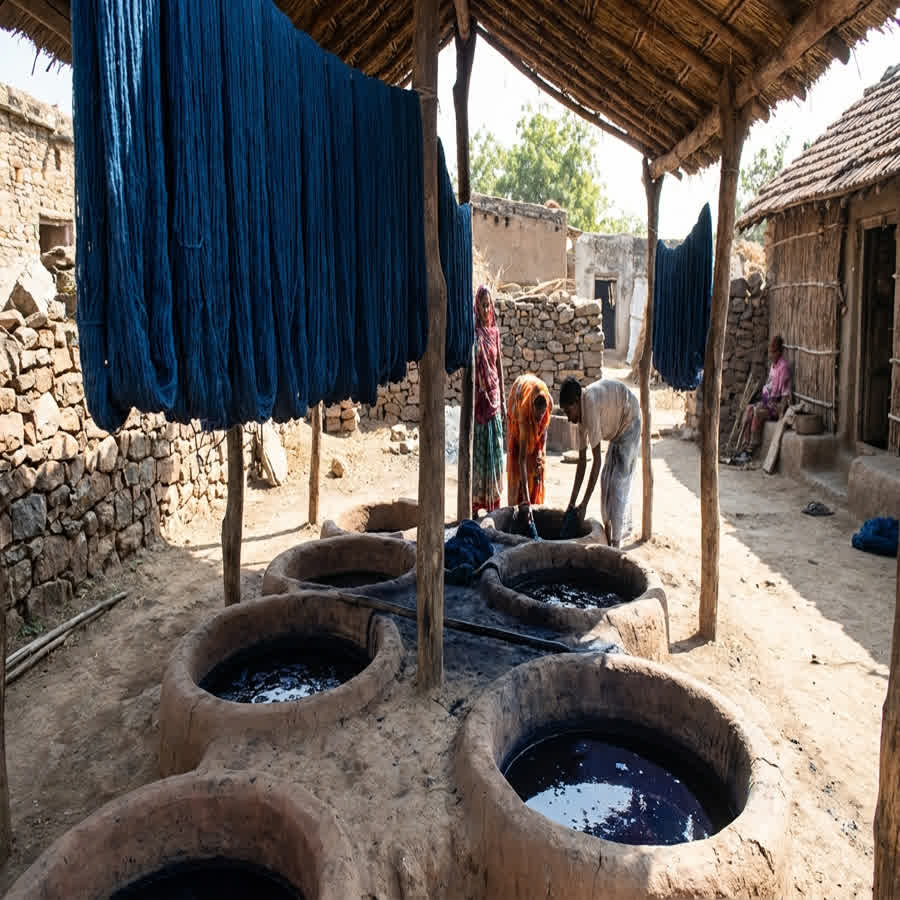
- Water Conservation: Khadi production uses significantly less water than powerloom manufacturing, which requires massive amounts of water for cooling machinery and high-volume chemical processing.
- Ethical Supply Chain: Choosing Khadi directly supports rural artisan communities. You can read more about the sustainability impact of Khaadi online shopping and how it empowers the East Indian craft sector.
Conclusion
Choosing between Khadi and powerloom cotton is a choice between two different philosophies of fashion. Powerloom offers efficiency and precision, but Khadi offers a soul, a story and a technical superiority in terms of wearer comfort and environmental stewardship.
For the modern fashion entrepreneur, khaadi online shopping is no longer a niche activity but a strategic sourcing move. By choosing handspun, handwoven textiles, you are investing in a product that stands out in a crowded market of "fast fashion" uniformity. The technical advantages—from the unique slub texture to the incredible thermal regulation—make Khadi a premium choice for high-end, sustainable collections.
Ready to elevate your fashion line with authentic, hand-crafted textiles? Explore our curated collections and buy khadi fabric online directly from the artisans of East India.
most asked questions
Why is Khadi more expensive than powerloom cotton?
Khadi is more expensive because it is a labor-intensive product. Every meter of fabric represents hours of hand-spinning the yarn and hand-weaving on a loom. Unlike powerlooms, which are automated, Khadi provides a fair wage to artisans. Furthermore, the technical benefits—durability, breathability, and the "living" nature of the fabric—provide a higher long-term value than mass-produced cotton.
Is Khadi difficult to maintain for the end consumer?
Not at all. While people assume handwoven fabrics are delicate, Khadi is actually quite robust. It can be machine-washed on a gentle cycle, though hand-washing is recommended to preserve the vibrancy of natural dyes. The technical structure of the handspun yarn ensures that the fabric becomes softer and more comfortable with each wash, unlike powerloom cotton which may thin out over time.
Can I use Khadi for structured garments like blazers?
Yes. By choosing a higher GSM, such as a 200 GSM Teal Khadi, you get a fabric with enough "body" and weight for tailoring. Khadi has a unique "drape-memory" that allows it to hold shapes well while remaining breathable, making it an excellent choice for sustainable luxury suiting and structured outerwear.
How do I verify if the "Khaadi online shopping" site I'm using is selling authentic handspun fabric?
Look for certifications (like the Khadi Mark in India) and transparency in their supply chain. Authentic B2B suppliers will provide technical details like the GSM, the type of loom used, and the spinning method. You can also perform a "burn test" or a "thread unravel test" to check for fiber purity and yarn twist. For a detailed guide, see our post on 7 quality tests for B2B sourcing.
Does Khadi shrink more than regular cotton?
Because Khadi is woven with low tension, the fibers have more room to contract when they first hit water. Generally, Khadi may shrink by 5-10%. Most professional khadi garments manufacturers will pre-wash the fabric or account for this in the garment's measurements. If you are buying yardage, it is always best to wash the fabric before cutting your patterns.
More Blogs
why organic fabric suppliers are growing in india
jacquard fabric in modern fashion
how silk manufacturers preserve traditional craftsmanship
indian fabric wholesale: a guide to sourcing handwoven textiles
how indian fabric exporters meet global quality standards
jacquard vs embroidery: what's the difference?