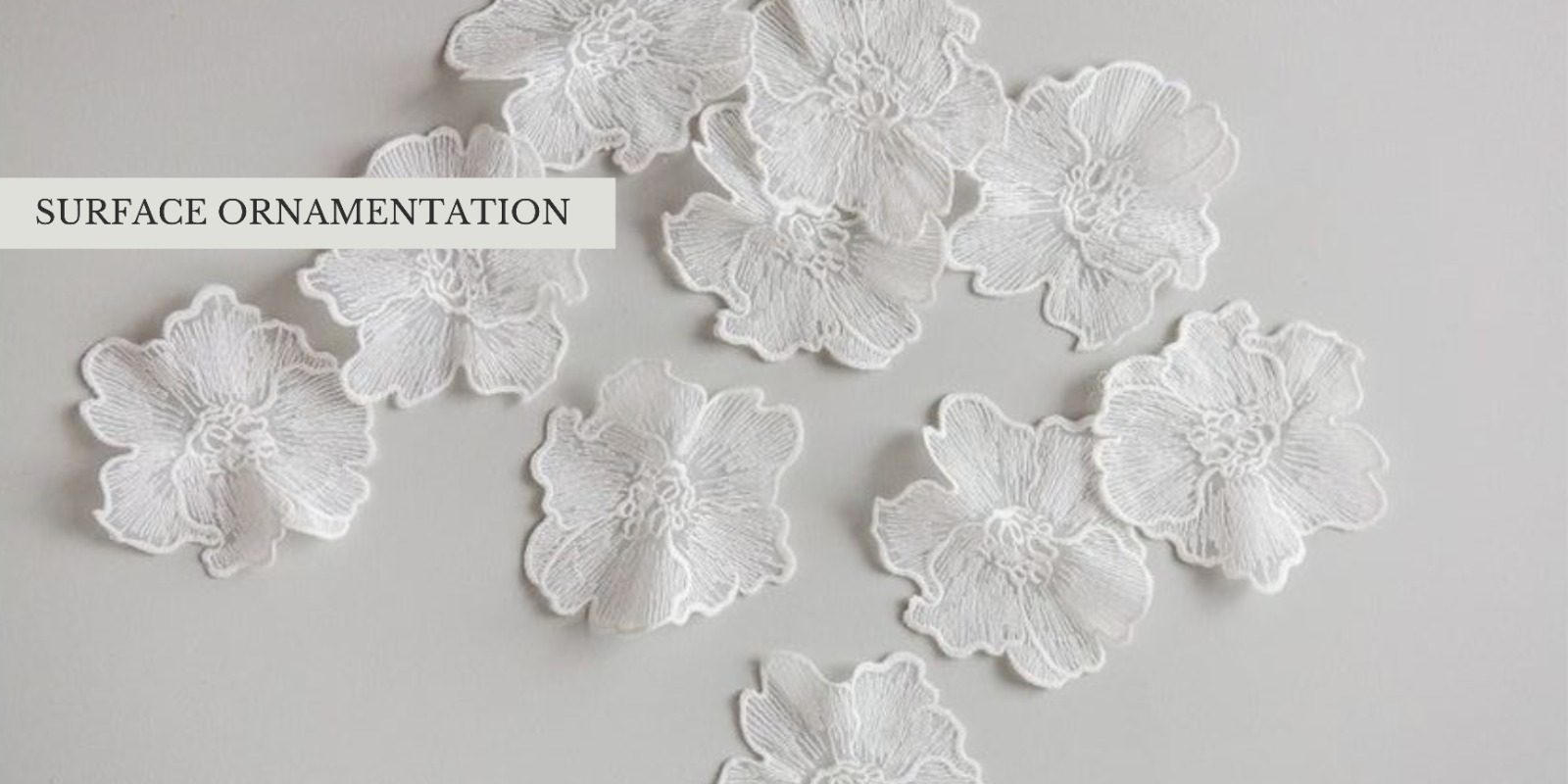
FABRIC EMBELLISHMENTS - ADDING AN EXTRA TOUCH OF ELEGANCE

Fabric Embellishment Techniques Open Up A World Of Creativity And Endless Possibilities For Transforming Plain Fabrics Into Works Of Art. Whether You Choose To Explore The Art Of Embroidery, Experiment With Appliqué, Or Delve Into Fabric Printing, Each Technique Has Its Unique Charm And Allows You To Add Your Personal Touch To Your Fabric Projects.
At Anuprerna, we see fabric embellishment as an opportunity to celebrate traditional craftsmanship while also exploring innovative approaches to sustainable fashion. We encourage our customers to embrace techniques such as embroidery, appliqué, and fabric printing as means of adding unique touches to their creations.
What is Embellishment?
Embellishment is any added detail that enhances the look or feel of a textile or product. It can include embroidery, beads, sequins, appliqué, surface stitches, or decorative trims. The goal is simple. It boosts visual interest, texture, and perceived value.
Step-by-Step Embellishments for Clothing
Applying embellishments for clothing requires a systematic approach to ensure durability and design consistency. Whether working with appliqué or beadwork, following a structured process helps maintain the integrity of the base fabric.
- Design Mapping: Trace the intended pattern onto the fabric using chalk or erasable markers to guide the placement of decorative elements.
- Material Selection: Choose threads, beads, or fabric patches that complement the weight and drape of the primary textile.
- Attachment: Secure the embellishments using hand stitching or specialized machinery, ensuring the tension is balanced to avoid fabric puckering.
- Finishing: Inspect the reverse side for loose threads and perform a stress test to confirm the embellishment is firmly attached for retail wear.
Embroidery
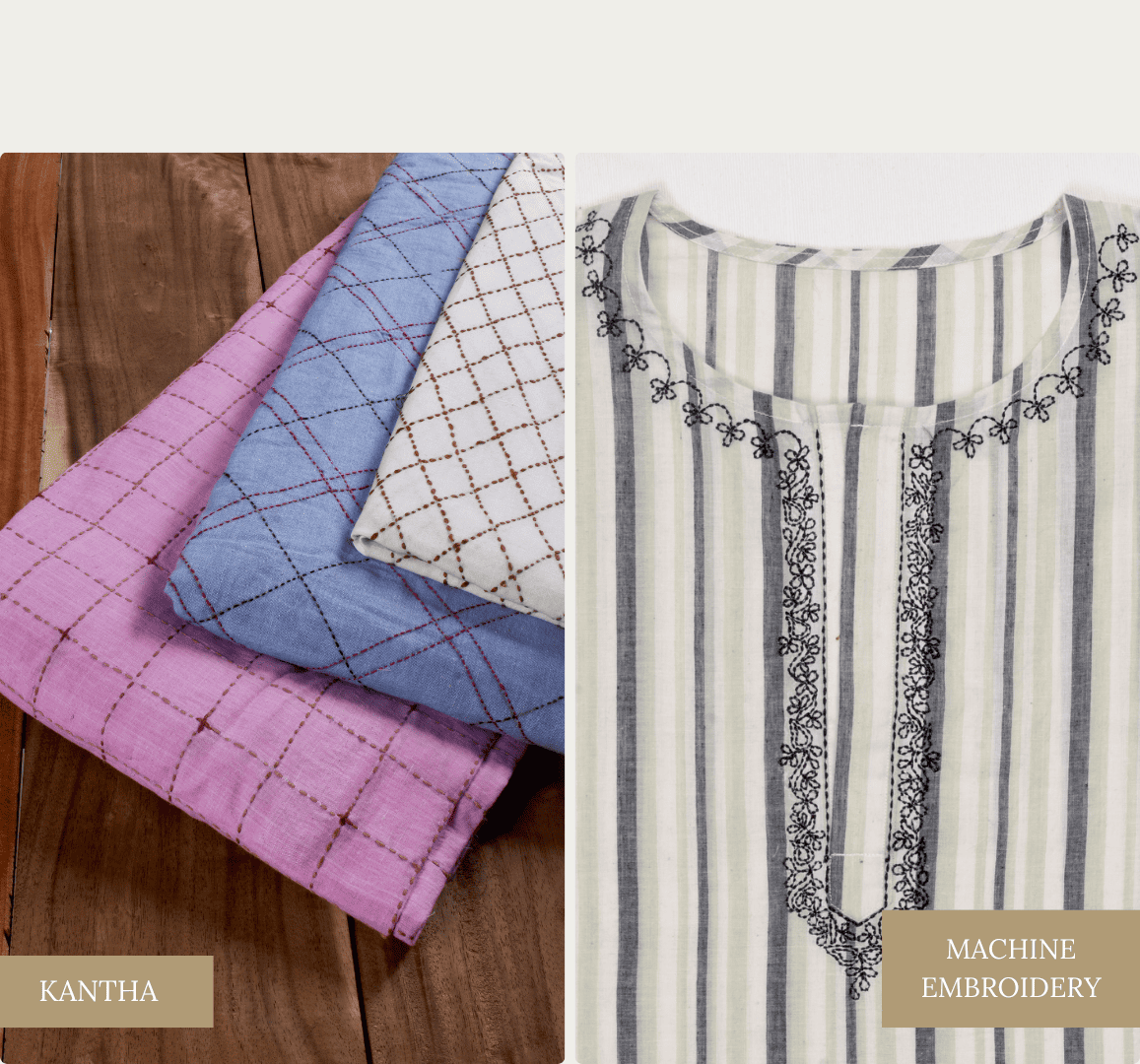
Embroidery is a timeless fabric embellishment technique that involves stitching decorative designs onto fabric using colorful threads to add texture, dimension, and visual interest to plain fabrics.
Hand Embroidery—Hand embroidery like Kantha work is a traditional method where skilled artisans stitch designs by hand using needles and threads. This technique allows for great precision and intricate detailing.
Machine Embroidery- This technique is faster and more efficient than hand embroidery, making it ideal for larger production and projects. With a wide range of stitch patterns and thread colours available, machine embroidery offers versatility and precision
Appliqué
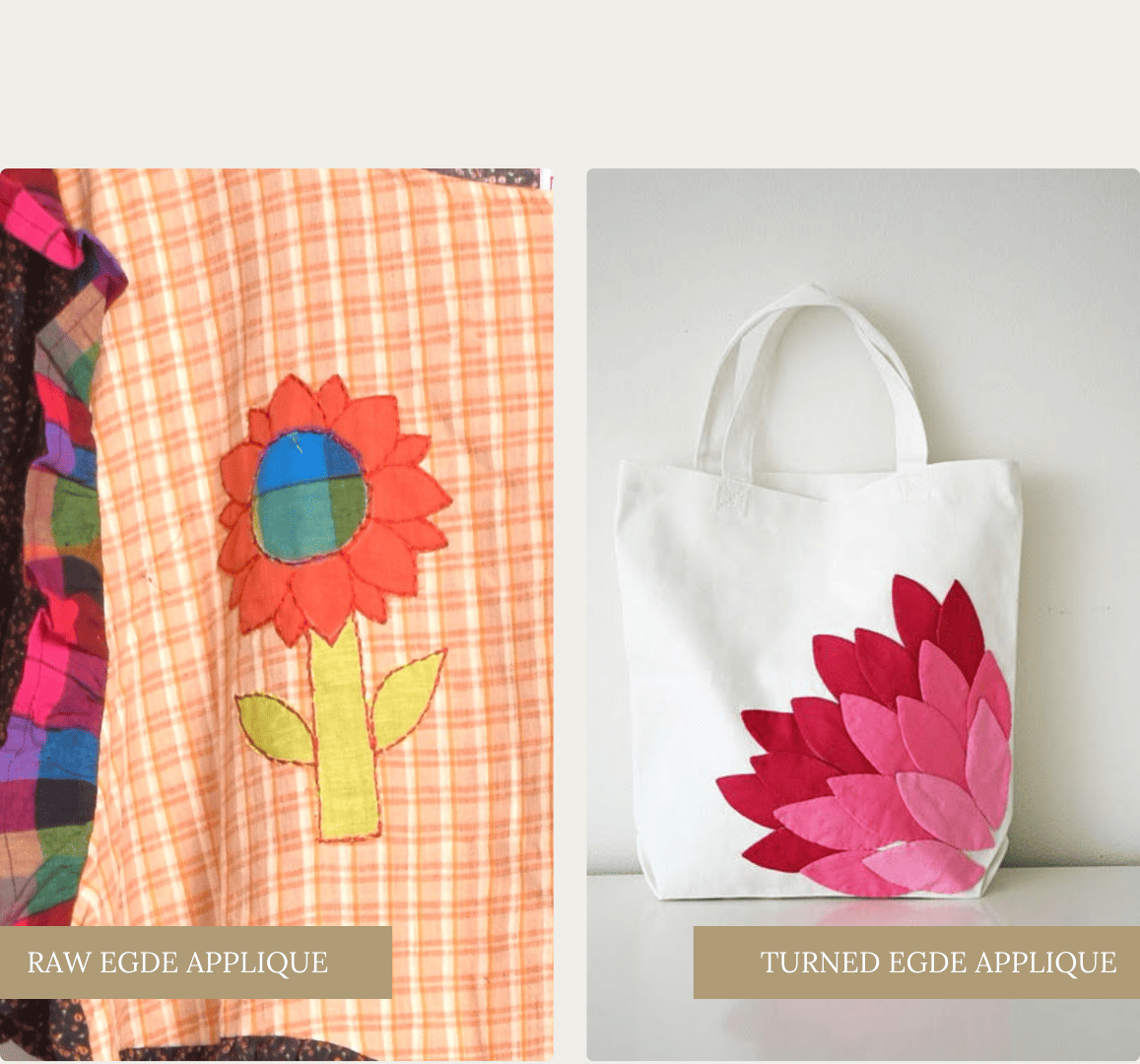
Appliqué is a fabric embellishment technique that involves attaching decorative pieces of fabric onto a base fabric. Appliqué patches, available in various shapes, sizes, and patterns, can be affixed to your fabric projects, adding a pop of color and dimension.
Raw Edge Appliqué - Involves cutting fabric shapes and attaching them to the base fabric using a stitching technique that leaves the edges raw. This technique creates a casual, rustic look and works well with contemporary designs.
Turned Edge Appliqué - Fabric shapes are cut, turned under, and stitched onto the base fabric, creating a clean and polished appearance. This technique is commonly used in quilting and traditional textile crafts.
Fabric Printing and Dyeing
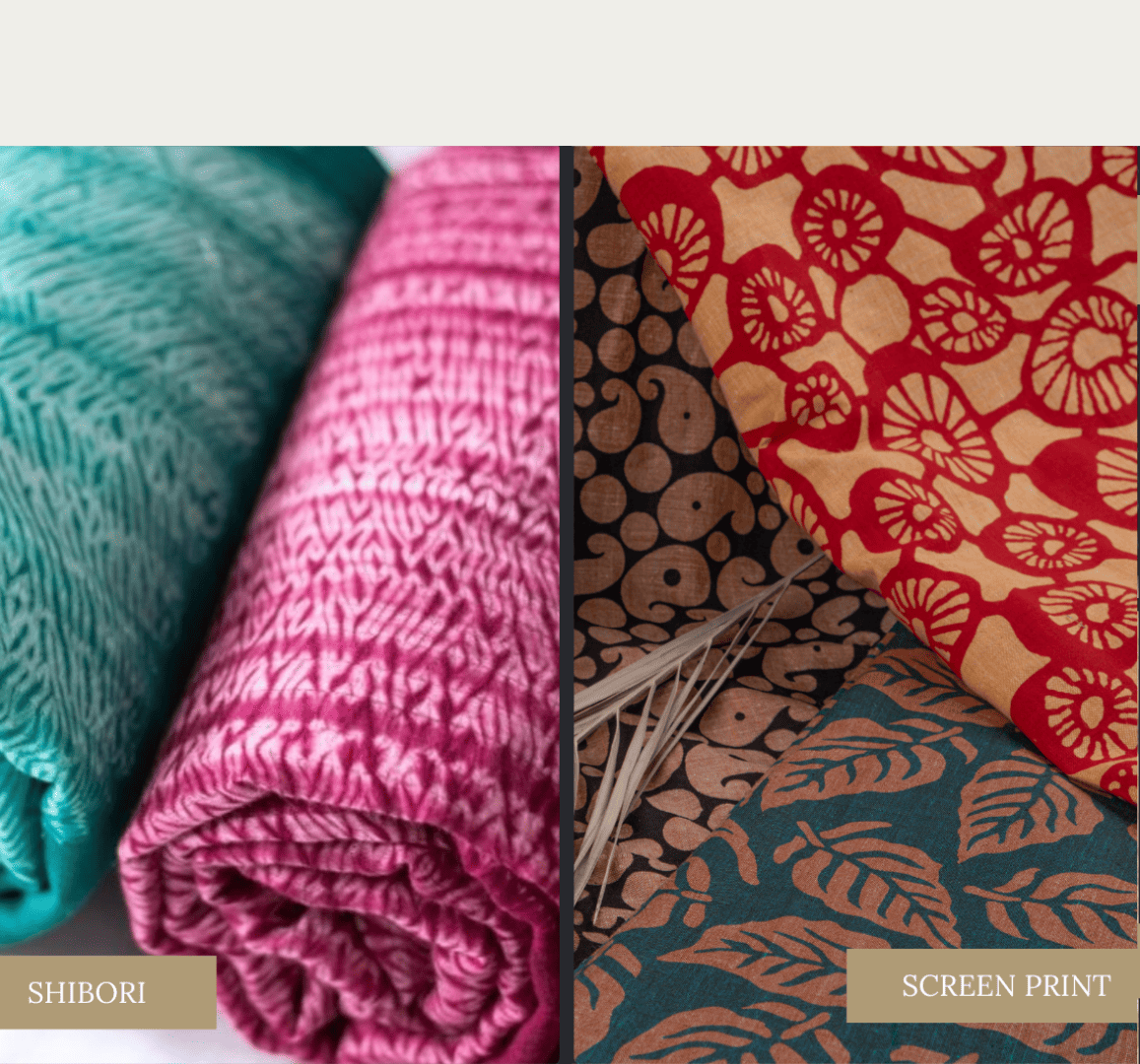
Fabric printing involves applying designs, patterns, or images onto fabric surfaces. One popular method is using fabric printing blocks, which are carved wooden or linoleum blocks with intricate design Types of fabric printing include Screen printing and Block Printing
Resist Dyeing on Fabric It involves selectively applying a substance to certain areas of the fabric to resist the penetration of dye, resulting in beautiful patterns and color variations.
Types of resist dyeing include Batik, Shibori and Tie Dyeing
Quilting
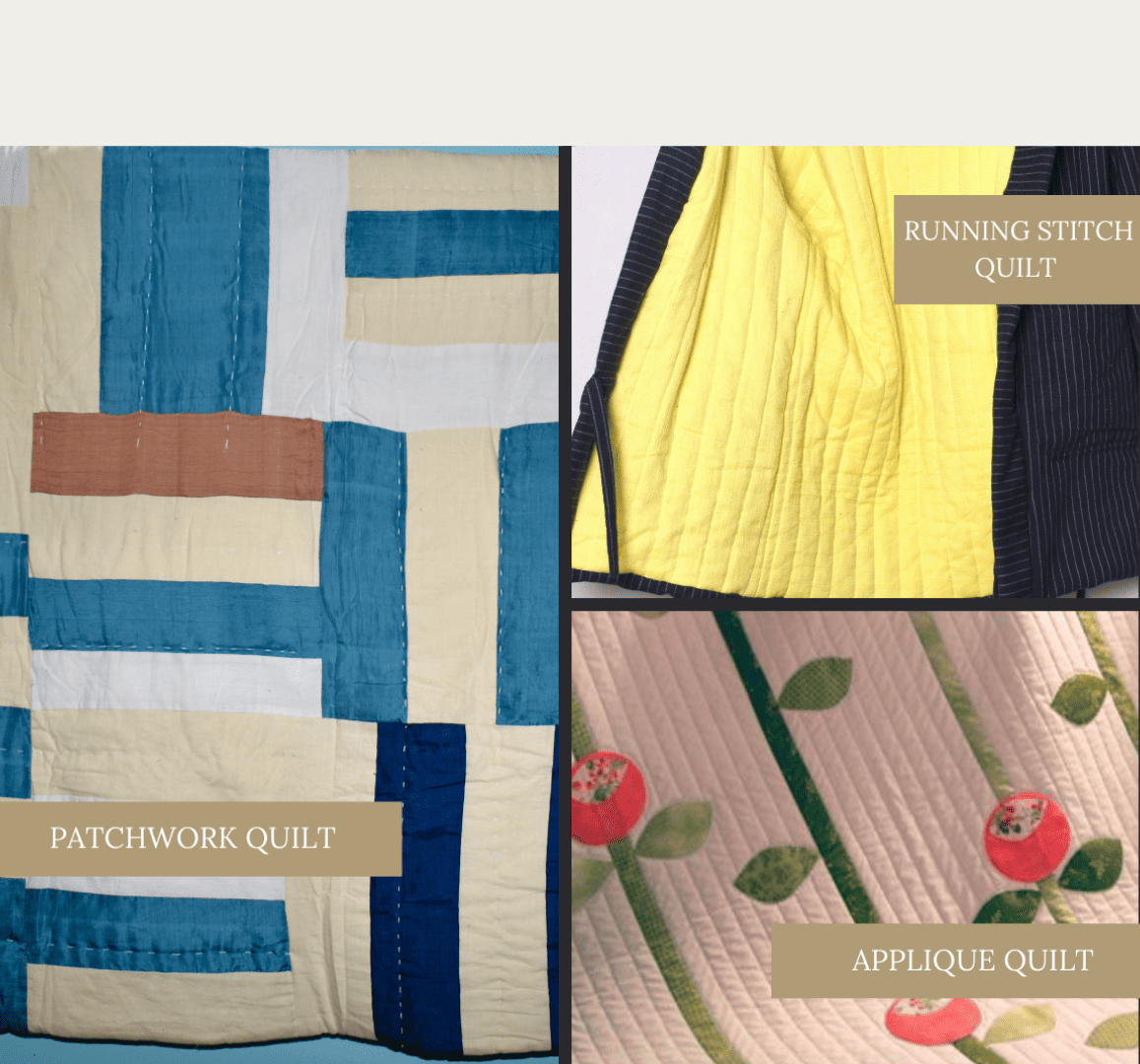
Quilting involves stitching layers of fabric together to create a thick, padded material. Quilting designs can range from simple geometric patterns to intricate motifs and can be achieved through various stitching techniques. Quilting fabrics come in a wide range of colors, patterns, and textures.
Patch work Quilting : This involves sewing together small fabric pieces, known as patches or quilt blocks, to form a larger quilt top. These patches can be cut into geometric shapes, such as squares, triangles, or hexagons, and arranged in intricate patterns. Patchwork quilting allows for endless design possibilities, from simple and symmetrical patterns to complex and asymmetrical arrangements.
Appliqué Quilting : Appliqué quilting is the process of adding decorative fabric shapes onto a quilt top. These shapes are typically cut from fabric and stitched onto the base fabric to create unique designs.
Running Stitch Quilting : It involves using a simple running stitch to secure the layers of a quilt together. It is easy is to execute and is time efficient, with a timeless charm
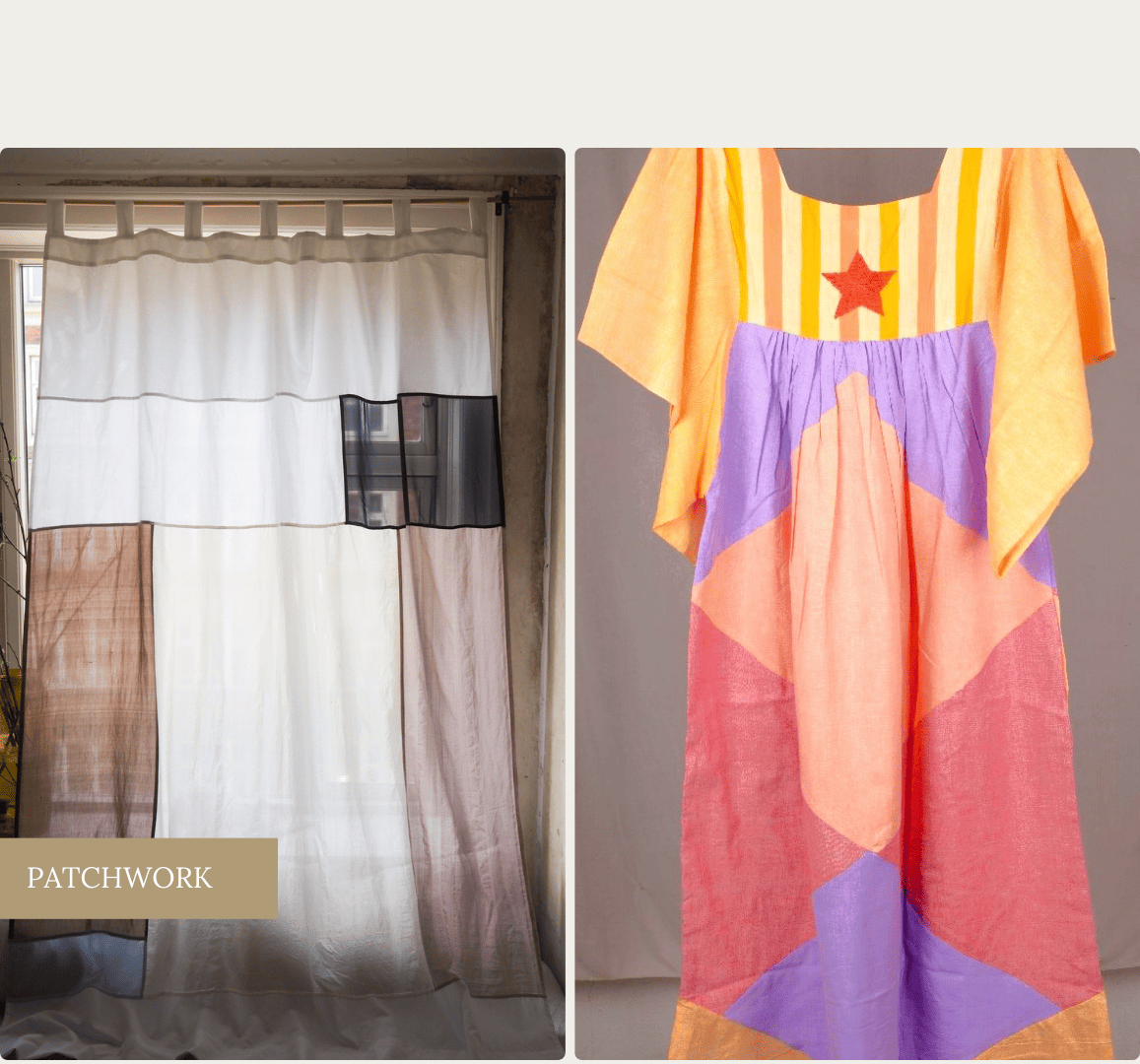
Patchwork
It is a technique that involves sewing together small fabric pieces to create larger designs or quilt blocks. It is a creative way to combine different colors, patterns, and textures to form cohesive and visually captivating compositions. Patchwork offers endless possibilities for creativity, allowing you to combine different colors, patterns, and textures to create visually captivating compositions. By using patchwork fabric that complements your embroidery designs, you can achieve a harmonious and cohesive look.
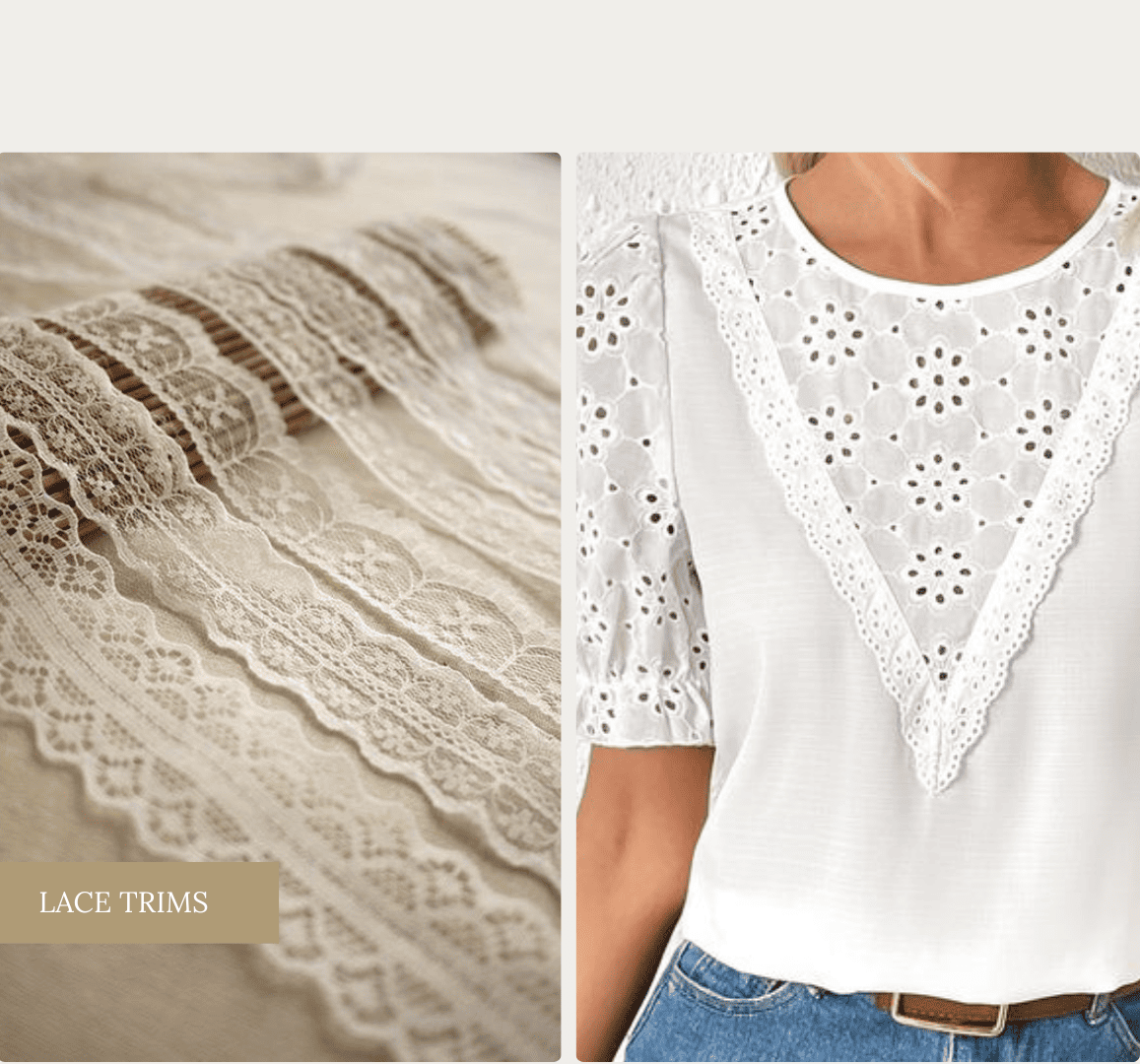
Lace Trims
Lace trims are intricate and delicate embellishments that can be used to enhance fabric creations. They are typically made from fine threads or yarns, intricately woven or knitted into decorative patterns. Lace trims can add a touch of elegance, femininity, and vintage charm to various textile projects.
Fasteners
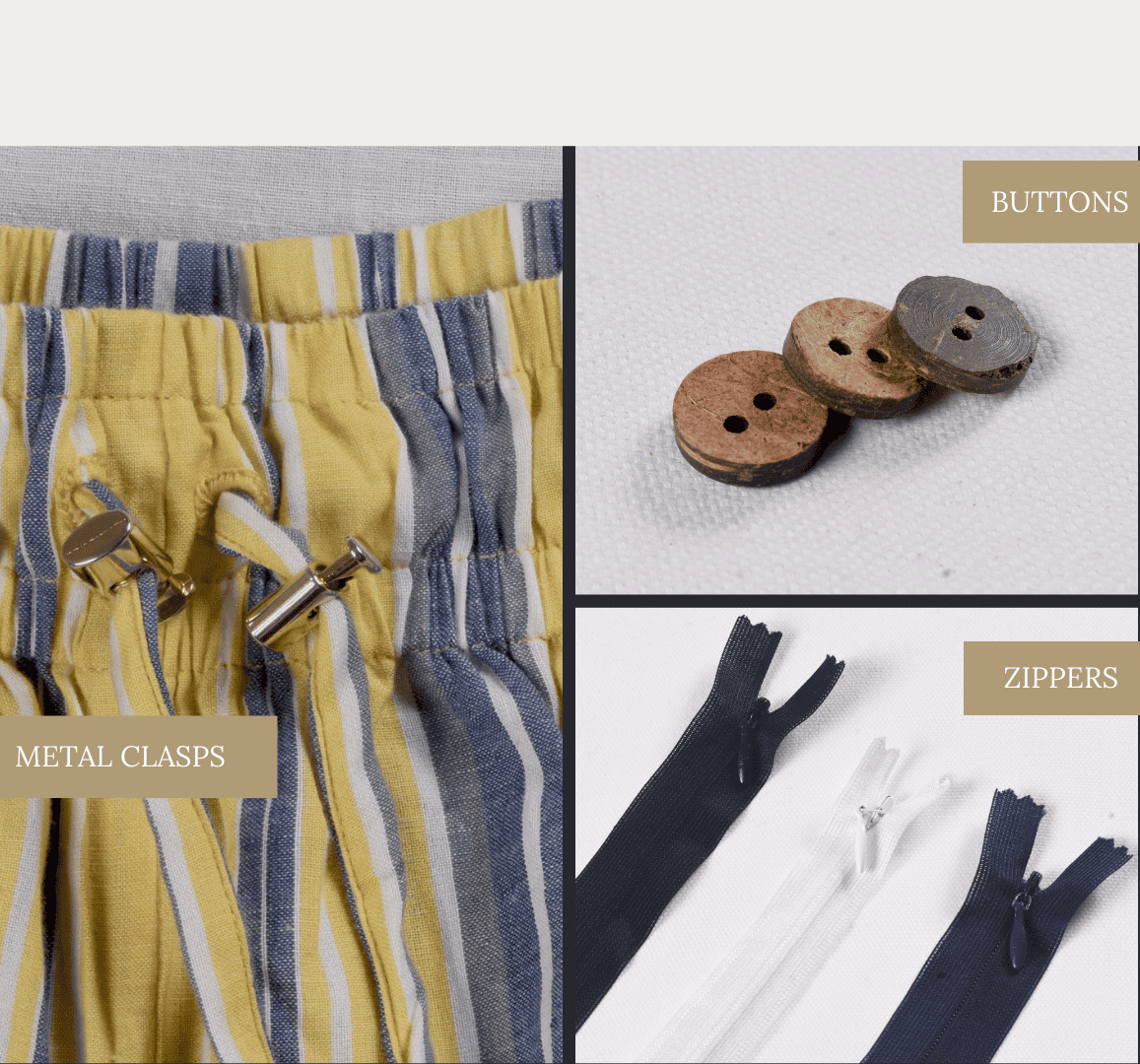
Fasteners play a crucial role in securing and closing fabric garments or accessories. They provide practical functionality while also adding a touch of style and design. There are various types of fasteners available, each serving a specific purpose and aesthetic:
We provide a wide rage of fastenerners to suit your individual styles
Buttons, Zippers, Hooks and eyes, Snaps and clasps, Drawstrings and Grommets
related questions
What are fabric embellishment techniques?
Common fabric embellishment techniques include embroidery, appliqué, beadwork, quilting, fabric painting, and printing methods like block or screen printing. Other popular options for clothing include lacework, smocking, and the use of decorative fasteners.
How many types of draping techniques are there?
There are numerous draping techniques. Common ones include Sari, Toga, Dhoti, Dupatta, and Cowl draping.
What is decorative embellishments?
Decorative embellishments are added elements, like embroidery, beads, sequins, or appliqué, that enhance the visual appeal of an object, fabric, or surface, imparting artistic and aesthetic value.
What is the process of embellishment?
The embellishment process involves choosing a design, selecting materials, applying decorative elements using techniques like embroidery or beadwork, securing them, and performing a final quality check.
What does embellishment mean in textiles for sustainable fashion?
In sustainable fashion, textile embellishment often involves using natural fibers, eco-friendly dyes, and traditional hand-crafted techniques like Kantha or hand-block printing. This approach reduces environmental impact while supporting artisan communities.
Can embellishments for clothing be applied to lightweight fabrics?
Yes, embellishments can be applied to lightweight fabrics, but it requires careful technique. Designers often use a stabilizer or choosing lighter elements like silk thread embroidery or fine lace trims to prevent the fabric from sagging or tearing.
More Blogs
how celebrity environmental activists are shaping sustainable fashion trends
summer 2026 textile trends: the season of slow luxury
the color theory hack: instantly upgrade your style with the science of hues
how to improve dressing sense: 5 simple rules for better style
top 5 textures to watch in fashion trends 2025
beyond borders: how fashion designers reimagine indian handloom in global fashion