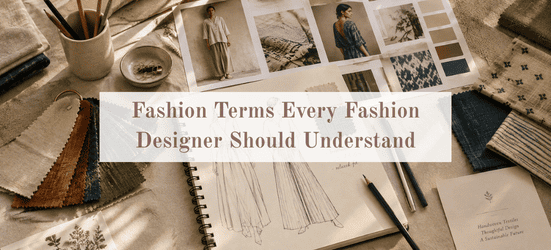
Fashion Terms Every Fashion Designer Should Understand

Vocabulary for clothing includes the words used to describe garments, fabrics, silhouettes, design techniques, fashion styles and the processes involved in creating clothing. For every fashion designer, understanding these terms makes it easier to communicate ideas, develop collections, select fabrics and explain design decisions clearly.
From essential fashion vocabulary to garment construction and the fashion industry terms used by professionals, these concepts provide a foundation for understanding how fashion moves from an initial idea to a finished garment.
What Are the Essential Fashion Style and Trends Terms?
Fashion style and trends describe how clothing looks, how it is worn and how preferences change over time. Understanding these terms helps designers identify creative directions and develop collections that reflect different aesthetics.
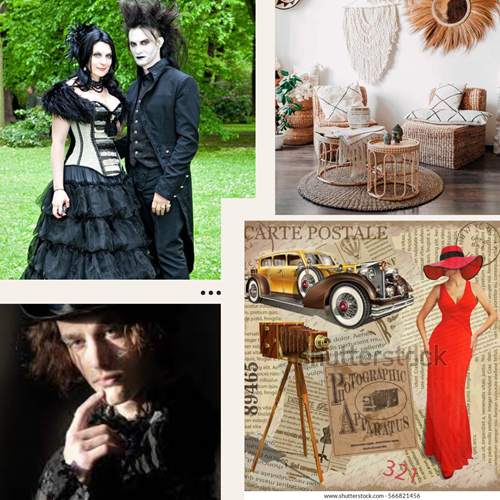
- Bohemian: A relaxed style often associated with flowing silhouettes, artistic details and vintage or ethnic influences.
- Minimalist: A style built around simplicity, clean lines, restrained details and versatile pieces.
- Gothic: A style known for dark colours, dramatic silhouettes and distinctive decorative elements.
- Athleisure: Clothing that combines the comfort of athletic wear with everyday styling.
- Vintage: Clothing from an earlier period, often appreciated for its distinctive design and historical character.
These fashion style and trends terms help designers communicate the visual direction of a collection and understand how different aesthetics appeal to different audiences.
Which Fashion Industry Terms Should Every Designer Know?
Fashion industry terms describe the tools, processes and activities involved in developing, presenting and marketing a collection. Knowing this vocabulary helps designers collaborate with creative teams, manufacturers, buyers and fashion professionals.
- Lookbook: A collection of photographs presenting garments, styling ideas or a designer's collection.
- Mood board: A visual arrangement of images, colours, textures and references that communicates a design direction.
- Fashion show: An event where designers present collections through styled looks, often on models.
- Trend forecasting: The process of identifying potential future trends by studying consumer preferences, cultural influences and market developments.
- Fashion cycle: The process through which a style emerges, gains popularity, reaches widespread acceptance and eventually declines or returns in a new form.
Understanding the fashion cycle helps designers consider the relationship between emerging trends, changing consumer preferences and the lasting appeal of a garment.
What Are Design Elements in Fashion?
Design elements in fashion are the visual and structural components used to create a garment's appearance. They include line, shape, colour, texture, pattern and form, which work together to influence how a finished piece looks and feels.
The main design elements include:
- Line: The direction created by seams, pleats, stripes or garment edges.
- Shape and form: The overall structure and three-dimensional appearance of a garment.
- Colour: A visual element that influences mood, contrast and coordination.
- Texture: The surface quality of a fabric, perceived through touch and sight.
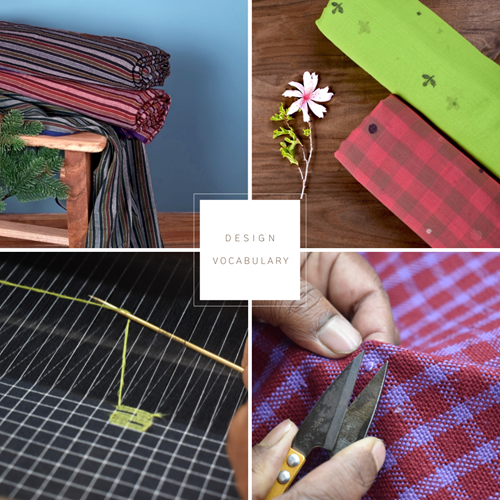
- Pattern: A repeated or arranged visual design, such as stripes, checks, florals or geometric motifs.
- Print: A design applied to fabric using techniques such as block printing, screen printing or digital printing.
- Embroidery: Decorative stitching used to create motifs, borders or textured details.
- Appliqué: A technique in which one piece of fabric is attached to another to create a decorative design.
What Are the Basic Garment Construction Terms?
Garment construction refers to the techniques and components used to assemble fabric into finished clothing. Understanding these terms helps designers communicate technical requirements, prepare specifications and work effectively with pattern makers and production teams.
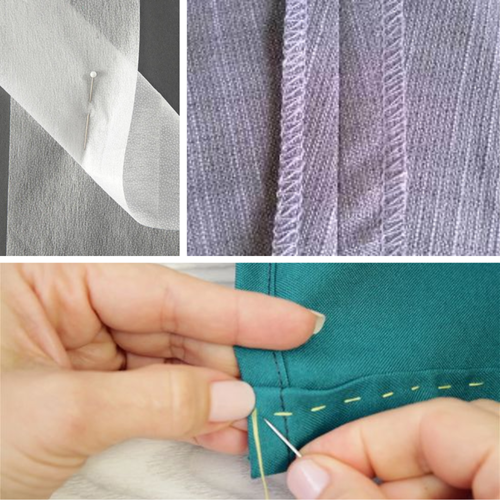
- Seam: The line where two or more pieces of fabric are stitched together.
- Dart: A tapered fold stitched into fabric to shape it around the body.
- Hem: The finished edge of a garment, usually created by folding and stitching the fabric.
- Lining: An inner layer added to a garment for comfort, coverage or a finished interior.
- Interfacing: A supporting material used to add structure to areas such as collars, cuffs and waistbands.
- Pleat: A fold of fabric arranged and secured to create shape, volume or visual detail.
- Draping: The process of positioning and pinning fabric on a dress form to develop a garment's shape.
- Silhouette: The overall outline or shape of a garment when worn.
These garment construction terms are particularly useful when translating a creative concept into a practical design that can be sampled and produced.
What Tools Help Fashion Designers Develop Their Ideas?
Fashion designers use drawing tools, fabric references and fitting equipment to turn initial concepts into workable designs. Familiarity with these resources supports better planning, material selection and communication throughout the design process.
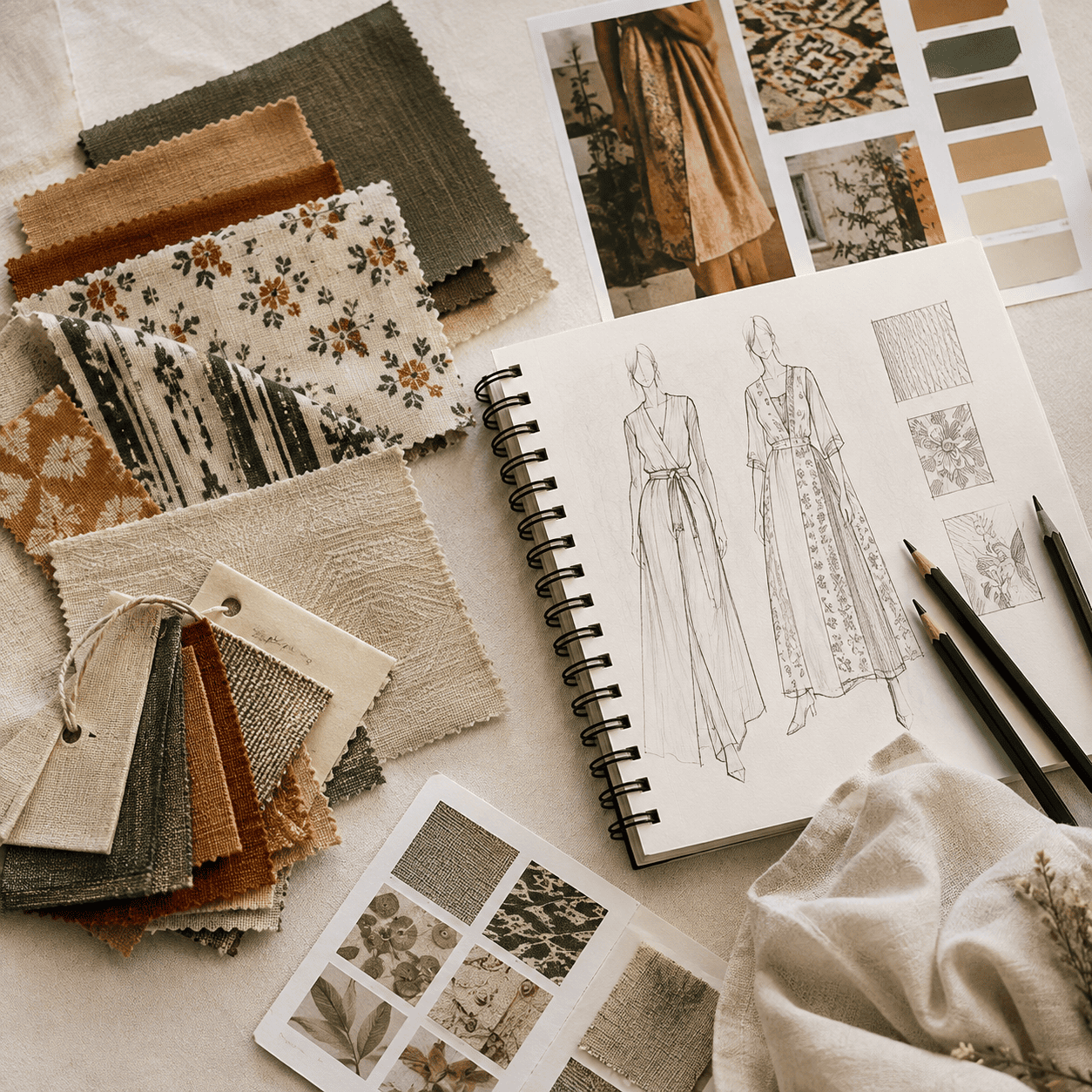
- Fashion sketchbooks: Used to record illustrations, silhouettes, design details and collection ideas.
- Fabric swatch books: Collections of fabric samples that help designers compare colour, texture, weave and material suitability.
- Dress forms: Three-dimensional forms used to develop silhouettes, drape fabric and assess garment proportions.
- Pattern drafting tools: Rulers, curves and measuring tools used to create and refine garment patterns.
- Sewing machine attachments: Specialised accessories that support particular stitching and finishing techniques.
- Mood boards: Visual references that help organise a collection's colours, materials and creative direction.
For designers working with textiles, fabric swatches are especially valuable because the actual surface, drape and texture of a material can differ from how it appears in a photograph.
What Do Tailoring and Fit Terms Mean?
Tailoring and fit terms describe how clothing is shaped, adjusted and customised to suit the wearer. These concepts help designers determine how a garment should sit on the body and what changes may be required before the final piece is completed.
- Bespoke: Clothing created specifically for an individual, typically through a highly personalised process.
- Made-to-measure: Clothing produced using a customer's measurements to adjust a selected design or pattern.
- Alteration: A modification made to an existing garment to improve its fit or finish.
- Fit: How a garment sits on and moves with the body.
- Draping: A method of developing garment shape by arranging fabric directly on a dress form.
Knowing these terms helps designers explain the difference between standard sizing, customised garments and individually tailored clothing.
How Are Design Elements in Art Related to Fashion?
Design elements art refers to the fundamental visual components used in creative work, including line, shape, colour, texture, space and form. Fashion designers apply these same principles when planning garment proportions, combining colours, selecting textiles and arranging decorative details.
For example, contrasting colours can create visual emphasis, while repeated motifs can establish rhythm across a garment. Understanding these principles helps designers create balanced, cohesive collections.
What Other Fashion Vocabulary Should Designers Understand?
Beyond construction and styling, fashion vocabulary includes terms that describe different approaches to designing, producing and presenting clothing.
- Haute couture: High-end fashion created through specialised craftsmanship and highly individualised production, particularly within the formal couture system.
- Prêt-à-porter: The French term for ready-to-wear clothing produced in standardised sizes for sale.
- Avant-garde: Experimental fashion that challenges familiar forms, techniques or design conventions.
- Capsule collection: A small, coordinated group of garments designed to work together.
- Fast fashion: A business model focused on producing and bringing trend-led clothing to market quickly, often at accessible prices.
These terms help designers discuss a brand's creative positioning, production approach and relationship with the wider fashion market.
Why Should Fashion Designers Learn These Terms?
Fashion terminology gives designers a shared language for discussing creative ideas and technical requirements. It supports clearer communication with textile suppliers, pattern makers, garment manufacturers, buyers and customers.
For designers sourcing textiles, knowing the difference between a print, a woven pattern, embroidery and fabric texture is particularly important. It helps them describe the material they need and make more informed decisions when developing a collection.
At Anuprerna, exploring different fabrics, surface techniques and handwoven textiles can help designers understand how material choices contribute to a garment's final character.
Explore Anuprerna's fabric collection to discover textiles for your next design project.
related questions
What are the essential fashion terms every designer should know?
Essential fashion terms include silhouette, texture, pattern, draping, seam, dart, hem, lining, mood board, lookbook and trend forecasting. These terms help designers discuss visual concepts, select suitable materials and communicate construction requirements.
What is a silhouette in fashion?
A silhouette is the overall outline or shape of a garment when worn. Common examples include A-line, straight, fitted, oversized and hourglass silhouettes. Designers use silhouettes to establish proportions, create visual interest and influence how a garment fits and moves.
What is the difference between fashion style and fashion trends?
A fashion trend is a general direction in which fashion is moving, often enduring over a longer period and influencing multiple seasons. In contrast, a fad is a short-lived, intense interest in a particular style, often emerging suddenly and fading quickly without significant lasting impact.
What does prêt-à-porter mean?
Prêt-à-porter means ready-to-wear. It describes clothing designed and produced in standardised sizes for customers to purchase as finished garments, unlike clothing made exclusively to an individual's measurements.
Why is garment construction important in fashion design?
Garment construction determines how fabric pieces are assembled, shaped and finished. Understanding seams, darts, hems, linings and other construction details helps designers create garments that meet their intended requirements for fit, function and appearance.
More Blogs
how celebrity environmental activists are shaping sustainable fashion trends
summer 2026 textile trends: the season of slow luxury
the color theory hack: instantly upgrade your style with the science of hues
how to improve dressing sense: 5 simple rules for better style
top 5 textures to watch in fashion trends 2025
beyond borders: how fashion designers reimagine indian handloom in global fashion