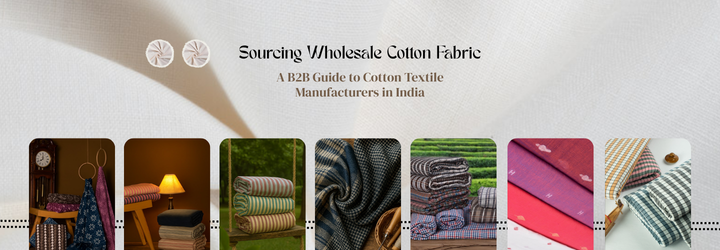
Sourcing Wholesale Cotton Fabric: A B2B Guide to Cotton Textile Manufacturers in India

For global fashion brands and independent designers, India has long been the heartbeat of the textile world. As the world’s largest producer of cotton, the country offers an unparalleled ecosystem for sourcing. However, for a B2B buyer, the journey from identifying a need for wholesale cotton fabric to receiving a finished shipment can be complex. The Indian textile landscape is vast, ranging from massive industrial mills to small-scale artisan clusters specializing in heritage weaves.
The challenge today isn't just finding a supplier; it’s finding a partner that aligns with modern values of sustainability, transparency, and ethical craftsmanship. Many brands struggle with inconsistent quality, lack of transparency in the cotton fabric manufacturing process, and the logistical hurdles of international trade.
In this comprehensive guide, we will navigate the nuances of working with cotton textile manufacturers in India. Whether you are looking for organic handloom cotton or heritage weaves like Khadi, this guide provides the roadmap to building a successful, sustainable supply chain that supports both your brand’s growth and the artisan communities of East India.
Understanding the Landscape of Cotton Textile Manufacturers in India
India’s textile industry is a tapestry of tradition and technology. To source effectively, a B2B buyer must understand that "Made in India" cotton can mean many things. The industry is broadly divided into the organized sector (large-scale mills) and the unorganized sector (handlooms and powerlooms).
The Shift Toward Sustainable Manufacturing
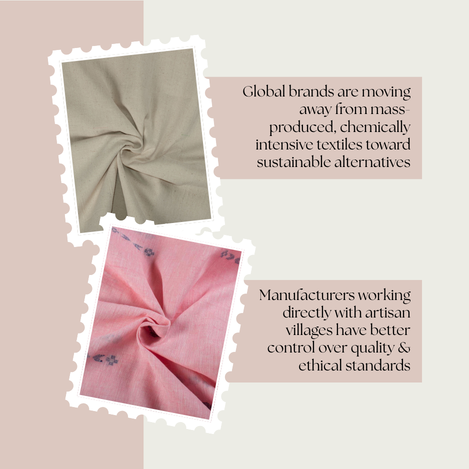
In recent years, there has been a significant shift. Global brands are moving away from mass-produced, chemically intensive textiles toward sustainable alternatives. This is where specialized wholesale fabric suppliers in India, like Anuprerna, bridge the gap. By focusing on hand-spun and hand-woven cotton, we offer fabrics that have a lower carbon footprint and a higher social impact.
Regional Specializations
- West Bengal & East India: Known for fine Muslins, Jamdani, and various weights of handloom cotton.
- Gujarat & Maharashtra: Hubs for industrial cotton and organic "Kala" cotton.
- Tamil Nadu: Famous for high-quality yarn and industrial weaving centers like Coimbatore.
For brands prioritizing "slow fashion," the handloom clusters of East India provide a unique value proposition. These fabrics aren't just commodities; they are stories of cultural heritage. When sourcing wholesale cotton fabric, choosing a manufacturer that works directly with these clusters ensures that your purchase supports fair wages and the preservation of ancient skills.
Pro Tip: When evaluating cotton textile manufacturers in India, ask about their "cluster footprint." Manufacturers who work directly with specific artisan villages often have better control over quality and ethical standards than those who buy from middleman markets.
The Journey of Fabric: The Cotton Fabric Manufacturing Process
Understanding the cotton fabric manufacturing process is essential for any B2B buyer to manage expectations regarding lead times, costs, and fabric characteristics. In the sustainable handloom sector, this process is significantly different from industrial manufacturing.
1. Fiber Sourcing and Ginning
The process begins with the cotton boll. Sustainable manufacturers prioritize organic or BCI (Better Cotton Initiative) cotton to ensure no harmful pesticides were used. Ginning involves separating the cotton fibers from the seeds.
2. Spinning: Hand-spun vs. Machine-spun
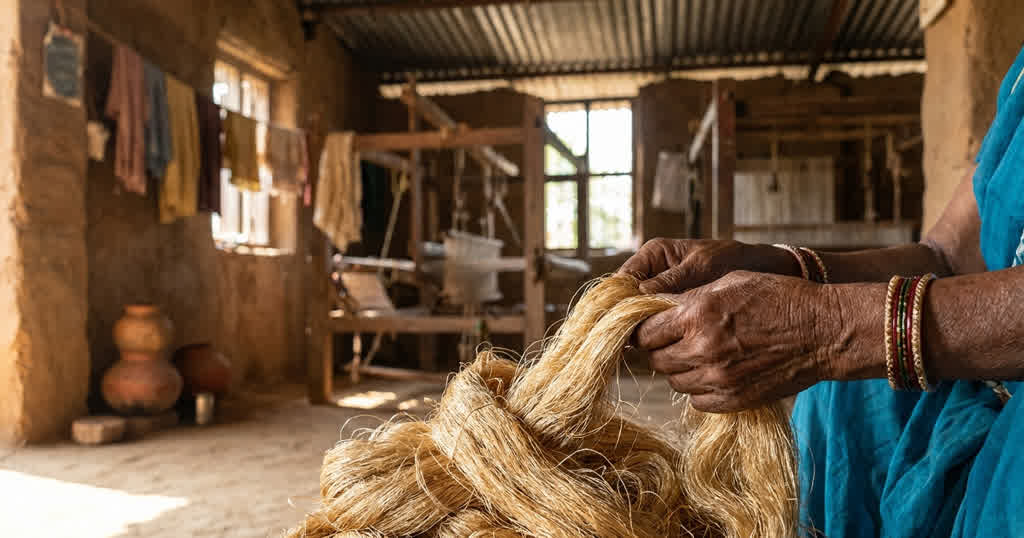
In the production of Khadi or high-end handloom cotton, the fiber is often hand-spun using a Charkha. This creates a unique, slightly irregular texture that machine-spun yarn cannot replicate. This "imperfection" is a hallmark of luxury in the sustainable textile world.
3. Pre-weaving Preparations
Before weaving, the yarn undergoes "sizing" (strengthening the yarn with natural starch) and "warping" (arranging the longitudinal threads). This stage is crucial for ensuring the durability of the wholesale cotton fabric.
4. The Weaving Process
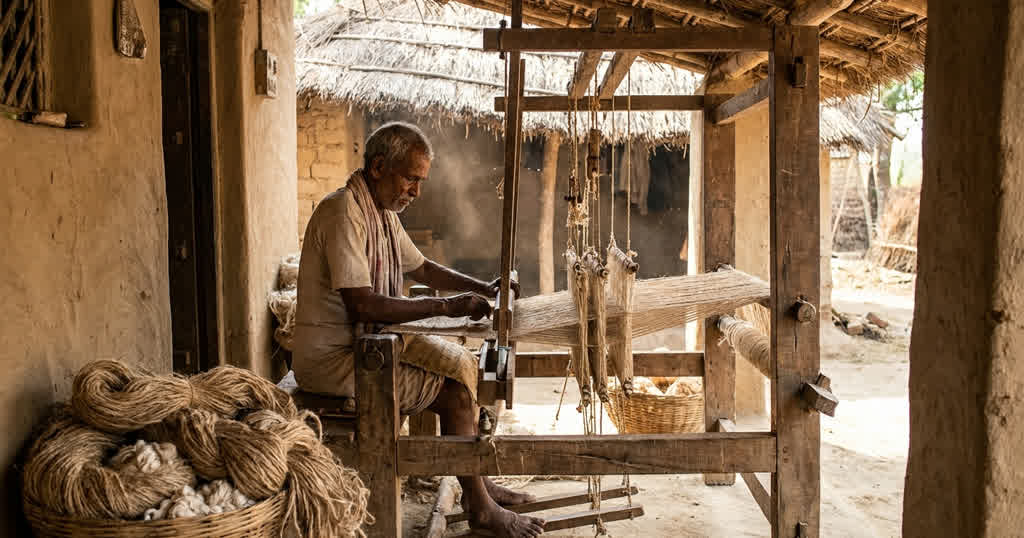
On a handloom, the weaver manually operates the shuttle. This process is slow, often producing only a few meters a day, but it results in a fabric that "breathes" better than powerloom alternatives. For brands looking for specific aesthetics, you might explore specialized categories like Gold Cotton Fabric or Brown Cotton Fabric, which utilize specific dyeing and weaving techniques to achieve unique hues and textures.
5. Dyeing and Finishing
Sustainable manufacturers use AZO-free dyes or natural plant-based dyes. The finishing process in handloom textiles is often kept minimal to maintain the natural integrity of the cotton fiber.
Key Factors to Consider When Selecting Wholesale Fabric Suppliers in India
Choosing the right partner among many wholesale fabric suppliers in India requires a rigorous vetting process. Here are the critical pillars of a successful B2B partnership:
Quality Assurance and Certifications
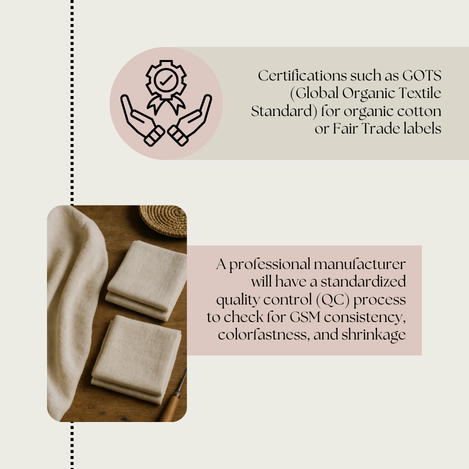
Don't just take a supplier's word for it. Look for certifications such as GOTS (Global Organic Textile Standard) for organic cotton or Fair Trade labels. Even in the handloom sector, a professional manufacturer will have a standardized quality control (QC) process to check for GSM consistency, colorfastness, and shrinkage.
Understanding MOQs and Sampling
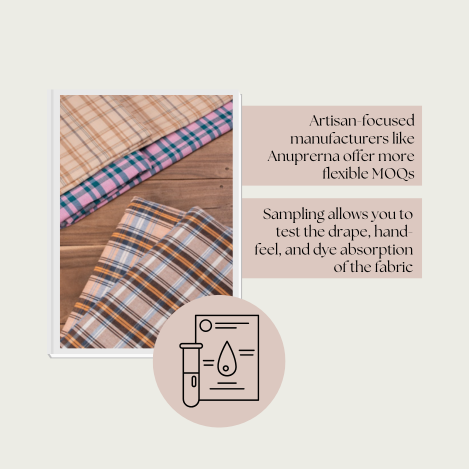
One of the biggest hurdles for boutique brands is the Minimum Order Quantity (MOQ). While industrial mills may require thousands of meters, artisan-focused manufacturers like Anuprerna offer more flexible MOQs. However, it is vital to understand the sampling protocols before committing to a large order. Sampling allows you to test the drape, hand-feel, and dye absorption of the fabric.
Transparency and Traceability
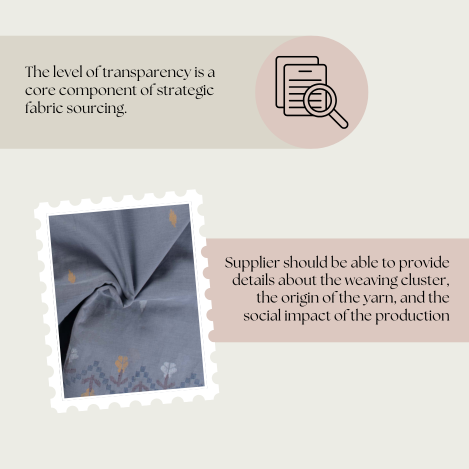
In the modern market, consumers want to know "who made my clothes." Your supplier should be able to provide details about the weaving cluster, the origin of the yarn, and the social impact of the production. This level of transparency is a core component of strategic fabric sourcing.
Communication and Lead Times
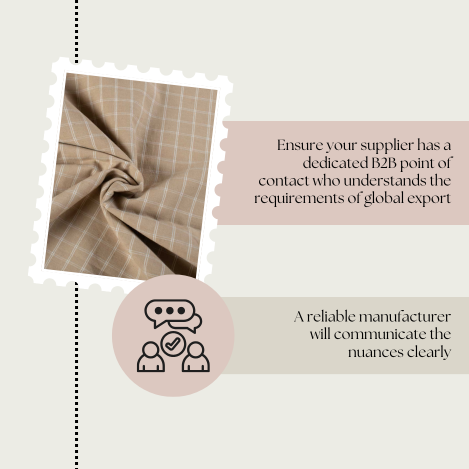
Handloom production is subject to weather conditions (like humidity affecting drying times). A reliable manufacturer will communicate these nuances clearly. Ensure your supplier has a dedicated B2B point of contact who understands the requirements of global export.
Navigating the Logistics of Wholesale Fabric Export
Sourcing the fabric is only half the battle; getting it to your warehouse is the other. When working with cotton textile manufacturers in India, you must account for the logistics of international shipping.
Documentation and Compliance
Exporting textiles involves a mountain of paperwork, including Commercial Invoices, Packing Lists, Certificates of Origin, and Bills of Lading. Ensuring these are accurate is vital to avoid delays at customs. For a deeper dive into this, refer to our guide on navigating the logistics of fabric wholesale.
Shipping Methods
- Air Freight: Faster (5-7 days) but significantly more expensive. Best for small batches or urgent sampling.
- Sea Freight: More cost-effective for large bulk orders of wholesale cotton fabric, though it takes longer (30-45 days).
Packaging for Protection
Cotton is a natural fiber and can be susceptible to moisture or pests during long transit times. Ensure your supplier uses high-quality, moisture-proof baling or rolling techniques to protect the fabric's integrity.
Why Sustainable Handloom Cotton is the Future for Global Brands
The global fashion industry is at a crossroads. With increasing regulations on environmental impact and a consumer base that values authenticity, the demand for ethically produced cotton is skyrocketing.
The Beauty of Handloom
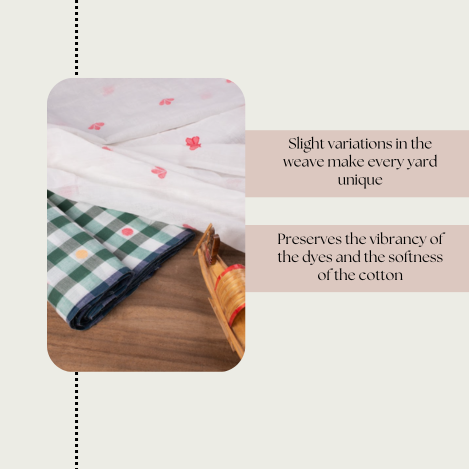
Unlike mass-produced fabrics, handloom cotton has a distinct soul. The slight variations in the weave make every yard unique. For designers, this adds a layer of "luxury" that cannot be replicated by machines. Whether you are looking for vibrant Orange Cotton Fabric for a summer collection or earthy tones, the handloom process preserves the vibrancy of the dyes and the softness of the cotton.
Social Impact as a Brand Value
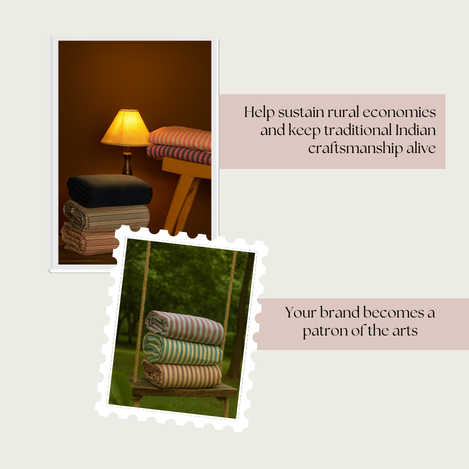
When you source from cotton textile manufacturers in India who prioritize artisan welfare, your brand becomes a patron of the arts. You help sustain rural economies and keep traditional Indian craftsmanship alive. This story is a powerful marketing tool that resonates deeply with conscious consumers.
Versatility in Design
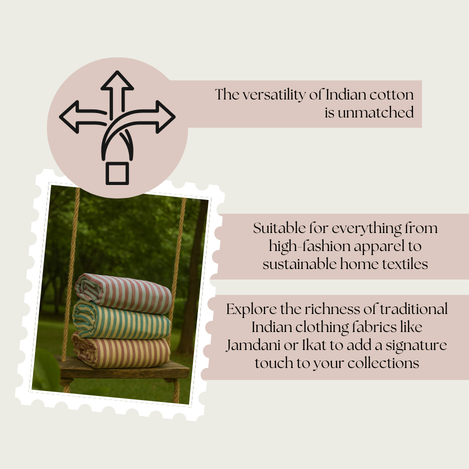
From lightweight mulmuls to heavy-duty cotton canvas, the versatility of Indian cotton is unmatched. It is suitable for everything from high-fashion apparel to sustainable home textiles. You can explore our full range of sustainable fabrics to see how different textures can elevate your brand's aesthetic.
Expert Tip: Don't limit your brand to just plain cotton. Explore the richness of traditional Indian clothing fabrics like Jamdani or Ikat to add a signature touch to your collections.
Common Mistakes to Avoid When Sourcing Wholesale Cotton
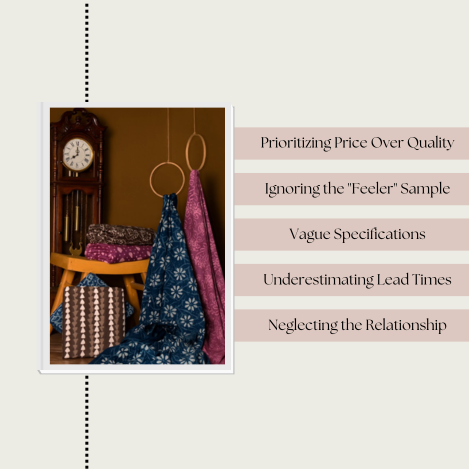
- Prioritizing Price Over Quality: Extremely low prices often indicate a lack of fair wages or the use of inferior, chemically-heavy yarns.
- Ignoring the "Feeler" Sample: Never skip the sampling stage. Digital photos can be deceiving regarding the actual "hand" of the fabric.
- Vague Specifications: Be incredibly specific about GSM, weave type, and Pantone colors. "Blue cotton" is not a specification; "120 GSM Plain Weave Cotton in Pantone 19-4052" is.
- Underestimating Lead Times: Always build a 2-4 week buffer into your production calendar, especially when dealing with handwoven textiles.
- Neglecting the Relationship: B2B sourcing is a partnership. Regular check-ins and a collaborative approach lead to better quality and more reliable supply chains.
Conclusion
Sourcing wholesale cotton fabric from India offers an incredible opportunity for brands to combine quality, sustainability, and heritage. By understanding the cotton fabric manufacturing process and carefully vetting cotton textile manufacturers in India, you can build a supply chain that is not only efficient but also ethically sound.
At Anuprerna, we are committed to being more than just a supplier. we are your partners in sustainable growth, connecting you with the finest artisan clusters of East India. By choosing handloom and ethically manufactured cotton, you are making a statement about the kind of future you want for the fashion industry, one that respects the maker as much as the wearer.
Ready to elevate your collection with authentic Indian cotton? Contact Anuprerna today to discuss your wholesale requirements and request a sample swatches.
most asked questions
Why should I choose handloom wholesale cotton fabric over mill-made fabric?
Handloom cotton offers superior breathability and a unique texture that machine-made fabrics cannot replicate. From a B2B perspective, it allows for lower MOQs and provides a powerful sustainability narrative for your brand. It also has a significantly lower carbon footprint as it doesn't require electricity for the weaving process.
How do I verify the authenticity of cotton textile manufacturers in India?
Look for transparent documentation regarding their supply chain. Authentic manufacturers will be able to tell you which artisan clusters they work with. Check for certifications like GOTS or membership in recognized craft councils. Requesting a factory or workshop visit (or a virtual tour) is also a great way to verify their operations.
What are the typical MOQs for wholesale fabric suppliers in India?
MOQs vary widely. Large industrial mills may require 1,000+ meters per color. However, sustainable and artisan-focused suppliers like Anuprerna often offer much lower MOQs, sometimes as low as 30-50 meters for certain handloom fabrics, making it accessible for boutique labels and startup brands.
How long does the cotton fabric manufacturing process take for bulk orders?
For handloom fabrics, the lead time is generally longer than powerloom. Depending on the complexity of the weave and the quantity, it can take anywhere from 6 to 12 weeks. This includes yarn preparation, dyeing, weaving, and quality checks. Always factor in seasonal variations, such as the monsoon season, which can affect drying times.
Can I get custom colors and designs when ordering wholesale cotton fabric?
Yes, most high-quality manufacturers offer custom dyeing (using Pantone references) and can even develop custom weave patterns. However, custom developments usually come with slightly higher MOQs and longer lead times for the sampling and approval process.
More Blogs

khadi jeans for men: styling sustainable denim
eco-friendly trims: sourcing sustainable fashion accessories
how to choose the right fabric wholesaler for your brand
what to look for in a silk manufacturer before you source
how does sustainable sourcing affect clothing quality?
what is a sustainable designer? roles, responsibilities, and impact