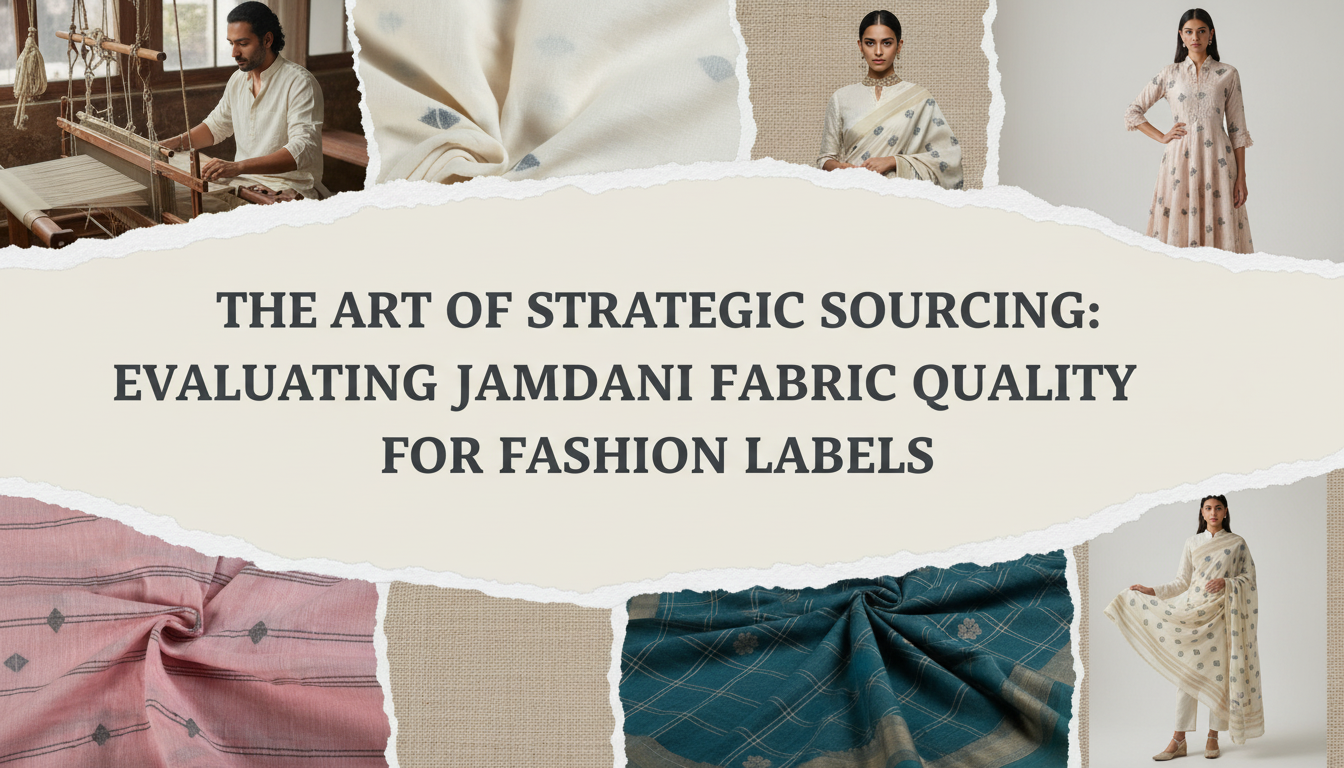
Strategic Sourcing: Evaluating Jamdani Fabric Quality for Fashion Labels

For high-end fashion labels and boutique designers, Jamdani is more than just a textile; it is "woven air." This UNESCO-recognized craft, originating from the historic Bengal region, represents the pinnacle of handloom weaving. However, for a sourcing manager or a creative director, the transition from admiring a swatch to managing a large-scale production run presents significant challenges. The market is saturated with "Jamdani-style" powerloom fabrics that mimic the aesthetic but lack the soul, durability and ethical value of the authentic craft.
When sourcing jamdani fabric, the stakes are high. Global brands require not only aesthetic excellence but also consistency, scalability, and ethical transparency. This guide serves as a strategic roadmap for fashion labels to navigate the complexities of the Indian textile market. We will explore how to identify a reputable jamdani fabric wholesaler, establish stringent jamdani quality standards, and implement a bulk fabric inspection protocol that safeguards your brand’s reputation. Whether you are based in New York City or London, understanding the nuances of this heritage craft is the first step toward a successful partnership with textile wholesale suppliers.
Establishing Jamdani Quality Standards: Beyond the Surface
The first step in strategic sourcing is defining what constitutes "quality" in a handwoven textile. Jamdani is unique because its patterns are not printed or embroidered; they are woven into the fabric using a supplementary weft technique.
The Supplementary Weft Technique
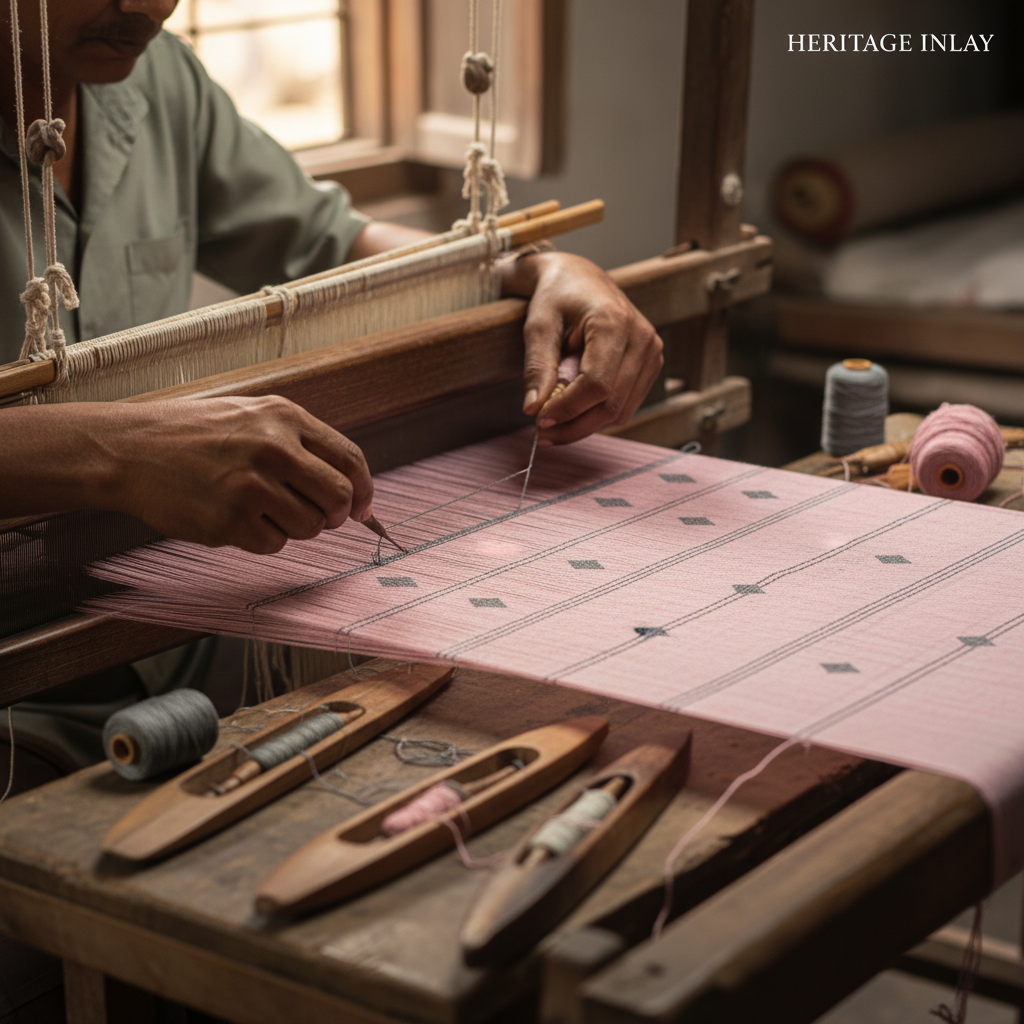
In authentic Jamdani, the weaver uses a fine bamboo or needle-like tool (often called a poti or kandur) to manually add the pattern threads between the warp and weft. This is a "discontinuous" weft, meaning the pattern thread only travels where the motif exists.
- Quality Indicator: Look at the reverse side of the fabric. In handwoven Jamdani, the motifs appear almost as clear as they do on the front, with very few loose threads. If you see long "floats" (loose threads) spanning the back of the fabric, it is likely a machine-made imitation or a lower-grade "cut-work" fabric.
Yarn Count and Fabric Hand-Feel
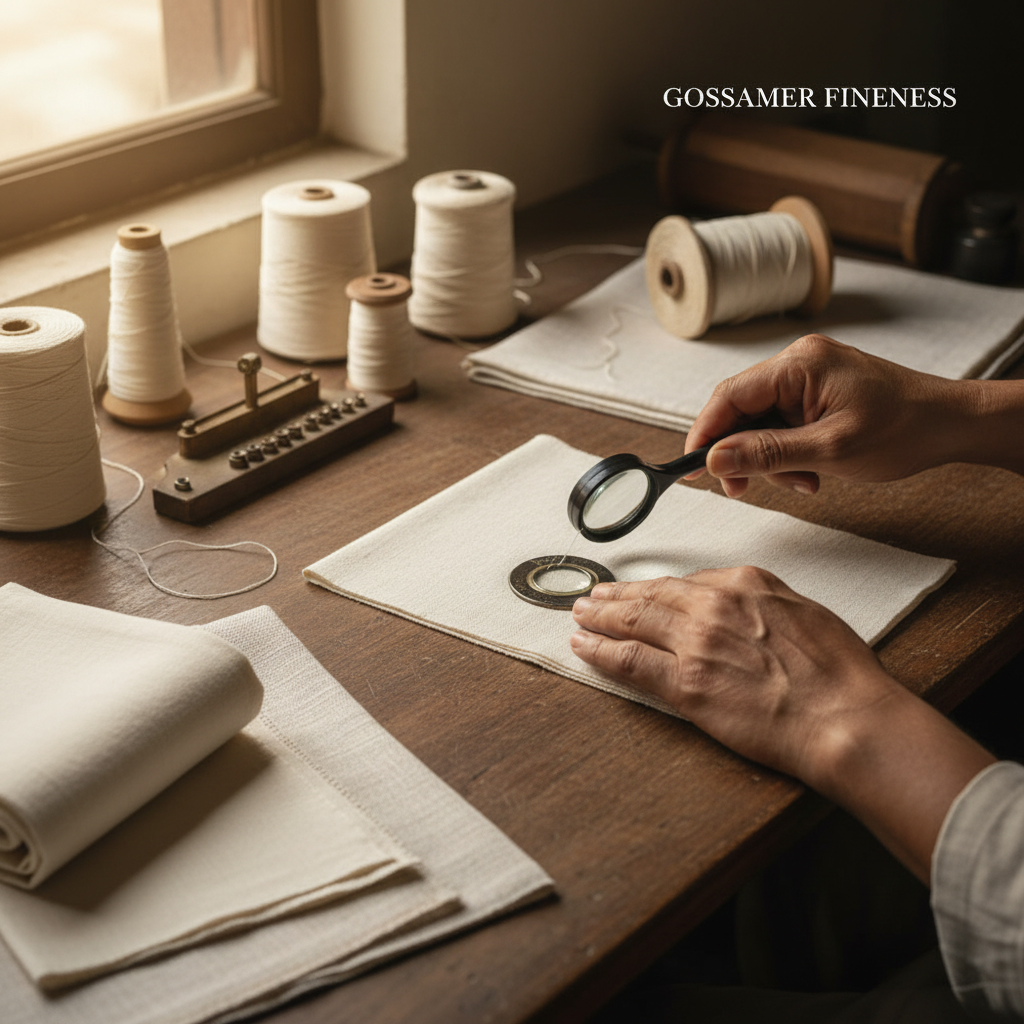
Jamdani is traditionally woven with high-count cotton (often 80s, 100s, or even finer). The finer the yarn, the more skillful the weaver must be to prevent breakage.
- Sourcing Tip: When evaluating samples from a jamdani fabric wholesaler, request the specific yarn count. High-quality Jamdani should feel light, breathable, and have a soft "drape" that improves with every wash.
Dye Fastness and Sustainability
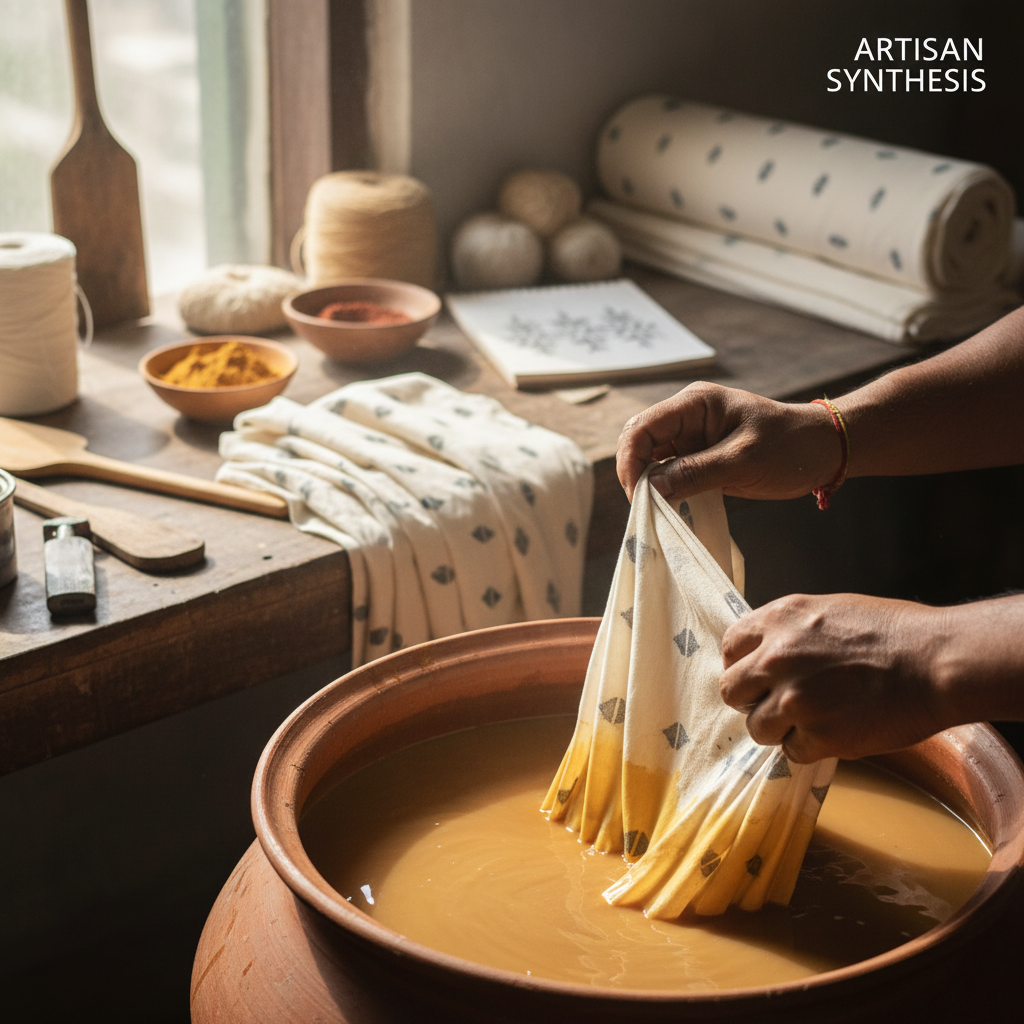
As a sustainable textile manufacturer, Anuprerna emphasizes the use of AZO-free dyes or natural dyes. For fashion labels, dye migration can ruin a collection. Ensure your textile wholesale suppliers provide test reports for colorfastness to rubbing and washing. This is a critical component of smart sourcing for your brand.
Finding the Right Jamdani Fabric Wholesaler
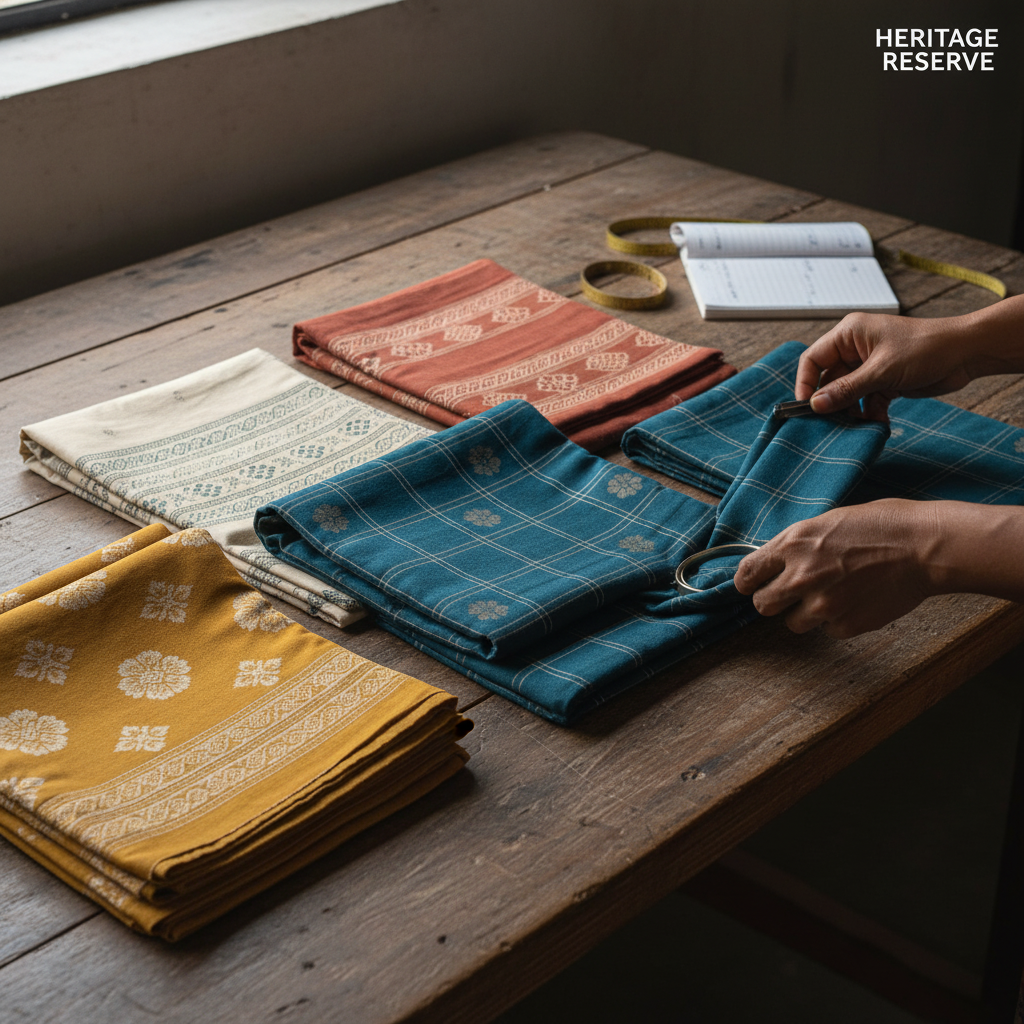
Not all wholesalers are created equal. In the B2B textile world, the "middleman" often obscures the origin of the fabric, leading to inconsistent quality and unethical labor practices.
Direct Artisan Integration
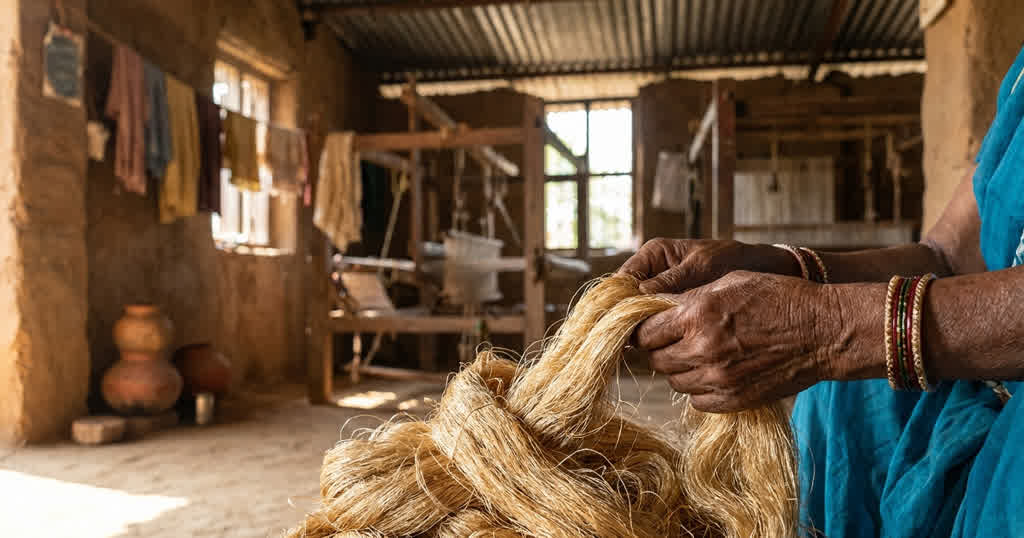
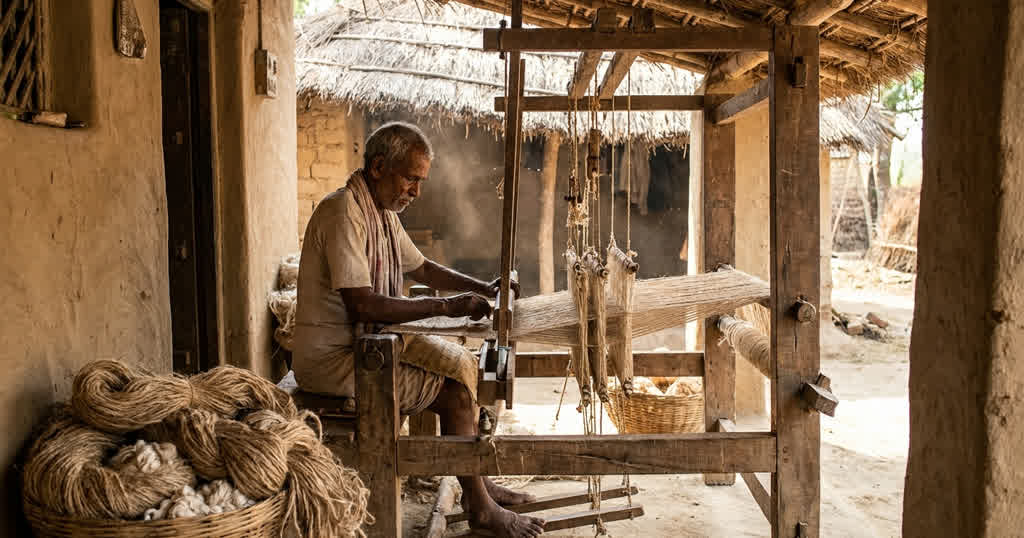
A strategic partner should have a direct link to artisan clusters. At Anuprerna, we work closely with weavers across East India, ensuring that the "hand" of the weaver is respected while meeting international quality benchmarks. When you choose a jamdani fabric wholesaler, ask about their supply chain. Do they know the village where the fabric was woven? Do they ensure fair wages?
Customization and Scalability
Fashion labels often require exclusive motifs or specific colorways. A superior wholesaler should offer:
- Low MOQs for Sampling: To allow for prototyping.
- Scalable Production: The ability to move from 50 meters to 500 meters without a drop in quality.
- Design Support: Translating your digital tech packs into handloom-friendly weaving instructions.
If you are sourcing for a brand in Manhattan or Brooklyn, you need a partner who understands the fast-paced nature of the fashion calendar while respecting the slow-fashion process of handweaving.
Bulk Fabric Inspection: A Checklist for Fashion Labels
Once you have selected a supplier and placed an order, the bulk fabric inspection phase is your primary defense against production errors. Unlike machine-made textiles, handloom fabrics possess "charming irregularities," but these must stay within acceptable tolerances.
1. Visual Inspection (The 4-Point System)
Most global brands use the 4-point system to grade fabric quality. For Jamdani, pay close attention to:
- Motif Consistency: Are the motifs spaced evenly? While slight variations prove it is hand-made, drastic shifts in pattern size indicate a lack of weaver focus.
- Slubs and Neps: Small knots in the yarn are natural in hand-spun cotton, but excessive "thick and thin" patches can affect the garment's structural integrity.
2. Dimensional Stability
Handwoven fabrics are prone to shrinkage. A professional textile export wholesale partner should provide pre-shrunk (sanforized) fabric or clearly state the expected shrinkage percentage (usually 3-5% for cotton Jamdani).
3. Weft Distortion (Bowing and Skewing)
Because Jamdani is woven on manual looms, the weft can sometimes become slanted. Check that the motifs are perpendicular to the selvedge. This is vital for pattern cutting in high-end garment construction.
For a deeper dive into these technicalities, refer to our strategic guide to sourcing fabrics wholesale in India.
Navigating Textile Export Wholesale Logistics
Sourcing the fabric is only half the battle; getting it to your cutting floor is the other. The complexities of textile export wholesale involve customs, duties, and specialized packaging to protect delicate handwoven fibers.
Export Documentation and Compliance
When working with Indian textile wholesale suppliers, ensure they are well-versed in:
- Certificate of Origin: Necessary for preferential duty rates in certain countries.
- Fumigation and Phytosanitary Certificates: Often required for natural fiber exports.
- Eco-Labels: Certifications like GOTS (Global Organic Textile Standard) or Fair Trade labels add immense value to your final product.
Logistics for Global Hubs
Whether you are shipping to Queens or international fashion capitals, your wholesaler should offer flexible shipping options (Air Freight for samples/urgent drops and Sea Freight for bulk). Understanding the logistics of fabric wholesale is essential for maintaining your production timeline.
Why Anuprerna is the Preferred Partner for Global Labels
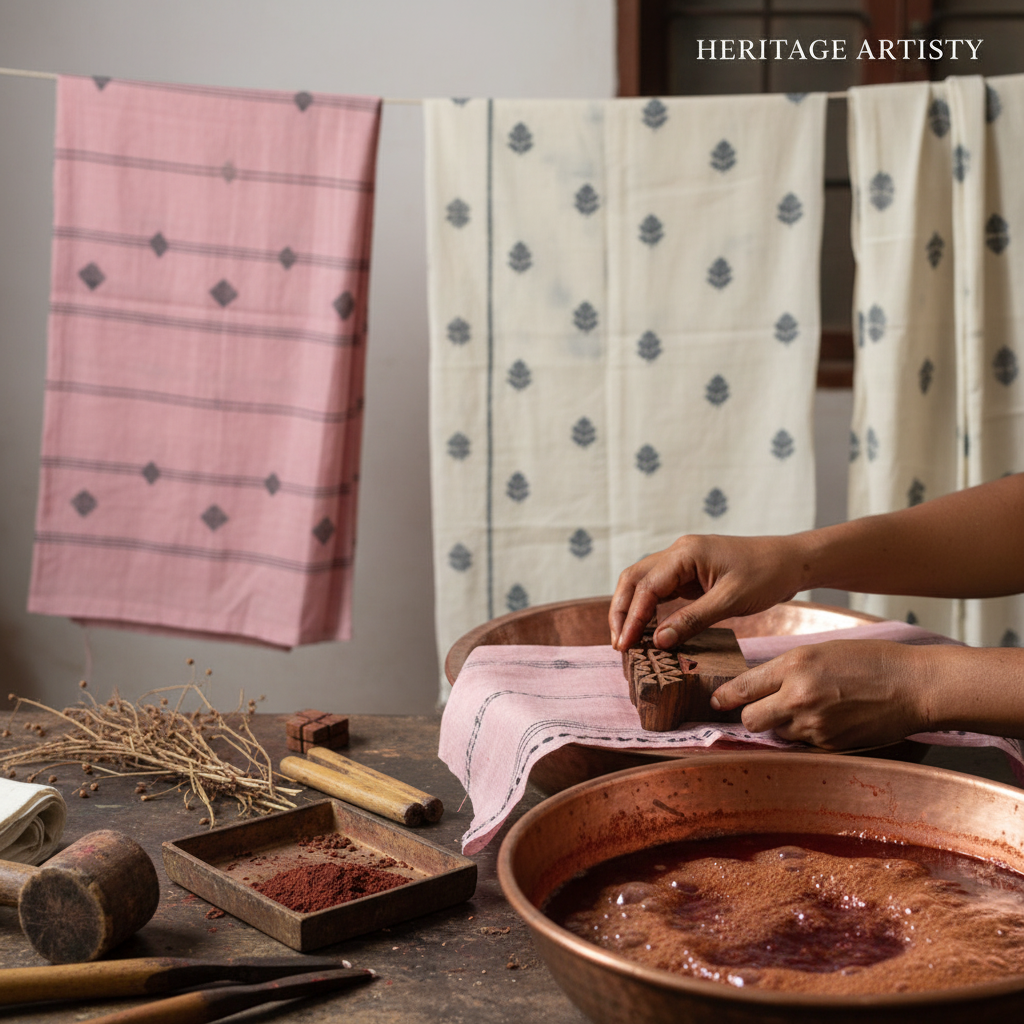
At Anuprerna, we bridge the gap between traditional Indian craftsmanship and the rigorous demands of the global fashion industry. We don't just act as a jamdani fabric wholesaler; we act as your manufacturing partner on the ground.
- Transparency: We provide a clear window into our artisan communities.
- Quality Assurance: Every meter of fabric undergoes a multi-stage bulk fabric inspection before it leaves our facility.
- Sustainability: We prioritize handloom processes that have a near-zero carbon footprint and provide a dignified livelihood to rural artisans.
Discover the top 10 reasons to choose Anuprerna for your next collection.
Conclusion
Sourcing Jamdani fabric requires a balance of artistic appreciation and technical rigor. By establishing clear jamdani quality standards, vetting your jamdani fabric wholesaler for ethical practices, and implementing a robust bulk fabric inspection routine, your fashion label can leverage the beauty of Indian heritage textiles without compromising on quality or delivery timelines.
Authentic Jamdani tells a story of patience, skill, and cultural pride. As a designer or brand owner, your choice of supplier determines whether that story is one of quality and sustainability. Partner with a supplier who values the craft as much as you value your brand.
Ready to source authentic Jamdani for your next collection? Explore our Fabric Wholesaler Catalog and connect with our team to request samples.
most asked questions
How can I tell the difference between handloom Jamdani and powerloom imitations?
The most reliable way to identify handloom Jamdani is by inspecting the reverse side. In authentic hand-woven Jamdani, the supplementary weft motifs are "locked" into the weave, appearing nearly identical on both sides with no long, loose threads (floats). Powerloom versions often use a "cut-work" technique where threads are clipped on the back, leaving a fuzzy texture, or they use embroidery that sits on top of the fabric rather than being integrated into the weave.
What are the typical MOQs when sourcing jamdani fabric from a wholesaler?
Minimum Order Quantities (MOQs) vary depending on the complexity of the design. For standard patterns, a jamdani fabric wholesaler like Anuprerna may offer MOQs as low as 30-50 meters per colorway. For custom-developed motifs, the MOQ might be higher to account for the time taken to set up the loom (warping and drafting), which is a labor-intensive manual process.
Why is bulk fabric inspection so critical for handwoven textiles?
Handwoven textiles are inherently prone to human variance. While these "imperfections" are a mark of authenticity, they must be managed to ensure garment consistency. Bulk fabric inspection identifies issues like "bars" (uneven weft tension), shade variations between different loom lots, and dimensional stability issues. Catching these at the source prevents costly errors during the garment construction phase in your factory.
Does Jamdani fabric require special care during garment production?
Yes. Because Jamdani is often woven with fine, high-count yarns and features delicate supplementary motifs, it should be handled with care. We recommend using fine needles (size 60/8 or 70/10) to prevent snagging the threads. Additionally, because it is a natural fiber, pre-washing or steam-pressing is essential to manage shrinkage before the cutting process begins.
How do textile wholesale suppliers ensure ethical production in Jamdani weaving?
Ethical textile wholesale suppliers maintain direct relationships with weaver cooperatives or individual artisan households. This ensures that the "living wage" reaches the weaver directly. At Anuprerna, we focus on social sustainability by providing year-round work, which prevents seasonal migration and helps preserve the Jamdani craft for future generations.
More Blogs

khadi jeans for men: styling sustainable denim
eco-friendly trims: sourcing sustainable fashion accessories
how to choose the right fabric wholesaler for your brand
what to look for in a silk manufacturer before you source
how does sustainable sourcing affect clothing quality?
what is a sustainable designer? roles, responsibilities, and impact