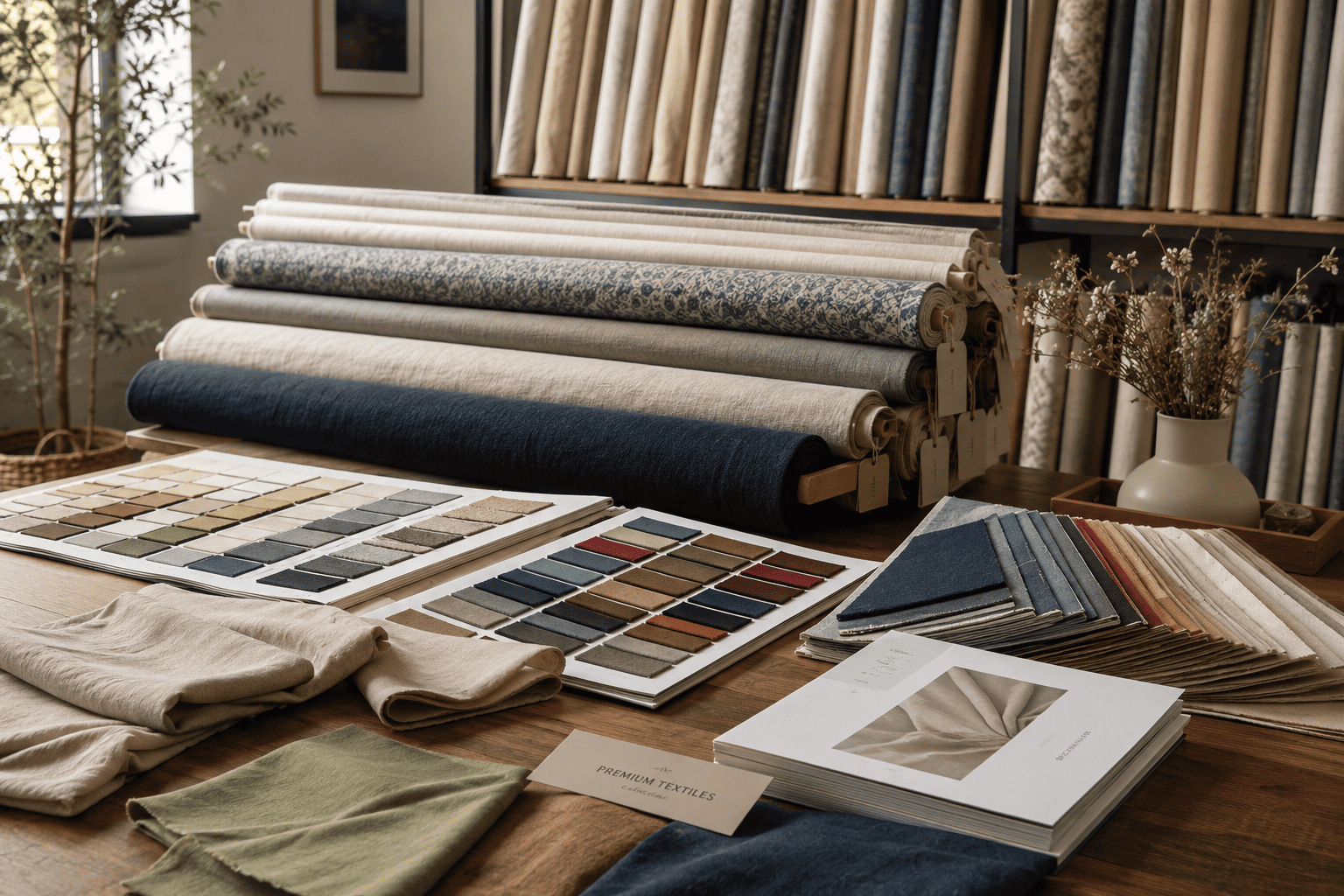
How to Choose the Right Fabric Wholesaler for Your Brand

Choosing the right fabric wholesaler is an important decision for any fashion brand, apparel manufacturer, boutique, or textile business. The fabric you source affects not only the look and feel of your finished product but also its quality, pricing, production timeline, and customer experience.
With so many suppliers offering different fabrics, prices, minimum order quantities, and production capabilities, finding the right partner can sometimes feel overwhelming.
The goal should not simply be to find the cheapest fabric. Instead, you need a supplier who can consistently deliver the right quality, quantity, pricing, and service for your business.
Why the Right Fabric Wholesaler Matters
Fabric is more than a raw material. It influences how a garment falls, feels, looks, and performs.
For a fashion brand, an inconsistent fabric can create problems during cutting and stitching. Differences in colour, texture, weave, or finishing between batches can also affect the consistency of a collection.
A dependable supplier, on the other hand, can make the sourcing process more predictable. They can help you understand available fabrics, recommend suitable materials, provide samples, and manage repeat orders more efficiently.
This becomes particularly important when working with natural and handcrafted textiles, where subtle variations may naturally occur.
The right sourcing partner should therefore offer more than a catalogue of fabrics. They should understand your requirements and have the capability to support your production needs.
Start by Defining Your Fabric Requirements
Before searching for wholesale fabric suppliers, determine exactly what you need.
Start with the basics:
- Fibre or material
- Fabric construction
- Desired texture and hand feel
- Colour requirements
- Width
- Intended garment or product
- Approximate order quantity
- Required delivery timeline
- Customisation requirements
For example, a summer apparel collection may require breathable cotton or lightweight linen, while a festive collection may call for silk, textured handwoven fabrics, or richly patterned textiles.
Having a clear brief makes it easier for suppliers to recommend appropriate options and allows you to compare different quotations accurately.
It also prevents a common sourcing problem: discovering a beautiful fabric that does not actually work for your intended product.
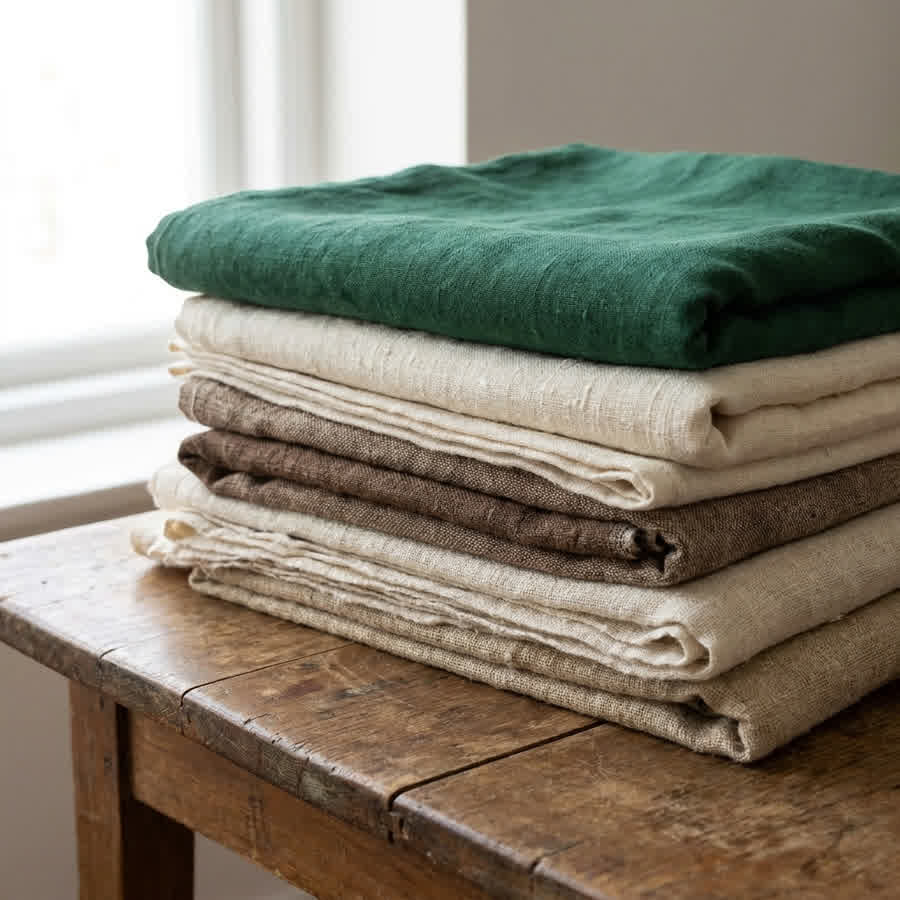
Evaluate Fabric Quality Before Placing a Bulk Order
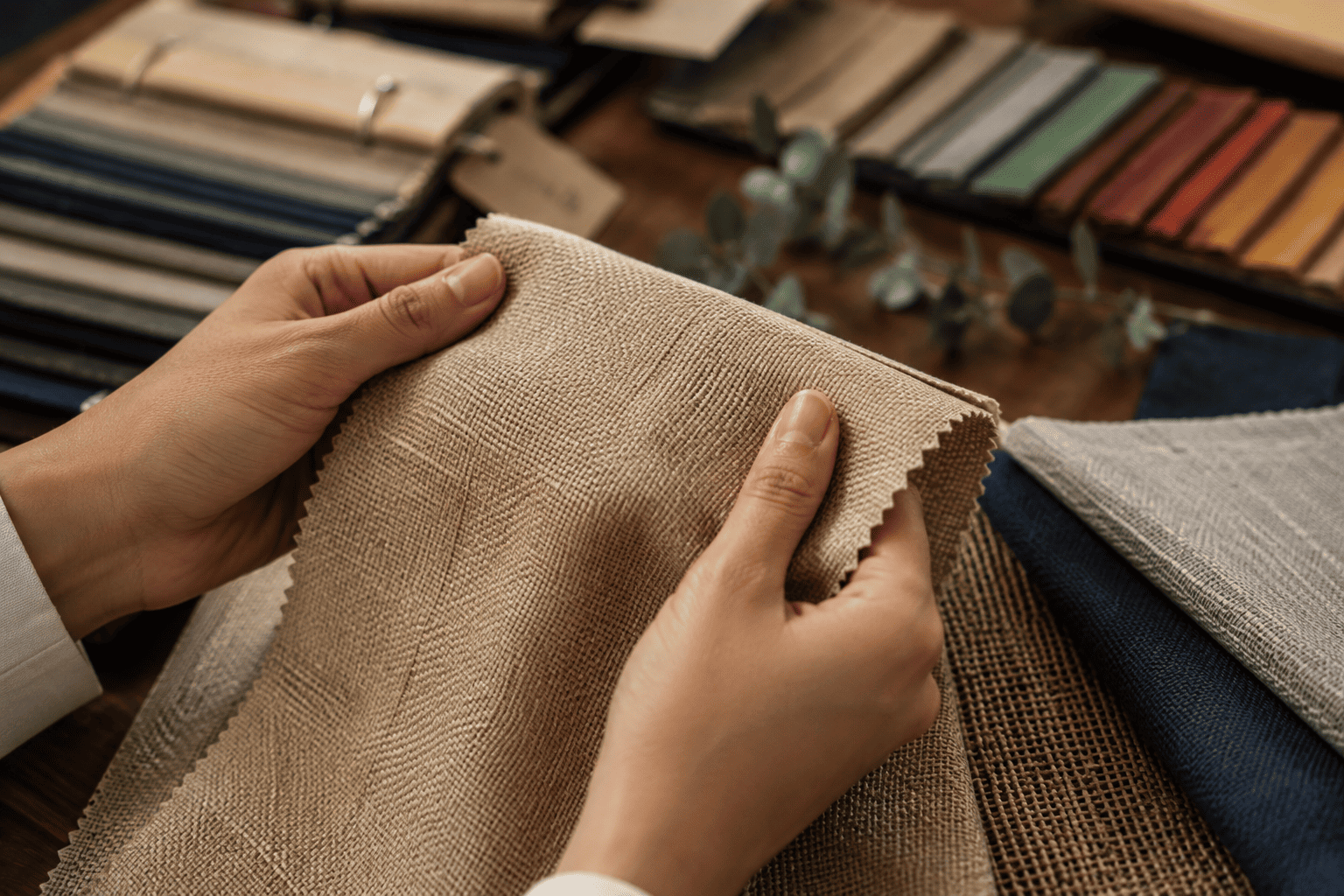
Don't rely only on online photographs when choosing a supplier. Request fabric swatches to assess the material before placing a large order.
Check:
- Texture and hand feel
- Weave or knit structure
- Colour and drape
- Surface consistency
- Fabric strength
- Finishing and fibre composition
- Shrinkage, where relevant
For garments, test the fabric during cutting, stitching, and washing to ensure it performs as expected.
Don't Skip the Sampling Stage
A sample is a relatively small investment compared with the cost of purchasing a large quantity of unsuitable fabric.
Use the sampling stage to determine whether the textile actually meets your design and production requirements before scaling your order.
Look Beyond Price When Choosing a Fabric Wholesale Supplier
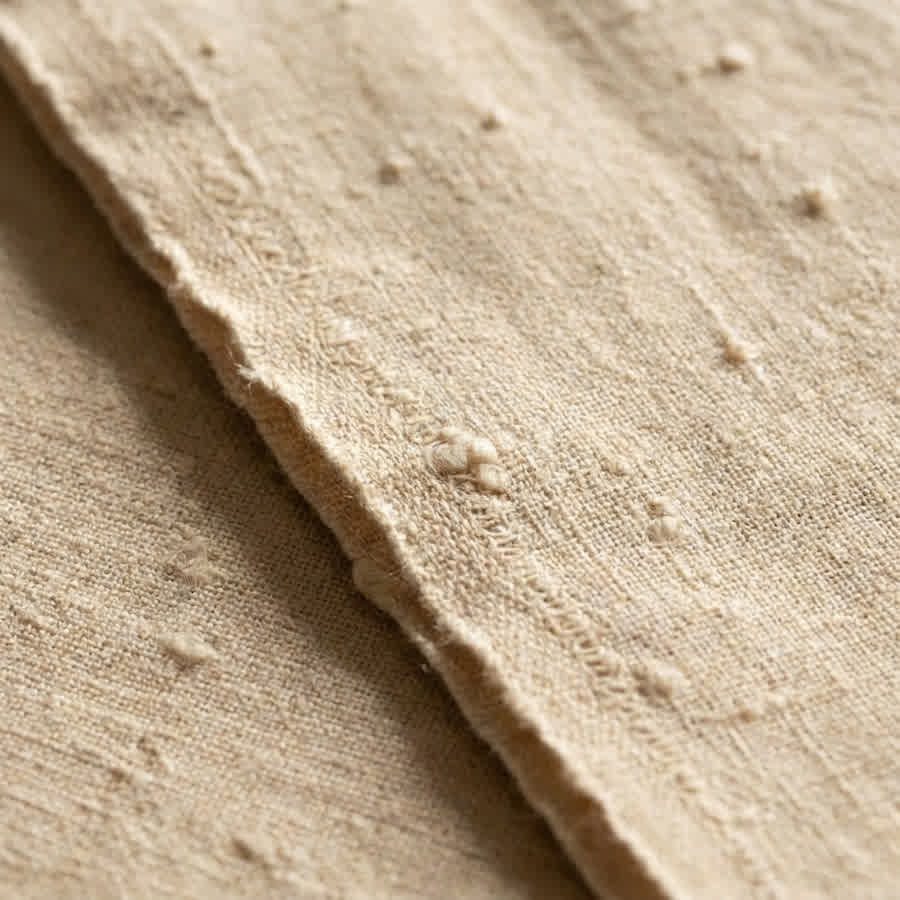
Price naturally plays an important role in wholesale sourcing. However, it should not become the only deciding factor.
A supplier offering a lower price may not necessarily offer better value if the fabric has inconsistent quality, high defect rates, unpredictable lead times, or limited support.
When evaluating a fabric wholesale supplier, consider the complete sourcing experience.
Ask yourself:
- Is the fabric quality consistent?
- Are product specifications clearly communicated?
- Is the MOQ suitable for my business?
- Are lead times realistic?
- Can the supplier handle repeat orders?
- Is communication quick and clear?
- Are samples available?
- Can the supplier support custom requirements?
One Useful Comparison
When comparing two potential suppliers, look at the overall value instead of comparing only the price per metre.
Explore the Supplier's Fabric Range
A supplier's product range can provide useful insight into their expertise.
Some suppliers specialise in specific materials, while others work across different fibres, weaving methods, printing techniques, and finishes.
Depending on your collection, you may be looking for:
- Cotton fabrics
- Khadi
- Raw silk
- Tussar silk
- Eri silk
- Linen
- Hemp fabrics
- Handwoven textiles
- Naturally dyed fabrics
- Hand block printed fabrics
- Jacquard fabrics
- Recycled or upcycled textiles
A supplier with experience in your preferred category may be able to provide better guidance during fabric selection and development.
For instance, a brand specialising in cotton apparel may benefit from working with a cotton fabric wholesaler who understands different cotton constructions, finishes, weaving methods, and their suitability for different garments.
Assess the Experience of a Wholesale Textile Supplier
Experience can make a significant difference in textile sourcing.
An established wholesale textile supplier should be able to discuss the practical aspects of the material rather than simply providing a product name and price.
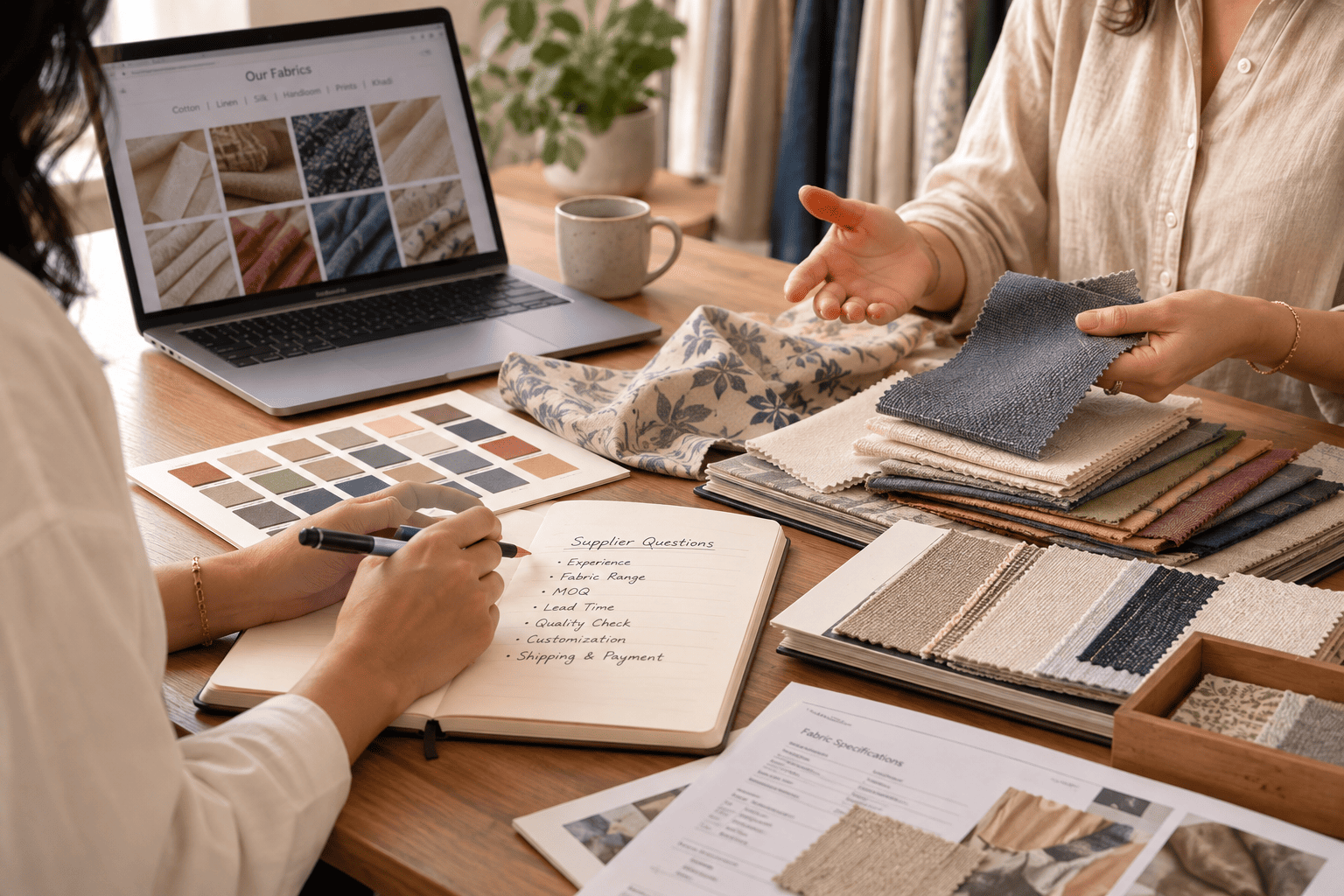
Ask potential suppliers about their experience with similar products and customers.
Useful questions include:
- How long have you been supplying fabrics?
- What types of fabrics do you specialise in?
- Do you provide samples before bulk orders?
- What is your MOQ?
- What is your standard production timeline?
- Can the fabric be reproduced for future collections?
- Do you offer custom colours or designs?
- How is the fabric inspected before dispatch?
- How are quality concerns handled?
- What are your shipping and payment terms?
The way a supplier responds can tell you a lot about their communication style, knowledge, and professionalism.
Consider Fabric Suppliers in India for Diverse Textile Options
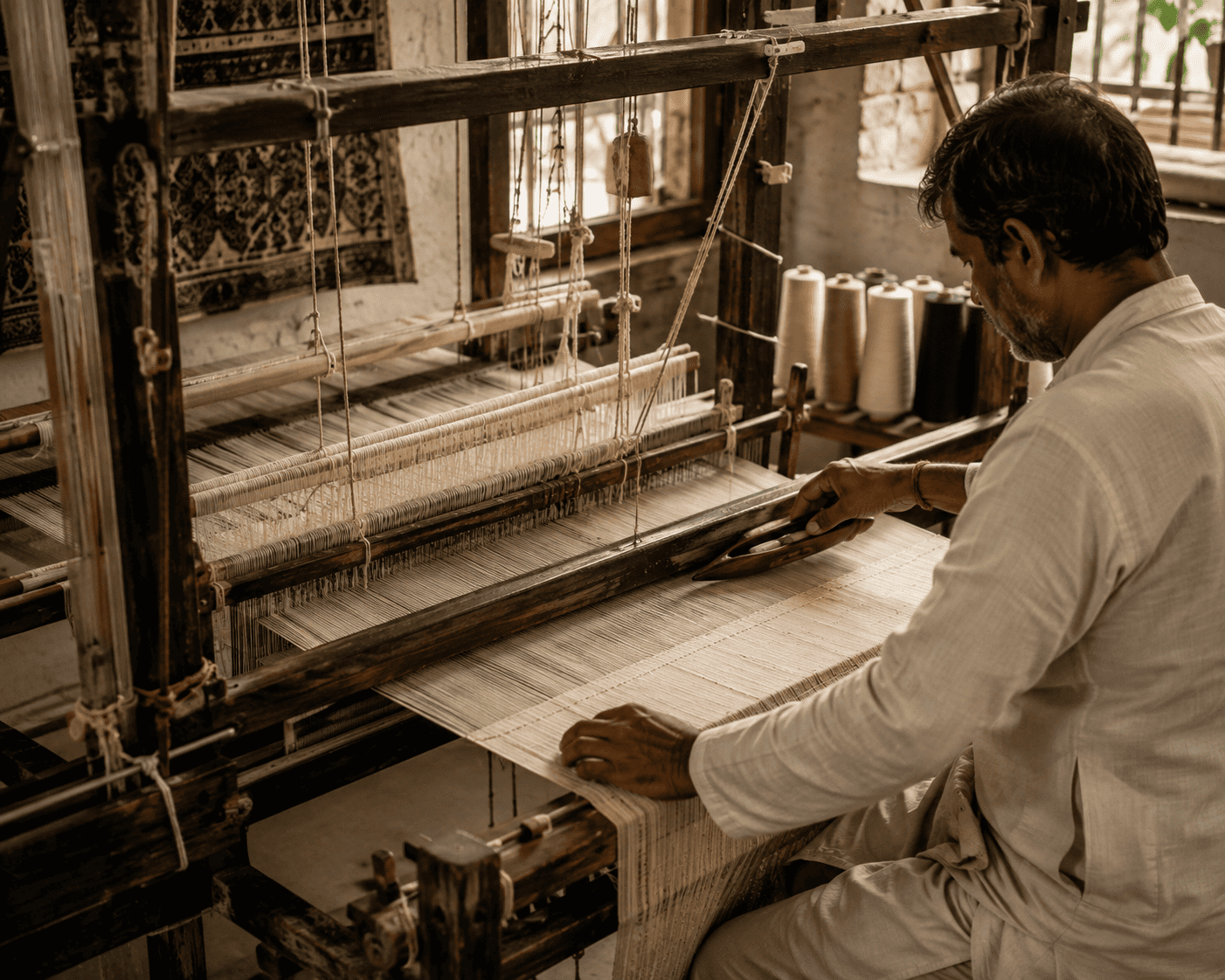
India offers a diverse textile ecosystem, from handloom weaving and silk to cotton, printing, natural dyeing, and regional crafts. Working with fabric suppliers in India can give brands access to both traditional and contemporary textiles.
When evaluating a supplier, consider:
- Product quality
- Production capacity
- MOQ
- Lead times
- Sampling
- Customisation
- Communication
- Shipping
- Quality control
The right supplier should match your quality, quantity, timeline, and sourcing requirements.
Research Fabric Companies in India Carefully
When researching fabric companies in India, use their website, catalogue, and social media to understand their fabric range and expertise—but don't rely on these alone.
Look for information about the materials they work with, wholesale availability, sampling, customisation, and sourcing process. Once you have shortlisted a few suppliers, contact them directly to discuss your specific requirements.
Check MOQ, Pricing and Lead Times
Three practical factors can quickly determine whether a supplier is suitable: MOQ, pricing, and lead time.
Minimum Order Quantity (MOQ) may apply per fabric, colour, design, or custom development. Choose an MOQ that matches your production volume rather than automatically selecting the supplier with the lowest minimum.
When comparing prices, make sure you are comparing similar fabrics. Ask whether the quotation includes custom dyeing or printing, finishing, packaging, shipping, and other applicable charges.
Lead times are equally important. Confirm whether the fabric is in stock or made to order, how long sampling and bulk production will take, and whether customisation will affect the timeline.
For handwoven or handcrafted fabrics, longer production times may be natural, so factor them into your collection planning.
Look for Transparency and Quality Information
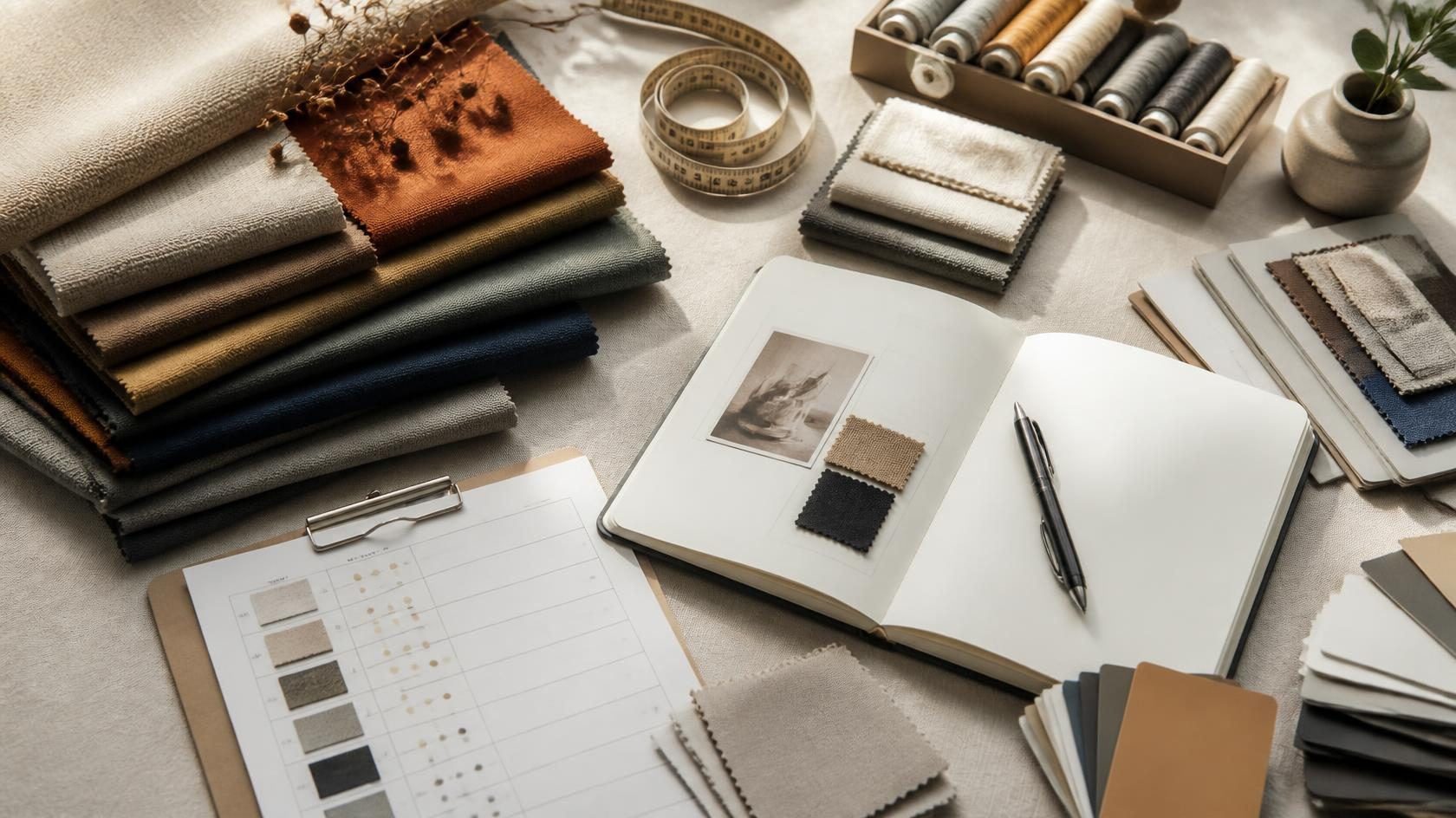
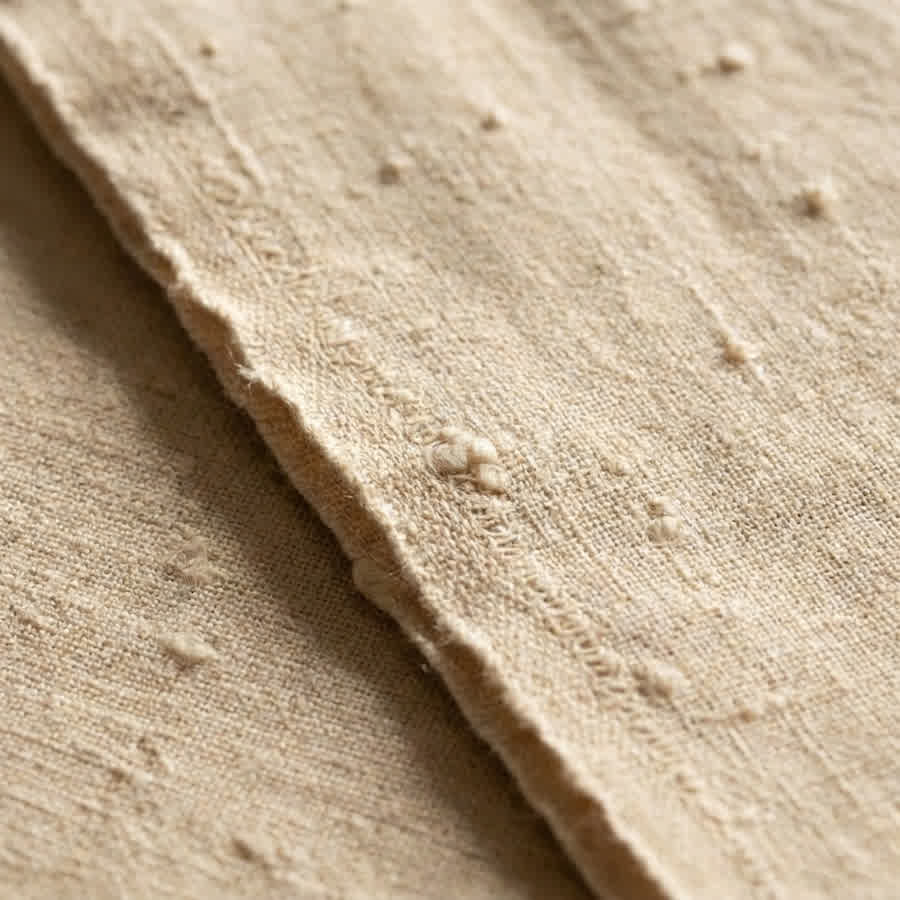
A reliable supplier should be able to clearly explain the fabric they provide. Depending on the textile, this may include its fibre composition, construction, width, finishing, colour options, MOQ, and production timeline.
This is especially important when sourcing natural or handcrafted textiles. Slight variations in colour, texture, or weave may be inherent to the making process rather than defects.
Before placing a bulk order, request samples and confirm that the fabric meets your requirements. This simple step can help prevent costly sourcing mistakes.
Consider Sustainability and Ethical Sourcing
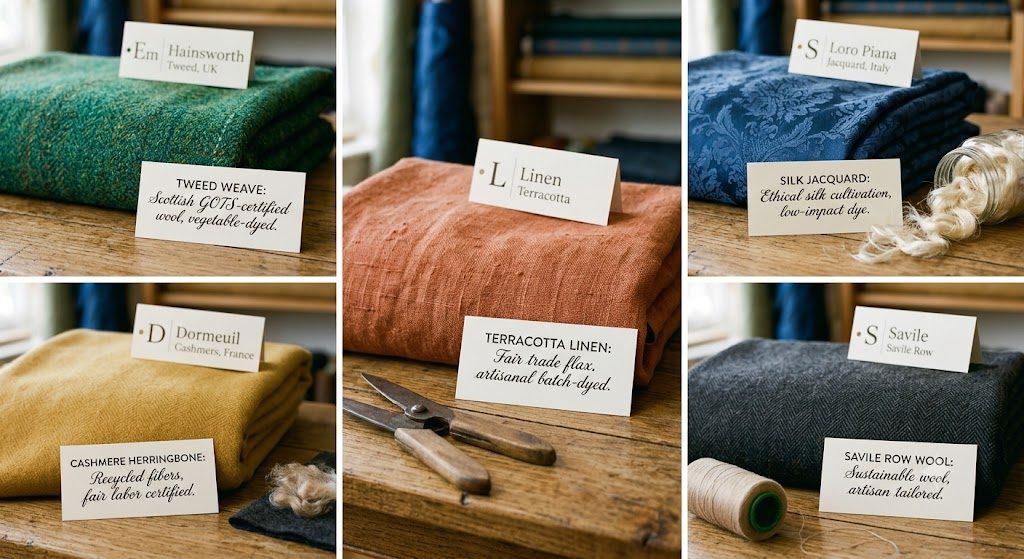
If sustainability is important to your brand, look beyond labels such as "eco-friendly" or "ethical." Ask suppliers how their fabrics are produced and where the materials come from.
Depending on the textile, you may want to understand the fibre source, production method, dyeing or finishing process, artisan involvement, and approach to waste.
Transparent sourcing information can help you make more informed purchasing decisions and communicate your product story more authentically.
Evaluate Suppliers Before Placing a Bulk Order
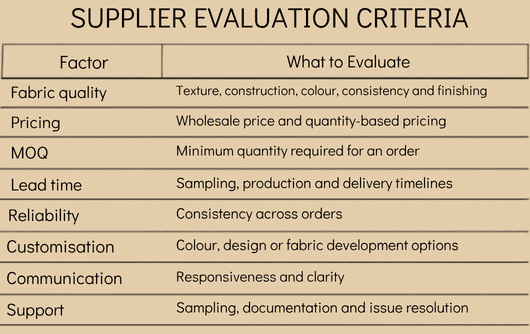
Once you have shortlisted potential suppliers, assess them using a simple checklist:
- Quality: Does the sample meet your expected standard?
- MOQ: Is the minimum order practical for your business?
- Pricing: Are all costs clearly explained?
- Lead time: Can the supplier meet your production schedule?
- Communication: Are questions answered clearly and promptly?
- Capacity: Can they handle both current and future orders?
- Customisation: Can they accommodate specific colours, prints, or fabric requirements?
- Reliability: Can they maintain consistency across repeat orders?
Also watch for red flags such as refusing to provide samples, unclear specifications, constantly changing prices, unrealistic delivery promises, or vague sourcing claims.
A supplier who performs well across these areas is more likely to become a dependable long-term partner.
Build a Long-Term Supplier Relationship
Finding the right supplier is only the first step. A strong working relationship can make future sourcing faster and more efficient.
As suppliers become familiar with your preferred fabrics, colours, quantities, quality expectations, and production schedules, communication becomes easier and repeat orders can be managed more smoothly.
However, successful relationships require effort from both sides. Clear specifications, realistic timelines, timely payments, and professional communication help create a reliable sourcing partnership.
Questions to Ask Before Your First Bulk Order
Before confirming a large order, make sure you have clear answers to these essential questions:
- What is the fabric's fibre composition and construction?
- What is the MOQ and wholesale price?
- Is a sample available before bulk production?
- What is the expected production and delivery timeline?
- Are custom colours, prints, or other modifications available?
- How is the fabric checked for quality?
- What happens if the delivered fabric does not match the agreed specifications?
- Can the supplier support repeat orders?
Getting these details confirmed in advance can reduce misunderstandings and make the sourcing process much smoother.
Choosing the right fabric supplier is about more than finding the lowest price. It means finding a partner who can consistently deliver the quality, reliability, communication, and production support your business needs.
Whether you are exploring fabric suppliers in India or sourcing from another market, take the time to evaluate the supplier as carefully as you evaluate the fabric.
The right supplier can become more than a source of textiles—they can become a dependable partner for developing and growing your future collections.
frequently asked questions
Should I request fabric samples before placing a wholesale order?
Yes. Samples allow you to evaluate the fabric's texture, colour, construction, drape, and overall suitability before investing in a larger quantity.
How can I compare wholesale fabric suppliers?
Compare suppliers based on more than price. Consider quality, MOQ, lead time, product range, customisation, communication, production capacity, and quality-control practices.
How do I find reliable fabric suppliers in India?
Research suppliers based on their fabric range and expertise, then request samples and quotations. Evaluate their quality, MOQ, lead times, communication, production capacity, and sourcing transparency before placing a bulk order.
Can a fabric supplier support custom fabric development?
Some suppliers offer custom colours, prints, weaves, or fabric development. Always discuss your requirements, minimum quantities, development costs, and timelines before proceeding.
How can I build a long-term relationship with a fabric supplier?
Communicate your requirements clearly, set realistic timelines, and maintain professional communication throughout the sourcing process. Consistent collaboration and feedback from both sides help build a reliable, long-term partnership. **Anuprerna also offers a dedicated wholesale program** designed to support brands and designers with their fabric sourcing needs.
More Blogs

khadi jeans for men: styling sustainable denim
eco-friendly trims: sourcing sustainable fashion accessories
what to look for in a silk manufacturer before you source
how does sustainable sourcing affect clothing quality?
what is a sustainable designer? roles, responsibilities, and impact
how celebrity endorsements are shaping the future of sustainable textiles