Why Designers Choose Indian Fabric Wholesale for Unique Collections

A designer finalises a twelve-piece capsule, then spots near-identical printed viscose in three competitor lookbooks. The sketches were original, but the cloth was catalogue stock anyone could order. That is usually the moment a brand starts looking at indian fabric wholesale as a way to change the fabric itself, not just the silhouette.
The stakes are higher now than a few seasons ago. Retail buyers and customers ask where the fibre grew, who spun it and what dyed it, and a vague eco-label no longer survives that conversation. A collection built on traceable handloom cloth carries its own proof, while a collection built on mass-produced synthetics carries a greenwashing risk the designer has to defend.
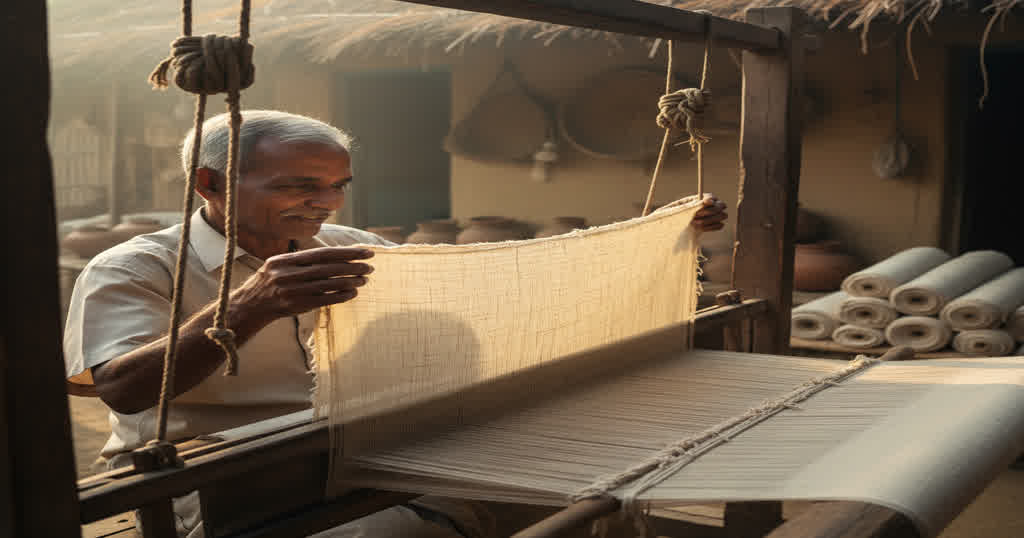
Beyond the Loom: The Strategic Advantage of [Indian Fabric Wholesale](https://anuprerna.com/blogs/indian-fabric-wholesale-a-guide-to-sourcing-handwoven-textiles/199940627)
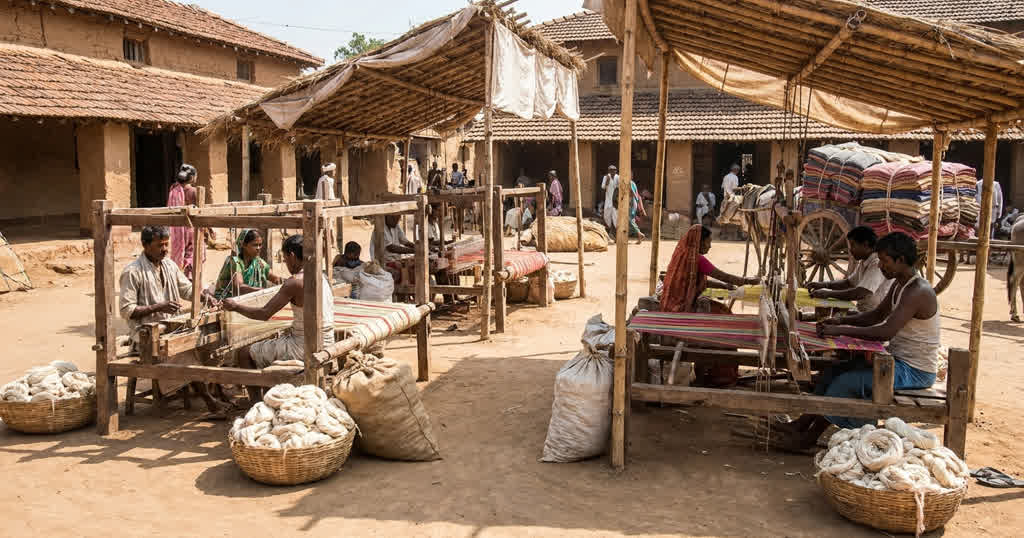
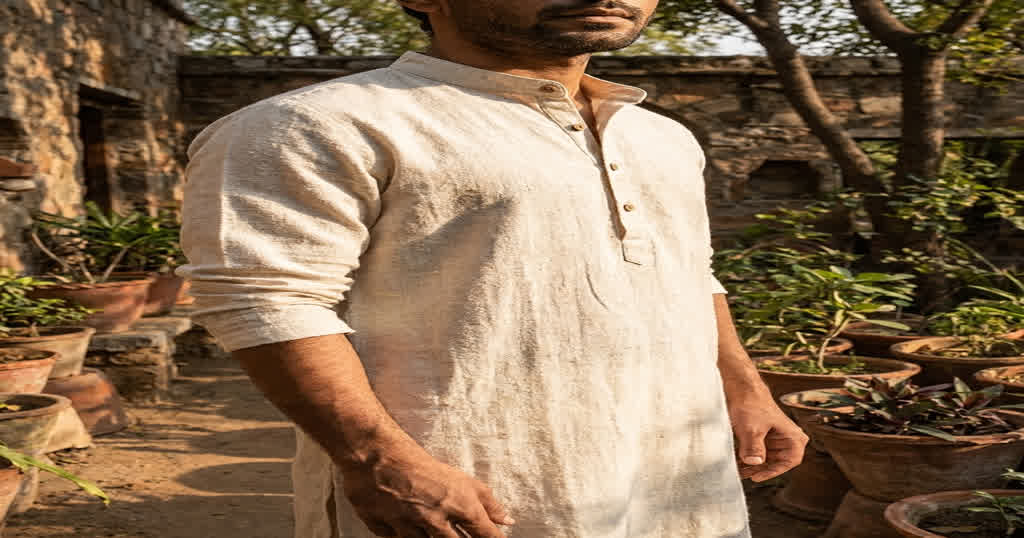
 — Anuprerna handloom](https://media.anuprerna.com/b683a9b1a80f4192a781c5b6a133db9a.jpg)
Designers choose indian fabric wholesale because it delivers non-replicable cloth and a verifiable low-carbon story in a single purchase. Handloom is the rare category where the product difference and the sustainability evidence come from the same source.
Differentiation That Cannot Be Copied
India's tradition of hand-spun and handwoven cloth, Khadi, Jamdani and Ikat among them, stretches back millennia. It survives as a decentralized cottage industry, with weaving techniques passed down inside regional communities. Each region keeps its own motif vocabulary, so a Bengal Jamdani floral and an Ikat resist-dyed pattern cannot be reproduced by a roller-printing mill.
For a boutique label, that matters commercially. A motif woven into the cloth, rather than printed on it, makes a capsule hard to knock off and easy to describe in a product story.
ESG Evidence You Can Resell
Handloom needs no electricity at the loom, and hand-spinning removes a mechanised step. That gives a low-carbon production profile that mass-produced synthetic alternatives struggle to match. Natural fibres also avoid the microplastic shedding associated with synthetics.
Sourcing from established Indian fabric suppliers gives sustainability leads three things they can use:
- Traceable origin: the cluster, and often the weaver, behind a given metre.
- Social compliance: fair, home-based or small-workshop livelihoods in rural districts.
- Narrative value: a heritage craft story a customer can read on a hang tag.
We say plainly to designers that handloom is not a shortcut to a well suited ESG score. It is a documented, defensible starting point, and documentation is what sourcing directors need when a retail partner asks for evidence.
Decoding the Weave: Material Science of Handloom Textiles
Handloom fabrics span 30 GSM to 250 GSM and rely on breathable natural fibres whose hand-spun yarn gives them a distinct tensile character. For designers, that range covers almost every garment category, from sheer shirting to structured outerwear.
GSM Range From Sheer to Structured
GSM means grams per square metre, the standard measure of fabric weight. Handloom covers a wide span of it:
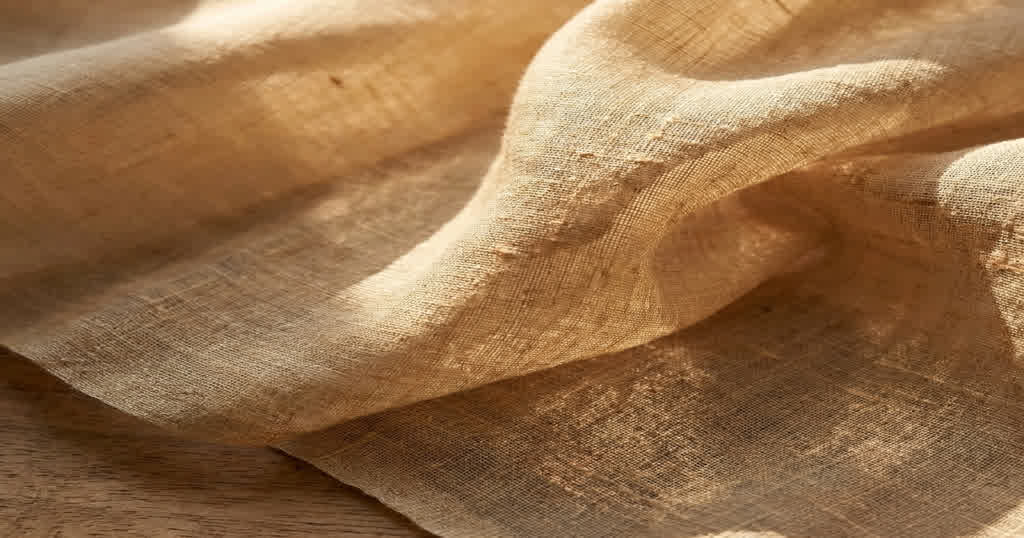
- Jamdani muslin at about 30 GSM: sheer, airy cloth for scarves, summer layers and resort shirting.
- Mid-weight organic cotton and linen: dependable cloth for shirts, dresses and relaxed tailoring.
- Heavy Khadi at up to 250 GSM: sturdy, textured cloth that holds shape in jackets and trousers.
Matching GSM to garment before ordering avoids the usual sampling mistake of choosing a beautiful cloth that drapes wrongly.
Fibres and Tensile Strength
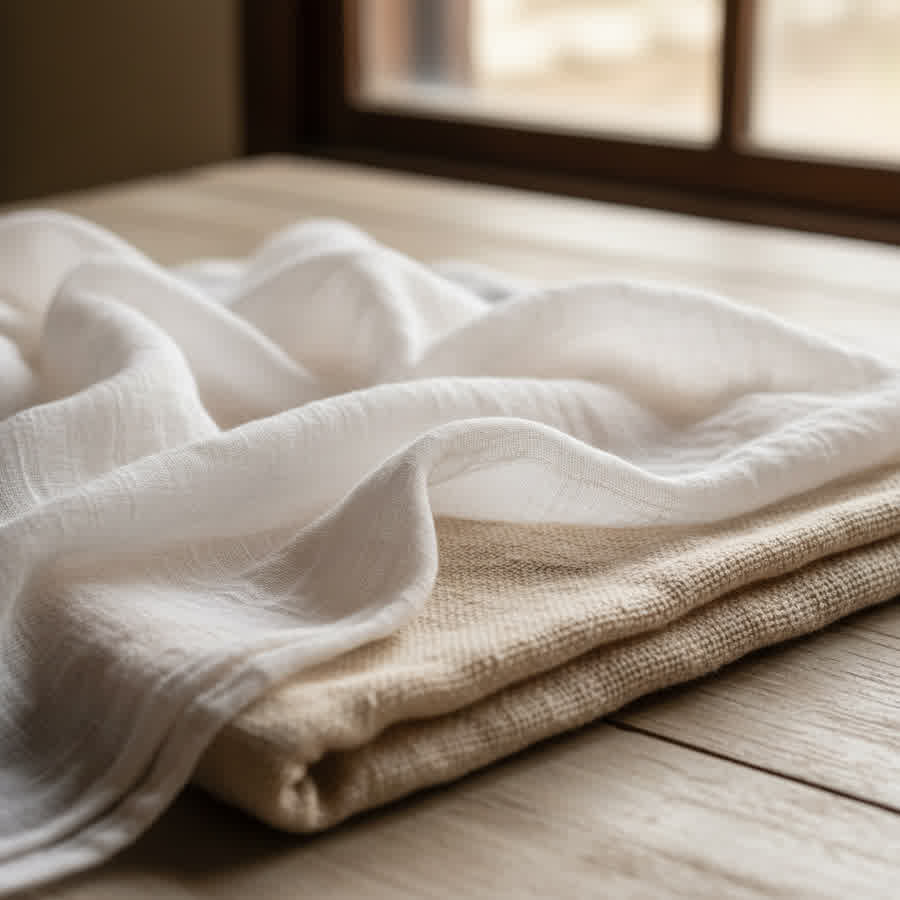
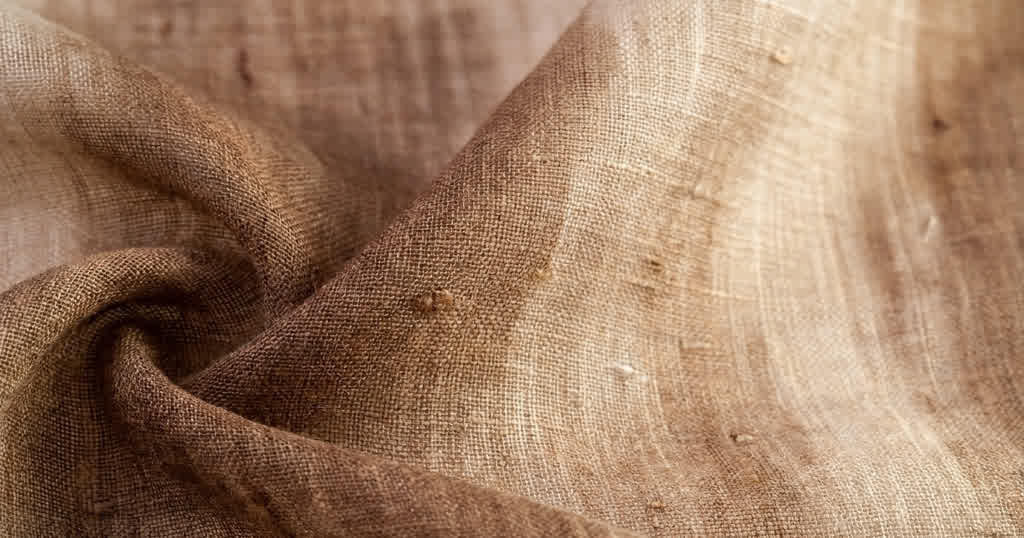
Hand-spun yarn keeps a natural twist that is slightly uneven along its length. That irregularity gives Khadi its characteristic slubby, dry hand-feel, and it contributes to a distinctive tensile behaviour that machine-spun, uniform yarn does not replicate. Designers working with indian textile manufacturers who handle hand-spun yarn should expect and market that character, not treat it as a defect.
The main fibres we see designers specify include:
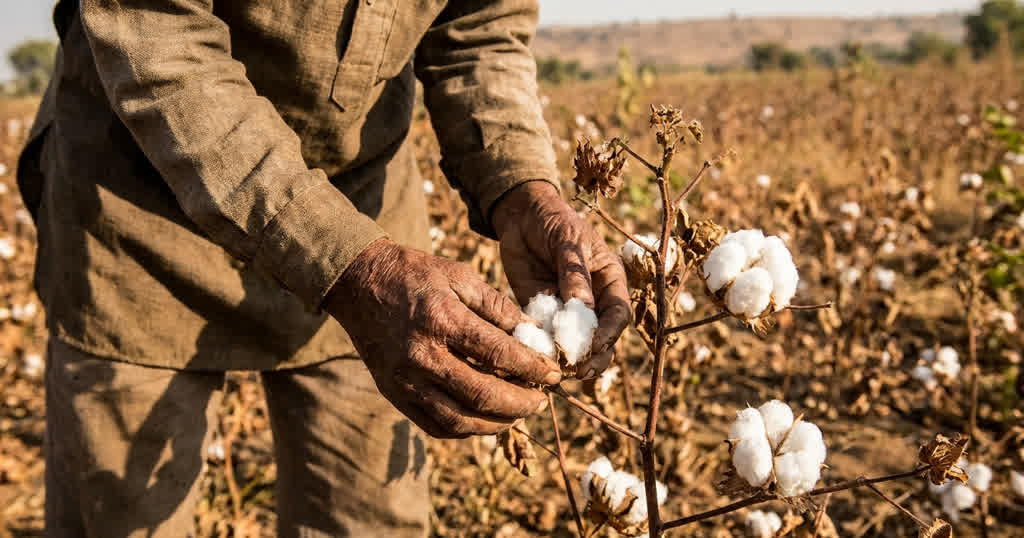
- Organic cotton: breathable, soft with washing, and a clean base for dyeing.
- Linen: a bast fibre, meaning it comes from the inner bark of the plant stalk, with cool, crisp handle.
- Ahinsa silk: silk made without killing the silkworm, which keeps a textured, matte lustre.
Low-Impact Dyeing
Dye choice shapes both the colour and the claim. AZO-free dyes avoid a restricted class of colourants and give consistent shades, while plant-based natural dyes give softer, shifting tones that age gracefully. Both routes suit designers who want to state exactly what touched the cloth.
Decentralized Supply Chains: How Anuprerna Redefines Wholesale Fabric Suppliers in India
Anuprerna works as a decentralized artisan network, which means designers deal with one coordinating partner while the weaving happens across many rural clusters. That structure is what lets wholesale fabric suppliers in india offer low MOQs, fair pay and traceable supply at the same time.
How the Network Works
Instead of one centralised mill, we coordinate small weaving clusters in rural Indian districts, each with its own specialism. One cluster may excel at Jamdani, another at Khadi or Ikat. We handle yarn sourcing, loom scheduling, quality checks and documentation, so the designer sees a single point of contact.
This is also why indian fabric wholesale from an artisan network behaves differently from a catalogue order. Capacity is shared across looms, so a new design can be slotted into available weaving time without waiting for a mill to fill a production run.
Low MOQs and Fair Pay
Conventional mills in fabrics wholesale often ask for thousands of metres. Because our weavers work on individual looms, designers can typically source 10 to 50 metres of in-stock fabric, and 100 to 300 metres for custom handwoven developments. That lets a boutique label test a fabric in one capsule before committing further.
Fair trade is built into how orders flow:
- Direct payment logic: the weaver's share is agreed before the loom is set up.
- Steady order planning: forward scheduling reduces the stop-start income typical of rural weaving.
- No hidden subcontracting: work stays inside the named cluster.
Traceability You Can Audit
Sourcing directors ask for records, not adjectives. We document fibre origin, cluster and dyeing method for each lot so a brand can answer a retailer's questions without chasing intermediaries. That paper trail is the practical difference between a story and a claim.
Customization at Scale: Designer Fabric Wholesale for Unique Collections
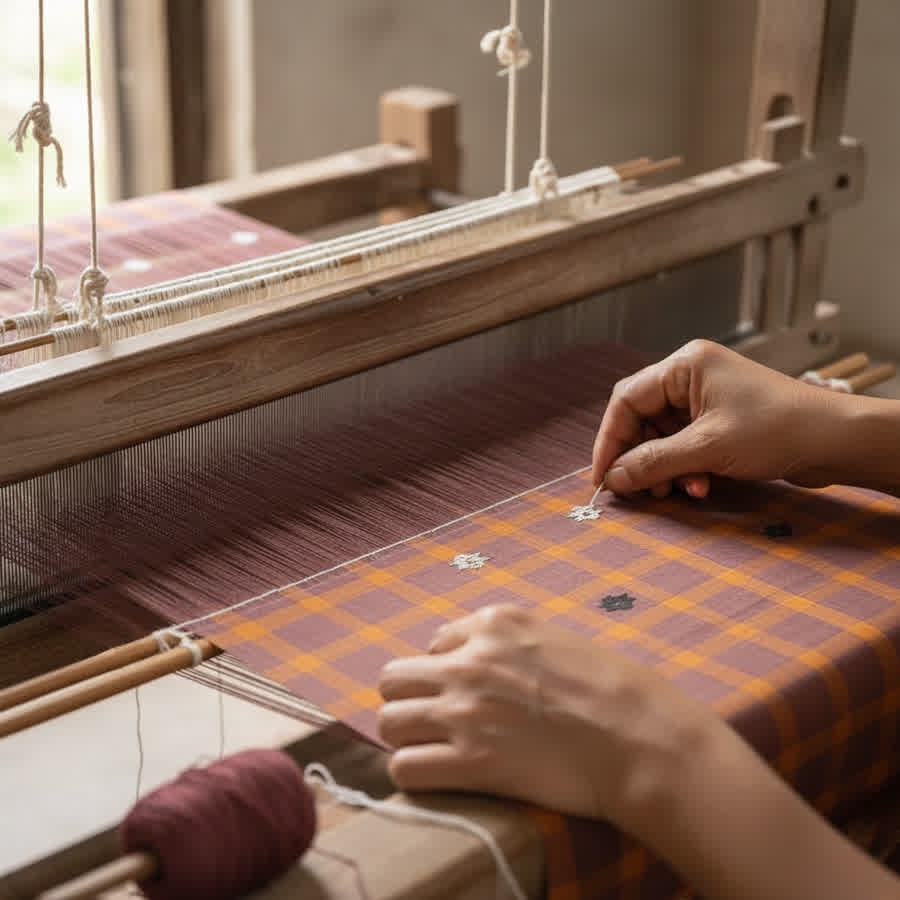
Designers can co-create exclusive cloth with an indian fabric company by supplying a brief, then working through motif, yarn, weave and dye with the weavers. This is what separates designer fabric wholesale from buying finished bulk stock: the collection's cloth exists only because the designer asked for it.
Co-Developing Motifs
The process starts with a moodboard, a colour palette and an intended garment. We translate it into a weave brief that a cluster can execute on a handloom, including repeat size, thread count and where the pattern sits on the width. Weavers then produce a strike-off, a small trial piece, so the designer can approve or adjust before the full run.
Clear briefs save time. Sending garment type, target GSM and drape expectations up front prevents several rounds of re-sampling.
Jamdani on the Loom
Jamdani is a discontinuous supplementary weft technique, where extra threads are inserted by hand to form the motif inside the cloth. It is slow, and every motif is placed manually, which is why no two metres are exactly alike. Designers use it for placement motifs, borders and all-over florals that read as luxury without a printed surface.
Practical points for specifying Jamdani:
- Choose scale carefully: very fine motifs suit 30 to 50 GSM muslin.
- Plan placement: decide whether motifs run along the border or across the body.
- Allow for hand variation: treat slight irregularity as a feature.
Custom Natural Dyeing
Natural dyeing uses mordants, mineral or plant-based fixatives that bind colour to fibre. Shades vary with plant material and water, so we sample each custom colour and approve it against the designer's reference before dyeing the lot. Brands that want tighter shade control can choose AZO-free dyes instead, and we help match the route to the collection's story.
Shipping Handloom Globally: A Guide to Indian Fabric Online Shopping for B2B
Indian fabric online shopping works for B2B when the artisan supply chain is digitised, so orders, samples, quality reports and shipping documents move through one traceable system. That removes the slow, paper-heavy handoffs that once kept small handloom producers out of export markets.
Digitising the Artisan Chain
Many Indian textile exporters work through layers of agents, and information gets lost at each layer. We keep digital records for every order, from yarn lot to loom to finishing, so a designer can check status without sending a chain of emails. Sample requests, specifications and approvals sit in one place.
For importers and wholesalers, this matters most. Among fabric wholesalers in india, the fragmentation of small producers is the usual barrier, and a coordinated network turns it into a single, trackable order.
Quality Control Before Dispatch
Handloom has natural variation, so quality control checks for the right kind of consistency. Before dispatch, each lot is inspected for the following:
- Width and GSM consistency against the approved sample.
- Weave faults such as broken picks, missing motifs or uneven selvedge, the self-finished edge of the cloth.
- Colour match to the approved shade, with wash testing where the brief requires it.
Reporting these points up front means the designer knows what arrives before it ships.
Ordering and Delivery
A practical online order for a new brand has four steps: request swatches, approve a strike-off, confirm quantity and finishing, then schedule export documentation. Our team supports the export paperwork and freight coordination, so designers abroad receive cloth with the records their customs and compliance teams expect. Reliable logistics turns handloom from a one-off discovery into a repeatable supply line.
frequently asked questions
What is the typical MOQ (Minimum Order Quantity) when working with Indian fabric wholesale suppliers?
Designers can typically source 10 to 50 meters for in-stock fabrics and 100 to 300 meters for custom handwoven developments with decentralized artisan networks like Anuprerna. Conventional mills often require thousands of meters, so this lower threshold makes indian fabric wholesale and designer fabric wholesale accessible for capsule collections.
How do Indian textile exporters ensure color fastness in natural and AZO-free dyes?
Reputable Indian fabric companies use careful mordanting and rigorous wash testing, and they typically achieve a color fastness rating of 3 to 4 on the grayscale. AZO-free dyes offer excellent consistency, while natural dyes will always have a characteristic, subtle aging process that adds to the fabric's organic appeal.
Can wholesale fabric suppliers in India provide traceability and ethical certifications?
Yes, leading Indian textile manufacturers and artisan networks provide traceability reports for their fabrics. These can include GOTS certification for organic yarns, and Handloom Mark or Craftmark certifications that authenticate the ethical, regional and handmade origins of the fabric.
What GSM ranges are available for custom handloom fabrics?
Custom handloom fabrics range from 30 to 250 GSM. Indian fabric suppliers can weave delicate Jamdani muslins at 30 to 50 GSM, ideal for summer resort wear, and sturdy Khadi or Eri silk blends at 200 to 250 GSM, suitable for structured jackets, trousers and light upholstery.
How does a designer start co-creating a custom collection with Anuprerna?
A designer starts by sharing a brief that covers the garment type, target GSM, palette and any reference motifs. We match the brief to a suitable weaving cluster, produce a strike-off sample for approval, and then move to the full run once the weave, colour and handle are confirmed. Clear briefs and early sample approval keep the process short and avoid repeated re-sampling.
More Blogs
organic fabric suppliers in india: a guide for fashion brands & designers
how fabric wholesalers help fashion brands scale faster
lightweight silk fabric: a guide to types, qualities & indian suppliers
silk fabric suppliers in india: a guide to lightweight & breathable silks
why yarn-dyed khadi cotton faric is the premium choice for contemporary styling
designer kurta for men: the role of fabric, texture and handloom craft