How Fabric Wholesalers Help Fashion Brands Scale Faster

A designer finalizing a seasonal collection often hits a critical bottleneck when transitioning from sampling to production. Finding reliable fabric wholesalers who can supply consistent, high-quality yardage without forcing massive minimums is a constant challenge. The pressure to scale quickly often pushes labels toward centralized, exploitative mass-production models. This compromise sacrifices the unique hand-feel and ethical origins that defined their initial pieces.
Scaling a sustainable collection requires a supply chain that can handle volume while adhering to strict ESG criteria. India has a legacy as a global textile powerhouse, and its modern evolution involves transitioning back to empowering decentralized artisan clusters. By partnering with specialized suppliers, buyers can bypass fragmented sourcing, secure reliable lead times, and scale their collections without the overhead of managing individual rural looms.
The Strategic Advantage of Partnering with Fabric Wholesalers for Brand Agility
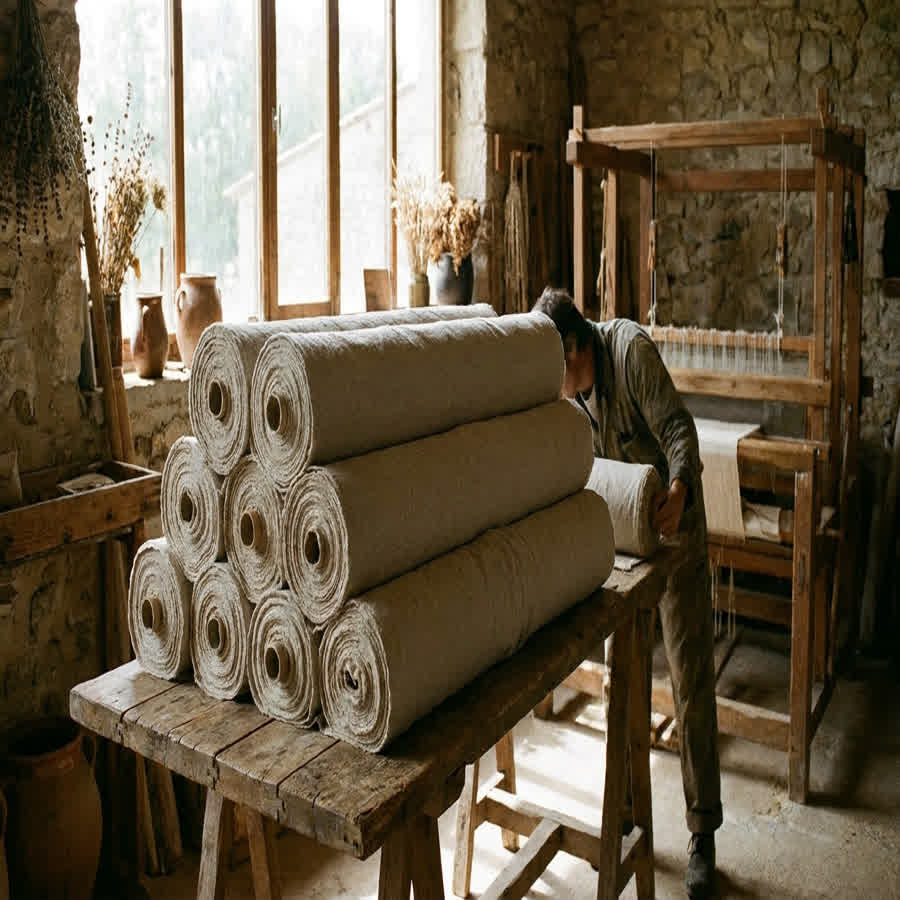
Partnering with specialized fabric wholesalers allows brands to bypass fragmented sourcing, secure reliable lead times, and pivot production volumes quickly based on consumer demand. Instead of coordinating with dozens of individual weavers, a brand can rely on a single entity to manage the complexities of fabrics wholesale procurement. This consolidation is essential for maintaining momentum during tight seasonal turnarounds. It provides a single point of accountability for the entire material supply chain.
Mitigating Inventory Risk
Holding excess fabric ties up capital and increases the risk of deadstock. Working with agile wholesale fabric suppliers helps brands align their material intake with actual sales projections. This approach prevents the financial strain of over-ordering while ensuring that popular styles can be restocked efficiently.
- Tiered purchasing models allow brands to buy only what they need for initial drops.
- Responsive supply chains mean that reorders can be processed without waiting for massive centralized mill schedules.
- Reduced warehousing costs free up capital for design and marketing efforts.
By relying on suppliers who understand the nuances of sustainable scaling, brands can test new silhouettes with smaller yardages. If a piece performs well, the supply chain is already primed to increase volume. This flexibility is a core benefit of working with specialized wholesale textile suppliers. It allows designers to react to market trends without committing to unsustainable volumes.
Reducing Time-to-Market
Speed is critical when responding to shifting consumer preferences. Fragmented sourcing often leads to delays, as buyers struggle to align delivery schedules across multiple independent artisans. A consolidated approach streamlines the entire process, from yarn procurement to final delivery.
- Centralized communication eliminates the need to track down individual weavers for progress updates.
- Pre-established logistics networks ensure that finished yardage moves quickly from rural clusters to urban manufacturing hubs.
- Standardized quality checks at the aggregation stage prevent defective materials from causing production bottlenecks.
When a brand partners with experienced wholesale fabric companies, they gain access to a well-oiled infrastructure. This allows designers to focus on creating, knowing that their textile supply chain is optimized for speed and reliability. The result is a faster transition from the design board to the retail floor.
Bridging Artisan Craft and Volume: How Textile Wholesalers in India Operate
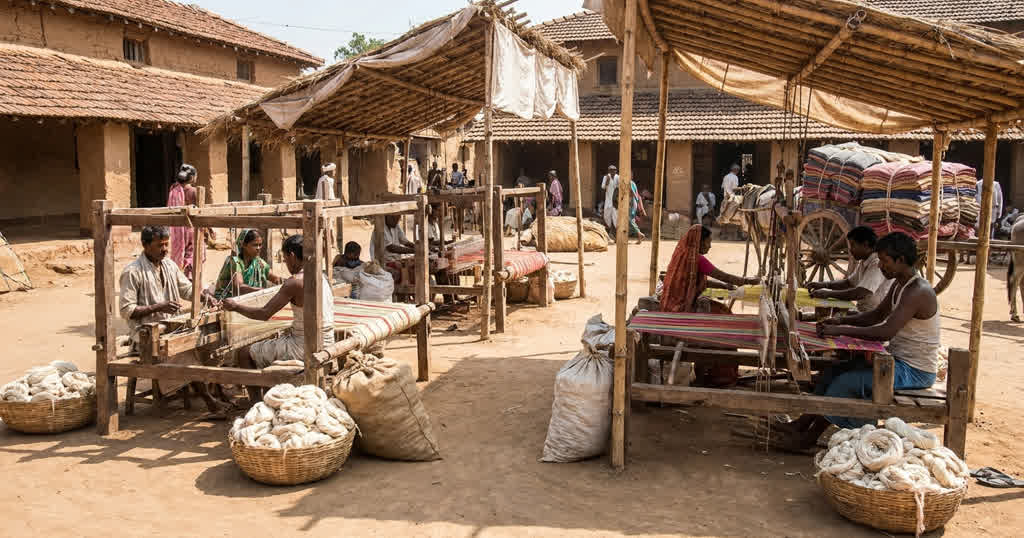
Textile wholesalers in India bridge the gap between craft and volume by aggregating capacity across multiple decentralized weaving clusters, transforming fragmented rural looms into a unified supply chain. This model allows brands to source authentic handloom textiles at scale without compromising the ethical foundations of their business. We currently work with numerous artisan clusters across regions like Murshidabad and Malda, coordinating production to meet commercial demands. This system proves that artisanal craft can meet industrial timelines.
The Decentralized Supply Chain Model
Historically, India's textile legacy was built on localized expertise, which was later disrupted by centralized mass-production. The modern approach revives this heritage by organizing independent artisans into a cohesive network. Fabric wholesale manufacturers act as the crucial link, translating technical specifications into actionable instructions for rural weavers.
- Capacity aggregation ensures that large orders are distributed across multiple looms, preventing any single weaver from being overwhelmed.
- Standardized raw materials are distributed to artisans, ensuring that the base inputs remain consistent across different villages.
- Centralized finishing processes are applied after weaving to unify the final drape and texture of the fabric.
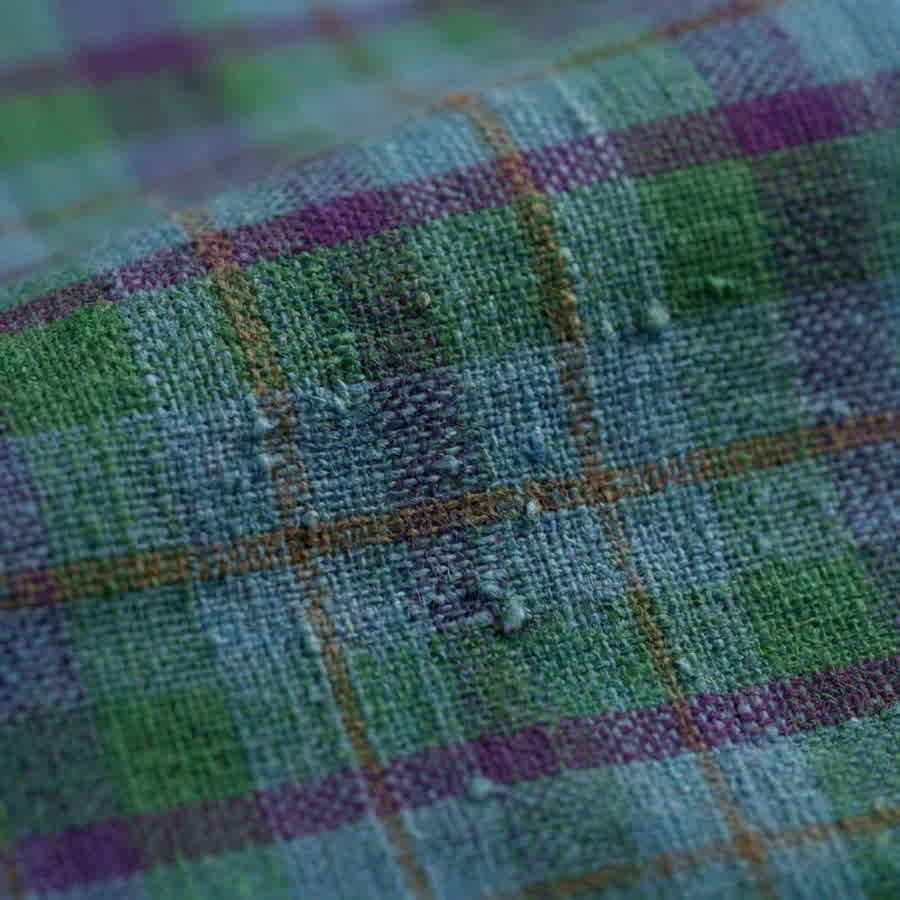
This structure allows bulk fabric suppliers to offer the volume required by growing brands while maintaining the unique characteristics of pure cotton handwoven fabric. It is a system designed to handle reliable wholesale volumes without resorting to factory-floor homogenization. The result is a scalable product that retains its human touch.
Empowering Rural Handloom Weavers
Scaling through decentralized craft provides significant socioeconomic benefits to rural communities. By integrating these artisans into a reliable commercial pipeline, wholesale textile fabric suppliers provide consistent income and preserve traditional skills. This ethical framework directly supports a brand's zero-waste credentials and social responsibility goals.
- Fair wage distribution is formalized through structured procurement contracts.
- Skill preservation occurs as younger generations see viable economic futures in traditional weaving.
- Reduced urban migration is achieved by bringing the work directly to the artisans' home villages.
For a sourcing director, this means the textiles they purchase carry a verifiable story of empowerment. Partnering with ethical fabric wholesalers turns procurement into a tool for positive social impact, adding immense value to the final garment. It transforms a simple material purchase into a core pillar of the brand's identity.
Quality Control at Scale: Material Consistency in Bulk Orders
Material consistency in bulk orders is maintained by standardizing yarn counts and GSM across decentralized looms while enforcing strict quality control protocols at aggregation points. For wholesale cotton fabric suppliers, managing the inherent variations of natural textiles is the most critical aspect of scaling. Buyers need assurance that the yardage they receive will perform predictably on the cutting table. Without this consistency, manufacturing efficiency plummets.
Standardizing Yarn Counts and GSM
The foundation of consistent fabric lies in the raw materials. Before a single shuttle is thrown, the exact specifications of the yarn must be established and distributed to the weaving clusters. This prevents the wild variations in weight and texture that often plague unmanaged artisan sourcing.
- Precise yarn counts, such as specifying 20s to 80s Ne, dictate the fineness and weight of the final textile.
- Controlled GSM targets, whether for a lightweight 60 GSM geometric jamdani fabric or a heavier 256 GSM khadi kantha fabric, ensure the fabric has the correct crisp hand-feel or fluid drape required for the design.
- Uniform warp and weft density is monitored to maintain the structural integrity of the weave across different looms.
By controlling these variables, fabric wholesalers can guarantee that a batch woven in one village matches a batch woven in another. This technical rigor is what separates a reliable supply chain from a disjointed craft project. It provides the predictability that factory production lines demand.
Ensuring Tensile Strength and Colorfastness
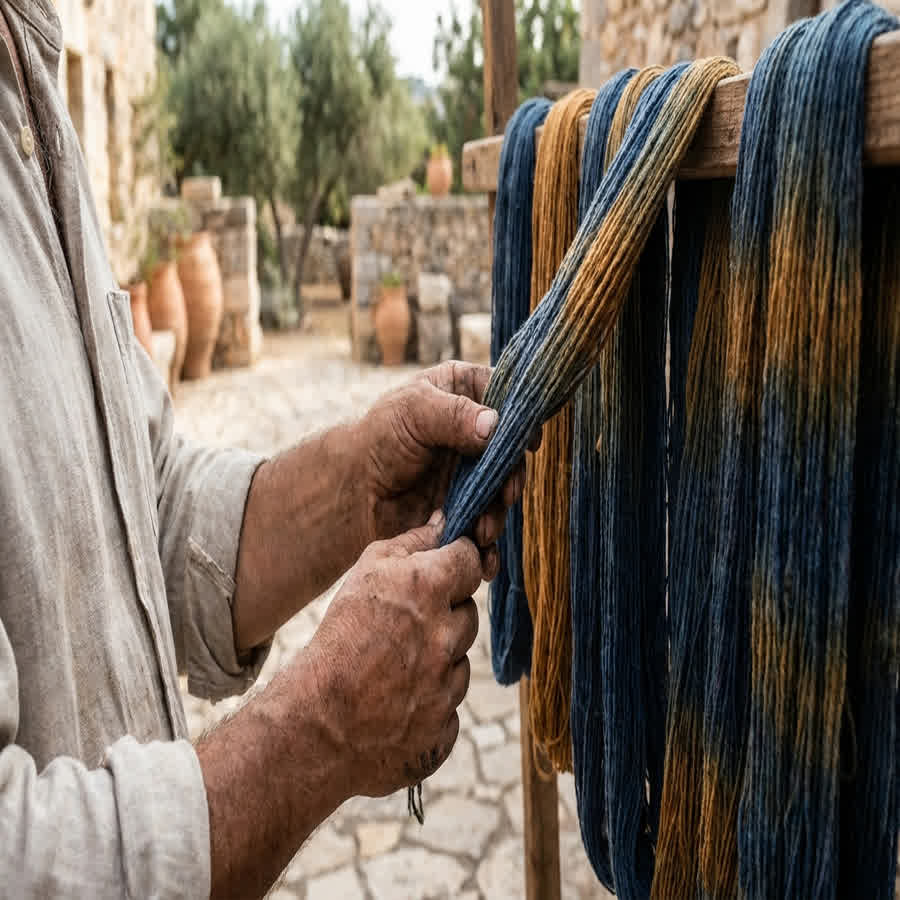
Beyond weight and density, the fabric must hold up to the rigors of garment manufacturing and consumer use. Wholesale textile suppliers implement centralized processes to manage dyeing and finishing, ensuring that the technical performance of the fabric is uniform.
- Consistent tensile strength is verified to ensure the fabric will not tear during industrial sewing processes.
- AZO-free dye absorption rates are standardized by dyeing the yarn in controlled, centralized facilities before distribution.
- Strict AQL inspections are conducted at the aggregation stage to catch any defects before the fabric is shipped to the buyer.
These protocols allow brands to confidently use handloom textiles in high-volume collections. The ability to deliver this level of technical consistency is the defining characteristic of professional wholesale fabric companies. It ensures that ethical sourcing does not come at the cost of material quality.
Managing MOQs and Lead Times with Wholesale Fabric Companies
Wholesale fabric companies manage MOQs and lead times by offering tiered scaling strategies, moving brands from low-volume sampling yardage to optimized bulk production. Emerging labels often need low minimums to test the market, but they also require a clear pathway to scale up once a collection gains traction. A well-structured supply chain accommodates both ends of this spectrum. It provides a reliable foundation for long-term growth.
Tiered Scaling Strategies
Traditional power mills often demand massive upfront commitments, which can be prohibitive for independent designers. Decentralized fabric wholesalers offer a more flexible approach, allowing brands to grow at their own pace without being penalized for smaller initial orders.
- Sampling yardage typically starts at accessible volumes, allowing designers to prototype garments and test drape and fit.
- Mid-tier production runs bridge the gap between sampling and full-scale manufacturing, well suited for limited capsule collections.
- High-volume bulk orders are easily accommodated by activating additional weaving clusters within the network.
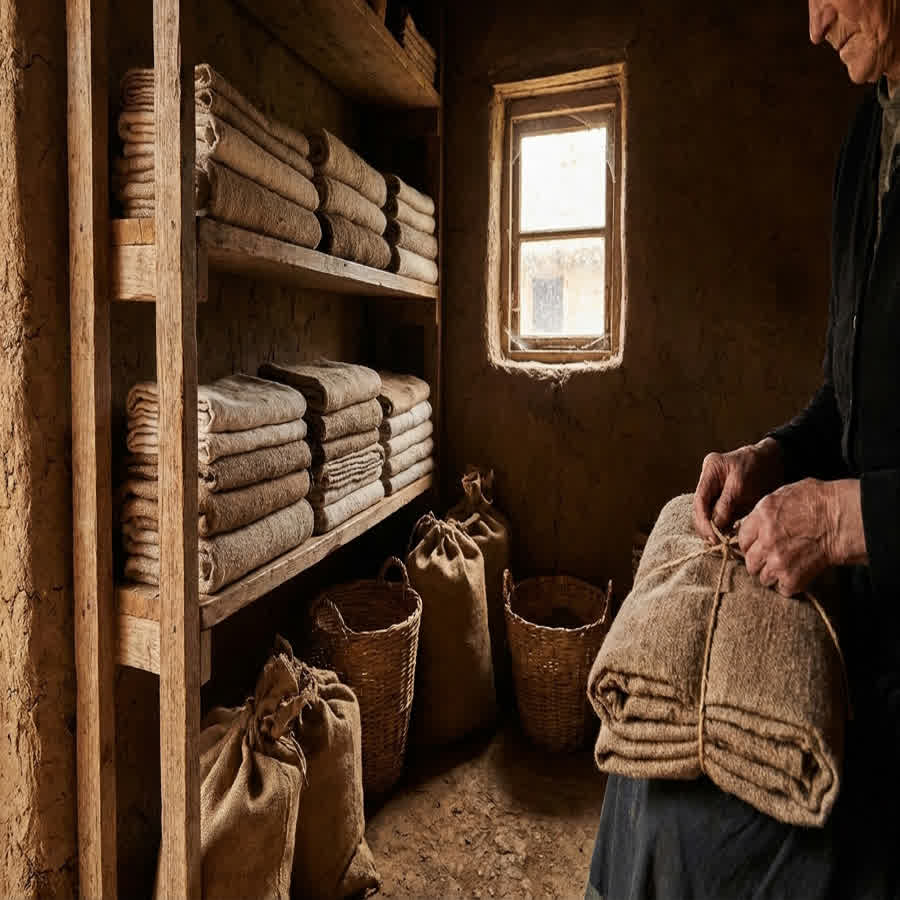
This tiered approach reduces the barrier to entry for sustainable sourcing. It allows a brand to establish a relationship with wholesale textile fabric suppliers early on, ensuring that the same quality and ethical standards are maintained as production volumes increase. Designers can scale their output without needing to constantly vet new suppliers.
Optimizing Logistics for Growing Brands
Lead times in artisan production depend heavily on weaving complexity and yarn availability. Experienced bulk fabric suppliers optimize these logistics by maintaining strategic inventories and streamlining the custom production process.
- In-stock greige fabrics can often be shipped quickly, providing a fast solution for brands that handle their own dyeing.
- Pre-dyed yarn inventories reduce the lead time for custom handwoven orders by eliminating the initial dyeing phase.
- Transparent production schedules give buyers clear visibility into the weaving process, allowing for accurate delivery forecasting.
By managing these logistical hurdles, fabric wholesale manufacturers remove the friction typically associated with artisan sourcing. This allows fashion brands to scale their sustainable collections efficiently, confident that their material supply will keep pace with their growth. It turns a complex logistical challenge into a streamlined operational advantage.
frequently asked questions
How do wholesale fabric suppliers ensure consistency in decentralized handloom textiles?
Consistency is achieved by standardizing yarn procurement (e.g., specific Ne counts), utilizing centralized AZO-free dyeing processes before distributing yarn to decentralized looms, and implementing strict AQL (Acceptable Quality Limit) inspections at the aggregation stage. By controlling the raw inputs and the final finishing, suppliers ensure that fabrics woven across different villages maintain uniform weight, density, and color.
What are the typical MOQs when working with wholesale textile fabric suppliers in India?
While traditional power mills demand 1,000+ meters per style, decentralized artisan wholesalers like Anuprerna offer tiered MOQs starting at 50-100 meters for sampling and scaling up to 5,000+ meters for bulk production. This flexible structure allows emerging brands to test new designs with minimal financial risk before committing to larger production runs.
How do bulk fabric suppliers handle lead times for custom sustainable fabrics?
Lead times depend on weaving complexity and yarn availability, with in-stock greige fabrics shipping in 1-2 weeks and custom-dyed handwoven fabrics requiring 45-60 days. This longer window for custom orders accommodates the necessary steps of yarn dyeing, loom setup, and the manual weaving process inherent to artisan production.
Can wholesale fabric manufacturers provide traceability for ESG compliance?
Yes, modern decentralized wholesale textile suppliers utilize digital tracking and cluster-mapping to provide full traceability from the yarn source to the weaving cluster. This verifiable data ensures that brands can confidently substantiate their sustainability claims and meet stringent environmental and social governance criteria.
Why should fashion brands choose decentralized fabric wholesalers over centralized mills?
Fashion brands should choose decentralized wholesalers to secure unique, low-MOQ artisanal textiles that build premium brand value while directly supporting rural weaving communities. This sourcing strategy provides a distinct market advantage by aligning high-quality material procurement with transparent, ethical supply chain practices.
More Blogs
lightweight silk fabric: a guide to types, qualities & indian suppliers
silk fabric suppliers in india: a guide to lightweight & breathable silks
why yarn-dyed khadi cotton faric is the premium choice for contemporary styling
designer kurta for men: the role of fabric, texture and handloom craft
cotton shirts for men online: a guide to fabric types, weaves and quality
is jacquard fabric good or bad for upholstery and apparel?