Why Fabric Wholesale Orders Fail After Sampling (And How to Prevent It)

Sampling is supposed to reduce risk. In fabric wholesale, it often does the opposite.
Many buyers approve a sample with confidence, place a bulk order and still end up with fabric that behaves differently, looks slightly off, or creates problems only after cutting and stitching begin. At that point, timelines are locked and money is already spent.
This is not bad luck. It is structural.
Most fabric wholesale failures happen because buyers misunderstand what sampling can and cannot guarantee. This guide breaks down why that gap exists and how to close it before your next bulk order.
The Uncomfortable Truth about Sampling
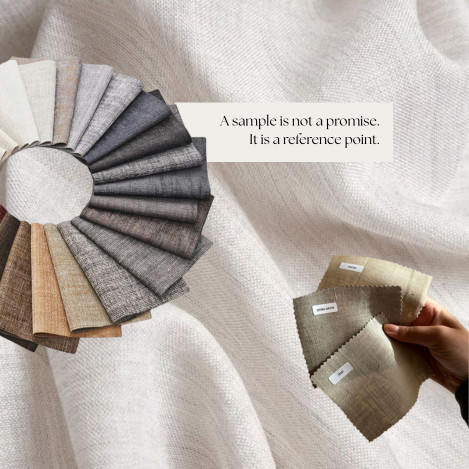
A sample is not a promise. It is a reference point.
In fabric wholesale, especially when working with fabric wholesalers handling multiple batches, looms or dye lots, a sample represents one moment in production, not the entire future order.
Orders fail when buyers treat samples as contracts rather than indicators.
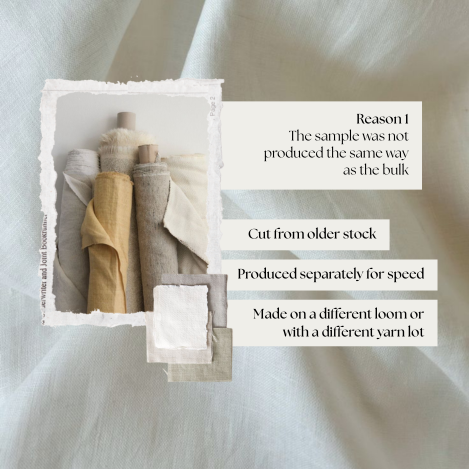
Reason 1: The Sample was Not Produced the Same Way as the Bulk
This is the most common failure point.
Many samples are:
- Cut from older stock
- Produced separately for speed
- Made on a different loom or with a different yarn lot
On paper, everything matches. In reality, the bulk fabric may differ slightly in texture, density, or shade.
How to prevent it:
Ask one direct question before approving any sample:
“Is this sample cut from the same production method and yarn lot intended for bulk?”
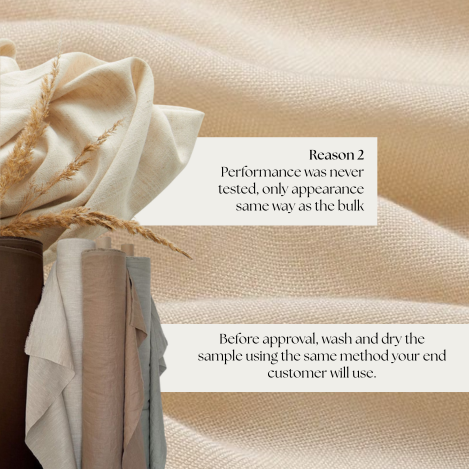
Reason 2: Performance was Never Tested, Only Appearance
Most buyers evaluate samples visually.
Very few test them under real conditions.
Shrinkage, color bleed, surface change after washing, and softening over time are not visible in a fresh swatch. These issues only appear after use.
This is especially risky with handwoven fabric, khadi cotton fabric, and silk fabric, where behaviour changes are natural but must be predictable.
How to prevent it:
Before approval, wash and dry the sample using the same method your end customer will use.
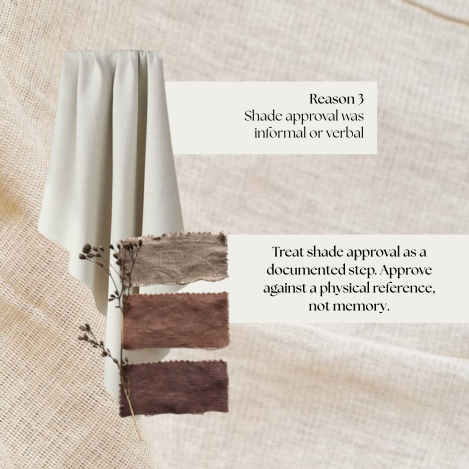
Reason 3: Shade Approval was Informal or Verbal
“This looks fine” is not an approval system.
In fabric wholesale, especially when dyeing is involved, shade perception varies by lighting and environment. What appears acceptable once may look different later.
How to prevent it:
- Treat shade approval as a documented step
- Approve against a physical reference, not memory
- View and confirm shade under consistent lighting conditions
Reason 4: Acceptable Variation was Never Defined
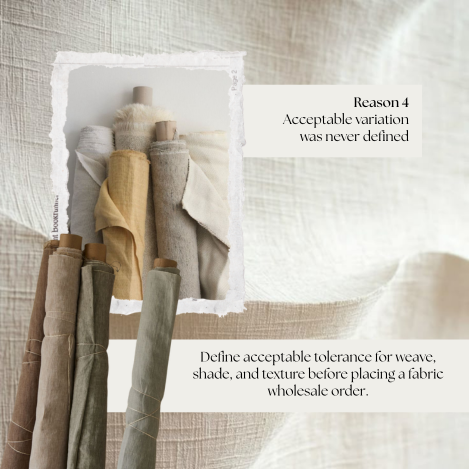
Every fabric has variation. The problem is not variation itself, but undefined variation.
Buyers often assume zero defects and perfect uniformity, which is unrealistic in handwoven fabric and small-batch production.
How to prevent it:
- Define acceptable tolerance for weave, shade, and texture upfront
- Document these tolerances before placing a fabric wholesale order
- Align on what is considered acceptable variation versus a defect
Reason 5: Sampling did not Reflect Scale Realities
A one-meter sample behaves differently from a 200-meter roll.
This is why buyers sometimes say, “The sample was perfect, the bulk is not.”
How to prevent it:
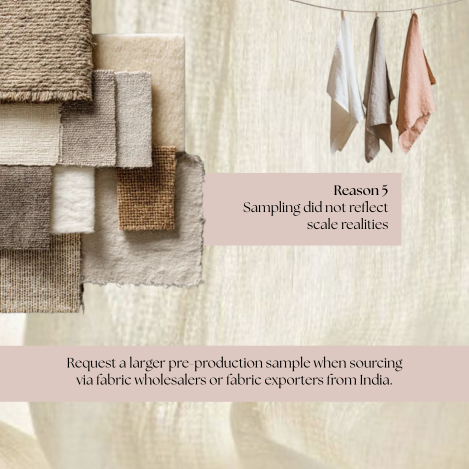
- Request a larger pre-production sample that reflects bulk behaviour
- Test drape, handling, and consistency at a scale closer to the final order
- Do this especially when sourcing via fabric wholesalers or fabric exporters from India
Reason 6: Communication Gaps During Production
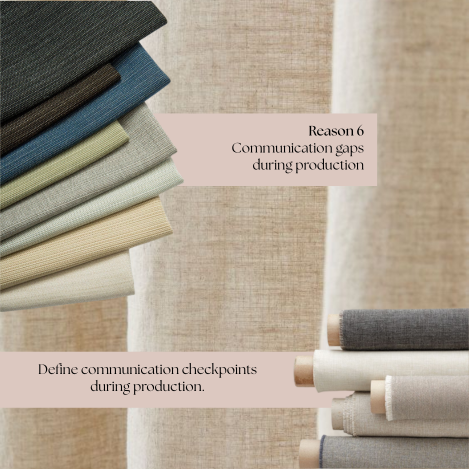
Sampling is a moment. Production is a process.
Between approval and dispatch, changes can happen silently, especially when working with fabric exporters from India or multi-cluster sourcing networks.
How to prevent it:
- Define clear communication checkpoints during production
- Confirm progress at key stages, not only at dispatch
- Keep approvals and changes documented throughout the process
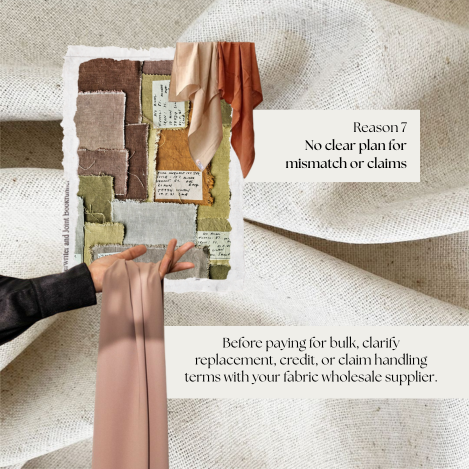
Reason 7: No Clear Plan for Mismatch or Claims
Most buyers avoid discussing failure scenarios upfront.
How to prevent it:
- Clarify replacement, credit, or claim handling terms before paying for bulk
- Document these terms with your fabric wholesale supplier
- Align on timelines and responsibility if issues arise
The Deeper Pattern Buyers Miss
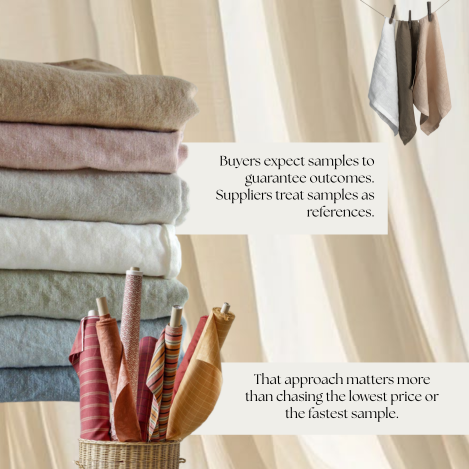
Fabric wholesale failures after sampling are rarely about dishonesty. They are about misaligned expectations on what a sample is meant to represent.
Buyers expect samples to guarantee outcomes. Suppliers treat samples as references within a variable production process. When that gap is not acknowledged early, even well-intentioned orders can break down at scale.
Where Sampling Ends and Accountability Begins
Sampling is not about eliminating risk.
It is about making risk visible early.
At Anuprerna, we make that visibility practical through clear expectations, realistic testing, and transparent communication across every fabric wholesale order.
most asked questions
Why does bulk fabric differ even after sample approval?
Because a sample reflects one production moment, not the entire batch. Differences in yarn lot, loom, dyeing cycle, or finishing can affect texture, shade, and behaviour in bulk fabric.
How large should a fabric sample be before placing a wholesale order?
A swatch is rarely enough. For bulk fabric orders, a larger pre-production sample or trial meterage gives a more reliable sense of drape, shrinkage, and consistency at scale.
What tests should be done on a fabric sample before approval?
At minimum: wash, dry, and handle the fabric as your end customer would. This helps identify shrinkage, colour bleed, surface change, and softness shifts before committing to bulk.
How can buyers reduce risk when working with fabric wholesalers?
By defining acceptable variation upfront, documenting shade approvals, setting production checkpoints, and choosing fabric wholesalers who communicate clearly throughout production.
More Blogs
colorfastness in natural dyes: how to prevent fading in eco-friendly fabrics
how to wash and maintain khadi denim jeans for longevity
eri silk for real life: what online buyers rarely understand before they click “buy”
how indian fabric exporters meet global quality standards
jacquard vs embroidery: what's the difference?
buy hemp fabric in bulk: what fashion brands need to know