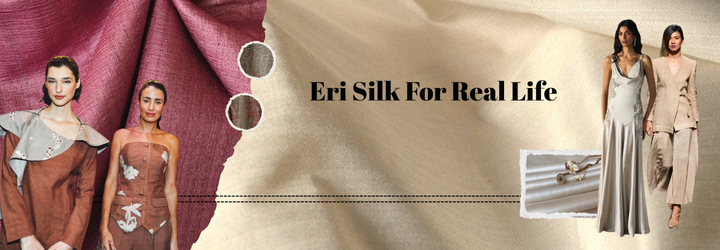
Eri Silk for Real Life: What Online Buyers Rarely Understand Before They Click “Buy”

If you are searching for eri silk, you are likely past impulse buying. You are comparing materials, reading descriptions carefully and trying to understand whether what you see online will actually translate into comfort and longevity once worn.
That caution is justified. Silk behaves very differently depending on how it is sourced, spun and finished.
At Anuprerna, eri silk, often known as peace silk for its non-violent harvesting process, is not treated as a niche luxury fabric. It is developed as a wearable, everyday material, woven by artisan clusters that have worked with this fibre for generations. That context matters because eri silk performs best when it is understood, not overworked.
This guide aims to help you make that decision clearly.
What Eri Silk Feels Like When You Actually Wear It
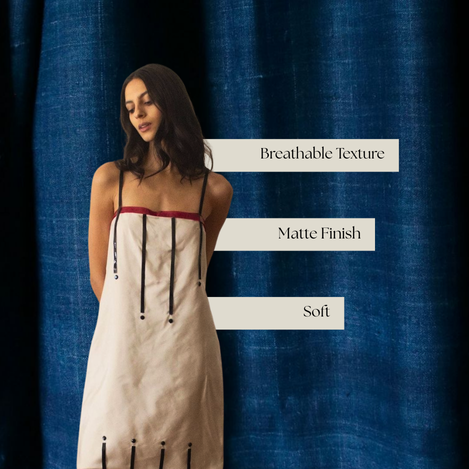
Eri silk does not aim for high shine. Its strength lies in how it feels against the skin.
The fabric has a matte finish, a soft, breathable texture and a relaxed drape that sits comfortably rather than clinging. Because eri silk yarn is spun instead of reeled, the fabric feels more stable and forgiving than glossy silks.
This is why eri silk at Anuprerna is commonly used for:
- garments meant for long hours of wear
- stoles and scarves worn close to the skin
- breathable linings paired with khadi cotton fabric
If you are looking for silk that integrates easily into daily wardrobes, eri silk works quietly and consistently.
Eri Silk vs Tussar Silk vs Raw Silk: Choosing What Actually Fits Your Use
These terms often appear together across fabric wholesalers and textile wholesale suppliers, but they serve different needs.
- Matte finish, soft and breathable
- Minimal sheen
- Strong, durable, and low-drama
- Ideal for stoles, linings, relaxed garments, and everyday wear.
- Naturally textured with visible slubs
- Slight sheen with a raw, earthy character
- Holds structure better than eri
- Common in sarees, dupattas and statement garments
- A category, not a single fiber
- Can include eri, tussar, or mulberry with minimal processing
- Texture varies widely depending on source and finish
- Often marketed loosely, so descriptions matter more than the name
If your priority is ease and versatility, eri silk tends to outperform both tussar silk and most raw silk fabrics in regular use.

How to Read Eri Silk Product Pages Without Guesswork
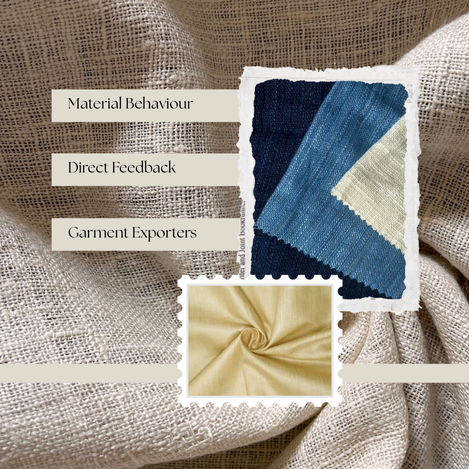
Many buyers hesitate when purchasing eri silk online because product pages often lack practical detail. This is where trust is built or lost.
When evaluating eri silk listings, especially from fabric exporters from India or organic fabric suppliers in India, look for clarity over claims.
Reliable signals
- Clear identification of eri silk, not just “pure silk”
- Honest description of texture and finish
- Intended applications or garment suggestions
- Care instructions suitable for regular wear
At Anuprerna, product descriptions are written from a fabric-first perspective. The focus is on how the material behaves in real use, not just how it photographs. This approach is shaped by direct feedback from designers, garment exporters from India and conscious buyers who work with eri silk repeatedly.
Where Eri Silk Works Best in Real Wardrobes and Collections
Eri silk performs best when it is allowed to stay natural.
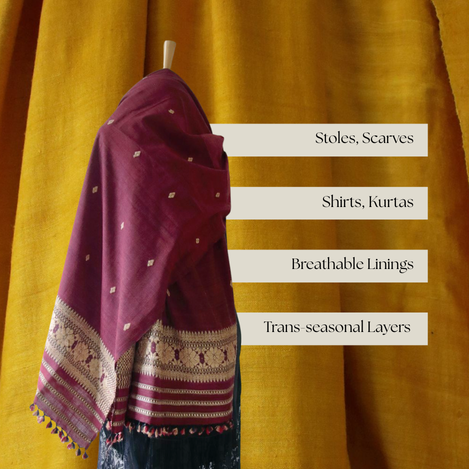
It is widely used for:
- stoles and scarves
- shirts, kurtas, and relaxed dresses
- breathable linings under khadi cotton fabric
- trans-seasonal layers paired with bamboo linen fabric or hemp blends
Because eri silk has a subdued finish, it pairs well with other natural fibres without competing visually. This makes it a preferred choice for brands and buyers looking beyond trend-driven fabrics wholesale toward longevity.
Care, Longevity and Why Eri Silk Holds Up

One of the most overlooked advantages of eri silk is how forgiving it is.
With gentle washing, mild detergent and air drying, eri silk maintains its structure well. Over time, it softens further instead of weakening, provided the yarn quality is consistent.
This durability is why eri silk continues to be used by textile export wholesale buyers who prioritize repeat wear over occasional use.
A Considered Choice, Not a Trend
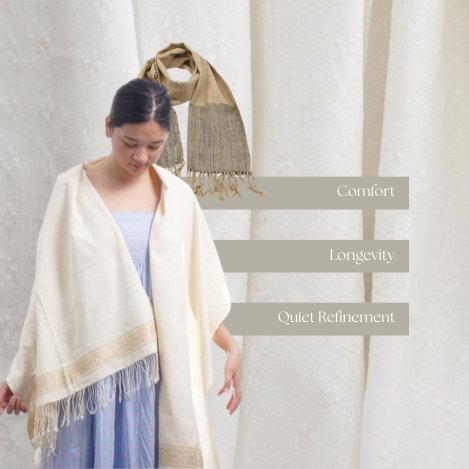
Choosing eri silk is not about making a statement. It is about choosing a fabric that supports how you actually live and dress.
When sourced responsibly and described honestly, eri silk offers comfort, longevity, and quiet refinement. That is why it remains a core fabric at Anuprerna, not as a trend but as a material people return to with confidence.
most asked questions
What is eri silk fabric used for?
Eri silk is commonly used for stoles, scarves, shirts, dresses, and breathable linings. Its comfort and durability make it suitable for everyday wear.
Is eri silk better than tussar silk?
Eri silk is softer and more breathable, making it better for daily wear. Tussar silk offers more texture and structure, often preferred for statement garments.
Is eri silk considered raw silk?
Eri silk can fall under raw silk categories, but not all raw silk is eri. Always check the fibre type and finish rather than relying on the label.
How do you care for eri silk fabric?
Eri silk can be gently hand-washed or machine-washed on mild cycles using soft detergent and air-dried for best results.
More Blogs
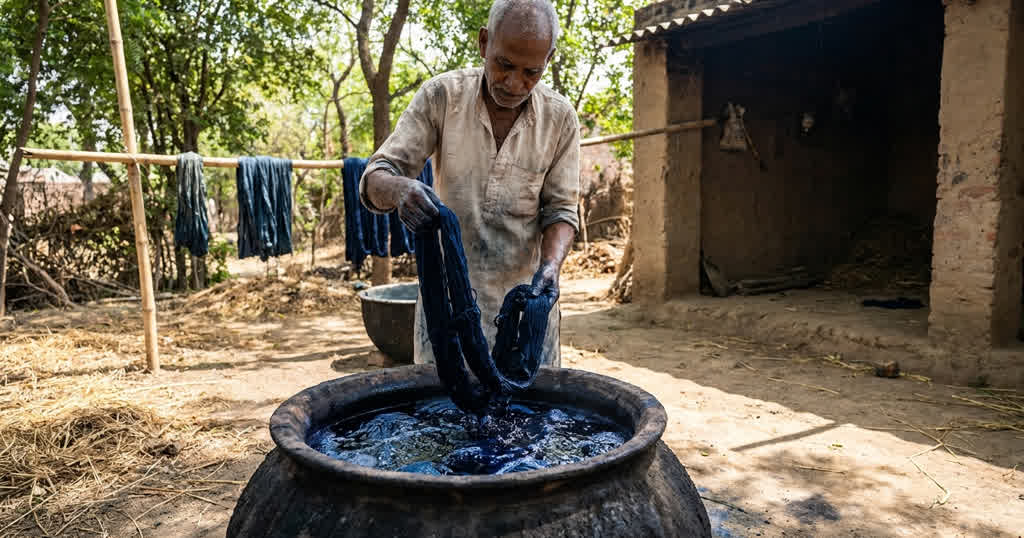
colorfastness in natural dyes: how to prevent fading in eco-friendly fabrics
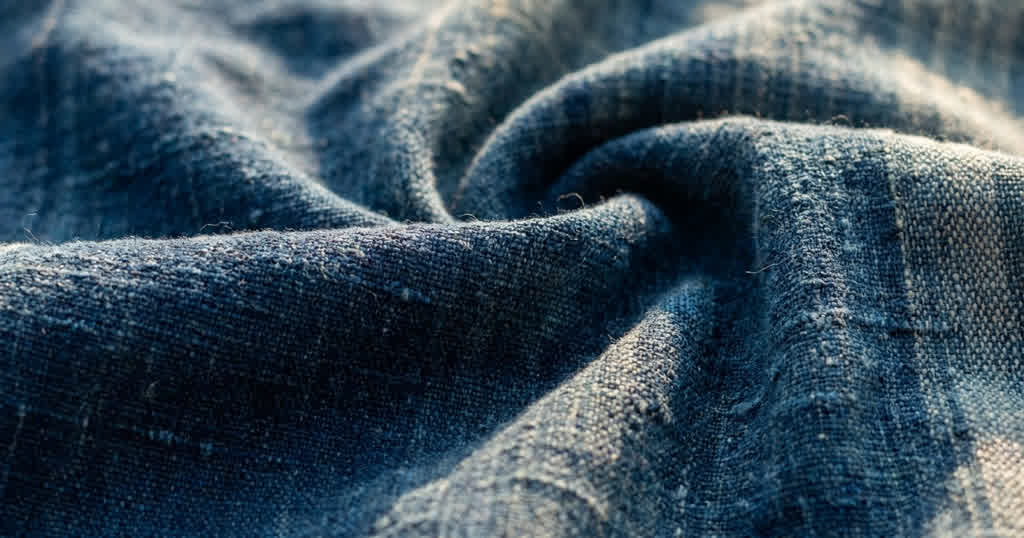
how to wash and maintain khadi denim jeans for longevity
why fabric wholesale orders fail after sampling (and how to prevent it)
how indian fabric exporters meet global quality standards
jacquard vs embroidery: what's the difference?
buy hemp fabric in bulk: what fashion brands need to know