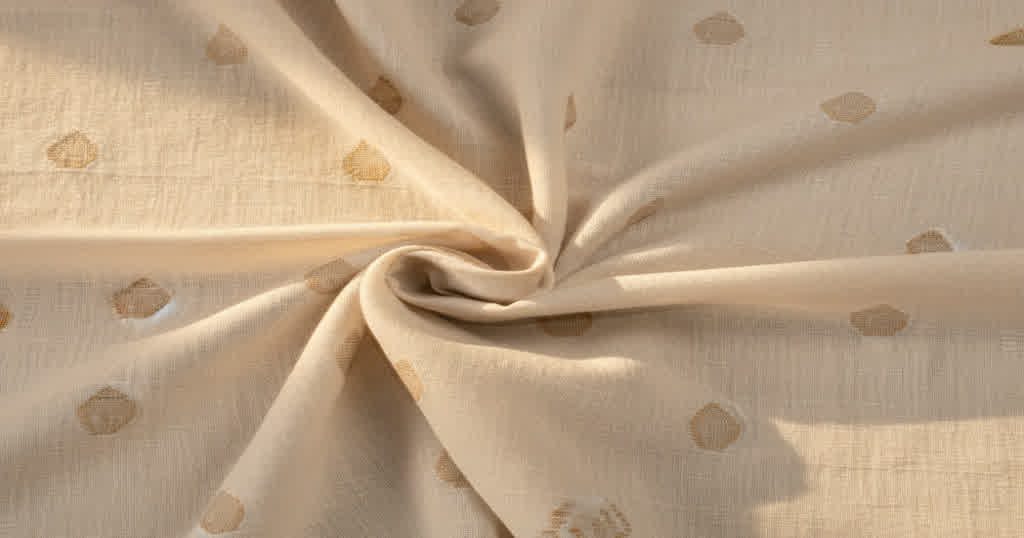
Jamdani Fabric Wholesale in India: A Guide to Artisan-Made Textiles

A designer weighing jamdani fabric wholesale from a new supplier flips the swatch over and checks the back first. If the motif threads trail loose or have been clipped, the cloth was probably made on a powerloom, not by hand. A sample that looks right from the front can still fail the handloom test in seconds.
Jamdani began in Bengal as a supplementary weft technique, and UNESCO recognises it as Intangible Cultural Heritage. Mughal emperors patronised it for its muslin-like sheer quality and geometric motifs. Brands now want that heritage with traceability they can resell, while rural weavers need orders sized to what a loom can actually produce. This guide covers the weave, the price logic, how to vet suppliers, and how we organise looms at Anuprerna.
The Anatomy of Jamdani: Decoding the Supplementary Weft Technique
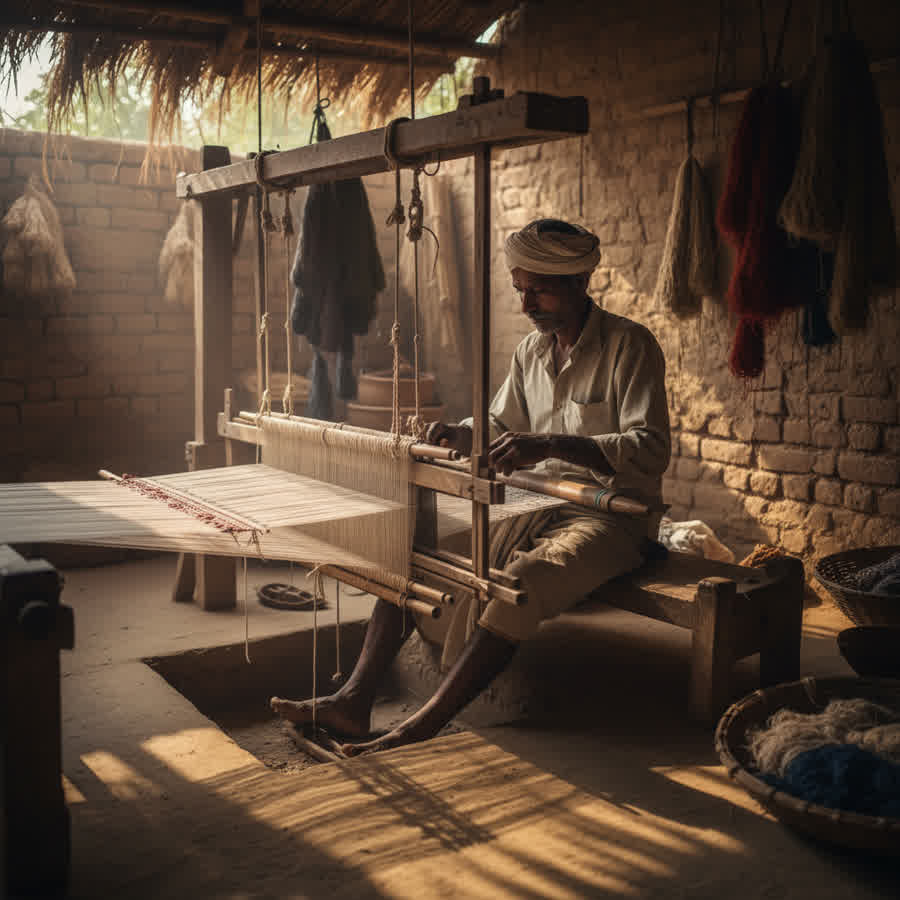
Jamdani is a supplementary weft technique: extra, non-structural yarn is hand-woven into a sheer ground cloth to form motifs. The pattern sits on the base weave rather than inside it, so it appears to float.
How the Discontinuous Weft Works
In ordinary weaving, the weft (the crosswise yarn) runs from one selvedge, the finished edge, to the other. In jamdani, the pattern yarn is discontinuous: it is inserted only across the width of each motif, then stopped. The weaver works on a pit loom, where the loom frame sits over a pit so the feet reach the treadles.
The jamdani weaving process moves in a fixed order:
- Ground weave: a plain, fine cotton or silk base is woven shot by shot.
- Pattern insertion: the weaver counts warp threads by hand and passes short lengths of pattern yarn only where the motif falls.
- Row-by-row building: the design grows slowly from a reference drawing, without a jacquard attachment.
Yarn Counts and GSM for Apparel
Yarn count measures thread fineness, and a higher number means a finer yarn. Jamdani is typically woven from fine cotton in 60s to 100s count, silk, or linen blends. Finished fabric weight runs from an ultra-light 40 GSM (grams per square meter) up to 80 GSM.
When specifying jamdani fabric wholesale orders, match weight to the garment:
- Around 40 GSM: stoles, scarves, dupattas and layered pieces where sheerness is the point.
- Towards 80 GSM: shirting, kurtas and unlined dresses that need a little more body.
- Fibre choice: cotton gives a dry, breathable hand, silk adds lustre, and linen blends add crispness.
Tension Without Weakness
Motifs must lie flat without puckering the ground cloth. The weaver controls tension on both pattern and base yarn so the fabric keeps its tensile strength. Uneven tension shows up later as distortion at motif edges, which becomes a cutting and sewing problem on your production floor.
Understanding Jamdani Fabric Price: A Transparent Guide for B2B Buyers
Jamdani fabric price per meter is driven by three things: yarn quality, motif density and artisan labour hours. Because the weaving is manual, price follows time on the loom rather than machine output.
The Cost Drivers, Line by Line
Each of these inputs changes the quote:
- Base yarn: 100s count cotton or silk costs more than coarser counts, and finer yarn is slower to weave.
- Motif density: more motifs per meter means more hand-inserted pattern passes.
- Labour hours: a skilled weaver may produce only 1 to 2 meters per day, depending on the design.
- Preparation and finishing: yarn preparation, washing and inspection add handling time.
We itemise these on quotes so you can see where the money goes. Transparent pricing should reflect fair wages and premium material cost, not a hidden margin.
Buti vs. Jaal: Why Density Changes Everything
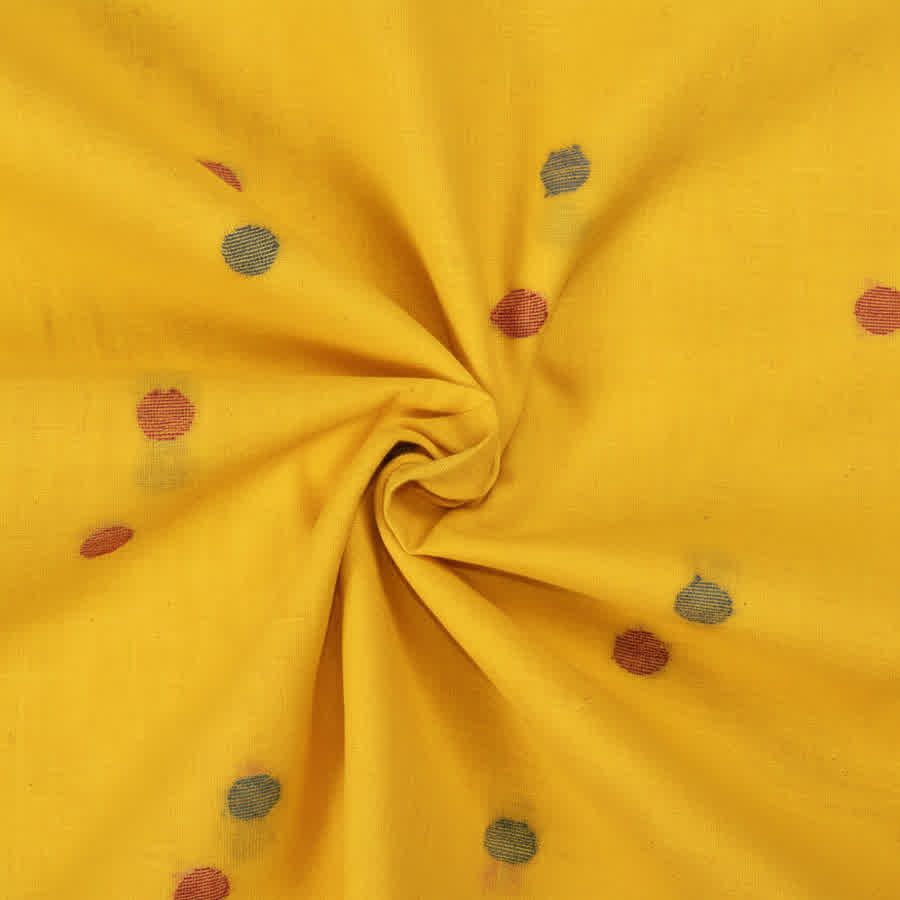
A buti is an individual, scattered motif, such as a small flower or diamond, set at intervals on the ground. A jaal is a dense, interconnected all-over pattern that covers the cloth like a lattice. Buti work leaves more plain ground and weaves faster, while jaal needs many more pattern passes per meter and costs accordingly.
Handloom Versus Powerloom Imitations
Powerloom imitations are cheaper because machines insert the pattern at speed, often by a cut-shuttle method that leaves cut threads on the back. The low price reflects the absence of hand labour, and the cloth lacks the slight natural irregularity of hand-controlled tension.
Compare a handloom quote only against other handloom quotes of the same count, GSM and motif density. A comparison across weaving methods is a comparison of different products, and it will make honest jamdani fabric wholesale pricing look expensive.
Vetting Authentic Jamdani Fabric Manufacturers in India
Genuine jamdani fabric manufacturers can show you the weaver, the loom and the yarn source behind your order, and they let you inspect the reverse of the cloth. If a supplier cannot do that, treat the fabric as unverified.
Reading the Cloth Itself
Start with the fabric in your hands, because it is the hardest thing to fake. Look for:
- The reverse side: loose floats or cut thread ends point to cut-shuttle powerloom work.
- Natural irregularity: small variations in motif spacing are signs of hand-controlled tension, while well-made repetition across hundreds of meters is a warning.
- Hand-feel: fine-count yarn should feel light and airy, not stiff or heavy.
Traceability Questions to Ask
Textile fabric manufacturers in India range from large mills to small weaver cooperatives, so ask every supplier the same questions. The answers show whether supply chain traceability is real or only a marketing line.
- Which district and weaving cluster produced this cloth?
- Who supplied the yarn, and what is its count and fibre?
- Can you share loom-level photos or weaver details for my order?
- How are production milestones reported during the lead time?
Ethical Labour Standards
Ask how weavers are paid: the per-meter rate, any advances, and whether payment reaches the weaver directly. Brands' ESG teams increasingly expect documented wage practices, not verbal assurances. A supplier proud of its ethical labour record will share these details readily.
Anuprerna's Decentralized Supply Chain: Scaling Artisan Production

We scale jamdani by spreading orders across many small rural weaving units in Bengal instead of concentrating them in one factory. Shared design briefs, yarn standards and a central inspection step keep the cloth consistent.
Many Looms, One Standard
Our weavers keep their own looms and work in their own communities. We coordinate the parts that must be uniform:
- Yarn sourcing: counts and fibres are specified up front so cloth from different looms matches.
- Design briefs: motif layout, buti or jaal density and target GSM are agreed before weaving starts.
- Scheduling: orders are split by loom capacity, so no single weaver is overloaded.
Flexible MOQs and Realistic Lead Times
Many conventional mills ask for thousands of meters. Our model allows jamdani fabric wholesale orders from about 50 to 100 meters per custom design, so boutique brands avoid overstocking. Because a weaver may produce only 1 to 2 meters a day, plan for a 60 to 90 day lead time on custom work.
We quote that window honestly, because forecasting accuracy matters more to your collection calendar than an optimistic promise.
Quality Control Before Dispatch
Every batch is checked before it leaves the cluster. Our inspection covers:
- Reverse-side check for loose floats or cut threads.
- Count and GSM verification against the agreed spec.
- Motif alignment and tension across the full length.
- Batch records linking the cloth to its weaving cluster.
That record gives you the traceable story your customers ask for, backed by cloth that passes inspection.
Explore Our Collection
Anuprerna works directly with handloom artisan clusters to weave jamdani fabric wholesale for designers and brands building considered collections. To source it for your next line, explore the range below.
frequently asked questions
What is the typical MOQ for jamdani fabric wholesale orders?
Anuprerna's flexible MOQs for jamdani fabric wholesale can start as low as 50 to 100 meters per custom design. Traditional textile fabric manufacturers in India may require thousands of meters. Our decentralized model lets boutique brands source sustainably without overstocking.
How does the jamdani weaving process affect production lead times?
Plan for a lead time of 60 to 90 days on custom wholesale orders. Jamdani is highly labour-intensive because motifs are woven directly into the fabric with a non-structural supplementary weft. A skilled artisan may weave only 1 to 2 meters per day, depending on motif density.
How can I verify the authenticity of handloom Jamdani versus powerloom imitations?
Inspect the reverse side of the cloth first. Authentic handloom Jamdani has motifs woven directly into the fabric, with no loose floating threads or cut ends on the back. Powerloom versions often show cut threads from the cut-shuttle method and lack the slight, natural irregularities of hand-controlled tension.
What specific factors determine the jamdani fabric price per meter?
Three main factors set the wholesale price: base yarn quality, motif intricacy and density, and artisan labour hours. Yarn quality ranges from 100s count fine cotton to silk blends. Transparent pricing reflects fair wages and premium material costs.
Which fibres are used for Jamdani fabric?
Jamdani is typically woven from fine cotton in 60s to 100s count, silk, or linen blends. Finished fabric weight ranges from an ultra-light 40 GSM to 80 GSM. The fibre you choose affects sheerness, drape and hand-feel, so match it to the garment you are making.
More Blogs
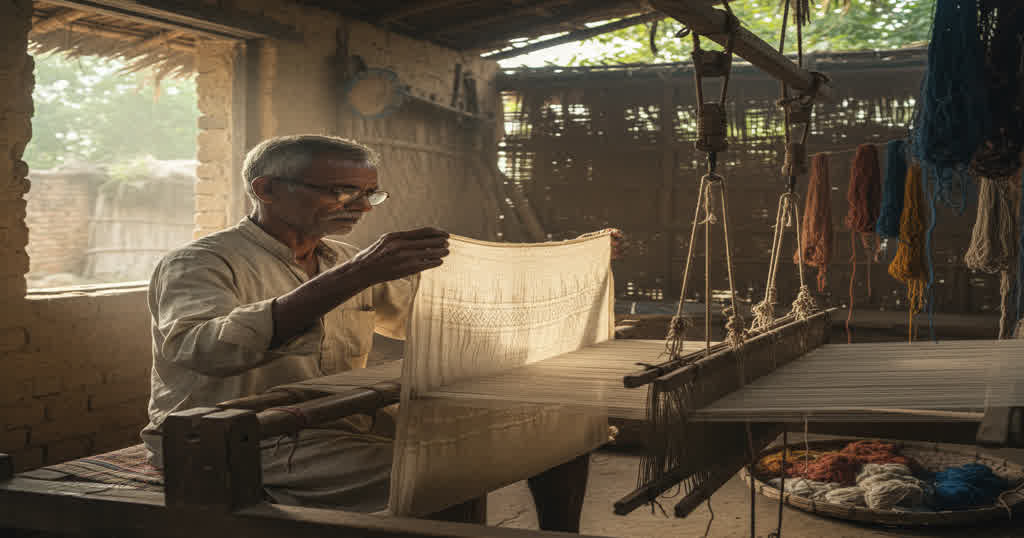
fabric sourcing in india: exploring handloom and artisan-made textiles
khadi cotton fabric vs regular cotton fabric : which one lasts longer?
why designers choose indian fabric wholesale for unique collections

organic fabric suppliers in india: a guide for fashion brands & designers
how fabric wholesalers help fashion brands scale faster
lightweight silk fabrics: a guide for designers & fabric buyers