From Village Looms To Global Brands: The Anuprerna Story

This new podcast captures how Anuprerna grew from uncertain early steps to a steady, artisan-first supply chain in East India. Most of the textile industry is built on a very different logic. "Speed over care and volume over context." Fabric is treated as inventory, people as capacity, and crafts as a style to be dropped the moment margins tighten.
“Sustainability often arrives as a campaign, not as an operating system.” In that world, an artisan-first model is not a romantic idea; it is a structural tension. This is the tension the conversation sits inside.
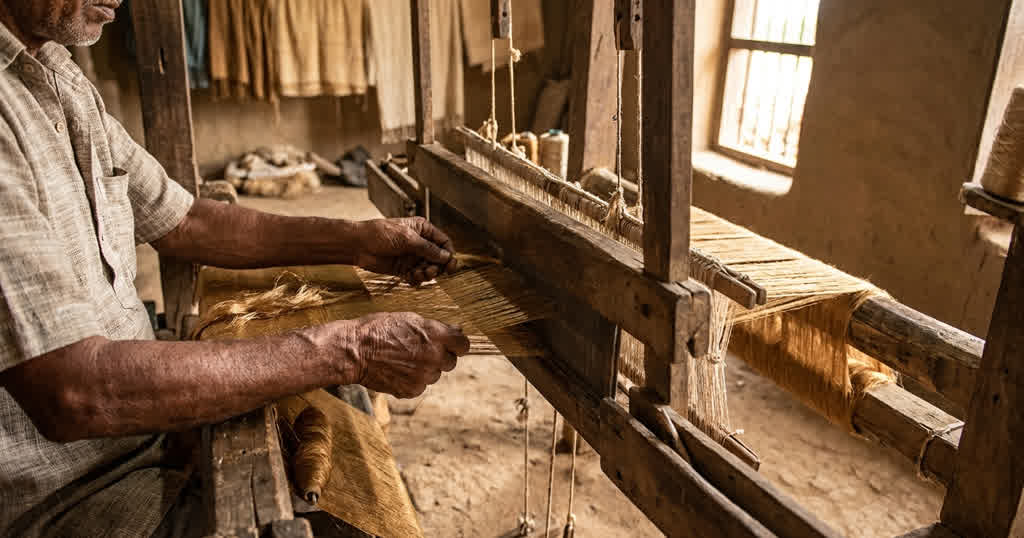
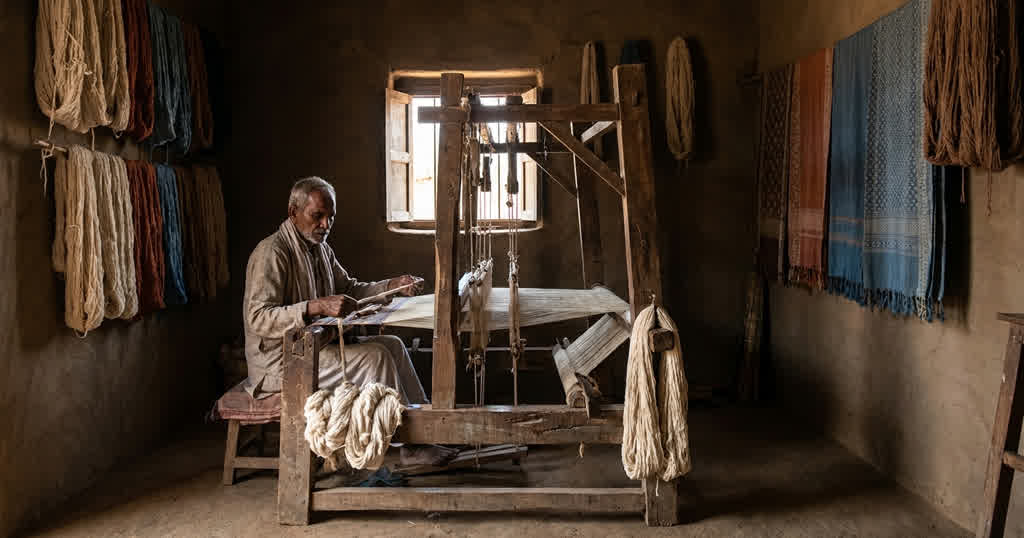
The episode traces the move from corporate strategy to building a tech-enabled, craft-focused business with very limited resources. It covers what has worked, what has not, and what it takes to keep artisans at the center while still building something that can scale. It also reflects what we aim for every day: fair growth for artisans, real transparency end-to-end, and technology used as a backbone rather than decoration.
The Story of Anuprerna

Why Anuprerna is different?
How do you keep a weaver in a village in Bengal on regular work without pushing them into unsafe timelines or unsustainable wages?
How do you say no to shortcuts that make financial sense in the short term but quietly erode the ecosystem you claim to stand for?
How do you bring in technology that tracks, supports, and de-risks their work without turning transparency into a buzzword or a marketing banner? The episode looks at those questions from the inside. It touches on why we chose a decentralized artisan network instead of a single large factory.
Why did we build our own tech backbone instead of plugging into a generic ERP?
Why did we spend years learning from missed orders, delayed shipments, and imperfect processes instead of chasing quick wins and rapid expansion?
Our Vision
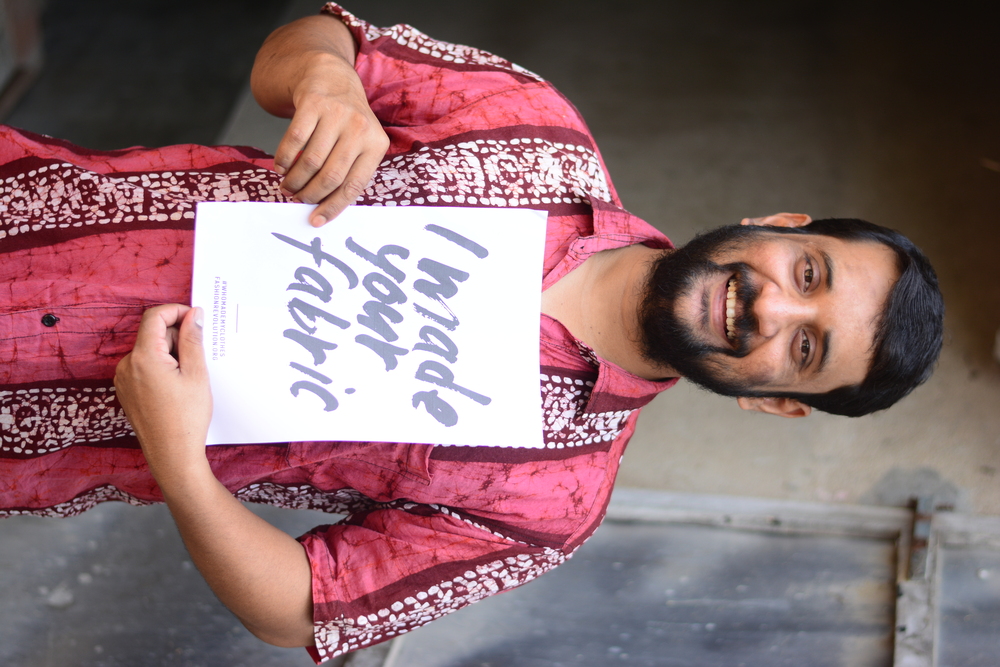
Zooming out, it also speaks to a larger shift that is slowly playing out in the industry. More designers now want to know who made their fabric, not just where it shipped from. More small and mid-sized brands are asking for traceable stories, not just MOQ and lead time. There is growing demand for material that is both commercially viable and ethically grounded. None of this is dominant yet, but it is no longer fringe either.
Our view is simple. If artisan-first supply chains are to survive, they cannot live on sentiment alone. They need robust operations, boring reliability, data that actually matches production reality, and pricing that reflects true cost rather than a race to the bottom. They also need buyers who are willing to build long-term relationships instead of shopping for the lowest quote every season.
“That is the broader context in which this podcast sits. It is not a victory lap. It is a snapshot of a work in progress within an industry that still largely rewards opacity, speed, and disposability.”
If this conversation sparks any thoughts, criticism, or disagreements about where the textile and fashion ecosystem is headed, we would genuinely like to hear them.
related questions
How did Anuprerna transition from a corporate strategy background to an artisan-first supply chain in Bengal?
Anuprerna moved from corporate strategy to an artisan-first model by shifting focus to Bengal’s weaving clusters, building trust with small teams, streamlining production through simple tech tools, and scaling slowly through repeat orders rather than aggressive expansion.
What role does technology play in connecting traditional weaving clusters to global markets?
Technology acts as the backbone. It streamlines orders, improves communication with clusters, tracks production, and gives global buyers real transparency. It removes friction from a very traditional system and makes artisan-led manufacturing reliable at scale.
How does Anuprerna balance commercial growth with fair, consistent livelihood opportunities for artisan communities?
Anuprerna focuses on steady orders, transparent pricing, and long term partnerships with clusters. Growth is planned around capacity that artisans can sustain. Technology manages workflows and demand, which keeps production regular without pushing unsafe speed or volume.
More Blogs
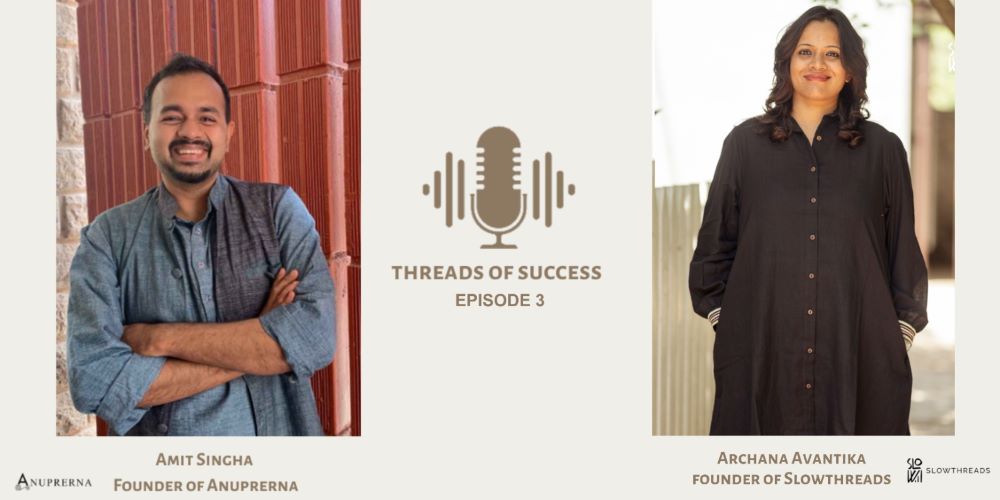
transformation journey with archana ravi founder of slowthreads
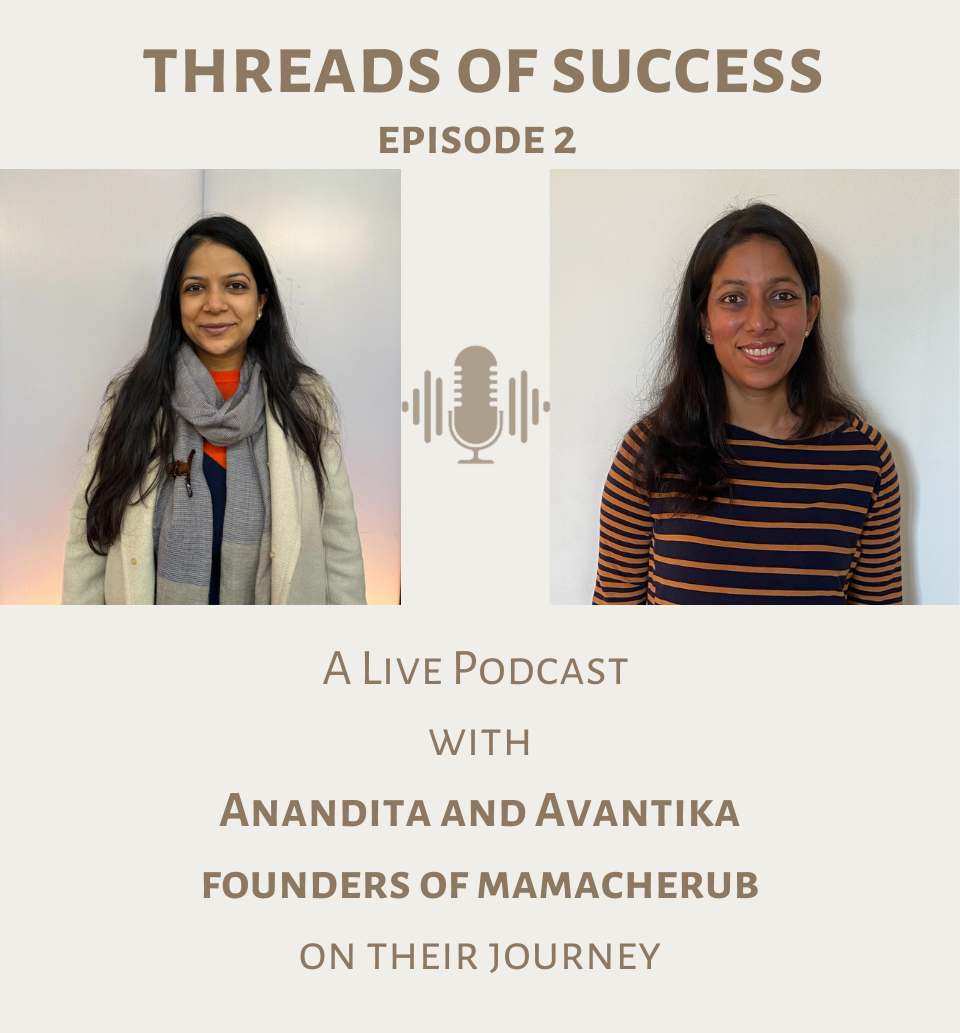
transformation journey of sustainable clothing brand, mamacherub
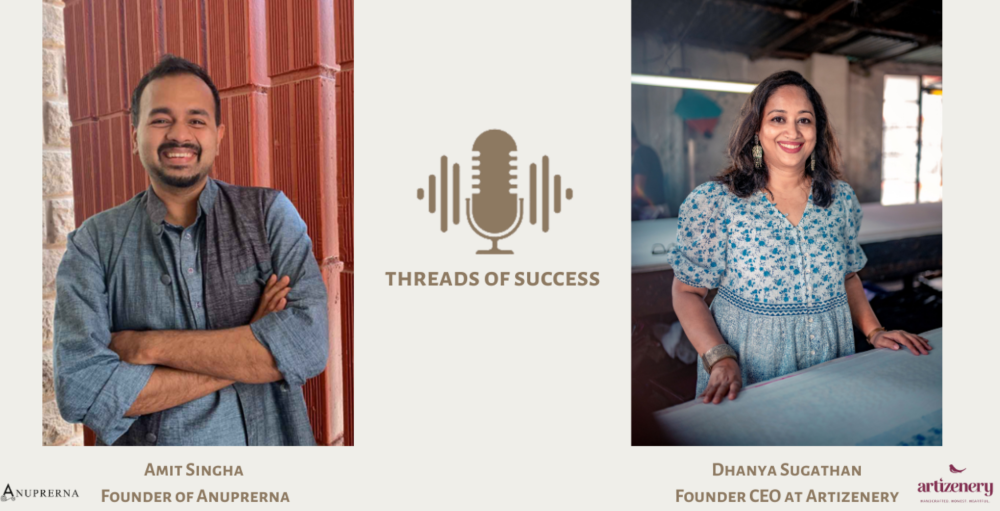
digital transformation in fashion with dhanya sugathan founder of artizenery

how to restyle festive co-ord sets for everyday wear
tussar silk fabric: characteristics, texture & a guide for designers
jacquard fabric supplier: a guide for designers & fashion brands