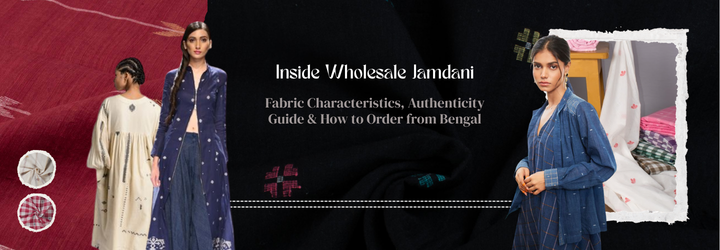
Jamdani Fabric Online: What It Is, How to Identify Authentic Jamdani from Bengal & How to Buy

If you are looking for Jamdani fabric online, it is important to understand what makes the textile authentic before choosing a fabric for your collection. Jamdani is a traditional handwoven cotton textile associated with Bengal, recognized by UNESCO as an Intangible Cultural Heritage of Humanity in 2013. Its distinctive motifs are created directly on the loom using a supplementary or discontinuous weft technique.
For buyers sourcing Jamdani fabric online in India, the visual appearance alone does not tell you whether a fabric is genuinely handwoven. The weaving technique, yarn count, motif complexity, colour, hand feel, and production provenance all influence the quality and authenticity of Jamdani.
Whether you are sourcing handwoven Jamdani fabric for apparel or exploring a handwoven Jamdani saree, understanding the construction of the textile is essential before making a purchase.
What Is Jamdani Fabric?
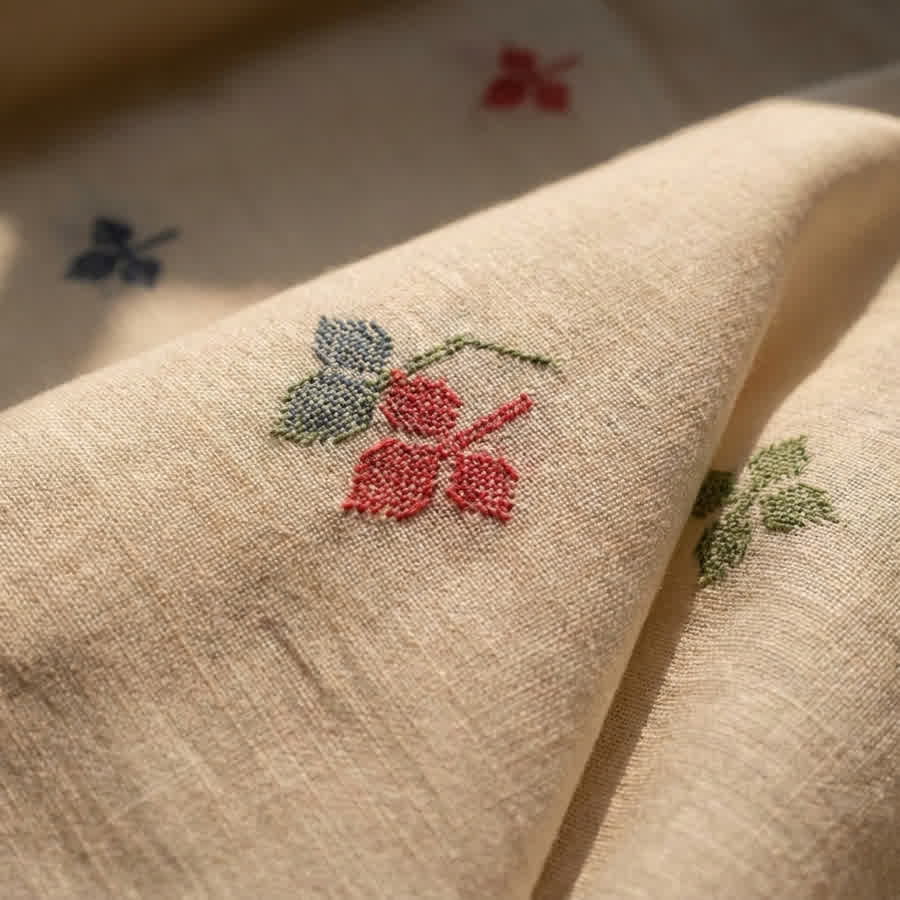
Jamdani fabric is a traditional handwoven cotton textile from Bengal, known for decorative motifs created directly during weaving using supplementary weft threads. Unlike printed textiles or embroidery, the motifs are integrated into the fabric during the weaving process.
This makes handwoven Jamdani fabric a skilled and labour-intensive textile tradition, closely associated with Bengal's fine cotton and muslin weaving heritage. The term Jamdani muslin fabric may refer to exceptionally fine Jamdani constructions, but buyers should always verify the fibre, count, and weave structure.
The traditional art of Jamdani weaving was inscribed on UNESCO's Representative List of the Intangible Cultural Heritage of Humanity in 2013. For modern fashion brands, Jamdani fabrics combine handloom craftsmanship, Bengal's textile heritage, lightweight cotton, and distinctive woven motifs.
Why Is Jamdani Fabric Special?
Speciality of Jamdani Fabric
Jamdani is special because its motifs are woven into the fabric using a supplementary-weft technique, making each piece a product of skilled manual craftsmanship.
The construction involves:
- A structural weft that forms the foundation of the fabric.
- A supplementary weft that creates individual motifs.
- Manual placement of the supplementary threads according to the design.
- A handloom process that allows the weaver to build detailed motifs directly into the cloth.
This technique gives Jamdani its characteristic floating motif effect.
Because the motifs are created during weaving, traditional Jamdani is different from a printed cotton fabric that only reproduces the appearance of the craft.
Slight variations in motif shape, spacing, or placement can also occur in handwoven Jamdani fabric. These variations are a natural characteristic of artisan-made textiles.
Understanding Khadi Jamdani Fabric
The term khadi Jamdani fabric may be used by buyers and sellers to describe Jamdani-style or Jamdani-woven textiles made with handspun or khadi-associated yarns. However, khadi and Jamdani describe different aspects of a textile.
Khadi primarily refers to handspun and handwoven cloth, while Jamdani refers to a distinctive supplementary-weft weaving technique and motif construction.
Therefore, when sourcing khadi Jamdani fabric, buyers should ask specifically about:
- The yarn used
- Whether the yarn is handspun
- The handloom construction
- The supplementary-weft technique
- Fabric count and weight
- Motif development
- Artisan and production provenance
This distinction helps prevent different handwoven textiles from being grouped together simply because they have a similar appearance.
How Can You Identify Authentic Jamdani Fabric?
How to Verify Genuine Handwoven Jamdani
Authentic Jamdani fabric can be identified by examining its woven construction, motif formation, and production details rather than relying only on its appearance.
When buying Jamdani fabric online, especially when purchasing for a fashion collection, look for:
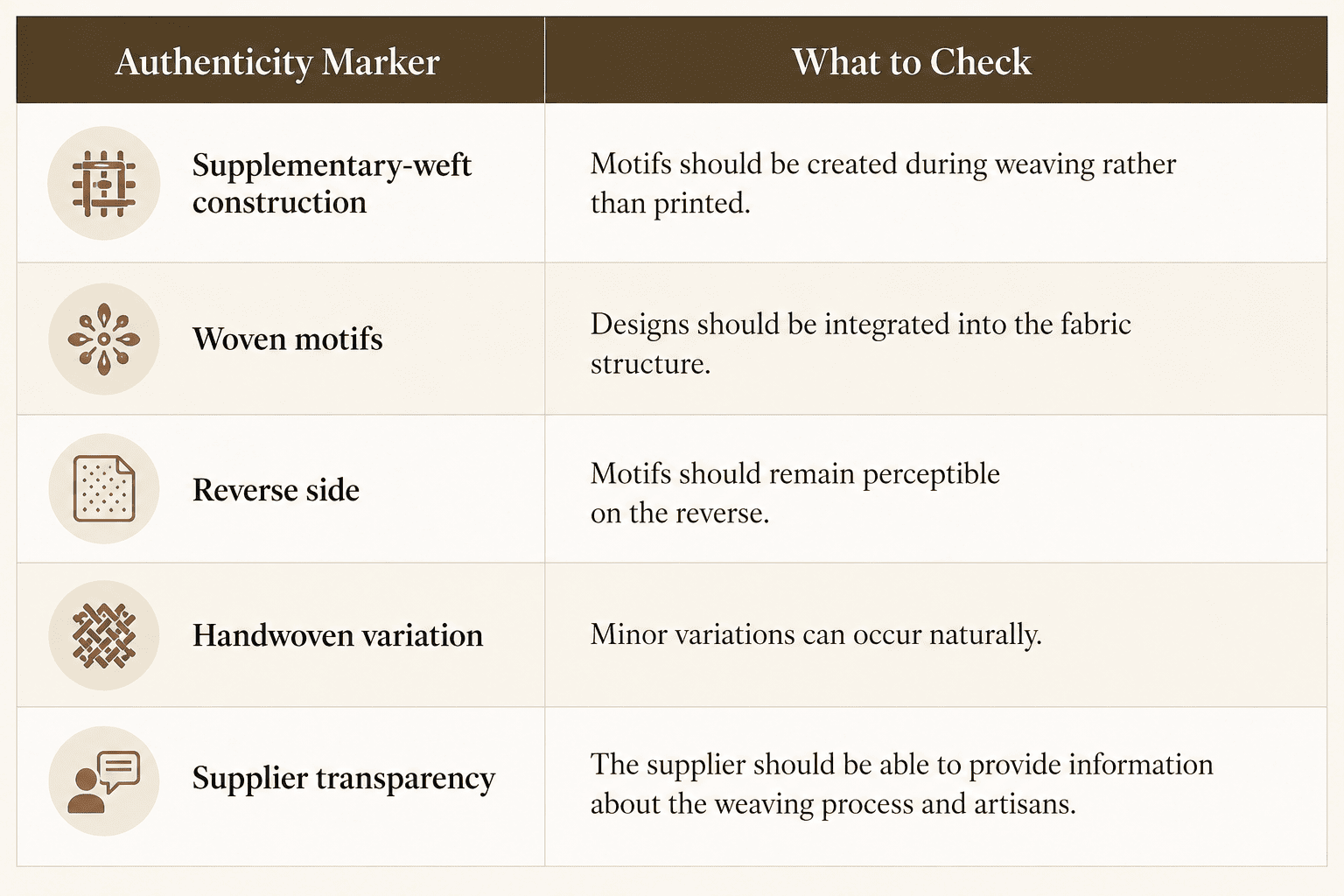
This distinction becomes particularly important when shopping for Jamdani fabric online in India, where machine-made jacquard, printed textiles, and other patterned fabrics may visually resemble traditional Jamdani.
For buyers specifically searching for an authentic Jamdani saree, the same principle applies. The appearance of a saree alone is not enough to establish authenticity. The weaving method, motif construction, provenance, and product documentation should also be considered.
Before placing a larger order, request a physical swatch whenever possible. A swatch allows you to assess the weave, motif definition, hand feel, weight, and drape rather than relying entirely on product photographs.
What Should You Check When Buying Jamdani Fabric Online?
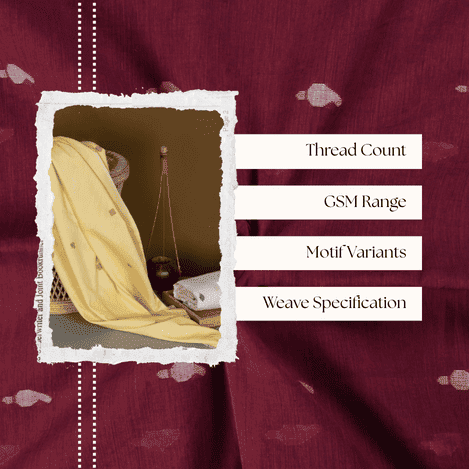
Jamdani Specifications Decoded: Thread Count, GSM and Motif Selection
When buying Jamdani fabric online, check the fabric's construction, count, GSM, motif, colour, width, quantity, and intended end use before placing an order.
1. Thread Count
Jamdani count refers to the fineness of the cotton yarn and plays an important role in determining the fabric’s weight, drape, appearance, and weaving time. As the count increases, the yarn generally becomes finer, allowing for lighter fabrics and more intricate woven motifs.
- 40–60 count: These fabrics have more body and can be comparatively faster to weave. They are suitable for everyday apparel, scarves, and commercial fashion collections.
- 60–80 count: This range offers a balanced combination of fineness, handle, and drape. It works well for dresses, blouses, shirts, and contemporary fashion.
- 84–100 count: Fine-count Jamdani is lighter and can support greater motif complexity. It is particularly suitable for luxury collections, occasionwear, and bespoke garments.
2. GSM Range
Jamdani is generally lightweight, with its character coming from its fine woven structure rather than high fabric weight.
The current sourcing specifications include:
- 50–80 GSM for fine and luxury-count Jamdani
- 60–100 GSM for mid-range to entry-commercial Jamdani
The GSM should always be considered alongside the count, weave structure, and intended garment application.
3. Motif Complexity
The complexity of the Jamdani motif affects both the visual character and the amount of time required to weave the fabric.
Common motif directions include:
- Geometric: clean, repeating forms suited to contemporary collections.
- Stripe: woven lines that work well across apparel and accessories.
- Check / Guti: smaller motifs suitable for minimalist and everyday designs.
- Floral / Butah: intricate floral and vine-inspired designs suited to luxury and heritage-focused collections.
More intricate motifs generally require more manual intervention and may therefore increase production time.
What Colour Options Are Available in Jamdani?
Jamdani Fabric Specifications: Count, GSM and Use
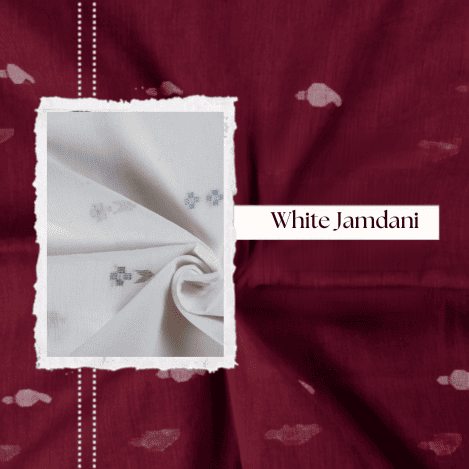
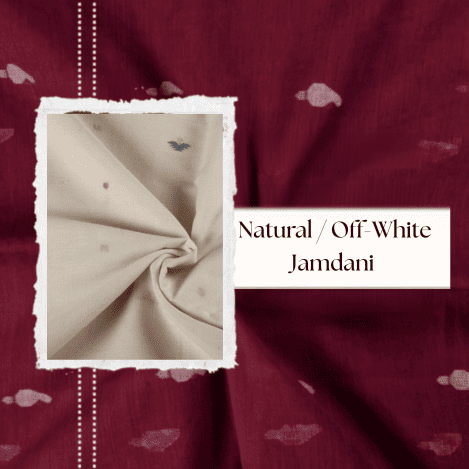
Jamdani fabric is available in a range of base and motif combinations, with white, natural/off-white, and navy among Anuprerna's core colourways.
White Jamdani
White Jamdani creates a refined, tonal appearance where the woven motifs become visible through texture and light.
It works particularly well for minimalist luxury, bridal, resort, and editorial collections.
Natural / Off-White Jamdani
Natural or off-white Jamdani retains the warm appearance of unbleached cotton and offers a softer, more earthy aesthetic.
It is suitable for slow-fashion collections, natural palettes, gender-neutral designs, and brands emphasizing textile provenance.
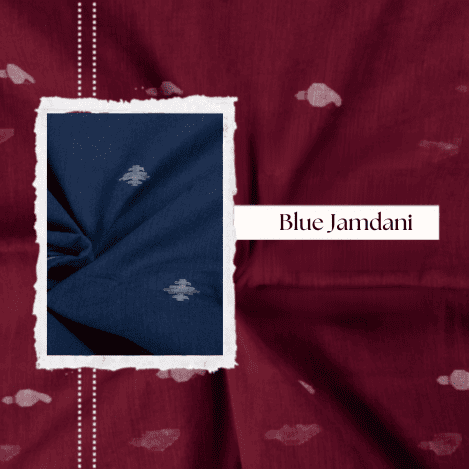
Blue Jamdani
Blue Jamdani creates stronger contrast between the base and supplementary-weft motifs, giving the traditional weave a contemporary appearance.
It can work well for statement garments, modern collections, and artisan-focused designs.
When ordering coloured Jamdani, confirm the dye method and colourfastness requirements according to your end use.
Is Jamdani Fabric Suitable for Fashion Collections?
Yes, Jamdani can be used across contemporary, luxury, occasionwear, sustainable, and heritage-inspired fashion collections.
Its lightweight construction and woven motifs make it suitable for applications such as:
- Dresses
- Blouses
- Shirts
- Kurtas
- Sarees
- Scarves
- Trousers
- Accessories
- Occasionwear
A handwoven Jamdani saree is one of the most recognizable applications of the craft, but the same weaving tradition can also be developed into fabrics for contemporary apparel and accessories.
The appropriate count and motif should be selected according to the garment structure. Finer Jamdani can offer a lighter drape, while lower counts can provide greater body for certain applications.
How Long Does Jamdani Fabric Take to Produce?
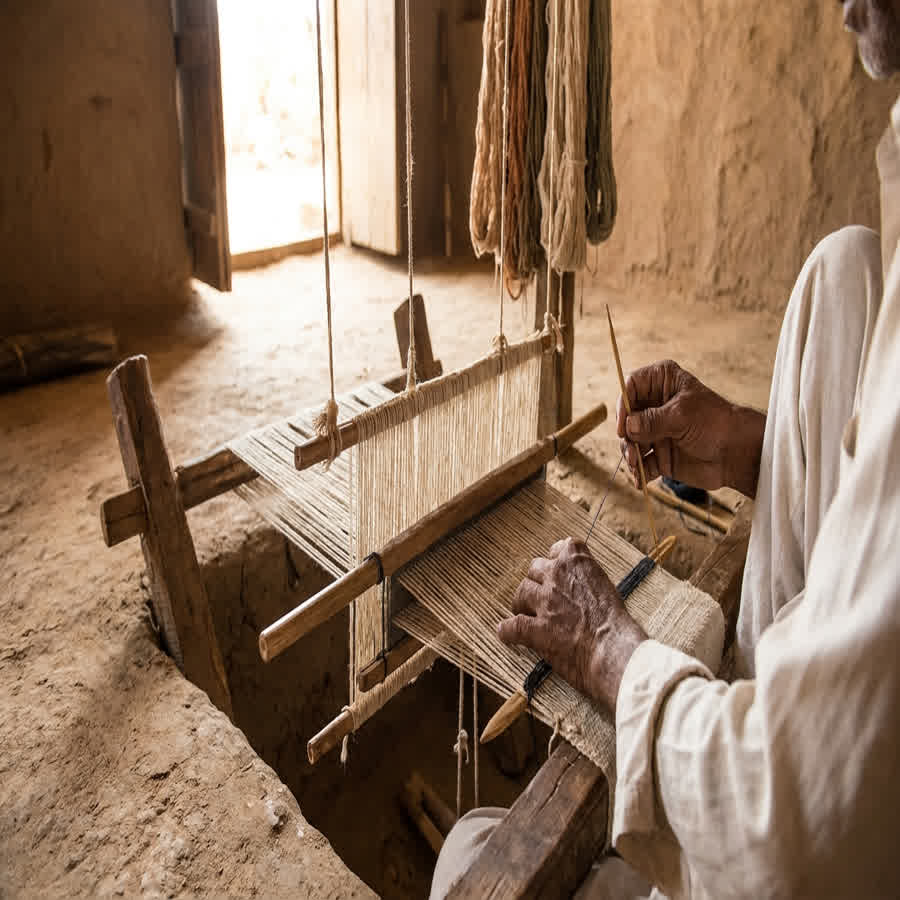
Jamdani generally requires a longer production timeline than plain handloom cotton because the motifs are manually created during weaving.
The current production guidance is approximately:
- Entry-count geometric or check Jamdani: 4–6 weeks
- Mid-range floral Jamdani: 6–8 weeks
- Fine-count luxury Jamdani with complex floral motifs: 10–12 weeks or more
Actual production time depends on the selected count, motif complexity, quantity, and artisan availability.
This is particularly important when buying Jamdani fabric online for a scheduled fashion collection. Always confirm the production timeline before placing a bulk order.
Where Can You Buy Jamdani Fabric Online in India?
You can buy Jamdani fabric online in India from specialist textile suppliers that provide clear information about the weaving technique, specifications, provenance, and ordering process.
For wholesale and collection development, Anuprerna offers Jamdani through an artisan-focused sourcing model that provides access to:
- Bengal artisan weavers
- Traditional supplementary-weft weaving
- Different Jamdani counts and motifs
- Multiple colourways
- Fabric swatches
- Production documentation
- Wholesale sourcing support
When choosing an online supplier, don't evaluate Jamdani only through photographs. Ask about the weaving technique, count, GSM, motif, dyeing process, MOQ, lead time, and sample availability.
How to Order Jamdani Fabric Online from Anuprerna?
The best way to order Jamdani online is to evaluate a physical swatch first, confirm the required specifications, test sample yardage, and then proceed with bulk production.
Step 1: Order a SwatchKit
Start with physical Jamdani swatches so you can evaluate:
- Weave clarity
- Motif definition
- Fabric hand
- Drape
- Weight
- Thread count
Step 2: Select the Count and Motif
Choose the appropriate count based on the intended garment and confirm the motif family.
Step 3: Select the Colourway
Choose from the available colourways and confirm dye requirements.
Step 4: Confirm Width and Quantity
Confirm the required width and quantity according to your production requirements.
Step 5: Test Sample Yardage
Create a test garment and assess sewing, drape, finishing, and washing behaviour before bulk production.
Step 6: Place the Order
Once the sample is approved, finalize the specifications, quantity, and delivery schedule with the wholesale team.
Why Choose Anuprerna for Jamdani Fabric?
Anuprerna connects buyers with artisan-made textiles while providing product and production information needed for more informed sourcing decisions.
For Jamdani, the sourcing model includes:
- Bengal artisan partnerships
- Traditional supplementary-weft weaving
- Production and artisan documentation
- SwatchKit ordering
- Wholesale sourcing support
- ArtisanFlow production visibility
This approach helps buyers evaluate not just how the Jamdani looks, but also how it is made and where it comes from.
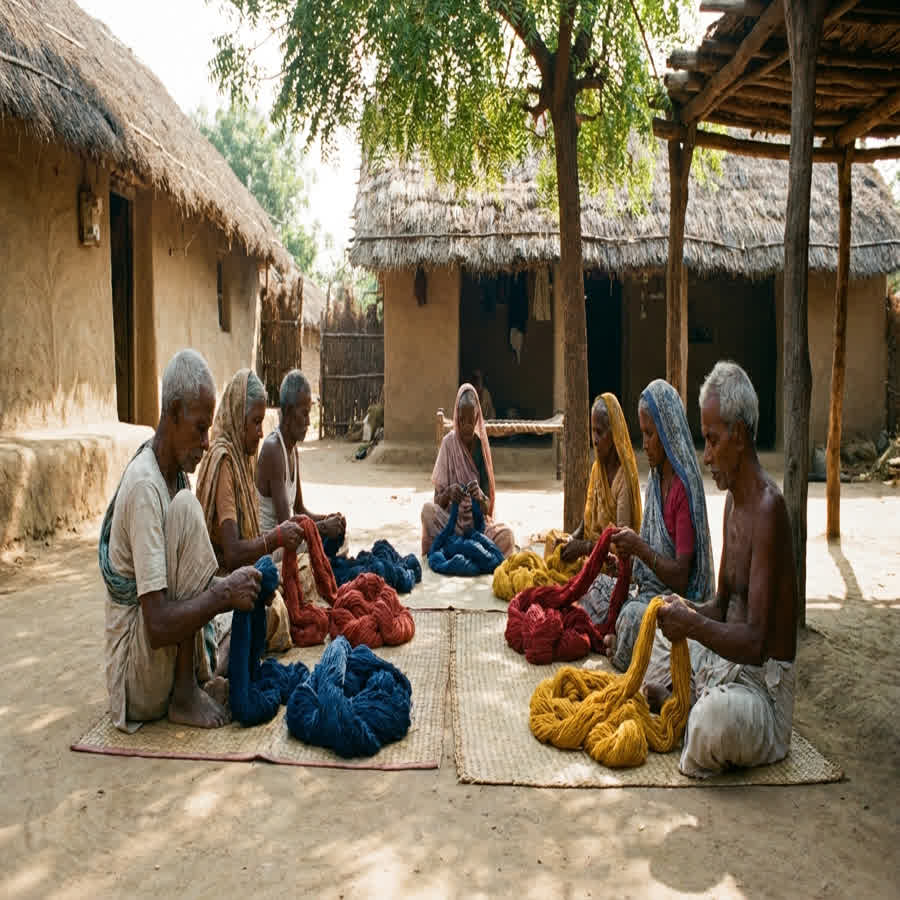
Jamdani is more than a patterned cotton textile; it is a handwoven tradition in which every motif is created as part of the weaving process. Its Bengal heritage, supplementary-weft technique, lightweight construction, and distinctive motifs make it particularly valuable for collections that prioritize craftsmanship and cultural provenance.
If you are looking for Jamdani fabric online or want to buy Jamdani fabric online in India, focus on more than the appearance of the fabric. Check the weaving technique, count, GSM, motif, colour, provenance, sample quality, and production timeline before making your decision.
For wholesale buyers, starting with a physical swatch is one of the simplest ways to understand whether a particular handwoven Jamdani fabric is right for your collection
frequently asked questions
How do I confirm that the Jamdani I am ordering is genuinely handwoven and not machine-made?
Request weaving documentation from your supplier before committing to bulk. At Anuprerna, buyers can receive artisan details, production photographs, and weaving records for their Jamdani orders. Physical evaluation of a swatch is also essential: authentic supplementary weft Jamdani will show slight motif irregularity, a reversible pattern visible on the underside, and a lightweight, papery hand that machine constructions cannot replicate.
What is the typical lead time for Jamdani wholesale orders?
Lead time for Jamdani is longer than for plain handloom cotton and depends heavily on thread count and motif complexity. Entry count geometric or check Jamdani typically requires 4 to 6 weeks. Mid-range with floral motifs typically requires 6 to 8 weeks. Fine count luxury Jamdani with complex floral patterns can require 10 to 12 weeks or more. The Anuprerna team will provide a confirmed lead time at point of order based on current artisan capacity and design specification.
Can I order a custom motif or a bespoke colour for my collection?
Custom motif development is available for established wholesale partners. This involves working with the weaver team to translate a design brief into a supplementary weft pattern. The process requires a minimum commitment and a sample approval stage before full production. Custom colourways beyond white, natural, and navy are also available subject to minimum quantities and dye compatibility with the Jamdani weave structure. Contact the wholesale team to discuss your brief.
Is Jamdani fabric suitable for machine sewing in commercial production?
Yes, with appropriate machine settings. The fine count variants require careful tension calibration and a fine needle to avoid distorting the supplementary weft threads. Entry and mid count Jamdani sews well under standard commercial conditions. Anuprerna recommends requesting sample yardage for production testing before bulk commitment, particularly for fine count pieces. The team can advise on recommended construction techniques for each thread count.
What certifications are available for Jamdani wholesale orders?
Anuprerna's standard dyed Jamdani uses GOTS-certified, azo-free dyes. Natural vat-dyed navy orders can be accompanied by dye source documentation. For Handloom Mark certification, which validates authentic handloom origin, please enquire directly with the team. Certification scope is confirmed at time of order based on the specific weave and dye specifications required.
Can I source Jamdani alongside other Anuprerna fabrics in a single wholesale order?
Yes. Anuprerna's range includes Jamdani, plain khadi, handloom cotton, and mulberry silk, all from the same Bengal artisan network. Consolidating multiple fabric types into a single order is possible and is a practical approach for brands building a full collection from a single ethical supplier. Contact the team to discuss a multi-fabric wholesale enquiry.
More Blogs
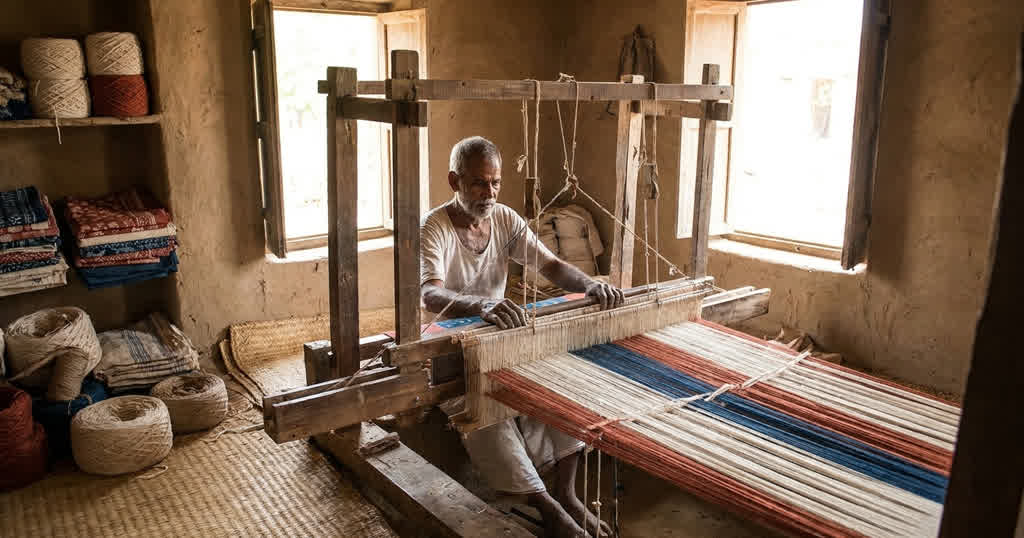
indian fabric wholesale: traditional techniques & modern textile design
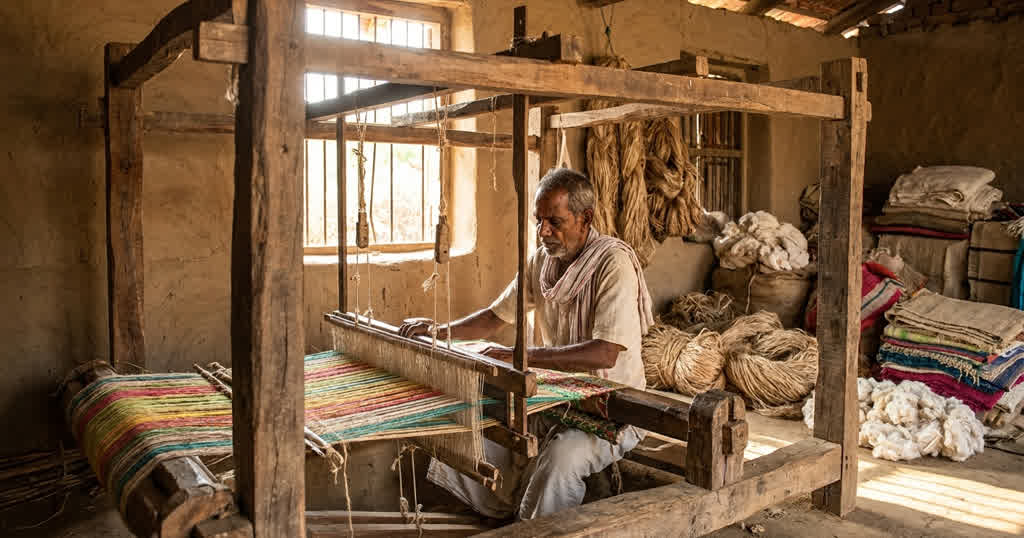
textile export wholesale: everything buyers need to know
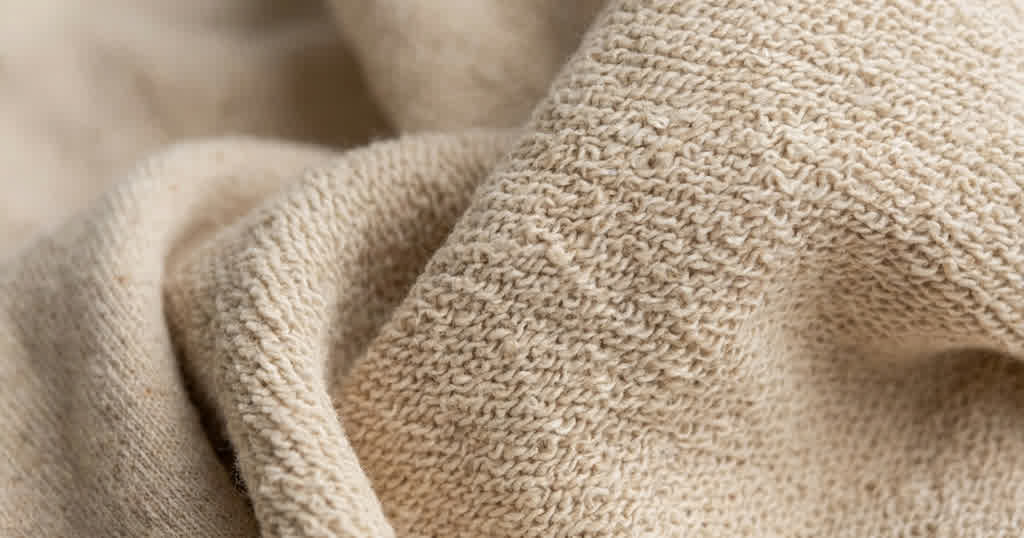
what is french terry material? a deep dive into loop-back cotton
how to sew with raw silk: tips for textile designers
designing with honeycomb material: best uses for waffle weave textiles
raschel knit vs warp knit: understanding the differences