Why Should You Choose Biodegradable Fabrics?

Biodegradable fabrics are textiles derived from natural fibers that break down into organic matter through the action of microorganisms. Unlike synthetic materials, these fibers return nutrients to the soil, reducing waste accumulation. This makes them a preferred choice for eco-conscious designers and brands.
Anuprerna supports sustainable practices by prioritizing biodegradable materials in our production processes. By choosing these sustainable textiles, we ensure our products align with principles of ecological responsibility and long-term environmental stewardship.
Understanding Biodegradable Fabrics
Biodegradable fabrics refer to textiles that decompose naturally through the action of microorganisms like bacteria and fungi. Natural materials such as handwoven cotton, wool, hemp, and linen disintegrate through these biological processes.
Because they are handwoven from natural fiber yarns, all Anuprerna fabrics are biodegradable. This natural lifecycle ensures that the material does not persist in landfills for centuries.
The Role of Natural Dyes in Biodegradable Textiles
Not all natural fiber fabrics remain truly biodegradable after processing. Many are treated with synthetic finishes or harmful chemical dyes that prevent natural disintegration and can leach toxins into the soil.
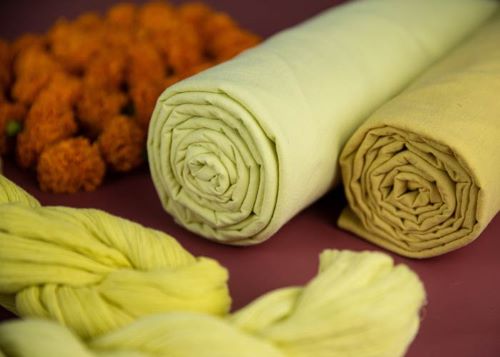
At our facility, we use certified azo-free dyes and GOTS-certified natural vegetable dyes. This ensures our fabrics decompose easily without releasing harmful substances into the ecosystem.
Biodegradable Fabrics:
Visuals
Benefits of Choosing Biodegradable Fabrics
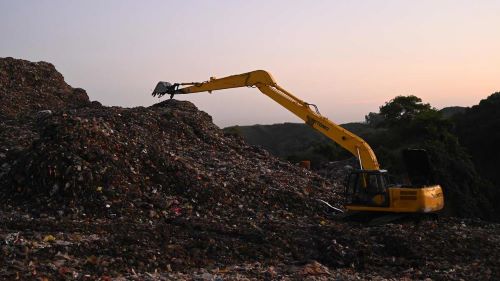
Millions of tonnes of clothing are discarded every year. Most of this waste will not biodegrade in a landfill, especially synthetic materials like polyester or nylon that can leak chemicals into the earth.
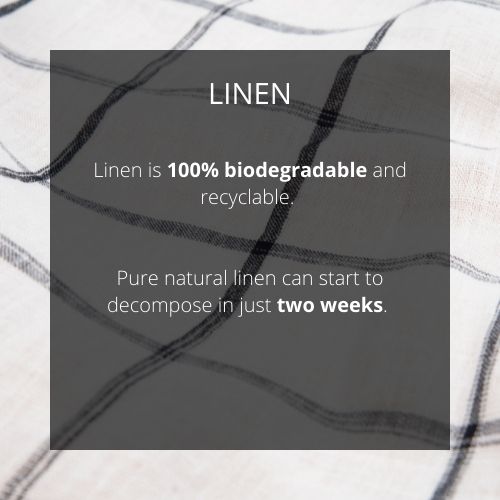
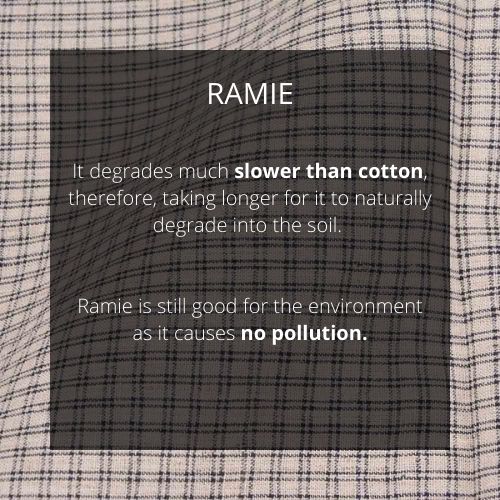
This is where sustainable natural clothing materials come to the rescue. Fabrics like organic cotton, linen, hemp, peace silk, and bamboo are among the few that are completely biodegradable.
Practical Tips for Composting Biodegradable Fabrics
Fabrics can be composted as long as the material is primarily biodegradable, allowing fibers to break down quickly in nature without leaving toxins behind.
Composting Requirements
To degrade naturally, clothes must be placed in an oxygen-rich atmosphere. Adding wet kitchen waste can encourage the process.
Adding worms can accelerate the process as they are efficient at processing organic waste. Do not overload your compost heap with more than 25% of old clothes.
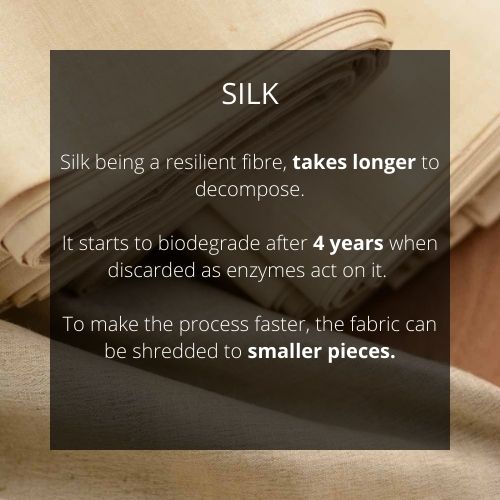
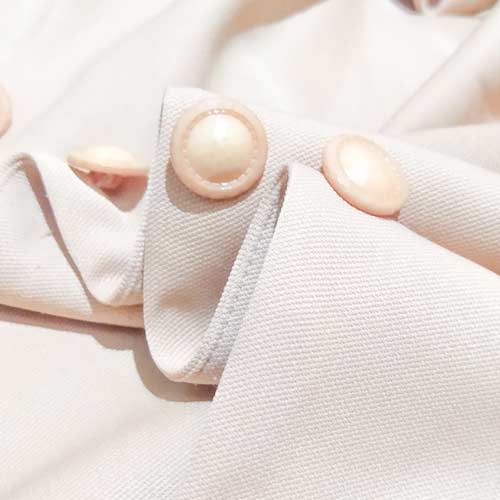
To speed up the process, shred or cut the fabrics into smaller pieces. Ensure you remove buttons, zippers, or any other non-biodegradable trims before composting.
Summary
At Anuprerna, all our fabrics are biodegradable as they are 100% natural material only and are not treated with any harmful chemicals. Even for dyeing, only Certified Azo-free and natural vegetable dyes are used. 95% of clothes can be reused or repurposed and composting should be your last resort owing to its complex processes. We too recycle our deadstock yarns or fabrics to make new fabric & products or packaging respectively. However, it is always better to choose biodegradable fabrics to begin with irrespective of whether you choose to recycle them or to compost them in the end.
frequently asked questions about biodegradable fabrics
What fabric decomposes the fastest?
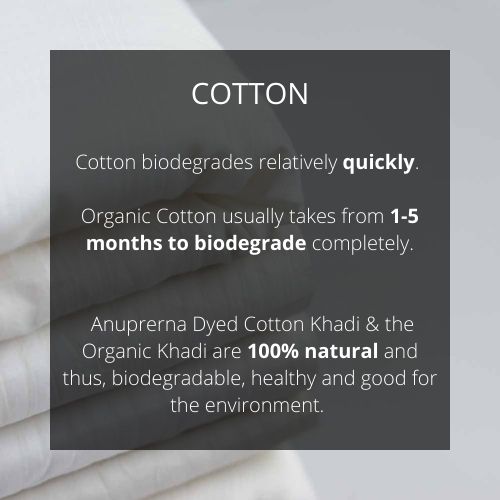
arrow_drop_downCotton fabric decomposes relatively quickly compared to many synthetic fabrics, making it one of the fastest decomposing textiles.
What fabric material cannot decompose?
arrow_drop_downWhile most fabric materials can decompose under certain conditions, synthetic fabrics made from materials like polyester, nylon, and acrylic can take a very long time to decompose, and in some cases, they may never fully break down in the environment.
Why are biodegradable fabrics better?
arrow_drop_downBiodegradable fabrics are better because they break down naturally in the environment, reducing waste, minimizing pollution, and promoting sustainability.
Can fabric biodegrade?
arrow_drop_downYes, fabric can biodegrade under certain conditions, especially if it is made from natural fibers like cotton, linen, wool, or silk. However, synthetic fabrics made from materials like polyester or nylon can take much longer to biodegrade or may not fully break down in the environment.
How do I identify if a fabric is compostable?
arrow_drop_downLook for 100% natural fiber content. Fabrics that are free from synthetic blends, plastic-based finishes, and toxic chemical dyes are generally suitable for home composting.
Are all natural fabrics automatically biodegradable?
arrow_drop_downWhile natural fibers are biodegradable, the processing matters. If a natural fiber is treated with synthetic resins or heavy metal dyes, it may not be suitable for composting.
More Blogs

b2b sourcing guide: how to source high-quality recycle cotton fabric for sustainable collections

sourcing wholesale cotton fabric: a b2b guide to cotton textile manufacturers in india

the ultimate designers’ guide to custom jamdani weaving: partnering with a jamdani fabric wholesaler

strategic sourcing: evaluating jamdani fabric quality for fashion labels

mulberry silk fabric in natural & dyed shades: what luxury sustainable brands need to know before ordering
indigo fabric for ethical collections: comparing khadi, cotton & mulberry silk at wholesale