Handprinted Batik Cotton at Wholesale: How to Evaluate Print Quality, Colorfastness and MOQ Before You Order

TL;DR
• Hand batik is a wax-resist dyeing process where molten wax is applied to fabric before dyeing, creating patterns through selective dye penetration. The characteristic crackling effect is a natural byproduct of the process and one of the clearest authenticity markers.
• The wholesale market has a significant volume of digital-print 'batik-look' fabric: this guide explains exactly how to distinguish genuine hand batik from imitations before placing an order.
• Print quality evaluation has four dimensions: wax penetration, crackling character, colour depth, and repeat consistency. All four require physical swatch assessment, not screen review.
• Colorfastness varies by dye type: azo-free reactive dye on cotton delivers Grade 4 to 5. Natural dye batik delivers Grade 3 to 4. Both are available at Anuprerna.
• MOQ at Anuprerna: low MOQ structure designed for sustainable brands and ethical boutiques building capsule collections or testing new print directions.
• Available colorways: indigo on natural, indigo on white, natural on natural, multi-colour, terracotta, and black are the core Anuprerna batik range.
• Traditional printing techniques including batik are growing at a CAGR of 8.7%, driven by demand for handcrafted and culturally significant textiles in sustainable fashion.
There is a particular challenge in sourcing hand batik cotton at wholesale that does not apply to plain fabric categories. The wholesale market is full of digital-printed and screen-printed cottons that replicate the visual aesthetic of batik without any wax, without any hand process, and without any of the artisan labor that defines the genuine technique.
For buyers building an authenticity claim or simply wanting a fabric that performs and ages the way hand batik should, the ability to evaluate print quality before ordering is not optional. It is the entire sourcing decision.
This guide is written for wholesale buyers at sustainable fashion brands and ethical boutiques who are actively evaluating hand-batik cotton and need to know what genuine batik looks and feels like, how to evaluate print quality and colorfastness from a swatch, what the right questions are when assessing a batik supplier, and how to structure an MOQ and ordering process that works for a capsule or seasonal collection.
Market context: Traditional printing techniques, including batik, block, and resist-dye methods, are projected to grow at a CAGR of 8.7% through 2025 and beyond (Grand View Research), driven by rising demand for handcrafted, culturally significant textiles in sustainable fashion markets. The sustainable fabrics segment is expected to grow by USD 28.9 billion at a CAGR of 8.6% between 2024 and 2029 (Technavio), with hand-process textiles occupying the premium end of this growth. India's textile and apparel sector, which reached USD 222 billion in 2024, sits at the center of this shift: the country operates over 300 GOTS-certified textile units and is the world's leading sustainable fabric producer (IMARC Group), with hand batik production a well-established part of the artisan export offer.
What Hand Batik Actually Is?
A Technical Definition for Wholesale Buyers
A process-focused breakdown of hand batik techniques, materials, and quality markers for bulk sourcing decisions
The word "batik" derives from the Javanese "amba" (to write) and "titik" (dot or point). The technique originated in Java, Indonesia, but has been practiced and adapted across South and Southeast Asia, West Africa, and the Indian subcontinent for centuries. UNESCO recognized Indonesian batik as an Intangible Cultural Heritage of Humanity in 2009.
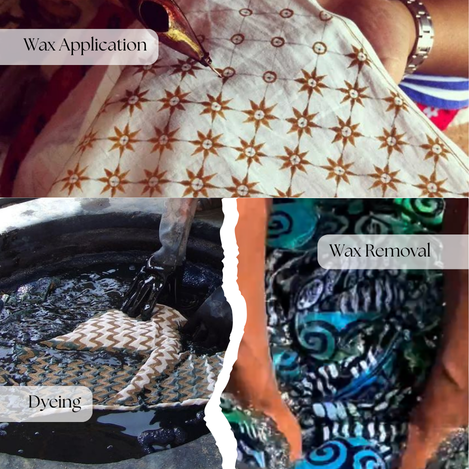
The hand batik process, as practiced at Anuprerna, involves three core stages:
• Wax application: molten wax, typically a mix of paraffin and beeswax, is applied to the fabric using a tjanting tool (a small-spouted cup) or a copper stamp (tjap) for block-repeat work. The wax penetrates the fabric and forms a dye resist wherever it is applied.
• Dyeing: the waxed fabric is immersed in a dye bath. Dye penetrates only the unwaxed areas. For multi-color batik, this process is repeated sequentially: wax additional areas, dye in the second color, and so on.
• Wax removal: after dyeing, the wax is removed by boiling or scraping. The areas that were waxed retain the original fabric color. The crackling effect, one of the most distinctive visual characteristics of batik, occurs when the hardened wax cracks during dyeing, allowing thin lines of dye to penetrate the resist areas.
This three-stage process is entirely different from digital printing, screen printing, or discharge printing, all of which apply color to the surface of the fabric rather than using a wax resist.
The result is not just visually distinct but structurally different: in hand batik, color is embedded into the fiber through the dye bath, producing a depth and durability that surface-printed imitations cannot replicate.
Key distinction for buyers: the crackling in-hand batik is not a design choice. It is a natural consequence of the wax fracturing under tension during the dye bath.
In digital-printed batik-look fabric, crackling is simulated as a printed pattern. Under close inspection with a loupe or even the naked eye, the difference is clear. Genuine crackle lines penetrate the fabric; printed crackle lines sit on the surface.
How to Evaluate Hand Batik Print Quality?
A Wholesale Buyer's Framework
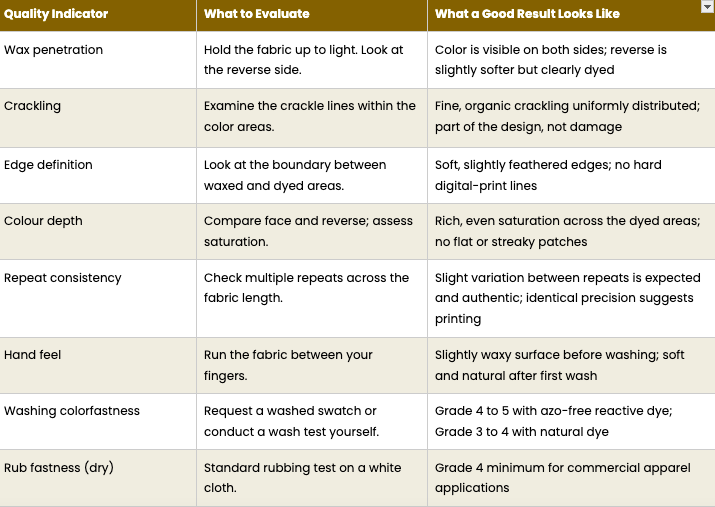
Print quality evaluation for hand batik requires physical samples. Screen images of batik, even high-resolution ones, cannot convey wax penetration depth, crackling character, color saturation, or fabric hand. Any supplier who discourages swatch requests before bulk ordering is a supplier worth approaching with caution.
Use the evaluation framework below when assessing swatches from any hand batik supplier:
Colorfastness in Hand Batik Cotton
What Wholesale Buyers Need to Know?
Azo-Free Reactive Dye on Hand Batik Cotton
Azo-free reactive dye is the standard at Anuprerna for all hand-batiked cotton in the indigo, terracotta, black, and multicolor ranges. Reactive dyes bond chemically with cotton fibers during the dye bath, producing excellent wash fastness when correctly processed.
• Wash fastness: Grade 4 to 5 on standard AATCC and ISO wash tests
• Dry rub fastness: Grade 4 minimum
• Wet rub fastness: Grade 3 to 4, which is standard for all reactive-dyed cotton
• Light fastness: Grade 4 to 5 depending on colourway; indigo and black perform well at the higher end of this range
• Azo compliance: All azo-free reactive dyes used at Anuprerna are compliant with EU REACH regulation and Oeko-Tex Standard 100 requirements
Natural Dye on Hand Batik Cotton
Natural dye batik is available for brands requiring fully traceable, chemical-free provenance. The dye sources available include indigo (natural vat), turmeric, pomegranate rind, and myrobalan. Natural dye batik carries a genuinely different visual and tactile quality: the colors are softer, the crackling is more pronounced against the resist areas, and the shade evolution over washing adds character that many slow fashion brands deliberately seek.
• Wash fastness: Grade 3 to 4 depending on dye source and mordanting process
• Natural indigo specifically: Grade 3 to 4 wash; the blue shifts over washing toward a softer, slightly greyed indigo that is prized in Japanese-influenced and slow-fashion contexts
• Colorfastness communication: For brands selling natural-dye batik to end consumers, communicating the living-color characteristic upfront is both honest and commercially advantageous. The shade evolution story is a product feature, not a liability.
• Lead time: Natural dye batik adds approximately 2 to 3 weeks to the standard production timeline.
A practical note for buyers: When receiving batik swatches, always conduct your own wash test under your production conditions before approving for bulk. Colorfastness grade is a laboratory standard; real-world performance depends on wash temperature, detergent, and care instruction compliance by the end consumer.
Crackling as a Quality Indicator
Understanding What Good Batik Looks Like
The crackling in-hand batik is simultaneously an authenticity marker and a quality variable. Not all crackling is equal, and wholesale buyers with experience of the technique know that crackling character tells you a great deal about the care taken in the wax application and the experience of the artisan.
• Fine, distributed crackling: Produced when wax is applied at the correct temperature and thickness. The crackle lines are thin, evenly distributed across the color areas, and add visual texture without overwhelming the pattern. This is the mark of skilled wax work.
• Heavy, coarse crackling: Occurs when wax is applied too thickly or at too high a temperature, or when the fabric is handled roughly after waxing. Results in thick, irregular dye bleed lines that can obscure the pattern detail.
• Minimal crackling: Achieved by using a higher beeswax proportion in the wax mix and handling the waxed fabric with care. Appropriate for fine work where pattern definition is the priority. Some buyers specifically request low-crackle batik for certain applications.
• Simulated crackling (printed imitation): Sits entirely on the surface; does not penetrate the fabric structure; has a consistent, repeating pattern rather than the organic variation of genuine wax crackle. Identifiable under close inspection.
At Anuprerna, crackling character can be discussed with the artisan team as part of a custom brief. Buyers with a specific crackle preference, whether fine and distributed, low-crackle, or more expressive, can communicate this during the sample development stage.
Hand Batik Cotton Colourways at Anuprerna
A Wholesale Reference
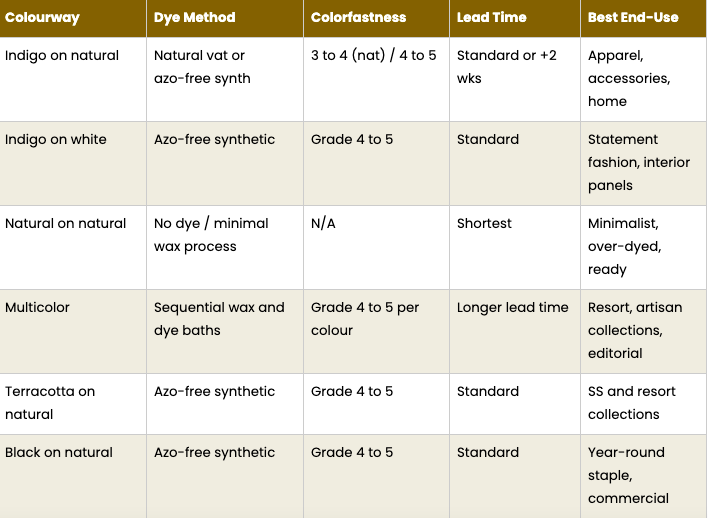
Anuprerna's hand-batik cotton range is available across six core colorways, each suited to different collection directions and buyer requirements.
The table below provides a consolidated reference for wholesale buyers evaluating multiple options:
Indigo Batik
The Core Commercial Colourway
Indigo is the strongest commercial colorway in the Anuprerna batik range and the most in-demand for both sustainable fashion and interior textile buyers. On hand batik cotton, indigo achieves a depth and tonal variation that no printing process can replicate: the combination of the dye bath's natural unevenness, the crackle lines, and the soft edges of the wax resist create a fabric with genuine visual character.
• Available as: natural vat-dyed indigo (living colour, Grade 3 to 4 wash fastness) or azo-free synthetic indigo (consistent depth, Grade 4 to 5 wash fastness)
• Ground options: natural cotton base (warm cream ground with indigo pattern) or white cotton base (higher contrast)
• Best for: sustainable fashion collections, Japanese-influenced capsules, denim-alternative apparel, interior cushion and panel fabric
Natural Batik
Wax-Resist Without Colour
Natural batik, also called wax-resist natural, is the zero-dye option: wax is applied to create the pattern, but no dye bath follows.
The result is a fabric where the waxed areas retain the base cotton color and the unwaxed areas show a slightly different texture and tone from the wax contact.
This is the most minimal expression of the batik process and suits brands building an undyed or raw-natural collection identity.
• Lead time: shortest in the batik range, as no dye processing is required
• Best for: minimalist natural-palette collections, overdye-ready stock, brands building a chemical-free story
Multi-Colour Batik
Hand-Batik Art
Multicolor batik involves sequential wax and dye cycles, with each color requiring a separate waxing and dye bath stage. The result is a fabric with two, three, or more distinct dye colors, each area separated by the wax resist pattern. Lead time is proportionally longer with each additional color.
• Lead time: add approximately one to two weeks per additional colour beyond the base colourway
• Best for: resort collections, artisan-forward editorial looks, festival and occasion wear, brands where colour complexity is a design priority
• Colorfastness: Grade 4 to 5 per colour with azo-free reactive dye; the team will advise on colour bleed risk between adjacent dye areas at sample stage
Order Hand Batik Cotton from Anuprerna
The recommended sequence for new wholesale partners:
1. Order a SwatchKit: Request swatches in your target colorways and dye type preference. Evaluate wax penetration, crackling character, color depth, and fabric hand under your studio lighting conditions. Conduct a wash test before approving.
2. Specify colorway and dye preference: Confirm your colorway choice: indigo, natural, terracotta, black, or multicolor. Confirm dye type: azo-free reactive (better consistency and colorfastness) or natural dye (stronger provenance narrative, living color character). This decision affects lead time, pricing, and available certifications.
3. Specify GSM and width: Hand batik at Anuprerna is available on handloom cotton in a range of weights. Confirm your weight requirements for each end use: lighter weights for apparel and accessories and heavier for home textile applications. Confirm width against your pattern-cutting or upholstery requirements.
4. Confirm crackling preference: If your design brief has a specific crackling character preference, such as fine and minimal or expressive and distributed, communicate this at the sample development stage. The artisan team can adjust wax composition and handling to influence crackling character.
5. Request sample yardage: Cut and construct a test garment or produce a sample interior piece. Wash test under your own production conditions. Verify colorfastness, handle post-washing, and crackling retention before bulk commitment.
6. Place wholesale order: Once the sample is approved, confirm the colorway, dye type, GSM, width, quantity, and delivery schedule with the Anuprerna wholesale team. For multi-color batik, confirm the color sequence and allow for the additional lead time per color stage.
Ready to Source Authentic Hand Batik Cotton at Wholesale?
Source Authentic from Anuprerna
Anuprerna's SwatchKit gives you genuine wax-resist batik samples to evaluate in your studio before any bulk commitment. Hold the fabric. Check the crackling. Wash-test the colour. Then order with confidence.
Order Your Batik SwatchKit | Contact the Wholesale Team
frequently asked questions
How do I confirm that the batik I am ordering is genuinely hand-waxed and not digitally printed?
Request a physical swatch before committing to any order. Genuine hand batik will show: crackling that penetrates the fabric structure (visible under magnification or when held at an angle to light); colour visible on the reverse side, slightly softer than the face; slight variation between pattern repeats; and a slightly waxy surface before washing. Digital print imitations will have sharp-edged, identical repeats; colour only on the face; and simulated crackle that sits on the surface. If a supplier is reluctant to provide physical swatches, treat that as a strong indicator of a printed substitute.
What GSM range is available for hand batik cotton at Anuprerna?
Hand batik is applied to Anuprerna's handloom cotton base fabric, which is available from approximately 100 GSM up to 200 GSM. Lighter weights, in the 100 to 140 GSM range, are most common for apparel applications including dresses, blouses, shirts, and scarves. Heavier weights, from 160 to 200 GSM, are available for home textile applications including cushion covers, panel curtains, and upholstery fabric. Confirm your GSM requirement with the team at the swatch stage.
Can I order a custom pattern or a bespoke colourway for my collection?
Yes. Custom pattern development is available for established wholesale partners. This involves working with the artisan team to develop a specific motif or repeat design in wax-resist technique. The process requires a minimum commitment and a sample approval stage before full production. Custom colourways, including specific pantone-adjacent shades in azo-free reactive dye, are also achievable for orders meeting minimum quantities. Contact the wholesale team to discuss your brief.
Does hand batik cotton shrink on first wash?
A degree of shrinkage on first washing is normal for all natural cotton fabrics, including hand batik. The extent depends on GSM and weave density. For apparel production, it is standard practice to pre-wash fabric before cutting and construction. Anuprerna can advise on expected shrinkage rates for specific weights and recommend whether pre-washing is required for your application.
What certifications are available for hand batik cotton wholesale orders?
Anuprerna's standard hand batik cotton uses GOTS-certified, azo-free reactive dyes. Oeko-Tex Standard 100 documentation is available on request for applicable orders. Natural dye batik orders can be accompanied by full dye source and process documentation for brands making verified natural dye claims in their consumer communication. Contact the wholesale team to discuss certification requirements for your target market.
How does the lead time for hand batik compare to plain handloom cotton?
Single-colour azo-free batik on a standard handloom cotton base typically has a lead time of 4 to 6 weeks, similar to plain dyed handloom cotton. Natural dye batik adds approximately 2 to 3 weeks. Multi-colour batik adds one to two weeks per additional colour stage beyond the base. For all batik orders, the ArtisanFlow platform allows buyers to monitor production stages in real time, which is particularly useful for planning collection calendars around batik's variable production timeline.
More Blogs
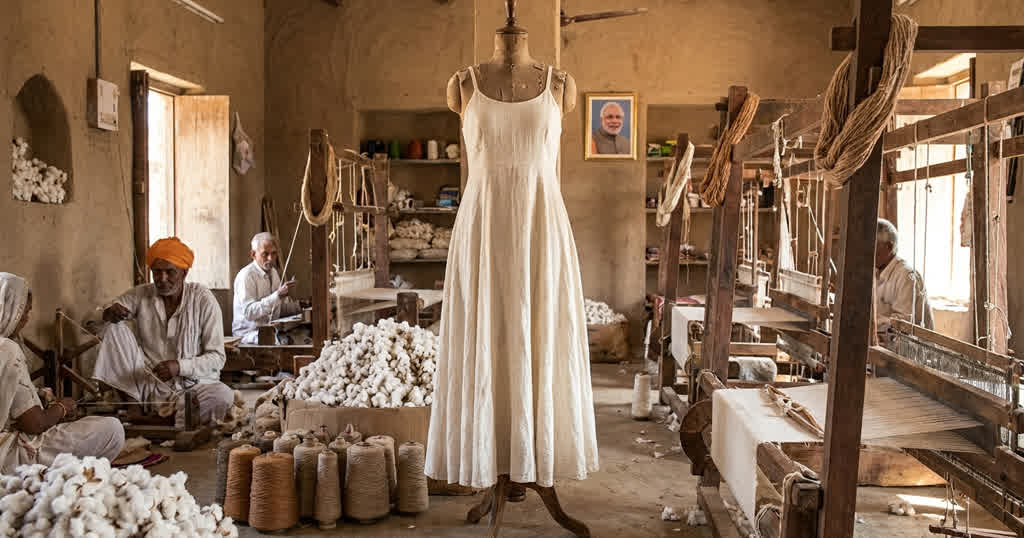
how celebrity endorsements are shaping the future of sustainable textiles
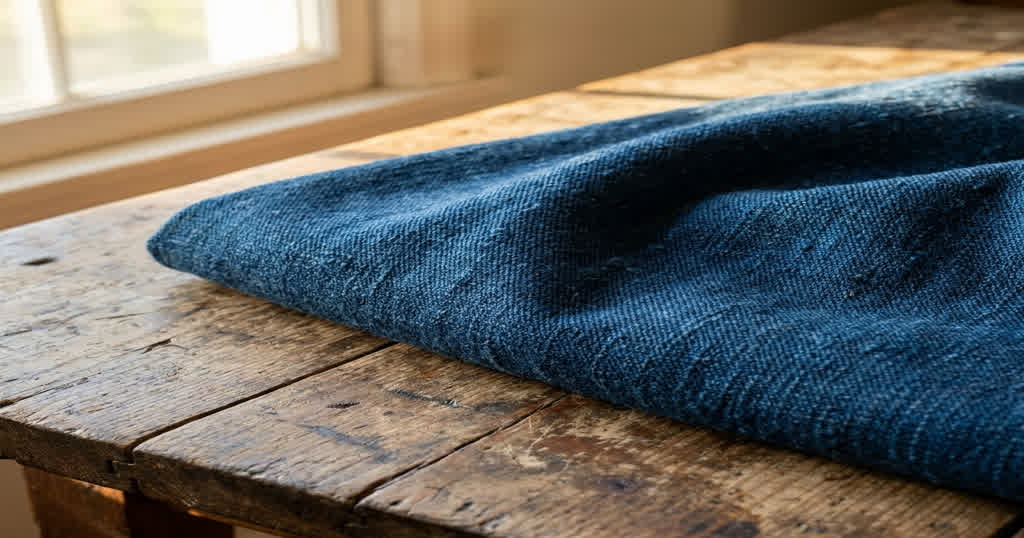
khadi denim vs. conventional denim: environmental impact and durability
the best sustainable fabrics for activewear production
how to calculate carbon emissions in your textile supply chain
why sustainable denim brands in india are choosing khadi

b2b sourcing guide: how to source high-quality recycle cotton fabric for sustainable collections