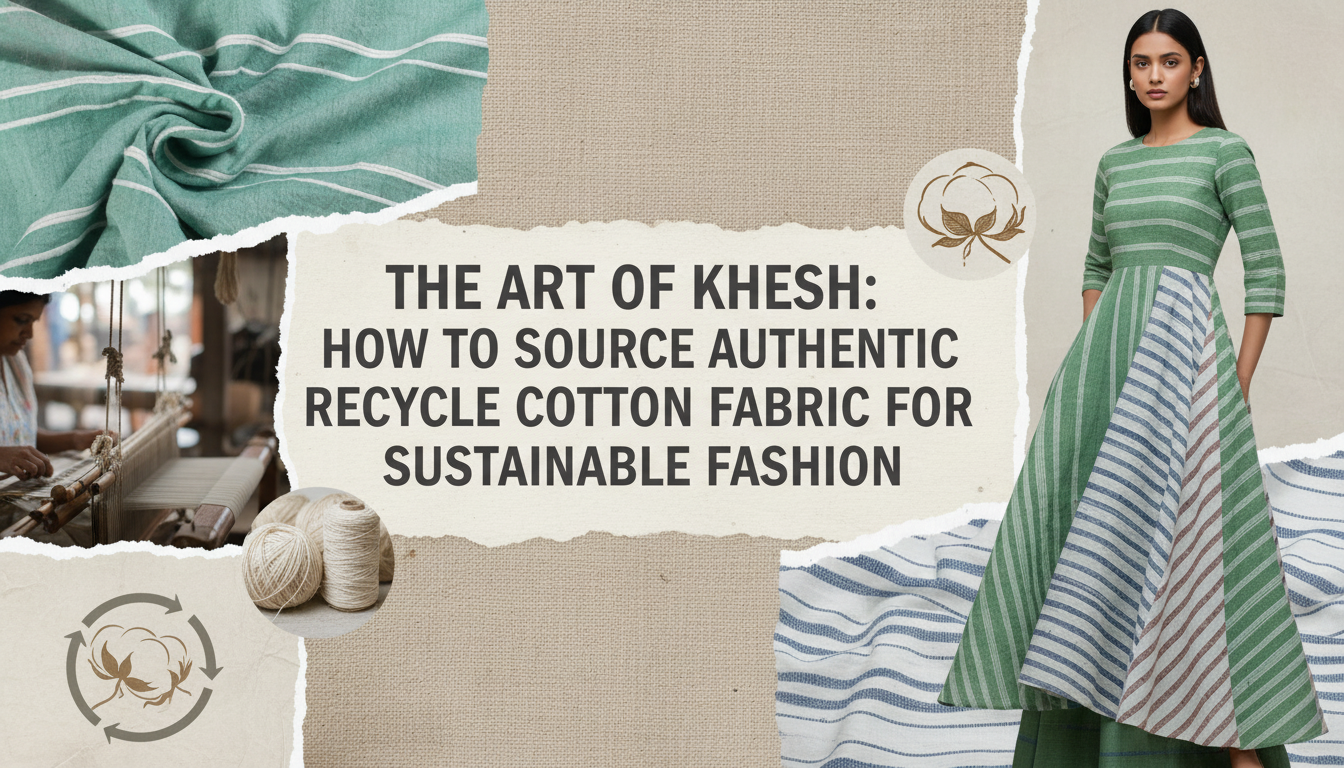
The Art of Khesh: The Original Zero-Waste Textile of West Bengal

In the quiet, dust-kissed villages of Birbhum, West Bengal, the rhythmic thwack-clack of the handloom tells a story that predates the modern "sustainable fashion" movement by decades. Long before "circularity" became a corporate buzzword, the weavers of this region were practicing a profound form of alchemy: turning old, cherished garments into new, soulful textiles. This is the world of Khesh—the original recycle cotton fabric of India.
For a B2B fashion brand or a conscious designer, sourcing fabric today often feels like a choice between mass-produced efficiency and ethical integrity. However, Khesh offers a rare middle ground where heritage meets high-utility. It is a textile born of necessity and elevated by artistry. By repurposing recycled saree fabric, Khesh weavers create a textured, multi-tonal cloth that carries the DNA of a thousand stories within its weft.
In this guide, we will journey into the heart of the khesh weaving process, explore why it stands as a pillar of sustainable textiles in West Bengal, and understand how Anuprerna is bridging the gap between these rural artisan clusters and the global fashion industry. Whether you are looking to integrate recycle fabric into your next collection or seeking to understand the cultural depth of Indian handlooms, the story of Khesh is one of resilience, beauty, and radical sustainability.
The Soul of Birbhum: The Heritage of Recycle Fabric
The story of Khesh is inseparable from the landscape of Birbhum and the visionary influence of Rabindranath Tagore’s Sriniketan. In the early 20th century, the philosophy of self-reliance and rural reconstruction led to the formalization of Khesh weaving. It wasn't just about making cloth; it was about honoring the lifecycle of materials.
In a traditional Indian household, a cotton saree is never truly "finished." It starts as a prized garment, softens over years of wear, becomes a swaddle for a newborn, a kitchen rag, and finally, in the hands of a Birbhum weaver, it finds its most glorious reincarnation as Khesh. This deep-rooted cultural habit of upcycling is what makes Khesh the quintessential recycle cotton fabric.
When you touch a piece of Khesh, you aren't just touching cotton; you are touching a blend of history. The "new" cotton yarn used in the warp provides structure, while the "old" strips of recycled saree fabric in the weft provide character. This duality is what defines sustainable fabric: pioneering eco-friendly textiles for a greener future. It is a textile that acknowledges the past while looking toward a waste-free future.
The Cultural Resonance of Upcycling
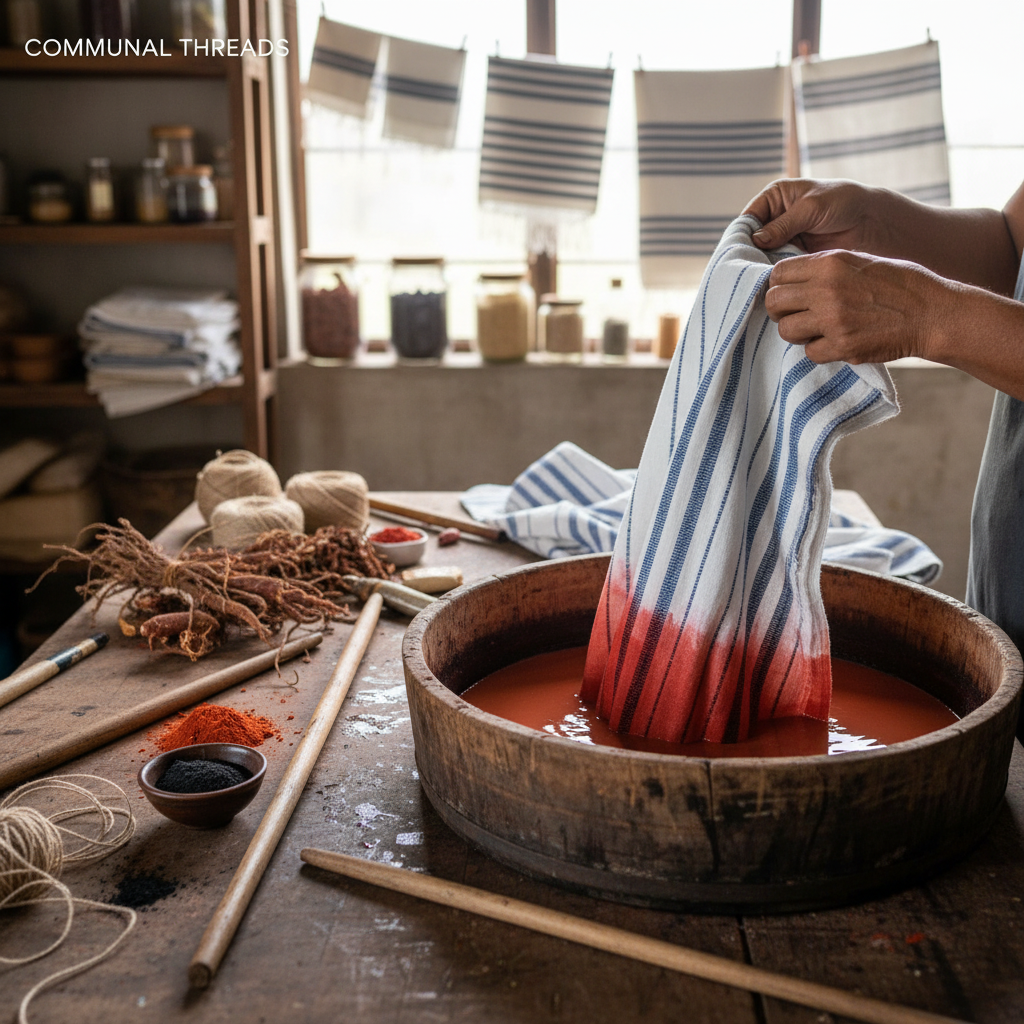
In the West, recycling is often seen as a mechanical process—shredding fibers to create new pulp. In West Bengal, the khesh weaving process is a poetic one. The weaver’s wife or local women often take the lead in the first stage, carefully tearing old sarees into thin, uniform strips. This communal effort ensures that the "waste" never leaves the village ecosystem, creating a localized circular economy that supports entire families.
Decoding the Khesh Weaving Process: From Saree to Yardage
To understand why Khesh is a premium recycle cotton fabric, one must look closely at the loom. Unlike mill-made fabrics that prioritize uniformity, Khesh celebrates the "beautiful imperfection."
Step 1: Collection and Sorting
The process begins with the collection of old cotton sarees. These are not just any scraps; they are sorted by color and material. At Anuprerna, we ensure that the base material is high-quality cotton to maintain the integrity of the final product.
Step 2: Tearing the Strips
This is a labor-intensive manual task. The sarees are torn longitudinally into thin strips. The width of these strips determines the texture of the final fabric. Because the strips are torn by hand, they retain a soft, frayed edge that adds to the fabric's signature "slubby" feel.
Step 3: Setting the Warp
The "warp" (the vertical threads on the loom) consists of new cotton yarn. This provides the strength and durability required for modern garments and home textiles. For brands looking for a cleaner aesthetic, we often use White Recycled Cotton 80 Gsm Fabric as a reference point for quality and weight, though Khesh typically has a heavier, more tactile hand-feel.
Step 4: Weaving the Weft
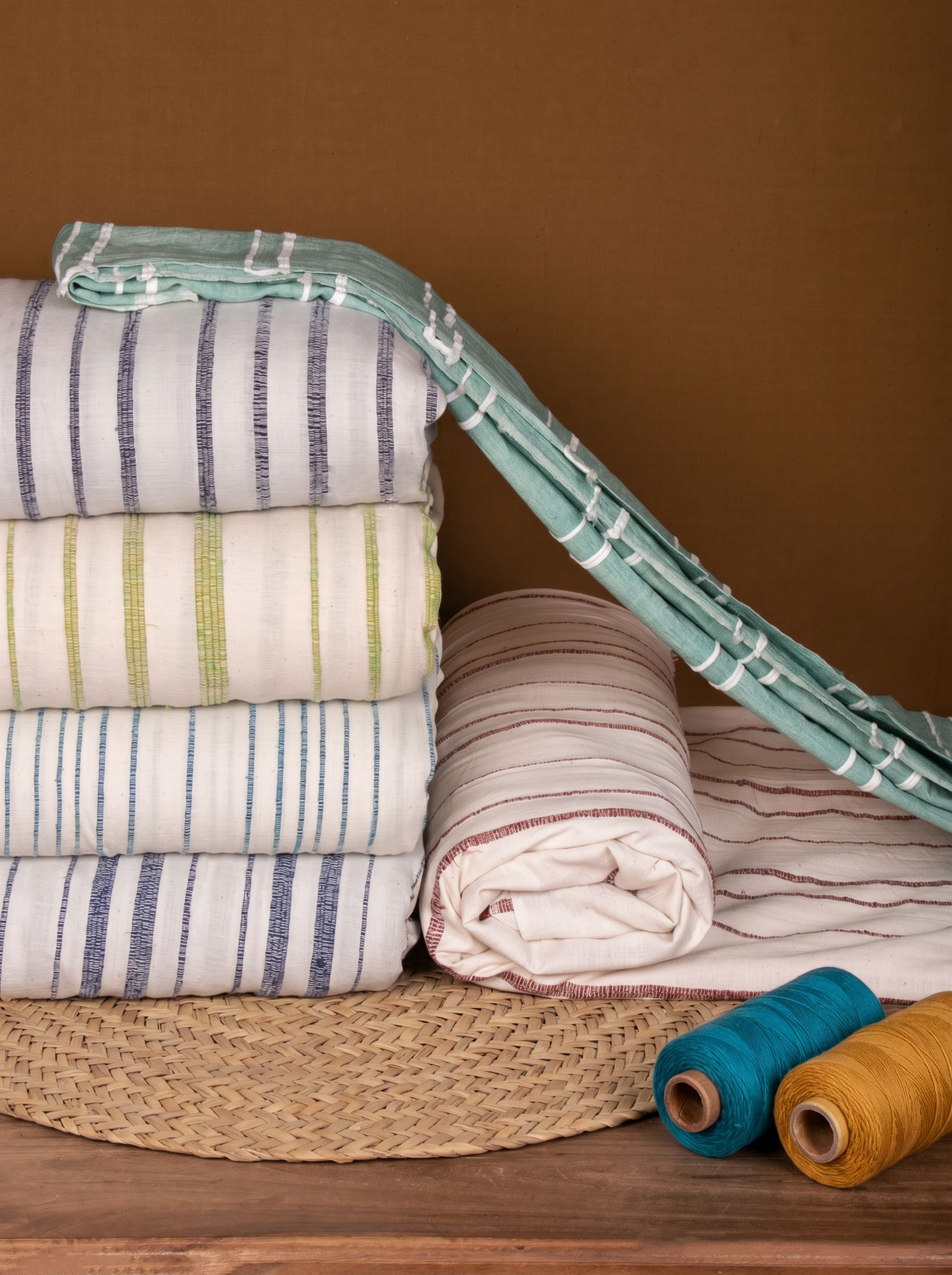
The magic happens here. Instead of a shuttle carrying a bobbin of new thread, the weaver manually inserts the strips of recycled saree fabric. As the weaver works the treadles, the strips are beaten into the warp. Since the sarees used for the strips vary in color, the resulting fabric features spontaneous, thin stripes and color shifts that can never be perfectly replicated by a machine.
This manual intervention is a prime example of why the slow weaving process matters. It preserves a technique that requires patience, skill, and an intuitive eye for color.
Why Khesh is the Ultimate Sustainable Textile for B2B Brands
In the competitive B2B landscape, fashion houses are under increasing pressure to prove their sustainability credentials. Sourcing recycle cotton fabric like Khesh offers several strategic advantages:
1. Zero-Waste Credentials
Khesh is inherently zero-waste. It diverts post-consumer textile waste (old sarees) from landfills and gives them a second life without the high energy consumption associated with chemical recycling or mechanical shredding. It is recycle fabric in its purest, most low-impact form.
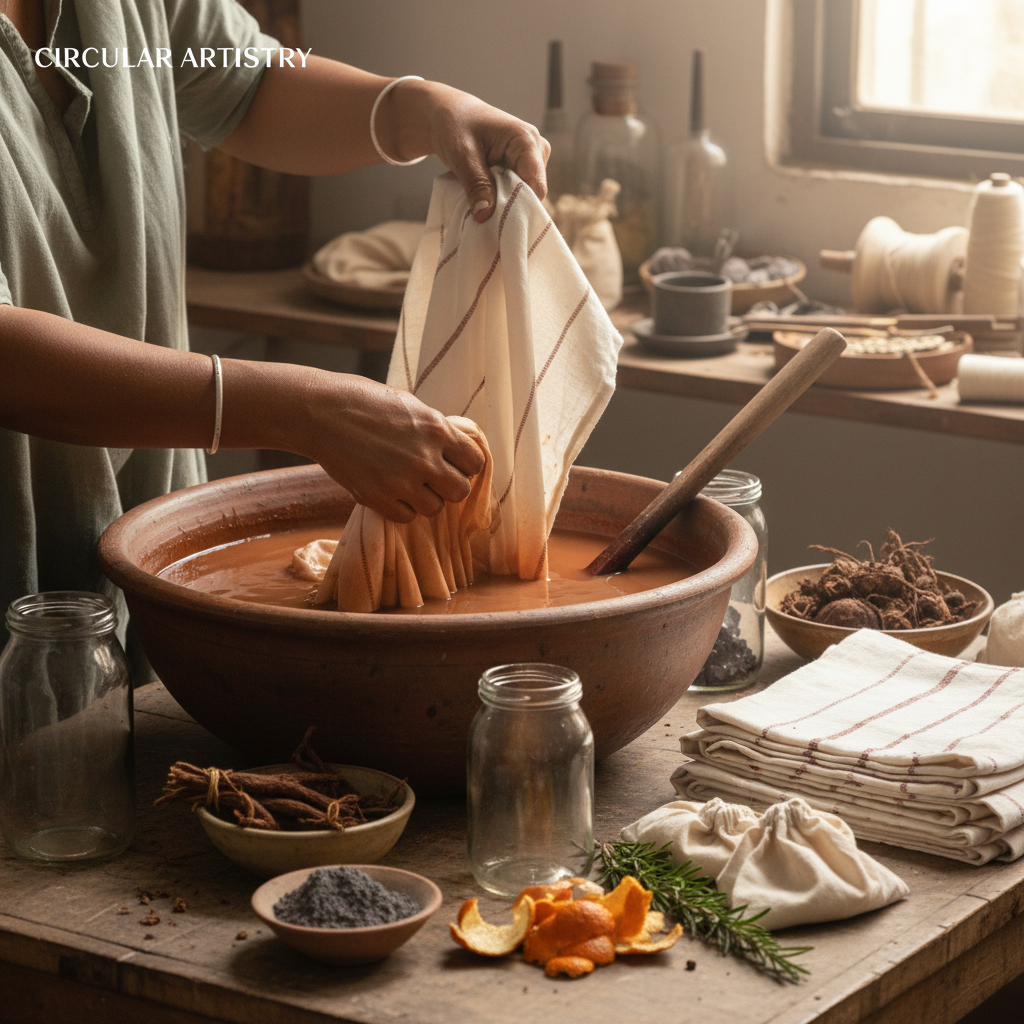
2. Unique Aesthetic Identity
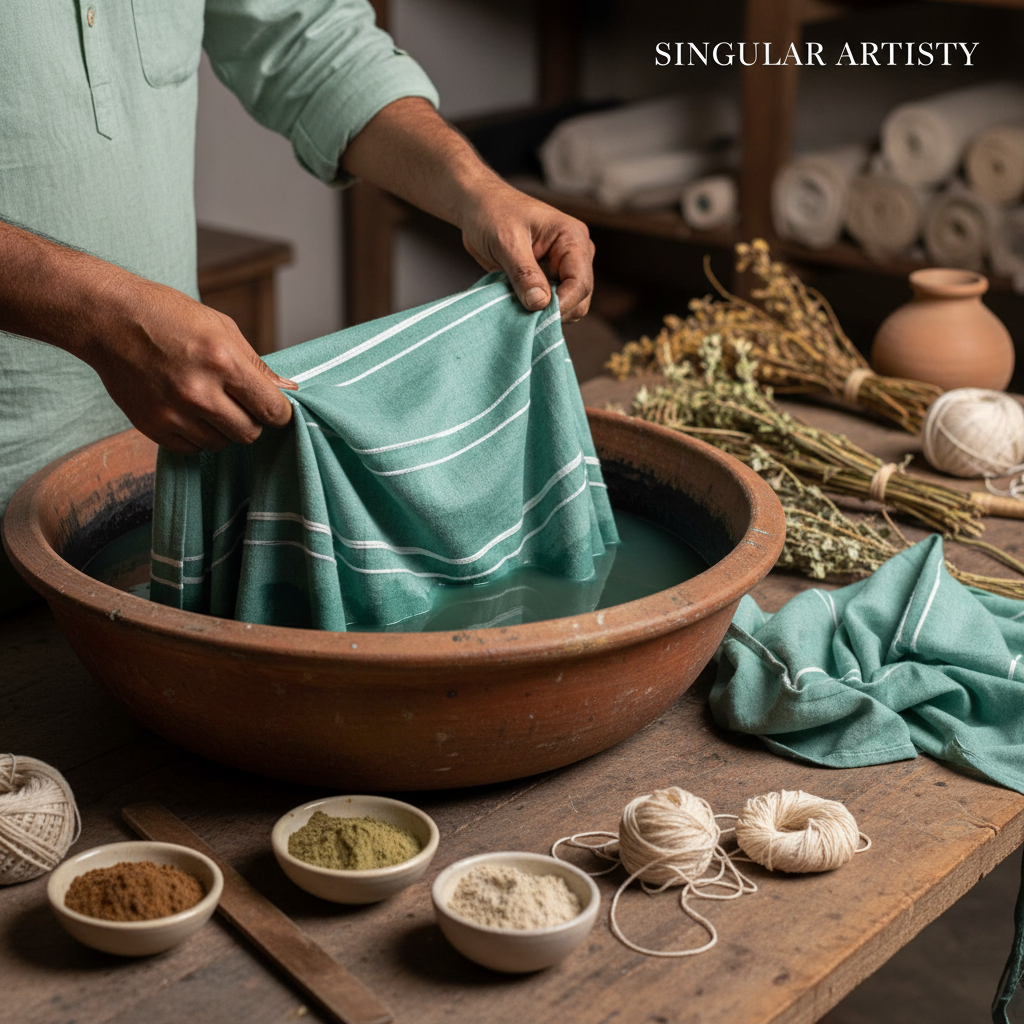
In a world of fast-fashion clones, Khesh offers "planned uniqueness." No two meters of Khesh are identical because the source sarees change. This allows brands to market "one-of-a-kind" pieces even within a wholesale production run. The visual depth of recycled saree fabric adds a premium, artisanal value to jackets, bags, and upholstery.
3. Superior Breathability and Comfort
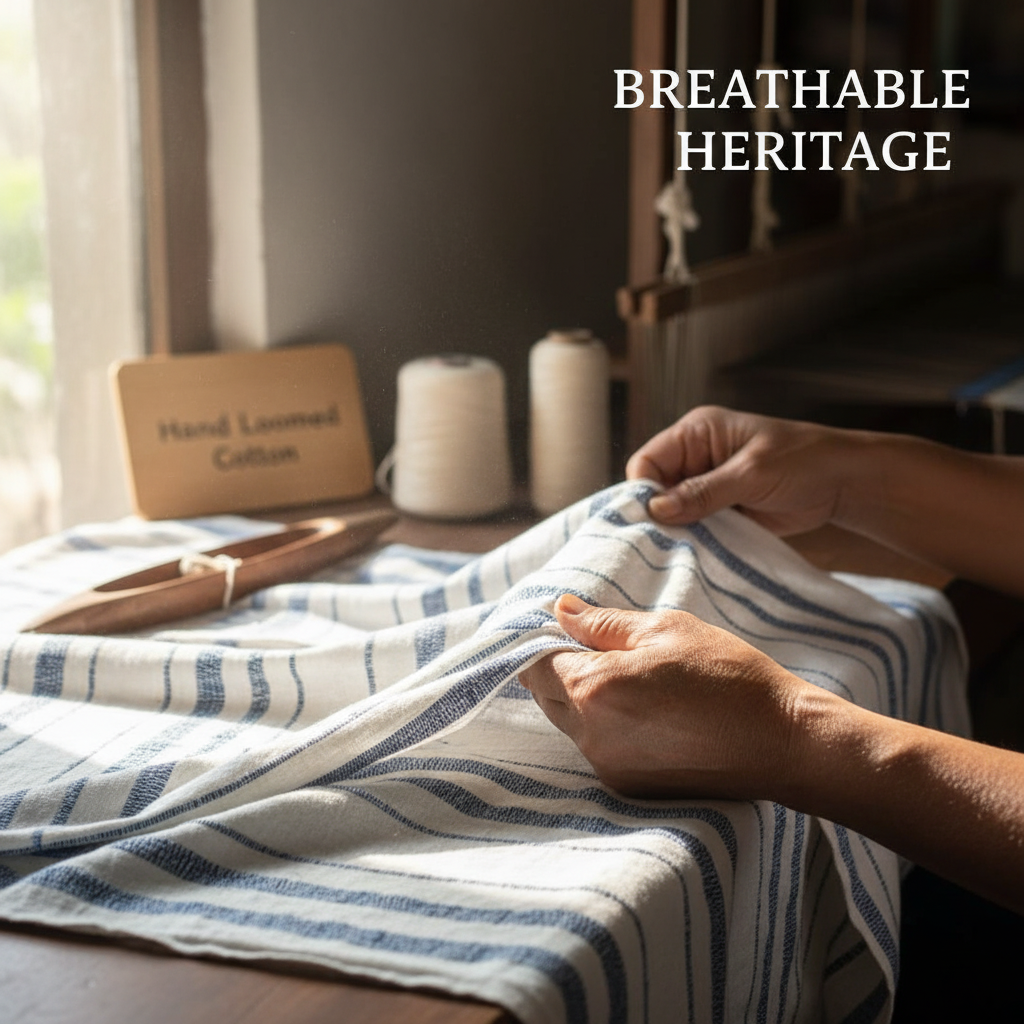
Because the base material is cotton—and often hand-spun cotton—the resulting fabric is incredibly breathable. As explored in our piece on the science of breathability, handwoven textiles allow for better air circulation than tight, mill-made weaves. Khesh, with its slightly porous structure, is perfect for both summer wear and transitional layering.
4. Ethical Storytelling
Sourcing sustainable textiles from West Bengal allows brands to tell a story of artisan empowerment. Every yard of Khesh purchased supports a weaver in Birbhum, helping to keep a century-old craft alive. This social impact is a crucial component of modern ESG (Environmental, Social, and Governance) goals for international businesses.
Anuprerna’s Role: Scaling Heritage without Losing the Heart
As a B2B partner, Anuprerna acts as the vital link between the rural looms of Birbhum and the global market. We understand that while designers love the "story" of recycle cotton fabric, they also require consistency in quality, lead times, and ethical transparency.
"Khesh is not just a product; it's a philosophy," says a master weaver from our cluster. "When we weave, we are weaving the memories of the old sarees into the strength of the new threads. Anuprerna helps us show this philosophy to the world."
We work closely with our artisan partners to:
- Standardize Color Palettes: While the weft strips are recycled, we can control the color of the warp to ensure a cohesive look for a brand's collection.
- Quality Control: We ensure that the recycled saree fabric used is clean, durable, and free from defects that would compromise the garment's longevity.
- Innovation: We are constantly experimenting with blending Khesh techniques with other fibers, like recycled silk or organic cotton, to create new textures for the modern market.
For those interested in exploring the broader spectrum of Indian heritage, our curated list of 10 must-have handloom textiles provides a roadmap for building a diverse, sustainable fabric library.
Designing with Khesh: Practical Tips for Fashion Brands
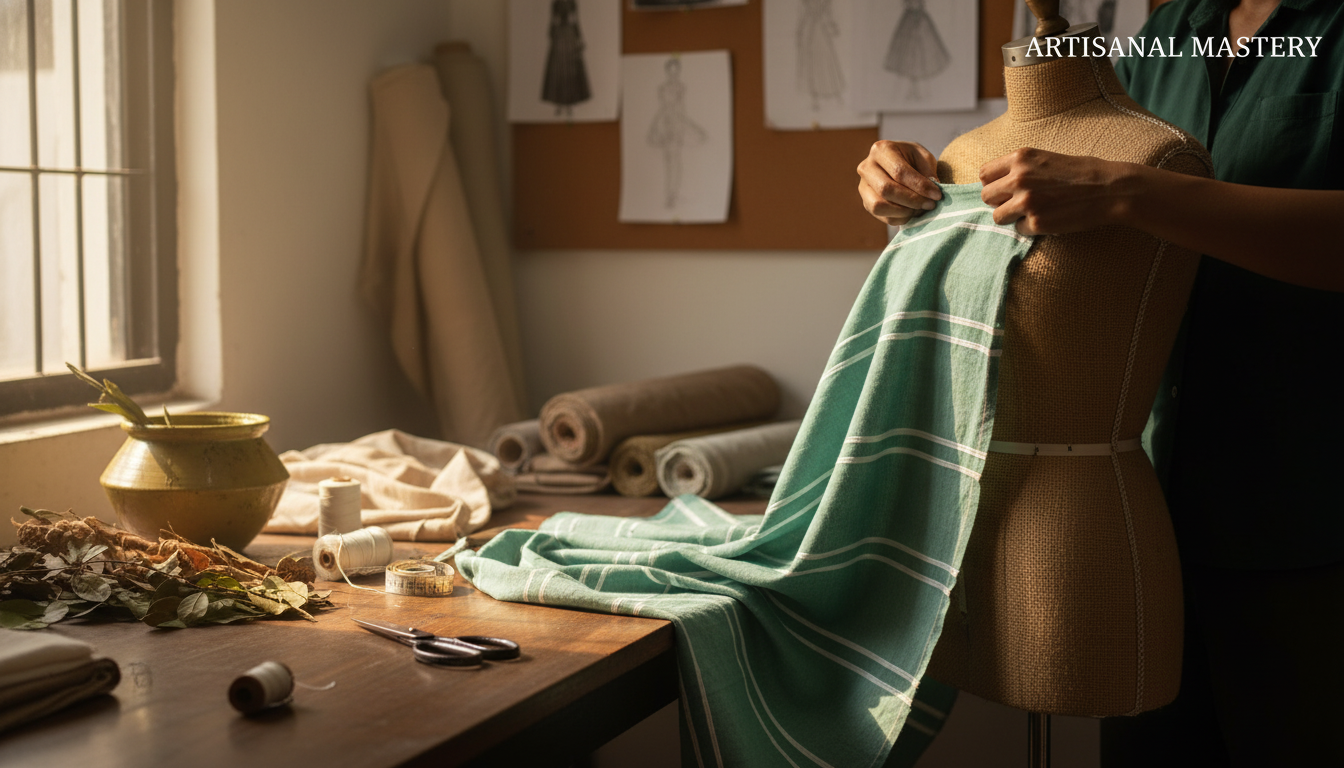
If you are considering Khesh for your next collection, here are a few technical insights to keep in mind:
- Weight and Drape: Khesh is generally a medium-to-heavyweight fabric. It is excellent for structured garments like overshirts, trousers, lightweight jackets, and home accessories (cushions, table runners).
- Width Constraints: Like most handloom fabrics, Khesh is typically woven on narrower looms (36 to 45 inches). Designers should plan their patterns accordingly to minimize cutting waste.
- Wash Care: As a recycle cotton fabric, Khesh is durable but appreciates gentle care. We recommend cold water washes to preserve the colors of the recycled strips.
- Color Fastness: Since the weft comes from various old sarees, there may be slight color bleeding in the first few washes. This is a characteristic of authentic recycled saree fabric and should be communicated to the end consumer as part of the fabric's charm.
By choosing Khesh, you are not just buying fabric; you are investing in a circular system. You are choosing a recycle fabric that respects the earth and the hands that make it.
Conclusion: The Future of Circularity is Handwoven
Khesh stands as a testament to the wisdom of our ancestors. It proves that sustainability doesn't always require futuristic technology; sometimes, it just requires a change in perspective. By looking at "waste" as a raw material, the weavers of West Bengal have created one of the most ecologically sound textiles in the world.
At Anuprerna, we are proud to champion sustainable textiles in West Bengal. Our commitment to Khesh is a commitment to the environment and the incredible artisans of Birbhum. As the global fashion industry pivots toward a circular economy, Khesh offers a proven, beautiful, and scalable solution for brands that want to lead the change.
Are you ready to integrate the story of Khesh into your brand? Let us help you source high-quality, authentic recycle cotton fabric that makes an impact. Together, we can weave a future that is as durable and colorful as a piece of Khesh.
most asked questions
What exactly makes Khesh a "recycle cotton fabric"?
Khesh is considered a recycle cotton fabric because its "weft" (the horizontal yarn) is made entirely from strips of old, used cotton sarees. These sarees are collected, torn by hand, and then woven back into a new textile using a fresh cotton warp. This process gives a second life to post-consumer textile waste, making it a pioneer in circular fashion.
How does the khesh weaving process differ from standard handloom weaving?
In standard handloom weaving, both the warp and the weft usually consist of new yarn (spun from raw fiber). In the khesh weaving process, the weaver replaces the standard weft yarn with thin strips of recycled saree fabric. This requires a specific technique to ensure the strips lay flat and are beaten tightly enough to create a cohesive, durable cloth.
Is Khesh fabric durable enough for commercial garments?
Yes, absolutely. While the weft is made of recycled strips, the warp is made of strong, new cotton threads. This combination creates a sturdy, mid-to-heavyweight fabric that is highly durable. It is particularly popular for outerwear, bags, and home textiles because of its thickness and resistance to wear and tear.
Can I request specific colors when sourcing Khesh in bulk?
Because Khesh uses recycled saree fabric, the exact color of the weft strips depends on the sarees available. However, as a B2B supplier, Anuprerna can manage the "color story." We can sort the recycled strips into broad color families (e.g., "blues," "earth tones," or "pastels") and use a specific color for the new cotton warp to achieve a consistent look across a production run.
Why should B2B brands choose sustainable textiles from West Bengal like Khesh?
Choosing sustainable textiles from West Bengal allows brands to tap into an authentic, transparent supply chain. Khesh offers a unique aesthetic that cannot be replicated by machines, providing a competitive edge in the "slow fashion" market. Furthermore, it supports rural livelihoods and preserves a unique cultural heritage, fulfilling both environmental and social sustainability goals.
More Blogs
screen printing on fabric: techniques, process & applications in fashion

linen gym wear: can you really workout in natural fibers?
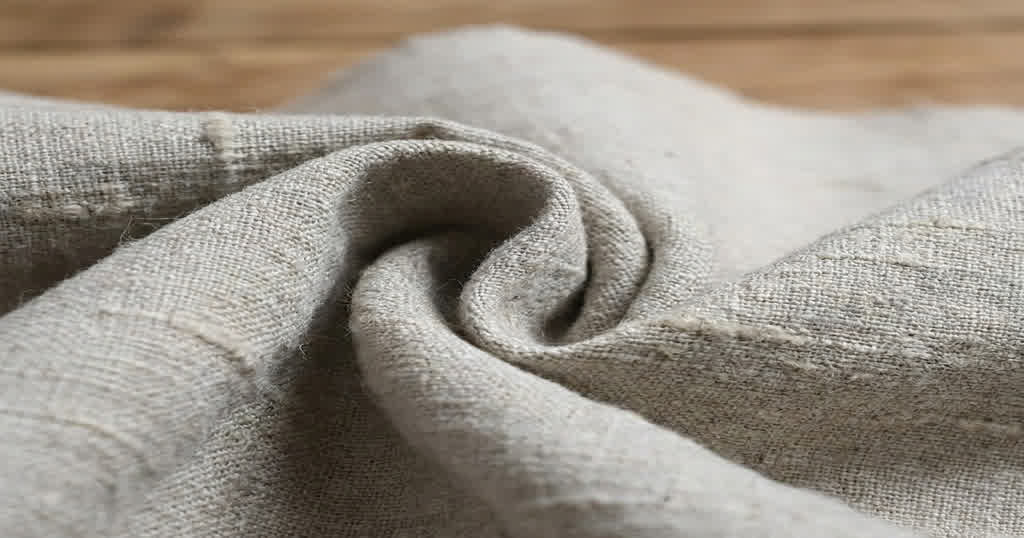
what to look for during khadi online shopping?
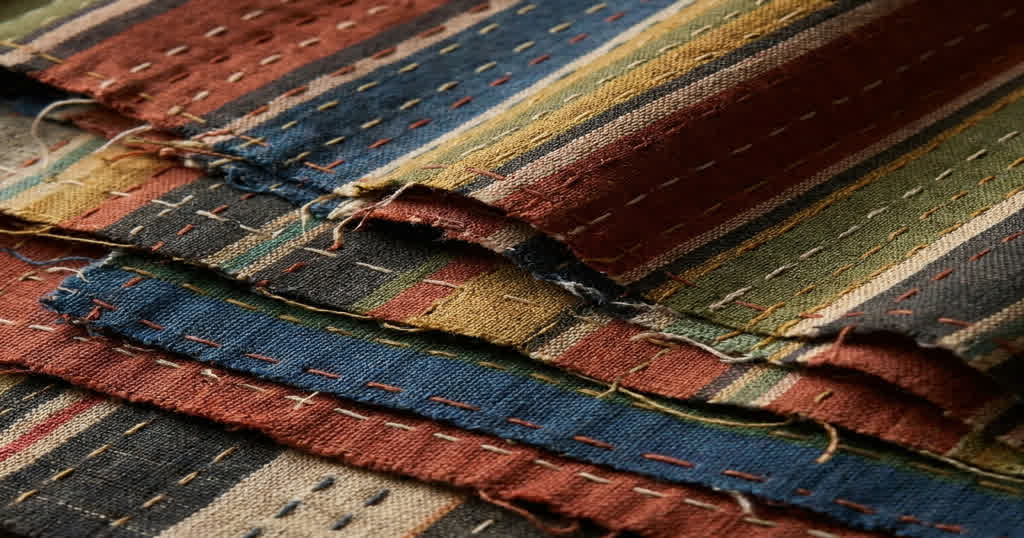
top 5 upcycled fabric products you can make at home
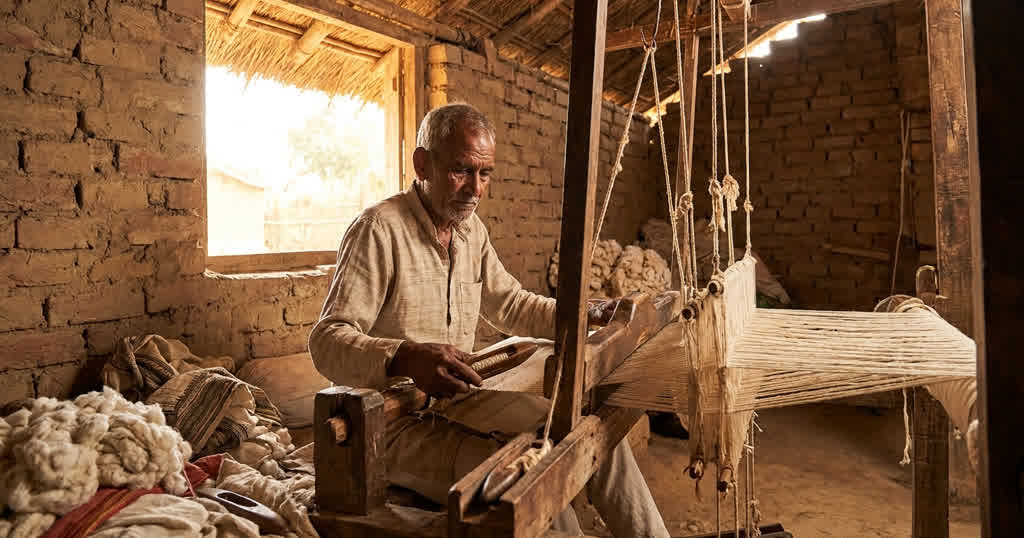
apparel manufacturer in india: from handwoven fabrics to finished garments
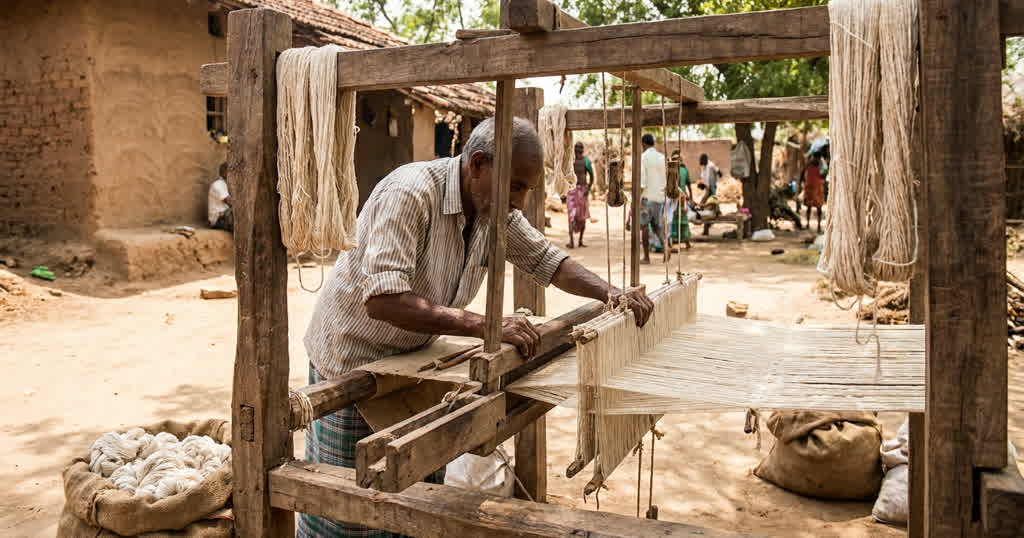
indian fabric wholesaler: understanding quality, weave, and craftsmanship