Sourcing Authentic Batik Fabric In India: A Buyer's Guide

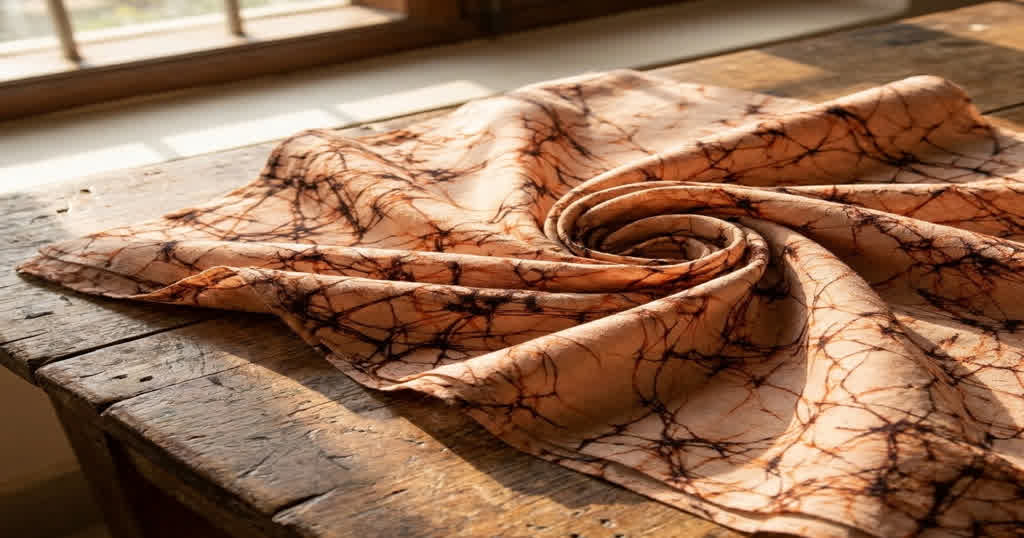
A sourcing director opens a shipment of printed yardage, expecting the crisp, organic crackle of traditional wax-resist, only to find a flat, single-sided rotary print. Finding the authentic batik fabric india produces requires moving past mass-market catalogs and understanding the physical markers of the craft. The difference between a surface-level imitation and a genuine artisan textile dictates the final garment's drape, dye longevity, and market value. Global fashion houses are shifting production away from synthetic, high-volume prints toward traceable, decentralized supply chains.
Securing these textiles at scale means partnering directly with rural clusters along the Coromandel Coast and Gujarat. Buyers must balance the technical demands of colorfastness and shrinkage control with the inherent variations of a hand-crafted process.
The Anatomy of Authentic Indian Batik: Wax-Resist vs. Rotary Print
Authentic Indian batik is defined by full dye penetration on both sides of the fabric and the presence of organic, irregular crackle veins where dye seeps through micro-fissures in the wax resist. Rotary screen prints, by contrast, sit flat on the surface and leave a pale, un-dyed reverse side.
Visual and Structural Markers of Authenticity
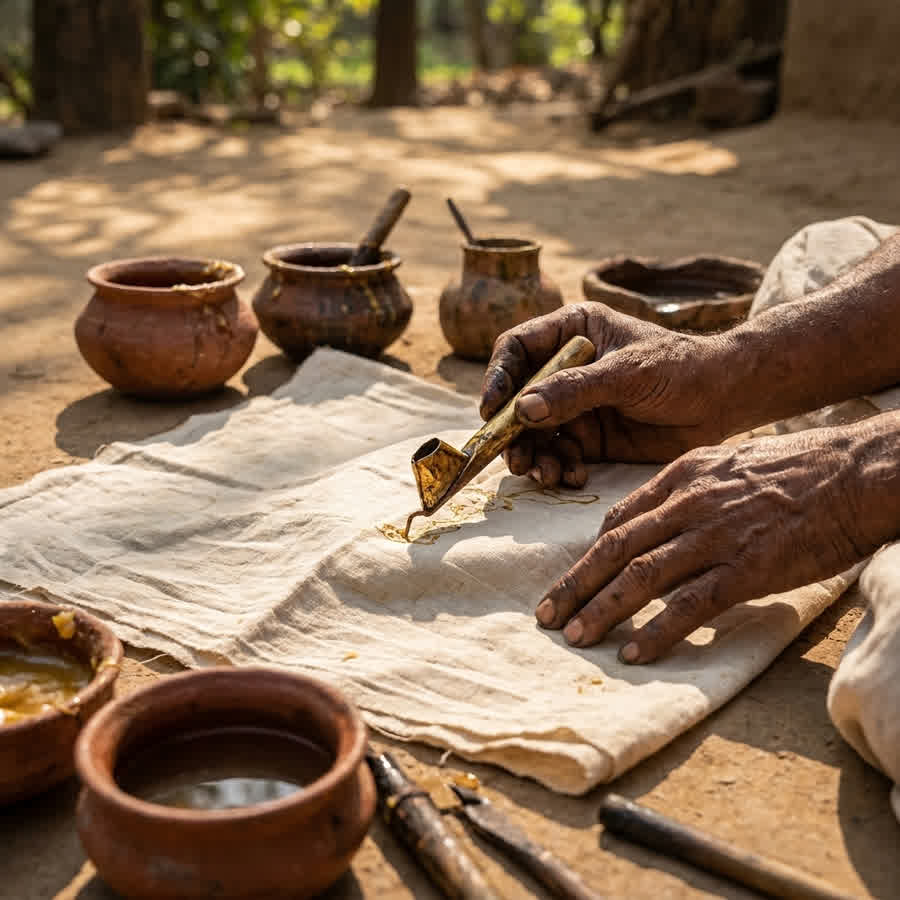
The history of this craft is deeply rooted in the ancient dyeing traditions along the Coromandel Coast and Gujarat. Unlike Indonesian styles, the Indian tradition utilizes indigenous motifs and specific block-printing methods, often resulting in unique Kalamkari-Batik hybrids. Artisans also employ traditional tjanting tools, which are spouted instruments used to draw precise wax lines directly onto the cloth.
For a B2B buyer, distinguishing real wax-resist from a machine-made fake happens during the initial sample inspection. A rotary print applies pigment only to the top layer of the textile, leaving the back side noticeably lighter. Authentic artisan pieces undergo full immersion dyeing, ensuring the reverse-side dye penetration matches the face of the fabric exactly.
Visual and Structural Markers of Authenticity (continued)
To verify a sample, sourcing teams should look for these specific structural markers:
- Identical color intensity on both the face and the reverse side of the yardage.
- Organic crackle veins that vary in thickness and placement across the pattern.
- Slight motif irregularities that indicate hand-applied wax rather than a repeating mechanical screen.
The Role of the Wax Formulation
The characteristic visual texture of this textile relies entirely on the precise chemistry of the resist material. Artisans blend specific paraffin-to-beeswax ratios to control how the wax behaves during the dyeing process. A higher paraffin content creates a more brittle resist, which fractures easily to produce heavy crackle lines.
Conversely, adding more beeswax makes the mixture pliable, allowing for sharp, unbroken lines ideal for detailed tjanting work. This technical formulation directly impacts the final aesthetic of the batik fabric india supplies to global brands. If the wax is too soft, the dye bleeds uncontrollably, ruining the pattern.
Understanding this wax chemistry helps designers specify the exact look they need for their collections. We work with clusters to adjust these ratios based on the client's design requirements.
- High paraffin blends for aggressive, highly visible crackle effects on larger motifs.
- High beeswax blends for smooth, continuous lines and intricate detailing.
- Temperature-controlled application to ensure the wax penetrates the fibers without spreading laterally.
Substrate Selection: Matching Fabric GSM to Batik Techniques
The success of commercial batik relies on selecting base fabrics with optimal porosity, specifically lightweight cottons between 60 and 120 GSM or silks between 40 and 80 GSM, which allow the hot wax to penetrate fully without stiffening the drape. Heavier or tightly woven synthetic blends reject the wax resist and result in blurred, inconsistent motifs.
Ideal Cotton Specifications for Wax Absorption
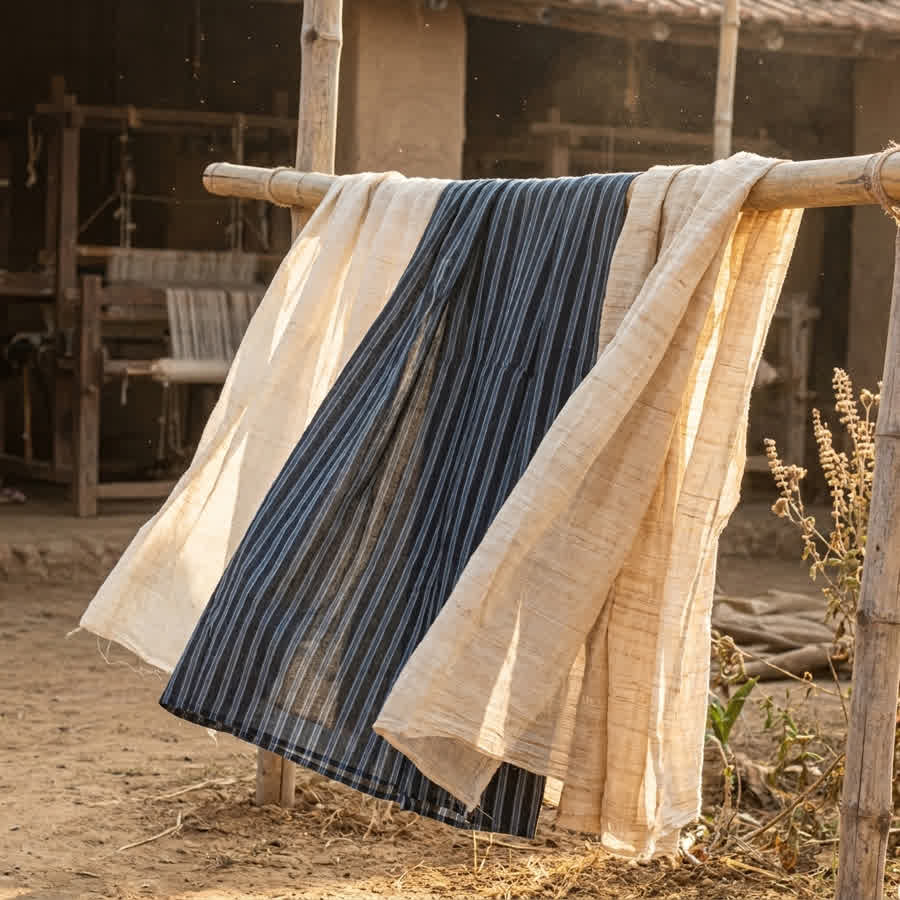
Choosing the right base material is a critical technical decision that affects both the production process and the final garment. The fabric must be porous enough to absorb the hot wax instantly, creating a solid barrier against the dye. We find that 60-100 GSM Mulmul cotton offers the ideal balance of absorbency and lightweight drape for summer collections.
For brands requiring slightly more structure, 80-120 GSM Cambric provides a tighter weave while still accepting the wax resist effectively. If a fabric is too thick, the wax cools and sits on the surface rather than penetrating the core of the yarn. This surface-level wax flakes off in the dye bath, destroying the intended pattern.
Ideal Cotton Specifications for Wax Absorption (continued)
When specifying cotton substrates for batik fabric india sourcing, buyers should mandate these parameters:
- 60-100 GSM Mulmul cotton for sheer, highly breathable resort wear with excellent dye uptake.
- 80-120 GSM Cambric for shirting and structured dresses requiring a crisp hand-feel.
- Zero synthetic blending, as polyester fibers repel both the wax and the reactive dyes.
Silk Substrates and High-Temperature Processing
Silk presents a different set of technical challenges for wax-resist dyeing due to its delicate nature and sensitivity to heat. We frequently utilize 40-80 GSM Ahimsa Silk, a cruelty-free alternative that retains a beautiful natural luster. The wax must be applied at a precise temperature, hot enough to penetrate the silk but cool enough to avoid scorching the protein fibers.
The natural sericin retention in some raw silks can interfere with dye absorption, requiring careful scouring before the wax is applied. Once prepped, Ahimsa silk yields vibrant colors and a fluid, luxurious drape that transforms the traditional craft into high-end fashion categories.
Sourcing silk batik requires strict attention to the finishing processes.
- 40-80 GSM Ahimsa Silk provides the necessary tensile strength to withstand multiple dye baths.
- Careful temperature regulation during waxing prevents fiber degradation and maintains the silk's natural sheen.
- Thorough pre-scouring removes residual gums, ensuring even penetration of azo-free dyes.
Structuring the Decentralized Artisan Supply Chain in India
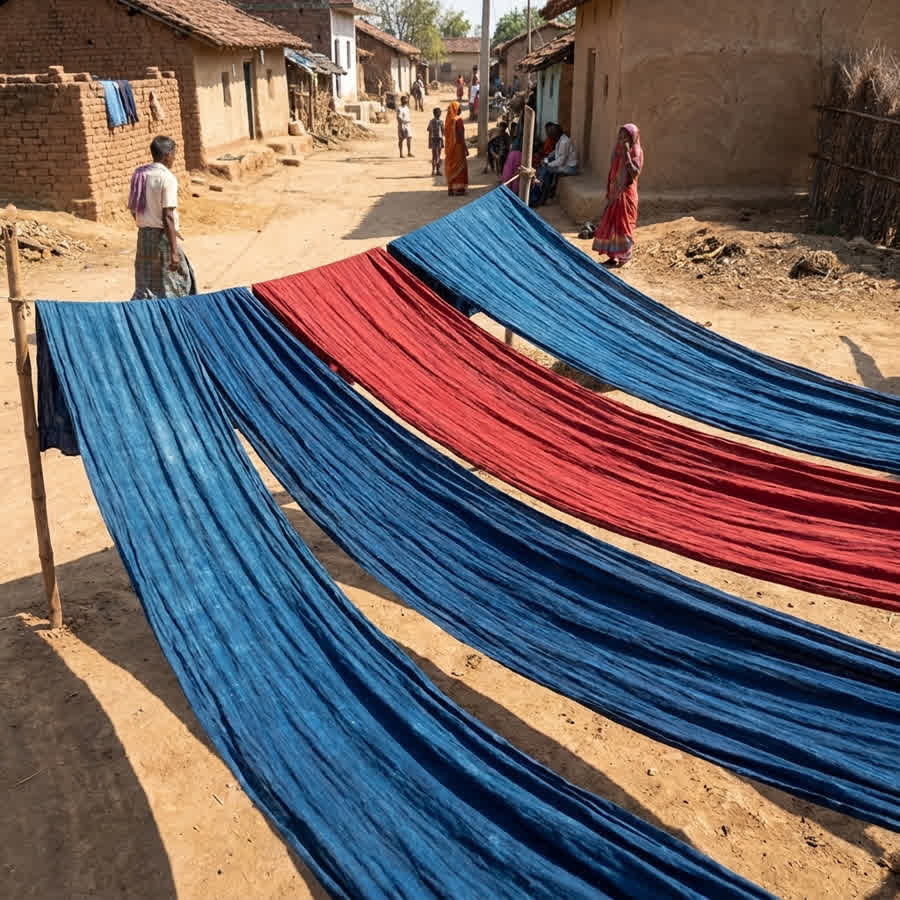
Successfully sourcing artisan textiles at scale requires building buffer times into production schedules to account for weather-dependent sun-drying and distributing volume across multiple rural weaving clusters. Centralized factory models fail here because authentic wax-resist dyeing relies on the localized climate and generational skills of decentralized village artisans.
Managing Weather-Dependent Production Cycles
Working with rural handloom and dyeing clusters means aligning commercial fashion calendars with natural weather patterns. The traditional process requires extensive sun-drying stages between each application of wax and dye. During the monsoon season, high humidity and lack of direct sunlight can halt production entirely, extending lead times significantly.
Managing Weather-Dependent Production Cycles (continued)
B2B buyers must plan their sourcing of batik fabric india collections well in advance of their required delivery dates. We advise our partners to factor in these environmental variables rather than demanding rigid, factory-style turnarounds. This approach ensures the artisans are not pressured to cut corners, which would compromise the integrity of the textile.
To maintain a reliable supply chain, sourcing directors should implement these scheduling strategies:
- 45 to 60 day lead times for standard commercial yardage of 500 to 1000 meters.
- Pre-monsoon production planning to secure inventory before heavy rains disrupt the sun-drying process.
- Distributed volume allocation across multiple regional clusters to mitigate localized weather delays.
Ethical Capacity Building and Quality Control
Decentralized production offers incredible traceability and social impact, but it requires rigorous systems to maintain consistent quality across different villages. We currently work with multiple artisan groups, focusing on ethical capacity building rather than purely transactional purchasing. This means providing training on commercial quality standards, such as managing shrinkage and ensuring consistent fabric widths.
Quality control happens on the ground, inspecting the yardage before the final boiling process. By establishing clear technical parameters with the artisans upfront, we reduce rejection rates and ensure fair compensation for their labor. This direct partnership model guarantees that the premium paid by the brand actually reaches the creators.
Effective cluster management relies on clear communication and standardized checks.
- On-site quality inspections to verify motif consistency and fabric integrity before shipping.
- Standardized width requirements communicated clearly to the handloom weavers prior to the dyeing stage.
- Transparent wage structures that guarantee ethical labor practices and support rural economic development.
Dye Chemistry and Colorfastness in Artisan Batik
Achieving commercial-grade colorfastness in artisan batik requires transitioning from traditional naphthol dyes to azo-free reactive or natural dyes, followed by a rigorous high-temperature dewaxing process. This chemical shift ensures the final yardage meets international wash-fastness standards while retaining the soft, breathable hand-feel of the base fiber.
Transitioning to Reactive and Natural Dyes
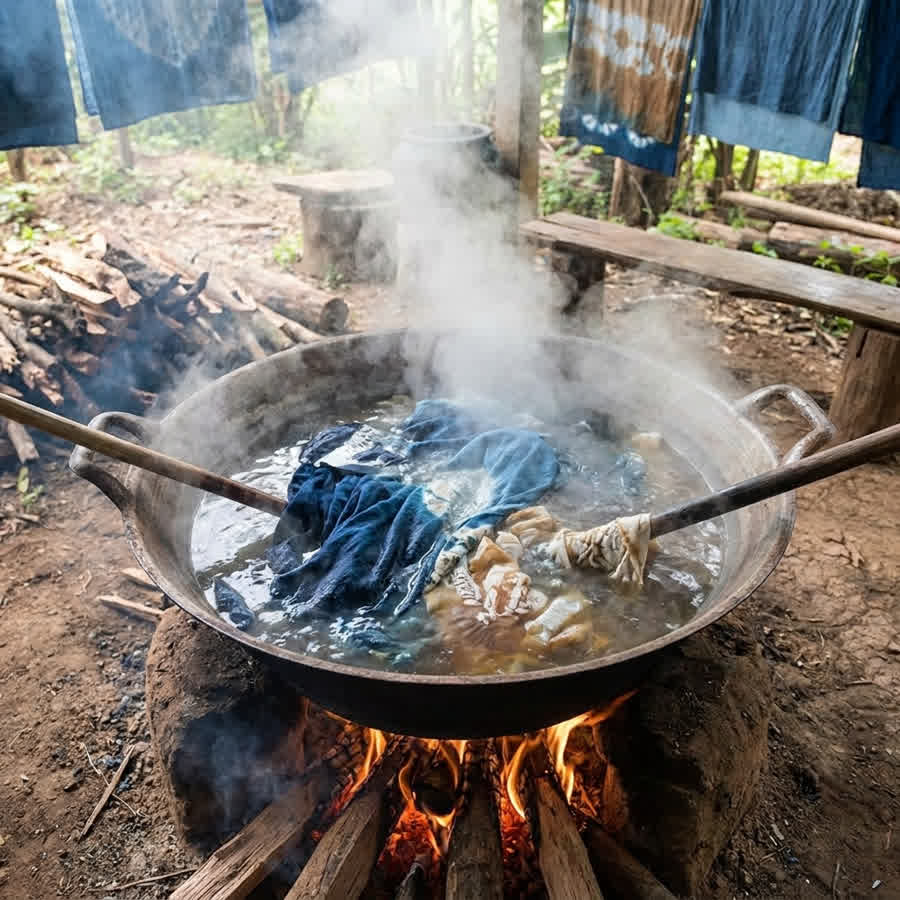
Historically, many artisan clusters relied on naphthol dyes for their vibrant, immediate color payoff, but these chemicals often fail modern environmental and safety audits. Today, the industry consensus demands a shift toward azo-free reactive dyes and plant-based natural dyes. Reactive dyes form a covalent bond with the cellulose fibers in cotton, resulting in exceptional wash-fastness and bright, consistent shades.
Transitioning to Reactive and Natural Dyes (continued)
Using natural dyes in this process introduces a high level of complexity. Plant-based extracts require cooler dyeing baths, which is actually advantageous as it prevents the wax resist from melting prematurely. However, achieving deep, saturated colors with natural materials requires multiple time-intensive dips and careful mordanting.
When specifying dye chemistry for batik fabric india orders, buyers should consider these technical factors:
- Azo-free reactive dyes for bright, highly colorfast yardage that meets strict international chemical compliance.
- Natural dye extracts like indigo and madder for brands prioritizing strict zero-waste credentials and organic narratives.
- Cool-temperature dye baths to protect the integrity of the wax resist during prolonged immersion.
The High-Temperature Dewaxing Process
The final and arguably most critical step in production is the removal of the resist material. If wax is left in the fibers, the fabric becomes stiff, unbreathable, and unusable for premium apparel. Artisans perform a high-temperature dewaxing process, boiling the yardage in large vats of water to melt and separate the wax from the cloth.
This boiling stage also serves to set the dyes and pre-shrink the fabric, providing a stable base for garment manufacturing. The melted wax is often skimmed off the surface of the boiling water and recycled for future use, adding to the zero-waste credentials of the craft. After boiling, the fabric undergoes rigorous washing to remove any residual dye.
Proper finishing guarantees the textile performs well on the cutting table and in the consumer's wardrobe.
- Rigorous boiling stages to completely dissolve the resist and restore the fabric's natural drape.
- Thorough post-wash rinsing to eliminate unfixed surface dyes and prevent color bleeding.
- Complete wax recovery to maintain a sustainable, closed-loop production cycle within the artisan cluster.
Explore Our Collection
Anuprerna works directly with handloom artisan clusters to weave batik fabric india for designers and brands building considered collections. To source it for your next line, explore the range below.
frequently asked questions
Q: How can we test for authentic wax-resist Batik fabric upon receiving a sample?
A: Authentic Batik features identical color intensity on both the face and reverse sides of the fabric due to full dye penetration, unlike screen prints. You will also see irregular, organic 'crackle' lines where dye seeped through micro-fissures in the wax. A visual inspection of the back of the fabric is the most reliable immediate test.
Q: What are the standard lead times for sourcing commercial yardage of authentic Indian Batik?
A: For authentic hand-batik, lead times range from 45 to 60 days for 500-1000 meters. This factors in weather-dependent sun-drying, multiple dyeing/waxing stages, and the final boiling process for wax removal. Buyers must plan their sourcing calendars around the monsoon season, which can cause significant delays.
Q: Can natural dyes be used effectively in the commercial Batik process?
A: Yes, but it requires careful temperature control and extended production timelines. Natural dyes often require cooler dyeing baths, which is advantageous as it prevents the wax resist from melting prematurely. However, achieving deep, dark shades requires multiple time-intensive dips and precise mordant application.
Q: Is there residual wax left on the fabric, and how does it affect the hand-feel?
A: Professional B2B finishing involves rigorous boiling and washing stages to remove all wax completely. The final fabric should have a soft drape with zero stiffness or waxy residue, maintaining the natural GSM and breathability of the base textile. Any stiffness indicates an incomplete dewaxing process.
Q: How does Indian Batik differ from Indonesian Batik in commercial sourcing?
A: Indian Batik is distinguished by its use of indigenous motifs, natural dyes, and frequent integration of block-printing techniques like Kalamkari-Batik hybrids. While Indonesian styles rely heavily on intricate tjanting work and distinct regional patterns, the Indian tradition offers unique block-printed resist methods that provide a different aesthetic for fashion collections.
More Blogs
raw silk vs mulberry silk durability: which is better for your collection?
understanding raw silk fabric properties: a guide for sustainable designers
the art of khesh: the original zero-waste textile of west bengal
from waste to weave: the mechanical textile recycling process to recycle cotton fabric
khesh recycled cotton fabric vs. virgin cotton: a technical comparison for fashion brands

the khesh technique: how to recycle cotton fabric into luxury sustainable textiles