Applique craft

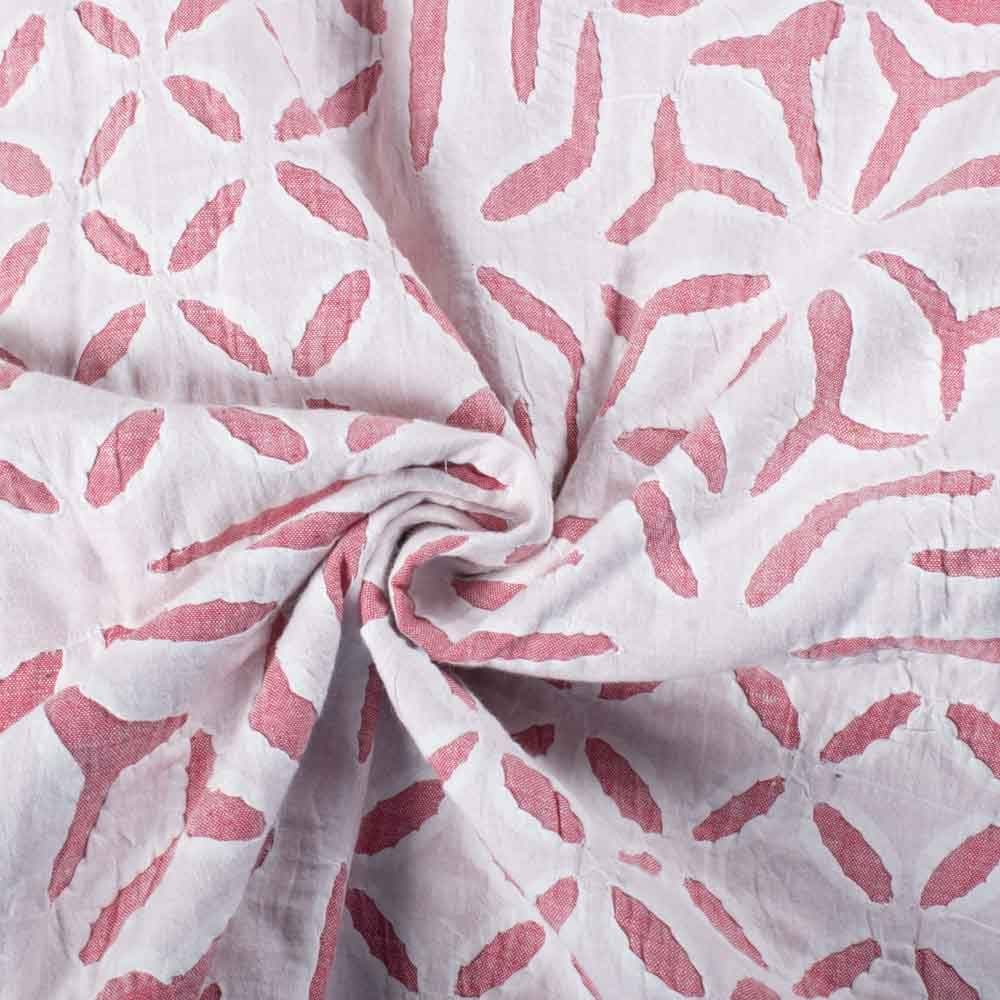
Appliqué is a traditional textile embellishment craft that transforms ordinary fabrics into artistic compositions through layering, cutting and stitching. At Anuprerna, we explore a distinctive form of reverse appliqué, where carefully cut openings in the upper fabric reveal a contrasting layer underneath, creating intricate patterns with remarkable visual depth. Combining traditional craftsmanship with contemporary design sensibilities, our appliqué fabrics celebrate the precision, creativity and artistry of textile artisans.
Applique Making Process
INTRODUCTION
Appliqué craft is a decorative textile technique that involves combining multiple layers of fabric to create distinctive patterns, motifs and textured surfaces. Unlike conventional embroidery, which primarily uses threads to develop designs, appliqué utilises the fabric itself as a medium of artistic expression.
While traditional appliqué involves attaching decorative fabric pieces onto a base fabric, reverse appliqué follows a different approach. Selected portions of the upper fabric are carefully removed to expose the contrasting fabric beneath.
At Anuprerna, this technique is adapted through a carefully developed process involving design preparation, selective fabric cutting, temporary adhesive application, stitching and washing. The resulting fabric showcases an interplay of colours, textures and handcrafted detailing.
APPLIQUÉ MOTIFS
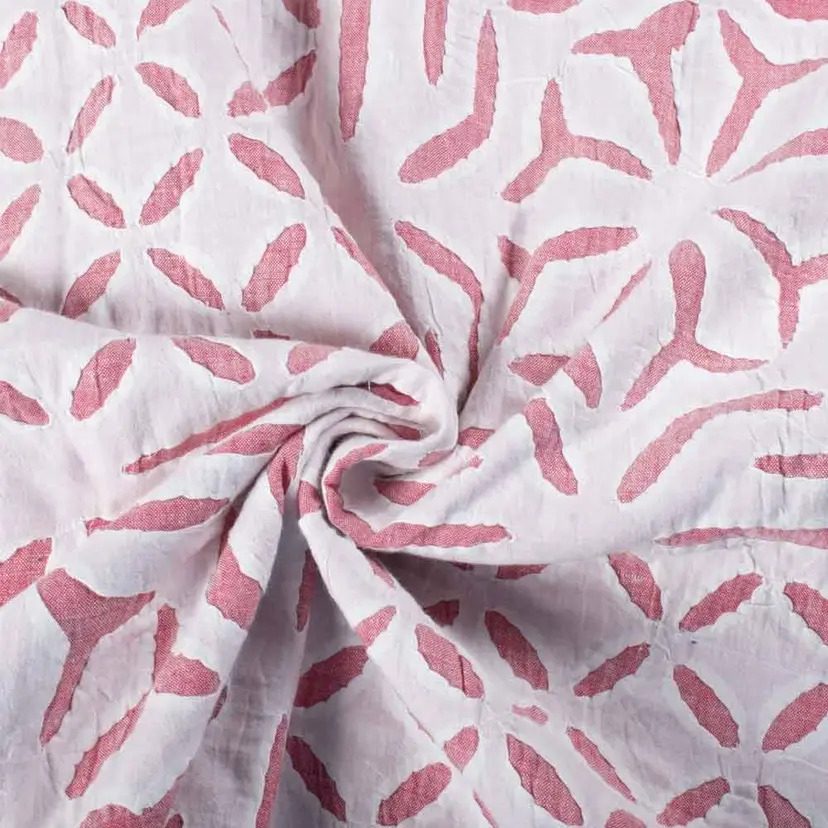
Appliqué motifs draw inspiration from nature, traditional artistic expressions, geometric compositions and contemporary abstract designs. From delicate floral patterns and organic leaf shapes to repeating geometric arrangements, the technique offers extensive possibilities for creative textile development.
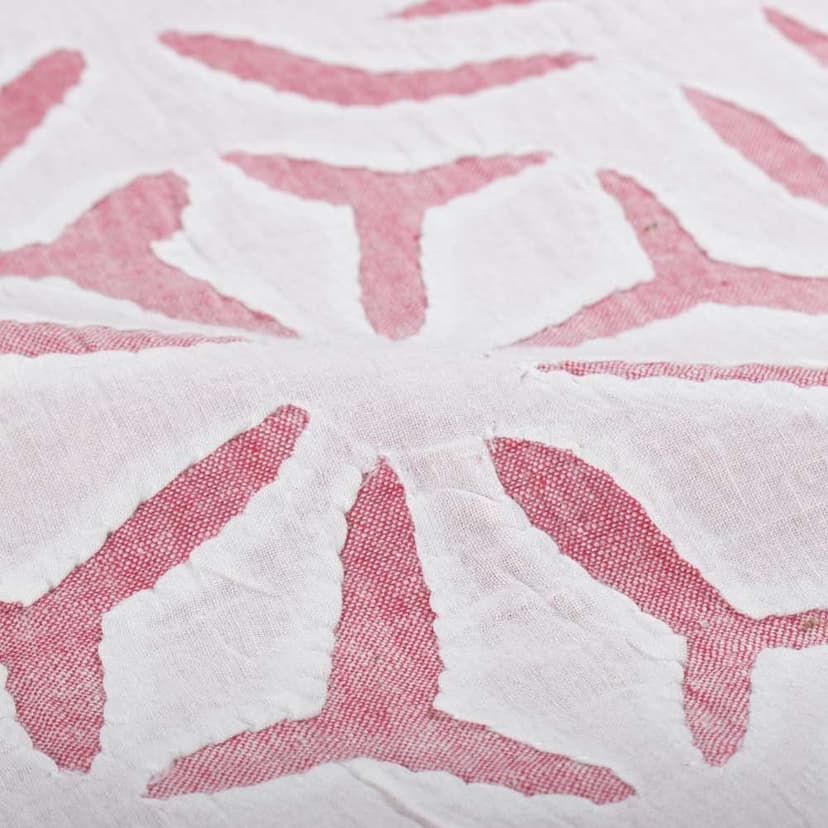
In Anuprerna's appliqué collection, the patterns are created by selectively cutting sections of the upper fabric while preserving its connected structure. The contrasting fabric underneath becomes visible through these openings, bringing each motif to life.
The combination of positive and negative spaces creates a distinctive visual rhythm, while the stitched outlines add subtle texture and definition to the fabric.
HISTORY OF APPLIQUÉ CRAFT
Appliqué is a longstanding textile decoration technique practised across different cultures around the world. Traditionally, artisans used pieces of fabric to embellish garments, household textiles, ceremonial objects and decorative furnishings.
In India, appliqué work has developed into several regional craft traditions, particularly in Rajasthan, Gujarat and Odisha. Each region has developed its own interpretation through distinctive motifs, colour combinations and stitching techniques.
THE PROCESS OF MAKING APPLIQUÉ FABRIC
STEP 1: DESIGN DRAWING
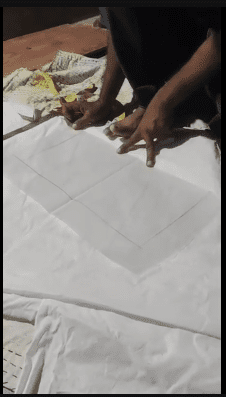
The process begins with drawing the desired patterns and motifs on paper. The design is carefully planned, considering the arrangement, proportions, spacing and repetition of each motif.
Special attention is given to the areas that will be cut away and the sections that will remain intact. This ensures that the upper fabric retains its connected structure throughout the subsequent stages of production.
The prepared design serves as a reference for the artisans during the fabric cutting process.
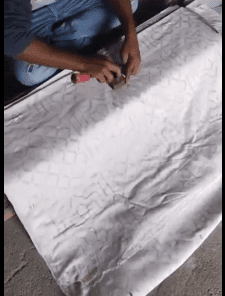
STEP 2: SELECTIVE FABRIC CUTTING
Following the prepared design, selected interior sections of the white upper fabric are carefully cut away.
Unlike conventional appliqué, where individual decorative shapes are cut out and attached separately, this technique involves removing only the designated spaces within the pattern while keeping the surrounding fabric intact and connected.
This intricate cutting process requires considerable precision, as every opening contributes to the final appearance of the appliqué fabric. The resulting cutwork allows the contrasting fabric beneath to become visible.
STEP 3: GUM PASTING AND FABRIC LAYERING
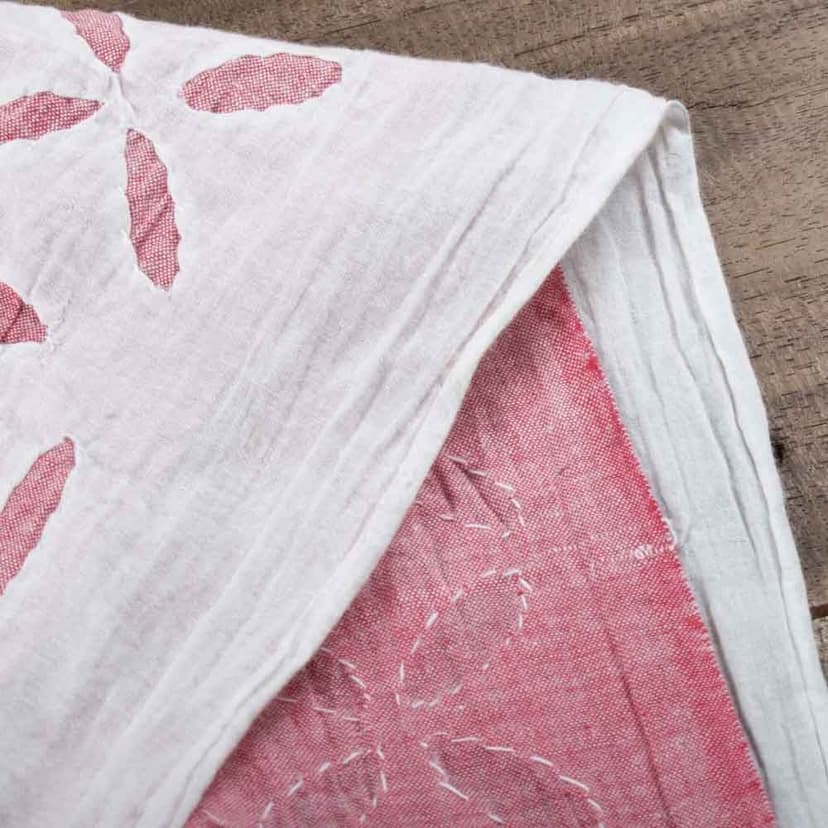
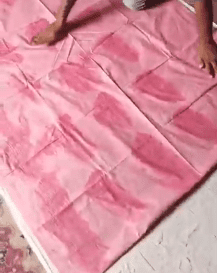
Once the cutwork is completed, the prepared white fabric is placed over another coloured fabric.
A temporary adhesive, or gum, is applied to hold the two fabric layers together. This helps maintain the alignment of the motifs and prevents unnecessary movement during the stitching process.
The contrasting base fabric becomes visible through the cut openings, giving the first impression of the finished appliqué design.
This stage is particularly important for maintaining the accuracy, placement and continuity of the patterns.
STEP 4: STITCHING
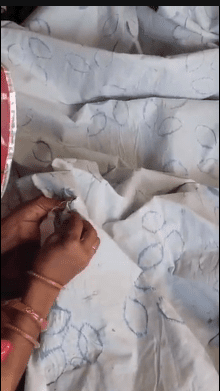
The artisans carefully stitch the two layers of fabric together, following the outlines of the cutwork designs.
The stitching secures the upper fabric to the contrasting base layer while defining the individual motifs. Each section requires careful attention to ensure that the fabric layers remain properly aligned and the cut edges are securely attached.
This stage transforms the temporarily assembled fabric layers into a cohesive textile with distinctive patterns, subtle surface texture and handcrafted detailing.
STEP 5: WASHING AND FINISHING
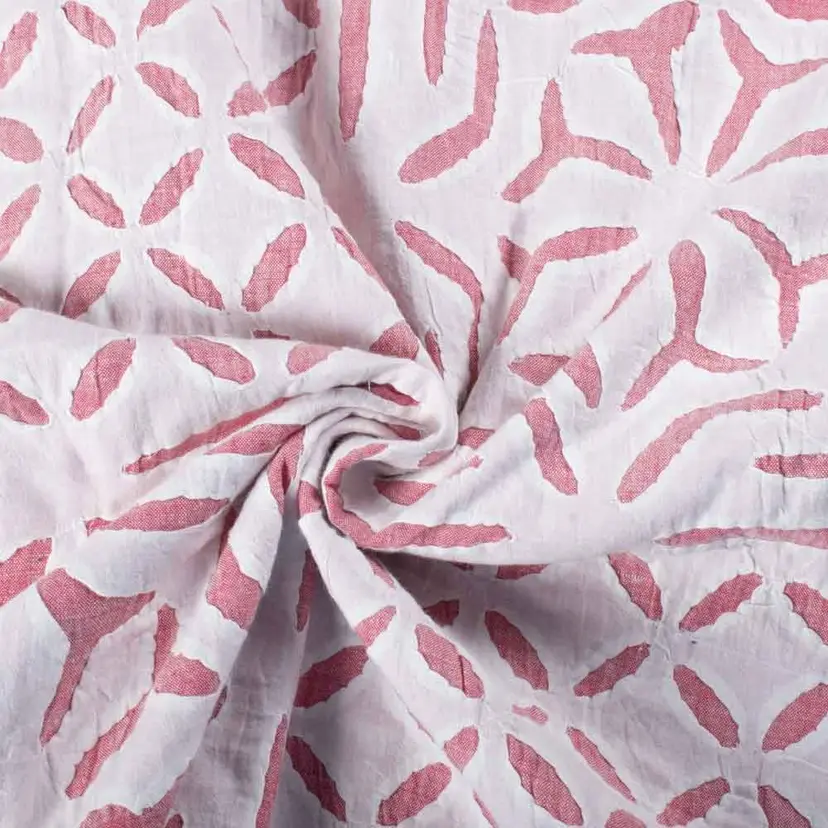
After the stitching process is completed, the fabric undergoes washing to remove the temporary gum used during the layering stage.
Washing helps eliminate adhesive residue and allows the fabric to regain its natural flexibility and texture. The stitched motifs remain securely attached, revealing the completed appliqué design.
The result is a layered textile featuring contrasting colours, intricate cutwork patterns and a distinctive handcrafted appearance.
THE DISTINCTIVE TEXTURE OF APPLIQUÉ FABRIC
One of the defining characteristics of appliqué fabric is its dimensional surface, created through the combination of layered textiles, selective cutwork and stitching.
The contrasting fabric visible through the carefully cut openings creates an engaging interplay of colours, while the stitched edges introduce subtle tactile detailing.
Unlike surface-printed fabrics, where patterns are primarily created through colour application, reverse appliqué designs are physically constructed using multiple layers of fabric. This gives the textile a distinctive depth and handcrafted character.
Depending on the base material and pattern density, appliqué fabrics can be developed for a variety of fashion and home furnishing applications.
EVOLUTION OF APPLIQUÉ CRAFT
Traditionally, appliqué work was widely associated with decorative textiles, ceremonial garments, quilts, wall hangings and household furnishings.
With changing design preferences, the craft has evolved to incorporate contemporary patterns, minimalistic motifs, abstract compositions and modern colour palettes.
Today, appliqué fabric offers designers an opportunity to introduce texture, contrast and handcrafted detailing into contemporary silhouettes. Its versatility makes it suitable for dresses, shirts, tops, jackets, skirts, statement garments, cushion covers and decorative home textiles.
At Anuprerna, we aim to explore the creative potential of appliqué craft by combining traditional textile craftsmanship with modern design requirements, making this distinctive technique relevant to contemporary fashion and lifestyle collections.
frequently asked questions
What is appliqué craft?
Appliqué is a textile embellishment technique in which different layers or pieces of fabric are combined and stitched together to create decorative motifs, patterns and textured surfaces.
How is Anuprerna's appliqué technique different?
Anuprerna's technique involves selectively cutting the upper fabric while retaining its connected structure. The prepared fabric is temporarily attached to a contrasting base fabric, stitched along the designs and subsequently washed to remove the adhesive.
Is appliqué fabric the same as cutwork fabric?
Although both techniques involve cutting fabric to create decorative patterns, reverse appliqué uses an additional fabric layer beneath the cut openings. Conventional cutwork generally creates open spaces within the fabric itself.
Why does appliqué fabric require washing after stitching?
Washing helps remove the temporary adhesive used to secure the fabric layers during stitching, allowing the finished textile to regain its natural flexibility and surface character.
How should appliqué fabric be cared for?
Gentle washing with a mild detergent is generally recommended to protect the stitched detailing. Avoid excessive rubbing, harsh chemicals and aggressive wringing. Specific care instructions may vary depending on the fabric composition and construction.
More Stories
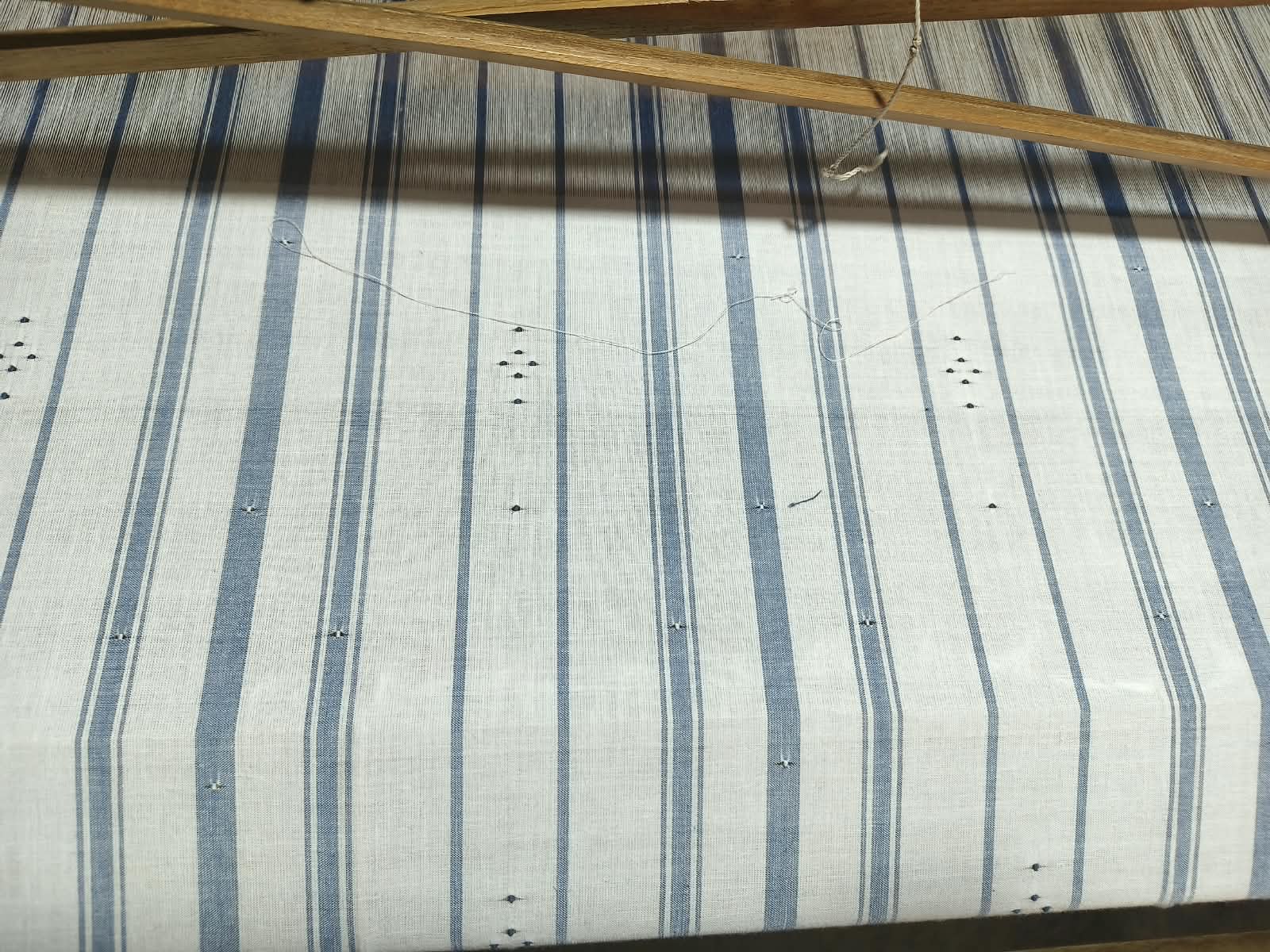
tangaliya weaving
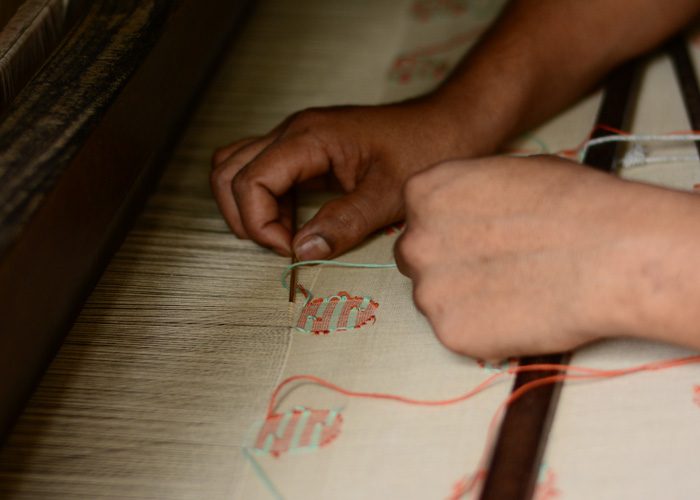
jamdani loom embroidery
handloom jacquard
kantha embroidery
eco printing
khesh recycled fabric