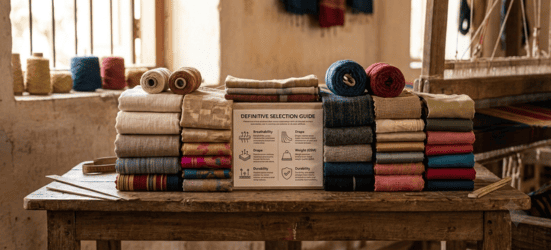
Choose The Right Fabric for Your Clothes: A Definitive Selection Guide

To choose the right fabric for clothing, match your garment’s function, silhouette, and season with four key criteria: material type (breathability and climate fit), fabric weight / GSM (determining structure vs. fall), drape (how the fabric flows), and grainline (ensuring proper drape and structural integrity). Indian handloom textiles—such as handwoven cotton fabric, handloom linen fabric, and sustainable silk blends—offer ideal, climate-adaptable solutions combining traditional craftsmanship with contemporary design.
CHOOSING THE RIGHT FABRIC BASED ON MATERIAL
Each material has its own specific characteristics in terms of breathability, stretchability, crease-resistance, climate adaptability etc. Depending on the occasion or function of a project as well as the kind of climate when it will be used, one can choose the optimum fabric for stitching.
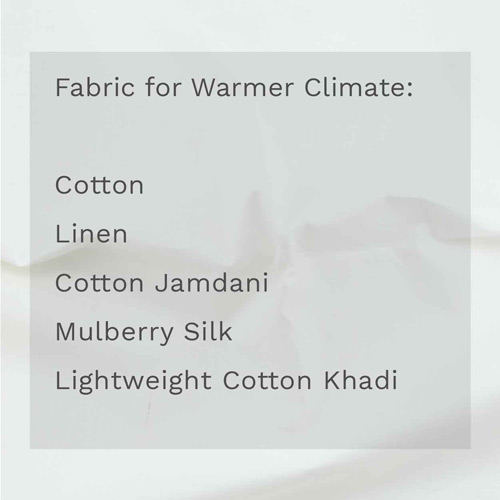
Fabric for Warmer Climate
Ethical and natural fabric materials like handloom cotton fabric and Handloom Linen fabric are great for summers. Cotton material is stable and one of the easiest fabrics to stitch. Handloom Khadi fabric is a great example of sustainable fabrics in India. Being handwoven and handspun, they are more breathable, comfortable and aesthetically appealing. It keeps warm in winters and cool in summers. The handwoven cotton fabric is also the simplest to work with, so it is preferred as shirting fabric, Kurti fabric, or fabric for summer dresses. Mulberry silk, being fine and breathable, can be used for a warmer climate.
Fabric for Cooler Climate

On the other hand, wild silk is more suited for cooler weather. However, both types of Silk along with sustainable silk fabric like Matka and Ketya are appropriate as special occasion or premium garments. Blended fabrics like khadi cotton, khadi cotton silk fabric or any cotton blend fabric for dresses and clothing offer the best of both.
GRAIN OR GRAINLINE OF THE FABRIC
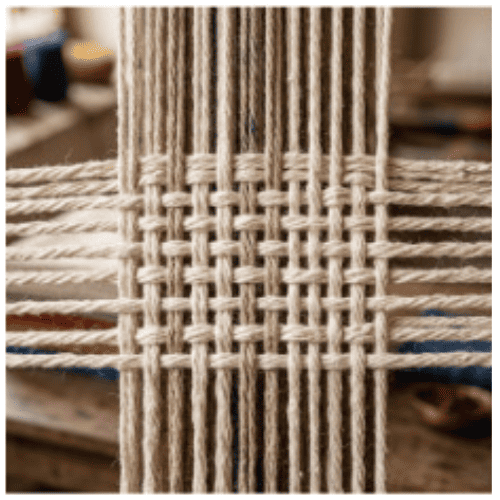
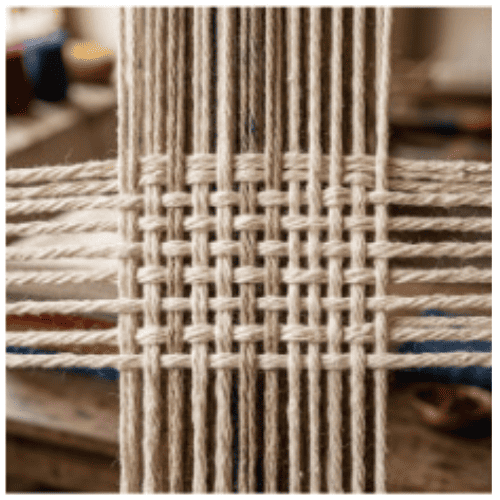
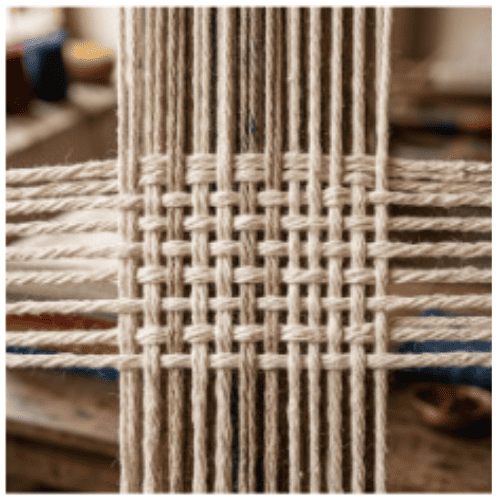
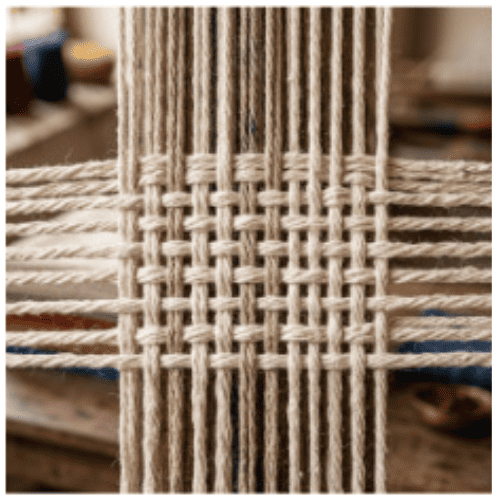
Grain refers to the direction of the yarns woven together to form the fabric. The warp yarns are the lengthwise grain while warp yarns represent the crosswise grain of the fabric. The patterns pieces cut are aligned parallel to lengthwise grain as that give the garment the maximum stability. It is crucial to ensure the grainline of the fabric is straight & perfect while choosing fabric for stitching. An improper grainline will not cut or sew well resulting in an overall poorly constructed garment.
DRAPE OF THE FABRIC:
The drape of the fabric refers to its "flow" or "fall". A fabric may be stiff and therefore better suited for fitted structured garments while fabrics that drape well are appropriate for flowy dresses and skirts. Understanding the drape of the fabric and keeping that in mind while choosing your fabric will help achieve the desired silhouette.
WEIGHT OF THE FABRIC
The weight of a fabric is measured in GSM (grams per square meter) and it defines how heavy or light fabric is. The higher the gsm for fabric, the higher is the weight for a fixed amount of the fabric. Measuring the fabric weight is a way of measuring the thickness of the material, and differentiating between light-weight, medium-weight, or heavy-weight fabric. It is very important to consider the right weight of fabric once the material has been decided.
Explore More
These are some of the heaviest fabrics and tend to fall on the more casual side. They tend to hold in heat well and are very durable. Heavy handloom cotton fabric or heavy handloom khadi fabric is perfect for items that you want to have more shape, but it’s still really easy to sew. When choosing your heavy cotton, know that it is usually quite stiff and make sure this has been accounted for in the project you choose.
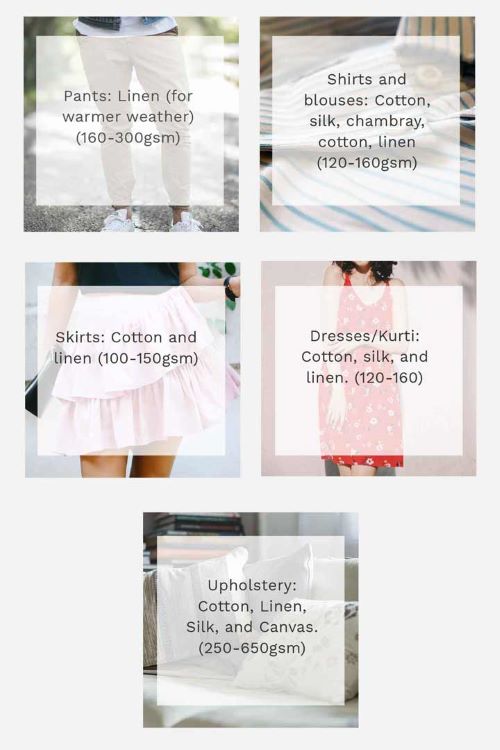
• Pants: Linen (for warmer weather) (160-300gsm), find here.
• Shirts and blouses: Cotton, silk, chambray, sustainable cotton fabric, linen (120-180gsm), find here.
• Skirts: Cotton and linen (100-150gsm), find here.
• Dresses/Kurti: Cotton, silk, or blended silk cotton fabric and linen. (80-160), find here.
• Upholstery: Cotton, Linen, Silk, and Canvas. (250-650gsm), find here.
These fabrics are light. They tend to be good for year-round wear, and may wrinkle a bit. These fabrics drape well and are great for business wear. Light cotton with a close weave is a great place to begin, as it’s usually easy to sew and often has a light fall.
This category includes year-round fabrics, including many more casual weaves. They tend to hold up against wrinkling fairly well on their own. They do not have any issue with opacity in these fabrics, although whites will still show through somewhat.
How Does Material Selection Affect Garment Comfort and Climate Adaptability?
Choosing the ideal cotton material fabric or natural blend depends heavily on climate, breathability, and garment purpose. Sustainable, natural fabric materials regulate body temperature naturally, ensuring long-lasting comfort across seasons.
Best Fabrics for Warmer Climates
For summer apparel, breathable and moisture-absorbent options are essential:
- Handloom Cotton Fabric: Stable, lightweight, and exceptionally easy to stitch. It is the preferred choice for handloom cotton material shirtings, summer dresses, and kurtis.
- Handloom Linen Fabric: Offers outstanding breathability and a crisp texture, perfect for warm-weather tailored pants and unstructured jackets.
- Handloom Khadi Fabric: Handspun and handwoven, Khadi keeps you cool in summer and warm in winter, representing one of the finest sustainable handloom fabrics of India.
- Mulberry Silk: Fine, soft, and breathable, making it suitable for elevated warm-weather garments.
Best Fabrics for Cooler Climates & Special Occasions
For colder seasons or high-end occasion wear, structure and thermal retention become key:
- Wild Silk & Silk Blends: Wild silks along with sustainable varieties like Matka and Ketya silk provide richer warmth and structure, ideal for premium garments.
- Khadi Cotton-Silk Blends: Blending cotton material with silk delivers the durability of cotton material alongside the luster of luxury silk.
How Does Material Selection Affect Garment Comfort and Climate Adaptability?
Choosing the ideal cotton material fabric or natural blend depends heavily on climate, breathability, and garment purpose. Sustainable, natural fabric materials regulate body temperature naturally, ensuring long-lasting comfort across seasons.
Best Fabrics for Warmer Climates
For summer apparel, breathable and moisture-absorbent options are essential:
- Handloom Cotton Fabric: Stable, lightweight, and exceptionally easy to stitch. It is the preferred choice for handloom cotton material shirtings, summer dresses, and kurtis.
- Handloom Linen Fabric: Offers outstanding breathability and a crisp texture, perfect for warm-weather tailored pants and unstructured jackets.
- Handloom Khadi Fabric: Handspun and handwoven, Khadi keeps you cool in summer and warm in winter, representing one of the finest sustainable handloom fabrics of India.
- Mulberry Silk: Fine, soft, and breathable, making it suitable for elevated warm-weather garments.
Best Fabrics for Cooler Climates & Special Occasions
For colder seasons or high-end occasion wear, structure and thermal retention become key:
- Wild Silk & Silk Blends: Wild silks along with sustainable varieties like Matka and Ketya silk provide richer warmth and structure, ideal for premium garments.
- Khadi Cotton-Silk Blends: Blending cotton material with silk delivers the durability of cotton material alongside the luster of luxury silk.
How Does Material Selection Affect Garment Comfort and Climate Adaptability?
Choosing the ideal cotton material fabric or natural blend depends heavily on climate, breathability, and garment purpose. Sustainable, natural fabric materials regulate body temperature naturally, ensuring long-lasting comfort across seasons.
Best Fabrics for Warmer Climates
For summer apparel, breathable and moisture-absorbent options are essential:
- Handloom Cotton Fabric: Stable, lightweight, and exceptionally easy to stitch. It is the preferred choice for handloom cotton material shirtings, summer dresses, and kurtis.
- Handloom Linen Fabric: Offers outstanding breathability and a crisp texture, perfect for warm-weather tailored pants and unstructured jackets.
- Handloom Khadi Fabric: Handspun and handwoven, Khadi keeps you cool in summer and warm in winter, representing one of the finest sustainable handloom fabrics of India.
- Mulberry Silk: Fine, soft, and breathable, making it suitable for elevated warm-weather garments.
Best Fabrics for Cooler Climates & Special Occasions
For colder seasons or high-end occasion wear, structure and thermal retention become key:
- Wild Silk & Silk Blends: Wild silks along with sustainable varieties like Matka and Ketya silk provide richer warmth and structure, ideal for premium garments.
- Khadi Cotton-Silk Blends: Blending cotton material with silk delivers the durability of cotton material alongside the luster of luxury silk.
How Does Material Selection Affect Garment Comfort and Climate Adaptability?
Choosing the ideal cotton material fabric or natural blend depends heavily on climate, breathability, and garment purpose. Sustainable, natural fabric materials regulate body temperature naturally, ensuring long-lasting comfort across seasons.
Best Fabrics for Warmer Climates
For summer apparel, breathable and moisture-absorbent options are essential:
- Handloom Cotton Fabric: Stable, lightweight, and exceptionally easy to stitch. It is the preferred choice for handloom cotton material shirtings, summer dresses, and kurtis.
- Handloom Linen Fabric: Offers outstanding breathability and a crisp texture, perfect for warm-weather tailored pants and unstructured jackets.
- Handloom Khadi Fabric: Handspun and handwoven, Khadi keeps you cool in summer and warm in winter, representing one of the finest sustainable handloom fabrics of India.
- Mulberry Silk: Fine, soft, and breathable, making it suitable for elevated warm-weather garments.
Best Fabrics for Cooler Climates & Special Occasions
For colder seasons or high-end occasion wear, structure and thermal retention become key:
- Wild Silk & Silk Blends: Wild silks along with sustainable varieties like Matka and Ketya silk provide richer warmth and structure, ideal for premium garments.
- Khadi Cotton-Silk Blends: Blending cotton material with silk delivers the durability of cotton material alongside the luster of luxury silk.
What Is Fabric Weight (GSM) and Why Does It Matter for Apparel Design?
Fabric weight is measured in GSM (Grams per Square Meter), which directly dictates thickness, warmth, opacity, and silhouette support. Matching the GSM to your garment design ensures the finished piece holds its intended shape.
What Is Fabric Weight (GSM) and Why Does It Matter for Apparel Design?
Fabric weight is measured in GSM (Grams per Square Meter), which directly dictates thickness, warmth, opacity, and silhouette support. Matching the GSM to your garment design ensures the finished piece holds its intended shape.
What Is Fabric Weight (GSM) and Why Does It Matter for Apparel Design?
Fabric weight is measured in GSM (Grams per Square Meter), which directly dictates thickness, warmth, opacity, and silhouette support. Matching the GSM to your garment design ensures the finished piece holds its intended shape.
What Is Fabric Weight (GSM) and Why Does It Matter for Apparel Design?
Fabric weight is measured in GSM (Grams per Square Meter), which directly dictates thickness, warmth, opacity, and silhouette support. Matching the GSM to your garment design ensures the finished piece holds its intended shape.
GSM Categories and Garment Applications
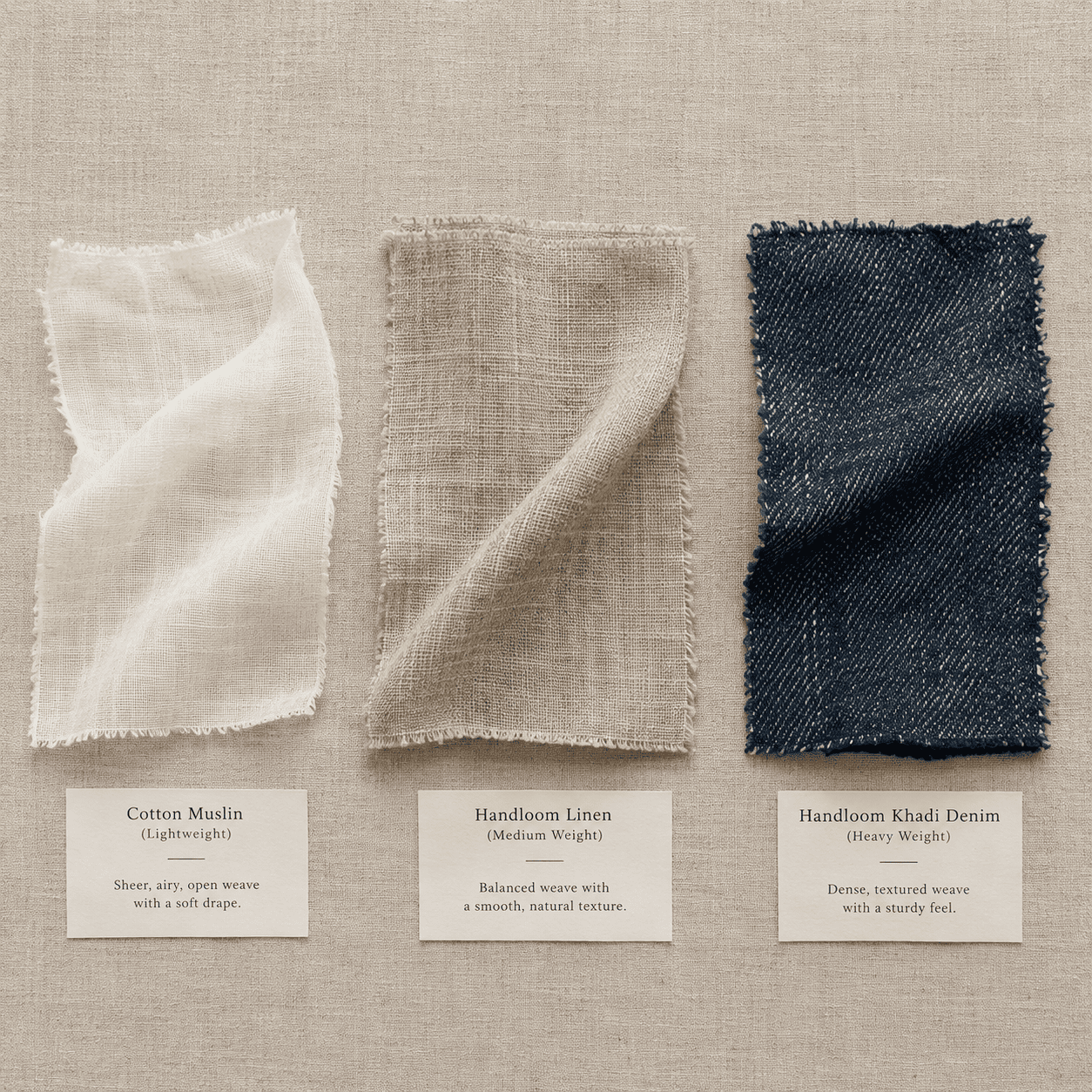
Lightweight Fabrics (80–120 GSM)
Lightweight fabrics are ideal for blouses, flowy summer dresses, and sheer kurtis. Their airy construction and soft drape make them suitable for warm-weather clothing. Popular options include light handwoven cotton fabric and Mulberry silk.
Medium-Weight Fabrics (120–200 GSM)
Medium-weight fabrics offer a balance of structure, comfort, and versatility, making them suitable for casual shirts, tailored skirts, and year-round dresses. Handloom linen fabric and Khadi cotton blends are useful choices for everyday garments that require both durability and a natural texture.
Heavyweight Fabrics (200–600+ GSM)
Heavyweight fabrics provide greater structure and durability, making them suitable for structured trousers, jackets, upholstery, and home décor. Options such as heavy handloom cotton material, Khadi denim, and canvas work well for garments and products that need a sturdier finish.
GSM Categories and Garment Applications
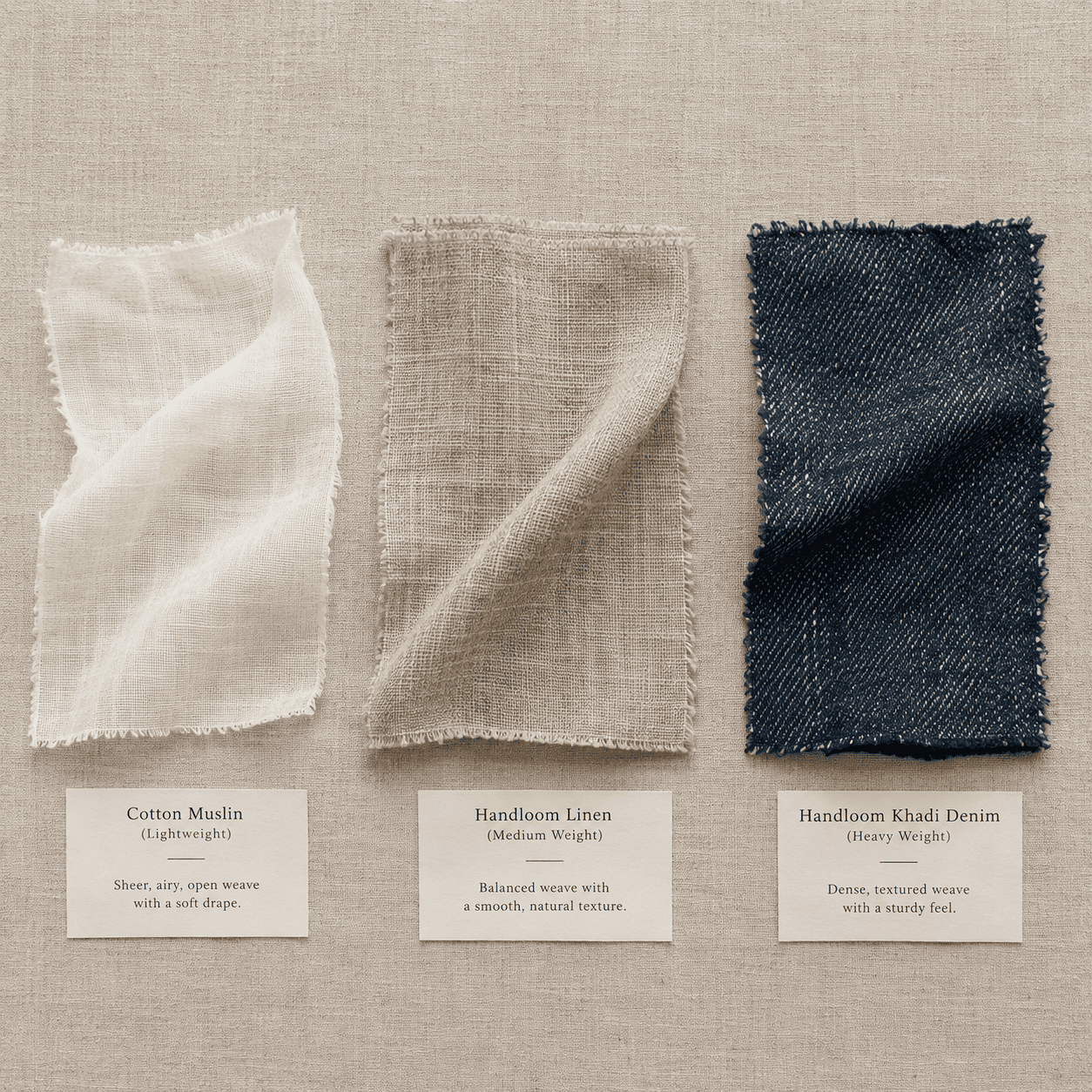
Lightweight Fabrics (80–120 GSM)
Lightweight fabrics are ideal for blouses, flowy summer dresses, and sheer kurtis. Their airy construction and soft drape make them suitable for warm-weather clothing. Popular options include light handwoven cotton fabric and Mulberry silk.
Medium-Weight Fabrics (120–200 GSM)
Medium-weight fabrics offer a balance of structure, comfort, and versatility, making them suitable for casual shirts, tailored skirts, and year-round dresses. Handloom linen fabric and Khadi cotton blends are useful choices for everyday garments that require both durability and a natural texture.
Heavyweight Fabrics (200–600+ GSM)
Heavyweight fabrics provide greater structure and durability, making them suitable for structured trousers, jackets, upholstery, and home décor. Options such as heavy handloom cotton material, Khadi denim, and canvas work well for garments and products that need a sturdier finish.
GSM Categories and Garment Applications
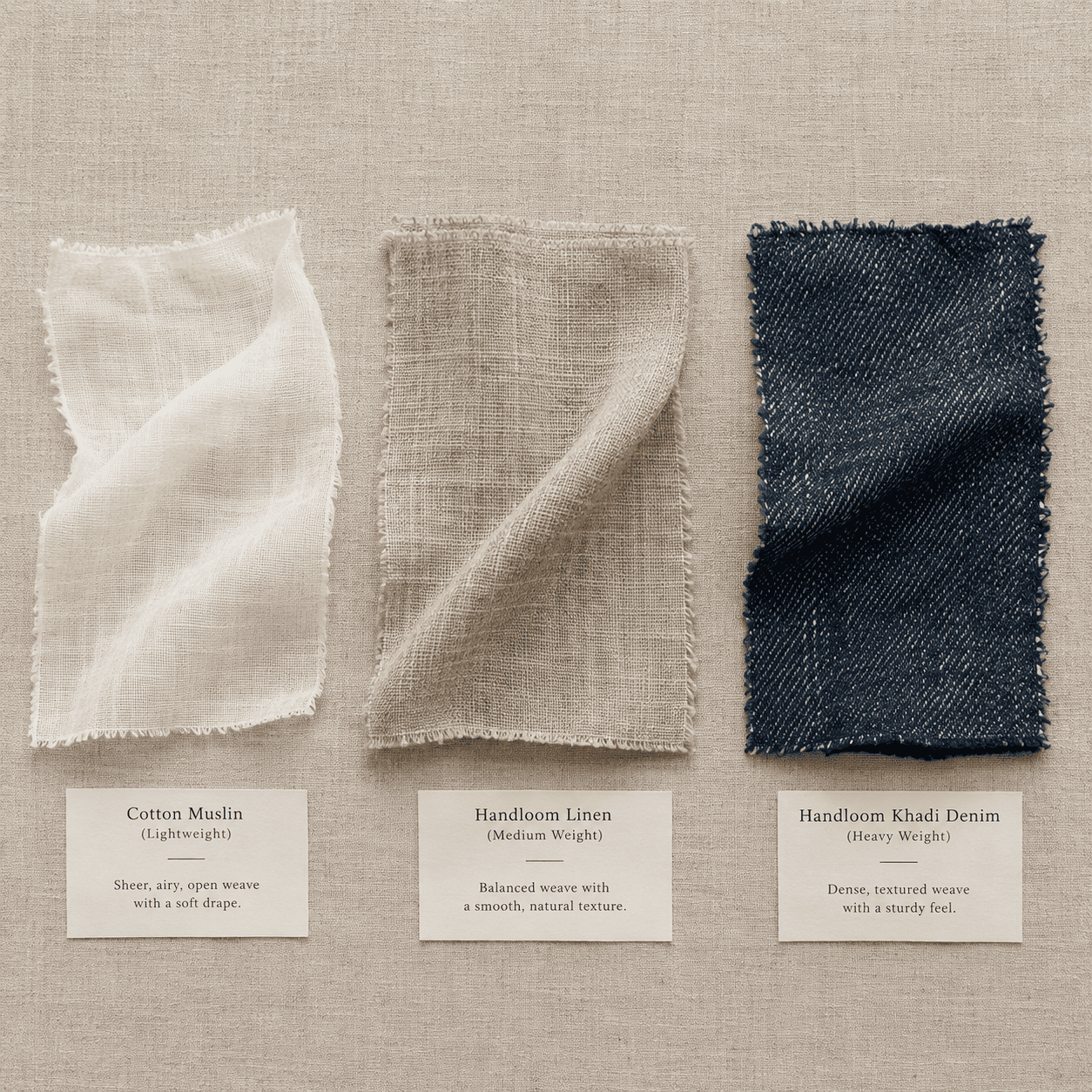
Lightweight Fabrics (80–120 GSM)
Lightweight fabrics are ideal for blouses, flowy summer dresses, and sheer kurtis. Their airy construction and soft drape make them suitable for warm-weather clothing. Popular options include light handwoven cotton fabric and Mulberry silk.
Medium-Weight Fabrics (120–200 GSM)
Medium-weight fabrics offer a balance of structure, comfort, and versatility, making them suitable for casual shirts, tailored skirts, and year-round dresses. Handloom linen fabric and Khadi cotton blends are useful choices for everyday garments that require both durability and a natural texture.
Heavyweight Fabrics (200–600+ GSM)
Heavyweight fabrics provide greater structure and durability, making them suitable for structured trousers, jackets, upholstery, and home décor. Options such as heavy handloom cotton material, Khadi denim, and canvas work well for garments and products that need a sturdier finish.
GSM Categories and Garment Applications
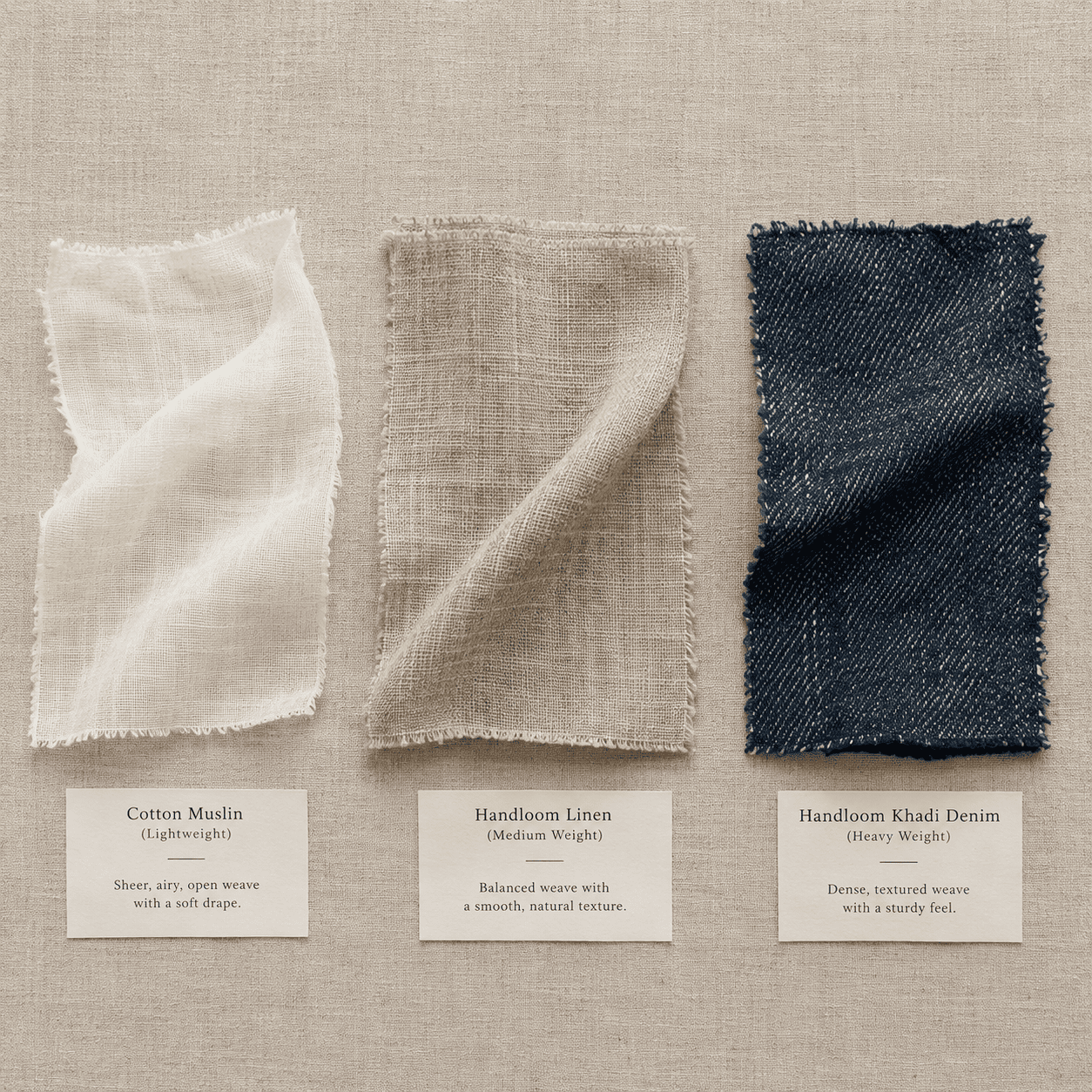
Lightweight Fabrics (80–120 GSM)
Lightweight fabrics are ideal for blouses, flowy summer dresses, and sheer kurtis. Their airy construction and soft drape make them suitable for warm-weather clothing. Popular options include light handwoven cotton fabric and Mulberry silk.
Medium-Weight Fabrics (120–200 GSM)
Medium-weight fabrics offer a balance of structure, comfort, and versatility, making them suitable for casual shirts, tailored skirts, and year-round dresses. Handloom linen fabric and Khadi cotton blends are useful choices for everyday garments that require both durability and a natural texture.
Heavyweight Fabrics (200–600+ GSM)
Heavyweight fabrics provide greater structure and durability, making them suitable for structured trousers, jackets, upholstery, and home décor. Options such as heavy handloom cotton material, Khadi denim, and canvas work well for garments and products that need a sturdier finish.
How Does Fabric Drape Influence Garment Silhouettes?
Fabric drape refers to the "fall" or "flow" of a material when suspended. Understanding drape ensures your selected pattern matches the physical behavior of the textile.
Fluid / High Drape: Lightweight silks, fine cotton muslin, and soft viscose blends flow softly along body contours. Ideal for flared skirts, wraps, and gathered dresses.
Stiff / Low Drape: Heavy handloom cottons, crisp linens, and structured canvas hold rigid shapes away from the body. Perfect for pleats, structured collars, tailored trousers, and outerwear.
How Does Fabric Drape Influence Garment Silhouettes?
Fabric drape refers to the "fall" or "flow" of a material when suspended. Understanding drape ensures your selected pattern matches the physical behavior of the textile.
Fluid / High Drape: Lightweight silks, fine cotton muslin, and soft viscose blends flow softly along body contours. Ideal for flared skirts, wraps, and gathered dresses.
Stiff / Low Drape: Heavy handloom cottons, crisp linens, and structured canvas hold rigid shapes away from the body. Perfect for pleats, structured collars, tailored trousers, and outerwear.
How Does Fabric Drape Influence Garment Silhouettes?
Fabric drape refers to the "fall" or "flow" of a material when suspended. Understanding drape ensures your selected pattern matches the physical behavior of the textile.
Fluid / High Drape: Lightweight silks, fine cotton muslin, and soft viscose blends flow softly along body contours. Ideal for flared skirts, wraps, and gathered dresses.
Stiff / Low Drape: Heavy handloom cottons, crisp linens, and structured canvas hold rigid shapes away from the body. Perfect for pleats, structured collars, tailored trousers, and outerwear.
How Does Fabric Drape Influence Garment Silhouettes?
Fabric drape refers to the "fall" or "flow" of a material when suspended. Understanding drape ensures your selected pattern matches the physical behavior of the textile.
Fluid / High Drape: Lightweight silks, fine cotton muslin, and soft viscose blends flow softly along body contours. Ideal for flared skirts, wraps, and gathered dresses.
Stiff / Low Drape: Heavy handloom cottons, crisp linens, and structured canvas hold rigid shapes away from the body. Perfect for pleats, structured collars, tailored trousers, and outerwear.
related questions
What determines the quality of clothing?
The quality of clothing is determined by factors such as the choice of materials, construction techniques, attention to detail, durability, comfort, and overall craftsmanship.
How do you choose the right fabric for clothing?
To choose the right fabric for clothing, consider factors such as the garment's purpose, desired comfort level, seasonality, care requirements, and personal preferences for texture, drape, and appearance.
How do I choose the right fabric pattern?
To choose the right fabric pattern, consider factors such as the garment's style and purpose, personal taste, body type, and the occasion. Opt for patterns that complement your overall look and make you feel confident.
What is GSM in fabric means?
GSM stands for grams per square meter and refers to the weight of a fabric per unit area. It is commonly used to measure the density or thickness of fabrics, with higher GSM indicating heavier fabrics.
More Blogs
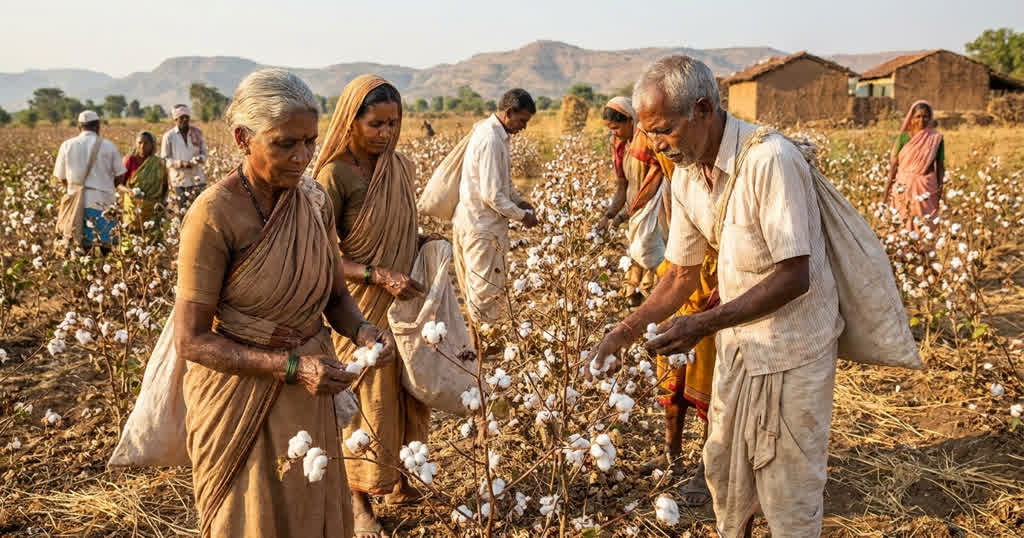
why organic fabric suppliers are growing in india
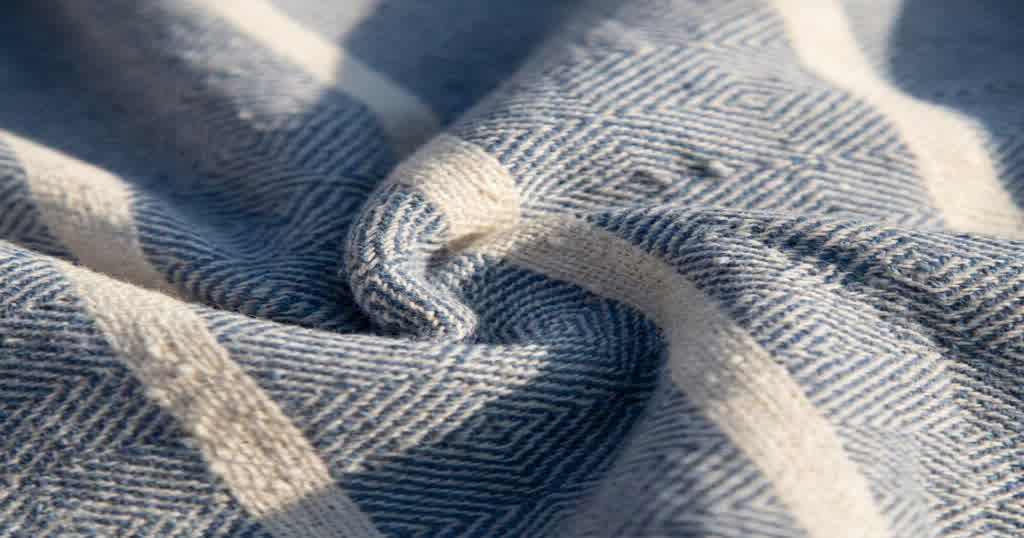
jacquard fabric in modern fashion
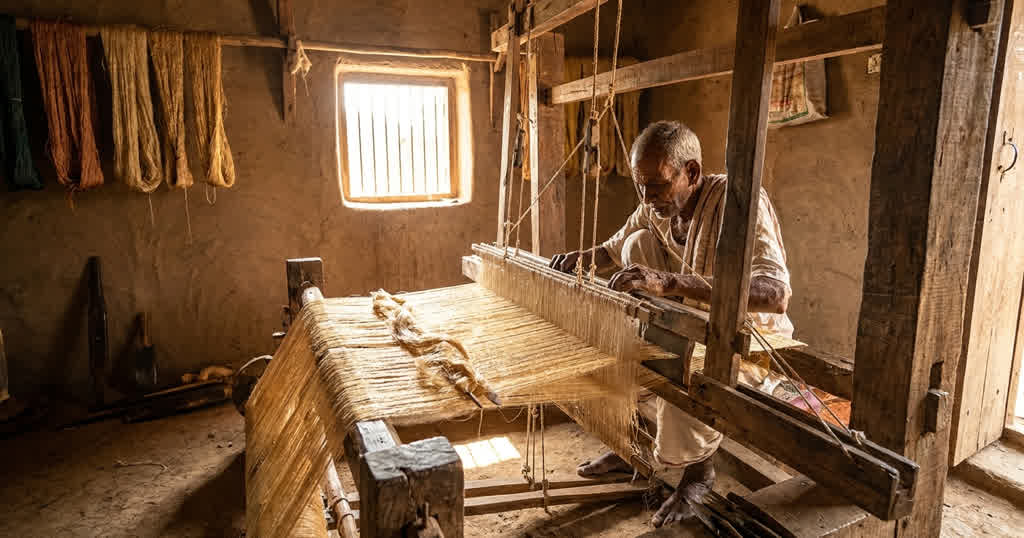
how silk manufacturers preserve traditional craftsmanship
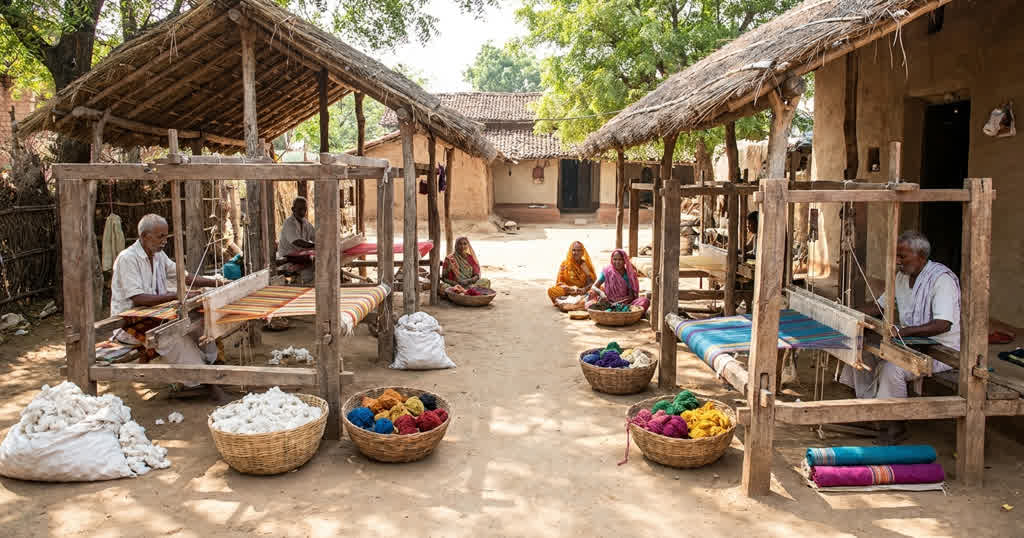
indian fabric wholesale: a guide to sourcing handwoven textiles
how indian fabric exporters meet global quality standards
jacquard vs embroidery: what's the difference?