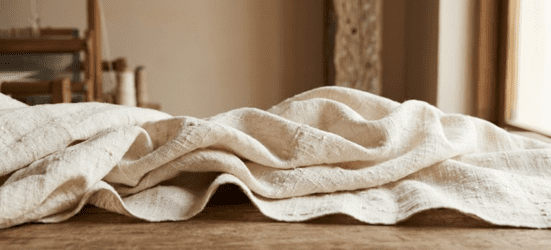
Khadi Online Shopping: How to Choose the Right Fabric
Khadi online shopping becomes easier when you know what to check before placing an order. The most important things to consider are the fabric’s composition, hand-spinning and weaving process, texture, weave structure, weight, drape and intended use. Since you cannot touch the fabric through a screen, reviewing product details, examining close-up images and ordering swatches can help you make a more informed decision.
Whether you are looking for khadi cotton fabric for everyday clothing, a lightweight handwoven textile for summer wear or a textured fabric for a contemporary collection, understanding these details will help you choose the right material. This guide explains how to identify authentic Khadi, compare different varieties and buy khadi fabric online with greater confidence.
Choose Khadi With More Confidence
Choosing the right Khadi fabric online requires more than selecting a colour or pattern. Understanding the spinning process, weave, fibre composition, texture and drape helps you find a material that suits your garment requirements.
Whether you are sourcing fabric for personal clothing or developing a collection, reviewing product details and ordering swatches before purchasing can make the process more reliable.
Explore Anuprerna’s handspun Khadi fabrics and order fabric swatches to experience the texture and character of each material before making your selection.
Why Should You Order Fabric Swatches Before Purchasing?
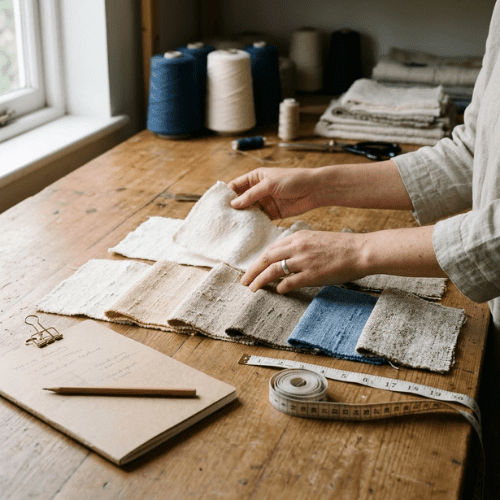
One of the biggest limitations of khadi online shopping is not being able to experience the fabric directly. A product photograph can show colour and surface detail, but it cannot fully communicate softness, thickness, texture or movement.
Ordering swatches allows you to:
- Feel the texture: Understand whether the surface is smooth, crisp, soft or textured.
- Check the colour: Compare the actual shade with your design palette and other materials.
- Assess the drape: Observe how the fabric falls when held, folded or lightly gathered.
- Evaluate the weave: Examine yarn irregularities, construction and surface details more closely.
- Test garment suitability: Consider whether the fabric meets the requirements of your intended silhouette.
For designers, boutiques and apparel businesses, this step can also help reduce uncertainty before placing a larger order.
Anuprerna offers fabric swatch kits to help buyers explore different materials and compare their characteristics before sourcing. Reviewing samples first can make fabric selection more considered and help avoid mismatches during production.
What Should You Check About Texture, Weave, Composition and Drape?
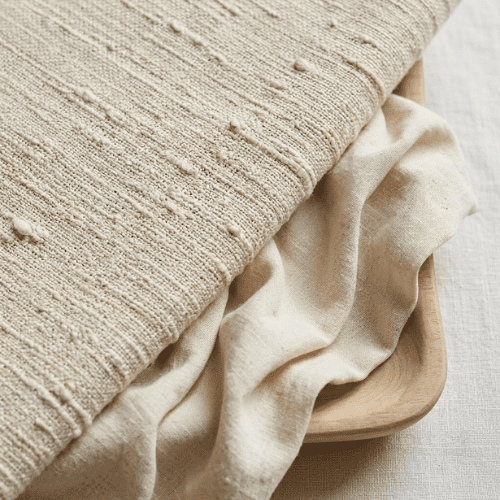
When buying khadi fabric online, four characteristics can help you decide whether a particular material is appropriate for your garment.
1. Texture
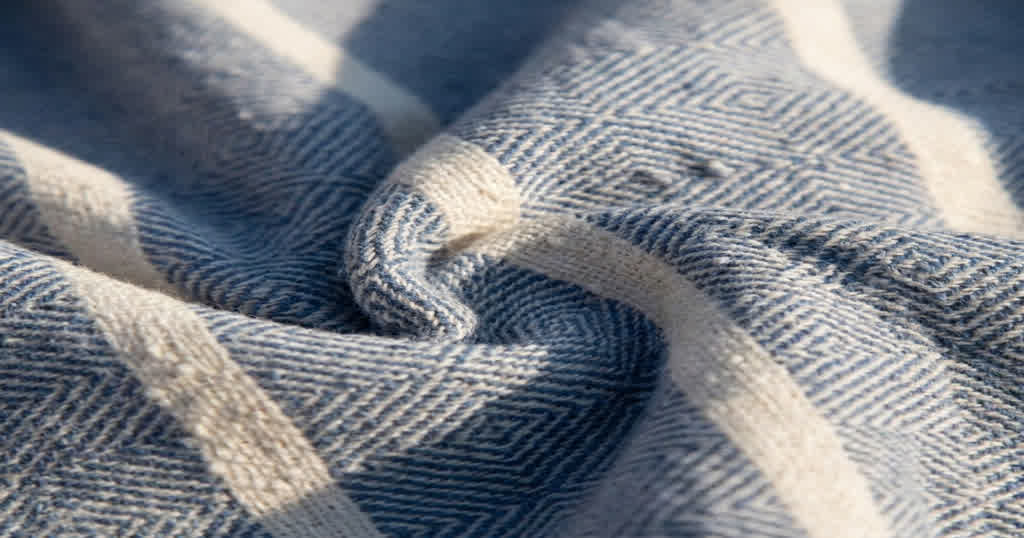
Texture affects both the appearance and feel of a garment. Some khadi fabrics have a relatively smooth surface, while others feature visible slubs and a more pronounced handwoven character.
Look at close-up product photographs rather than relying only on full-length images. Check whether the surface is fine, slightly irregular, textured or visibly structured.
2. Weave
The weave influences the fabric's appearance, stability and overall construction. A plain weave, for example, creates a different surface from a twill or other patterned weave.
If the product listing does not mention the weave, ask the supplier for clarification. This is especially useful when selecting fabric for garments that require a particular structure or finish.
3. Composition
Always check the fibre content. Khadi can be made from different natural fibres, but khadi cotton is specifically cotton-based. If you are looking for pure cotton, confirm that the fabric does not contain an undisclosed blend.
For buyers interested in material choices beyond Khadi, Anuprerna’s guide to sustainable fabrics for apparel and accessories offers further options to consider.
4. Drape
Drape describes how a fabric falls and moves. A soft, fluid fabric may be suitable for relaxed dresses and flowing silhouettes, while a firmer fabric may be more appropriate for structured garments.
Product photographs can offer some clues, but they cannot fully communicate movement or fall. A swatch is a more reliable way to assess drape before committing to a larger quantity.
Where Can You Buy Khadi Fabric Online in India?
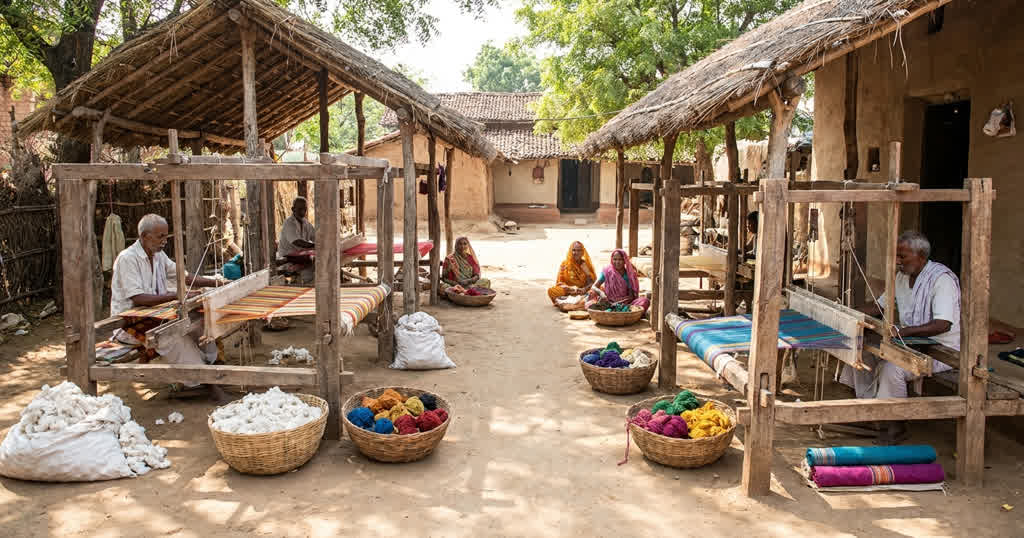
Khadi fabric can be sourced from textile manufacturers, artisan-led businesses and specialised handloom suppliers. When choosing where to buy, look for a supplier that provides clear product information, transparent production details, fabric photographs and access to samples.
For a more reliable buying experience, consider these points:
- Product transparency: The supplier should clearly mention fibre composition, spinning and weaving methods.
- Fabric variety: Check whether different weights, textures, colours and patterns are available.
- Swatch availability: A supplier offering samples makes it easier to assess the fabric before ordering.
- Order flexibility: Understand whether the fabric is available in stock, made to order or through bulk pre-orders.
- Communication: The supplier should be able to answer questions about fabric suitability, care and production timelines.
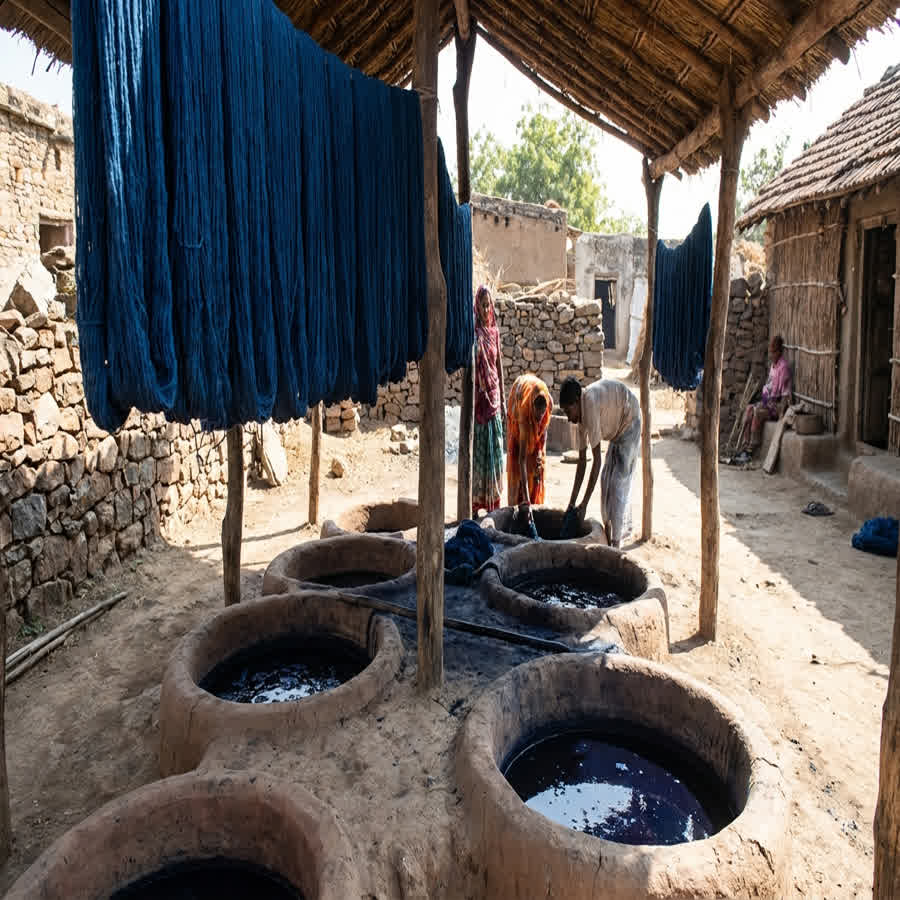
Anuprerna offers handspun and handwoven Khadi fabrics, including cotton varieties, yarn-dyed designs and other artisanal textiles. Buyers can explore the Khadi fabric collection and order fabric swatches to evaluate materials before making a purchase.
For a closer look at how Khadi is made, explore Anuprerna’s Dyeable Khadi Cotton story, which explains the hand-spinning and handweaving process.
Which Khadi Fabrics Are Suitable for Different Clothing Styles?
Khadi is not a single standardised fabric. Its texture, yarn thickness, weave, weight and finishing can vary, which makes different varieties suitable for different clothing applications.
Here are some ways to match khadi fabrics with garment requirements:
Lightweight Khadi Cotton for Shirts and Summer Wear
Lightweight khadi cotton can work well for shirts, relaxed tops, tunics and breathable summer garments. Its natural texture gives clothing a relaxed appearance, while the fabric's construction and finishing influence how light and comfortable it feels.
Medium-Weight Khadi Cotton for Dresses and Kurtas
Medium-weight handwoven cotton can be suitable for everyday dresses, kurtas, co-ord sets and casual separates. It can offer more body than very lightweight fabric while retaining the characteristic texture of handwoven cotton.
Textured and Structured Khadi for Jackets and Bottoms
Khadi varieties with a firmer construction can be considered for overshirts, lightweight jackets, trousers and structured silhouettes. Check the fabric's thickness, stability and drape before finalising the design.
Yarn-Dyed Khadi for Checks, Stripes and Contemporary Designs
Yarn-dyed khadi cotton offers visual interest through patterns created with coloured yarns. Checks, stripes and other woven designs can work well for shirts, dresses, jackets and coordinated garments.
Organic Khadi Cotton for Conscious Collections
For brands and designers prioritising material sourcing, organic khadi cotton can be an option to explore. Check the fibre composition and any relevant certification or sourcing documentation rather than relying on the product label alone.
Explore Anuprerna’s handspun Khadi fabric collection to compare different colours, textures and woven designs.
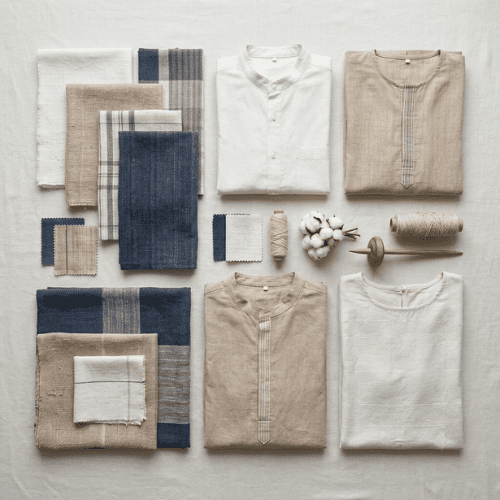
What Should You Look for When Doing Khadi Online Shopping?
Before choosing a fabric, look beyond its colour and surface appearance. A reliable product listing should provide enough information to help you understand how the fabric is made and how it may perform when stitched into a garment.
Here are six important details to check:
- Fibre composition: Confirm whether the fabric is made from cotton, silk, wool or a blend. For khadi cotton, check whether the material is 100% cotton or contains other fibres.
- Spinning process: Genuine Khadi is made using hand-spun yarn. Check whether the supplier clearly mentions this process.
- Weaving technique: Look for information confirming that the fabric is handwoven rather than produced on a power loom.
- Texture and surface: Examine close-up photographs to understand the yarn character, surface irregularities and weave structure.
- Weight and drape: Check the fabric weight, where available, and ask the supplier how it falls and behaves when used for clothing.
- Care instructions: Review washing, drying and ironing recommendations to understand the maintenance required.
These details are particularly important when sourcing fabric online for a garment or a larger production order. A fabric that looks suitable in a photograph may behave differently once cut, stitched and worn.
How Can You Identify Authentic Khadi Fabric?
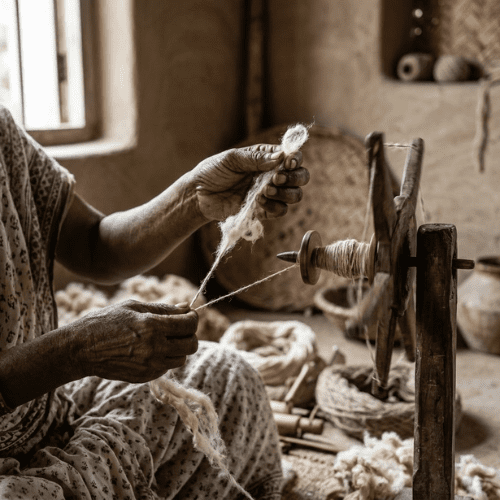
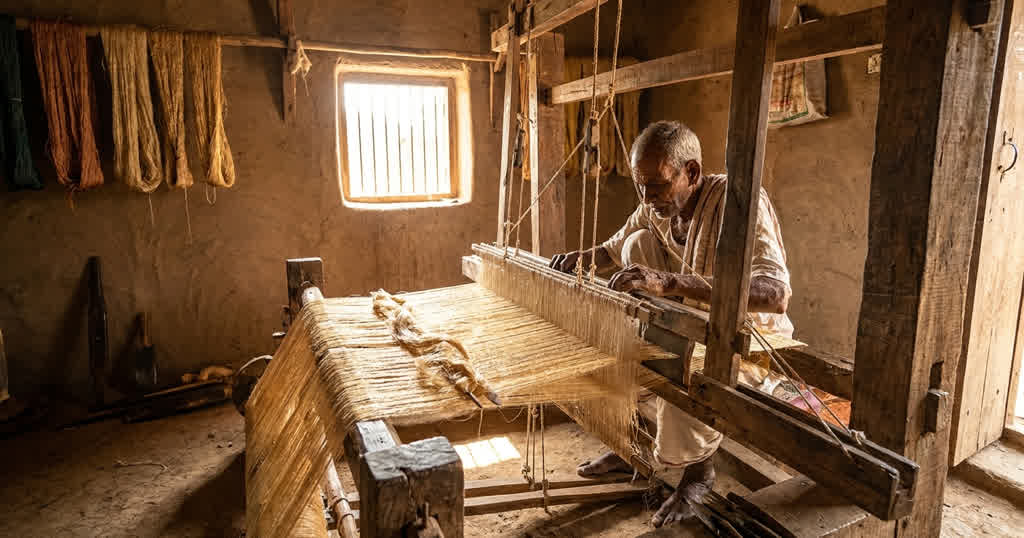
The defining characteristic of Khadi is its production process: the yarn is hand-spun, traditionally using a charkha, and then handwoven on a loom. Both processes matter. A fabric made with mill-spun yarn but woven by hand is handloom fabric, but it does not meet the traditional definition of Khadi.
When evaluating authentic Khadi online, consider the following indicators:
1. Check the spinning method
Ask the supplier whether the yarn is hand-spun or mill-spun. This is one of the most important questions because the hand-spinning process distinguishes Khadi from many other handwoven cotton fabrics.
2. Examine the yarn and surface
Hand-spun yarn can have natural variations in thickness, creating subtle irregularities and slubs across the fabric. These variations contribute to Khadi’s distinctive character. However, an uneven surface alone does not prove authenticity; other details about the production process should support the claim.
3. Understand the weaving process
Authentic Khadi is handwoven. Ask whether the fabric is woven manually and whether the supplier can explain its production process.
4. Look for production transparency
A trustworthy supplier should be able to share information about the fibre, spinning, weaving, finishing and sourcing. For larger orders, request relevant documentation or additional production details where applicable.
To understand the distinction in greater detail, read Anuprerna’s guide to authentic Khadi and the quality checks to consider before sourcing.
frequently asked questions
Where can I buy Khadi fabric online in India?
Khadi fabric can be purchased from specialised handloom suppliers, artisan-led textile businesses and fabric manufacturers. Look for clear information about the spinning and weaving process, fibre composition, product specifications and sample availability. Anuprerna offers a range of handspun Khadi fabrics that can be explored through its online collection.
How can I identify genuine Khadi fabric?
Genuine Khadi is made using hand-spun yarn and handwoven fabric construction. Ask the supplier to confirm both processes and provide details about the fabric's origin and production. Natural yarn irregularities may be visible, but appearance alone is not sufficient to establish authenticity.
Is Khadi cotton good for summer?
Khadi cotton is often suitable for summer clothing because cotton is breathable and handwoven construction can allow air to circulate, depending on the fabric's weave, weight and finishing. Lightweight varieties are commonly considered for shirts, dresses, kurtas and relaxed everyday wear.
What is the difference between Khadi and handloom cotton?
The difference is in the spinning process. Khadi is made from hand-spun yarn and handwoven on a loom. Handloom cotton may also be woven manually, but it can use mill-spun yarn. Therefore, all Khadi is handwoven, but not all handloom cotton is Khadi.
Why is Khadi fabric more expensive than regular cotton?
Khadi production involves manual spinning and weaving, both of which require time and skilled artisan work. The production process is generally slower than industrial textile manufacturing, and fabric availability can vary according to the weaving process and order requirements. These factors can contribute to a higher price compared with mass-produced cotton.
More Blogs
choosing the right silk manufacturers in india: a buyer’s guide
why organic fabric suppliers are growing in india
jacquard fabric in modern fashion
how silk manufacturers preserve traditional craftsmanship
indian fabric wholesale: a guide to sourcing handwoven textiles
how indian fabric exporters meet global quality standards