How to Choose the Right Khadi Fabric Weight for Different Outfits
Choosing the right Khadi fabric weight is essential when designing or purchasing clothing because it influences how a garment falls, feels, holds its shape and performs during everyday wear. Lightweight Khadi cotton can work well for relaxed shirts and summer dresses, while fabrics with more body may be better suited to kurtas, trousers, overshirts and structured jackets. The right choice depends on the garment's silhouette, intended use, weave structure, yarn characteristics and desired drape.
When exploring Khadi fabric through online stores or planning a clothing collection, understanding GSM (grams per square metre) can make fabric selection easier. However, weight alone does not determine quality or suitability. The weave, fibre composition, yarn thickness and finishing also influence how the finished garment looks and feels.
This guide explains how to choose Khadi fabric weight for different outfits, what to consider before purchasing and how designers, boutiques and fabric buyers can make more informed decisions.
What Does Khadi Fabric Weight Mean?
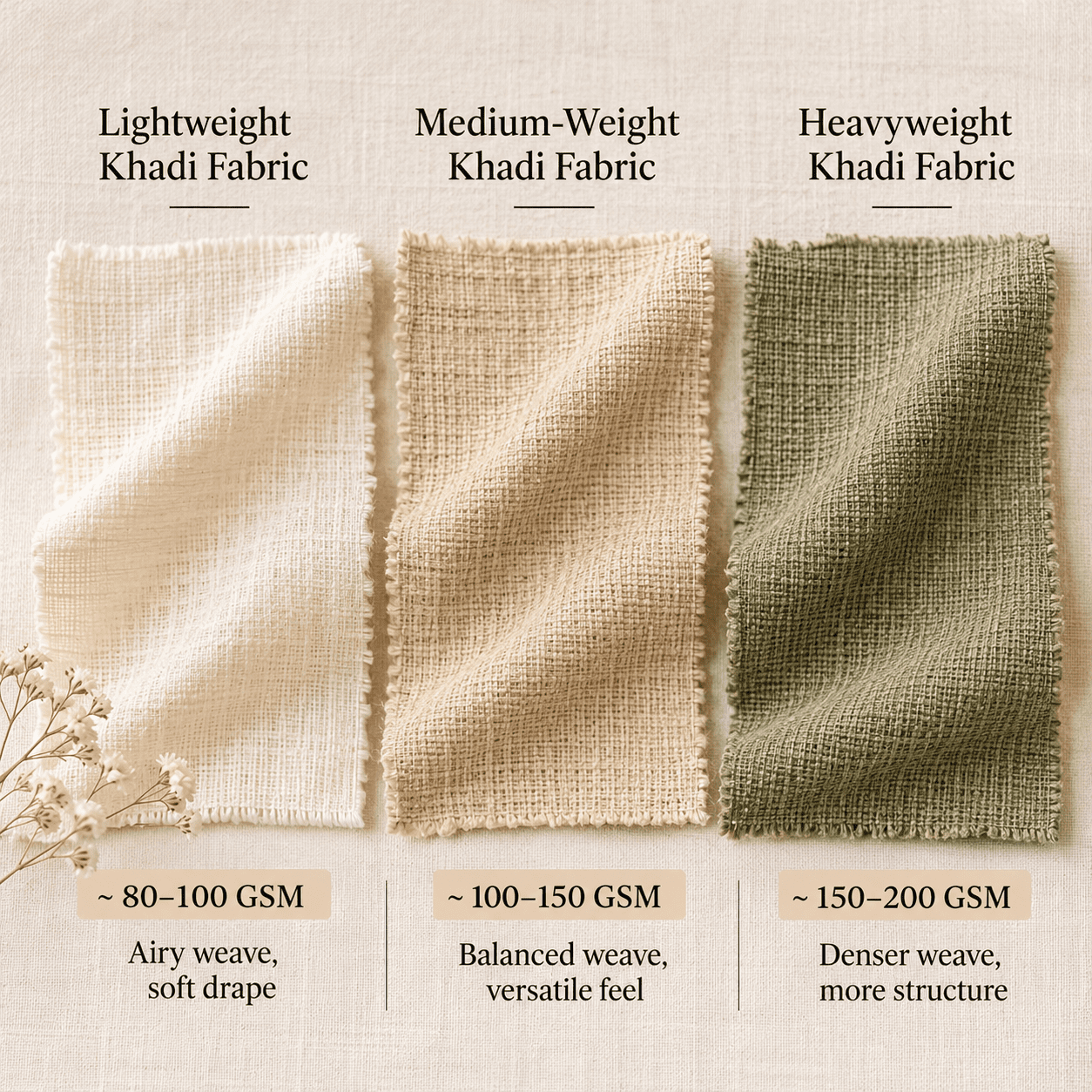
Khadi fabric weight refers to the weight of a particular area of fabric, generally measured in GSM (grams per square metre). It helps buyers understand whether a textile is relatively lightweight, medium-weight or heavyweight.
A fabric with a lower GSM generally weighs less per square metre, while a higher GSM indicates a heavier material. However, two fabrics with similar GSM can still have different textures, thicknesses and draping qualities because of differences in yarn construction, weave density and finishing.
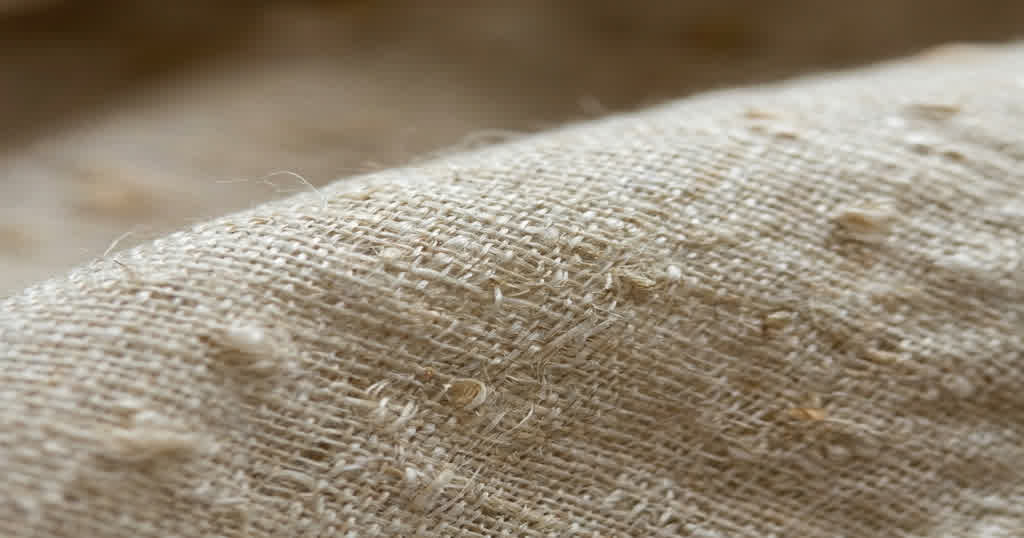
For example, a loosely woven Khadi cotton fabric may feel more open and airy than a closely woven fabric with a similar weight. Similarly, a fabric with thicker hand-spun yarn may have a more pronounced texture than one made with finer yarn.
Understanding fabric weight is particularly useful when buying Khadi online, where shoppers cannot physically touch the material before placing an order.
Why Does Fabric Weight Matter in Clothing?
Fabric weight influences several aspects of garment construction and wearability:
Drape: Determines how naturally a garment falls around the body.
Structure: Influences whether a garment holds its shape or flows with movement.
Opacity: Can affect how much of the garment is see-through, although weave density and colour also matter.
Comfort: Influences how a garment feels during different activities and weather conditions.
Garment construction: Affects cutting, stitching, lining requirements and the finished silhouette.
For fashion designers and manufacturers, matching fabric weight with the garment design is important for achieving the intended appearance and functionality.
2. How to Choose the Right Khadi Fabric Weight for Different Outfits
Different garments have different fabric requirements. A relaxed summer shirt needs a different drape from a tailored jacket, while a flowing dress may require a softer construction than structured trousers.
Here is how to approach Khadi fabric selection for common clothing styles.
B. Dresses and Tunics: Look for Softness, Movement and Drape
Dresses and tunics can be designed in different silhouettes, from flowing A-line styles to gathered dresses and straight-cut tunics. The fabric weight should complement the intended shape.
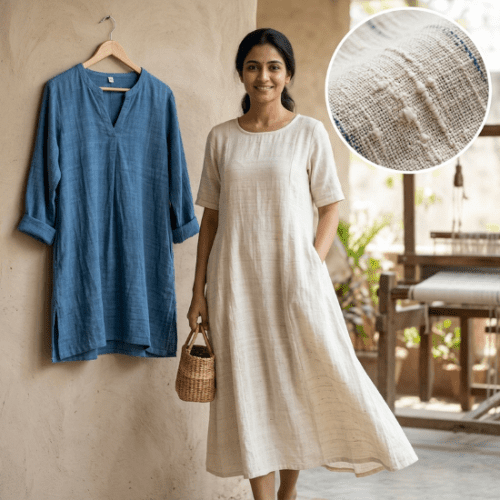
Lightweight Khadi cotton can work for loose, relaxed dresses and summer tunics where movement and a softer fall are important.
Medium-weight Khadi cotton may be more suitable for shirt dresses, gathered silhouettes and everyday dresses that need a little more body.
For designs involving gathers, pleats or multiple panels, consider how the fabric will behave when several layers come together.
What to consider:
Choose softer fabric for flowing and relaxed silhouettes.
Look for sufficient body when designing gathered dresses.
Check the fabric's opacity, particularly for lighter shades.
Consider how the material will behave after washing and finishing.
Khadi cotton dress material can offer an interesting combination of natural texture and versatility for everyday and contemporary clothing.
A. Shirts and Blouses: Choose Lightweight to Medium-Weight Khadi
Shirts and blouses generally benefit from fabrics that offer comfort, movement and sufficient structure for collars, cuffs and button plackets.
Lightweight Khadi cotton can be suitable for relaxed shirts, casual blouses and summer tops. It provides a natural handwoven appearance without making the garment feel unnecessarily heavy.
Medium-weight Khadi may be more appropriate for shirts that require a slightly firmer finish, defined collars or a more structured silhouette.
What to consider:
Choose a soft fabric with a comfortable drape for relaxed shirts.
Check whether the fabric has sufficient opacity for the intended design.
Consider a firmer weave for shirts with structured collars and cuffs.
Examine the fabric's surface to determine whether its texture suits the design.
A lightweight cotton fabric with an appropriate weave can work well for warm-weather clothing, but the final choice should always depend on the fabric sample and garment pattern.
C. Kurtas and Co-ord Sets: Consider Medium-Weight Khadi
Kurtas and co-ord sets are versatile clothing options that can be styled for everyday wear, workwear and casual occasions.
Medium-weight Khadi cotton is worth considering for these garments because it can provide a balance between comfort and structure. It can support straight-cut kurtas, relaxed co-ord sets, long shirts and everyday separates.
For more fluid or oversized silhouettes, a lighter fabric may be suitable. For designs with defined seams, pockets or a more tailored finish, consider a fabric with greater body.
What to consider:
Match the fabric's weight with the desired silhouette.
Check how it behaves around seams, pockets and plackets.
Consider whether the fabric will be used for a single garment or a coordinated set.
Ensure that the material provides enough coverage for the finished design.
For designers developing coordinated collections, choosing fabrics with consistent texture and weight across different garment pieces can help create a cohesive look.
3. Understanding GSM When Buying Khadi Fabric Online
GSM is a useful specification when comparing different Khadi fabrics online. It provides a measurable indication of fabric weight and helps buyers shortlist materials for particular garments.
However, GSM should not be treated as a standalone indicator of quality, thickness or comfort.
Two fabrics with similar GSM can behave differently depending on their weave, yarn count, fibre composition and finishing. A more open weave may feel different from a compact construction, even when both have similar weights.
When evaluating Khadi fabric online, consider the following:
1. Compare GSM with the garment requirement
Start with the type of garment you want to make. A relaxed shirt, flowing dress and structured jacket have different requirements. Use GSM to shortlist fabrics rather than making the final decision based on the number alone.
2. Examine the weave structure
The weave influences the fabric's density, appearance and stability. A closely woven textile may offer more coverage than a more open construction of similar weight.
3. Understand yarn characteristics
Hand-spun yarn can have natural variations in thickness. These variations contribute to Khadi's distinctive surface and can influence the overall texture and appearance.
4. Check the finishing
Dyeing, washing and other finishing processes can affect the fabric's handle, appearance and performance. Ask the supplier for relevant product details when these are not available online.
5. Request a swatch
A physical swatch allows you to check the actual weight, texture, opacity and drape before selecting fabric for a complete garment or larger order.
For a deeper understanding of fabric specifications, read our guide on Khadi Online Shopping: How to Choose the Right Fabric.
D. Trousers and Skirts: Look for Stability and Shape Retention
Trousers and skirts often need more structural support than loose tops or flowing dresses.
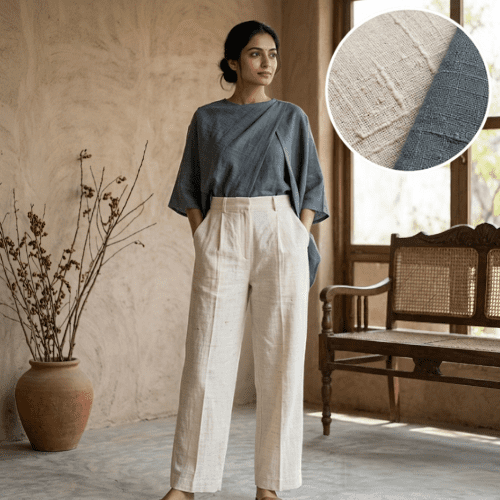
A medium-weight or heavier Khadi fabric may be suitable for straight skirts, relaxed trousers and contemporary separates, depending on the weave and construction.
For wide-leg trousers and fluid skirts, a softer fabric with good movement may be preferable. For tailored trousers, pencil skirts or designs with pleats, look for greater stability and enough body to maintain the intended shape.
What to consider:
Check the fabric's resistance to stretching and distortion.
Look for adequate opacity and coverage.
Assess how the fabric behaves when folded or pleated.
Consider the need for lining, especially in lighter colours.
Check whether the material is comfortable for prolonged wear.
A fabric swatch can help determine whether the material has the right balance of movement and stability before cutting the garment.
E. Jackets and Overshirts: Choose Khadi with More Body
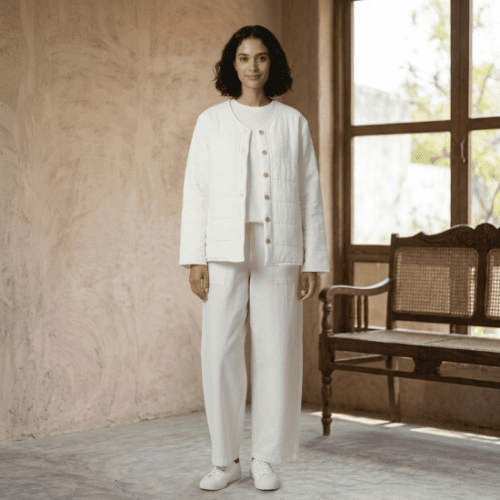
Jackets and overshirts usually require fabrics that can maintain their shape and support details such as collars, pockets, seams and button closures.
A firmer medium-weight or heavier Khadi fabric may be suitable for these designs. The exact requirement depends on whether the garment is intended as a lightweight layering piece or a more structured outer layer.
Textured handloom Khadi cotton can add character to minimal jackets, while denser constructions may be considered for more defined silhouettes.
What to consider:
Select a fabric that supports the intended structure.
Check whether the material can hold collars and pockets neatly.
Assess its thickness when layered over another garment.
Consider lining and interlining requirements.
Test the fabric's stability during stitching.
A heavier fabric is not automatically better for every jacket. The design, climate and intended use should guide the final selection.
4. Why Khadi Fabric History Matters When Choosing a Textile
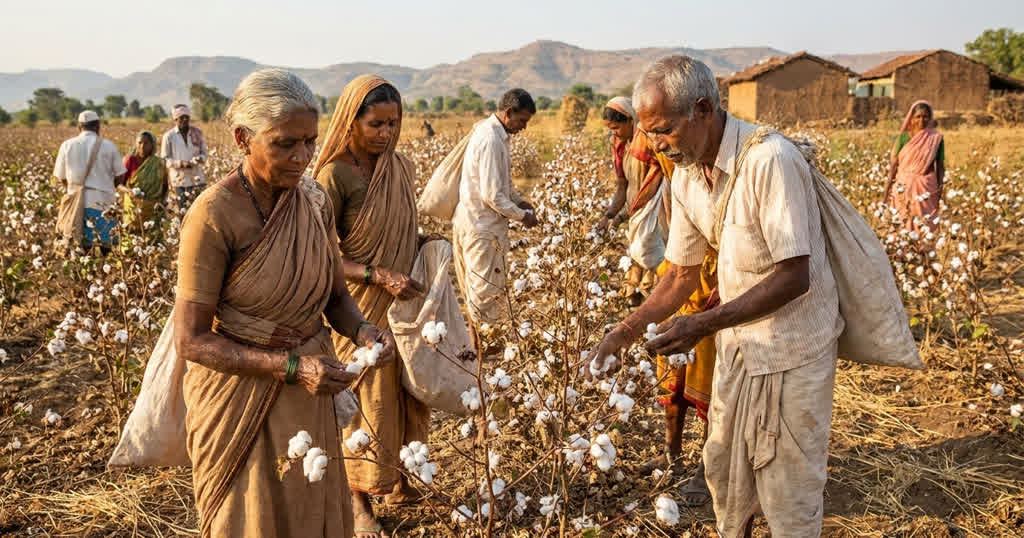
Khadi has a distinctive place in India's textile history. Its association with hand-spinning and handweaving connects the fabric to traditional textile-making practices and artisan craftsmanship.
The spinning process traditionally involves converting fibre into yarn by hand, often using a charkha. The yarn is then woven manually on a loom. This combination of hand-spinning and handweaving gives Khadi its distinct production identity.
Unlike a standardised mill-made textile, Khadi can vary in yarn thickness, texture, weave and surface character. These differences are part of what makes it interesting for contemporary apparel design.
Understanding Khadi fabric history also helps buyers appreciate why its characteristics cannot be judged by GSM alone. The production method, yarn and weaving construction all contribute to the final textile.
For designers and conscious fashion brands, handloom Khadi cotton fabric can offer a material with a strong connection to craftsmanship, regional textile traditions and considered production.
6. Why Fabric Swatches Matter Before Finalising Your Garment
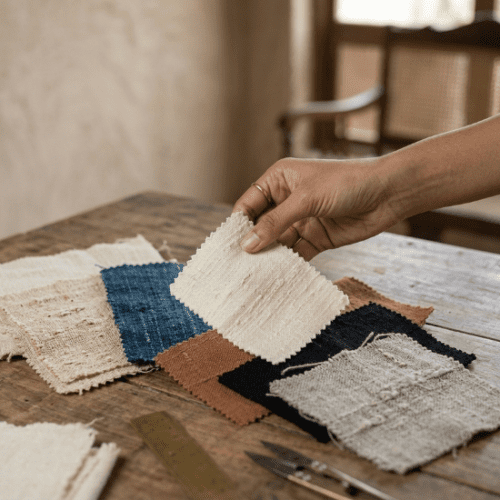
Photographs and product descriptions provide useful information, but they cannot completely communicate how a fabric feels or moves.
Ordering a swatch is a practical step before purchasing Khadi cotton dress material or sourcing fabric for a larger apparel collection.
A fabric swatch helps you:
Assess the actual weight: Understand whether the material feels lighter or heavier than expected.
Check the drape: Hold, fold and gather the fabric to observe its movement.
Evaluate texture: Examine the hand-spun yarn character and weave more closely.
Check opacity: Hold the fabric against light to understand its coverage.
Compare colours: Match the actual shade with your design palette.
Plan garment construction: Consider stitching, lining and finishing requirements.
For designers and businesses, sampling can reduce uncertainty before committing to a larger quantity. It also helps ensure that the selected material aligns with the garment's design and production requirements.
7. Choosing the Right Khadi Fabric for Your Next Collection
The right Khadi fabric is not necessarily the lightest or heaviest option. It is the material whose weight, weave, texture and drape work together with the intended garment design.
For shirts and relaxed tops, explore lightweight constructions that offer comfortable movement. For dresses and kurtas, consider the balance between softness and body. For trousers, skirts and jackets, pay attention to stability, coverage and shape retention.
For fashion businesses, sourcing decisions also need to account for fabric availability, production requirements, colour consistency and order quantities. When selecting Khadi fabric wholesale, discuss the intended garment application with the supplier and request samples before confirming a larger order.
Anuprerna works with handspun and handwoven textiles crafted by artisans in West Bengal, offering Khadi cotton fabrics for designers, brands and conscious fashion businesses.
Explore the available fabric options, compare their specifications and select materials that support your next collection.
5. What to Check Before Buying Khadi Cotton Fabric Online
When shopping for Khadi online, it is important to look beyond product photographs and colour descriptions. The fabric's technical details can help you understand whether it is suitable for your intended garment.
Before placing an order, check these details:
Fibre composition: Confirm whether the material is pure Khadi cotton fabric or a blend of different fibres.
Fabric weight: Check the listed GSM and ask for clarification if it is not provided.
Weaving process: Understand whether the fabric is handwoven.
Spinning process: Genuine Khadi uses hand-spun yarn, so check whether the supplier clearly confirms this.
Weave and texture: Examine close-up photographs to understand the surface and construction.
Width: Check the usable fabric width to estimate how much material your garment requires.
Care instructions: Review washing, drying and ironing recommendations.
Sample availability: Request swatches to assess the material before purchasing larger quantities.
These checks are particularly useful for fashion labels, boutique owners and manufacturers sourcing Khadi fabric wholesale for their collections.
At Anuprerna, buyers can explore handspun and handwoven Khadi cotton fabrics for different apparel applications. Reviewing samples before production can help designers assess texture, colour, weight and weave.
More Blogs
buy hemp fabric for clothing: from fiber to finished textile
innovative banana fiber products: sustainable alternatives for brands
choosing the right silk fabric supplier for luxury fashion
khadi online shopping: how to choose the right fabric
choosing the right silk manufacturers in india: a buyer’s guide
why organic fabric suppliers are growing in india