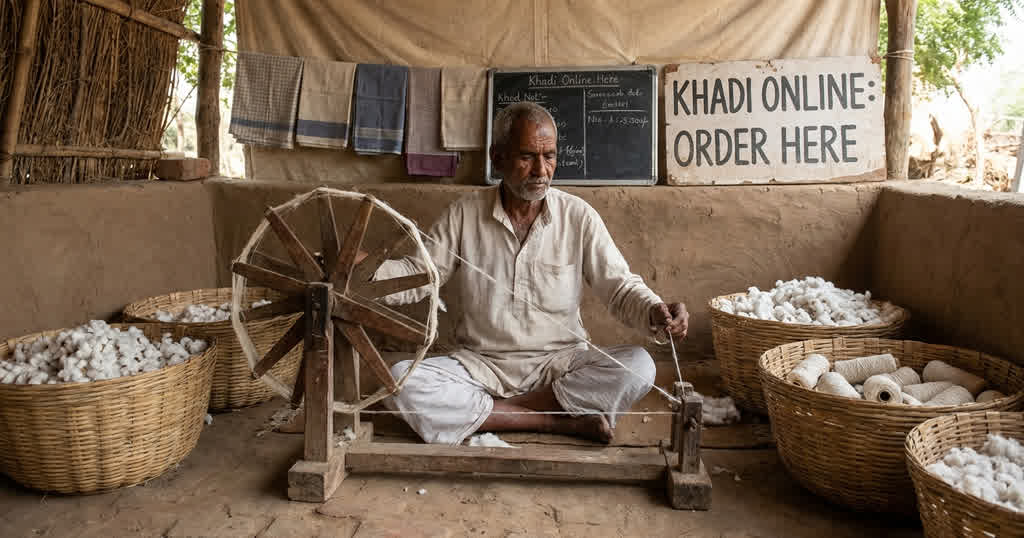
Khadi Online Shopping: What Fabric Details Should You Check?

Sourcing textiles digitally removes the tactile assurance of a swatch, forcing designers to evaluate drape, tension, and yarn structure through a screen. When executing khadi online shopping for a seasonal collection, the absence of physical touch makes it difficult to distinguish authentic hand-spun yardage from engineered mill-made imitations. A misjudgment here affects garment longevity, dye uptake, and the integrity of a brand's sustainability narrative.
The stakes for verifying khadi fabric specifications remotely are high, as B2B buyers require exact technical data to scale production. Understanding how to read macro-photography for inherent slubs, interpret GSM ranges, and trace the decentralized artisan supply chain ensures that the procured material performs precisely as designed.
Decoding Khadi Fabric India: Hand-Spun vs. Mill-Spun Indicators
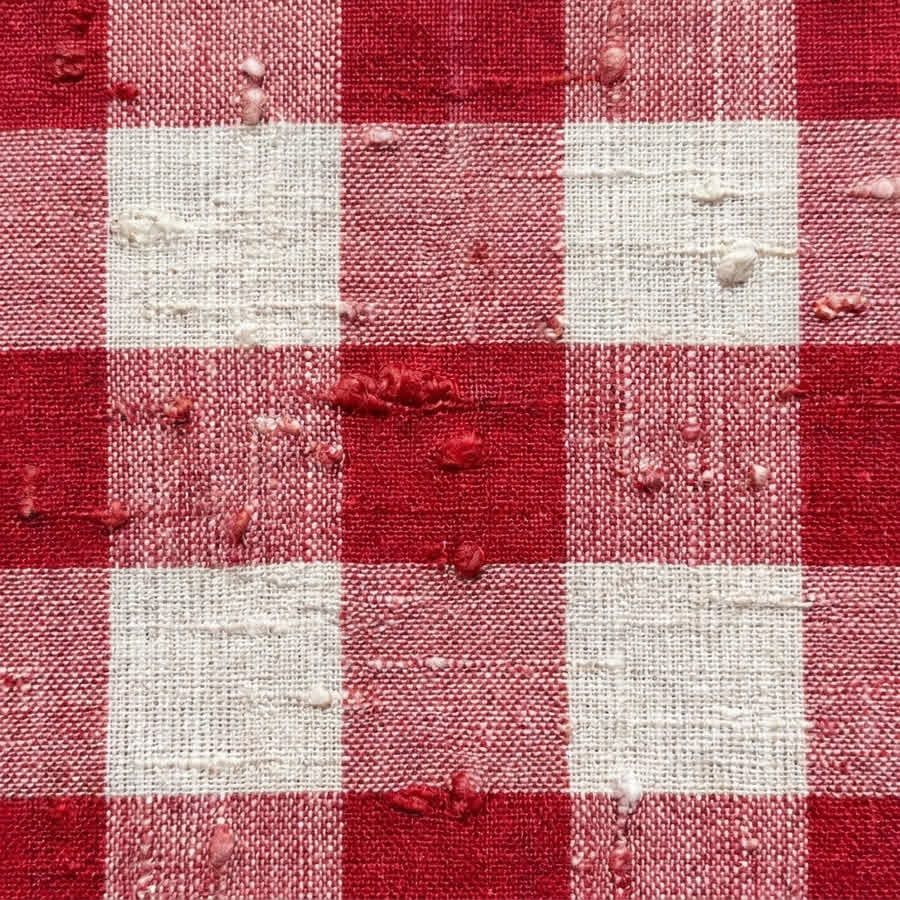
To differentiate authentic hand-spun khadi from mill-spun alternatives online, buyers must analyze macro product photos for irregular, multi-directional slubs and natural tension variations. These structural signatures confirm the yarn was spun on a traditional charkha rather than a mechanized ring frame. Evaluating khadi fabric india requires a sharp eye for these micro-details, as power-loom operators often engineer artificial imperfections to mimic the handloom aesthetic.
Identifying Authentic Yarn Structure
The defining characteristic of genuine khadi cotton fabric is its unique yarn architecture. Hand-spinning creates microscopic inconsistencies in the yarn diameter, which translate into distinct structural traits. When you buy khadi fabric online, request high-resolution close-ups to verify these specific indicators.
- Multi-directional slubs: Authentic khadi features thickened yarn segments in both the warp and weft, unlike mill-made fabrics which typically only show slubs in one direction.
- Micro air pockets: The low-twist nature of hand-spun yarn traps air, providing the unique thermal regulation that keeps the wearer cool in summer and warm in winter.
- Tension variations: Look for subtle shifts in weave density, a natural result of the human rhythm applied to the handloom.
Spotting Engineered Imitations
Mechanized production attempts to replicate the dry, crisp hand-feel of khadi, but the resulting fabric lacks the structural integrity of the authentic craft. B2B sourcing teams must scrutinize digital assets to avoid these power-loom lookalikes.
- Uniform slub spacing: Machine-made fabrics display a repeating pattern of imperfections, whereas true handwoven khadi fabric is entirely random.
- High-twist rigidity: Mill-spun yarns are tightly twisted for machine weaving, eliminating the breathable micro-structure inherent to charkha spinning.
- Well suited selvedges: A flawlessly straight, tightly bound edge often indicates power-loom production, while handloom selvedges show minor, organic variations in tension.
By demanding transparent visual evidence of these traits, designers ensure their khadi online shopping yields textiles that meet strict ethical and performance standards.
GSM and Yarn Count: Sourcing the Right Khadi Cotton Fabric Online
Sourcing the correct khadi cotton fabric online requires matching a GSM range of 60 to 200+ and yarn counts between 33s and 100s directly to your garment's structural requirements. Lightweight summer shirts demand a lower GSM and higher yarn count, while structured jackets require heavier, lower-count yardage for optimal tensile strength. Without a physical swatch, these two metrics become the primary data points for predicting how the textile will perform on the cutting table.
Selecting GSM for Garment Applications
Grams per square meter (GSM) dictates the weight, opacity, and drape of the woven material. When executing khadi online shopping, buyers must align the GSM specification with their seasonal tech packs.
- 60 to 80 GSM: This muslin-like weight offers high breathability and a sheer finish, ideal for resort wear, loose tunics, and lightweight scarves.
- 90 to 140 GSM: The industry standard for everyday shirting and dresses, providing a balanced soft, structured drape with full opacity.
- 150 to 200+ GSM: A canvas-like weight that delivers high tensile strength, suited for tailored jackets, trousers, and light upholstery.
Decoding Yarn Count Specifications
Yarn count indicates the fineness of the spun thread, inversely related to its yarn thickness. A higher number means a finer yarn, which directly impacts the fabric surface texture and dye uptake.
- 33s to 40s count: These thicker yarns create a highly textured, rustic surface that absorbs natural dyes deeply, well suited for heavyweight khadi fabric.
- 60s count: The versatile middle ground, offering a smooth yet tactile finish that works well for standard B2B fashion production.
- 80s to 100s count: Extremely fine yarns requiring exceptional artisan skill, resulting in a luxurious, silky hand-feel reserved for premium boutique collections.
By cross-referencing GSM and yarn count, designers can confidently buy khadi fabric online that aligns precisely with their technical specifications.
Visualizing Drape and Texture in Handwoven Khadi Fabric
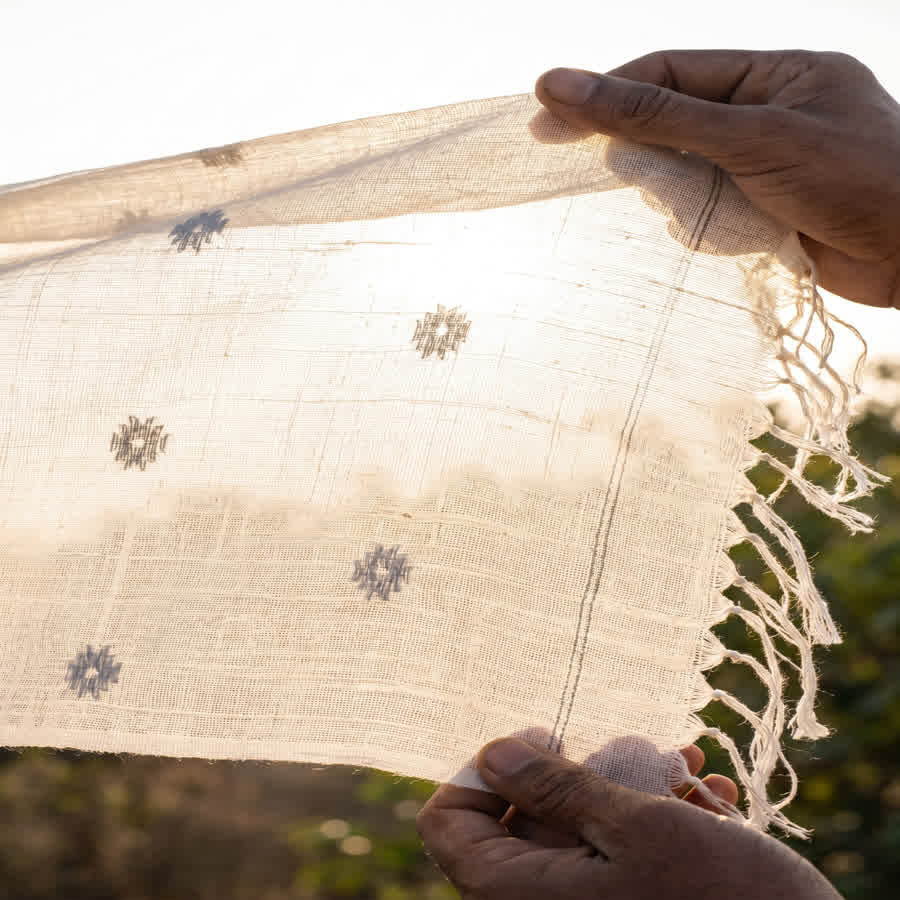
To accurately assess the drape and texture of handwoven khadi fabric through a screen, buyers must analyze light-transmission photos and video snippets that demonstrate the material in motion. These digital assets reveal the weave density, bias flexibility, and surface topography that static, flat-lay images obscure. For a sustainable fashion designer, interpreting these visual cues is critical to ensuring the fabric will hold the intended silhouette.
Analyzing Light Transmission
Requesting images of the fabric held up to a light source is a highly effective remote sourcing technique. This method exposes the internal architecture of the khadi cotton fabric, allowing buyers to evaluate its structural consistency.
- Weave density: Light passing through the fabric highlights the tightness of the interlacing yarns, indicating the overall tensile dynamics and potential for seam slippage.
- Slub distribution: Backlighting clearly illuminates the inherent slubs, proving the yarn was hand-spun on a charkha.
- Opacity verification: Observing light penetration helps designers confirm if a 90 GSM fabric requires a lining for commercial apparel applications.
Interpreting Video Assets for Drape
Static images cannot convey how a textile yields to gravity. Video snippets are essential during khadi online shopping to predict the fluid, natural movement of the woven yardage.
- Bias stretch: Watching the fabric pulled along its bias reveals its elasticity, which is crucial for tailored garment construction and bias-cut dresses.
- Crease recovery: Observing how the fabric behaves after being crushed in hand indicates its resilience and the natural thermal regulation properties of the cotton fibers.
- Surface topography: Moving light across the textile highlights the microscopic peaks and valleys of the handloom weave, confirming its authentic tactile nature.
By demanding comprehensive visual data, B2B buyers can confidently source khadi fabric india without relying on physical samples.
The Anuprerna Supply Chain: Verifying Artisan Authenticity
Anuprerna verifies artisan authenticity by operating a decentralized supply chain that directly connects B2B buyers with rural Indian handloom weavers, providing full traceability for every batch of fabric. This transparent model guarantees ethical origin, enforces strict quality control, and empowers micro-economies rooted in the Swadeshi movement. When brands engage in khadi online shopping through our platform, they receive verifiable data that supports their sustainability claims.
Traceability in Decentralized Micro-Economies
The history of khadi represents self-reliance, spearheaded by Mahatma Gandhi to build independent rural economies. We maintain this legacy by structuring our B2B sourcing operations around decentralized artisan clusters across Bengal.
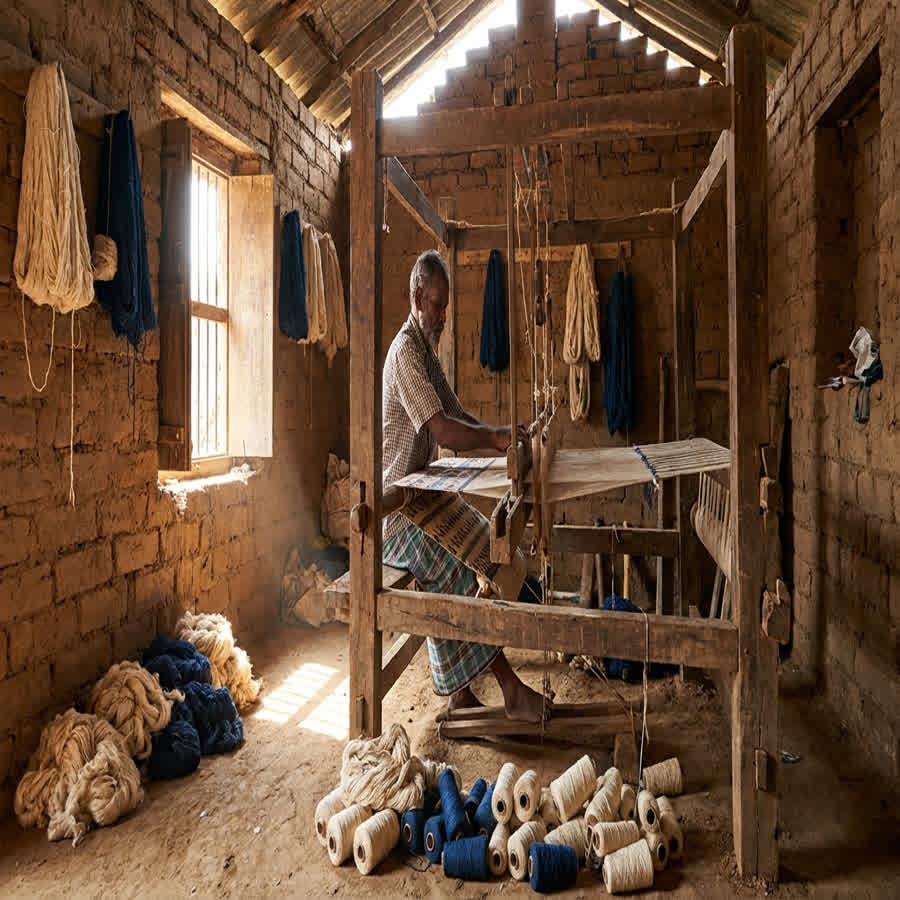
- Cluster-specific sourcing: We map every roll of handwoven khadi fabric back to its specific weaving village, such as Murshidabad or Burdwan, ensuring complete provenance.
- Direct artisan engagement: By eliminating middlemen, we ensure fair wages and build long-term partnerships with the weavers operating the traditional charkha.
- Zero-waste credentials: Our localized production model minimizes carbon footprints, aligning with the strict ESG requirements of modern sustainable fashion brands.
Quality Control for B2B Wholesale
Scaling handloom production for wholesale requires rigorous standardization without compromising the heritage craft. We bridge the gap between rural artisans and global designers by implementing strict technical oversight.
- Standardized GSM testing: Every batch of khadi cotton fabric undergoes weight verification to ensure it meets the precise specifications required for commercial tech packs.
- Yarn count consistency: We monitor the hand-spinning process to maintain acceptable tolerances within specified yarn counts, ensuring reliable dye uptake across large orders.
- Defect mapping: While we celebrate natural slubs, we rigorously screen for structural weaving errors to provide high-yield yardage for efficient garment manufacturing.
Through this transparent framework, we allow designers to buy khadi fabric online with absolute confidence in both its technical performance and ethical origin.
frequently asked questions
How can I verify the authenticity of handwoven khadi fabric when buying online?
Look for macro-shots revealing natural, irregular slubs in both warp and weft directions. Authentic khadi is sourced through transparent, decentralized artisan networks like Anuprerna, which provide detailed provenance and technical specifications for every batch. These visual and data-driven indicators separate genuine hand-spun textiles from engineered mill-made imitations.
What GSM is ideal for khadi cotton fabric intended for summer apparel?
For summer apparel like shirts and dresses, a GSM between 80 and 120 is ideal. This range offers optimal breathability and structural integrity while use khadi's natural thermal regulation properties. Fabrics in this weight category provide enough opacity for commercial garments without sacrificing the lightweight, airy feel required for warm climates.
Does authentic khadi fabric shrink after the first wash?
Yes, authentic handwoven khadi typically experiences a 3-5% shrinkage due to the relaxation of hand-spun yarns. B2B buyers should account for this in their tech packs or request pre-washed yardages. Factoring in this natural contraction ensures that the final tailored garments maintain their intended fit and silhouette after consumer laundering.
Why are there variations in texture across a single roll of khadi fabric?
Texture variations, or 'slubs', are inherent to the hand-spinning (charkha) process. These are not defects but structural signatures that enhance the fabric's breathability, tensile dynamics, and bespoke aesthetic. The human rhythm involved in spinning creates microscopic inconsistencies in yarn diameter, resulting in the unique, tactile surface that defines authentic handloom textiles.
What is the difference between khadi cotton and regular mill-made cotton?
Khadi cotton is hand-spun and handwoven, creating micro air pockets that offer superior thermal regulation, whereas mill-made cotton is machine-spun tightly and lacks these breathable properties. The traditional charkha spinning process gives khadi its distinct texture and low environmental impact, making it a highly verifiable choice for sustainable fashion brands focused on ethical sourcing.
More Blogs
how indian fabric exporters meet global quality standards
jacquard vs embroidery: what's the difference?
buy hemp fabric in bulk: what fashion brands need to know
a designer’s guide to sourcing silk from indian manufacturers
tussar silk fabric: characteristics, texture & a guide for designers
jacquard fabric supplier: a guide for designers & fashion brands