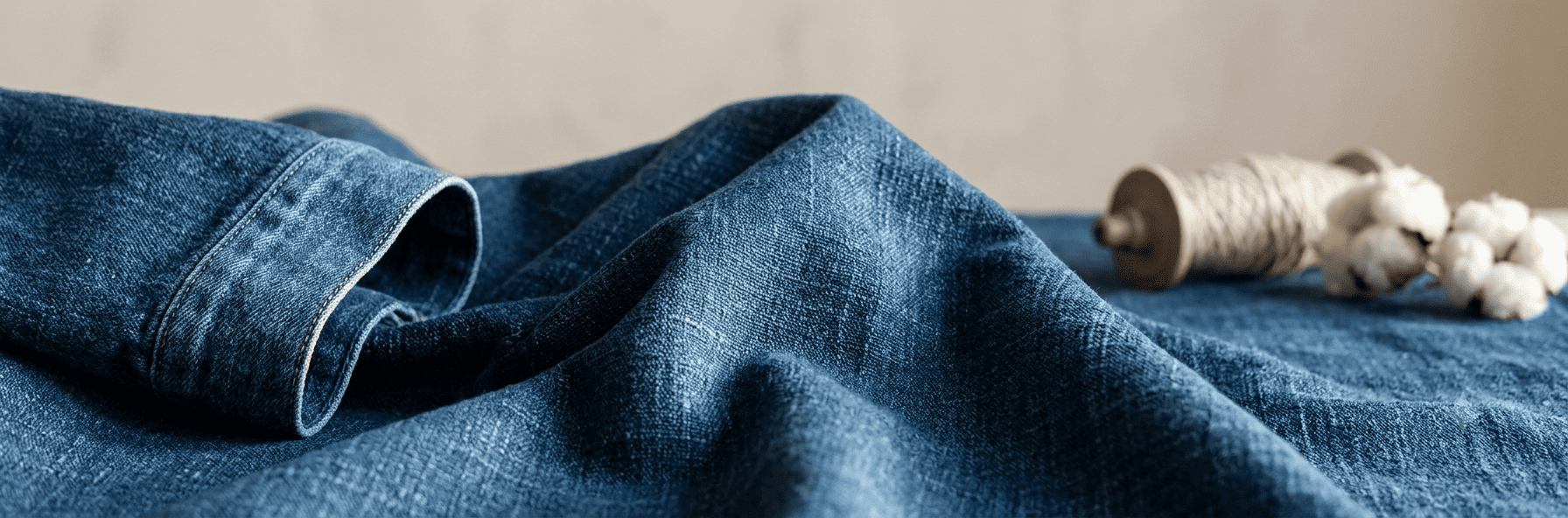
Khadi Denim: A Sustainable Alternative to Conventional Denim

Khadi denim is a sustainable fabric that combines the traditional craft of handspinning and handweaving with the durability and versatility associated with denim. Made using handspun yarns and woven on traditional handlooms, Khadi denim offers an alternative to conventional denim while supporting artisan livelihoods and more responsible textile production.
Unlike mass-produced denim fabric, Khadi denim is made through a slower, more craft-led process. At Anuprerna, we use GOTS-certified organic cotton for our Khadi denim, bringing together organic cotton, traditional weaving techniques, and contemporary textile applications.
What Is Khadi Denim?
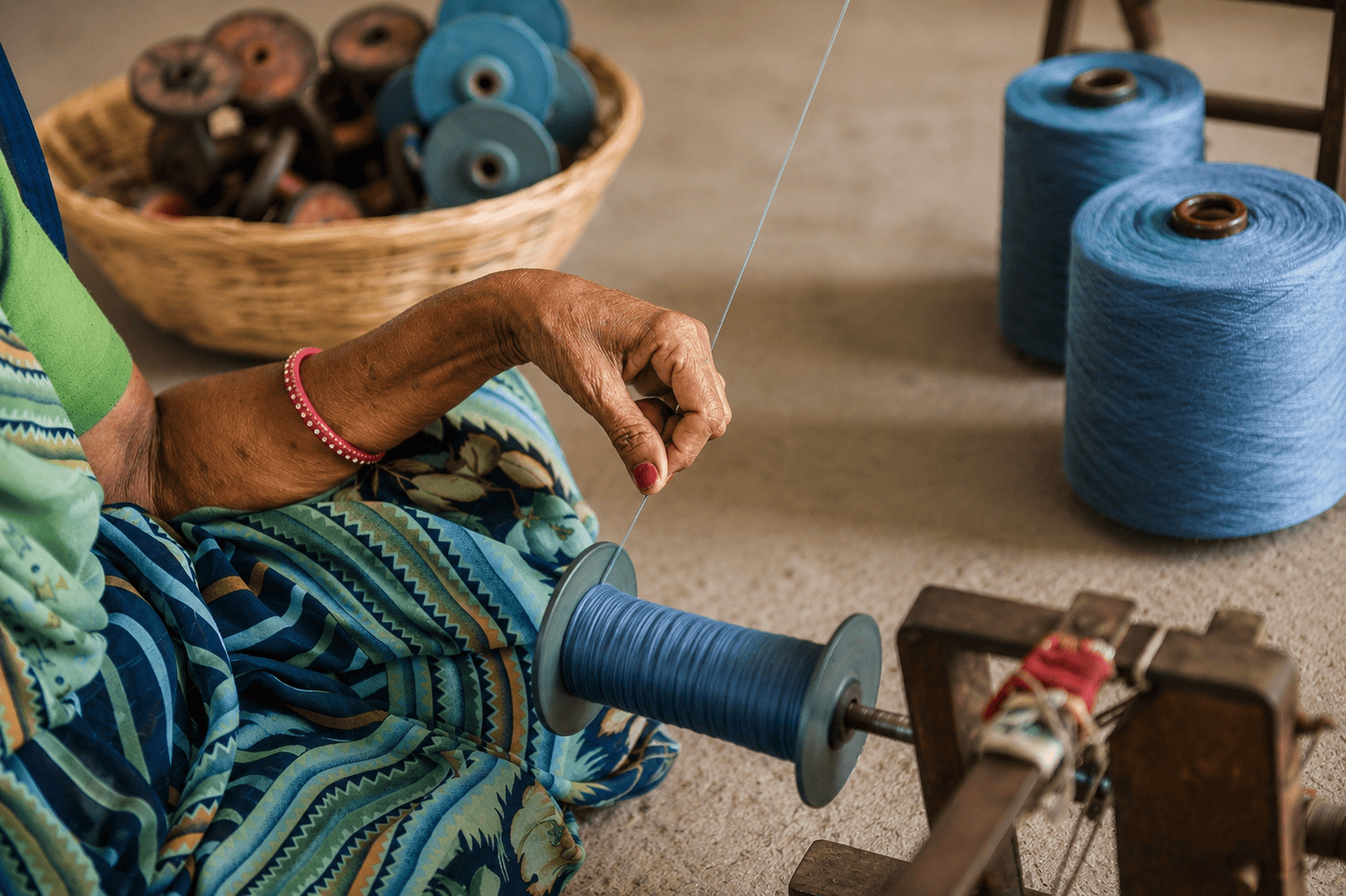
Khadi denim is denim made using the principles of Khadi production, where fibres are handspun into yarn and woven by skilled artisans on traditional handlooms.
While conventional denim cloth fabric is generally produced through industrial manufacturing, Khadi denim is created through a more manual process. The handwoven construction gives the fabric a distinctive texture and character while reducing the reliance on electricity and fossil fuels during the weaving stage.
This makes Khadi denim particularly relevant for brands and consumers looking for a sustainable fabric with a strong connection to traditional Indian textile craftsmanship.
What Is Denim Fabric and Why Is It So Popular?
Denim fabric is traditionally a cotton fabric associated with twill weaving and indigo colouring. It became widely popular because of its strength, versatility, comfort, and ability to withstand regular wear.
The fabric originated in Nîmes, France, and denim trousers became especially popular as workwear because their durable construction made them suitable for farms and manual labour. The first patented jeans were created by Jacob Davis and Levi Strauss & Co. in 1873.
Over time, denim jeans moved beyond workwear and became a staple of mainstream fashion. Today, denim is used for jeans, jackets, skirts, dresses, shirts, and other apparel.
What Makes Denim Fabric Durable?
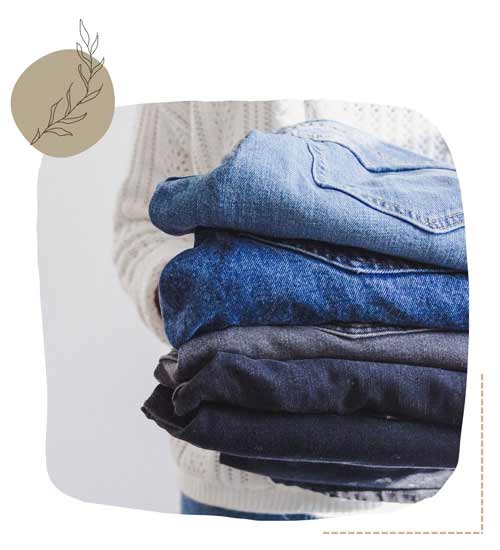
The durability of denim comes largely from its cotton composition and twill construction. The tightly woven structure gives the fabric strength, while its versatility allows it to work across different styles and applications.
The quality of denim fabric material can also vary depending on factors such as:
- Fibre composition
- Yarn quality
- Weave construction
- Fabric weight
- Surface texture
- Colour consistency
- Finishing processes
- Overall durability
Understanding these factors becomes particularly important when comparing conventional denim with handwoven alternatives such as Khadi denim.
What Are the Different Denim Fabric Types?
Denim fabric types can differ according to their construction, fibre composition, weight, finishing, and manufacturing process.
Some denim fabrics are made entirely from cotton, while others may incorporate different fibres to create specific characteristics such as stretch or softness. Denim can also vary from lightweight fabrics to heavier constructions designed for durability.
Khadi denim offers a different approach. Instead of focusing only on industrial production and uniformity, it combines denim's familiar functionality with handspun yarns, handloom weaving, and artisan craftsmanship.
Why Does Conventional Denim Have a Significant Environmental Impact?
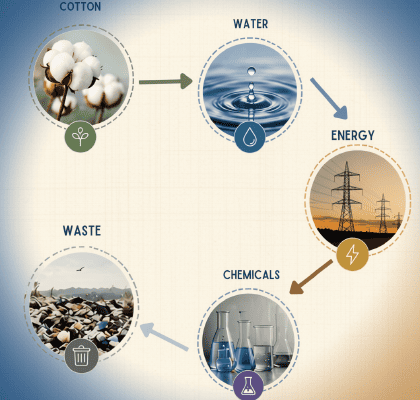
The popularity of denim comes with an environmental cost.
Conventional denim production can require significant quantities of water, energy, chemicals, and other resources. Cotton cultivation also has a considerable environmental footprint, while industrial textile processing can contribute to pollution.
The original article notes that producing cotton and a pair of conventional jeans involves substantial water consumption, while denim manufacturing also uses electricity, chemicals, and diesel.
The impact does not end when a garment is purchased. Textile waste and the disposal of chemically treated garments can contribute to environmental pollution.
This is why alternatives that consider how denim is produced, rather than only how the finished garment looks, are becoming increasingly important.
How Is Khadi Denim Made?
The key difference lies in the production process.
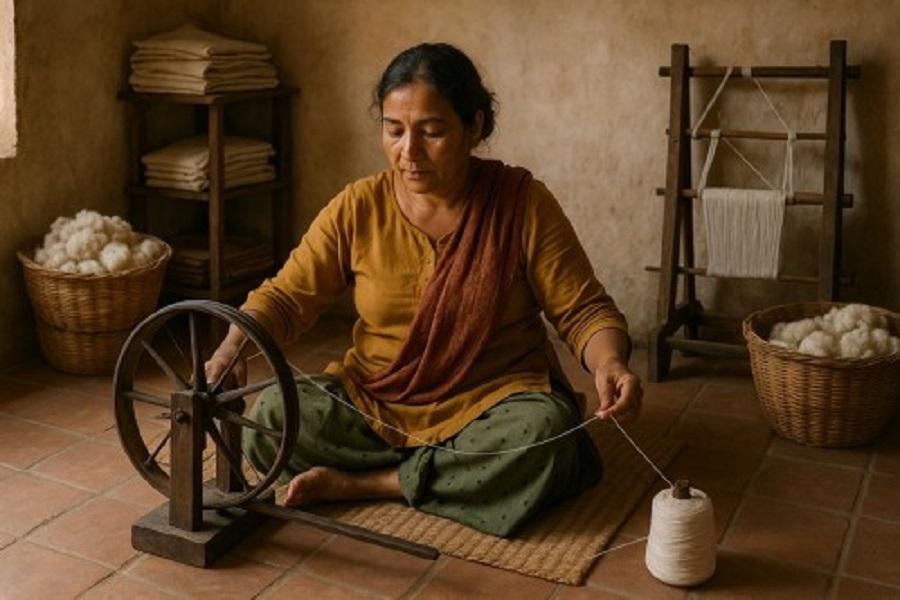
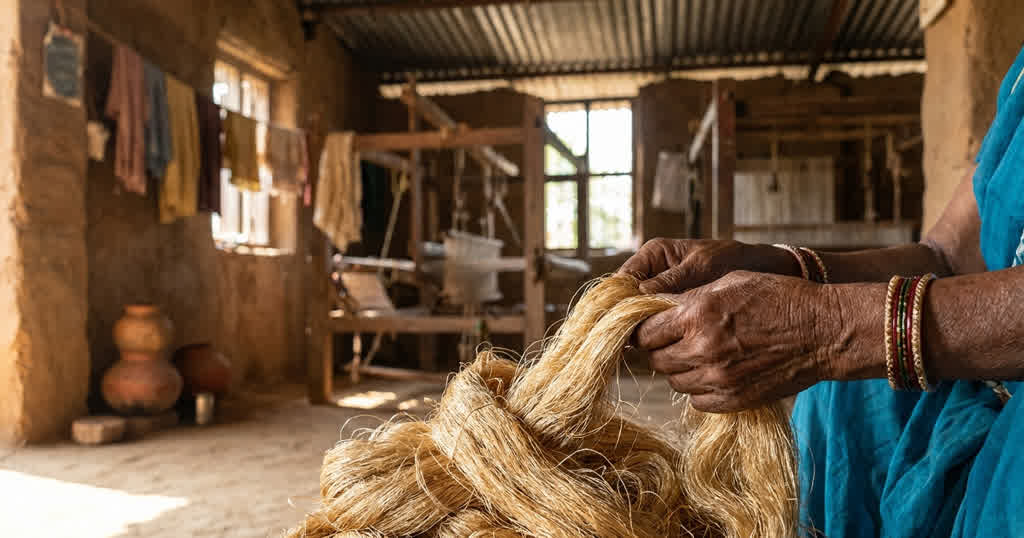
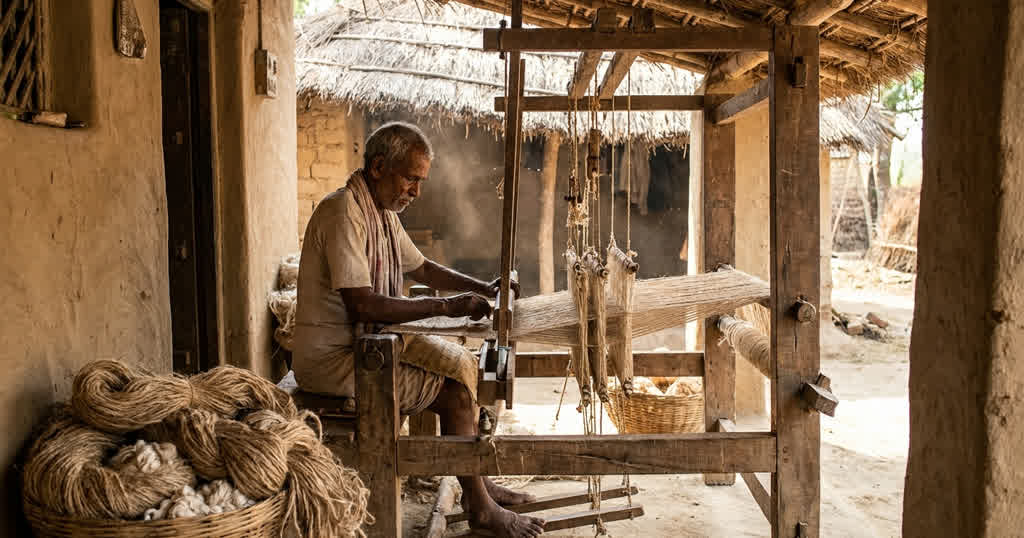
Khadi denim is made by handspinning natural fibres into yarns and weaving those yarns on traditional handlooms. This manual process distinguishes it from factory-produced denim and gives the fabric a characteristic handwoven texture.
The process also creates opportunities for skilled handloom artisans while preserving traditional textile knowledge.
At Anuprerna, Khadi denim is made using GOTS-certified organic cotton, supporting a more considered approach to material sourcing and textile production.
Why Is Khadi Denim Considered a Sustainable Fabric?
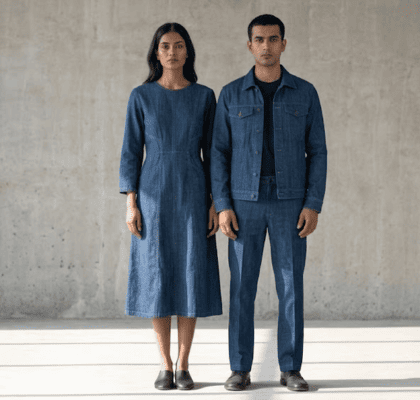
Khadi denim’s sustainability comes from how it is made and the materials used. Traditional handspinning and handloom weaving reduce dependence on industrial machinery while supporting artisan skills.
Key aspects include:
Handspun & Handwoven
Yarns are handspun and woven on traditional handlooms, reducing industrial dependence and creating Khadi denim’s distinctive texture.
Organic Cotton
Anuprerna uses GOTS-certified organic cotton for Khadi denim, supporting more responsible textile sourcing.
Lower Industrial Energy Dependence
Handloom weaving requires less reliance on electricity and fossil-fuel-powered machinery than industrial weaving.
Artisan-Centred Production
Skilled artisans remain central to the process, helping preserve traditional handloom techniques and India’s textile heritage.
Is Khadi Denim Suitable for Jeans?
Yes. Khadi denim can be used for denim jeans while offering characteristics that distinguish it from factory-made denim.
Khadi denim retains the functional qualities expected from denim, including durability and breathability, while its handwoven construction creates a more distinctive, rustic surface texture.
Its characteristics include:
- Breathability: The natural weave allows airflow, making it suitable for different climates.
- Structured silhouette: Unlike stretch denim, Khadi denim can maintain a more tailored and structured appearance.
- Durability: High-quality handspun yarns can create a fabric designed for long-term use.
- Distinctive texture: The handwoven construction gives each fabric a characteristic surface and tactile quality.
These qualities make Khadi denim suitable for contemporary denim jeans, jackets, shirts, and other apparel applications.
Khadi Denim vs Conventional Denim: What Is the Difference?
The main difference is not simply the appearance of the fabric but how the fabric is produced.
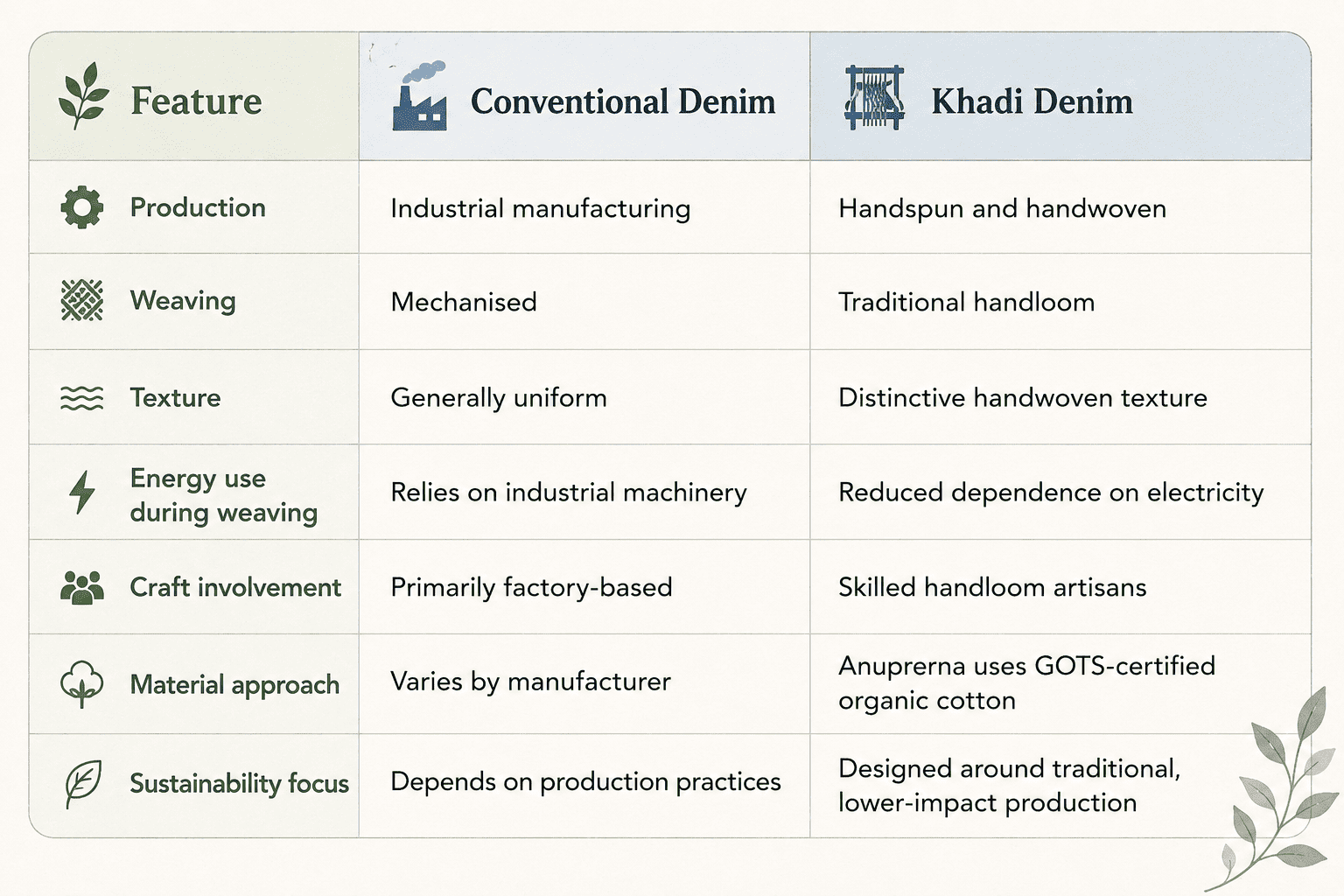
The distinction between handloom denim and Khadi denim is also important. Handloom denim describes denim woven using traditional handloom techniques, whereas Khadi denim specifically connects handspinning and handweaving with India's Khadi tradition.
What About Denim Jeans Raw?
Denim jeans raw, commonly associated with raw or untreated-looking denim, are valued for their original fabric character and the way the material changes through wear.
Khadi denim offers a different interpretation of this idea. Its handwoven construction naturally creates variations in texture and surface, allowing the fabric itself to become part of the visual identity of the garment.
For designers looking beyond standard industrial denim, this makes Khadi denim an interesting material for creating pieces with a more tactile and artisanal character.
Can Organic Cotton Clothes Be Made from Khadi Denim?
Yes. Organic cotton clothes can be developed using Khadi denim when the fabric is produced with organic cotton.
Anuprerna's Khadi denim uses GOTS-certified organic cotton, combining the qualities of organic cotton with traditional Khadi production methods.
This makes it relevant for designers and brands developing collections around natural fibres, artisan textiles, and more responsible sourcing.
From denim jeans and jackets to shirts and contemporary separates, Khadi denim can bring a handcrafted quality to modern wardrobes.
Why Choose Khadi Denim Over Conventional Denim?
Choosing Khadi denim is about looking beyond the finished garment and considering the entire textile journey.
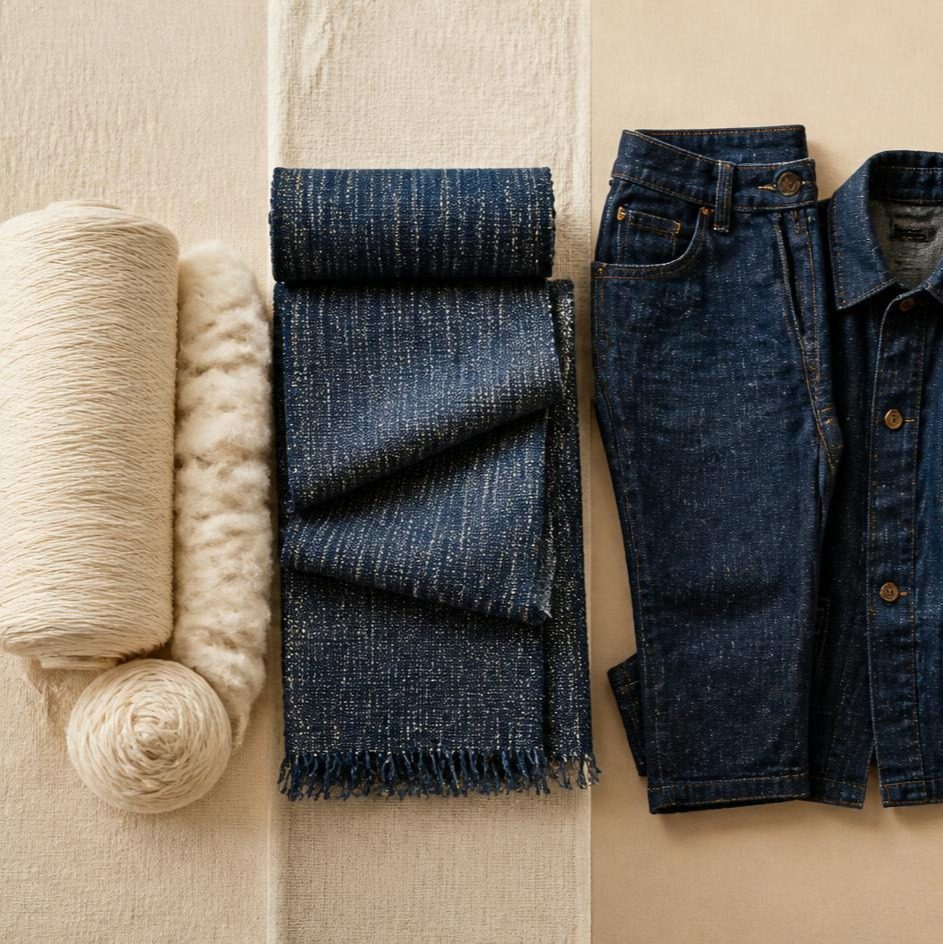
For conscious consumers and brands, it can offer:
- Traditional handloom craftsmanship
- Handspun yarn production
- Organic cotton sourcing
- A distinctive natural texture
- Breathability and durability
- Reduced dependence on industrial weaving
- Support for artisan livelihoods
- A connection to India's textile heritage
For those looking for sustainable jeans, Khadi denim provides an alternative worth considering when sourcing or designing denim-based clothing.
Can Khadi Denim Be Used for Sustainable Jeans?
Khadi denim can be an important material option for sustainable jeans, particularly when the fabric is made using responsibly sourced fibres and traditional production methods.
However, sustainability does not depend on fabric alone. The complete lifecycle of a garment—including fibre sourcing, dyeing, manufacturing, garment longevity, care, and end-of-life—also matters.
Choosing durable fabrics, producing thoughtfully, and designing garments for long-term use can all contribute to a more responsible approach to denim.
Choosing a More Responsible Denim Fabric
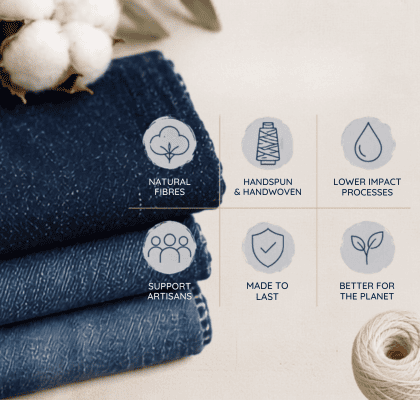
This can be designed as a premium editorial card rather than a traditional infographic.
The growing interest in sustainable fabric alternatives reflects a wider shift in how consumers and brands think about clothing.
Rather than viewing denim simply as a familiar fashion staple, it is worth asking:
What is denim fabric made from? How was it woven? Who made it? What resources were used? And how long is the garment designed to last?
Khadi denim provides one answer to these questions by bringing together organic cotton, handspun yarns, handloom weaving, and artisan craftsmanship.
Khadi denim brings together the familiarity of denim with the heritage of Khadi and the principles of more conscious textile production.
From organic cotton and handspun yarns to traditional handloom weaving, its production offers a different approach to the conventional denim cloth fabric supply chain.
For designers, brands, and conscious consumers exploring sustainable jeans, Khadi denim offers more than an alternative material. It represents a way to connect contemporary fashion with traditional craftsmanship while making more considered choices about how textiles are produced.
The next time you look for denim jeans, consider not only the style and fit but also the fabric behind them—and the people and processes that brought that fabric to life.
frequently asked questions
What is original denim?
Original denim traditionally refers to cotton fabric constructed using a twill weave. It is known for its durability, rugged texture, and association with indigo blue colouring.
What determines denim fabric quality?
Denim fabric quality can be evaluated through factors such as fibre composition, weave tightness, fabric weight, colour consistency, finishing, and resistance to wear.
Is denim good for summer?
Traditional heavyweight denim is not a strong choice for hot summer weather, as it is dense and not very breathable. However, lightweight denim or denim blends with cotton and other breathable fibers can be more suitable for summer. Look for lighter denim options or styles designed for warm weather to enhance comfort during the summer months.
Where can I find sustainable jeans in India?
When looking for sustainable jeans in India, consider the fabric composition, production method, fibre sourcing, durability, and transparency of the brand or textile supplier. Khadi denim is one alternative for those seeking a more artisan-led approach to denim.
Why choose khadi jeans for men?
Choosing khadi jeans for men supports a supply chain that avoids industrial-scale pollution. These jeans are crafted from organic cotton and natural dyes, offering a durable, skin-friendly, and environmentally conscious wardrobe staple.
Where to find sustainable jeans in India?
You can source sustainable jeans in India through specialized handloom houses like Anuprerna, which focus on transparent, artisan-led production methods that prioritize low environmental impact and fair wages for weavers.
More Blogs
khadi jeans for men: styling sustainable denim
eco-friendly trims: sourcing sustainable fashion accessories
how to choose the right fabric wholesaler for your brand
what to look for in a silk manufacturer before you source
how does sustainable sourcing affect clothing quality?
what is a sustainable designer? roles, responsibilities, and impact