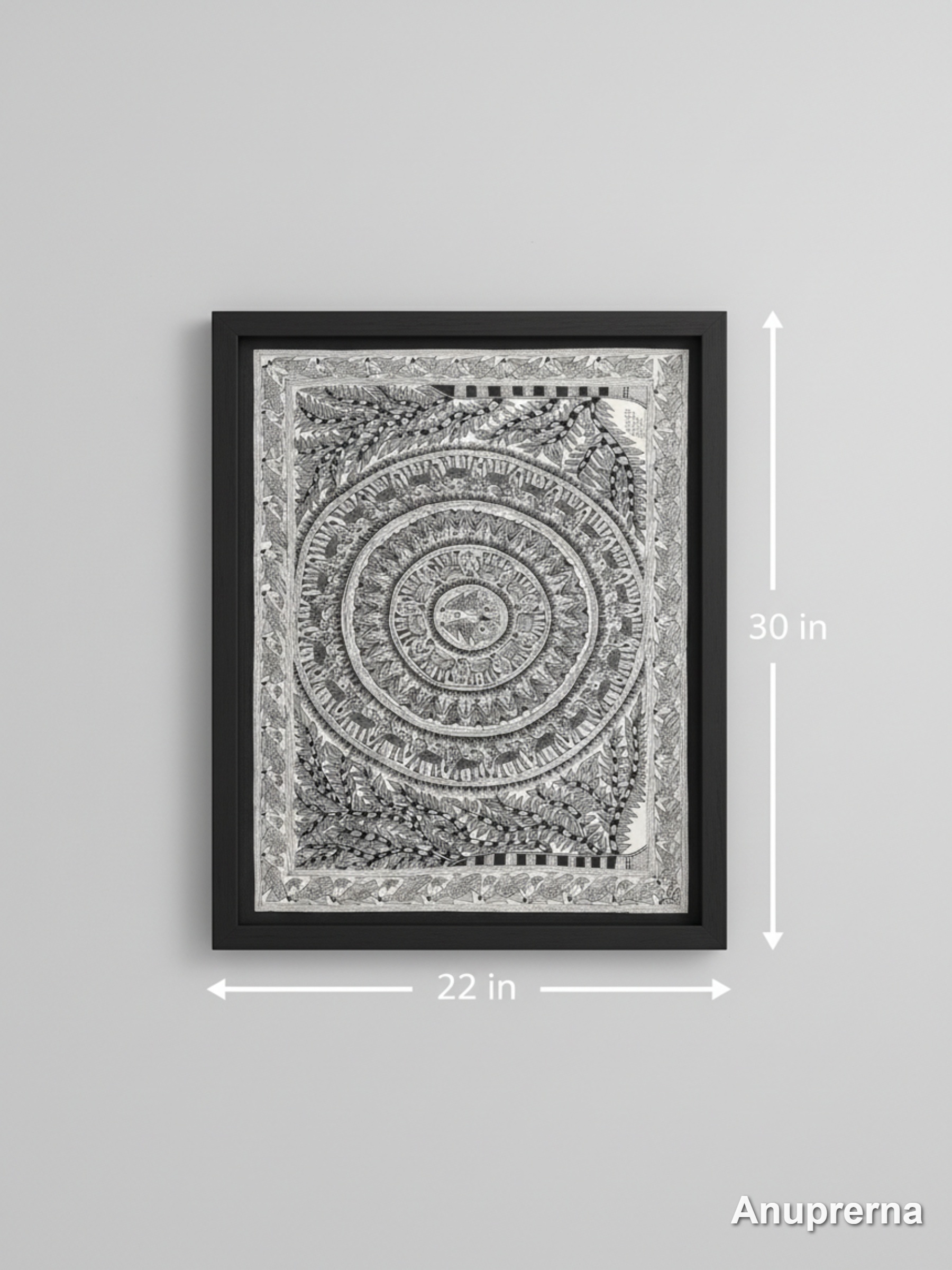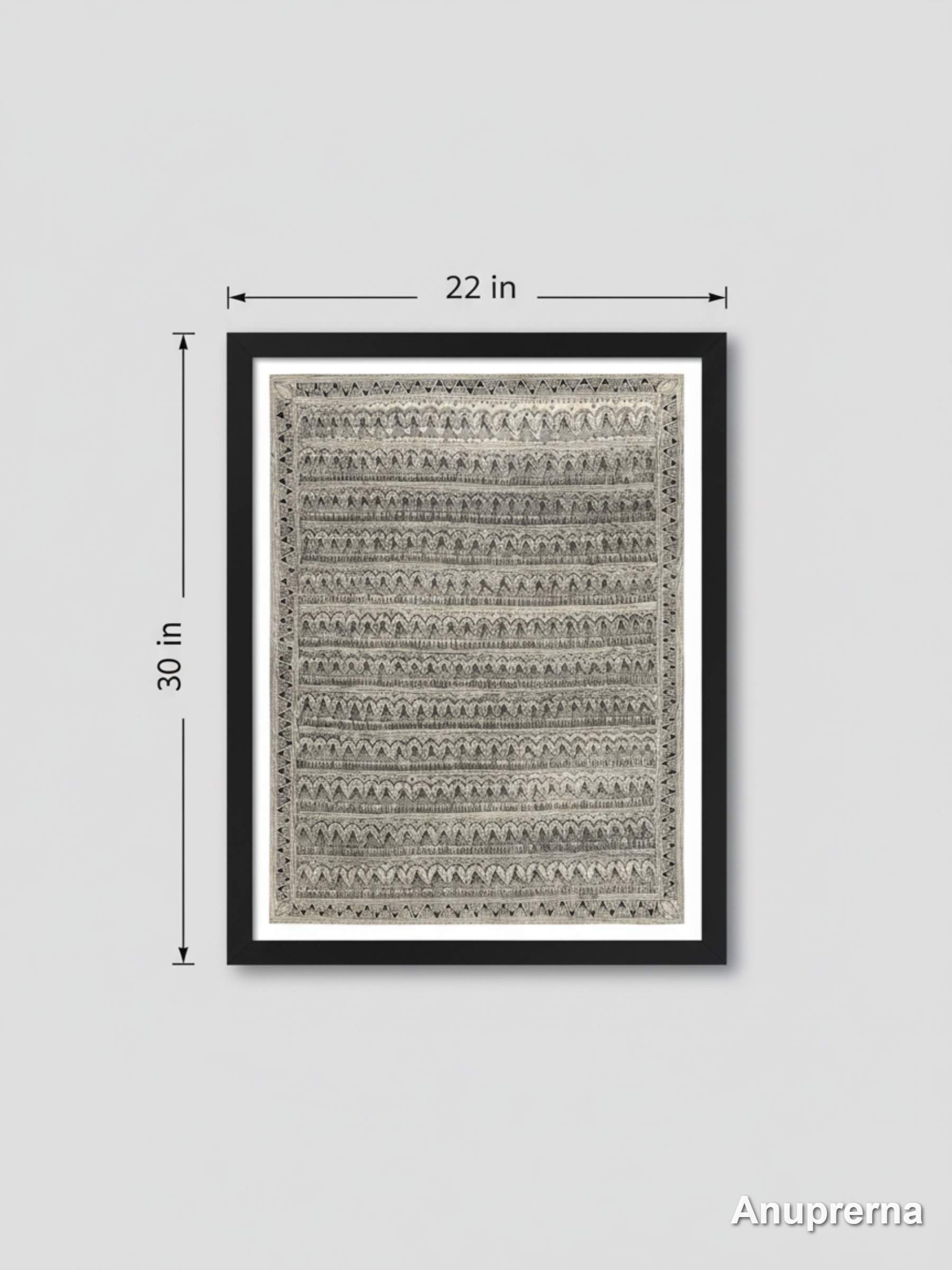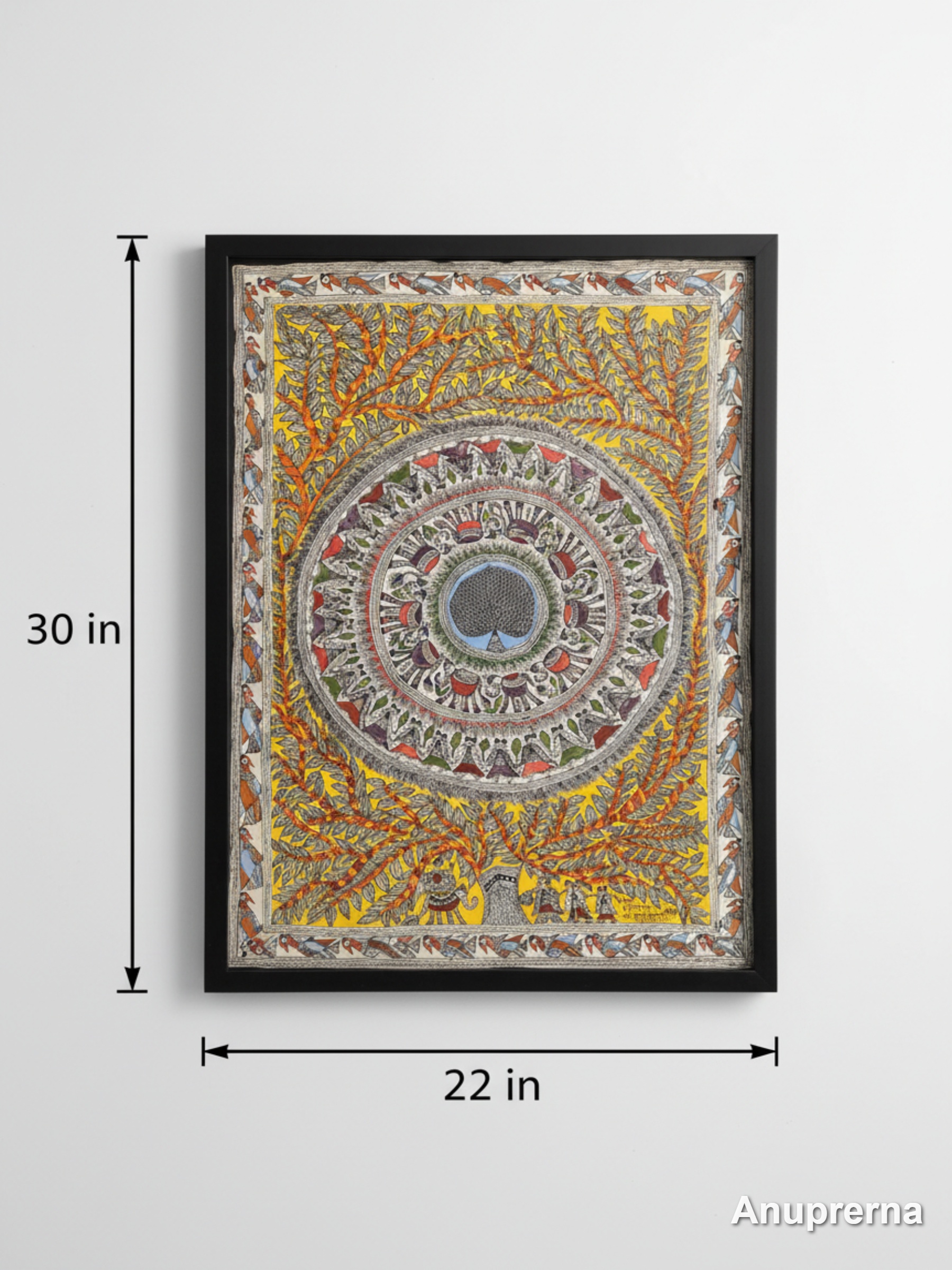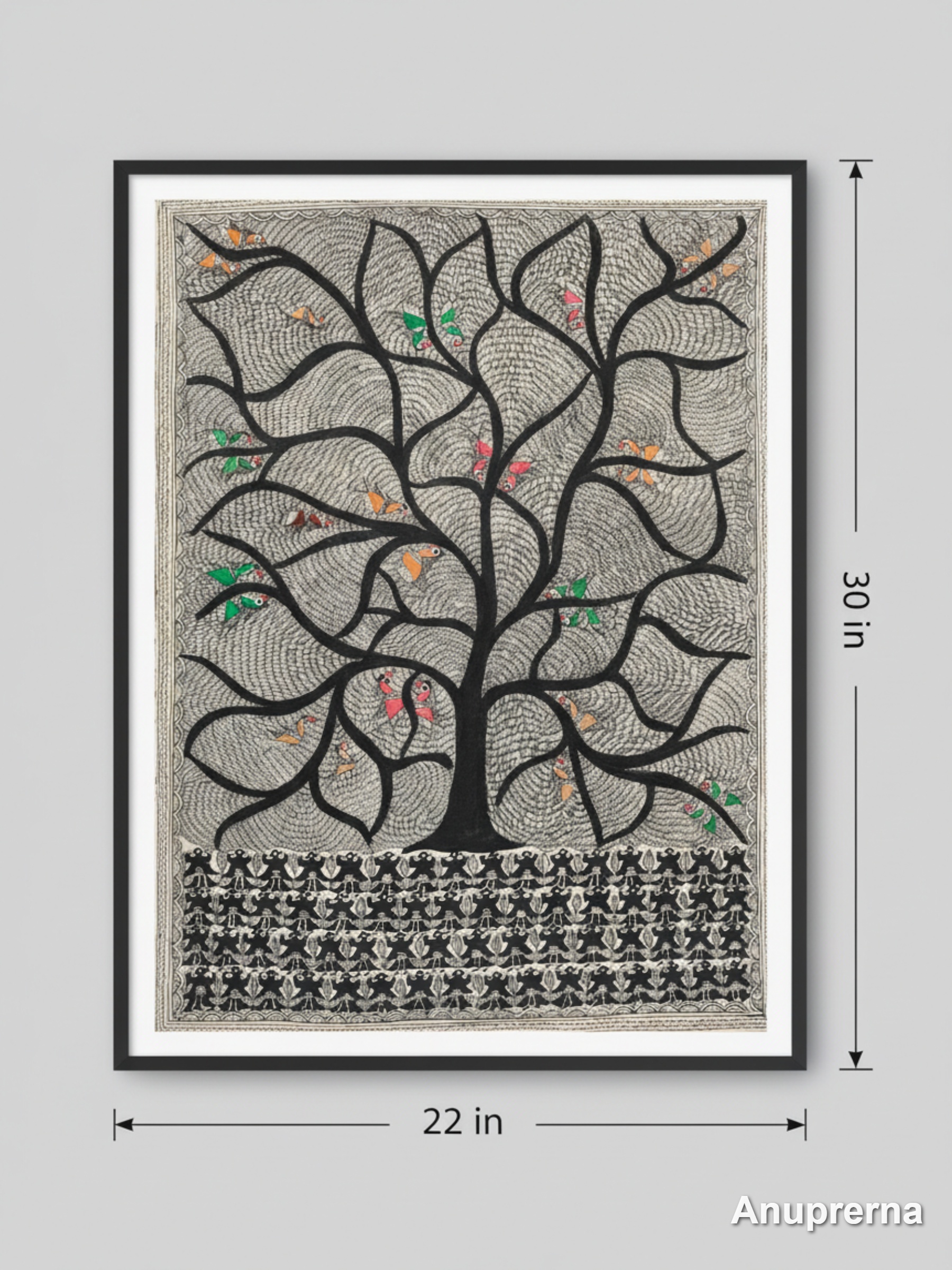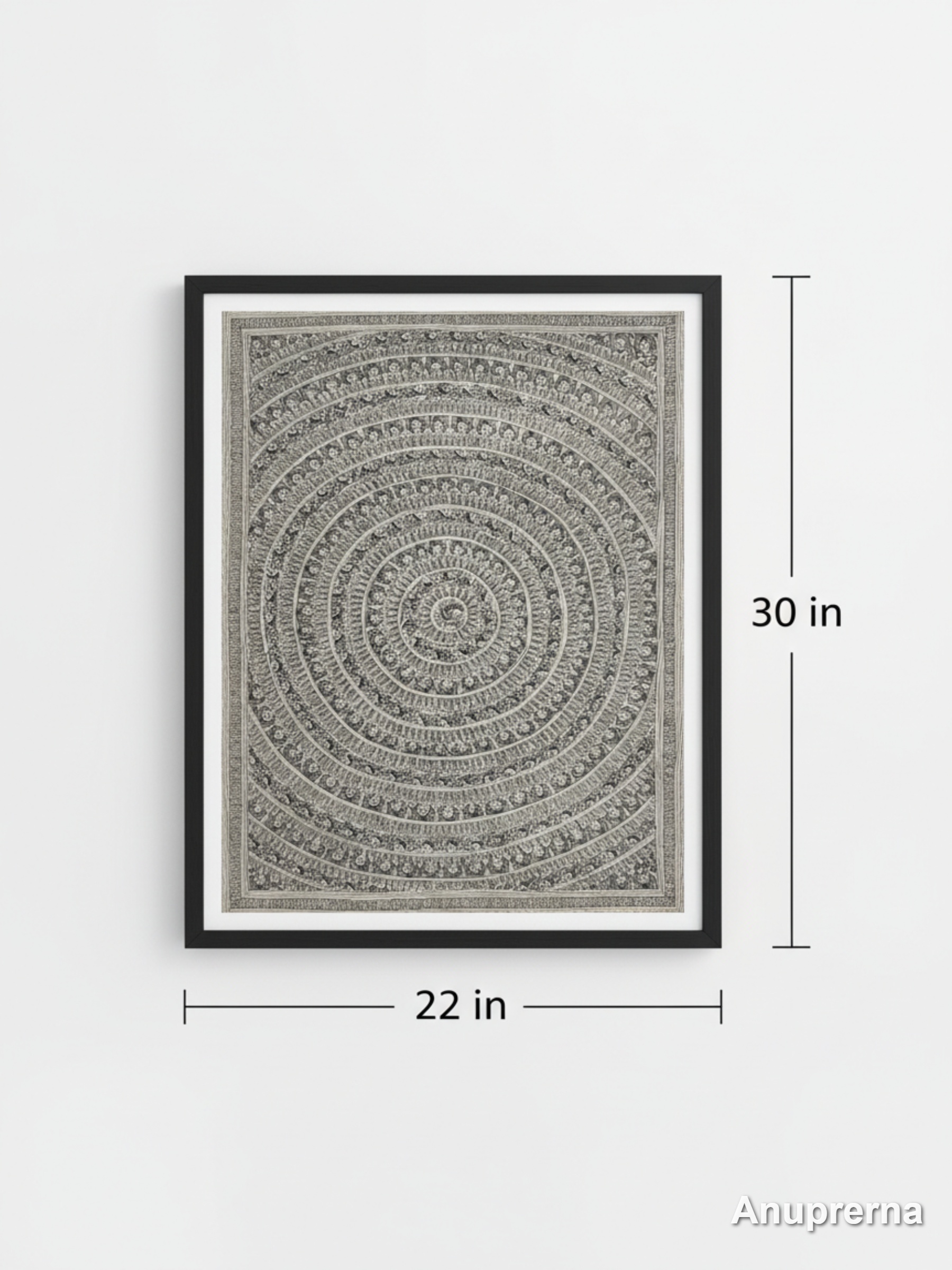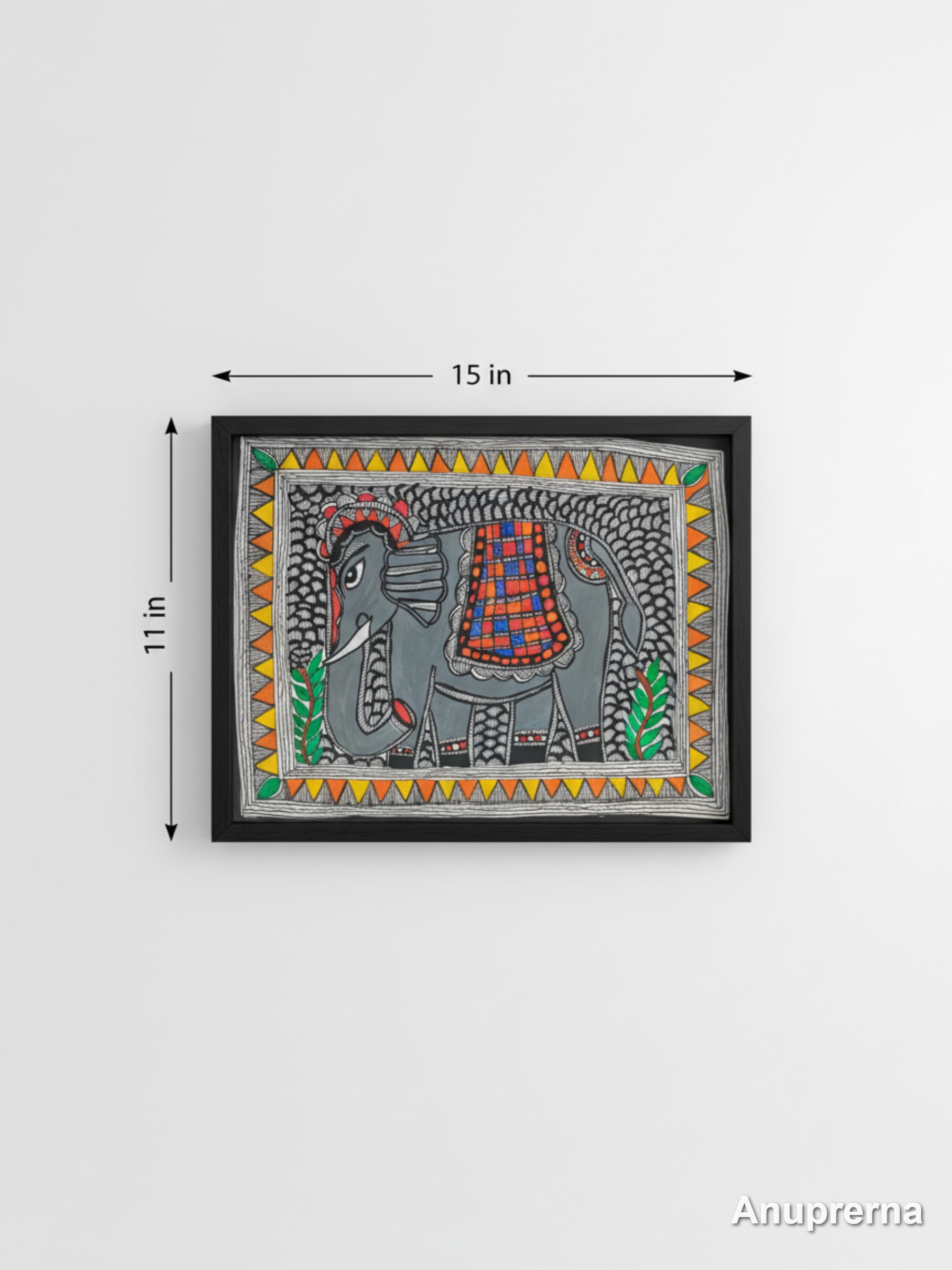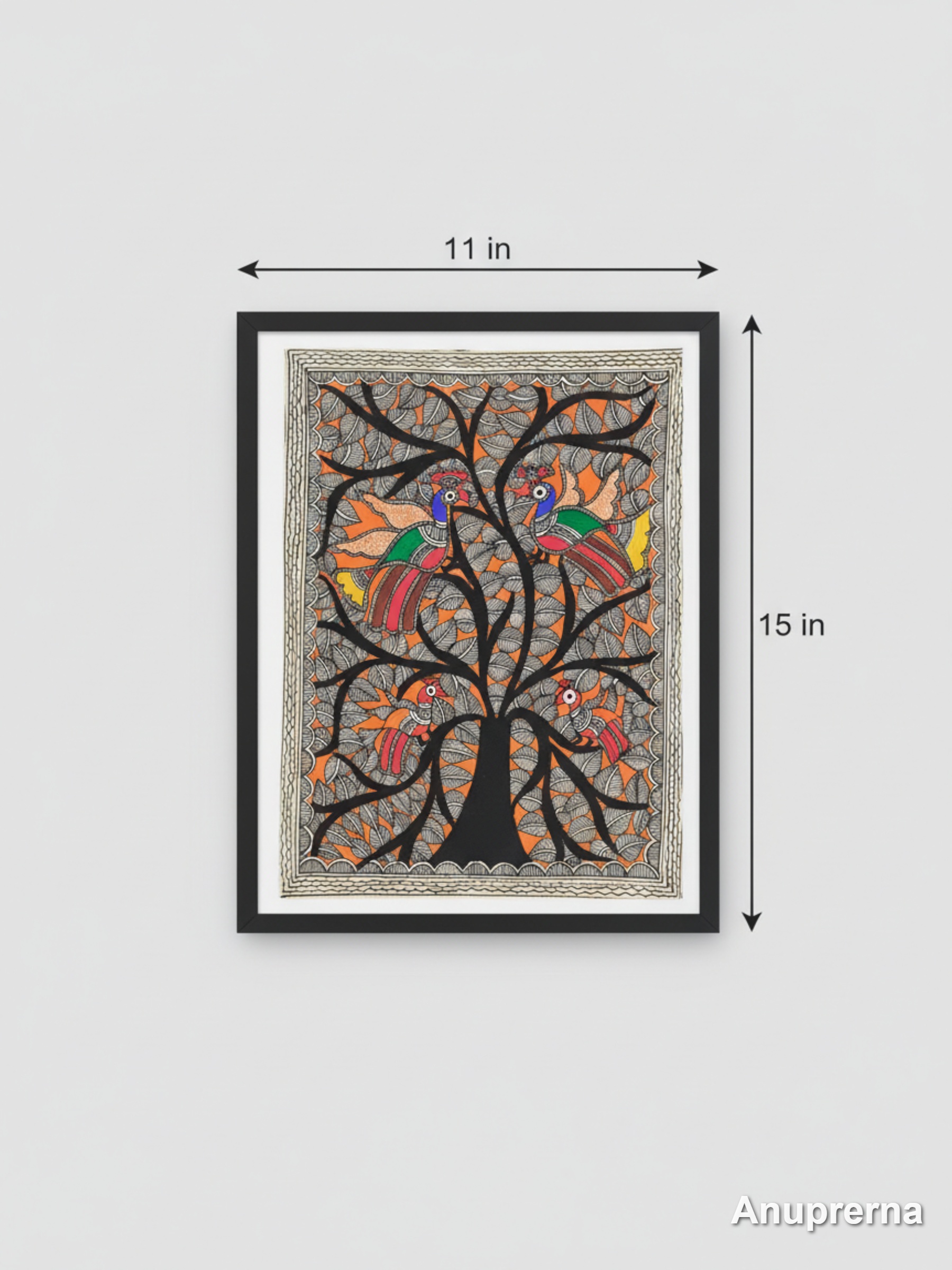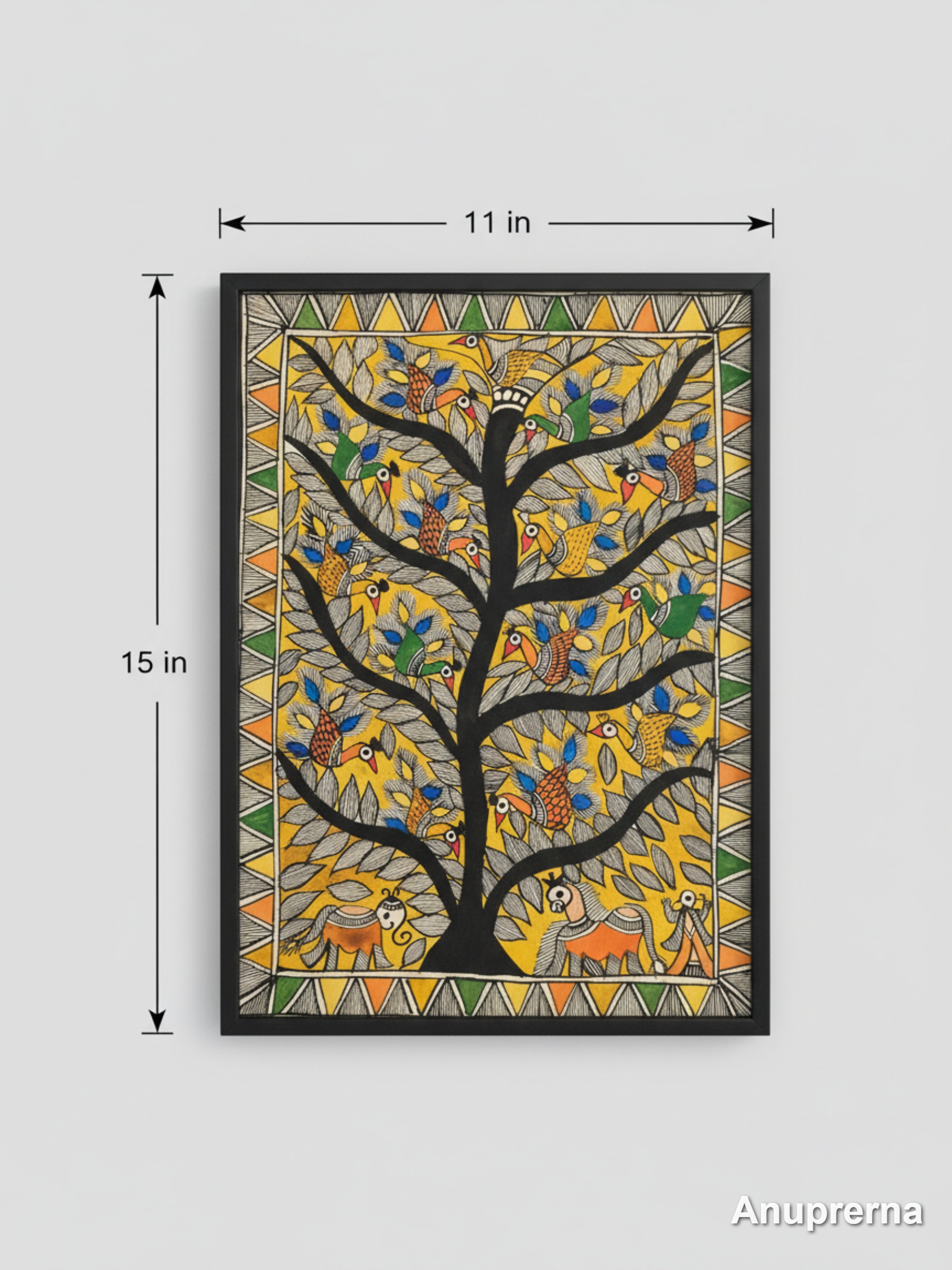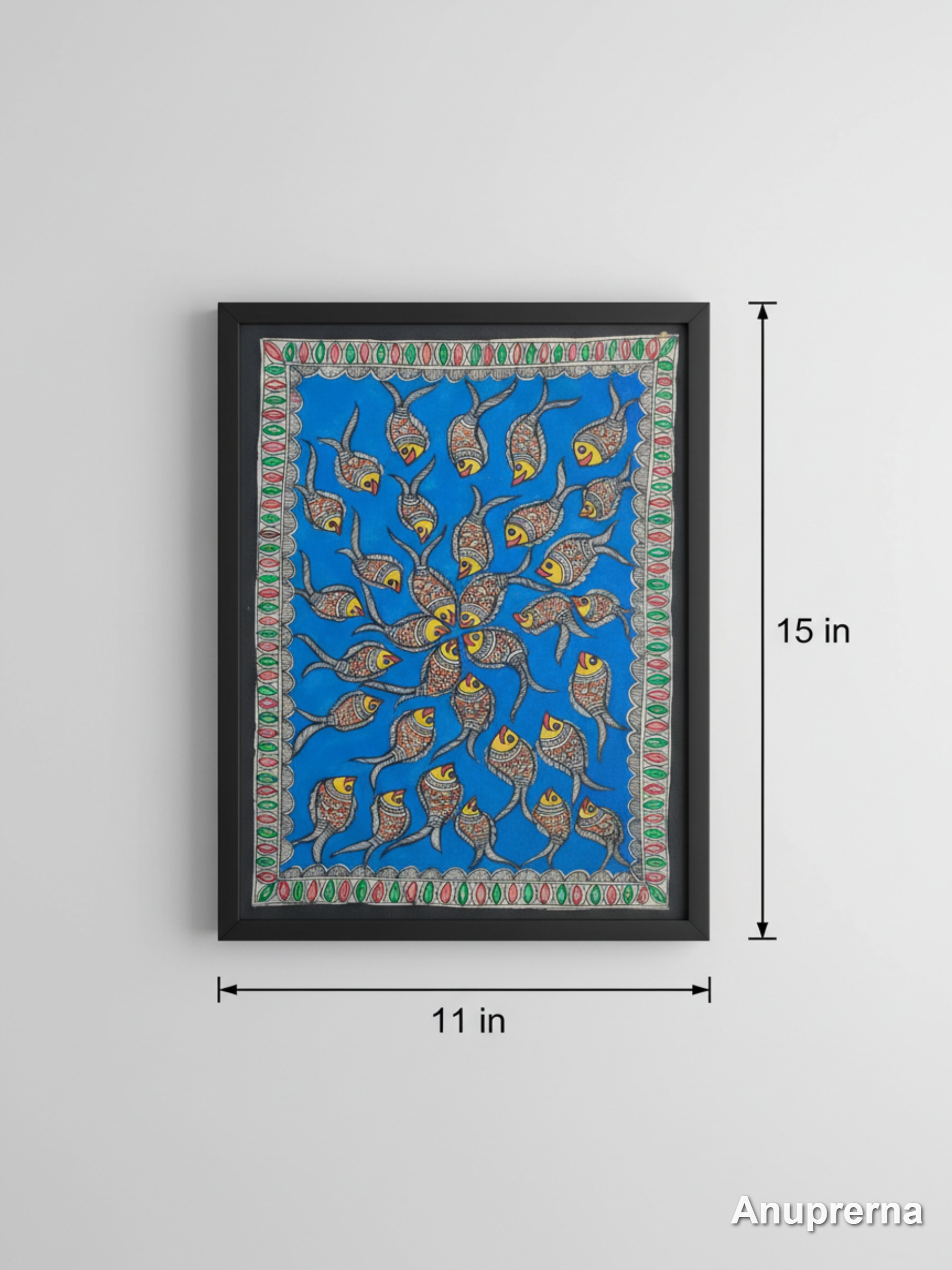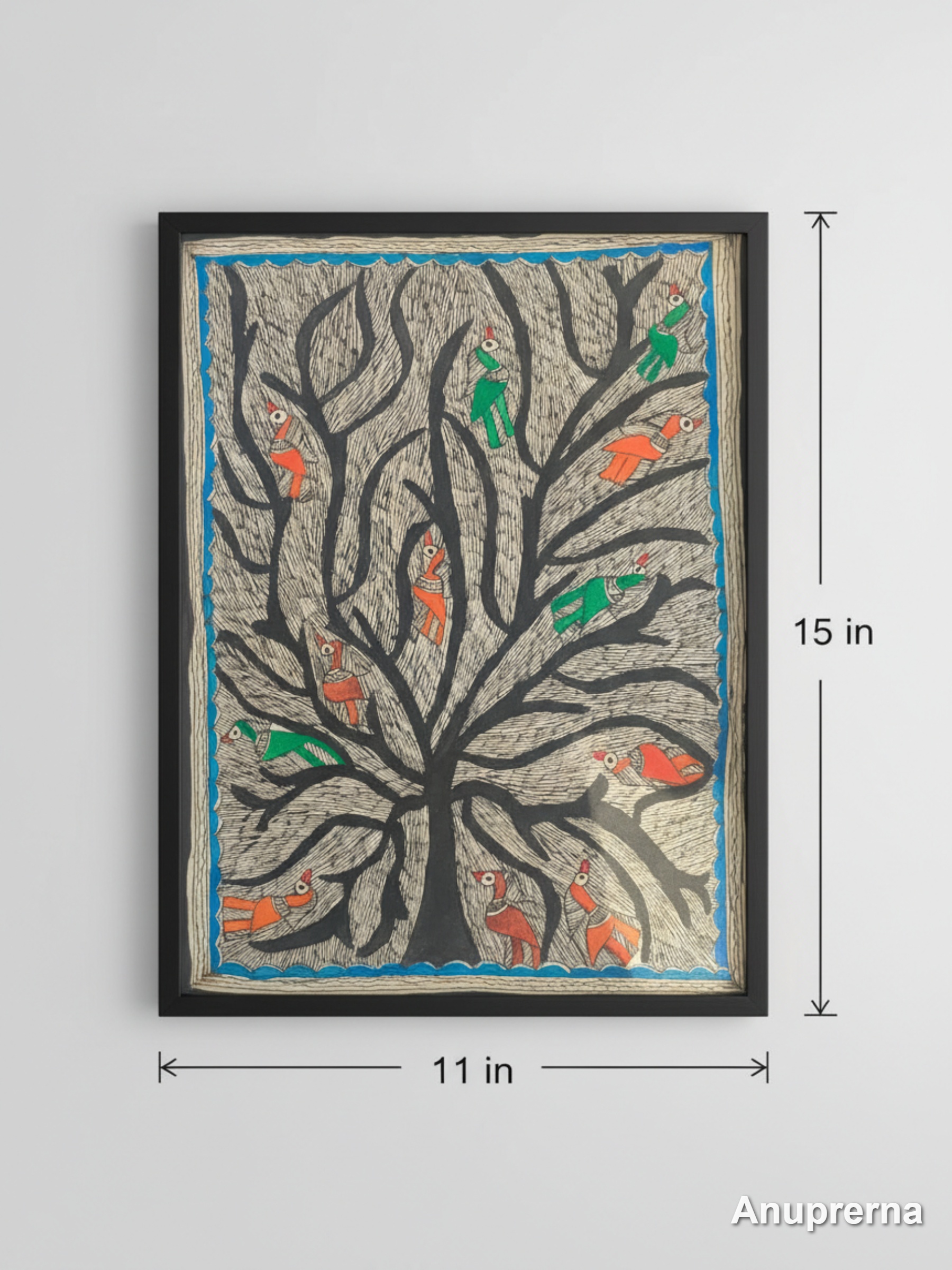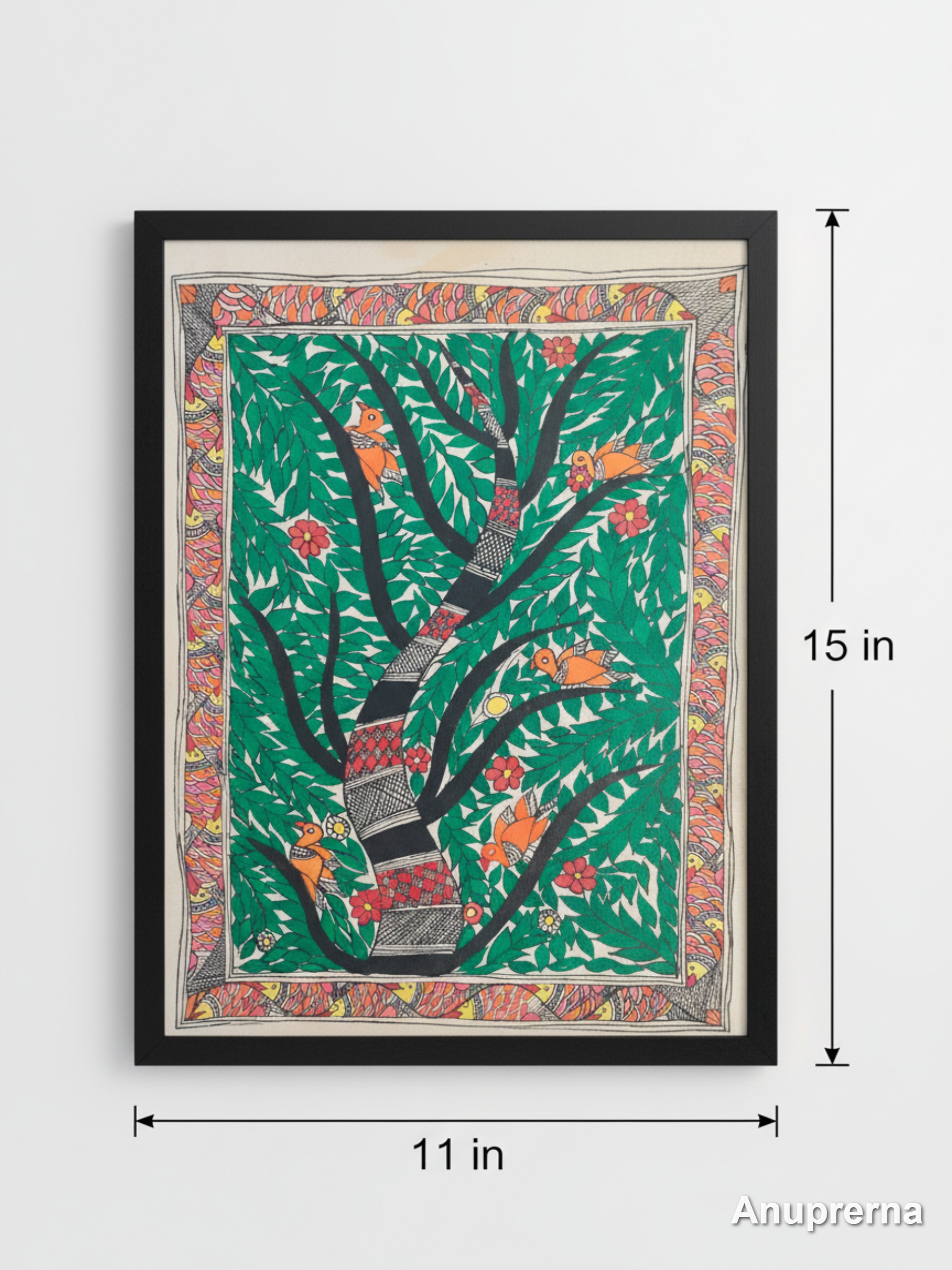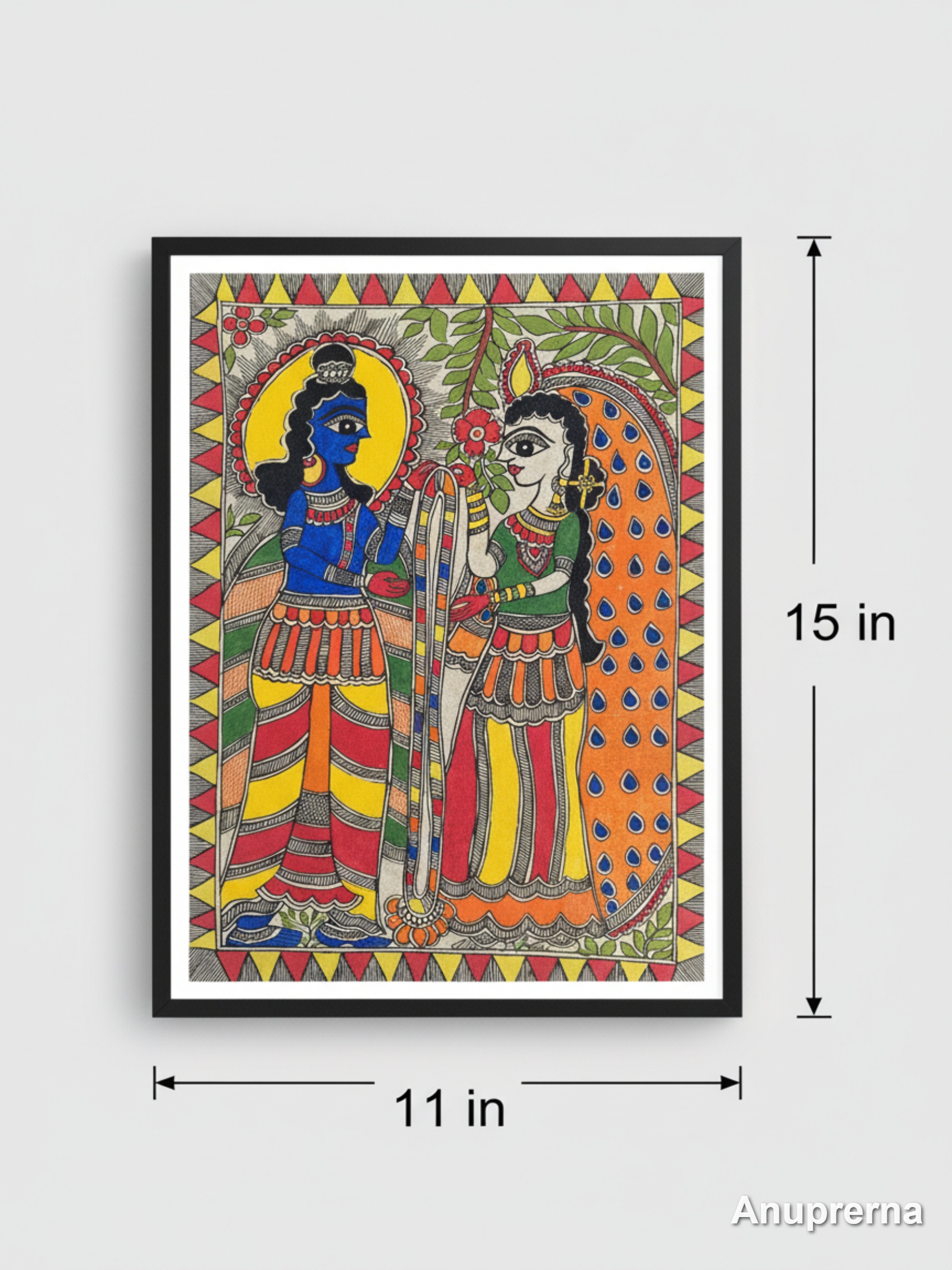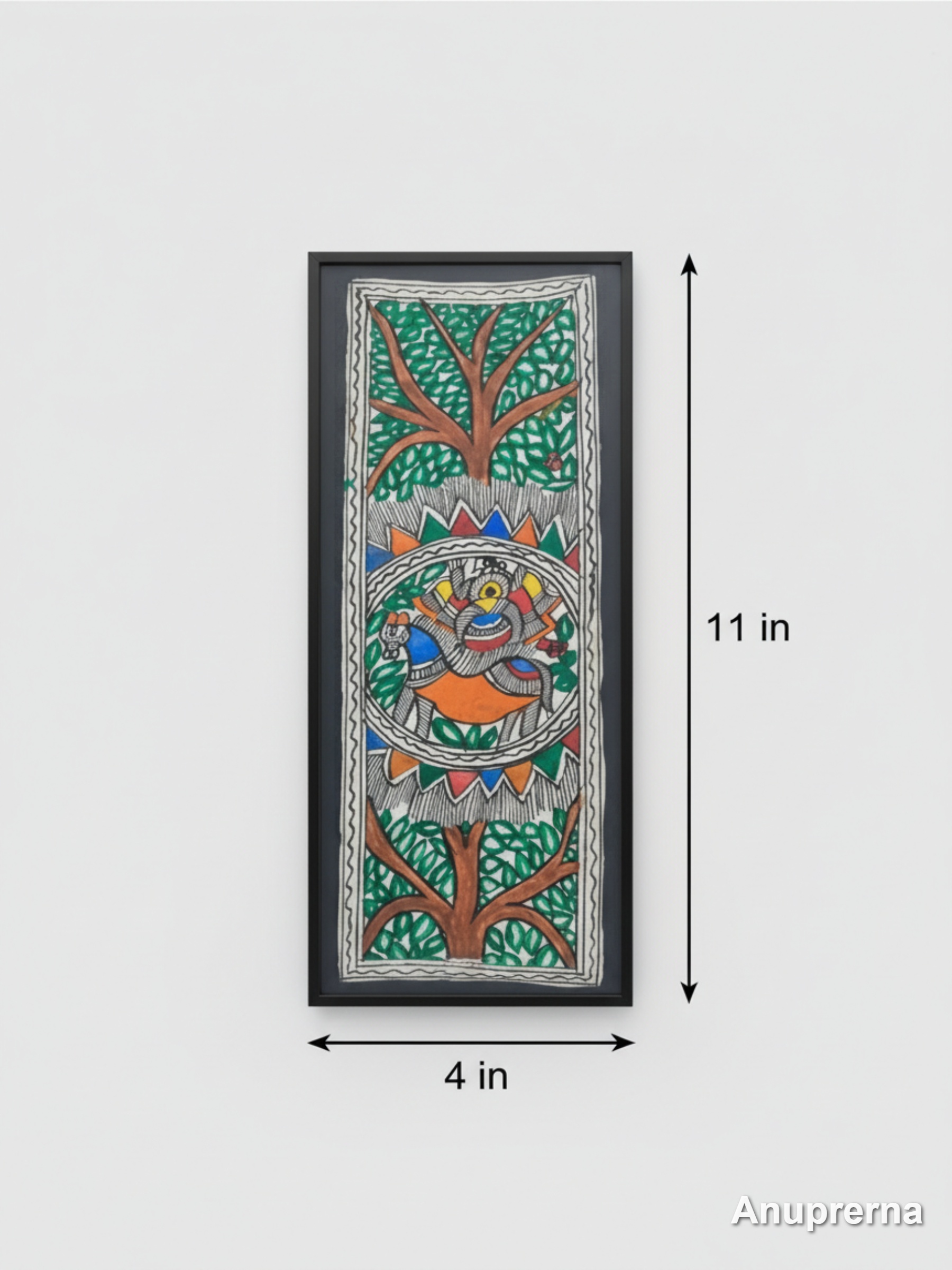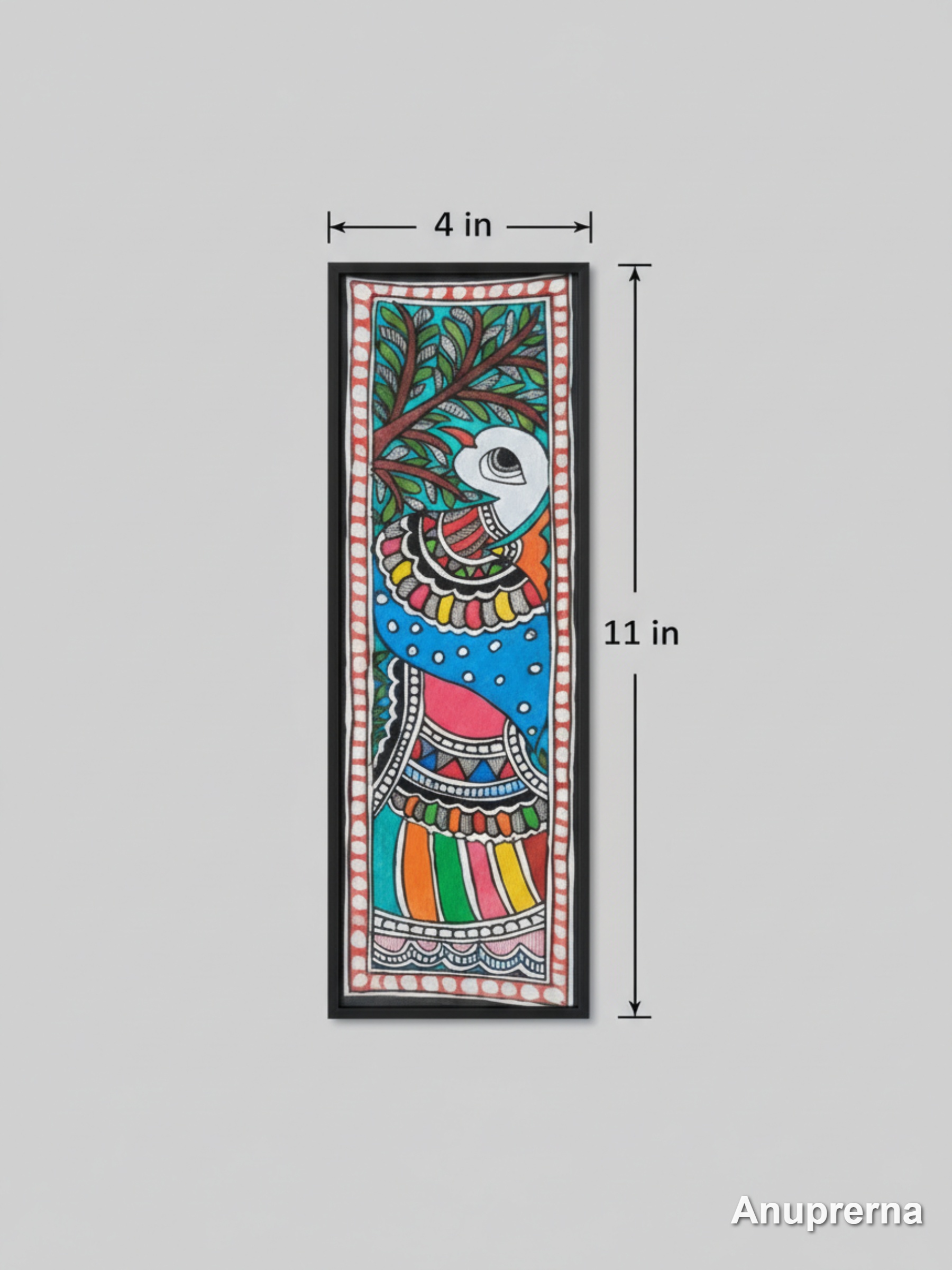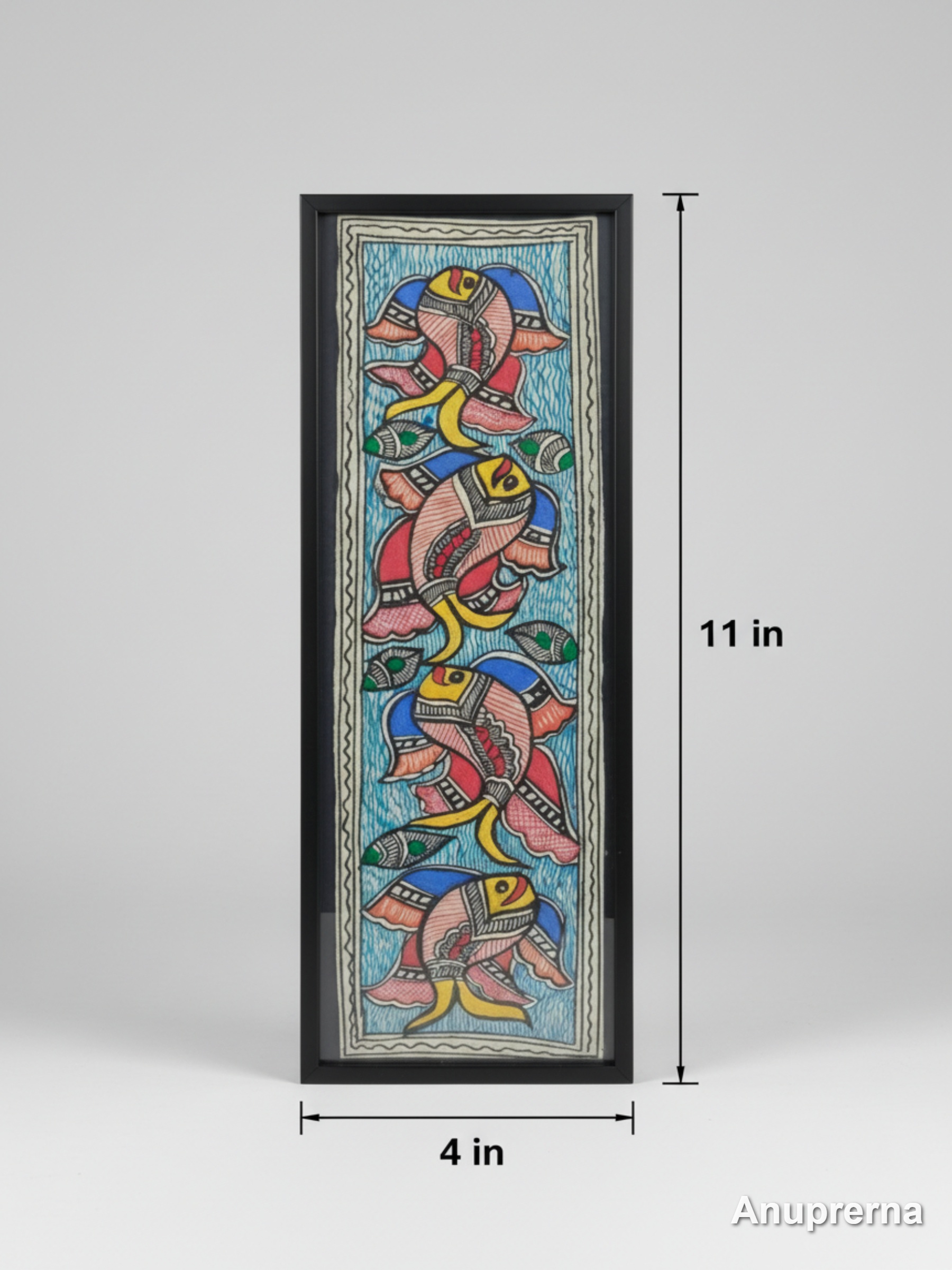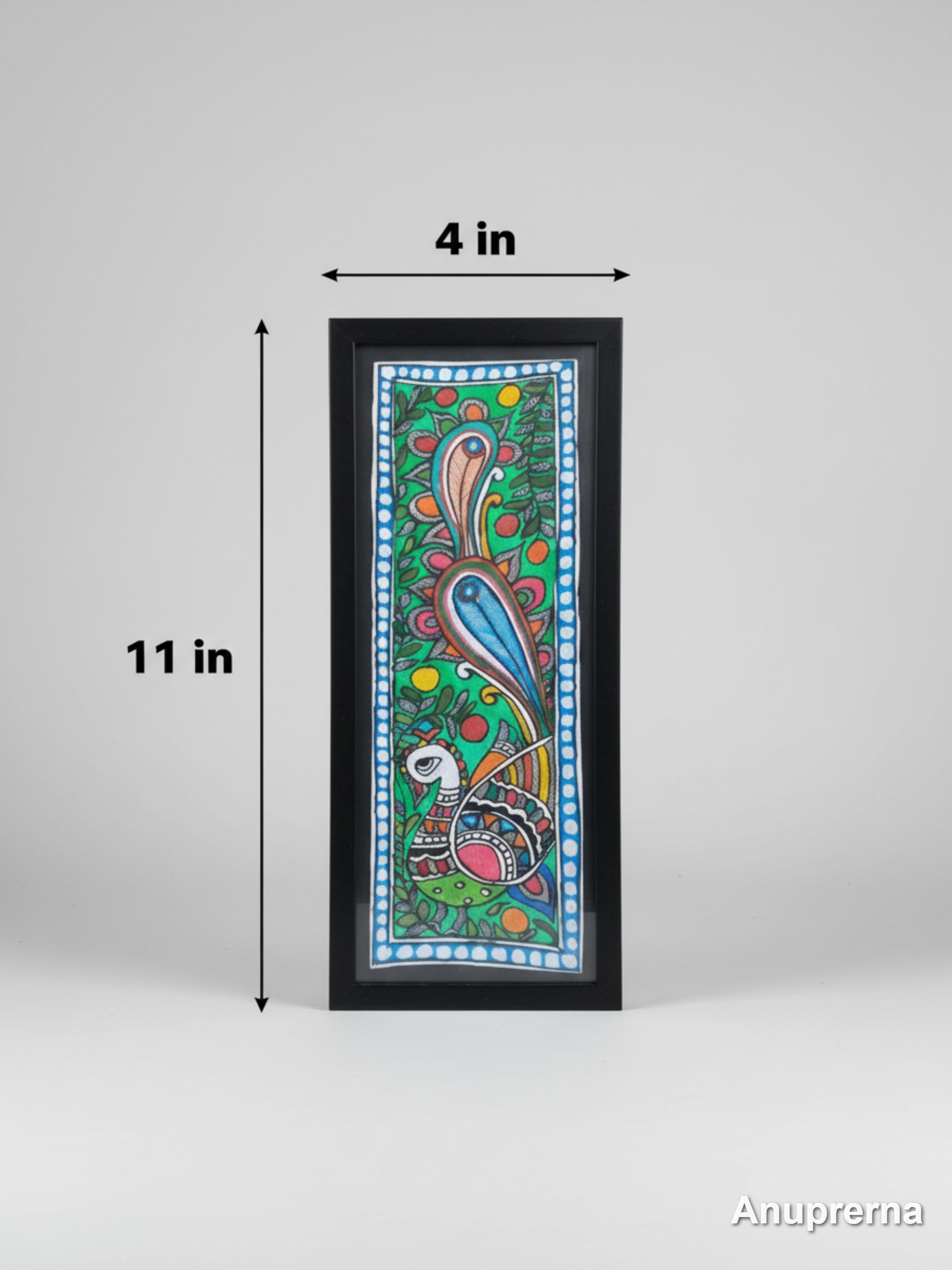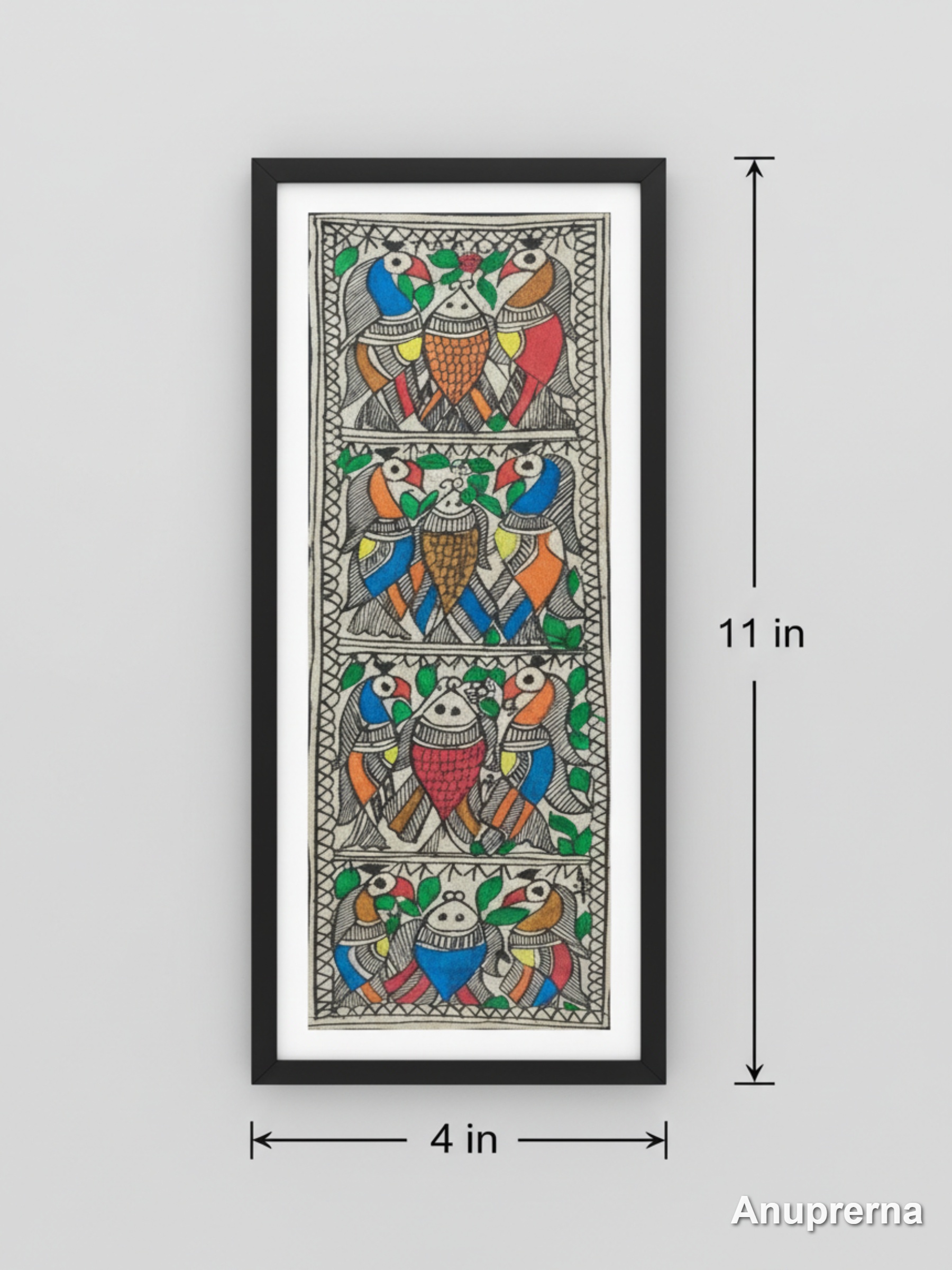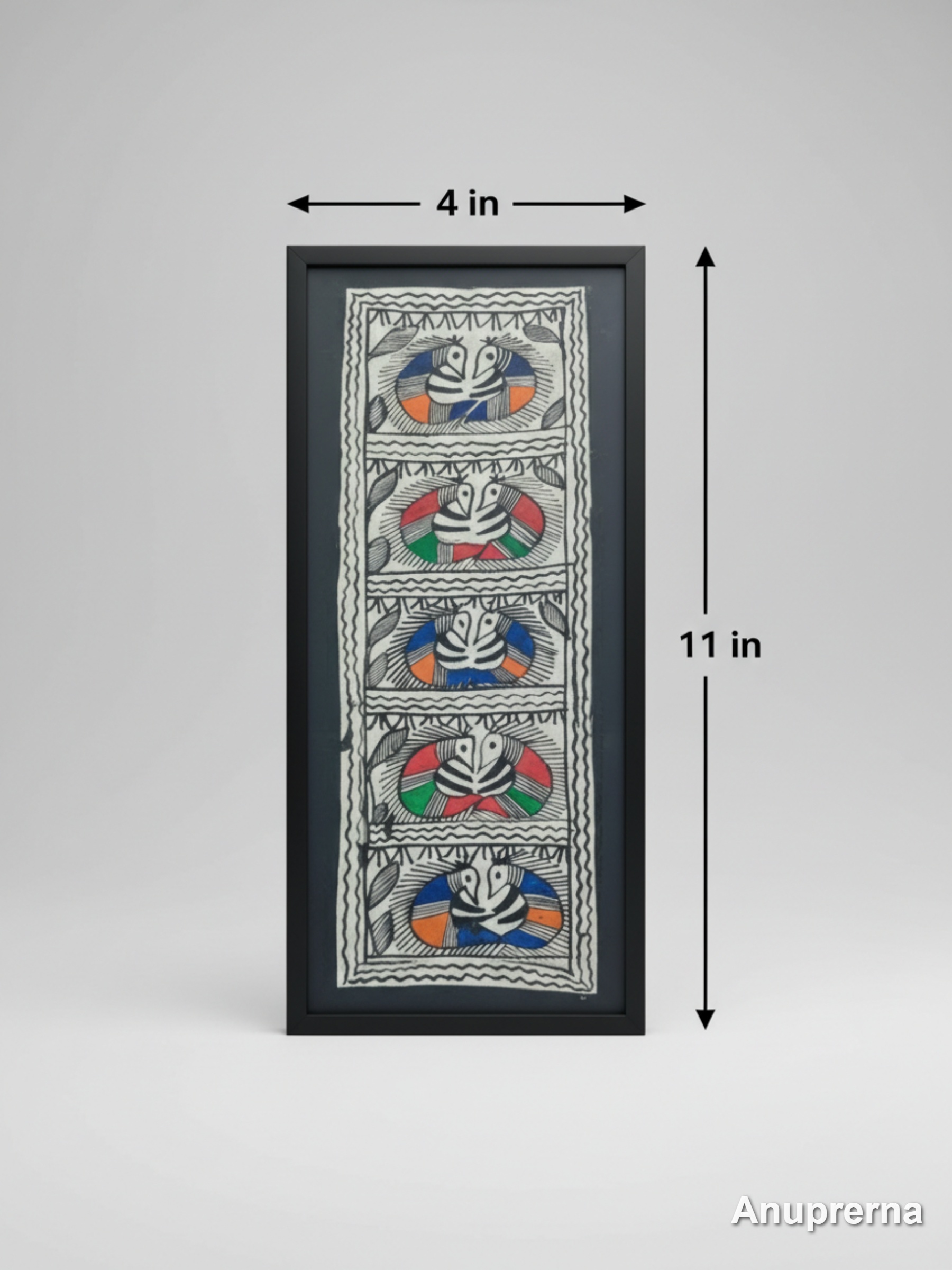
Madhubani Wall Art

Madhubani is not painted to fill space. It is painted to make meaning visible.
Madhubani is a traditional Indian painting style practised in the Mithila region of Bihar and parts of Nepal. Known for its intricate patterns, symbolic language and structured compositions, it transforms walls and surfaces into dense narrative fields. Painted historically on mud walls and floors, these artworks were created as part of rituals and celebrations, carrying cultural memory forward rather than serving as standalone decoration.
Meaning and Origins
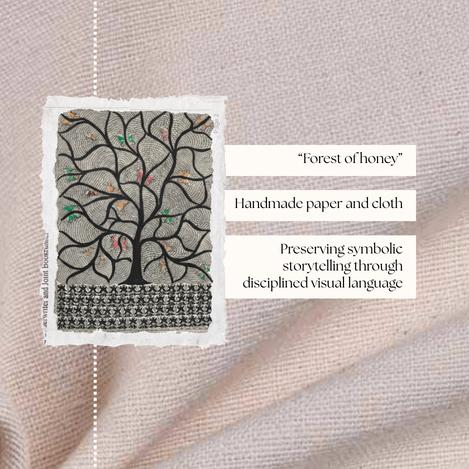
The term Madhubani translates to “forest of honey,” referring to the region where the art form developed. Rooted in domestic and ceremonial contexts, it was traditionally painted by women on the interior and exterior walls of homes during weddings, festivals and religious occasions.
Over time, as natural disasters and changing economies reshaped rural life, the art transitioned from walls to handmade paper and cloth. This shift allowed artists to preserve the practice while adapting it for portability and wider audiences.
As formats evolved from murals to framed works, the intent remained intact: preserving symbolic storytelling through disciplined visual language.
Themes and Subjects
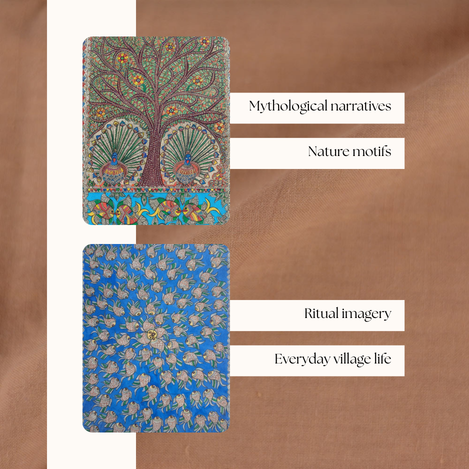
Madhubani is instantly recognisable through its dense compositions and symbolic structure. Common themes include:
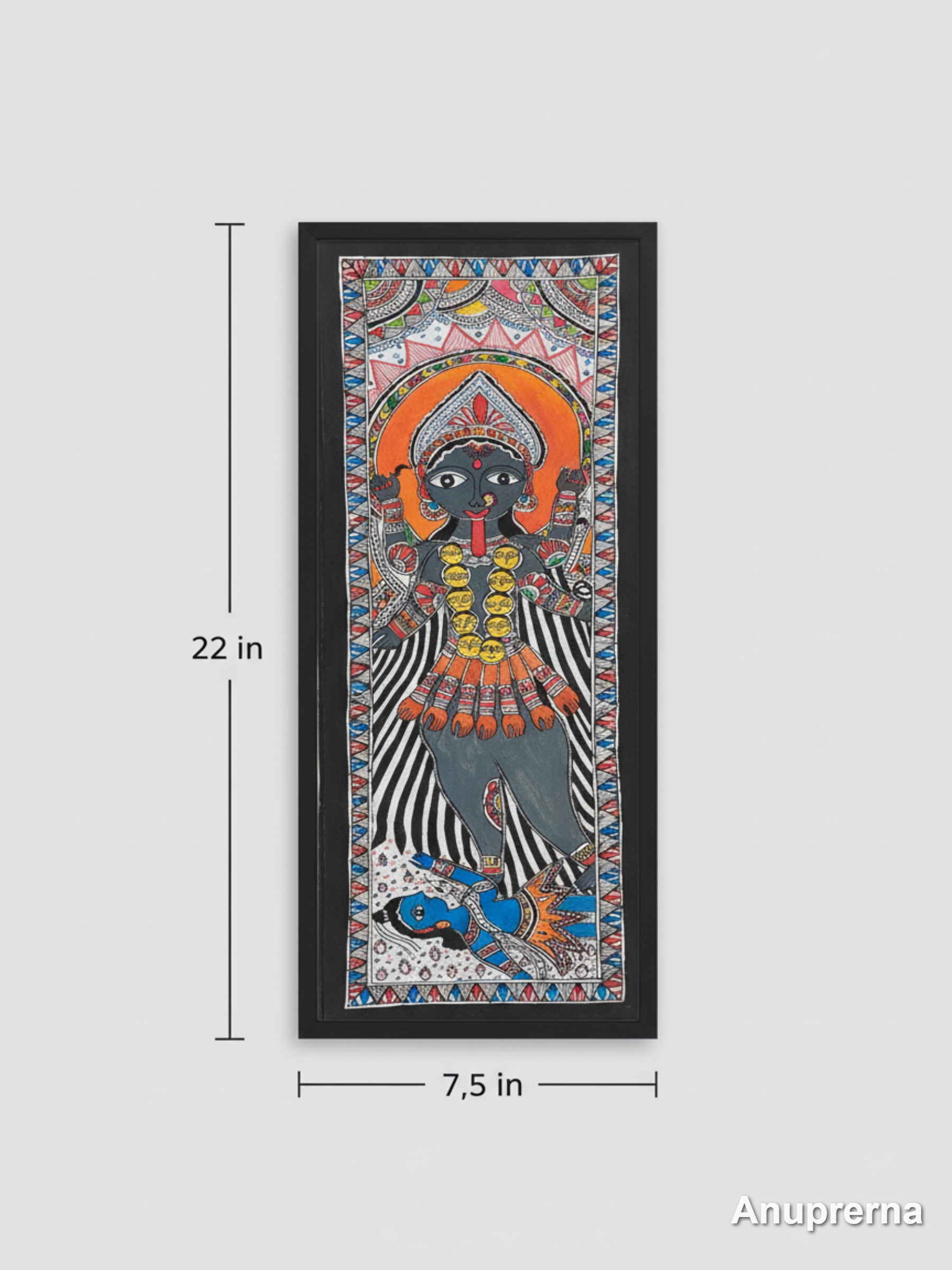
- Mythological narratives, especially scenes from the Ramayana and Mahabharata
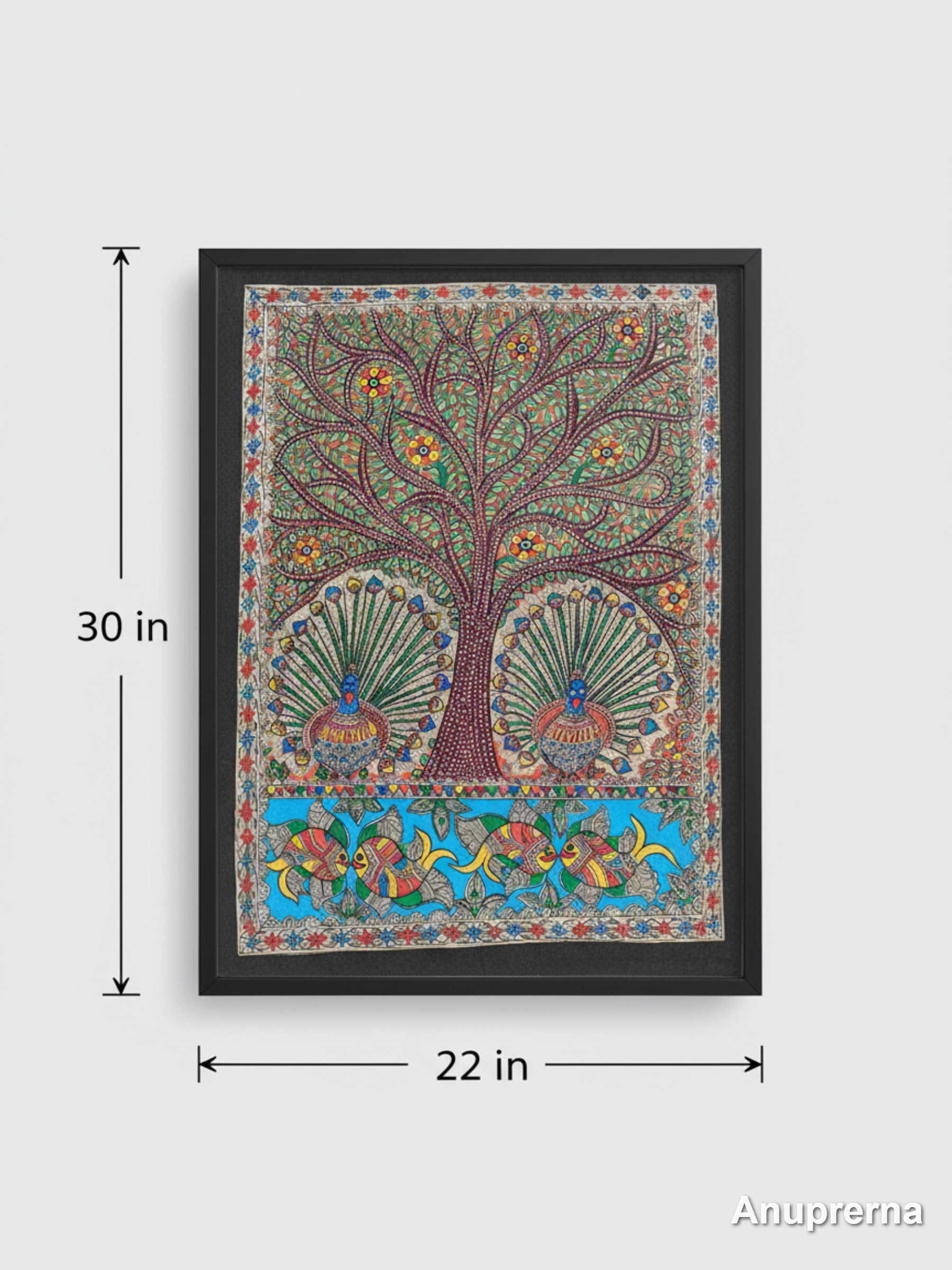
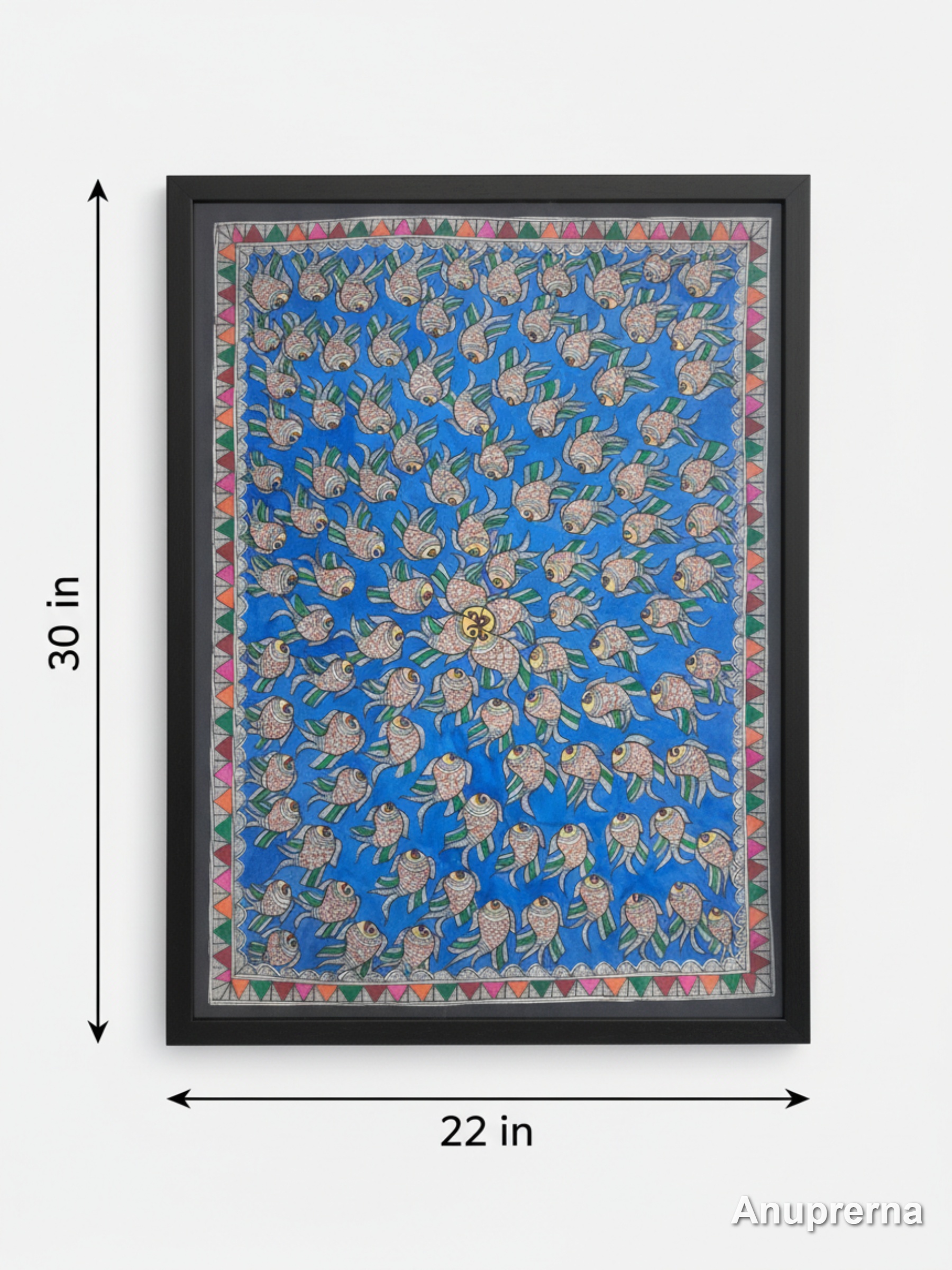
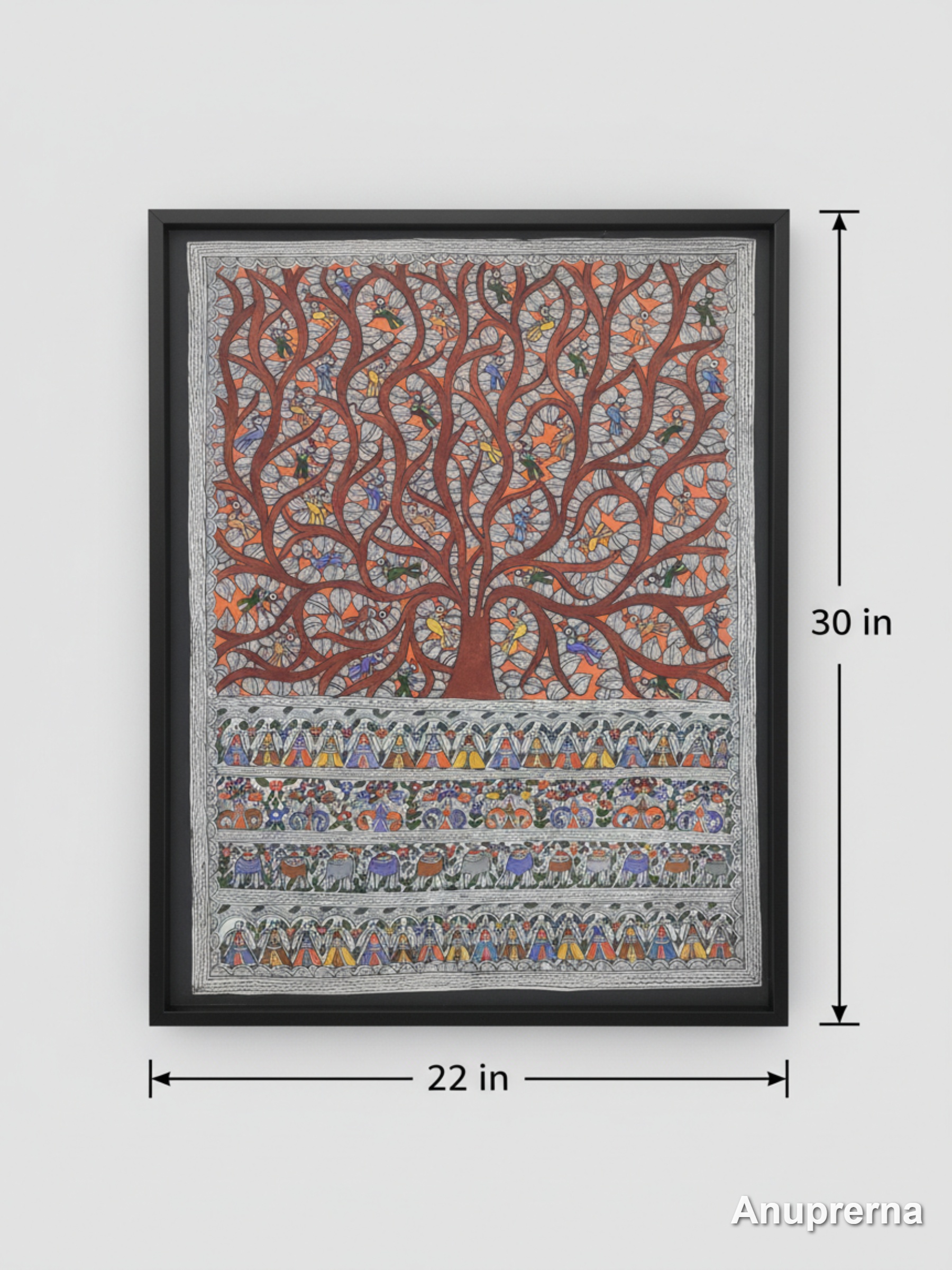
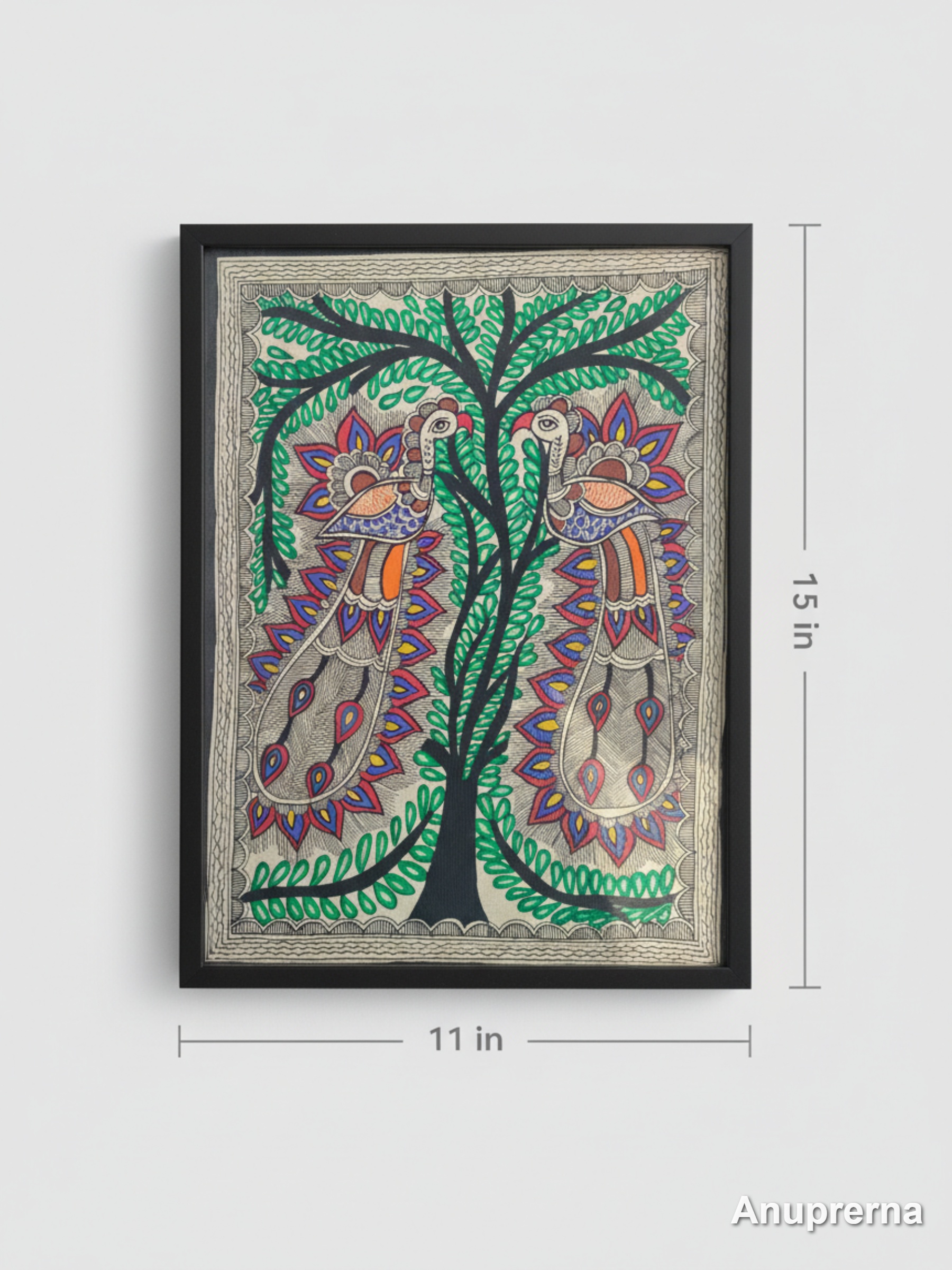
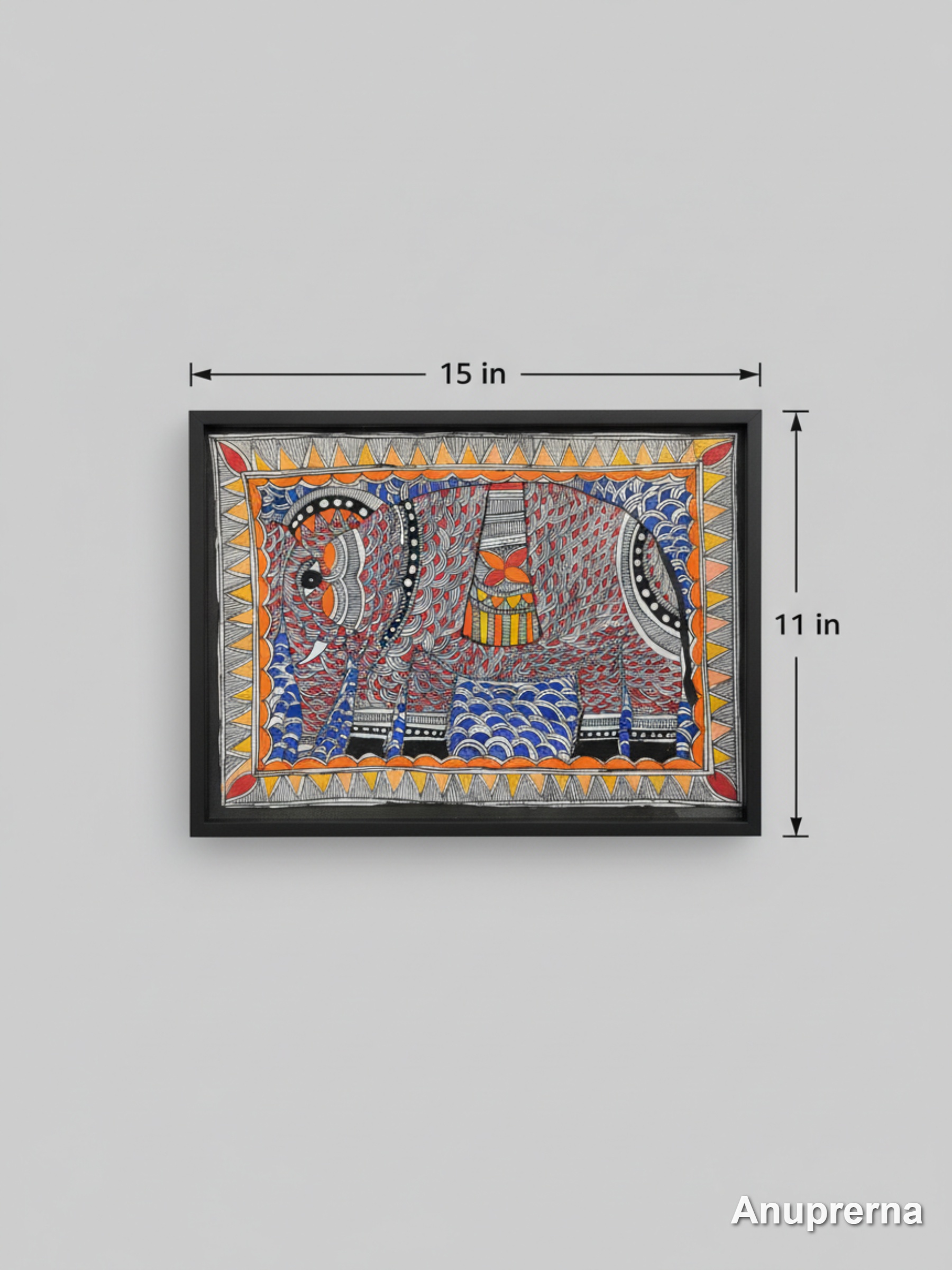
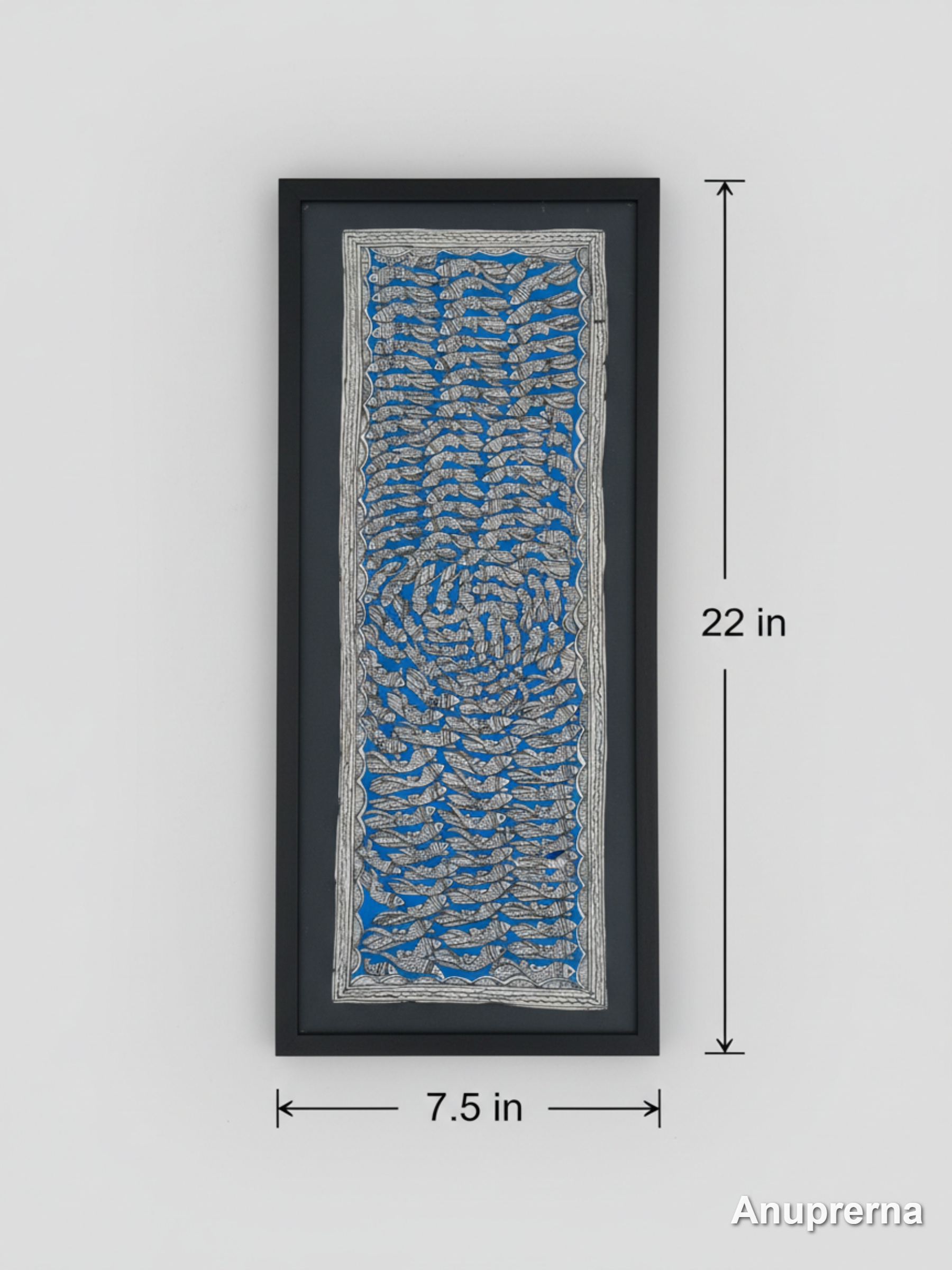
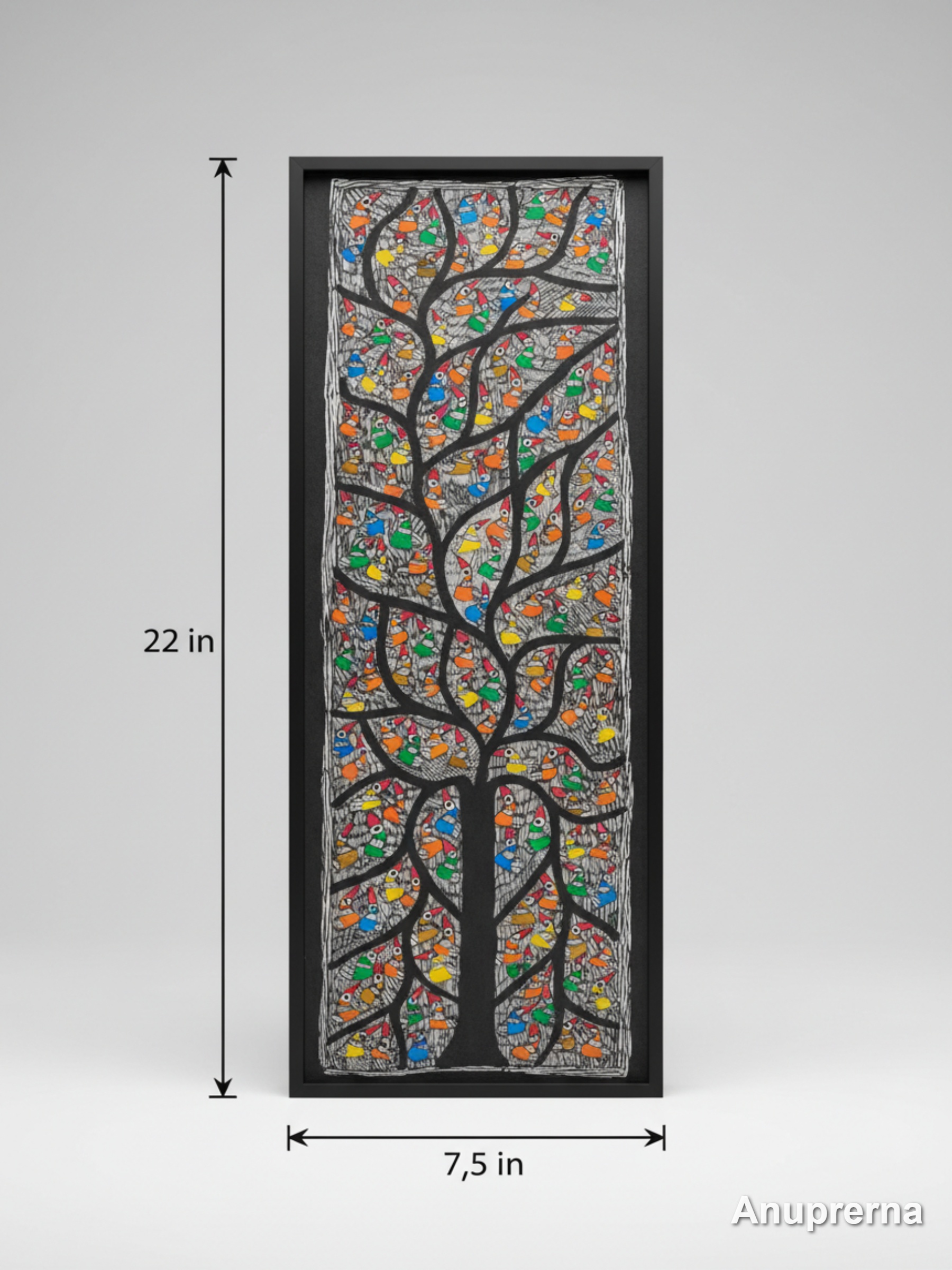
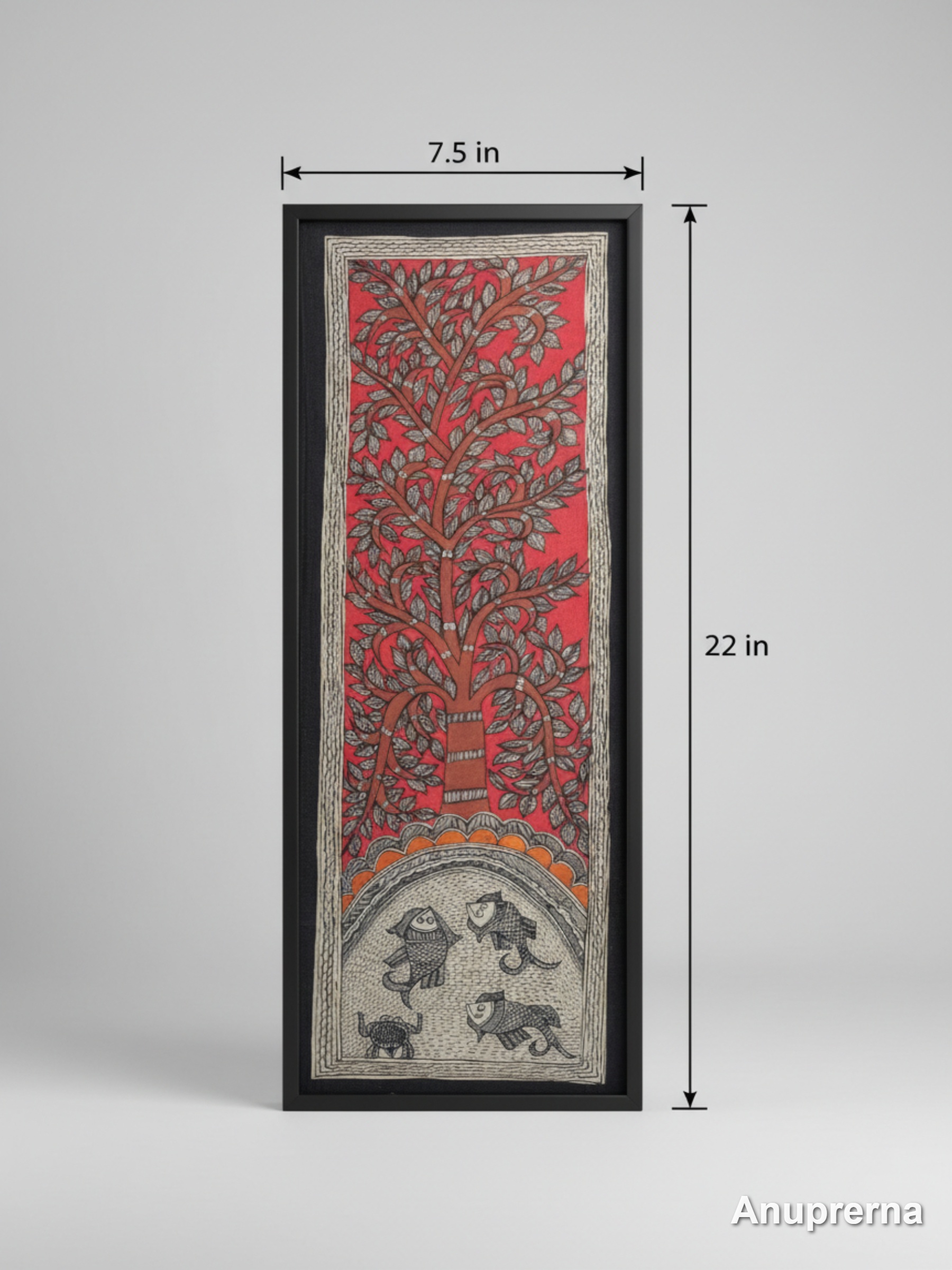
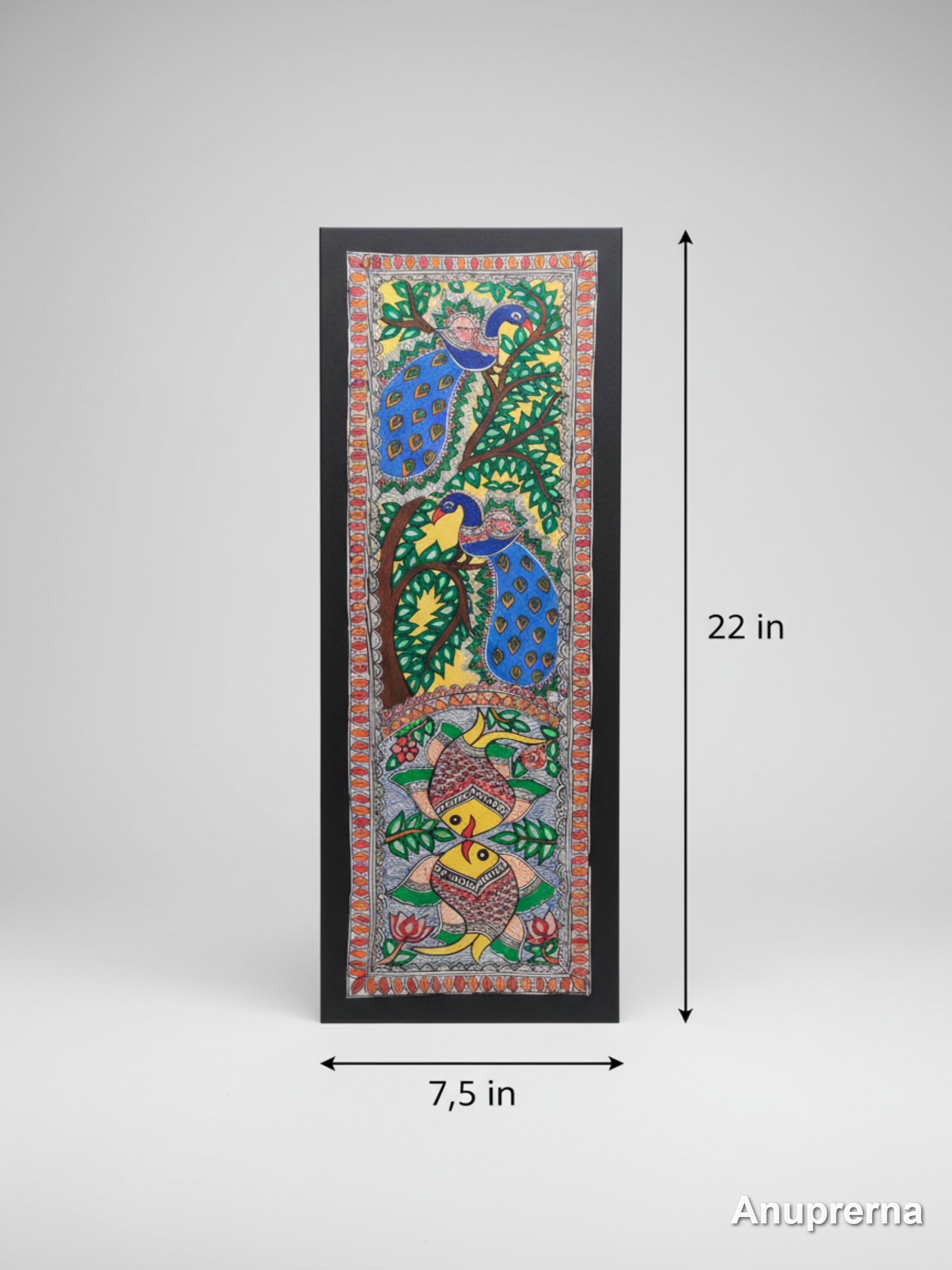
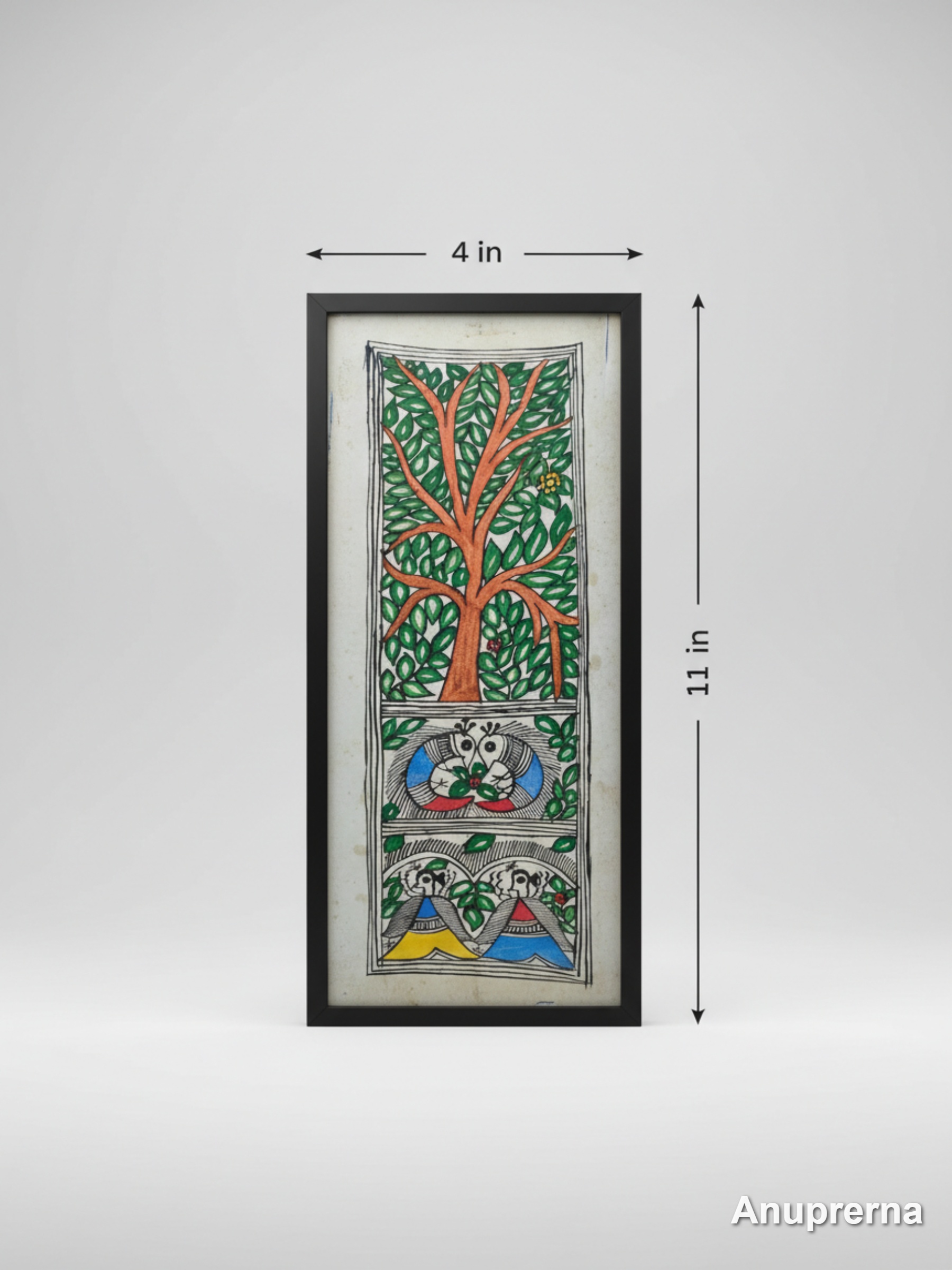
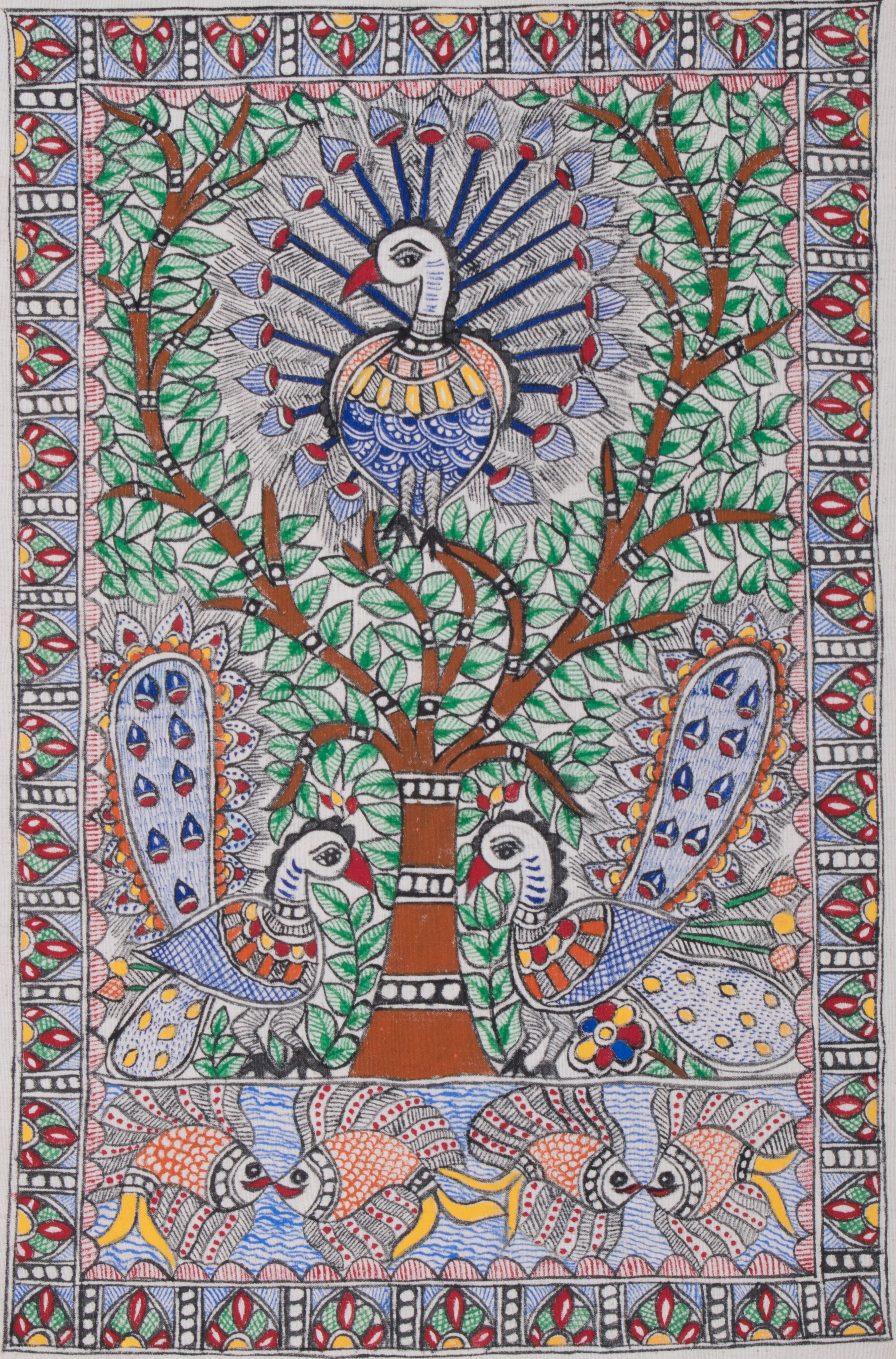
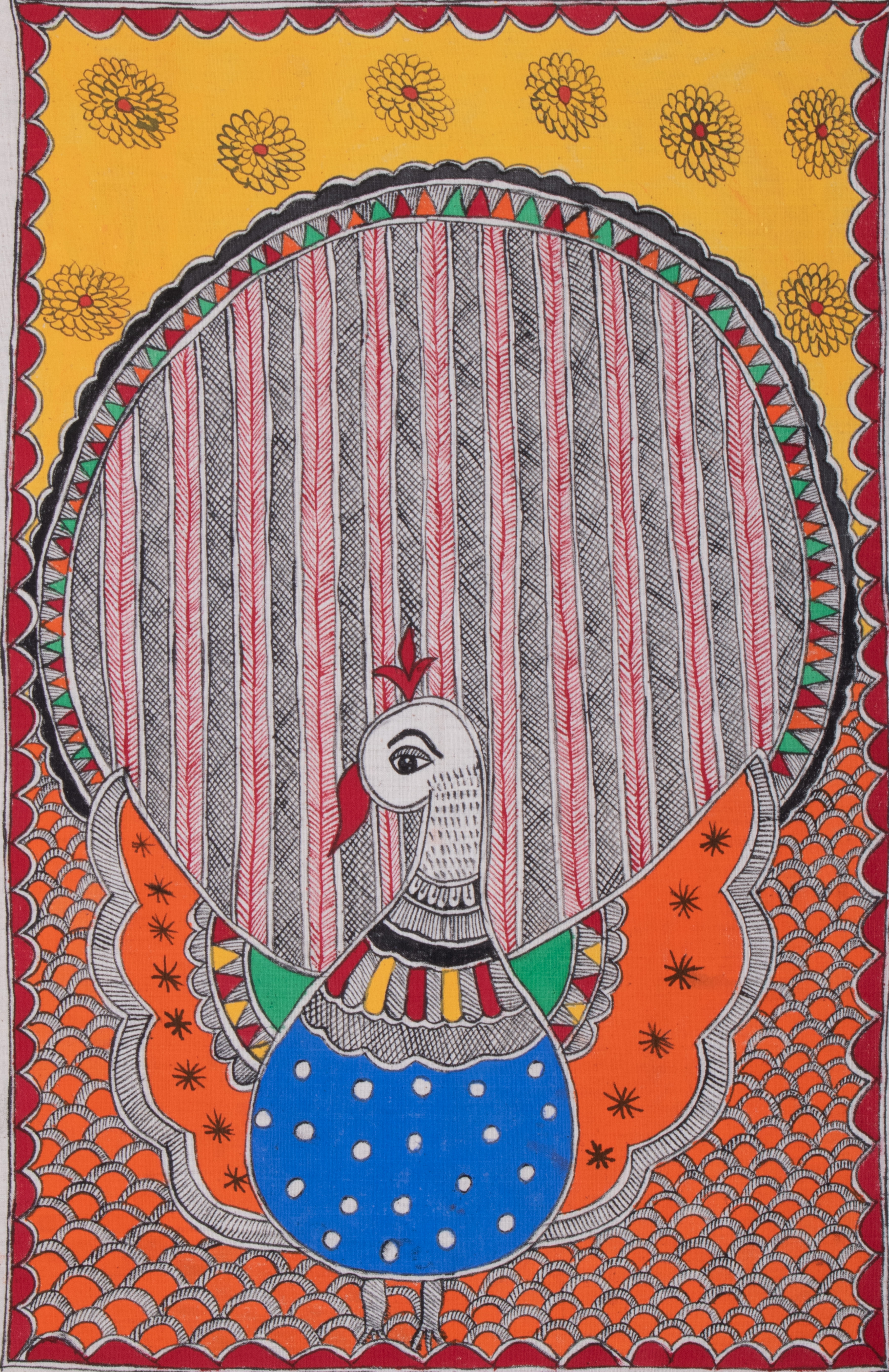
- Nature motifs such as fish, peacocks, trees and the sun
- Ritual imagery connected to marriage and fertility
- Everyday village life rendered through symbolic form
These subjects are not chosen randomly. Each motif carries layered meaning, reinforcing continuity between ritual, memory and representation.
Visual Characteristics
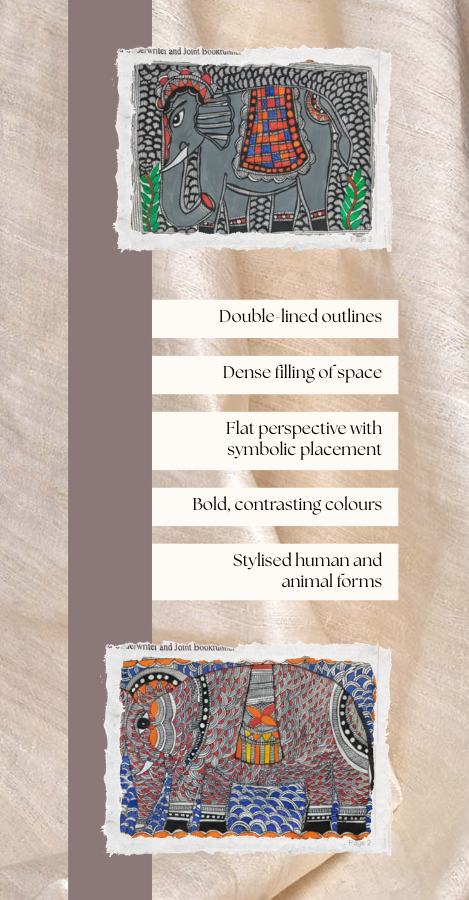
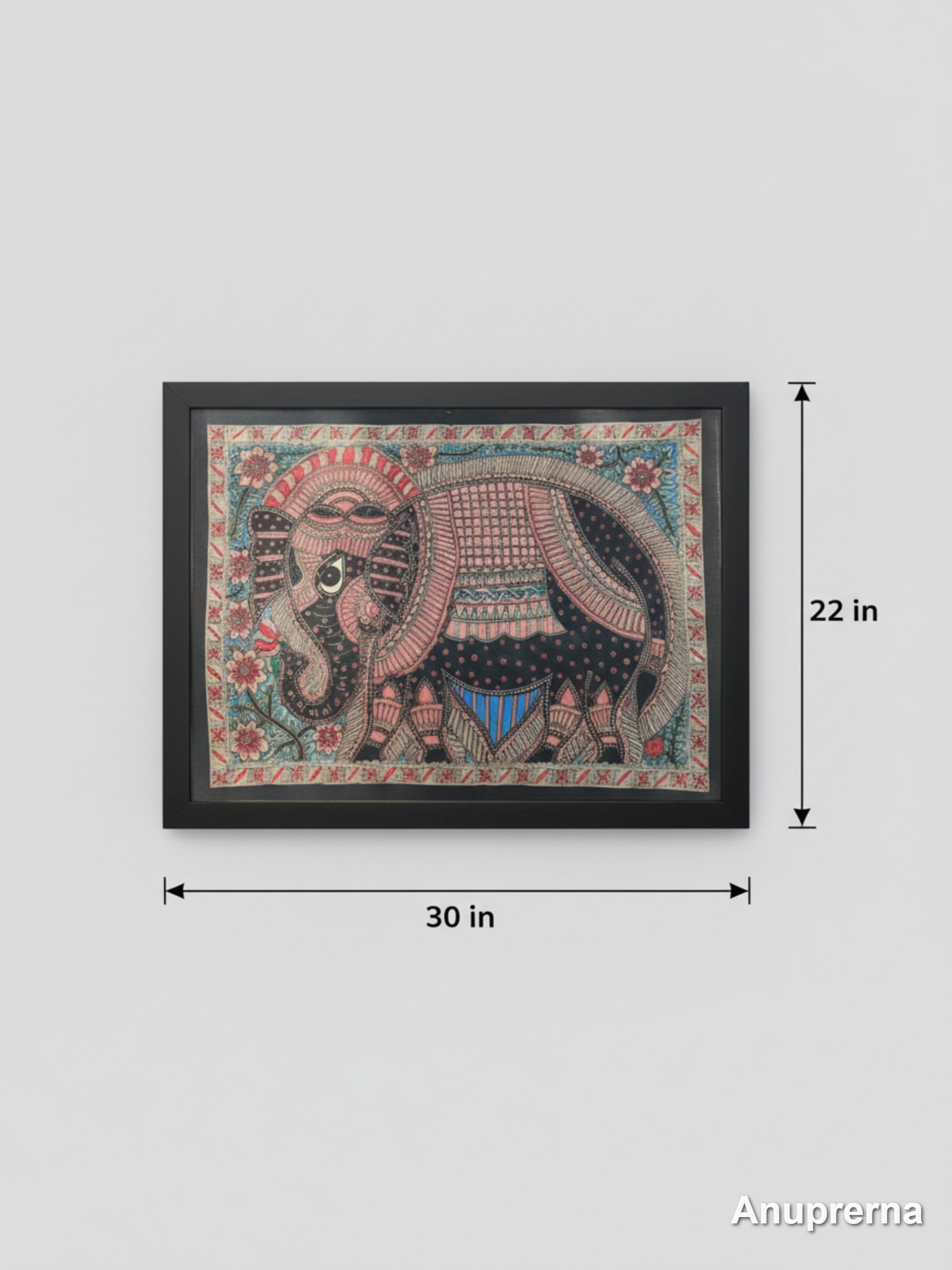
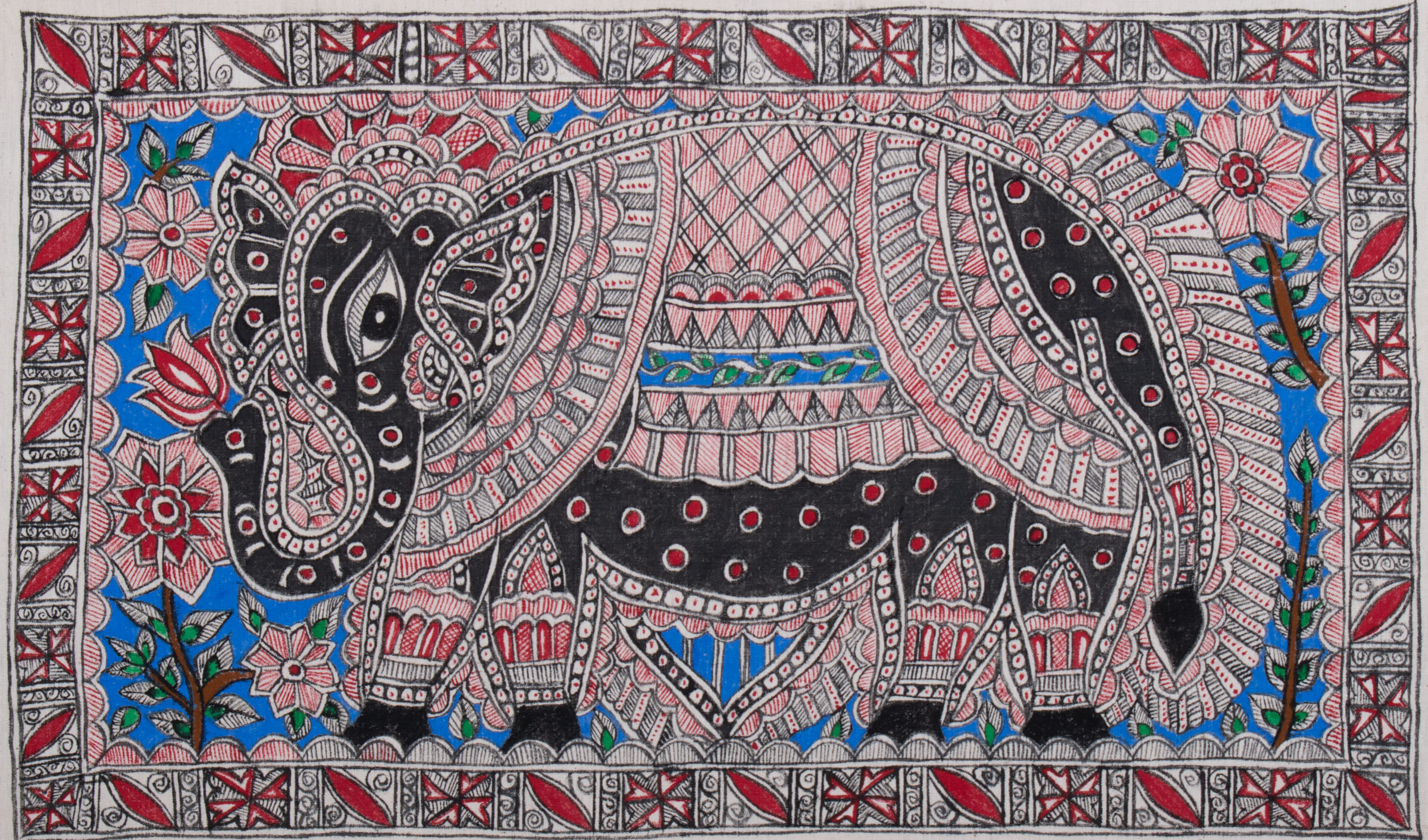
Madhubani follows a disciplined visual grammar. Every element is governed by convention and clarity rather than personal improvisation or decorative trends.
- Double-lined outlines
Figures and motifs are enclosed within two parallel lines, often filled with fine patterns. This technique reinforces structure and visual rhythm. - Flat perspective with symbolic placement
The artwork avoids illusionistic depth. Importance is conveyed through repetition, placement, and symbolic hierarchy rather than scale realism. - Dense filling of space
Empty space is rarely left untouched. Backgrounds are filled with intricate patterns, cross-hatching, dots, and geometric forms, maintaining visual continuity. - Bold, contrasting colours
Traditional palettes feature strong contrasts, often derived from natural pigments. Colour placement supports narrative clarity rather than tonal realism. - Stylised human and animal forms
Figures follow established proportions and gestures, prioritising recognisability and symbolic meaning over anatomical accuracy.
These characteristics are functional decisions. Together, they support the storytelling purpose of Madhubani, ensuring that meaning remains visible, layered and continuous rather than reduced to surface ornamentation.
Traditional Materials and Tools
Historically, Madhubani paintings were created using materials chosen for availability, control and longevity.
- Prepared surfaces
Originally painted on mud walls coated with cow dung and clay, later adapted to handmade paper and cloth. Surfaces were prepared carefully to ensure pigment adhesion and durability. - Natural and plant-based pigments
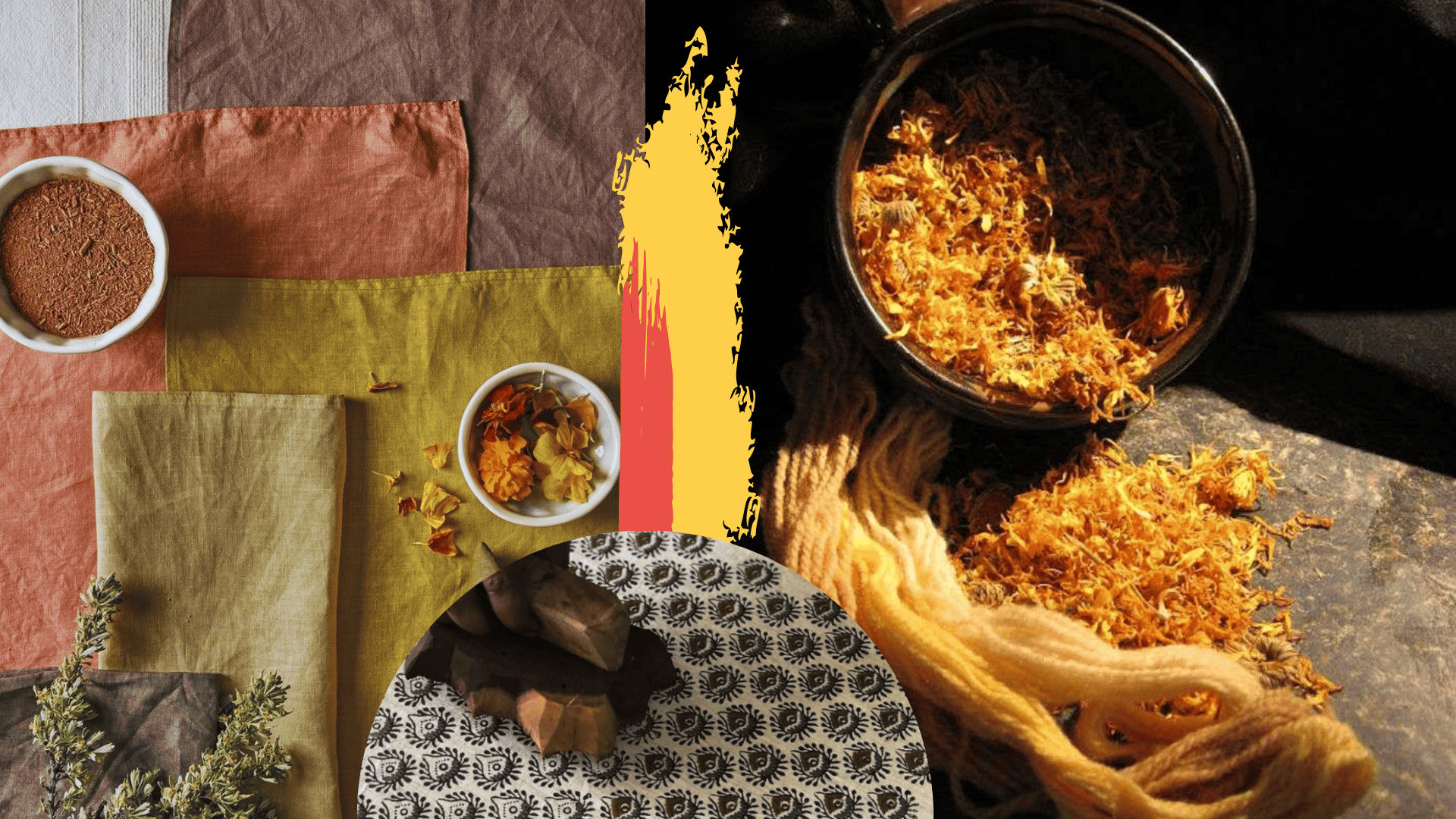
Colours were derived from turmeric, indigo, soot, flowers, and minerals. These pigments produced a restrained yet enduring palette that aged gradually rather than fading abruptly. - Handmade brushes and tools
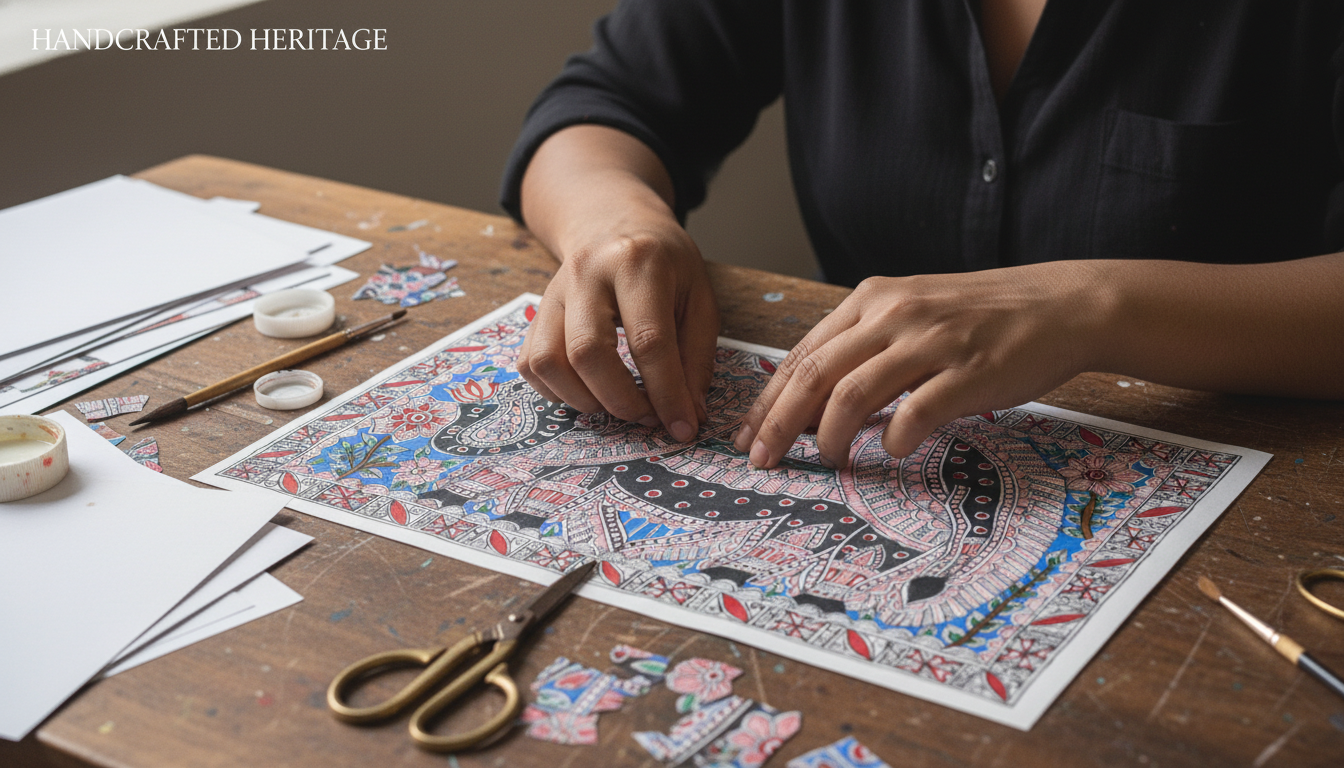
Artists traditionally used twigs, matchsticks, bamboo nibs, or cotton-wrapped sticks to create outlines and detailing. These tools allowed precision while maintaining the distinctive hand-drawn quality of the craft.
These material choices ensured structural stability and colour retention while supporting the discipline required for detailed pattern work.
The Making Process
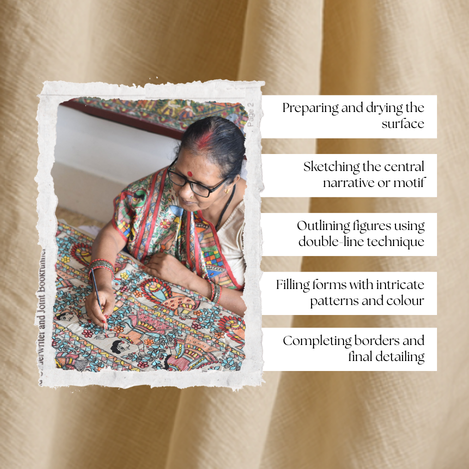
While techniques vary across communities and family lineages, the process generally follows a structured sequence:
- Preparing and drying the surface
- Sketching the central narrative or motif
- Outlining figures using double-line technique
- Filling forms with intricate patterns and colour
- Completing borders and final detailing
Each stage builds on the previous one. The process demands patience, repetition and compositional control to maintain balance across densely filled surfaces.
Madhubani as Wall Art
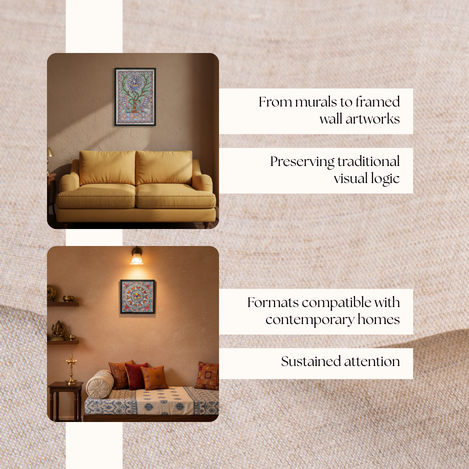
In contemporary settings, Madhubani has transitioned from murals to framed wall artworks. Rather than covering entire walls, compositions are structured within defined boundaries suited to modern interiors.
Artists adjust scale and narrative density to ensure clarity within a single frame while preserving traditional visual logic. Borders continue to organise space. Patterns continue to fill surfaces. Symbolic forms remain central.
The adaptation does not simplify the language of the craft. It translates it into formats compatible with contemporary homes without detaching it from its ritual and narrative foundations. When displayed as wall art, Madhubani invites sustained attention. It encourages viewing as interpretation rather than passive decoration.
Sustaining the Craft Today
Madhubani continues as a living tradition. Its continuity depends not only on artistic skill but also on systems that support consistent production, material sourcing and fair collaboration.
At Anuprerna, this craft is supported through a coordinated ecosystem that brings artists and suppliers into a structured production framework. This approach helps maintain artistic integrity while enabling predictable workflows, responsible sourcing, and economic viability in contemporary markets.
Sustainability here is not a slogan. It is an operational discipline.
Care and Display
To preserve Madhubani artworks over time:
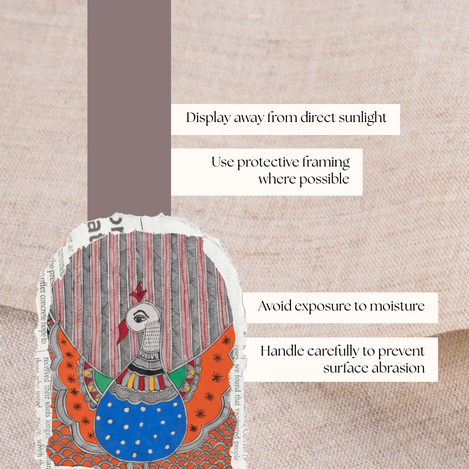
- Display away from direct sunlight
- Use protective framing where possible
- Avoid exposure to moisture
- Handle carefully to prevent surface abrasion
With proper care, these artworks retain their colour intensity and detailing for years.
Continuing a Visual Tradition
Madhubani is not preserved through nostalgia.
Its relevance lies in continued practice, informed appreciation and structured support systems that allow artists to work with consistency and dignity.
The art remains rooted in symbolism, repetition and narrative discipline. Its evolution does not depend on reinvention but on continuity supported by responsible frameworks.
As long as the stories are valued and the systems sustaining the artists remain intact, Madhubani endures through relevance rather than preservation alone.
most asked questions
Is Madhubani still practised today?
Yes, Madhubani is a living art tradition. It continues to be practised by artisan communities in Bihar and surrounding regions. Sustainable production frameworks and fair collaboration models help ensure the craft remains economically viable and culturally relevant.
What is Madhubani wall art?
Madhubani wall art is a traditional painting style from the Mithila region of Bihar. Known for its dense patterns, symbolic imagery, and double-line outlines, it was historically painted on mud walls during rituals and festivals. Today, it is created on handmade paper and cloth while preserving its narrative structure.
What makes Madhubani paintings unique?
Madhubani follows a disciplined visual grammar. It features double-lined outlines, flat perspective, bold contrasting colours, and densely filled backgrounds. Every motif carries symbolic meaning, making the artwork narrative-driven rather than purely decorative.
Are Madhubani paintings made using natural colours?
Traditionally, Madhubani artists used natural pigments derived from turmeric, indigo, soot, flowers, and minerals. Many artisans continue to follow these methods, ensuring colour longevity and authenticity in the artwork.
How should Madhubani wall art be displayed and maintained?
Madhubani artworks should be displayed away from direct sunlight and moisture. Protective framing is recommended to preserve detailing and colour intensity. Avoid excessive handling to prevent surface abrasion.
More Stories
patachittra wall art
eco printing
khesh recycled fabric
eri peace silk
naturally dyed block printing

digital printing