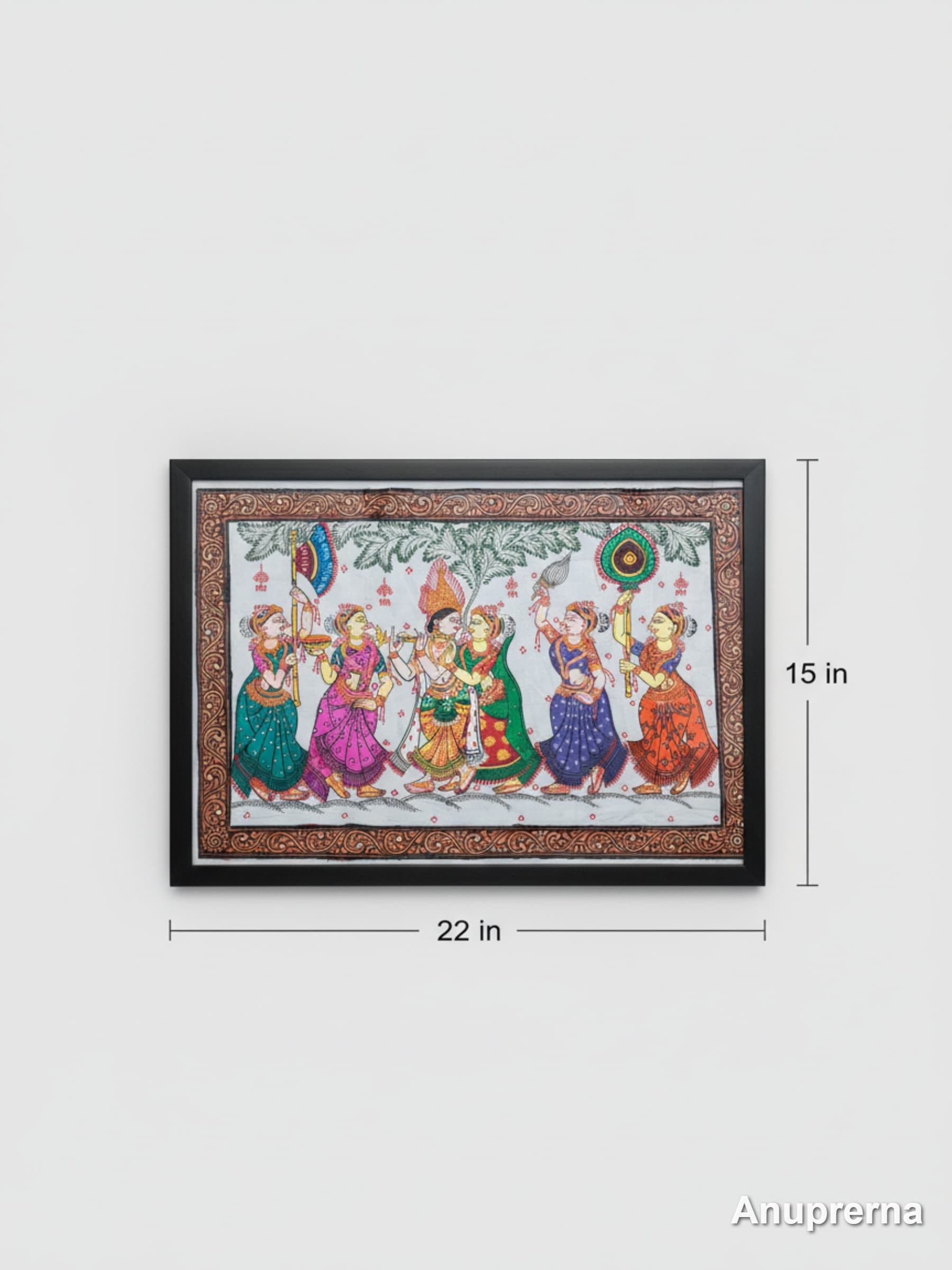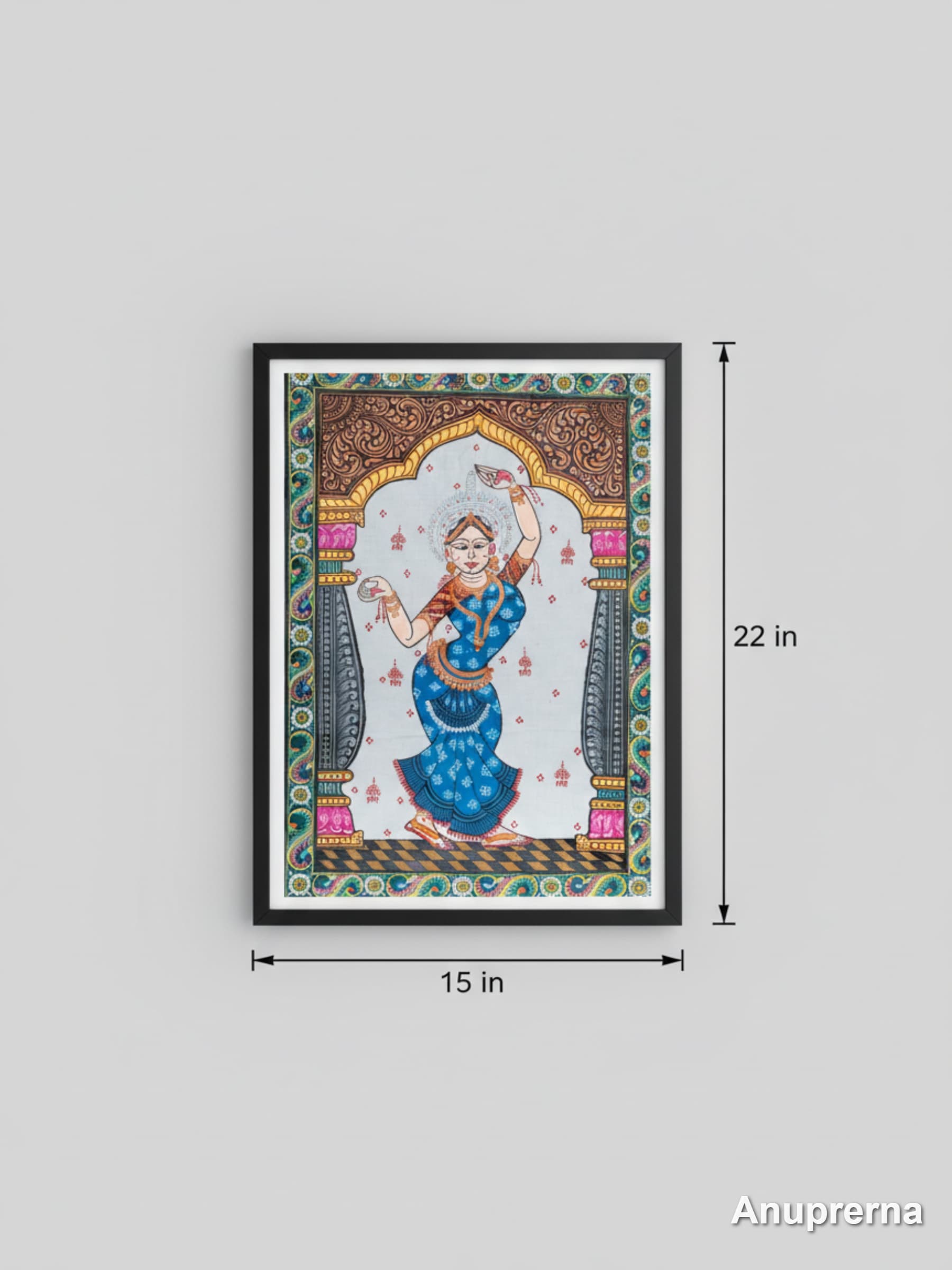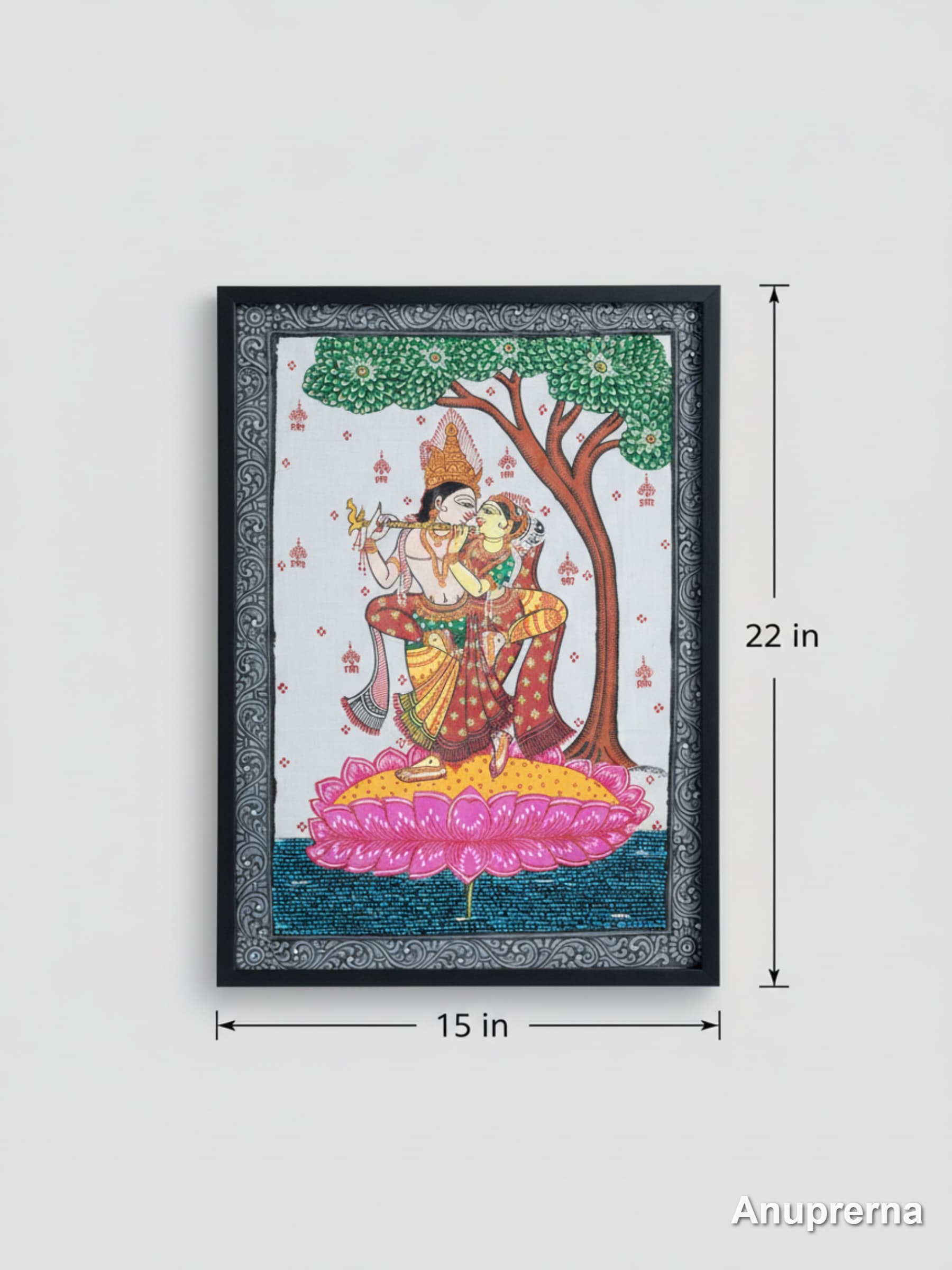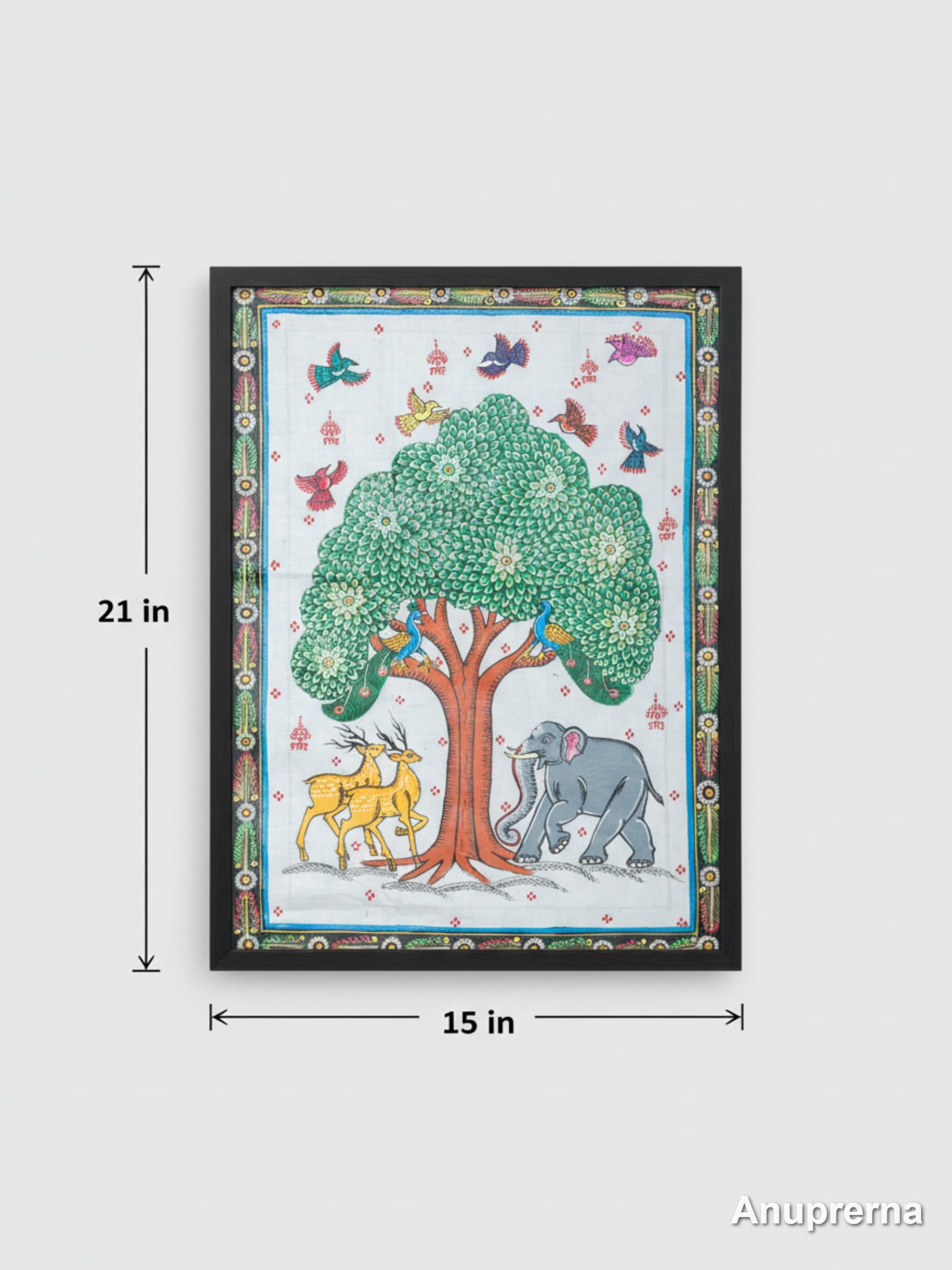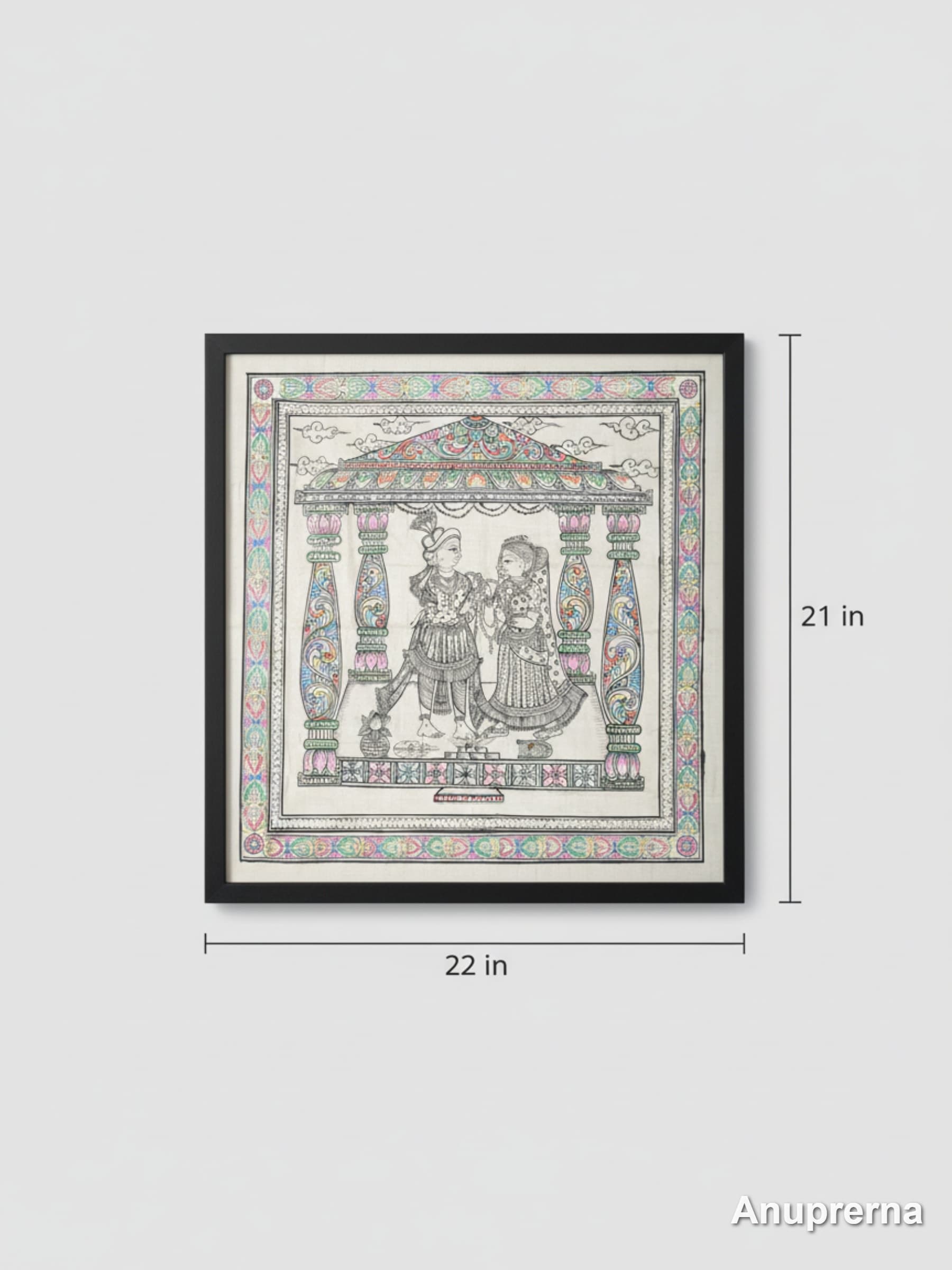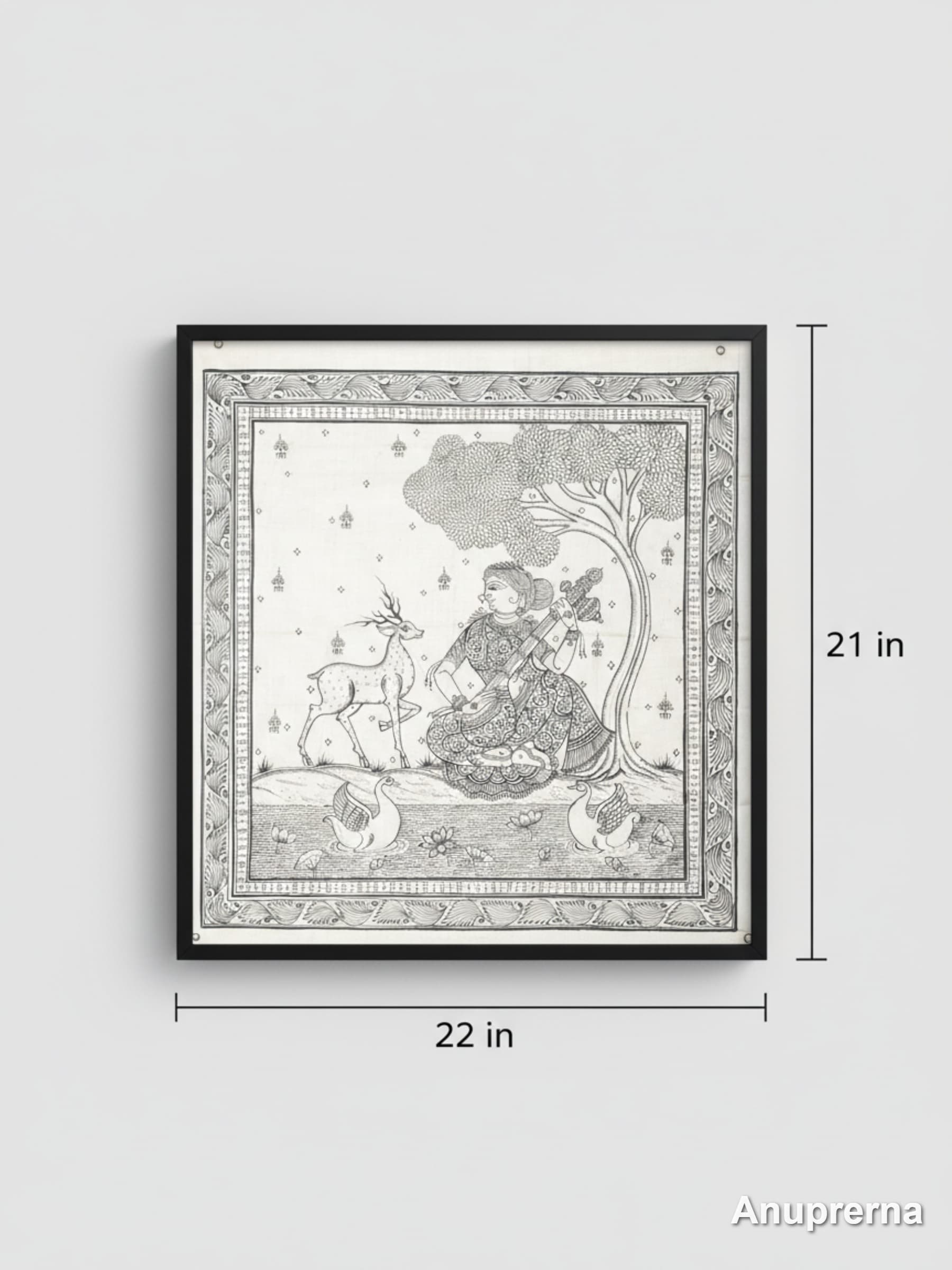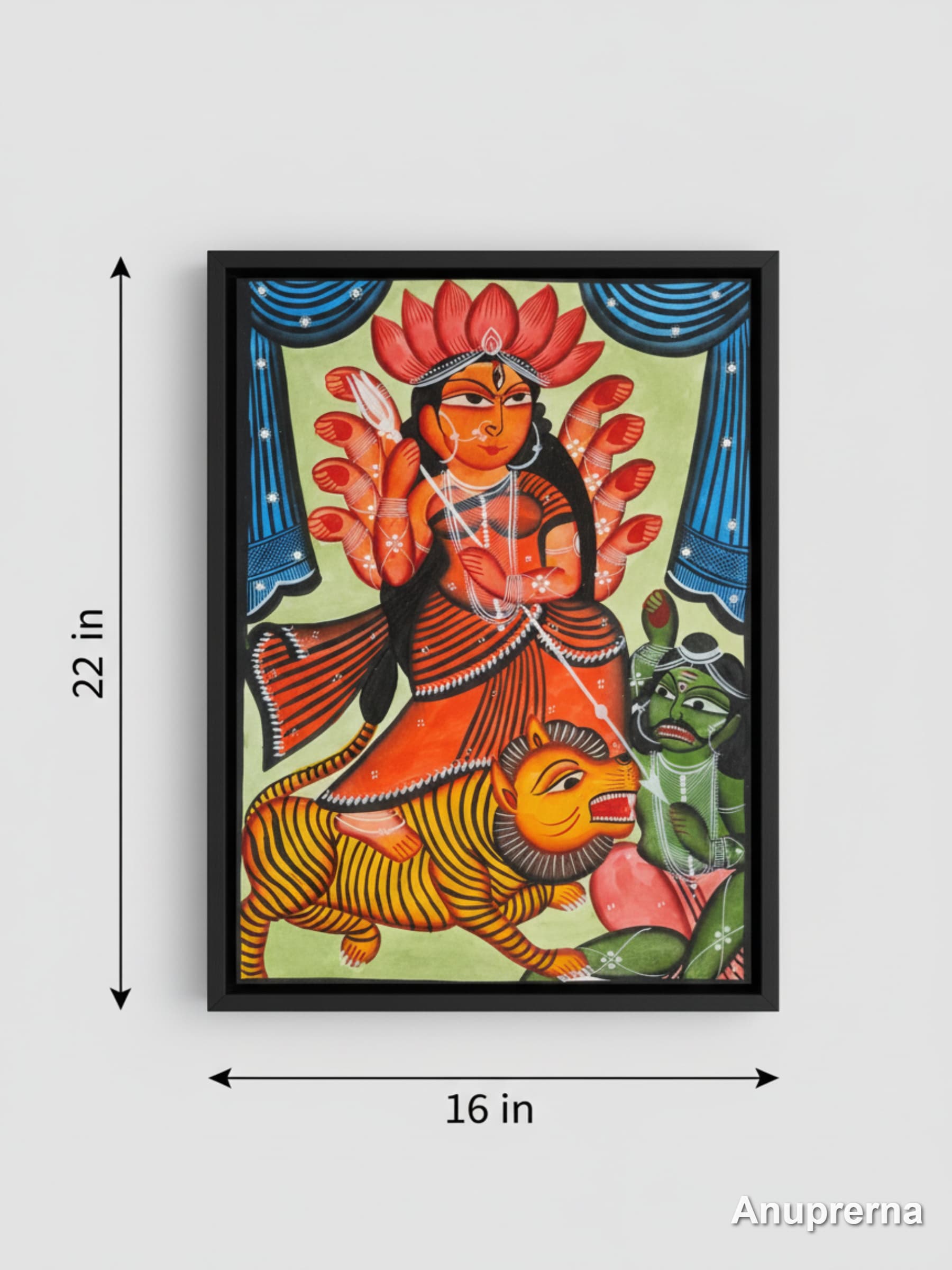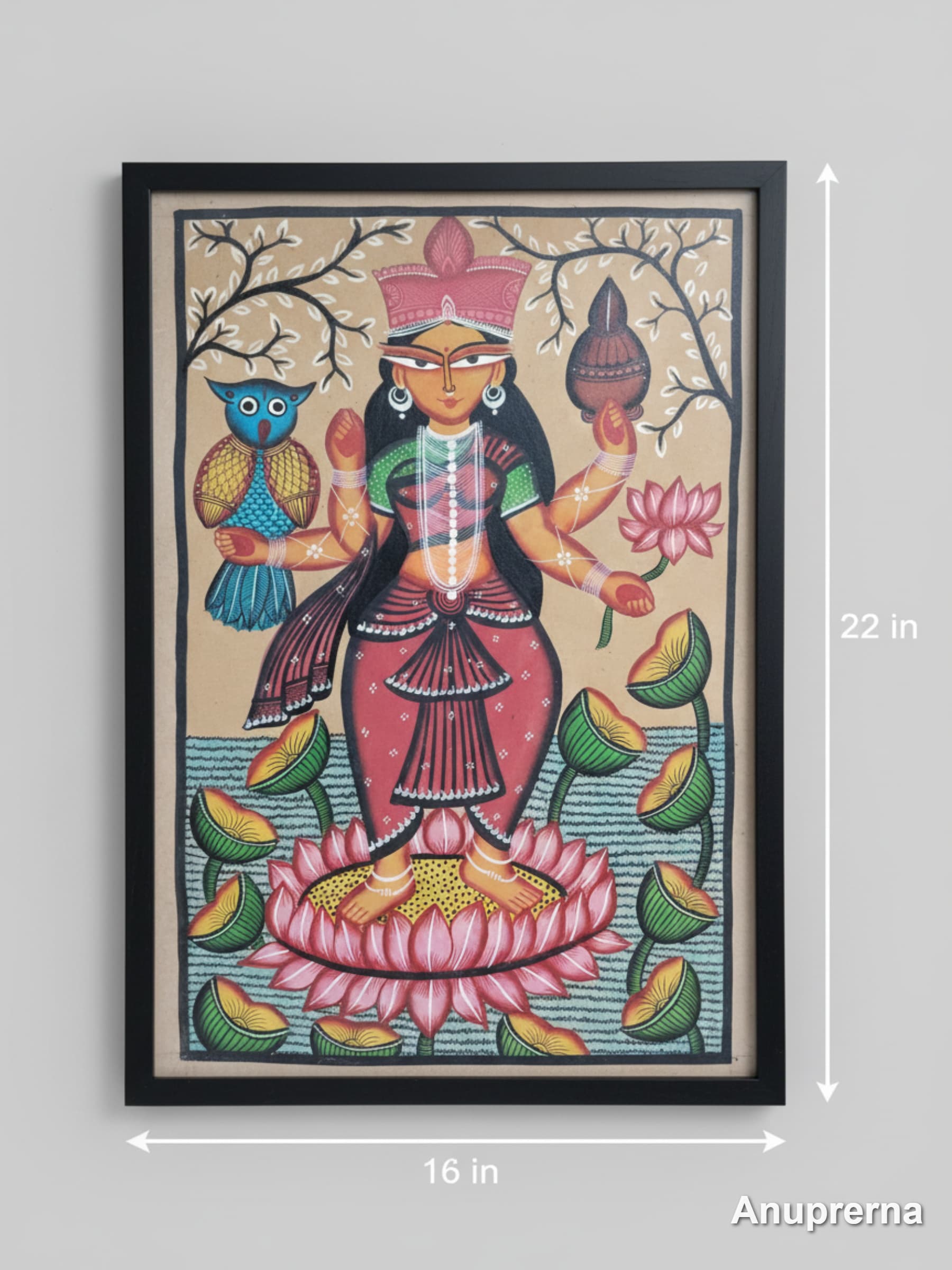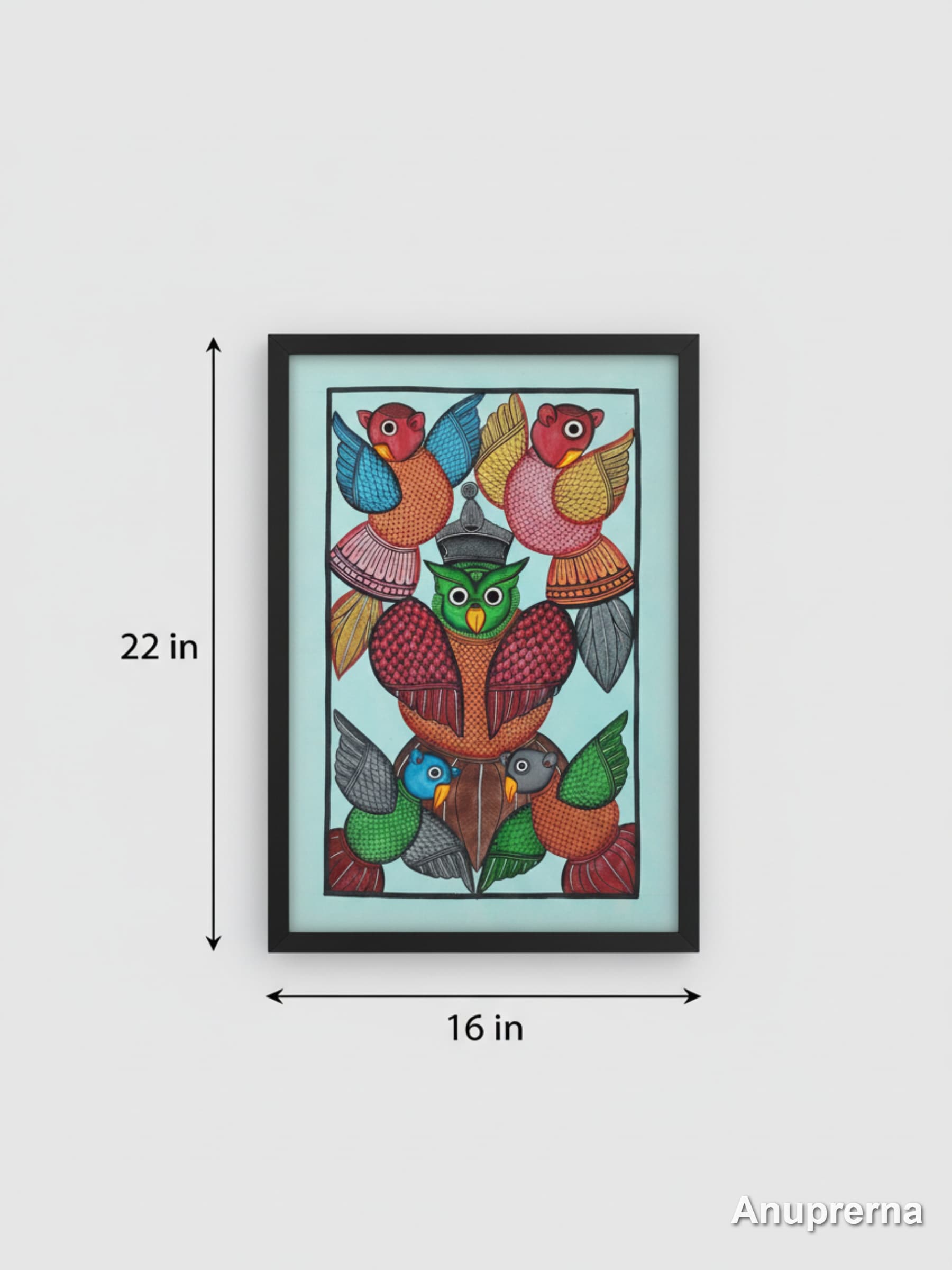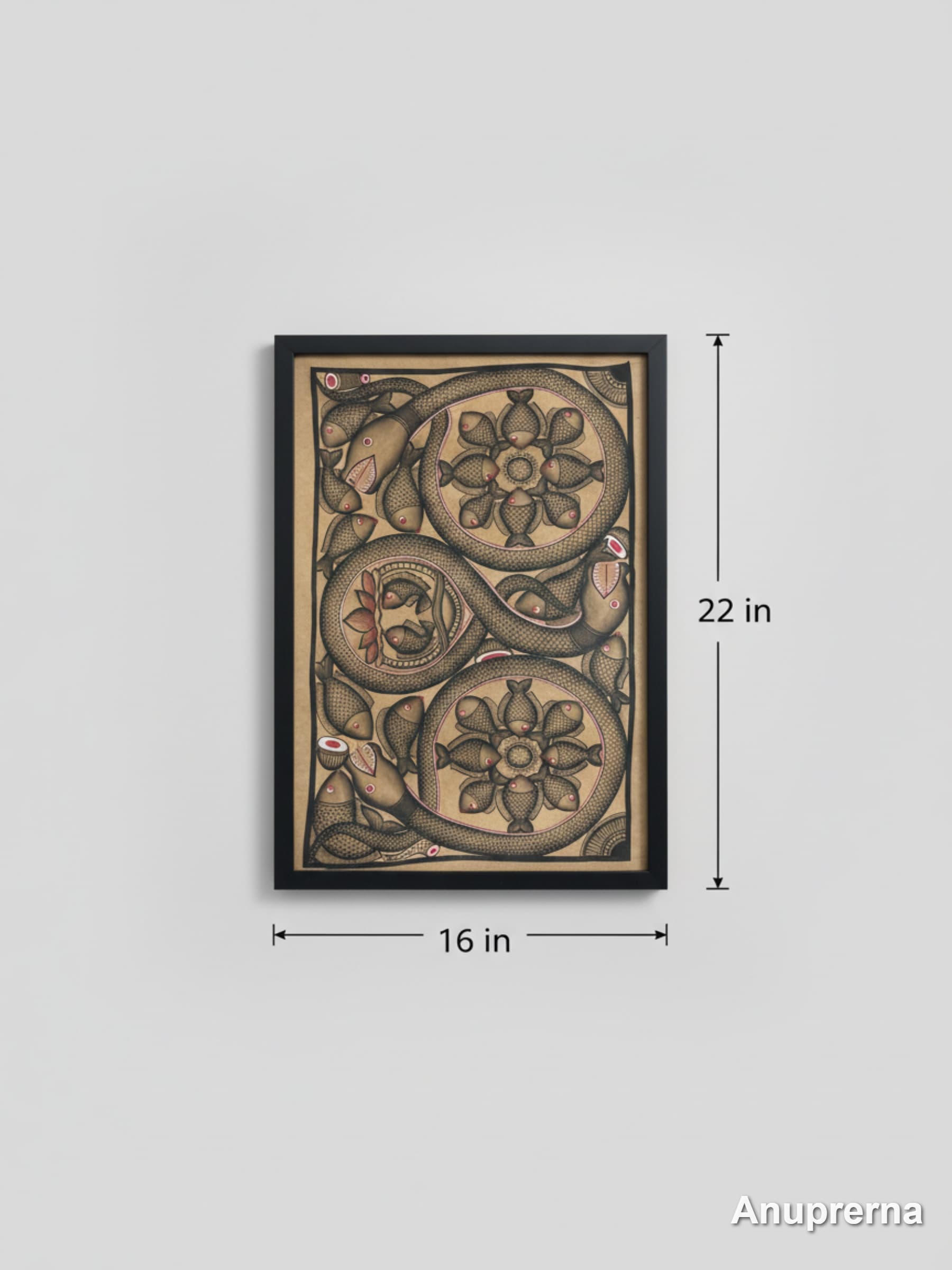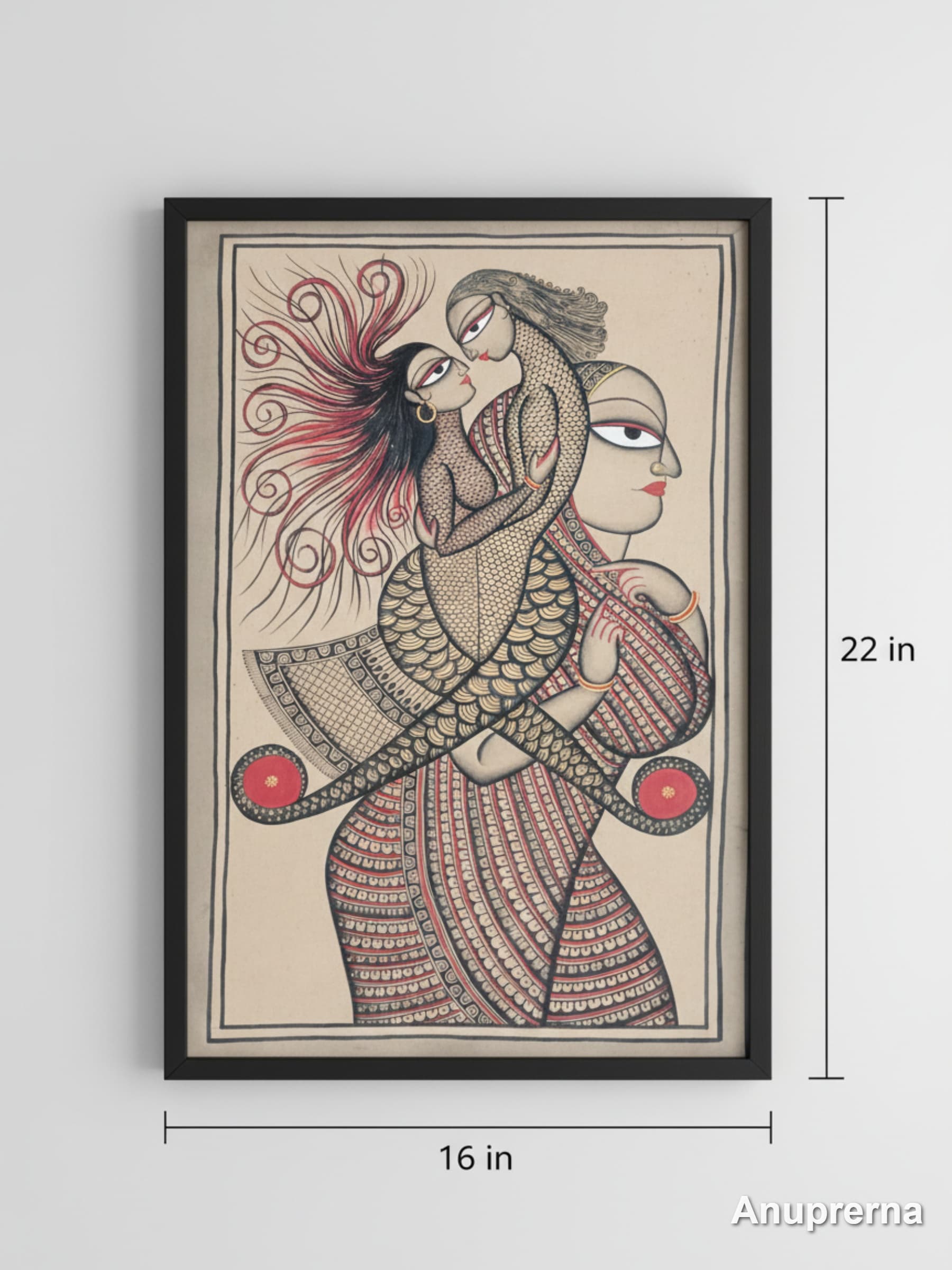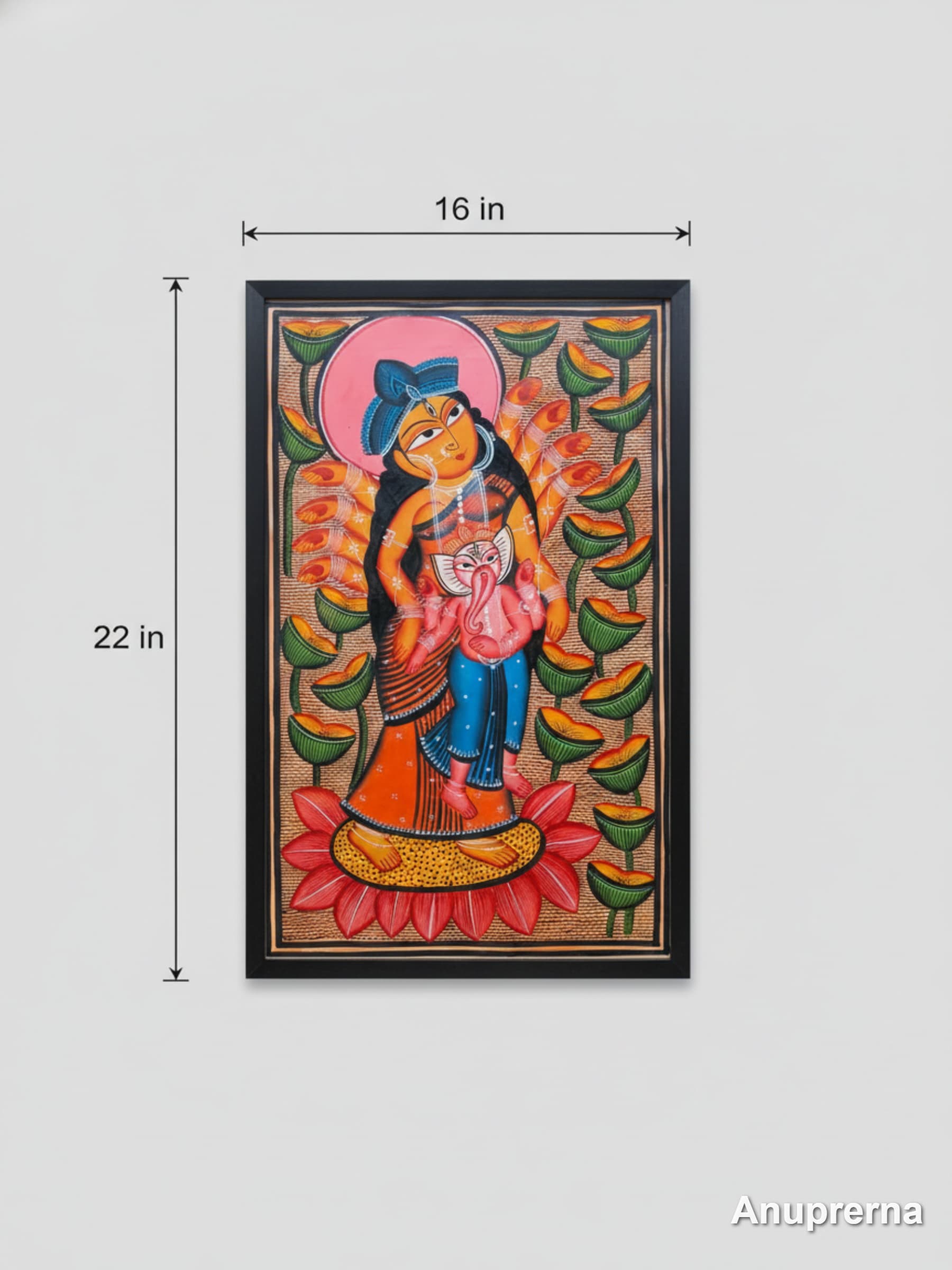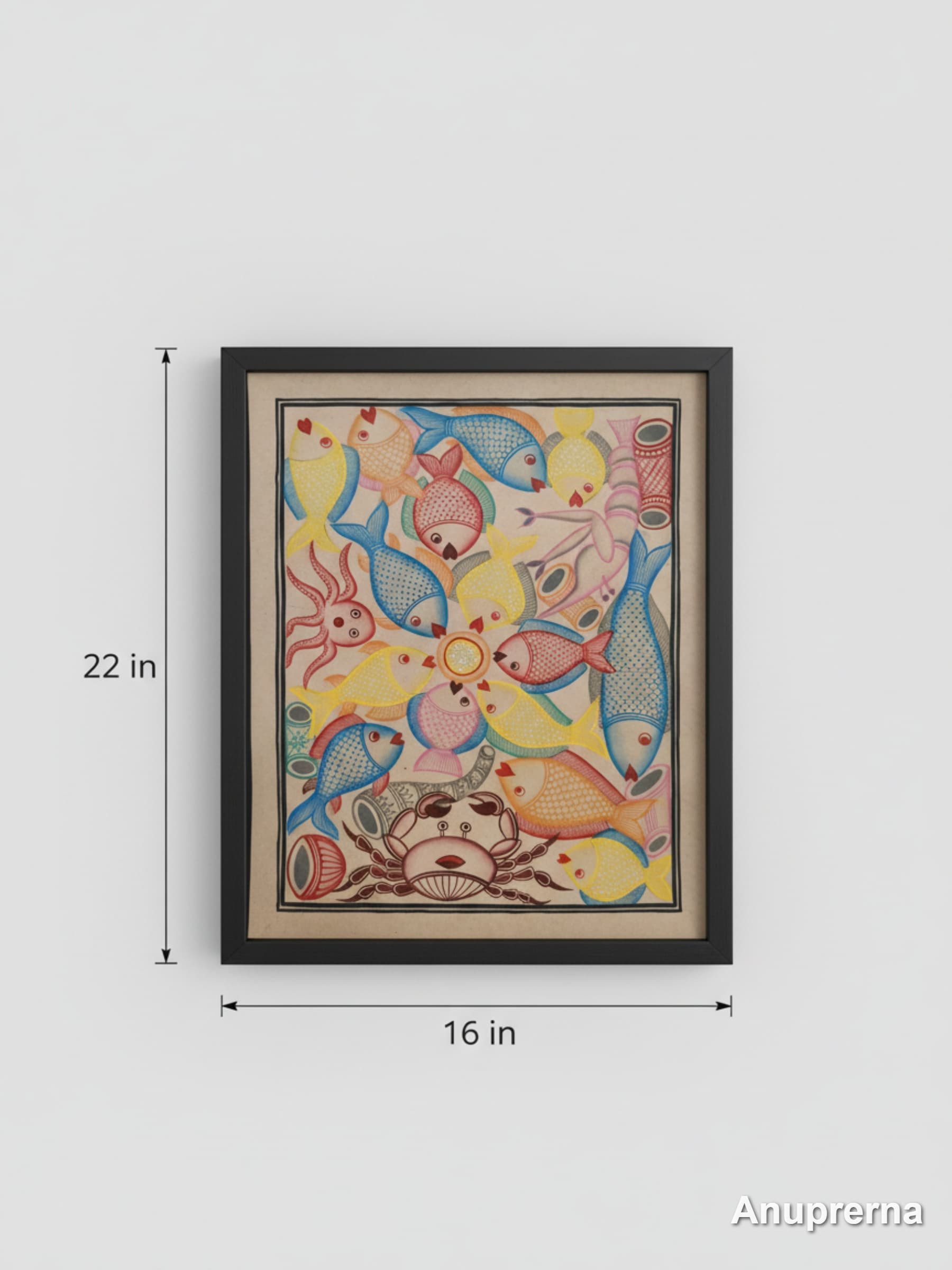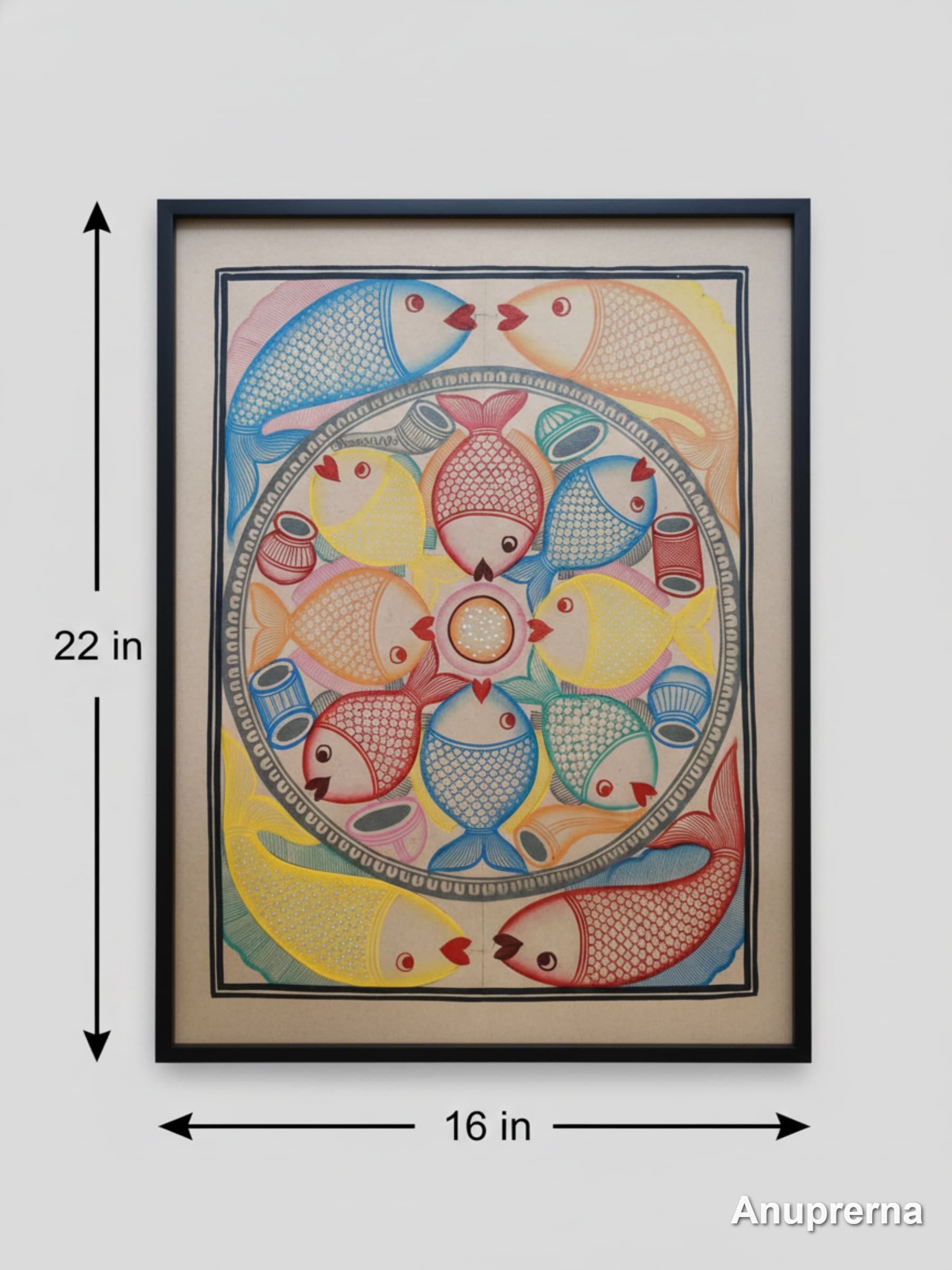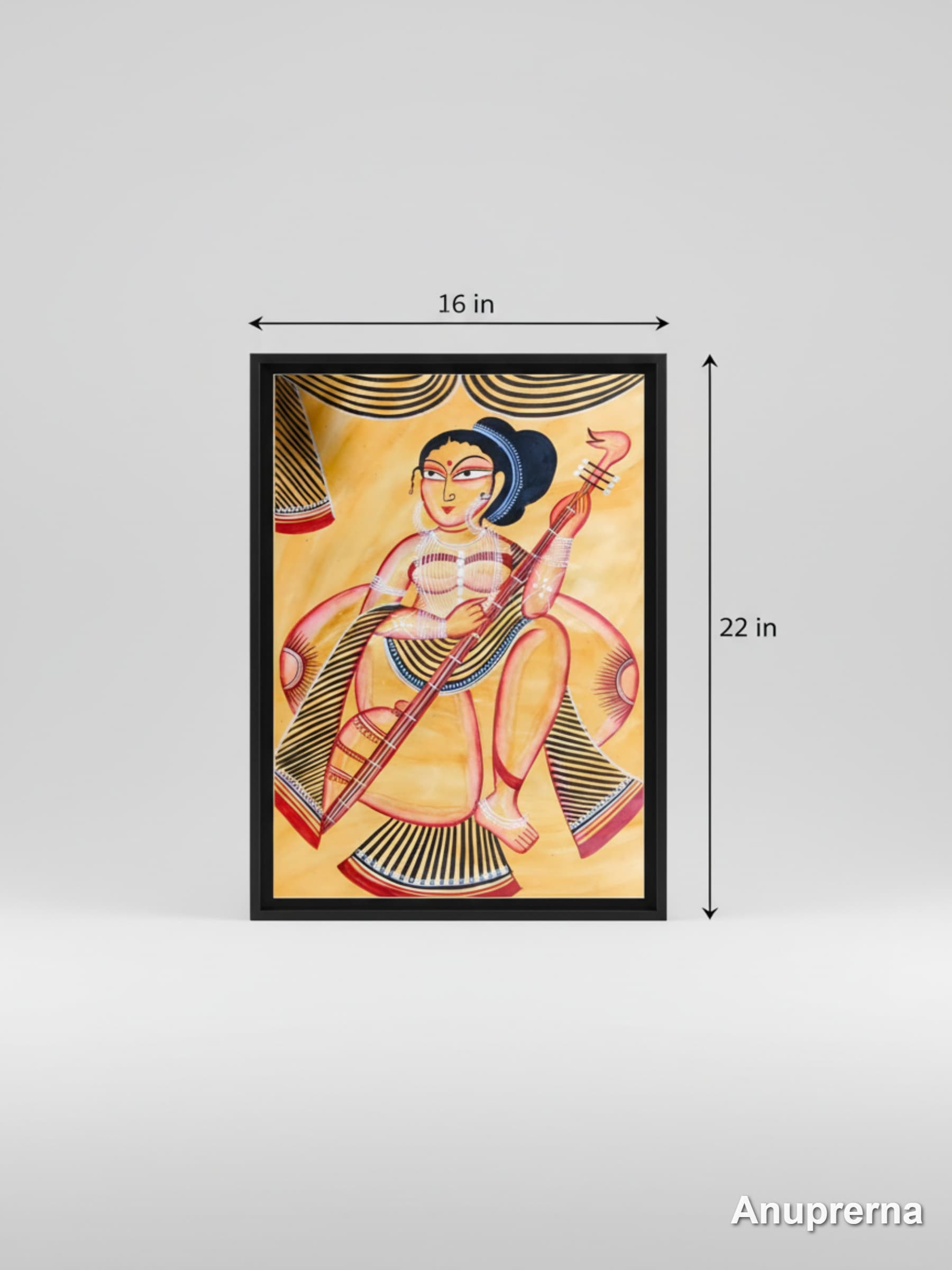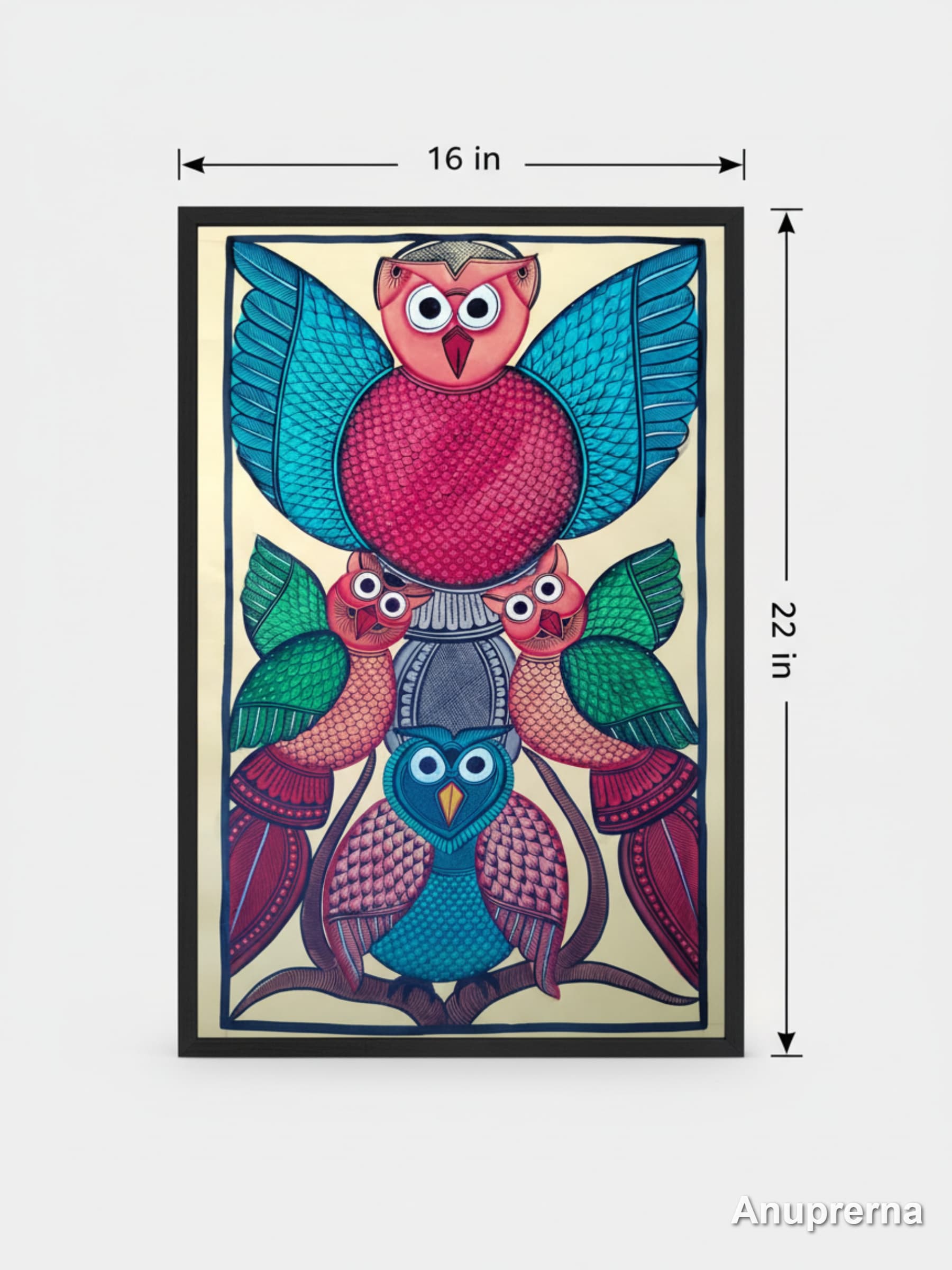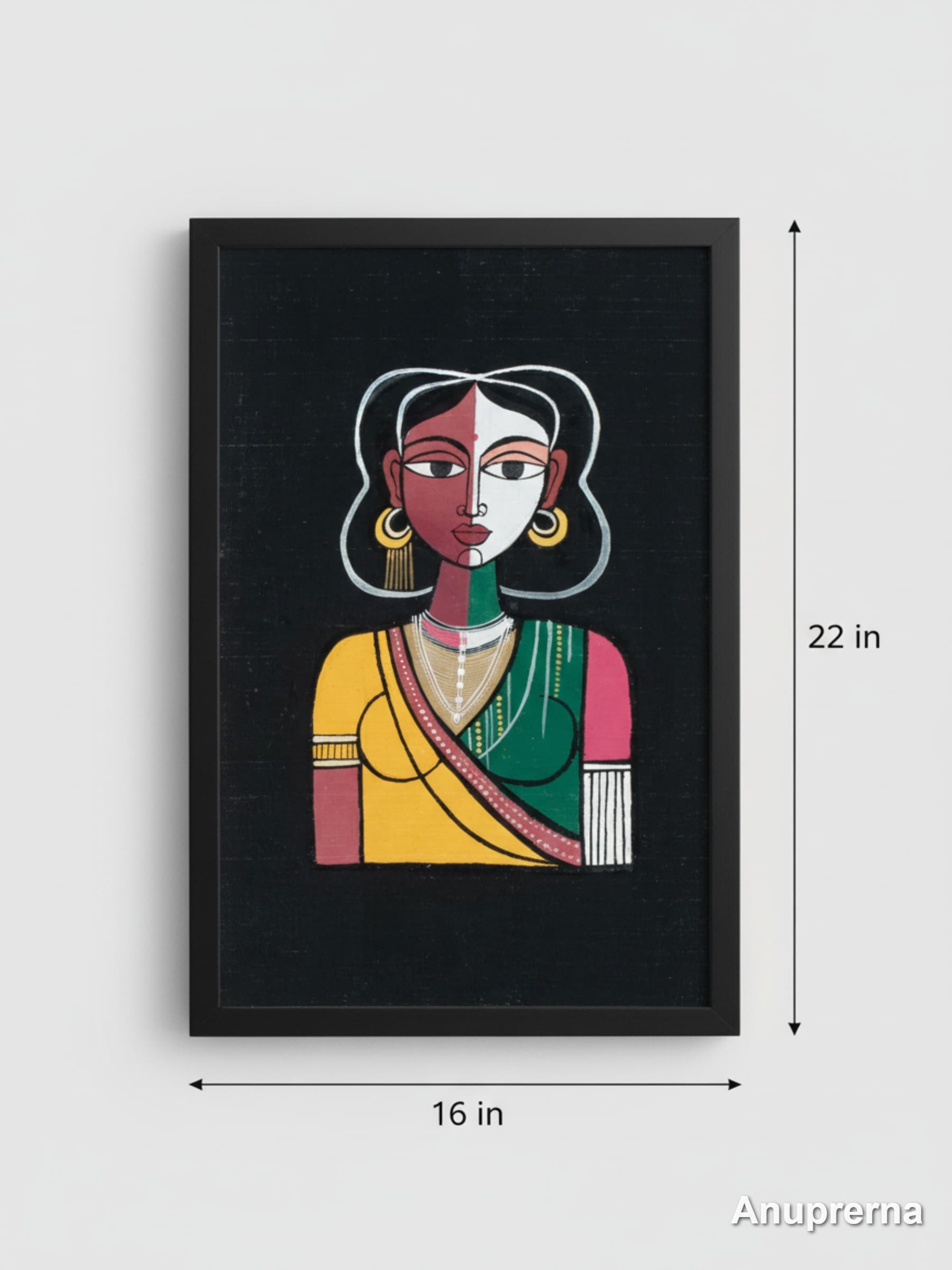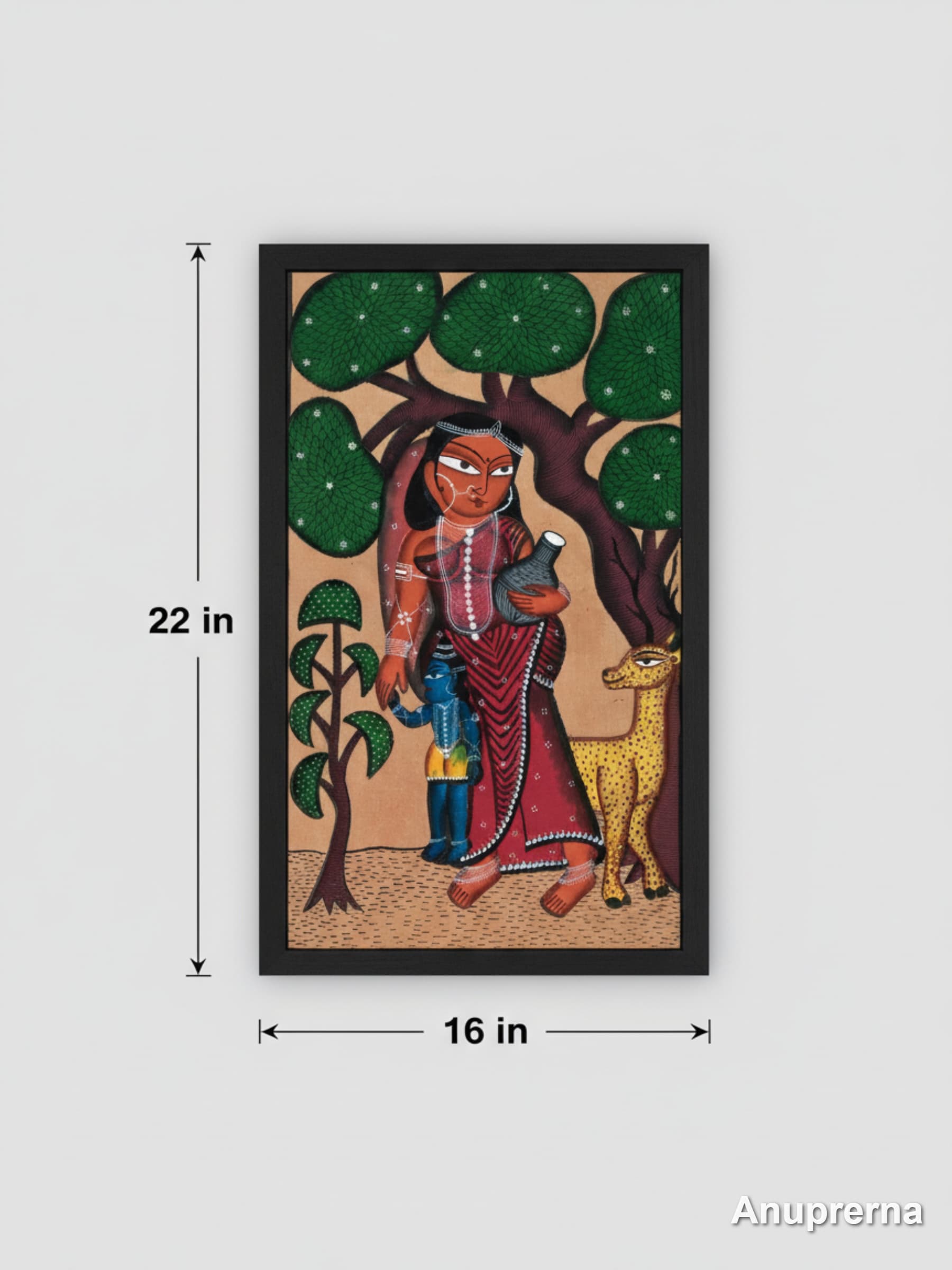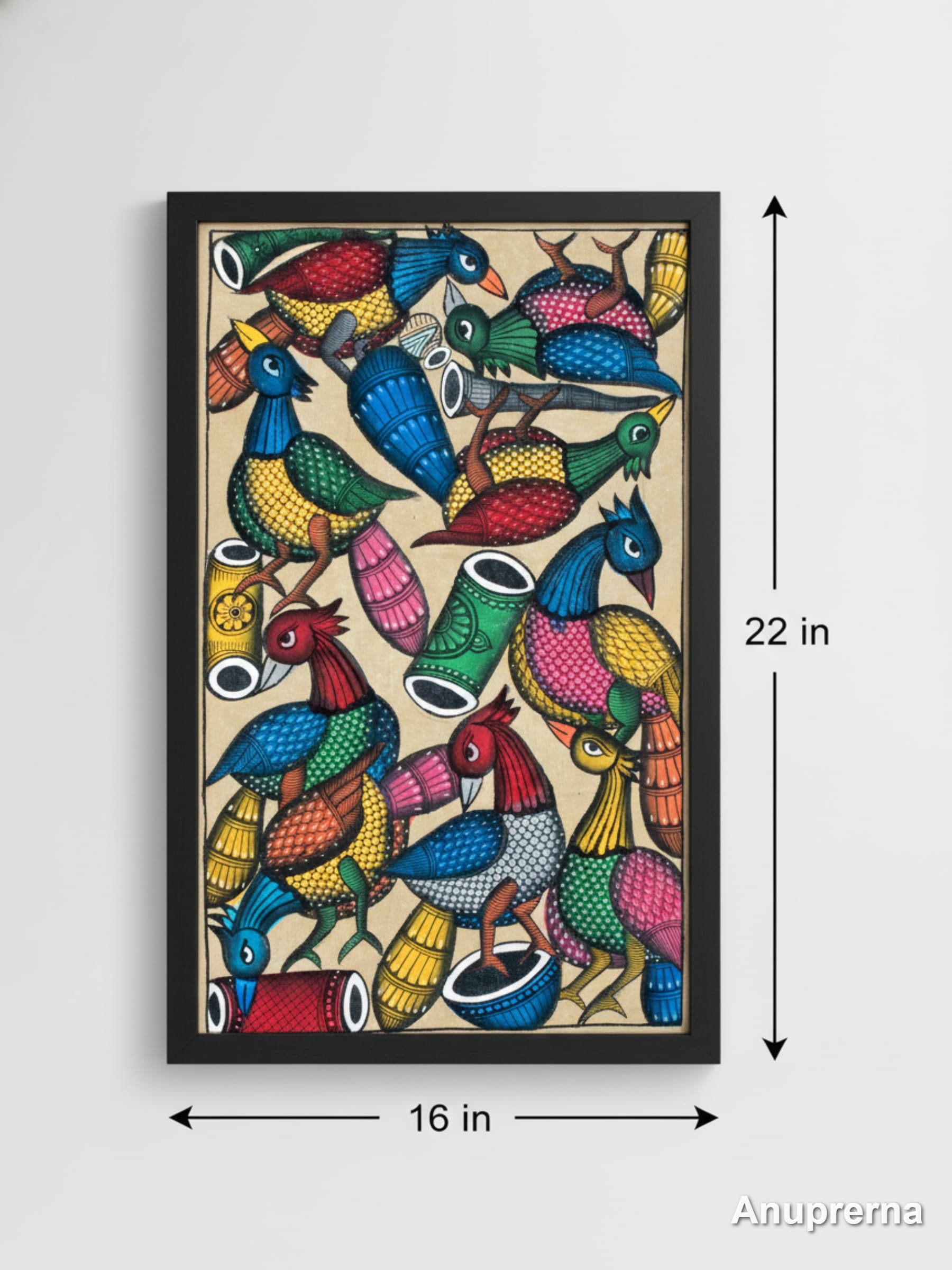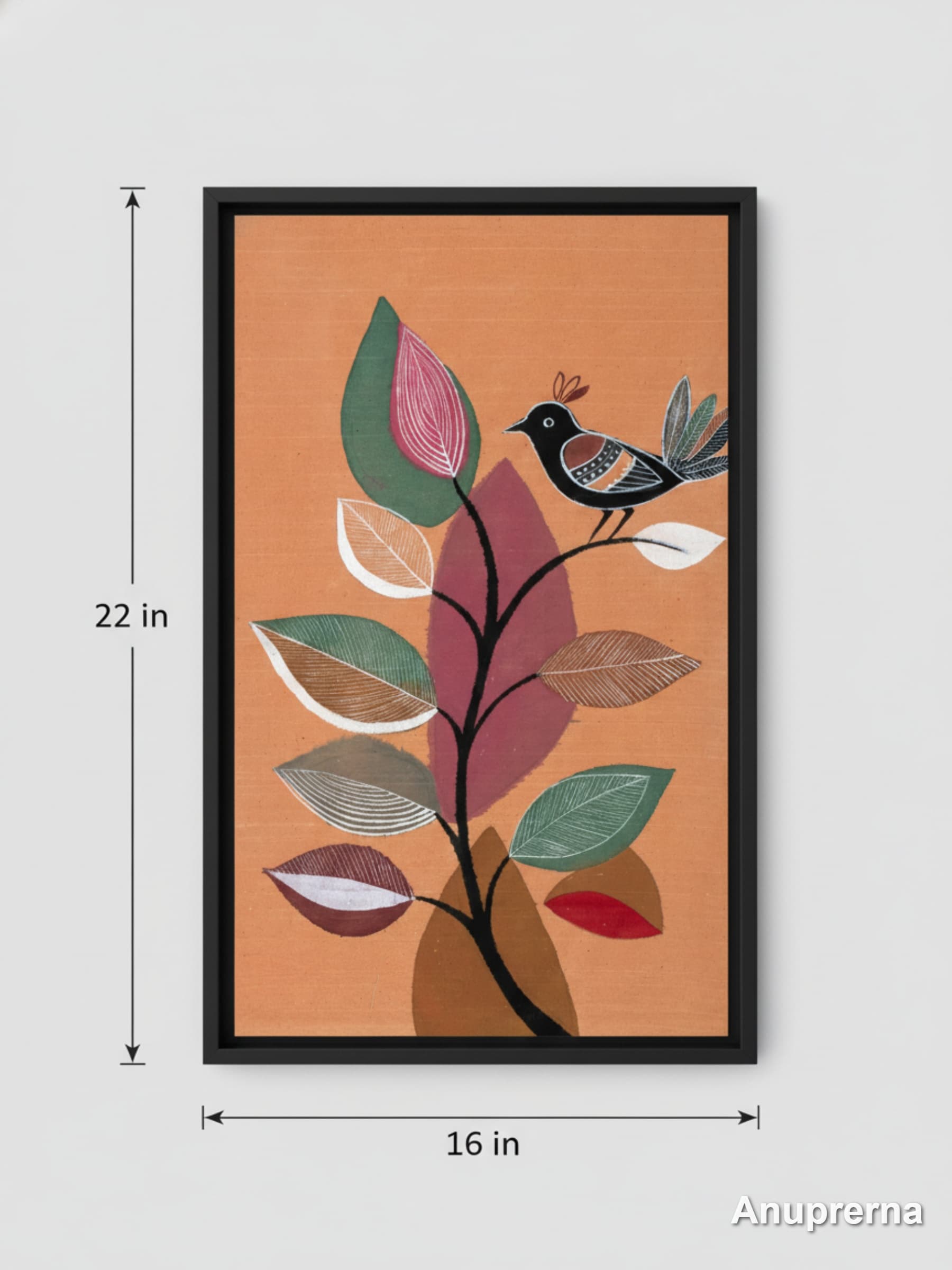
Patachittra Wall Art

Patachittra is not painted to decorate walls, it is painted to carry stories forward.
Patachittra is a traditional Indian narrative painting style practised in parts of Odisha and West Bengal, known for its intricate detailing and storytelling depth. Painted on cloth, these artworks are meant to be read visually, unfolding stories through form, repetition, and structured composition rather than serving as mere decoration.
Meaning and Origins
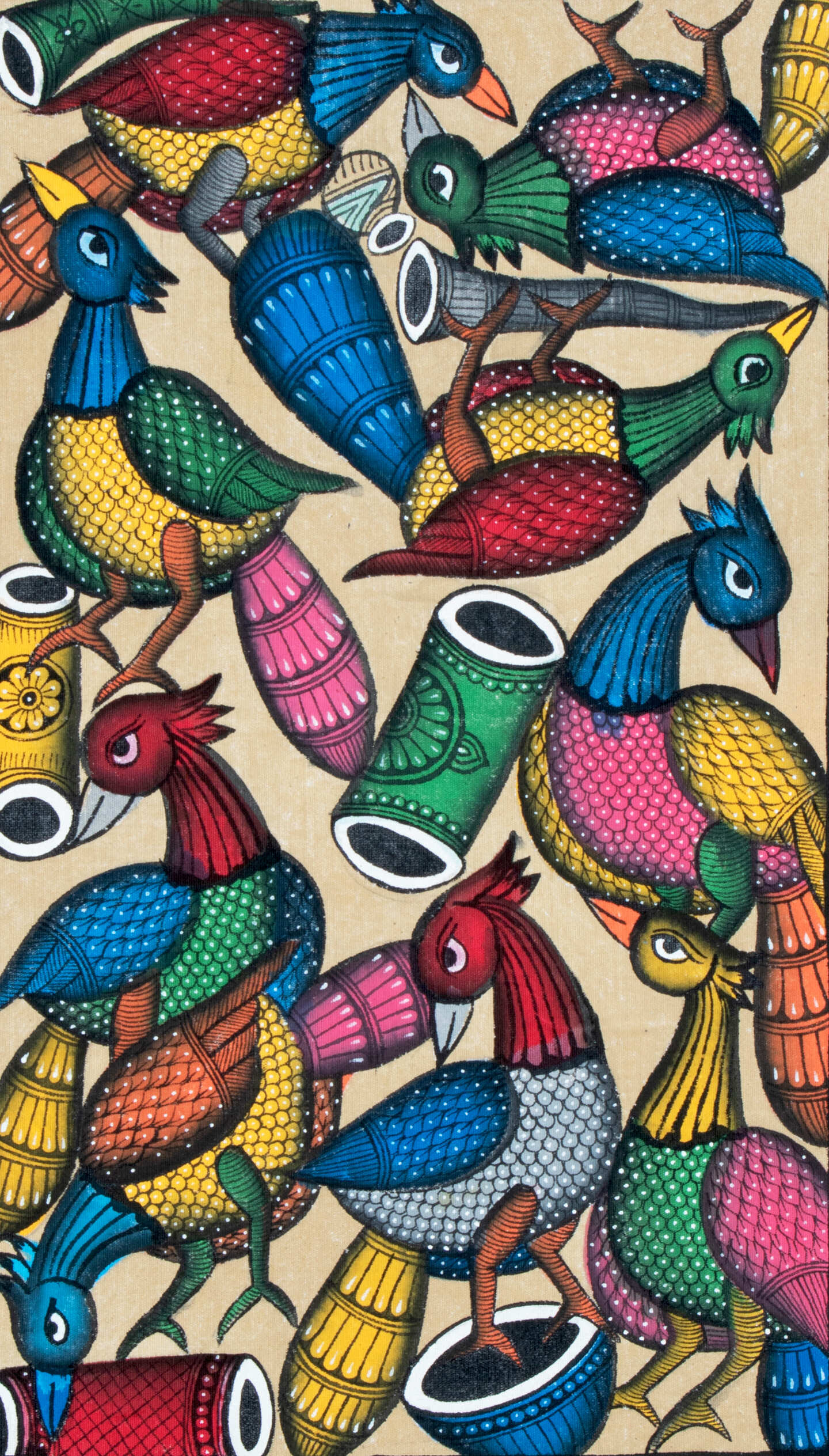
The term Patachittra is derived from two words: patta, meaning cloth or surface, and chitra, meaning image or painting. Traditionally, artists created long painted scrolls or cloth panels that were displayed while narrating stories, making the artwork an integral part of oral storytelling traditions.
Traditionally, artists worked on long painted scrolls or segmented cloth panels. These were revealed gradually as the artist narrated the accompanying story, allowing images and spoken word to function together.
As social contexts changed, the physical format of Patachittra adapted. Scrolls gave way to fixed panels, and public performances became more private forms of viewing. Over time, the format evolved, but the core intent remained the same: preserving and passing down stories through visual language.
Themes and Subjects
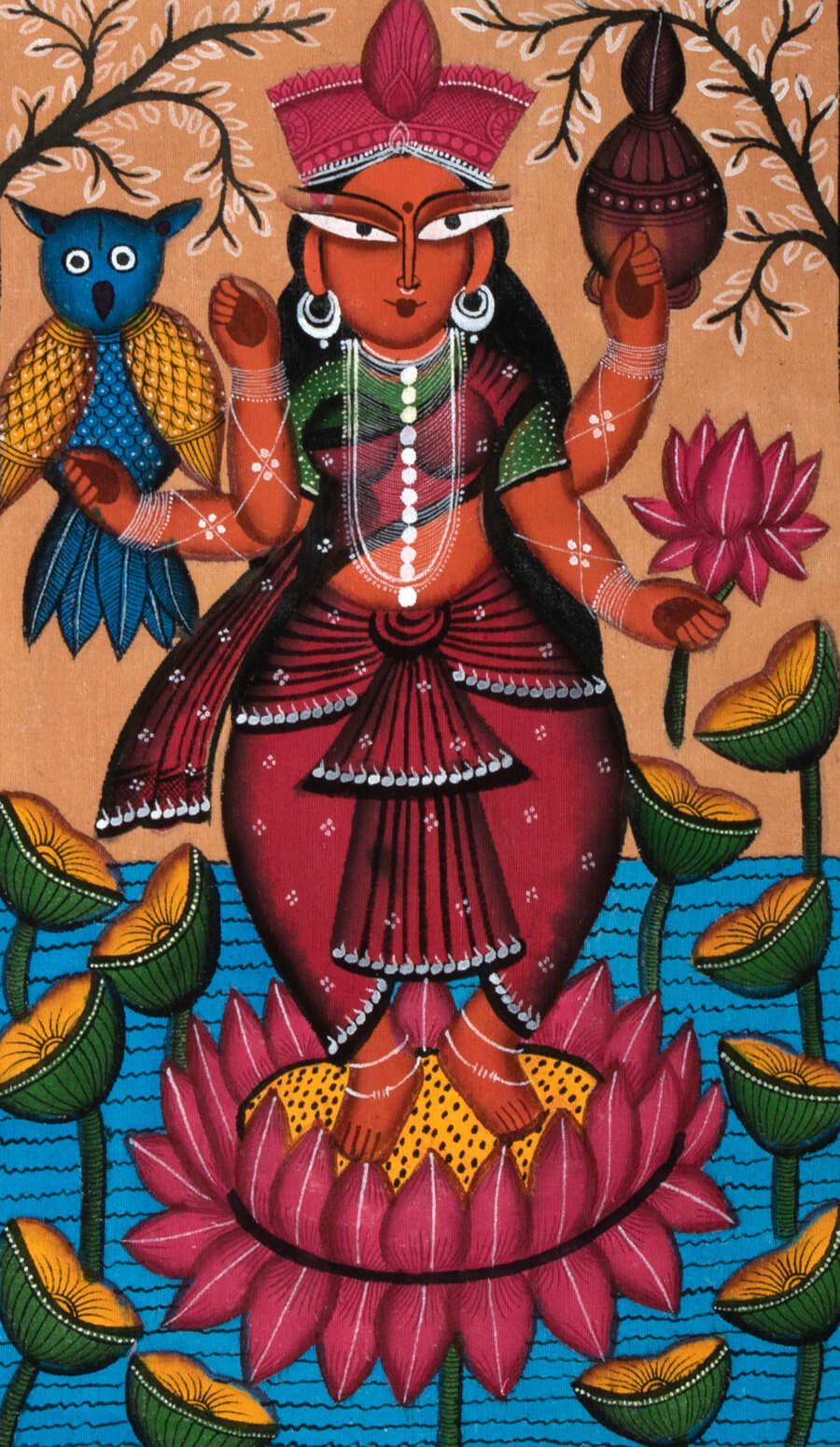
Patachittra is instantly recognisable through its distinct visual grammar:
- Strong, hand-drawn outlines
- Flat perspective with minimal depth
- Dense detailing with little empty space
- Decorative borders that frame and organise narratives
- Stylised human and animal forms rendered with precision
These features are intentional and serve the storytelling nature of the craft rather than decorative minimalism.
Visual Characteristics
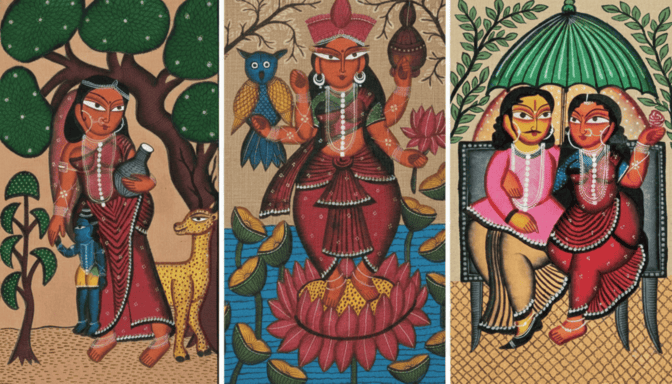
Patachittra is instantly recognisable through its distinct visual grammar. Every element is governed by convention, discipline, and narrative clarity rather than personal improvisation or decorative trends. The visual language is deliberate, consistent, and designed to guide the viewer through a story.
- Strong, hand-drawn outlines
Figures, objects, and scenes are defined by confident outlines that anchor the composition. - Flat perspective with minimal depth
Patachittra avoids illusionistic depth. Instead, elements are arranged across a flat plane where importance is conveyed through placement and repetition, not scale or realism. - Dense detailing with little empty space
Surfaces are filled with motifs, textures, and contextual elements. The absence of negative space reinforces continuity and keeps the narrative visually active. - Decorative borders that frame and organise narratives
They function as visual separators and guides, helping structure sequences, define scenes, and maintain narrative order. - Stylised human and animal forms rendered with precision
Figures follow established proportions and gestures that prioritise recognisability over realism.
These characteristics are not aesthetic preferences but functional choices. Together, they support the storytelling purpose of Patachittra, ensuring that meaning remains clear, continuous, and accessible rather than reduced to decorative minimalism.
Traditional Materials and Tools
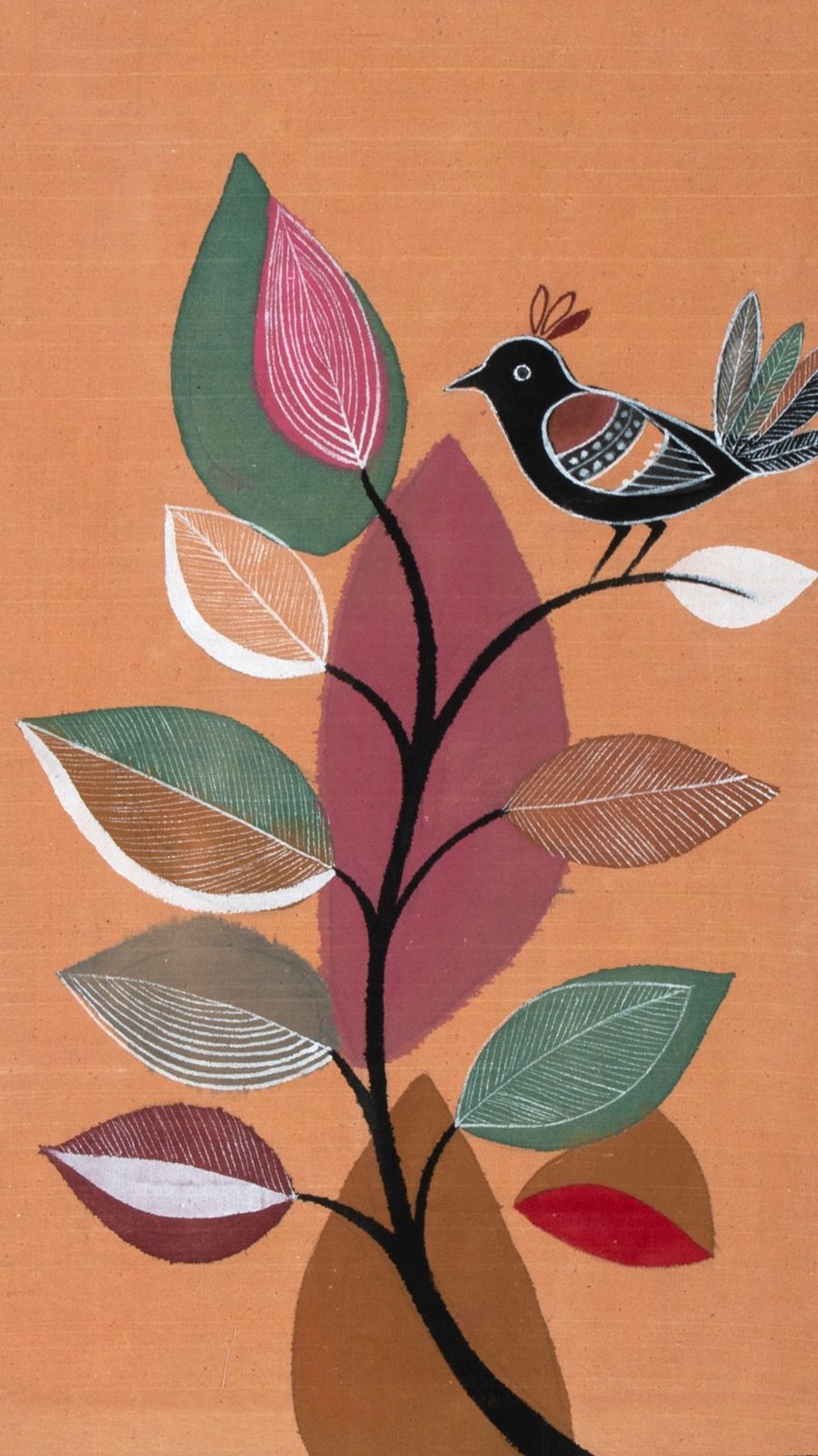
Historically, Patachittra paintings were created using materials chosen for durability, availability and control rather than convenience. Each component supported the long-term preservation of the artwork while enabling the level of precision required for narrative painting.
- Prepared cloth surfaces
Cloth was treated and prepared to create a stable base that could withstand multiple layers of pigment without distortion. The surface needed to remain firm yet flexible, allowing the artwork to endure handling, display, and time. - Natural and mineral-based pigments
Colours were derived from organic and mineral sources, selected for their stability and tonal depth. These pigments produced a restrained yet enduring palette that aged gradually rather than fading abruptly. - Handmade brushes for outlining and detailing
Brushes were crafted to suit specific stages of the artwork, particularly the fine outlines and dense detailing that define Patachittra. Their construction allowed artists to maintain consistent line quality and control across complex compositions.
These material choices were not incidental. Together, they ensured that Patachittra paintings could retain structural integrity, colour balance, and narrative clarity over long periods while supporting the discipline required for detailed visual storytelling.
The Making Process
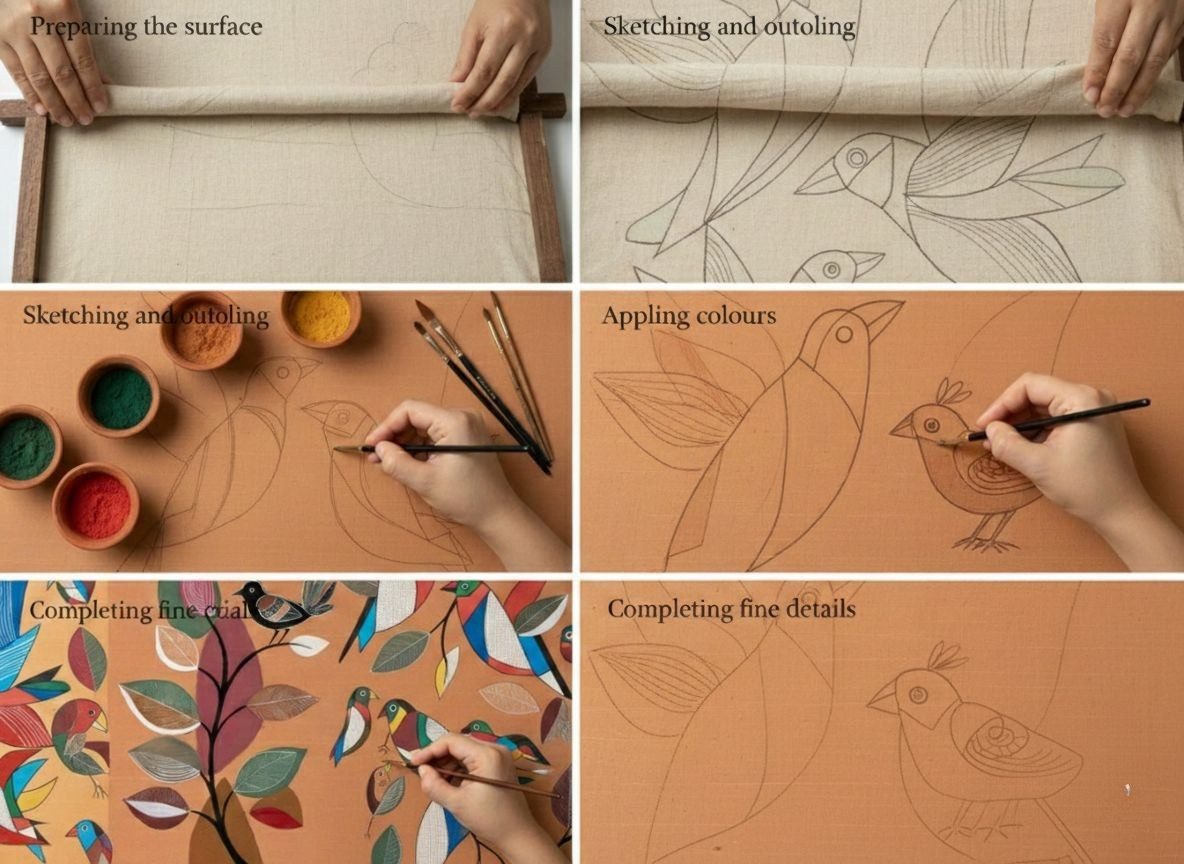
While techniques vary slightly by region and artist, the process generally follows a structured sequence:
- Preparing the surface for painting
- Sketching and outlining the narrative framework
- Applying colours in a defined order
- Completing fine details and borders
Each step builds upon the previous one, reinforcing the discipline and patience required to complete a single artwork.
Patachittro as Wall Art
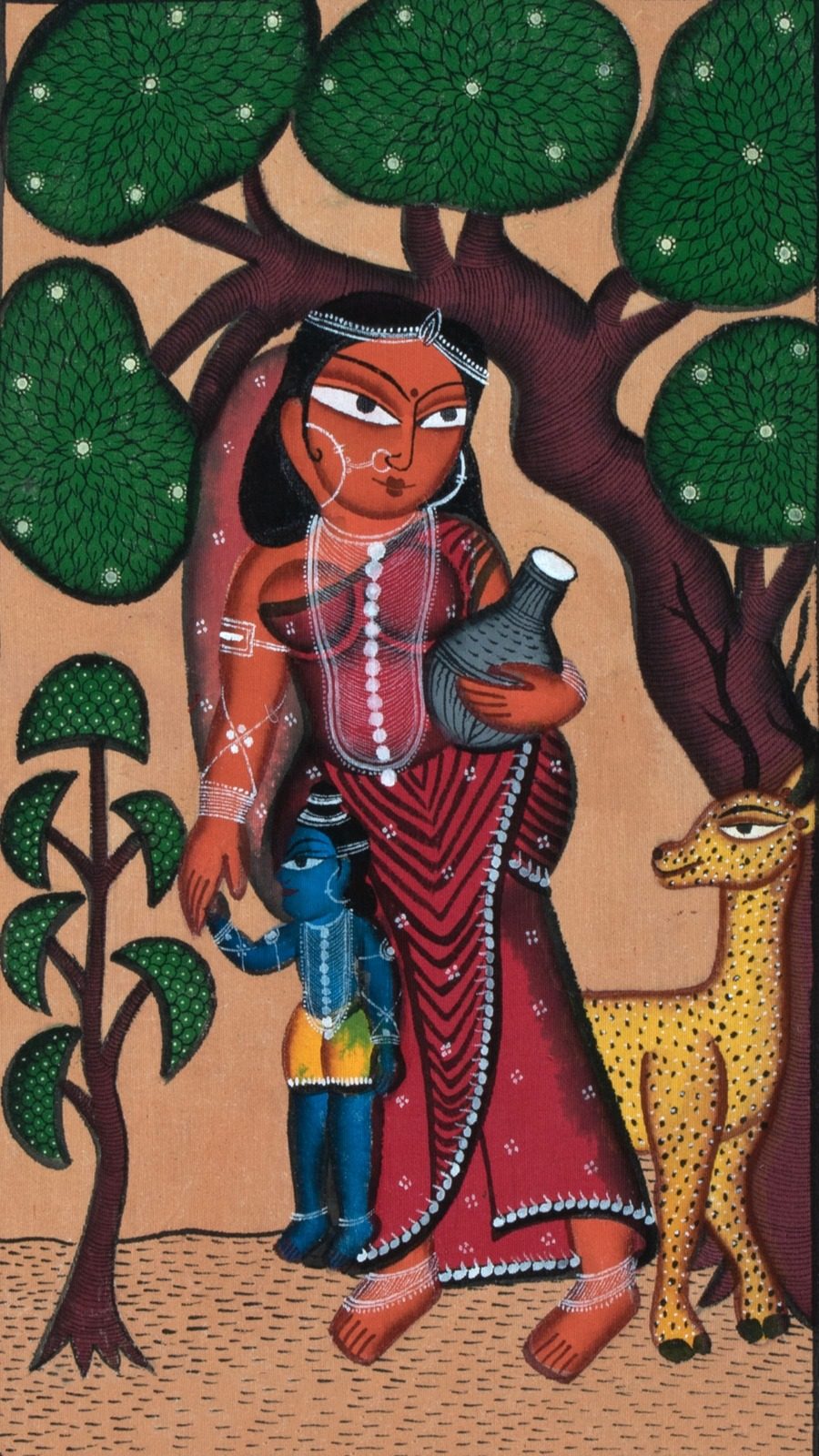
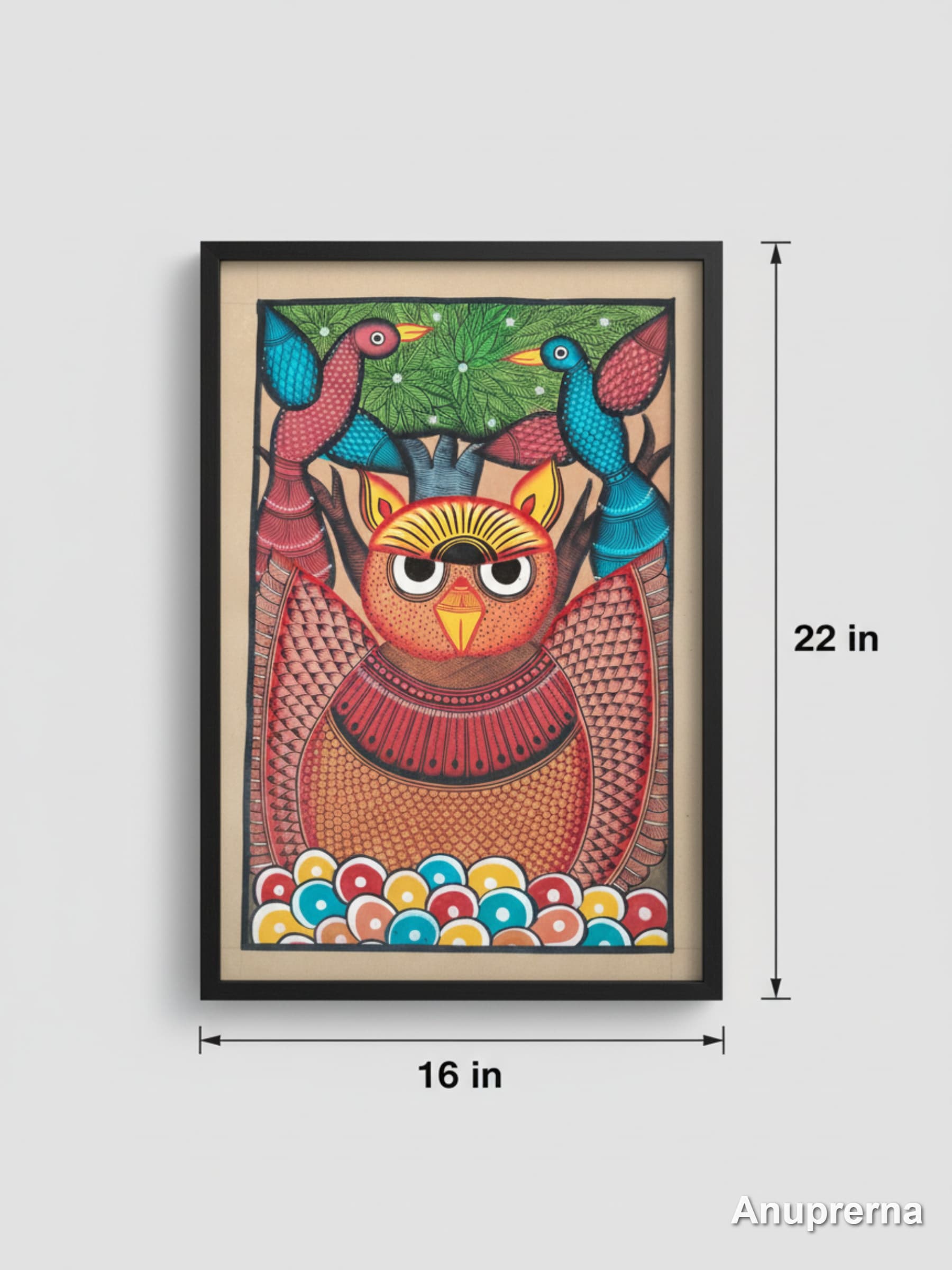
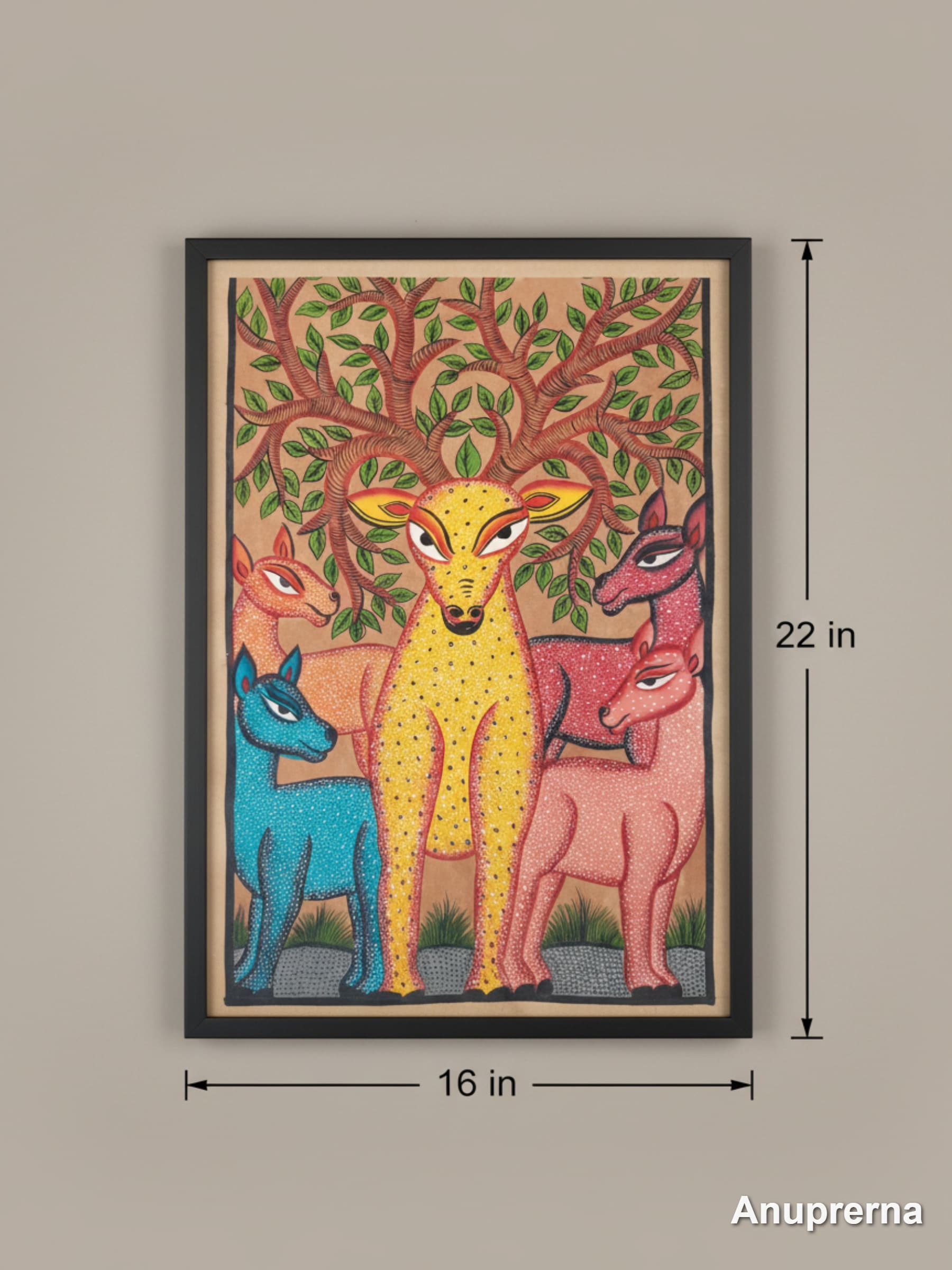
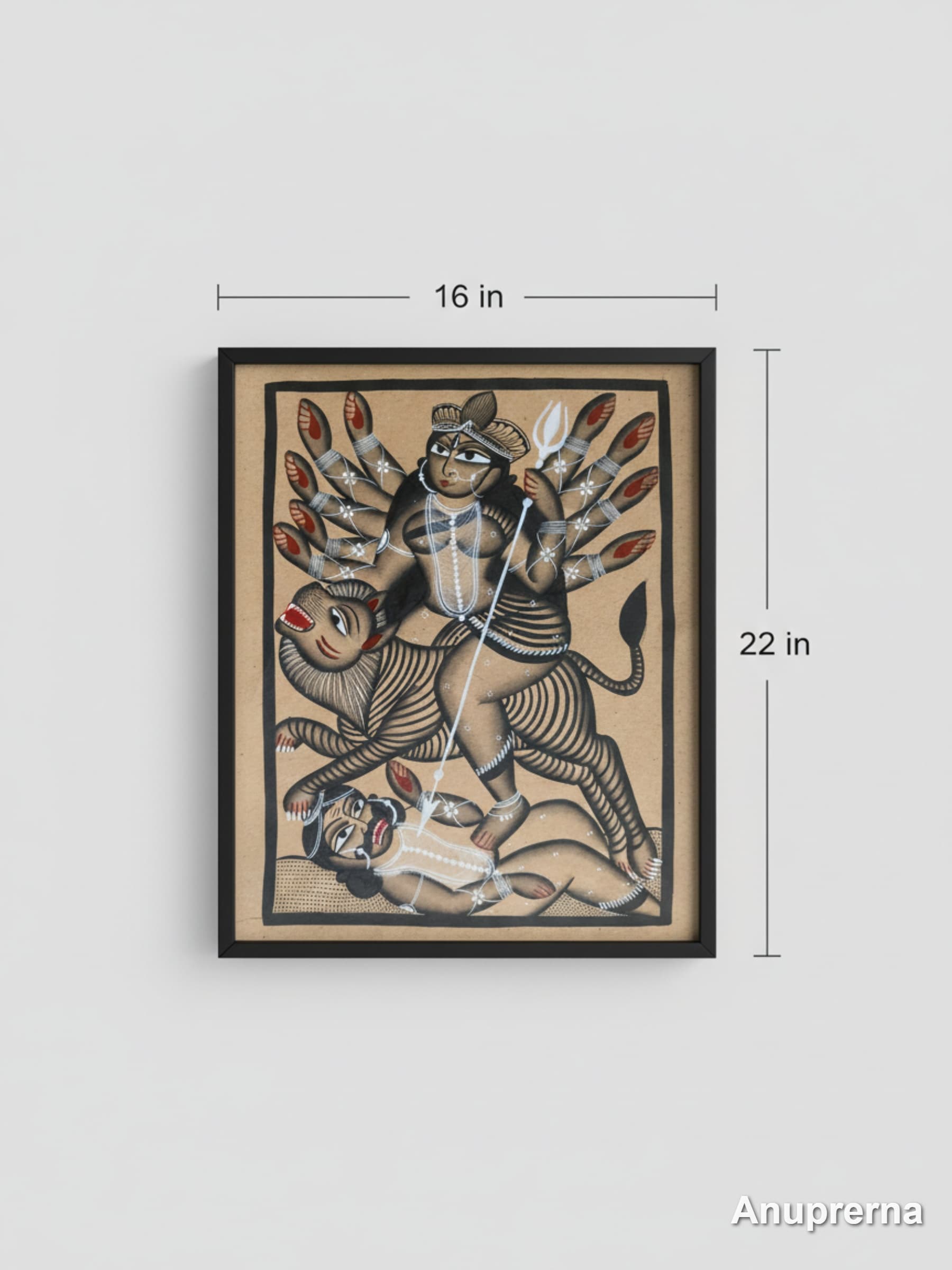
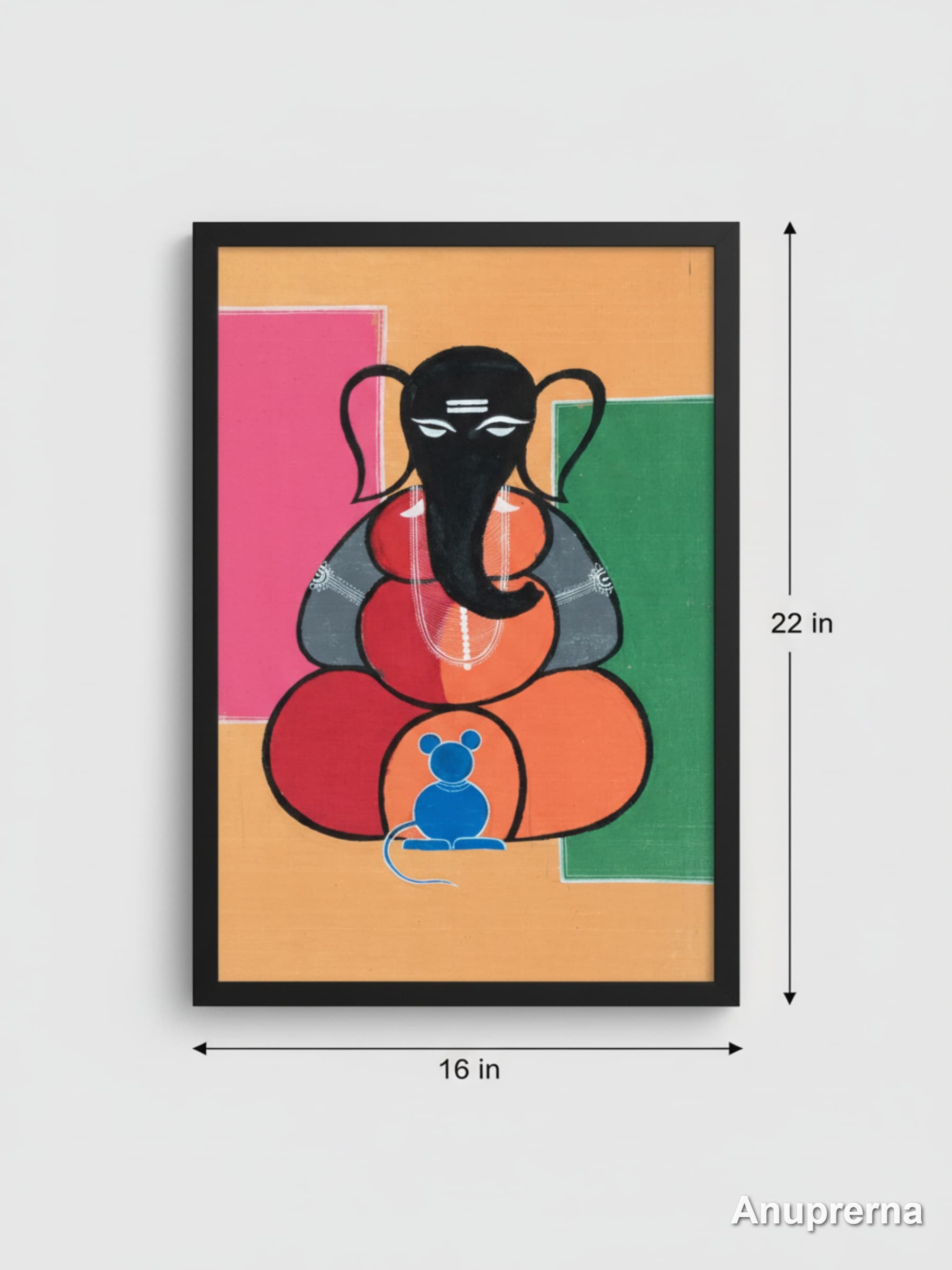
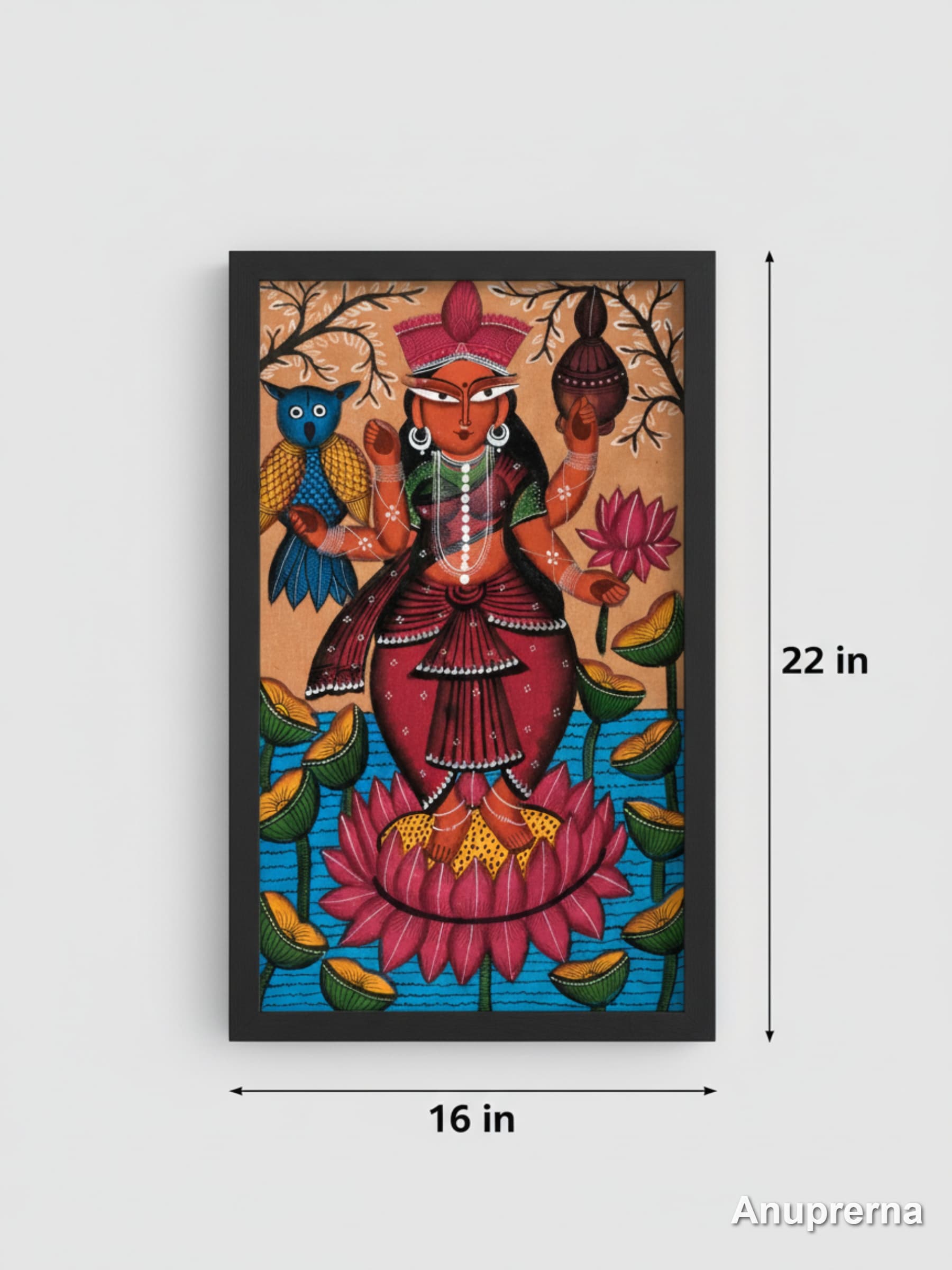
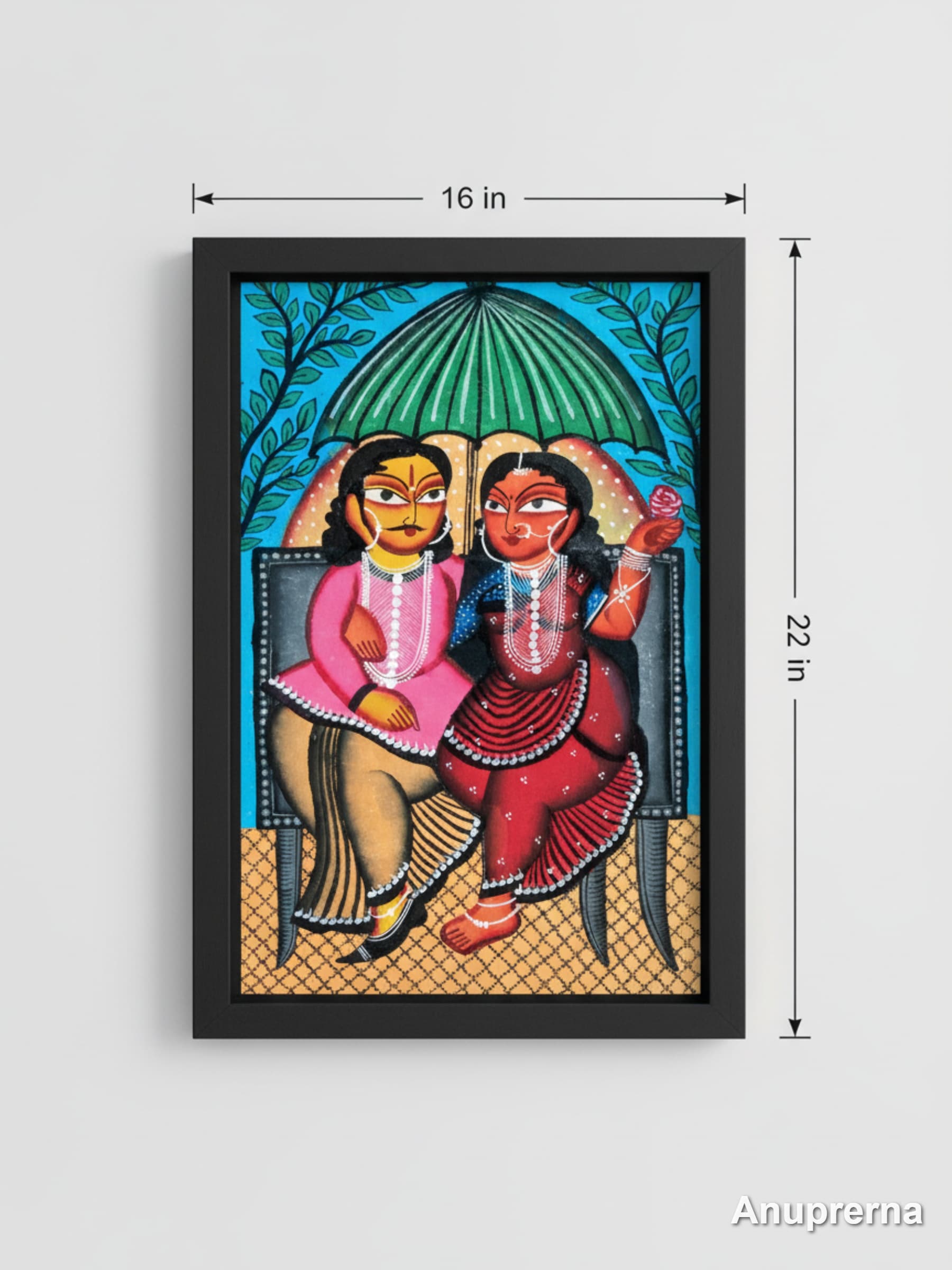
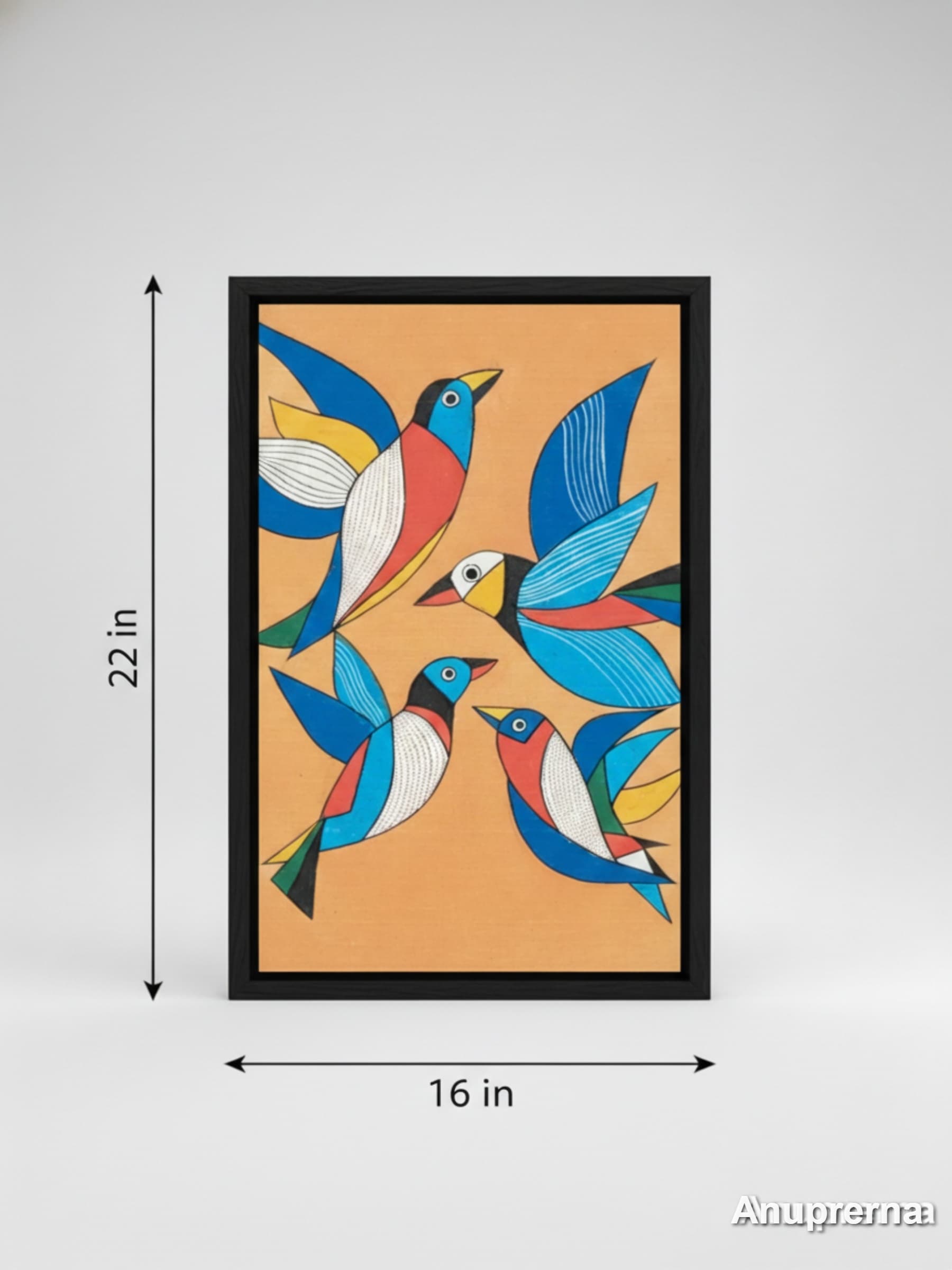
In contemporary settings, Patachittra has transitioned from scrolls to framed wall artworks. Rather than isolating a single scene, these works often compress or restructure sequences within a defined frame. Artists adjust scale, proportion, and layout to accommodate modern spaces, ensuring the artwork remains legible without losing narrative continuity. The framing acts as a boundary, not a constraint, preserving the integrity of the story within a contemporary context.
When presented as wall art, emphasis remains on continuity of story, balance of composition, and preservation of traditional visual language. Borders, repetition, and stylised forms continue to guide the viewer’s reading of the piece. The adaptation does not simplify the language of the craft. It translates it.
This evolution allows Patachittra to exist within modern environments without becoming ornamental. The artwork remains anchored in storytelling, inviting sustained attention rather than passive display, while aligning with present-day modes of living and collecting.
Sustaining the Craft Today
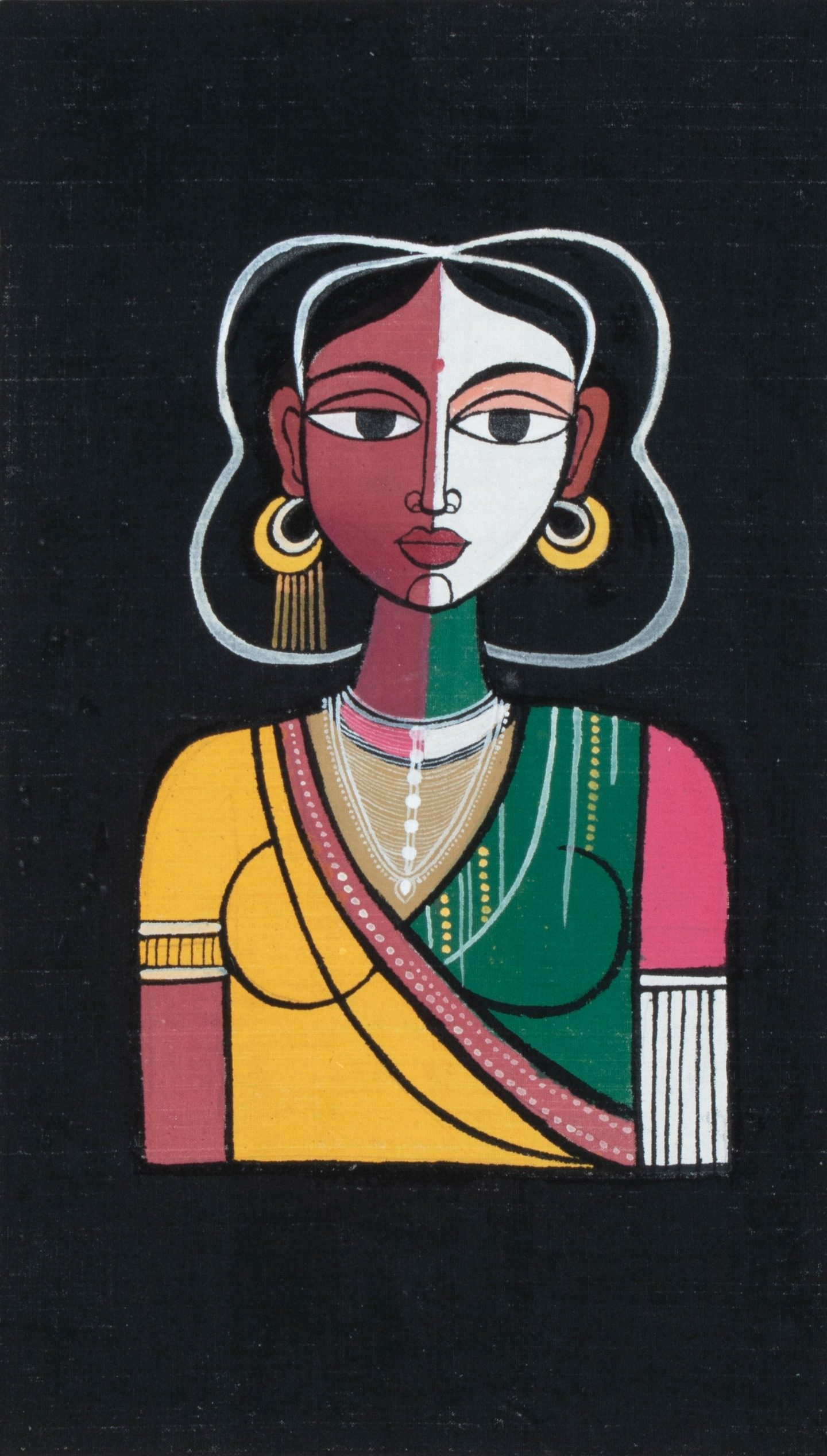
Patachittra continues to be practised as a living tradition.
Its continuity depends not only on artistic skill but also on structured systems that allow artists and material suppliers to work together consistently.
At Anuprerna, this craft is supported through a coordinated ecosystem that brings artists and suppliers into a shared production framework. This approach helps maintain artistic integrity while enabling predictable workflows, fair collaboration, and responsible sourcing, ensuring the art remains relevant and economically viable in contemporary markets.
Care and Display
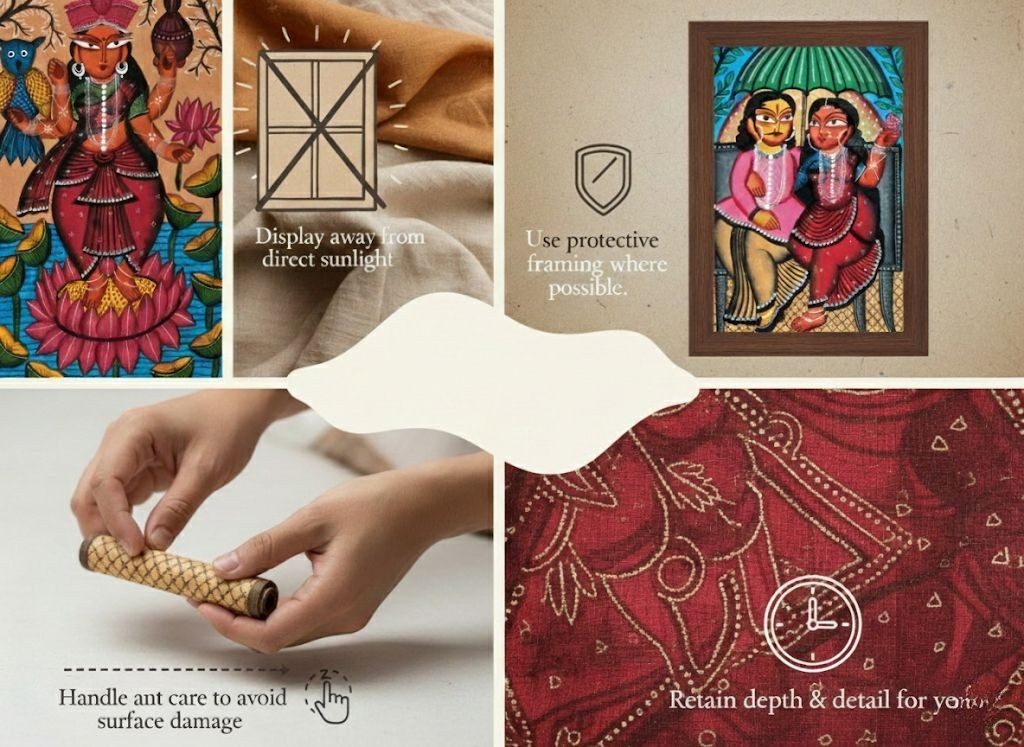
To preserve Patachittra artworks over time:
- Display away from direct sunlight
- Use protective framing where possible
- Handle with care to avoid surface damage
With proper care, these artworks retain their visual depth and detail for years.
Continuing a Visual Tradition
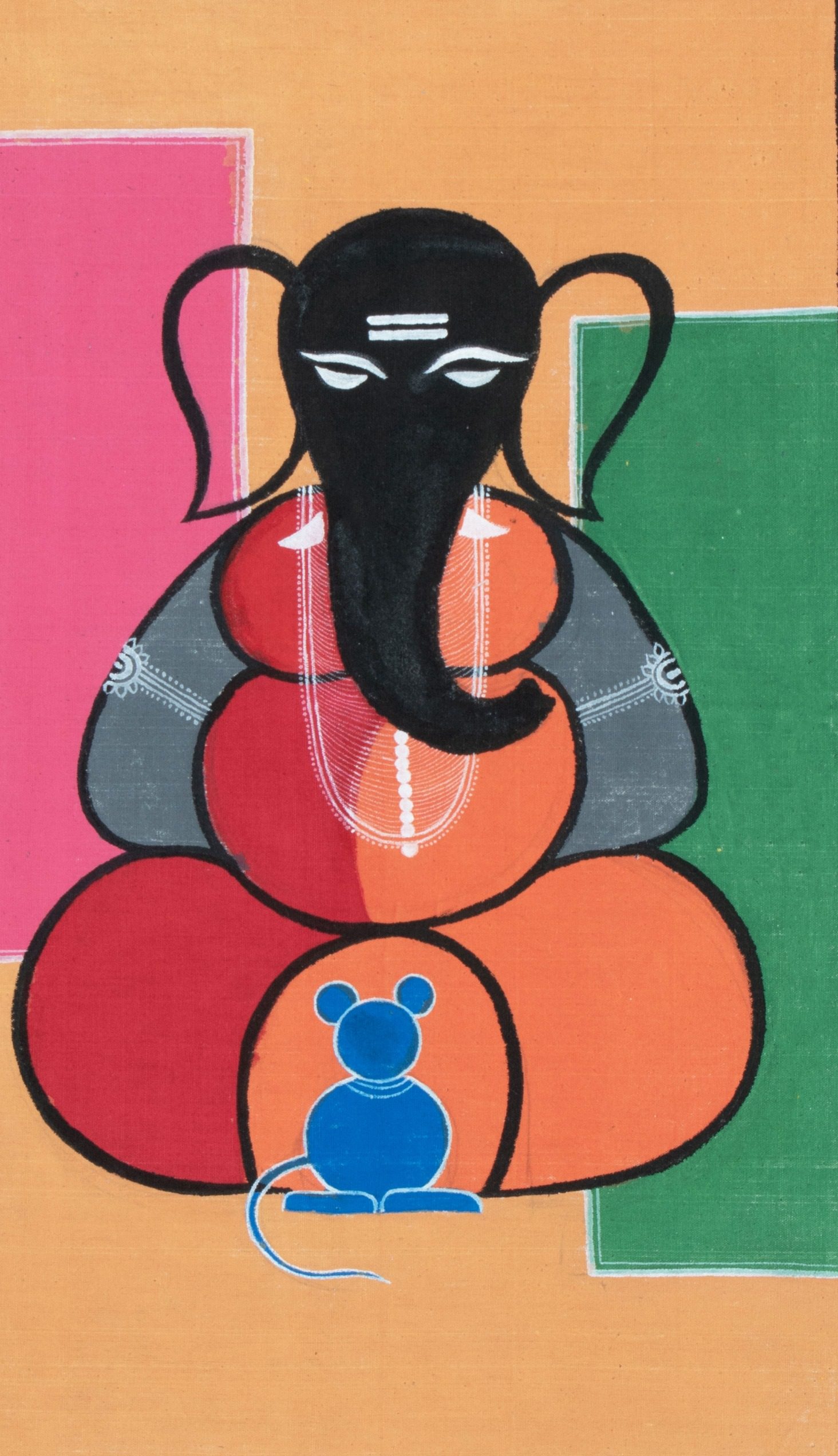
Patachittra is not preserved through nostalgia alone. Its relevance lies in continued practice, informed appreciation, and thoughtful integration into modern spaces. As long as the stories remain valued and the systems supporting the artists remain intact, the art form continues to evolve while staying rooted in its origins.
The relevance of Patachittra lies in the willingness to engage with its narrative structure, visual discipline, and cultural intent rather than treating it as a decorative reference to the past. Thoughtful integration into contemporary spaces allows the art to be encountered regularly, not archived conceptually or physically.
Equally important are the systems that support the artists themselves. Sustainable materials, predictable workflows, fair collaboration, and access to responsible markets determine whether the practice can continue with integrity. Without these structures, the art risks stagnation or dilution.
As long as stories continue to be valued and the frameworks enabling their creation remain intact, Patachittra evolves through continuity, not reinvention. It stays rooted in its origins while remaining responsive to the present, ensuring the tradition endures through relevance rather than preservation alone.
most asked questions
How should Patachittra wall art be cared for?
Patachittra artworks should be kept away from direct sunlight, handled carefully, and preferably displayed with protective framing to preserve colour, detail, and surface integrity over time.
What materials are traditionally used to create Patachittra art?
Traditional Patachittra is painted on prepared cloth using natural or mineral-based pigments and handmade brushes, allowing for fine detailing and long-term durability.
What themes are commonly depicted in Patachittra artworks?
Common themes include mythological stories, local deities, folk narratives, and moral tales rooted in everyday life. A single artwork often contains multiple scenes arranged in a readable sequence.
How is Patachittra different from decorative paintings?
Unlike decorative art, Patachittra follows a structured visual language where scenes, characters, and borders work together to unfold a story. Repetition and continuity matter more than visual minimalism.
What is Patachittra wall art?
Patachittra wall art is a narrative painting tradition from Odisha and West Bengal, created on cloth and designed to visually communicate stories through sequential imagery rather than standalone decoration.
More Stories
madhubani wall art
eco printing
khesh recycled fabric
eri peace silk
naturally dyed block printing
digital printing