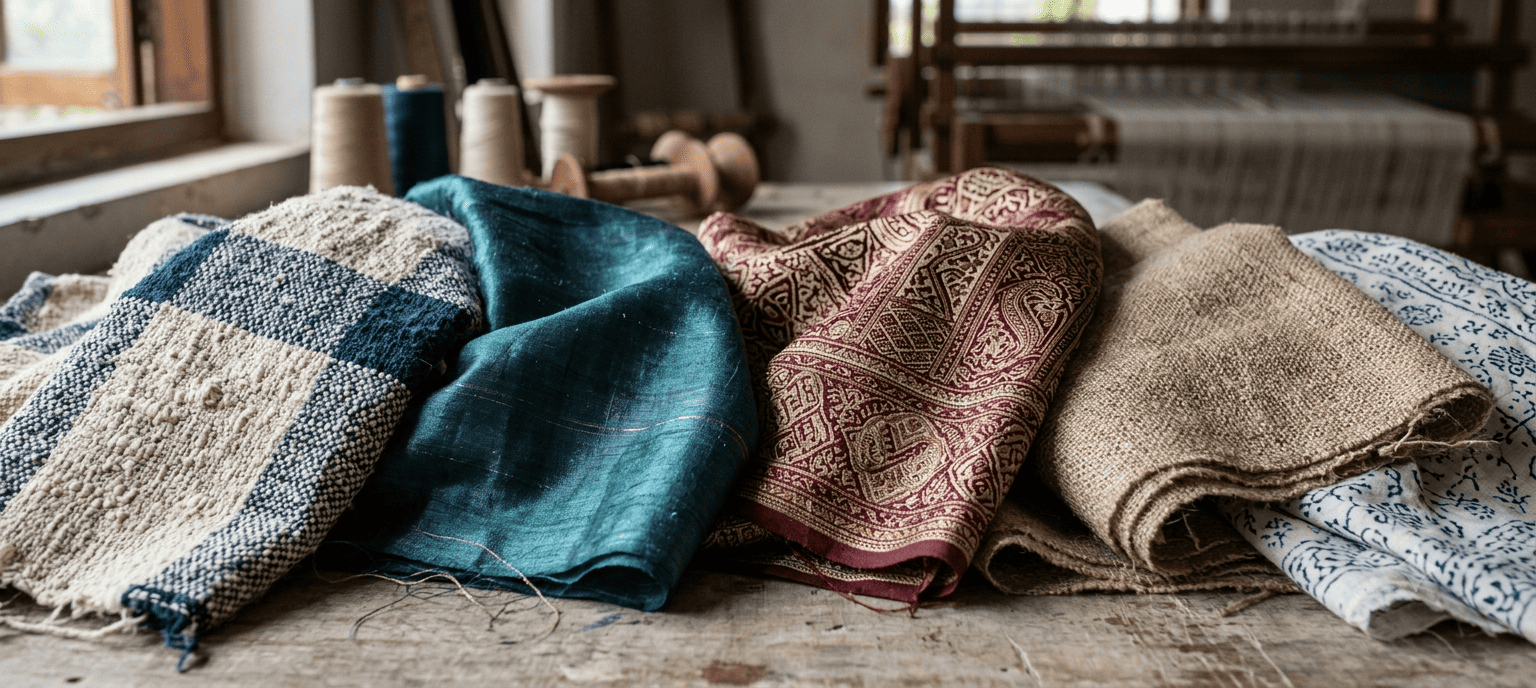
How to Identify High Quality Fabric: 7 Visual Cues

When sourcing fabric online, visiting a textile market, or choosing clothing, high quality fabric can often be identified before you even touch it. Look for seven visual cues: even weave or knit structure, consistent yarn density, natural sheen, even color, neat selvage, graceful drape, and clear pattern alignment.
These details reveal how a fabric has been constructed, dyed, finished, and handled—and can help you assess fabric quality when touch or physical testing isn't possible.
For designers, retailers, and conscious shoppers, knowing how to visually evaluate fabric can make sourcing decisions more informed and help identify textiles designed for durability, comfort, and long-term use.
What Does High Quality Fabric Look Like?
A high quality fabric generally shows consistency without looking unnaturally perfect. The yarns or loops should be evenly distributed, colors should appear balanced, edges should be clean, and patterns should maintain their intended alignment.
Depending on the textile, quality can also appear through natural characteristics such as subtle slubbing in handwoven cotton, variations in shade, or the characteristic texture of a handloom fabric.
Instead of judging fabric by one characteristic alone, examine it as a whole.
Here are the seven visual cues to look for.
1. Start With the Weave or Knit Structure
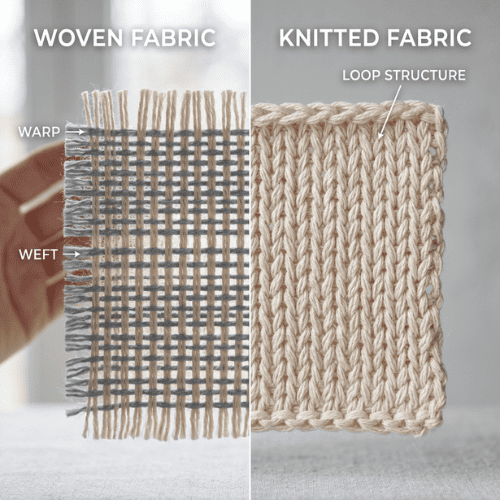
The construction of a fabric is one of the first things to examine.
Woven fabrics are created by interlacing warp and weft yarns, giving them structure and stability. Knitted fabrics are constructed by looping yarns together, which gives them greater stretch and flexibility.
Understanding the difference between weave and knit helps you determine whether the fabric's construction matches its intended use.
Look closely for:
- Evenly distributed yarns or loops
- Consistent spacing
- No obvious gaps or distorted areas
- A structure appropriate to the fabric type
- No unexplained warping or stretching
For example, a tightly constructed woven fabric intended for shirting should have a noticeably different structure from a lightweight knitted fabric designed for stretch.
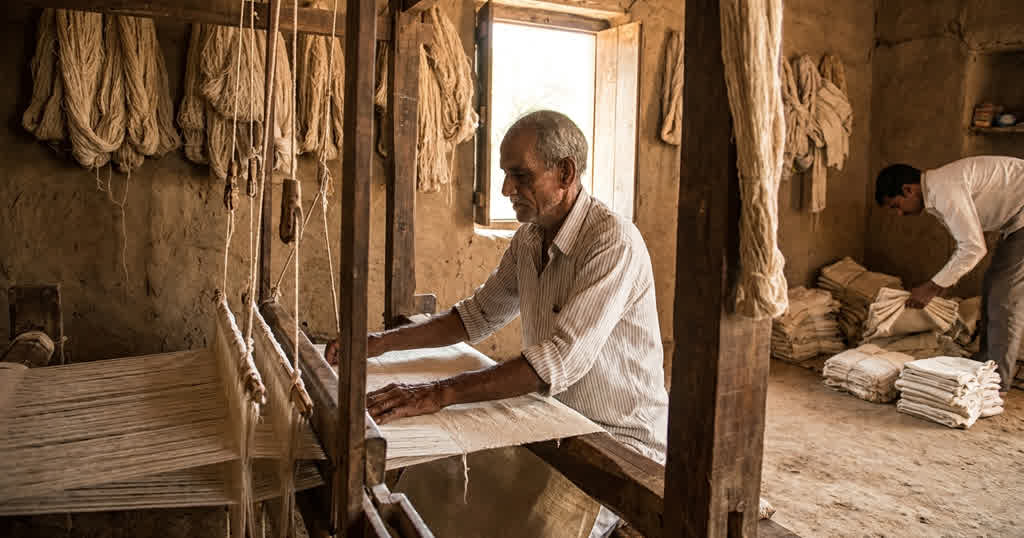
At Anuprerna, handloom construction adds another dimension to this visual assessment, where subtle variations can be part of the character of an artisan-made textile rather than a sign of poor quality.
2. Check Yarn Density and Fabric Opacity
Yarn density and fabric opacity can reveal a lot about how a textile has been constructed.
Hold the fabric against a light source, if possible. Look at how evenly the light passes through it.
A well-constructed fabric should generally show:
- Consistent yarn distribution
- No unexpected holes or gaps
- Even density across the surface
- Appropriate opacity for its intended use
For example, high-quality cotton shirts should not look unnecessarily sheer or loosely constructed unless transparency is an intentional design characteristic.
With natural handwoven cotton, however, small variations and slubbing may be expected. The important distinction is whether those characteristics appear intentional and consistent with the fabric's construction.
3. Look for Natural Sheen and Surface Character
Sheen isn't automatically an indicator of quality. What matters is whether the surface appearance is appropriate to the fiber and finish.
Silk and fine mercerized cotton may have a naturally lustrous appearance, while khadi and linen typically have a more matte surface.
Look for:
- Even reflection of light
- Natural-looking surface texture
- Consistent finish
- No excessive artificial gloss
- Surface character appropriate to the fiber
A fabric that looks unnaturally shiny may have a surface coating or finish that changes its appearance. Rather than asking whether a fabric is shiny, ask whether its sheen looks natural for the material.
4. Examine Color Evenness and Depth
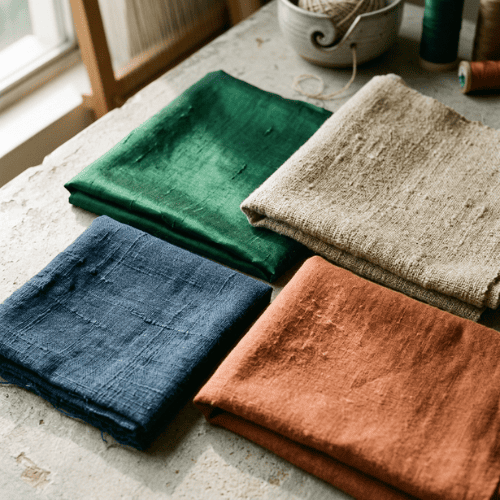
Color can provide important visual clues about dyeing and finishing.
A well-dyed fabric should generally show consistent coloration across its surface. Examine it from different angles and look for unexplained:
- Streaks
- Blotches
- Pale patches
- Uneven saturation
- Abrupt changes in shade
Color penetration also matters. Rich, well-developed color tends to look integrated into the textile rather than sitting only on its surface.
However, natural and artisan-made textiles may intentionally display subtle shade variations. Plant-based dyes and handcrafted processes can create character that differs from the uniformity of industrial production.
The goal is therefore not absolute uniformity, but intentional and appropriate color variation.
5. Inspect the Selvage and Stitching
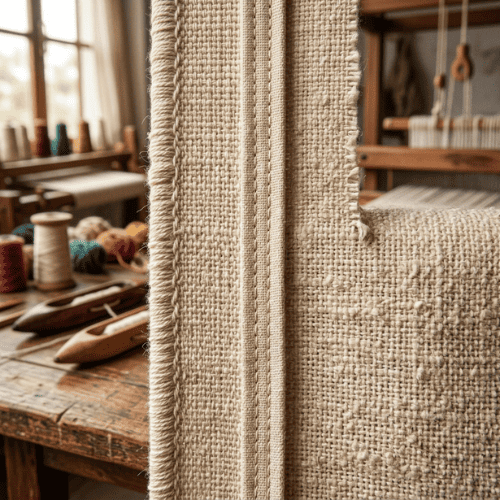
The selvage is the self-finished edge of a woven fabric. It can provide useful information about construction and finishing.
A well-formed selvage is generally:
- Neat
- Firm
- Consistent
- Properly aligned
- Free from unnecessary fraying
Look at the edge closely and compare it with the rest of the fabric.
For finished garments, examine the stitching and seams as well. Clean, even stitching and secure hems can indicate careful handling during garment production.
This doesn't mean that a decorative or intentionally unfinished edge is poor quality. As with other visual cues, the construction should be assessed according to the textile's intended design.
6. Observe Fabric Drape and Breathability
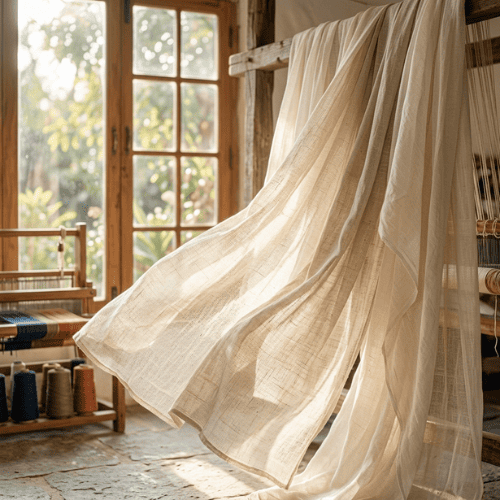
Fabric drape tells you how a textile responds to gravity and movement.
Hold or lift one corner and observe how it falls.
Depending on its intended purpose, a good fabric may:
- Fall in soft, fluid folds
- Hold a structured shape
- Move naturally
- Maintain its form without looking excessively rigid
A heavy canvas, for example, is expected to behave differently from a lightweight silk.
Fabric breathability can also offer visual clues. Natural fibers such as cotton and linen may have a porous, open appearance, while heavily coated fabrics can appear more compact or surface-heavy.
Visual inspection cannot fully confirm breathability, but it can help you form an initial assessment before physical testing.
7. Check Pattern Clarity and Alignment
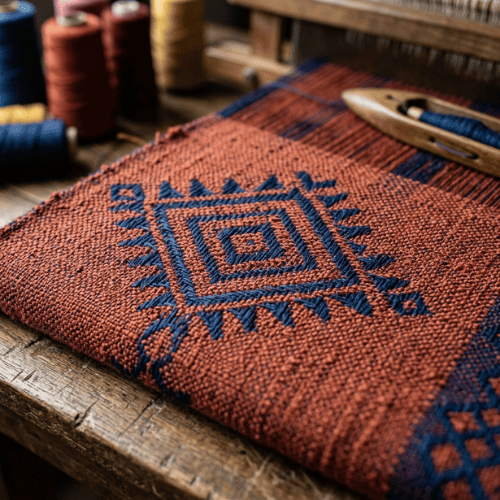
If you're examining printed or patterned textiles, inspect the design closely.
A well-executed pattern should generally have:
- Clear edges
- Consistent motifs
- Appropriate alignment
- No unexplained distortion
- Clean transitions between pattern and background
This is particularly useful when examining jacquard fabric or damask fabric, where the design is created through the woven structure rather than simply applied to the surface.
For repeating patterns, check whether motifs remain aligned across the fabric. Distorted or inconsistent pattern placement can reveal problems in weaving, printing, finishing, or handling.
How to Check Fabric Quality When Shopping Online
When you cannot physically inspect a textile, visual evaluation becomes even more important.
Before purchasing, look for close-up fabric photographs that allow you to examine:
- The weave or knit structure
- Yarn density
- Surface texture and sheen
- Color consistency
- Selvage or finished edges
- Drape and movement
- Pattern clarity
If the product page only provides distant photographs, request detailed images or fabric swatches whenever possible.
For wholesale sourcing, swatches can provide a much more reliable understanding of construction, color, texture, and finish than product photographs alone.
How to Identify High Quality Fabric at a Glance
A quick visual check can be summarized in seven questions:
- Is the structure even?
Look at the weave or knit. - Is the density consistent?
Check how the fabric responds to light. - Does the surface look natural?
Observe sheen, texture, and finish. - Is the color balanced?
Look for consistent saturation and intentional variation. - Are the edges clean?
Inspect the selvage and garment seams. - Does it drape appropriately?
Observe how the fabric falls and moves. - Are patterns clear and aligned?
Check motifs, edges, and woven designs.
Together, these cues give you a practical starting point for assessing fabric quality before making a purchase.
Quality in textiles isn't always about looking perfectly uniform. Especially with handwoven and artisan-made fabrics, character can appear through slubs, subtle shade variations, texture, and irregularities created by the making process.
The key is learning to distinguish intentional textile character from signs of poor construction.
The next time you shop for fabric, slow down and look closely. The weave, density, color, edges, drape, and pattern can tell you much more about a textile than a label alone.
related questions
How can I tell if a fabric is high quality just by looking at it?
Look for: Even weave or knit structure Smooth, clean surface without pilling Consistent color or natural shade Proper drape and no warping at edges These visual cues often indicate high quality fabric with good craftsmanship and fiber strength.
What makes cotton fabric high quality?
High quality cotton shirts are made from long-staple cotton fibers, which feel smoother, resist pilling, and last longer. Look for clean weaves, subtle luster, good opacity, and strong, even stitching. For more information about cotton, choose handwoven or organic cotton with minimal chemical processing for comfort, breathability, and durability.
How do I check fabric breathability visually?
While touch is best for testing fabric breathability, you can often judge it by: Looking for tiny gaps in the weave Holding it to light to check density Choosing natural fibers like cotton or linen that visually appear porous and soft
What does fabric checking mean?
Fabric checking refers to visually and physically inspecting fabric for quality indicators like yarn consistency, weave type, opacity, finish, and surface defects. It helps determine whether the fabric is durable, breathable, and suitable for its intended use.
More Blogs
tussar silk fabric: characteristics, texture & a guide for designers
jacquard fabric supplier: a guide for designers & fashion brands
organic fabric suppliers in india: a guide for sustainable brands
raw silk vs tussar silk vs eri silk: key differences & characteristics
jamdani fabric wholesaler: a guide for designers & brands
malmal cloth in english: understanding the global appeal of mul cotton