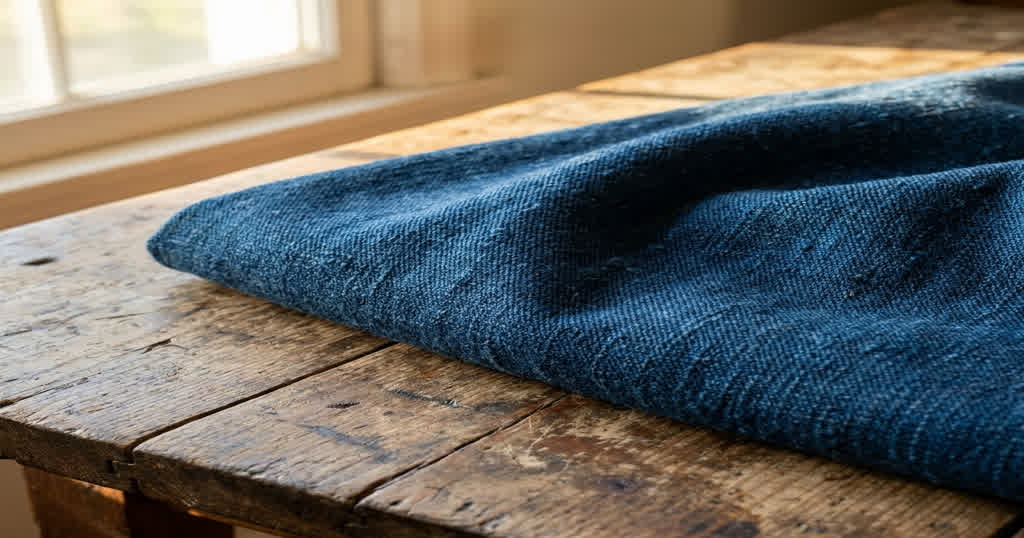
Khadi Denim vs. Conventional Denim: Environmental Impact and Durability

Designers face mounting pressure to reduce the massive water and carbon footprint associated with standard mill-made jeans. For sustainable denim brands in india and across the globe, the search for a low-impact alternative often leads back to the roots of the Swadeshi movement. This historical push for self-reliance birthed a textile tradition that now offers a highly technical solution to modern ecological challenges. By merging traditional hand-spun, handwoven techniques with a globally recognized twill structure, a new category of fabric emerges.
The decision to source this heritage material goes beyond simple aesthetics. It requires a deep understanding of material science, from the varying twist levels of the yarn to the specific GSM requirements of commercial apparel. Choosing this decentralized production model provides a compelling, verifiable ESG narrative centered on rural employment and radical supply chain transparency.
The True Cost of Blue: Conventional Denim’s Environmental Toll vs. Khadi’s Zero-Carbon Footprint
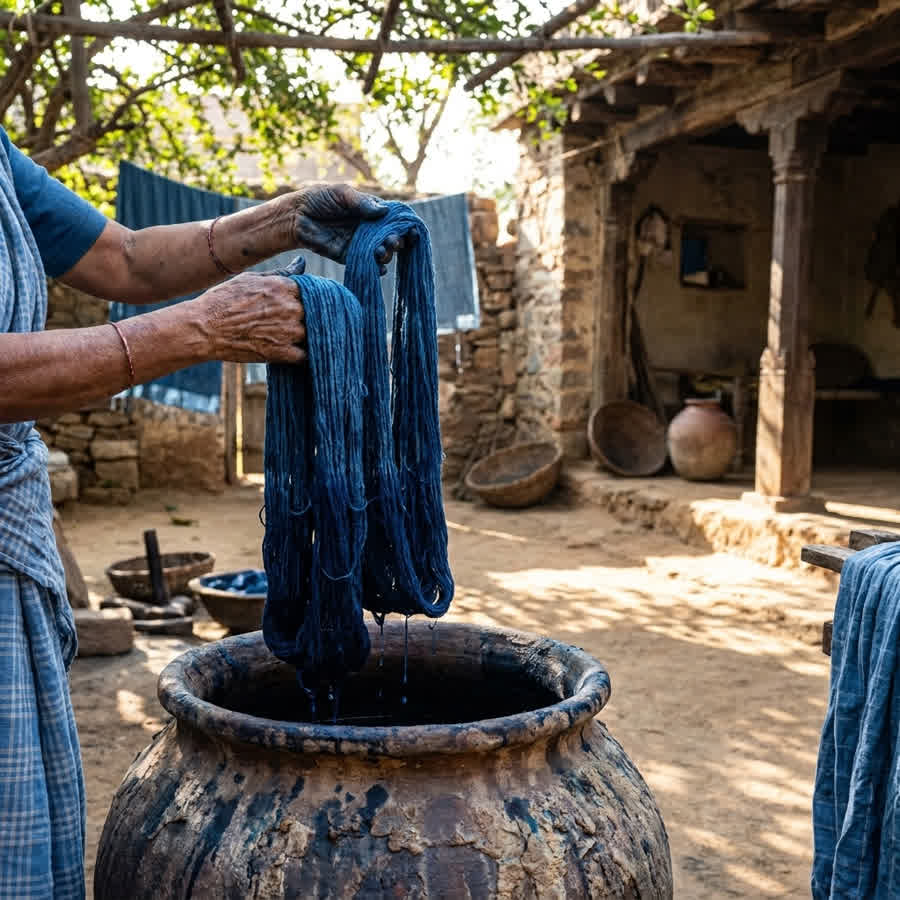
Conventional denim relies on water-heavy industrial processes and fossil-fuel energy, whereas Khadi denim achieves a zero-carbon footprint through manual hand-spinning and weaving. This fundamental difference in production mechanics directly dictates the environmental impact of the final yardage.
Assessing the Water and Chemical Footprint
Standard denim manufacturing consumes thousands of liters of water per garment, primarily during the dyeing and finishing stages. Industrial mills often rely on synthetic indigo dyes and harsh chemical fixing agents that require extensive washing to remove. These processes generate significant toxic chemical runoff, placing a heavy burden on local water systems.
In contrast, the artisan approach drastically reduces water dependency from the very beginning of the supply chain. The process relies on rain-fed indigenous cotton, which requires a fraction of the irrigation needed for conventional GMO cotton crops.
Assessing the Water and Chemical Footprint (continued)
The finishing stages also bypass industrial water waste by utilizing specific natural methods:
- Natural indigo vats replace synthetic chemical baths, allowing the dye to oxidize naturally in the air.
- Sun-drying techniques eliminate the need for industrial gas dryers, further reducing energy consumption.
- Zero chemical sizing means the fabric does not require intensive industrial washing to achieve a soft hand-feel.
The Zero-Electricity Weaving Advantage
The most significant divergence in the Life Cycle Assessment (LCA) occurs at the loom. Commercial denim is woven on high-speed projectile or rapier looms that draw massive amounts of industrial electricity. This continuous power draw forms the bulk of the fabric's carbon footprint before it even reaches the cutting table.
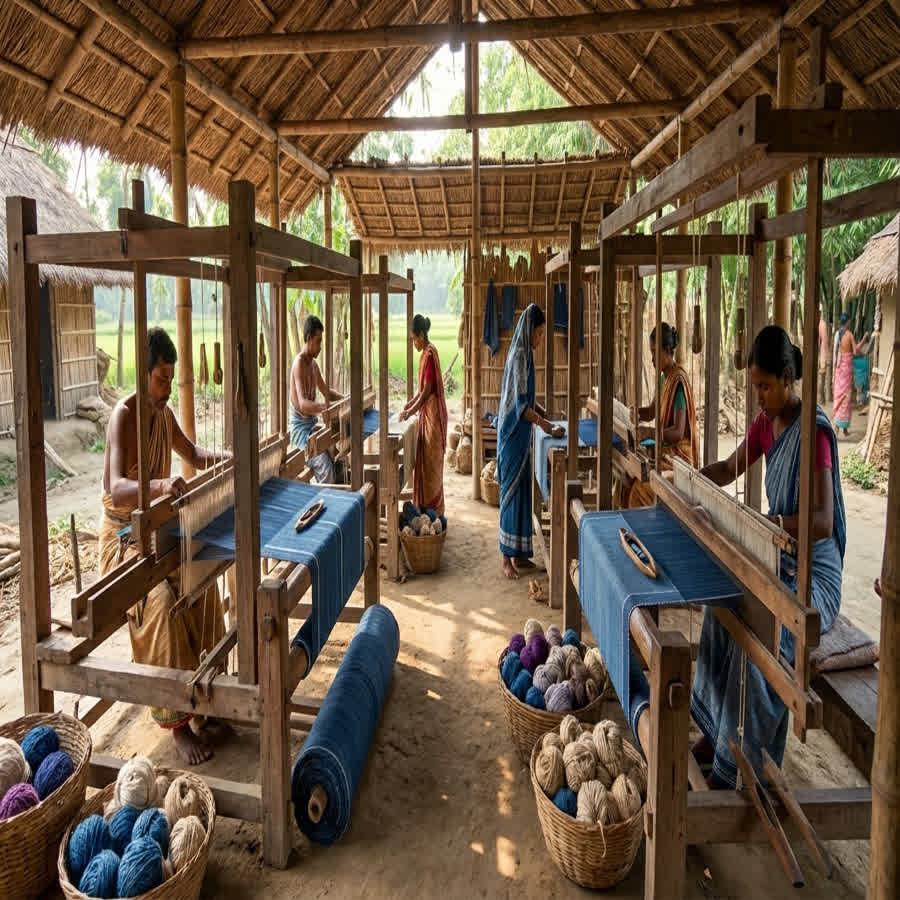
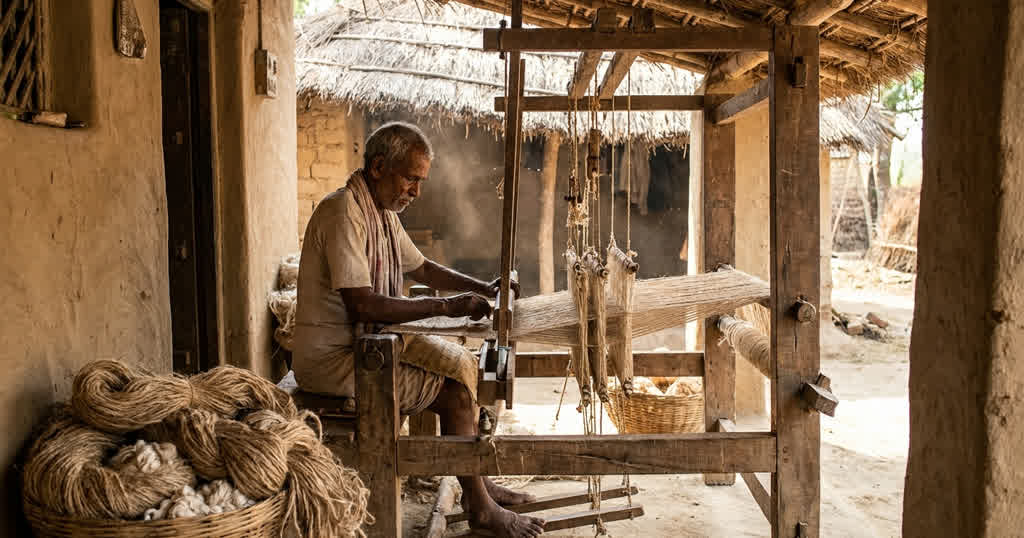
Khadi denim operates entirely off the grid. Artisans in rural Bengal use traditional wooden pit looms or frame looms powered solely by human kinetic energy. This zero-electricity production model allows sustainable denim brands in india to claim a legitimate, verifiable reduction in their scope 3 emissions. By removing the power grid from the weaving equation, the fabric offers a direct path to carbon-neutral sourcing without relying on purchased offsets.
Material Science of Hand-Spun Yarn: Why Khadi Denim Breathes Better
Khadi denim breathes better because its hand-spun yarn features varying twist levels and is woven under low tension, creating micro-gaps that regulate temperature. This unique structural composition directly contrasts with the uniform, tightly packed yarns of machine-made denim.
Structural Differences in Yarn Twist
Industrial spinning machines are engineered to produce yarn with a perfectly uniform twist and high tension. This creates a dense, flat surface that traps heat against the body, making standard denim notoriously uncomfortable in humid climates. The mechanical uniformity eliminates the natural variations found in the raw cotton fiber.
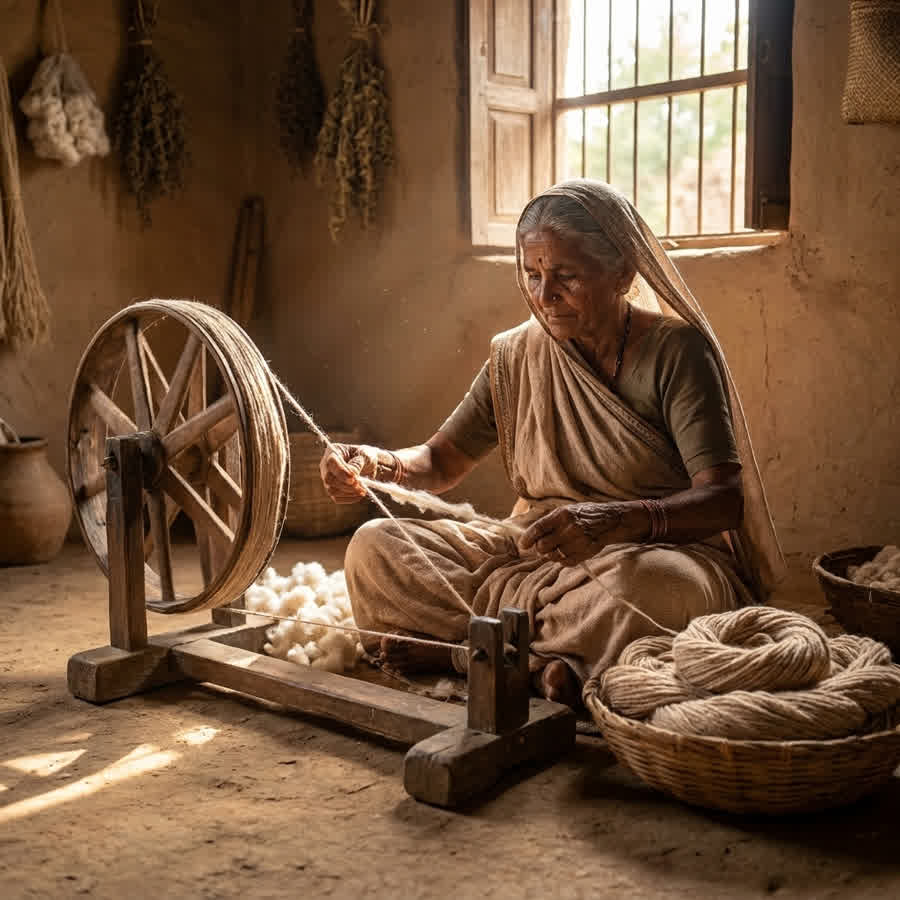
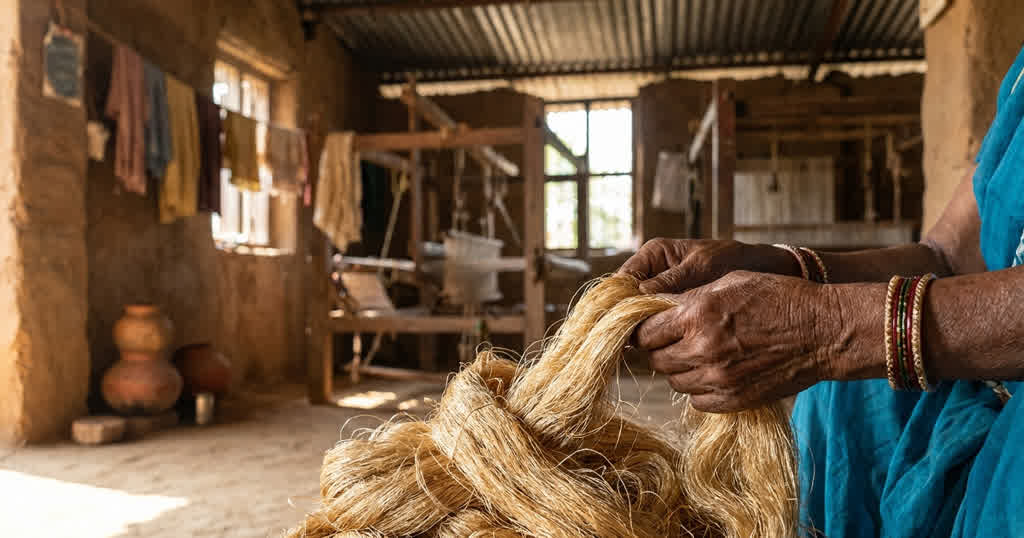
Hand-spinning on a traditional charkha introduces intentional irregularities into the yarn. The artisan manually controls the drafting and twisting process, resulting in a yarn with varying twist levels along its length. These subtle thick and thin spots, known as slubs, give the fabric its distinct tactile texture.
Structural Differences in Yarn Twist (continued)
This manual spinning process yields several technical advantages for the final garment:
- Increased air permeability occurs because the irregular yarns do not pack together as tightly as machine-spun yarns.
- Superior moisture wicking is achieved as the less-compressed cotton fibers retain their natural ability to absorb and release sweat.
- Lighter perceived weight makes the fabric feel comfortable even when the actual GSM matches heavier conventional denims.
Low-Tension Weaving and Thermal Regulation
The weaving process further enhances the fabric's breathability. Handloom weavers operate with significantly lower warp tension compared to industrial power looms. This low-tension weaving prevents the yarns from being stretched and flattened during the creation of the twill structure.
Because the yarns remain plump and rounded, the resulting fabric contains thousands of microscopic air pockets. These micro-gaps act as a natural insulation layer, providing superior thermal regulation. The fabric keeps the wearer cool in the summer by allowing body heat to escape, while the trapped air provides a layer of warmth during cooler months. For sustainable denim brands in india, this translates to a versatile, multi-season textile.
Durability Tested: Tensile Strength and the Aging of Handwoven Denim
Handwoven denim achieves comparable tensile strength to conventional denim through natural fiber alignment over time, bypassing the need for chemical sizing or synthetic elastane. While the initial hand-feel differs from stiff industrial denim, the long-term structural integrity remains highly competitive for commercial apparel.
Natural Fiber Alignment vs. Chemical Sizing
Commercial denim mills rely heavily on chemical sizing agents, such as synthetic starches and polyvinyl alcohol (PVA). These chemicals coat the warp yarns to prevent breakage under the extreme tension of high-speed power looms. While this creates a rigid, durable-feeling fabric off the roll, the sizing washes out over time, often leading to premature fabric degradation.
Khadi denim requires no such chemical intervention. The low-tension handweaving process is gentle enough that the raw cotton yarns do not need synthetic reinforcement. Instead, the fabric relies on the inherent strength of the staple fibers and the density of the manual weave.
Natural Fiber Alignment vs. Chemical Sizing (continued)
This natural approach to durability offers distinct technical benefits:
- Zero chemical degradation ensures the fabric does not weaken as synthetic sizing agents are washed away.
- No synthetic elastane blends are needed, meaning the fabric will not suffer from the sagging or puckering associated with degraded spandex.
- High tear resistance is maintained because the hand-spun yarns retain their natural elasticity and flex under stress.
The Aging Process and Structural Integrity
The way a fabric ages is a critical metric for any sourcing designer. Conventional denim often relies on abrasive industrial washing, pumice stones, or laser treatments to achieve a worn-in look. These processes intentionally damage the twill structure, compromising the garment's lifespan before it even reaches the consumer.
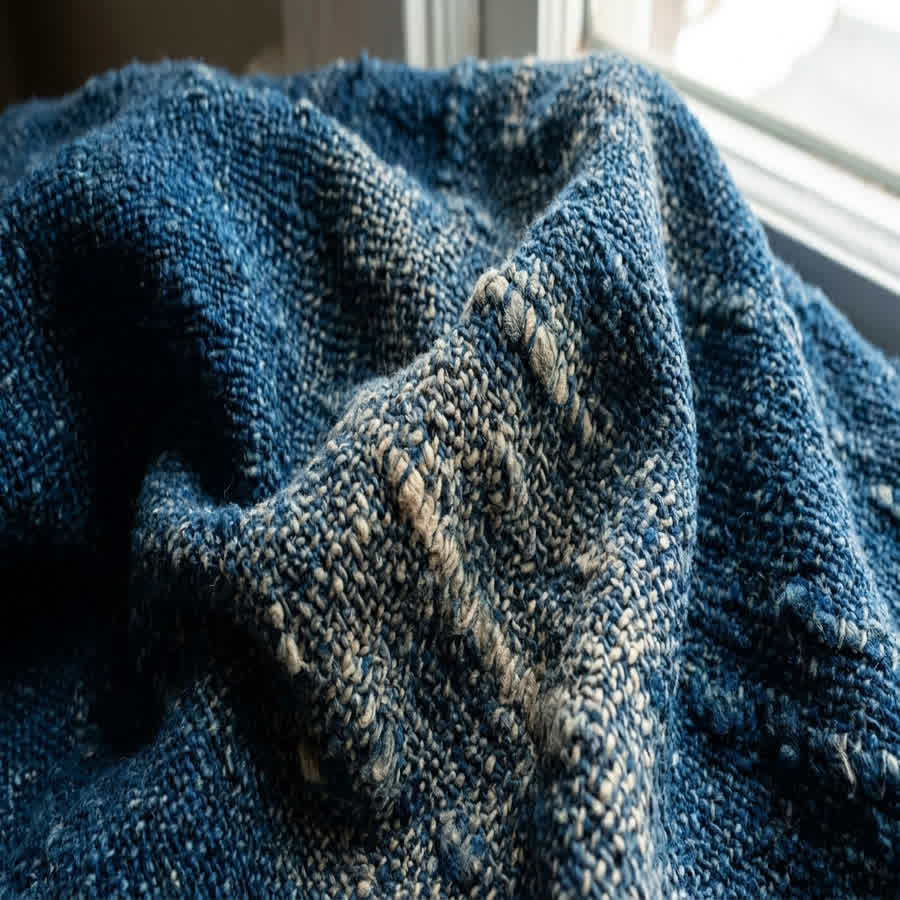
Khadi denim ages organically through wear. Because the yarn features varying twist levels, the indigo dye penetrates unevenly. As the fabric rubs against the body, the dye chips away from the thicker slubs first, creating a natural, high-contrast fade. Over time, the natural fiber alignment settles, causing the fabric to soften dramatically while maintaining its core tensile strength.
This allows the garment to mold to the wearer without losing its structural integrity.
Sourcing for Sustainable Denim Brands in India: The Decentralized Artisan Advantage
Sourcing Khadi denim through a decentralized artisan network provides brands with verifiable ESG metrics, ethical labor transparency, and a resilient supply chain. By moving away from centralized industrial mills, designers can secure high-quality textiles while directly supporting rural economies.
Building a Verifiable ESG Narrative
Consumers and regulatory bodies increasingly demand proof of ethical production. Centralized mills often struggle to provide full transparency, as their raw materials are mixed from various untraceable commodity brokers. This opacity makes it difficult for brands to substantiate their sustainability claims.
Working with a decentralized supply chain like Anuprerna changes this dynamic entirely. We currently work with specific rural clusters across Bengal, allowing us to trace every yard of fabric back to the exact village where it was spun and woven. This level of radical supply chain transparency gives designers the concrete data they need.
Building a Verifiable ESG Narrative (continued)
A verifiable ESG narrative is built on specific, measurable practices:
- Direct artisan compensation ensures that weavers receive fair wages without intermediaries taking a cut.
- Decentralized rural employment allows artisans to work from their homes, preserving community structures and preventing forced urban migration.
- Strict ESG compliance is maintained through regular, documented visits to the weaving clusters and transparent auditing.
Logistics of Decentralized Procurement
A common concern for a B2B sourcing manager is whether a decentralized network can meet commercial production requirements. While handloom production operates on a different timeline than high-speed mills, it offers unique logistical advantages for boutique and mid-sized brands.
Khadi denim typically ranges from 8 to 14 oz (approximately 270-475 GSM), providing a versatile weight for everything from lightweight shirting to heavy jackets. Because the production is distributed across multiple independent weavers, the supply chain is highly resilient to localized disruptions. This model allows for lower Minimum Order Quantities (MOQs), enabling sustainable denim brands in india to test new designs without committing to massive industrial yardage.
Explore Our Collection
Anuprerna works directly with handloom artisan clusters to weave sustainable denim brands in india for designers and brands building considered collections. To source it for your next line, explore the range below.
frequently asked questions
What is the typical GSM and weight range for B2B Khadi denim sourcing?
Khadi denim typically falls between 8 oz and 14 oz, which translates to approximately 270 to 475 GSM. This versatile weight range makes the fabric highly adaptable for commercial production. Designers can source the lighter 8 oz weights for summer shirting and dresses, while utilizing the heavier 14 oz yardage for durable jackets and traditional jeans.
How does the water consumption of Khadi denim compare to conventional denim?
Khadi denim drastically reduces water consumption by utilizing rain-fed indigenous cotton, natural indigo dyeing processes, and eliminating water-intensive industrial finishing. Conventional denim requires up to 10,000 liters of water per kilogram of fabric, primarily due to irrigated GMO cotton and extensive chemical washing. By removing synthetic sizing and chemical baths, the handloom process bypasses the need for these massive industrial water draws.
Can Khadi denim meet the tensile strength requirements for commercial apparel?
Yes, Khadi denim meets standard commercial tear-strength tests and provides excellent long-term durability. While hand-spun yarn has a different tension profile than machine-spun yarn, the dense manual weaving process creates a highly resilient fabric. It uniquely softens with wear and naturally aligns its fibers over time, maintaining structural integrity without the need for synthetic elastane.
How do sustainable denim brands in India verify the authenticity and ethical production of Khadi denim?
Authentic Khadi is verified through certification by the Khadi and Village Industries Commission (KVIC), alongside direct traceability data provided by the supplier. Anuprerna goes a step further by providing full traceability back to specific rural artisan clusters in Bengal. This ensures strict ESG compliance, ethical labor standards, and a transparent supply chain that brands can confidently market to their consumers.
How does the dyeing process of Khadi denim differ from conventional denim?
Khadi denim typically uses natural indigo vats that oxidize in the air, whereas conventional denim relies on synthetic chemical dyes and heavy fixing agents. The natural dyeing process eliminates toxic chemical runoff, protecting local waterways near the artisan clusters. Additionally, the uneven absorption of natural indigo into the hand-spun yarn creates the distinct, high-contrast fading that premium denim buyers seek.
More Blogs
khadi jeans for men: styling sustainable denim
eco-friendly trims: sourcing sustainable fashion accessories
how to choose the right fabric wholesaler for your brand
what to look for in a silk manufacturer before you source
how does sustainable sourcing affect clothing quality?
what is a sustainable designer? roles, responsibilities, and impact