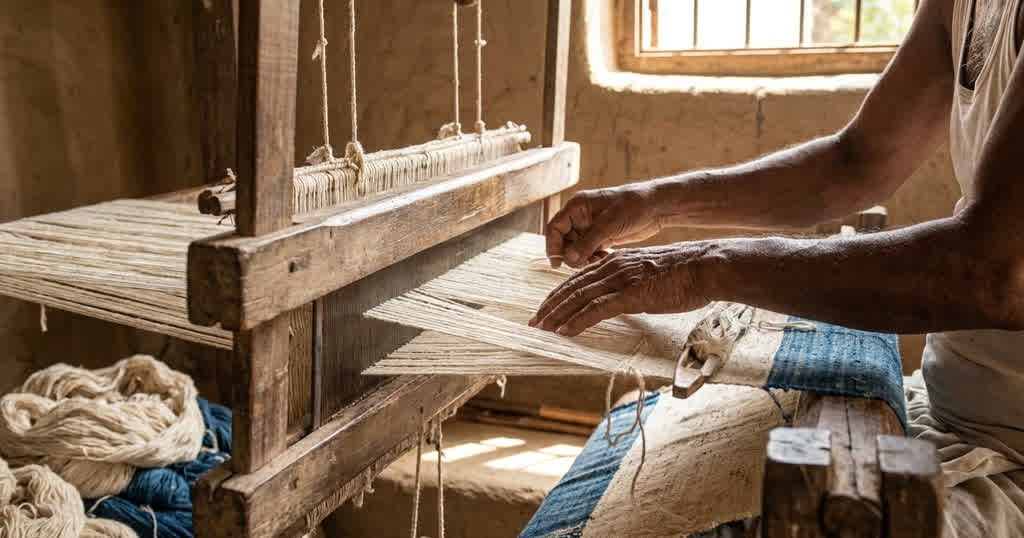
How to Calculate Carbon Emissions in Your Textile Supply Chain

A brand's climate strategy often stalls the moment it attempts to trace a garment back to the farm. To accurately calculate carbon emissions textile buyers must track data across highly fragmented networks of spinners, weavers, and dyers. This process frequently exposes a heavy reliance on fossil-fuel-dependent industrial manufacturing, making corporate climate goals difficult to achieve without a fundamental shift in sourcing.
The pressure to report verifiable primary data is intensifying due to strict regulatory scrutiny, such as the EU Strategy for Sustainable and Circular Textiles. Sourcing teams are realizing that accurate measurement is only the first step toward compliance. The long-term solution requires replacing energy-intensive production with decentralized artisan supply chains, utilizing human-powered clusters to drastically lower the baseline footprint.
Decoding Scope 1, 2, and 3 Emissions in Textile Manufacturing
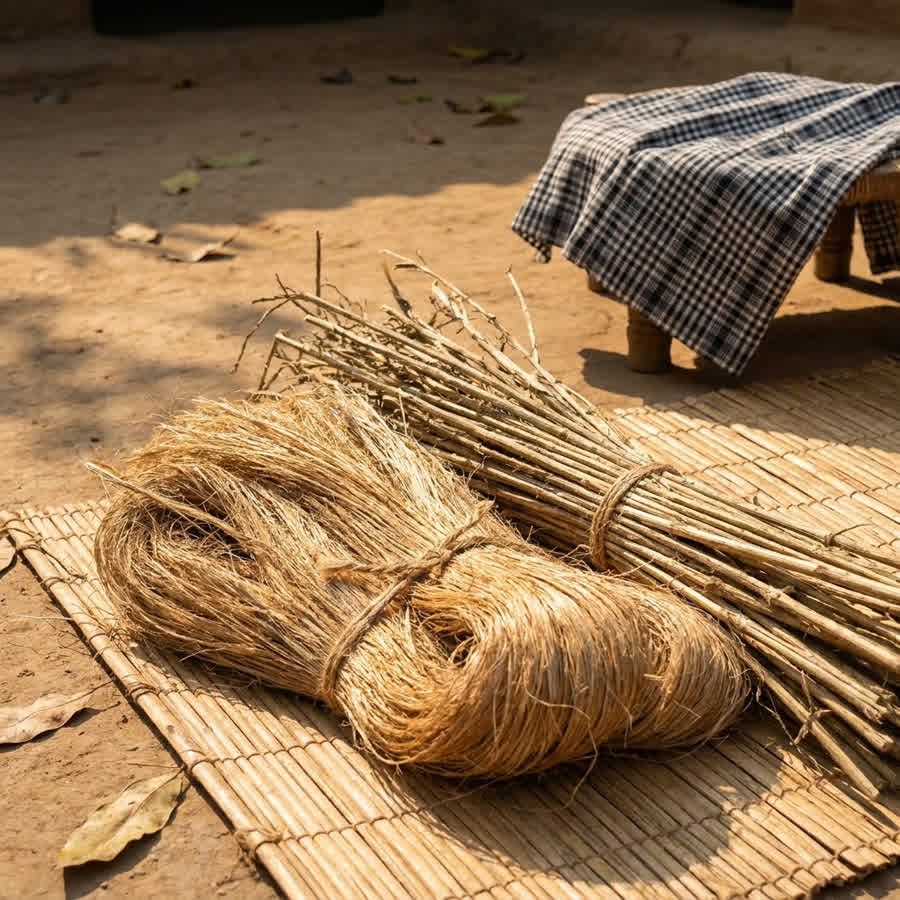
Scope 1, 2, and 3 emissions categorize the direct and indirect greenhouse gases produced by a company, with Scope 3 representing the vast majority of a fashion brand's total climate impact. Understanding these boundaries is essential for accurate carbon accounting and ensuring strict regulatory compliance across the supply chain.
Defining the Boundaries of Carbon Accounting
To measure a brand's true environmental impact, sustainability directors must categorize emissions into three distinct scopes. This framework ensures that no greenhouse gas output is double-counted or ignored during the auditing process.
- Scope 1 Emissions: These are direct emissions from owned or controlled sources, such as company vehicles or on-site fuel combustion.
- Scope 2 Emissions: This covers indirect emissions from the generation of purchased electricity, steam, heating, and cooling consumed by the reporting company.
- Scope 3 Emissions: These include all other indirect emissions that occur in a company's value chain, encompassing both upstream raw material extraction and downstream activities.
Defining the Boundaries of Carbon Accounting (continued)
For most fashion brands, Scope 1 and 2 represent a tiny fraction of their overall footprint. The real measurement challenge lies in the extended network of Tier 2 and Tier 3 suppliers.
Why Scope 3 Dominates the Footprint
Industry consensus indicates that Scope 3 emissions account for up to 80 percent of a fashion brand's total carbon footprint. This category includes the cultivation of bast fibers, yarn spinning, fabric weaving, and chemical wet processing.
Gathering accurate primary Scope 3 data is notoriously difficult because these processes happen in outsourced, overseas facilities. Brands often rely on inaccurate industry averages rather than demanding supplier-specific emission data. This reliance on secondary data obscures the true climate impact of fossil-fuel-dependent powerlooms and synthetic dyeing facilities.
By partnering with transparent, decentralized supply chains, brands can replace vague estimates with precise, verifiable data. This visibility is critical for buyers who need to calculate carbon emissions textile impacts accurately to satisfy corporate Net-Zero targets.
The LCA Approach: How to Calculate Carbon Emissions in Your Textile Supply Chain
A Life Cycle Assessment (LCA) calculates carbon emissions by measuring the CO2 equivalent (CO2e) per kilogram of fabric across every stage of production. This step-by-step methodology tracks the energy intensity of raw material cultivation, spinning, weaving, and wet processing to build a complete emissions profile.
Mapping the Cultivation and Spinning Phases
The first step in a textile LCA is quantifying the agricultural inputs required to grow raw fibers. This includes measuring the carbon footprint of fertilizers, pesticides, and tractor fuel used in conventional cotton farming.
- Raw Material Cultivation: Sourcing organic fibers eliminates petrochemical fertilizers, significantly lowering the initial CO2e per kg.
- Yarn Spinning: Converting raw fiber into yarn requires substantial mechanical energy, making it a critical measurement point for Tier 3 emissions.
- Transportation Logistics: The physical distance between the farm and the spinning mill adds logistical emissions that must be factored into the LCA methodology.
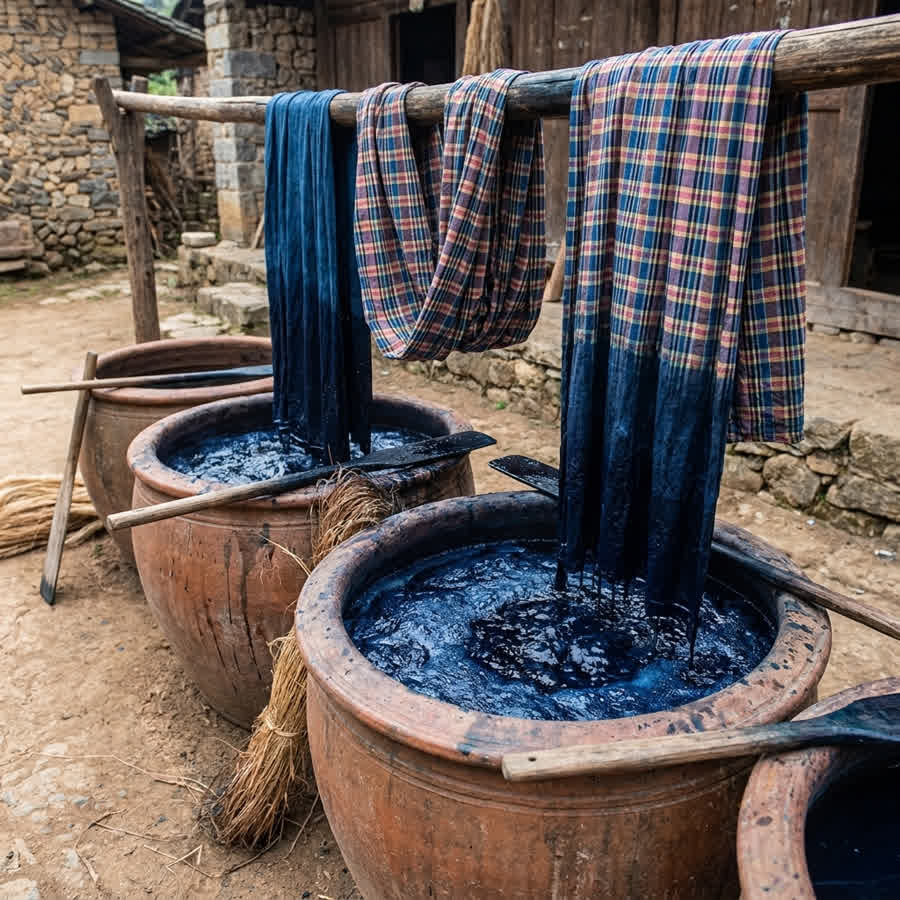
Mapping the Cultivation and Spinning Phases (continued)
Tracing these early stages is vital for sourcing managers who want to calculate carbon emissions textile footprints accurately. Without primary data from the farm and spinner, the entire assessment relies on flawed baseline assumptions.
Measuring Weaving and Wet Processing Impacts
Once the yarn is spun, the LCA tracks the energy consumed during fabric formation and finishing. This is where the divergence between industrial mass-production and artisanal methods becomes starkly apparent in the data.
Mechanized weaving requires constant electricity, adding a heavy load of kWh/kg energy consumption to the fabric's tally. Wet processing further spikes the footprint due to the thermal energy needed to heat water for synthetic dye fixation.
- Thermal Energy: Heating large vats of water for chemical dyeing relies heavily on burning fossil fuels.
- Petrochemical Inputs: Synthetic dyes themselves are derived from petroleum, adding embedded carbon to the finished textile.
- Low-Heat Alternatives: Transitioning to plant-based natural dyeing and cold-vat fermentation drastically reduces these processing emissions.
By measuring these specific inputs, brands can identify exactly where their supply chain generates the most carbon. They can then target those specific energy-intensive phases for immediate reduction.
Powerloom vs. Handloom: The Carbon Impact of Human-Powered Weaving
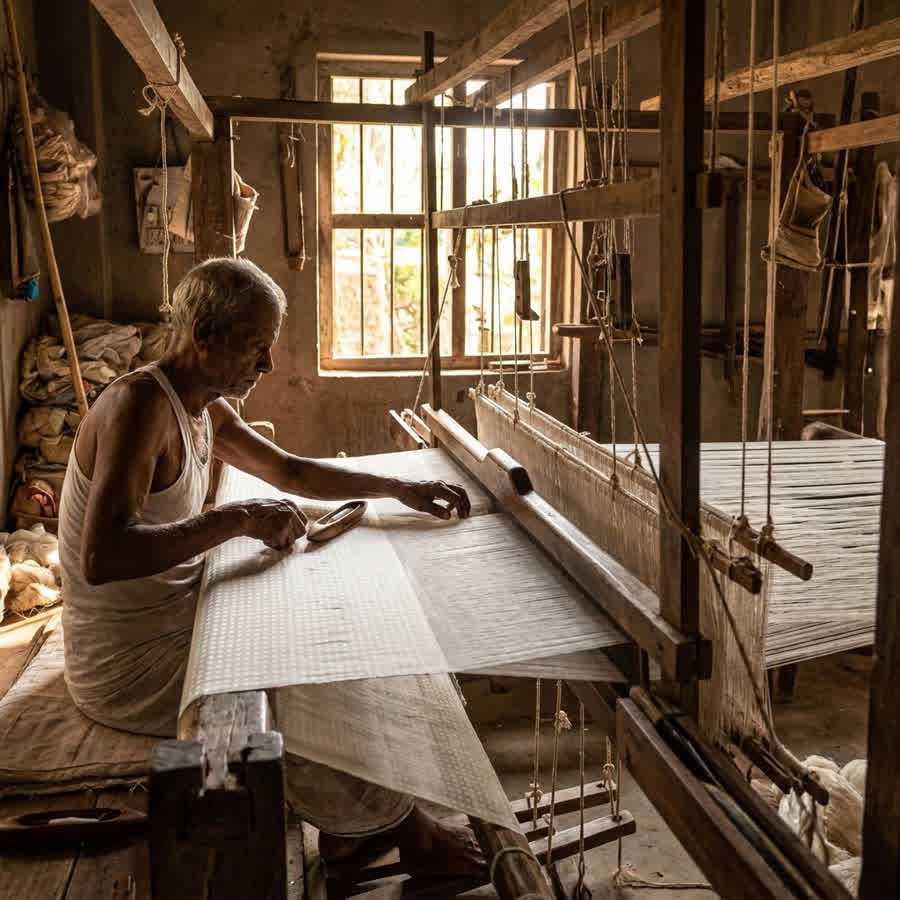
Mechanized powerlooms consume massive amounts of grid electricity, while traditional handlooms operate entirely on human kinetic energy, resulting in zero electricity usage during the weaving phase. This fundamental difference makes handloom textiles an inherently low-carbon sourcing solution that bypasses industrial energy grids.
The Energy Intensity of Mechanized Weaving
The industrial revolution centralized textile production, introducing powerlooms that permanently spiked the industry's carbon footprint. These machines require a continuous supply of electricity to operate at high speeds and meet commercial production quotas.
In many manufacturing regions, this grid electricity is generated by burning coal or natural gas. Consequently, every meter of fabric produced on a powerloom carries a high energy intensity burden.
The Energy Intensity of Mechanized Weaving (continued)
- Continuous Power Draw: Industrial looms run 24 hours a day, consuming significant kWh/kg of fabric.
- Climate Control: Large factories require energy-intensive HVAC systems to maintain specific humidity levels for the mechanized looms.
- Fossil-Fuel Dependence: The reliance on non-renewable energy sources directly inflates a brand's Scope 3 emissions.
For brands trying to calculate carbon emissions textile data, these mechanized facilities represent a major obstacle. They make achieving aggressive climate reduction goals nearly impossible without purchasing offsets.
The Zero-Electricity Handloom Advantage
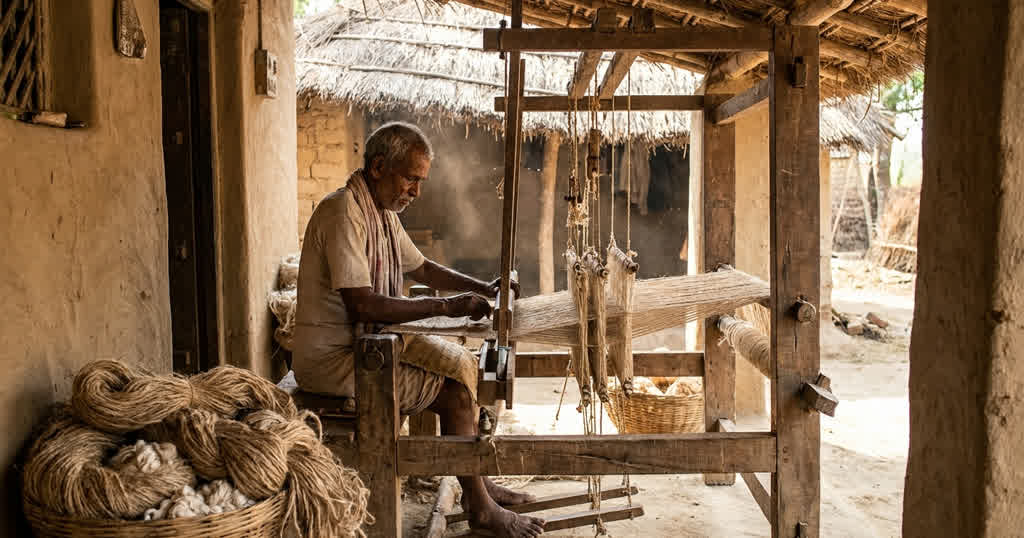
In contrast to industrial factories, India's traditional decentralized handloom clusters have operated for centuries on human power. This represents an inherently near-zero carbon weaving model that modern supply chains are now trying to reverse-engineer.
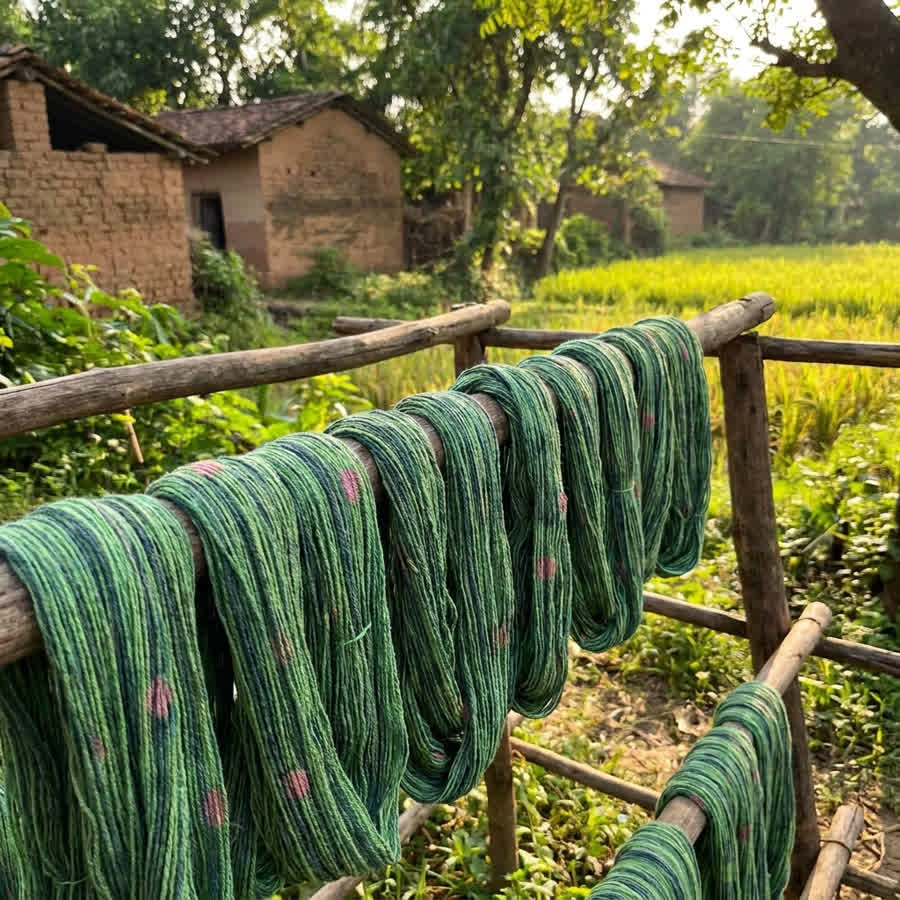
At Anuprerna, our artisan partners across rural Bengal weave fabrics like Matka silk using wooden looms powered entirely by hand and foot pedals. This process requires exactly 0 kWh/kg of electricity during the fabric formation stage.
- Human Kinetic Energy: The physical act of throwing the shuttle generates zero greenhouse gases.
- Decentralized Production: Weavers work from their homes, eliminating the need for massive, climate-controlled industrial factory spaces.
- Inherent Climate Solutions: Sourcing handwoven fabrics naturally lowers a brand's carbon baseline without relying on controversial carbon offset credits.
By choosing handloom textiles, sourcing managers can drastically simplify their carbon calculations. They secure verifiable, low-impact materials that inherently improve their brand's environmental reporting.
Evaluating Carbon Accounting Frameworks: GHG Protocol and Higg MSI
The Greenhouse Gas Protocol and the Higg Materials Sustainability Index (MSI) are the standard frameworks used to measure and report textile carbon emissions. Adapting these tools to accurately reflect decentralized, rural supply chains is crucial for capturing the true data benefits of artisan production.
Standardizing Measurement with the GHG Protocol
The Greenhouse Gas Protocol provides the foundational methodology for corporate carbon accounting worldwide. It establishes the strict rules for defining emission scopes and ensures consistency across different manufacturing sectors.
For fashion brands, this protocol dictates how to gather and report data from complex global supply chains. It requires companies to move away from estimates and prioritize primary supplier-specific data.
Standardizing Measurement with the GHG Protocol (continued)
- Standardized Reporting: Ensures that all brands measure their CO2 equivalent using the exact same baseline rules.
- Independent Verification: Provides a framework that external auditors can use to verify a company's climate claims.
- Target Setting: Forms the basis for establishing science-based targets and aggressive corporate Net-Zero goals.
Using this protocol helps sustainability directors structure their data collection. It is essential when they calculate carbon emissions textile impacts across multiple tiers of production.
Adapting Frameworks for Decentralized Supply Chains
While the GHG Protocol sets the rules, tools like the Higg MSI are used to calculate the specific environmental impacts of different materials. However, these tools are often calibrated for large-scale industrial manufacturing facilities.
Measuring a decentralized artisan supply chain requires a highly specific, nuanced approach. Sourcing teams must ensure that the zero-electricity benefits of handloom weaving are accurately recorded in their LCA software.
- Custom Data Inputs: Brands must input primary data showing 0 kWh/kg for weaving, rather than accepting industrial default values.
- Tracing Natural Dyes: The low thermal energy of plant-based natural dyeing must be explicitly measured against synthetic baselines.
- Capturing Artisan Impact: Proper accounting highlights the drastic reduction in emissions achieved by rural Indian handloom weavers.
By insisting on accurate primary data inputs, brands can prove the superior climate performance of their collections. This transforms an artisanal aesthetic into a measurable ESG compliance asset.
Turning Low-Carbon Sourcing into a B2B Competitive Advantage
Sourcing inherently low-carbon textiles provides a strategic advantage by ensuring compliance with strict environmental regulations and enabling brands to meet aggressive Net-Zero targets. Transparent, verifiable carbon data transforms artisan fabrics from a niche aesthetic choice into a core compliance asset for B2B buyers.
Meeting Strict Regulatory Compliance
B2B fashion brands are facing intense regulatory scrutiny regarding their environmental claims and supply chain transparency. Legislation like the Corporate Sustainability Reporting Directive (CSRD) requires detailed, mandatory disclosures of Scope 3 emissions.
Brands can no longer rely on vague sustainability marketing; they must provide hard, auditable data. Sourcing from transparent suppliers like Anuprerna provides the exact verifiable carbon data that European auditors demand.
Meeting Strict Regulatory Compliance (continued)
- Mandatory Disclosures: Regulations increasingly require brands to publish their exact CO2e per kg metrics.
- Anti-Greenwashing Laws: Strict rules penalize companies that make unsubstantiated climate-friendly claims.
- Supply Chain Traceability: Brands must prove the origin and impact of their materials, down to the rural artisan clusters.
Proactively securing this data protects brands from heavy regulatory fines. It also secures their position as a preferred supplier in the highly regulated European wholesale market.
Achieving Corporate Net-Zero Targets
Beyond compliance, buyers urgently need low-carbon suppliers to meet their own internal climate commitments. Many brands have set ambitious goals to halve their emissions by 2030, a target impossible to reach while relying on fossil-fuel-dependent powerlooms.
Integrating handloom textiles into commercial collections inherently lowers the brand's overall carbon baseline. This strategy reduces the need to purchase expensive and often scrutinized carbon offset credits.
- Inherent Emission Reductions: Handloom fabrics eliminate the root cause of weaving emissions at the source level.
- Primary Data Confidence: Working directly with decentralized supply chains yields accurate data to calculate carbon emissions textile progress.
- Market Differentiation: Brands that can prove their low-carbon claims gain a distinct advantage with eco-conscious consumers and wholesale buyers.
By treating artisan sourcing as a strategic climate solution, fashion brands can build resilient, future-proof supply chains. They secure both the tactile heritage of the craft and the hard data required for modern business.
frequently asked questions
What is the biggest challenge in calculating Scope 3 emissions for textiles?
The primary challenge is supply chain traceability. Most brands lack visibility into Tier 3 (yarn spinning) and Tier 4 (raw material cultivation) suppliers, forcing them to rely on secondary data or industry averages rather than primary, supplier-specific emission data. This fragmentation makes it difficult to map the exact energy inputs required to produce a finished garment.
How do handloom textiles compare to powerloom textiles in carbon emissions?
Handlooms operate entirely on human kinetic energy, utilizing 0 kWh of electricity during the weaving phase. This drastically reduces the Scope 2 and Scope 3 emissions associated with fabric production compared to mechanized powerlooms, which rely heavily on grid electricity often powered by fossil fuels. By eliminating the need for continuous mechanical power, handlooms offer an inherently low-carbon alternative.
Which carbon accounting frameworks are standard for the textile industry?
The Greenhouse Gas (GHG) Protocol is the foundational standard for corporate carbon accounting. Within textiles, the Sustainable Apparel Coalition's Higg Materials Sustainability Index (MSI) and Textile Exchange's LCA guidelines are the most widely adopted tools for calculating material-specific impacts. These frameworks help brands standardize their data collection and report their findings accurately to auditors.
How does wet processing and dyeing impact a fabric's carbon footprint?
Wet processing is typically the most energy-intensive phase of textile manufacturing due to the high thermal energy required to heat water and fix synthetic dyes. Transitioning to natural dyes, cold-vat fermentation, and unbleached fabrics significantly lowers the CO2e per kg of the finished textile. Reducing the reliance on petrochemical inputs during this phase is crucial for lowering overall supply chain emissions.
Why is primary data better than secondary data for textile carbon accounting?
Primary data reflects the actual, measured emissions from a brand's specific suppliers, whereas secondary data relies on generic industry averages. Using primary data allows sustainability directors to accurately capture the unique benefits of low-carbon initiatives, such as zero-electricity handloom weaving. This precision is essential for proving compliance with strict environmental regulations and verifying Net-Zero progress.
More Blogs

khadi jeans for men: styling sustainable denim
eco-friendly trims: sourcing sustainable fashion accessories

how to choose the right fabric wholesaler for your brand
what to look for in a silk manufacturer before you source
how does sustainable sourcing affect clothing quality?

what is a sustainable designer? roles, responsibilities, and impact