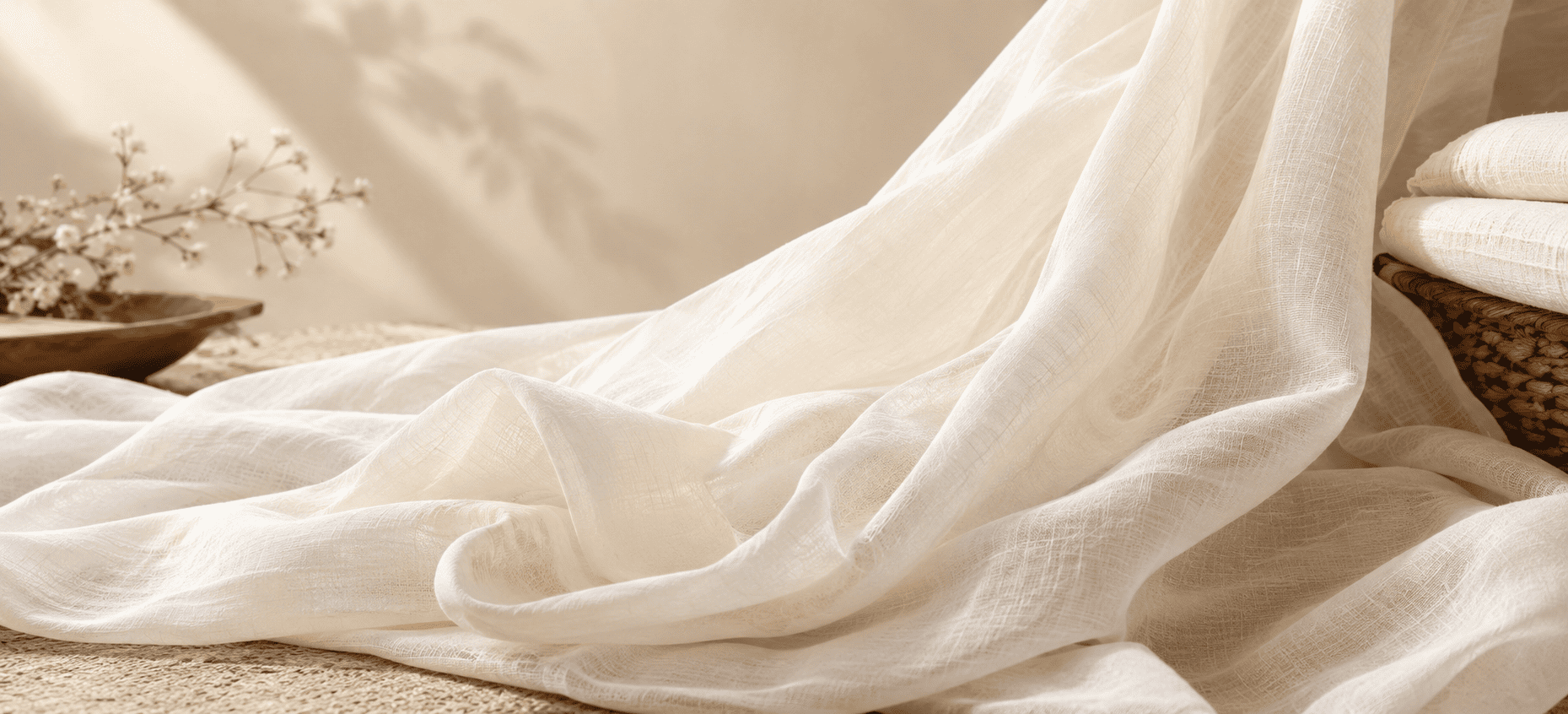
Mulmul Fabric: A Guide to Muslin Cotton, Characteristics & Uses

Muslin fabric is a lightweight, breathable cotton textile known for its soft hand feel, airy structure and natural drape. In India, closely related fine cotton fabrics are often referred to as mulmul, malmal or mull, depending on regional usage and fabric construction.
Because of its softness and breathability, muslin fabric has traditionally been used for clothing, baby textiles, home furnishings and handcrafted products. Its lightweight character also makes it particularly suitable for warm climates and relaxed, flowing silhouettes.
For designers and fabric buyers, understanding the weave, fiber composition, texture and intended use of muslin can help in choosing the right fabric for a collection or project.
What Is Muslin Fabric?
Muslin fabric is a lightweight cotton textile, generally made using a plain weave and valued for its softness, breathability and delicate drape.
The fabric can range from very fine and sheer constructions to slightly more substantial cotton versions. Its final appearance and hand feel depend on factors such as yarn fineness, weave density, finishing and fiber quality.
Muslin has a long association with the Indian textile tradition. Fine cotton textiles from the Indian subcontinent were historically valued for their exceptional softness and delicate construction.
Today, the term muslin fabric is used more broadly for lightweight cotton textiles, while traditional Indian terms such as mulmul and malmal continue to be used for particularly fine and soft cotton fabrics.
Is Muslin Fabric the Same as Mulmul Fabric?
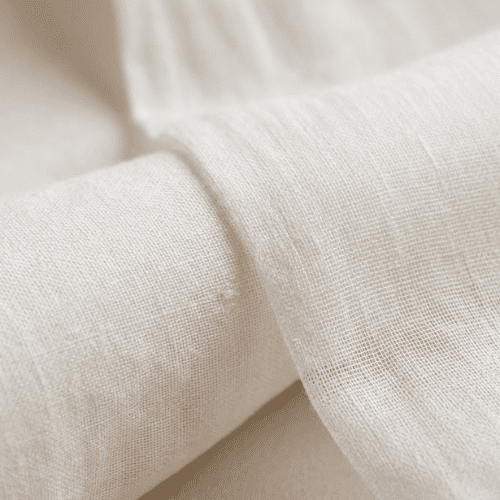
Mulmul fabric is closely associated with fine, lightweight cotton muslin, but the terms are not always interchangeable.
Traditional mulmul cotton fabric is known for its delicate, airy structure and exceptionally soft hand feel. The word mulmul is commonly used in the Indian textile context, while muslin is the broader English term used for lightweight cotton textiles.
The terminology can vary depending on the region, manufacturer and fabric construction. Therefore, rather than relying only on the name, buyers should examine:
- Fiber composition
- Yarn fineness
- Weave structure
- Fabric density
- Softness and hand feel
- Transparency
- Drape
- Intended end use
This is especially important when sourcing fabric online or purchasing for production, because two fabrics described as muslin may have noticeably different characteristics.
What Is Malmal Fabric in English?
“Malmal fabric” is generally referred to as “muslin fabric” in English.
In the Indian context, malmal and mulmul are commonly used names for fine, lightweight cotton fabrics. However, naming conventions can vary, so the actual fabric specifications remain more useful than the name alone.
What Makes Muslin Fabric Soft and Breathable?
The softness and breathability of muslin fabric come primarily from its lightweight cotton construction and airy weave.
Cotton naturally allows moisture to be absorbed and released, while a lightweight weave allows air to move through the fabric.
Key characteristics include:
Soft Hand Feel
Fine cotton yarns and lightweight construction can give muslin a smooth, gentle feel against the skin.
Breathability
The airy structure allows better airflow, making lightweight muslin particularly comfortable in warm conditions.
Lightweight Construction
Muslin is generally much lighter than heavier cotton fabrics, making it suitable for flowing garments and delicate textile applications.
Natural Drape
Fine muslin and mulmul cotton fabric can fall softly around the body, making them suitable for relaxed silhouettes.
Versatility
Depending on its construction, muslin can be used for apparel, home textiles, baby products and craft applications.
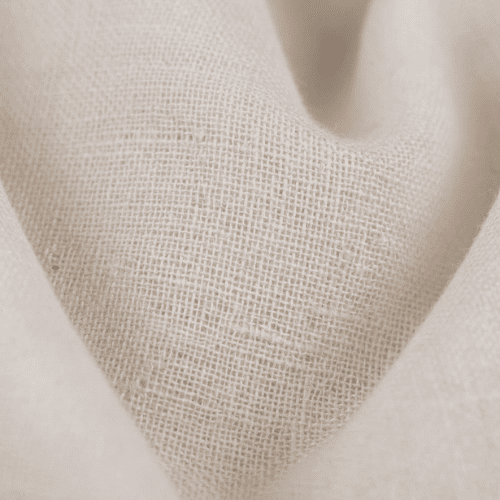
What Are the Characteristics and Weave of Muslin Fabric?
Muslin fabric is commonly associated with a plain weave, where horizontal weft yarns pass over and under vertical warp yarns in a regular pattern.
This relatively simple construction helps create the balanced and lightweight character associated with many muslin fabrics.
However, not all muslin has exactly the same appearance or performance. Differences in yarn count, yarn thickness, weave density and finishing can change the final fabric.
When evaluating muslin fabric, look for:
- Consistent weave
- Even yarn spacing
- A soft but stable hand feel
- Appropriate transparency for the intended use
- Natural drape
- Good recovery after handling
- Fiber composition suited to the project
For designers, these characteristics are important because the same broad fabric category can behave differently depending on its construction.
What Is Mulmul Cotton Fabric Used For?
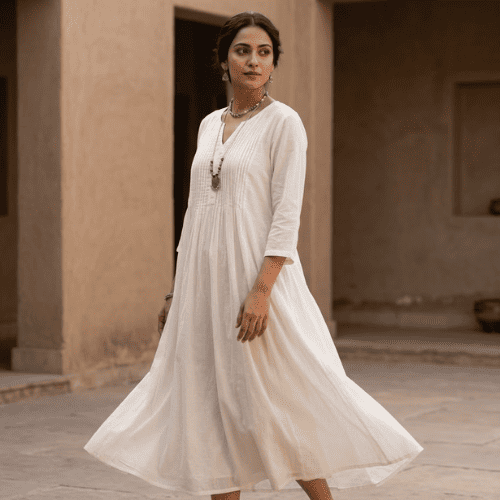
Mulmul cotton fabric is particularly suited to lightweight clothing because it combines softness, breathability and a naturally fluid drape.
One of its common applications is mulmul cotton dress material, which can be used to create comfortable and lightweight garments.
Depending on its weight, weave and finish, mulmul can be used for:
- Dresses
- Kurtas
- Tops
- Shirts
- Sarees
- Scarves
- Relaxed co-ord sets
- Lightweight layers
- Children's clothing
Mulmul Dress Material for Contemporary Fashion
Mulmul dress material works especially well for garments where softness and movement are important.
Designers can use it for relaxed silhouettes, gathered details, flowing dresses and breathable everyday clothing.
Because the fabric has a delicate appearance, it can also work well with surface techniques such as embroidery, block printing or other decorative treatments, provided the construction is suitable for the technique.
How Is Muslin Fabric Used Beyond Clothing?
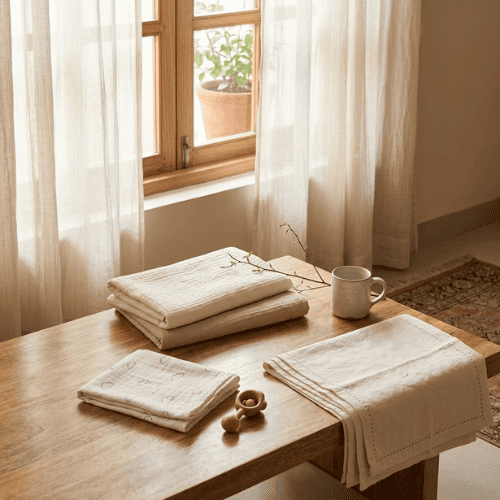
Muslin fabric is also used for home textiles, baby products and craft applications because of its lightweight and breathable nature.
Home Textiles
Depending on the fabric construction, muslin can be used for:
- Lightweight curtains
- Sheer panels
- Cushion covers
- Bed textiles
- Table linens
- Decorative textile layers
Baby Products
Soft cotton muslin is commonly associated with products such as:
- Baby wraps
- Swaddling cloths
- Bibs
- Burp cloths
- Lightweight baby clothing
Craft & Textile Applications
Its soft and workable structure also makes some varieties suitable for:
- Embroidery
- Quilting
- Textile sampling
- Handcrafted accessories
- Decorative textile projects
The suitability of a particular muslin fabric depends on its actual construction, so fabric specifications should always be checked before production.
Mulmul, Mull and Muslin: What's the Difference?
Muslin, mulmul, and mull are related textile terms, but they should not automatically be treated as identical fabrics.
Muslin Fabric
A broad term commonly used for lightweight cotton textiles, particularly those made with a plain weave.
Mulmul Fabric
An Indian textile term generally associated with very fine, soft, and lightweight cotton fabric.
Mull Fabric
Mull fabric refers to a fine, lightweight textile, but its exact fiber composition and construction can vary. It should therefore be evaluated based on its actual specifications.
Malmal
Malmal is another Indian term commonly associated with fine cotton textiles and is often translated as muslin in English.
For sourcing purposes, the most reliable approach is to assess the fiber, weave, weight, hand feel, and finish, rather than choosing a fabric solely by its name.
How Can You Identify Good-Quality Muslin Fabric?
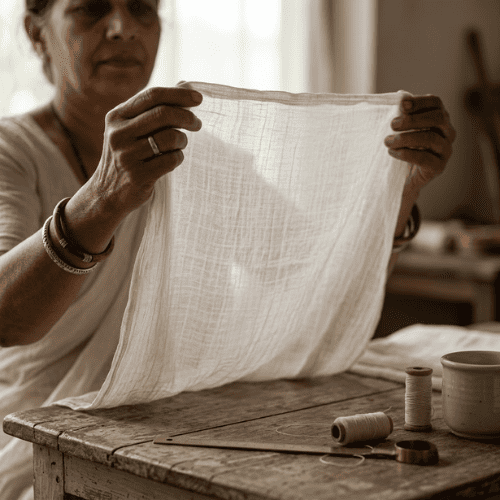
Good-quality muslin should have a consistent weave, appropriate softness, even construction and characteristics that match its intended application.
Before purchasing fabric for production, check:
1. Fiber Composition
Confirm whether the fabric is cotton or contains other fibers.
2. Weave Consistency
Look closely at the fabric surface for uneven or irregular areas that could affect the finished product.
3. Hand Feel
Good-quality fine cotton muslin should have a comfortable and appropriate hand feel for its intended use.
4. Drape
Hold or hang a fabric sample to understand how naturally it falls.
5. Breathability
For warm-weather clothing, assess how open and airy the fabric feels.
6. Intended Application
A very fine and sheer muslin may be excellent for one application but unsuitable for a structured garment.
7. Sample Before Bulk Production
For designers and brands, ordering a swatch before committing to a larger quantity can help evaluate the fabric's actual hand feel, colour and construction.
Anuprerna's fabric sourcing guidance similarly recommends checking factors such as composition, weight, width, pattern, drape and care information when buying fabric online.
Why Is Muslin Fabric Suitable for Indian Climates?
Lightweight muslin fabric is well suited to warm climates because its breathable cotton construction can encourage airflow while remaining soft and comfortable.
Its main advantages for warm-weather dressing include:
- Lightweight construction
- Breathable cotton fibers
- Soft hand feel
- Comfortable natural drape
- Easy layering
- Suitability for relaxed silhouettes
This makes fine muslin and mulmul particularly relevant to Indian summer wardrobes, everyday clothing and lightweight festive or occasion pieces.
However, comfort ultimately depends on the specific fabric construction. A denser or heavier cotton labelled as muslin may perform differently from a very fine variety.
How Should Muslin Fabric Be Cared For?
Muslin should generally be handled gently, with washing and drying methods chosen according to its fiber composition and finishing.
For lightweight cotton muslin:
- Follow the manufacturer's care instructions.
- Use a mild detergent where appropriate.
- Avoid harsh bleaching agents.
- Avoid aggressive wringing.
- Wash gently.
- Air dry where recommended.
- Avoid excessive heat.
- Use a low or suitable ironing temperature.
Shrinkage can also be relevant when working with natural fabrics. Pre-washing or accounting for expected shrinkage before cutting can help reduce problems during garment production. Anuprerna's fabric-care guidance specifically discusses how fiber composition, weave and finishing can influence shrinkage.
Why Do Designers Continue to Use Mulmul and Muslin?
Muslin and mulmul remain useful to designers because they combine lightweight comfort, breathability, softness and natural drape with considerable versatility.
For contemporary collections, these fabrics can work across:
- Everyday apparel
- Summer collections
- Resort wear
- Relaxed dresses
- Kurtas
- Lightweight shirts
- Children's clothing
- Home textiles
- Craft-based designs
Their connection to India's textile heritage also gives designers an opportunity to work with a fabric category that combines traditional textile knowledge with contemporary design possibilities.
For brands sourcing natural textiles, the most important consideration is not simply whether a fabric is called muslin or mulmul, but whether its actual construction, feel and performance match the requirements of the final product.
mulmul fabric
Can mulmul fabric be used for making reusable produce bags or eco-friendly packaging?
Absolutely! It is durable, washable, and provides a breathable environment for storing clothes, accessories and natural fabrics.
Is mulmul and similar fabrics suitable for embroidery or hand stitching?
Yes, mulmul and similar fabrics areas popular choice for embroidery and hand stitchings. They are lightweight and smooth texture make it easy to work with, allowing intricate designs to be created with ease.
Can mulmul fabric be dyed or printed with designs?
Certainly! Mulmul and other organic fabrics readily accepts dyes, allowing for vibrant and long-lasting colors. It is also an excellent canvas for block printing, screen printing, and other design techniques, making it a favorite among textile artists and designers.
Where can I purchase mulmul fabric?
Mulmul fabric is readily available in fabric stores, both online and offline. You can also find a wide selection of muslin fabric in specialty textile shops, eco-friendly boutiques, and online platforms like Anuprerna
Is mulmul fabric suitable for summer clothing?
Yes, muslin fabric is an excellent choice for summer garments due to its lightweight and breathable properties. It helps keep you cool and comfortable in hot and humid weather.
More Blogs
how indian fabric exporters meet global quality standards
jacquard vs embroidery: what's the difference?
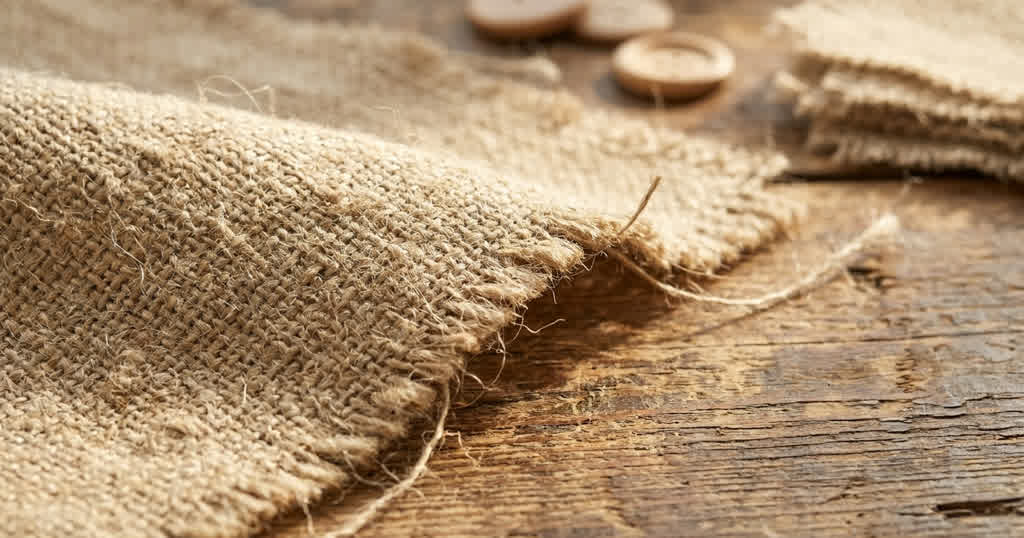
buy hemp fabric in bulk: what fashion brands need to know
khadi online shopping: what fabric details should you check?
a designer’s guide to sourcing silk from indian manufacturers
tussar silk fabric: characteristics, texture & a guide for designers