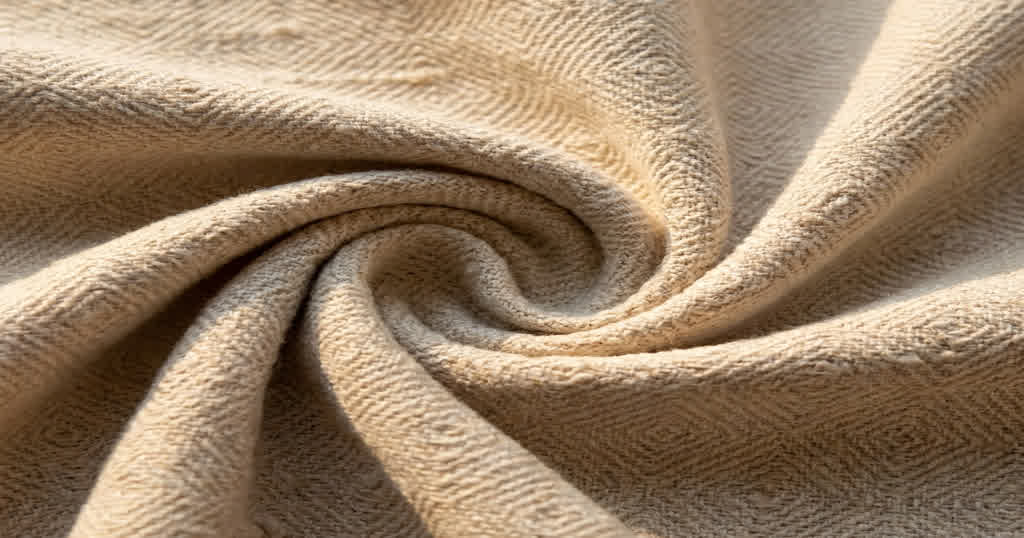
Understanding Jacquard Weaving Techniques

Designers often face a critical choice when developing textured collections, deciding between flat surface prints that fade over time and structurally integrated motifs that endure. Sourcing authentic jacquard fabric offers a distinct tactile advantage, but finding low-minimum, natural-fiber options outside of massive industrial mills remains a persistent challenge for independent labels. The shift away from synthetic, mass-produced brocades is driving demand for traceable, artisanal alternatives. Understanding the mechanics of jacquard weaving allows a brand to specify the exact drape, durability, and sustainability metrics required for premium garments and home textiles.
We see this transition daily as boutique buyers seek textiles that carry a genuine heritage narrative without compromising on technical performance.
The Anatomy of Jacquard Weaving: Beyond the Surface
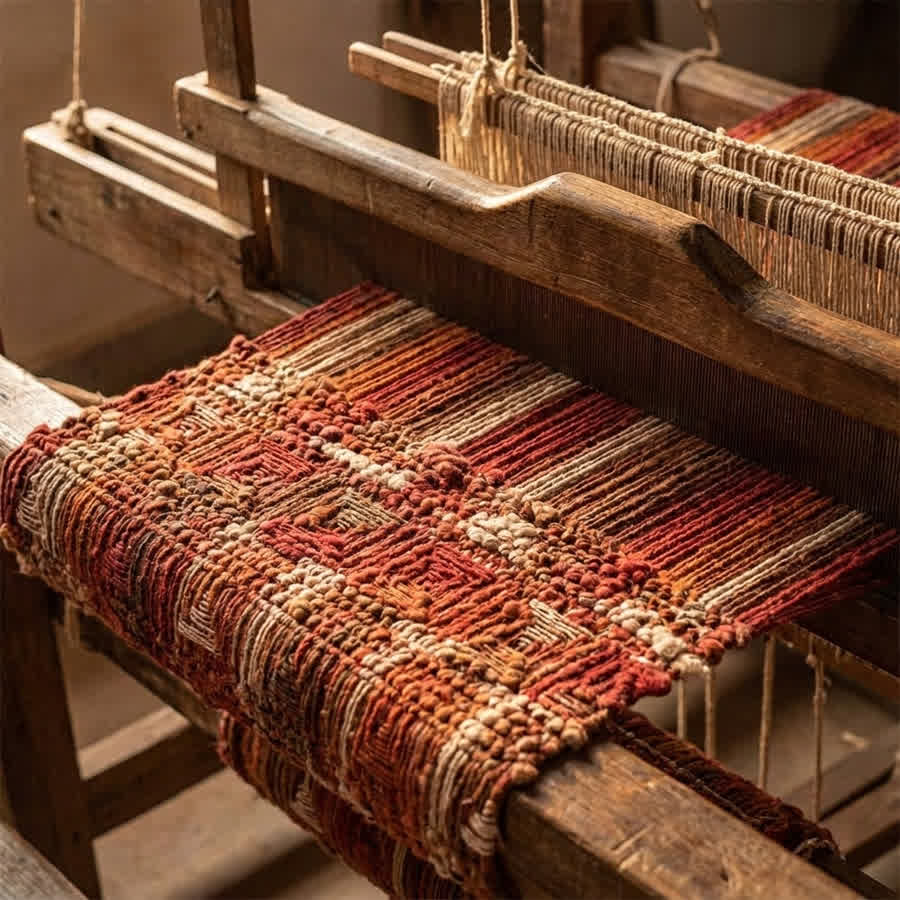
The anatomy of jacquard weaving relies on a specialized loom mechanism that individually controls each warp thread, allowing complex motifs to be structurally interlaced directly into the textile rather than applied to the surface. This structural integration creates a highly durable, often reversible cloth with superior dimensional stability. Invented by Joseph Marie Jacquard in 1804, this technology revolutionized textile production by using interchangeable punch cards to automate the lifting of specific yarns.
Structural Integrity vs. Surface Application
A true jacquard material derives its aesthetic entirely from its woven construction. Unlike rotary printing or topical dyeing, the pattern cannot wash away or crack under tension. This inherent structural integrity provides significant advantages for long-term wear and tear.
- High tensile strength is achieved because the motif is bound tightly into the base weave.
- Dimensional stability prevents the fabric from warping out of shape during garment construction.
- Reversible design potential allows designers to utilize both the face and the back of the cloth for contrasting visual effects.
The Mechanics of the Punch Card System
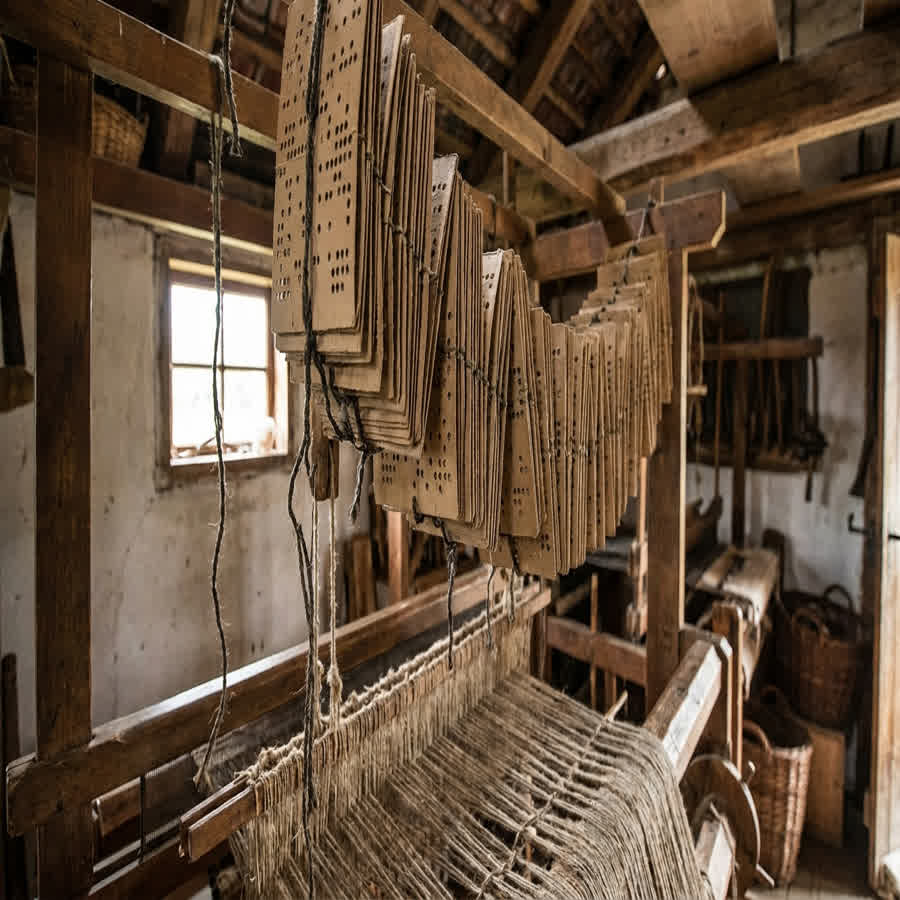
In the traditional handloom sector, rural artisans still utilize the original punch-card mechanisms adapted for pit and frame looms. Each perforated card corresponds to one row of the design, dictating exactly which warp threads are lifted and which remain lowered. As the weaver throws the shuttle carrying the weft yarn, the selected warp threads create the visible pattern.
This mechanical precision requires immense concentration and physical coordination from the artisan. The loom reads the sequence of holes in the cards, translating a flat concept into a three-dimensional jacquard pattern. By physically changing the stack of cards, the weaver can transition between entirely different motifs without re-threading the entire loom. This flexibility is what makes the technique so valuable for bespoke textile development.
Handloom vs. Powerloom: The Artisan Jacquard Difference
The primary difference between handloom and powerloom production lies in the energy source and the scale of operation, with artisan handlooms relying entirely on human kinetic energy and traditional punch cards to weave intricate motifs without electricity. This decentralized approach yields a zero-carbon-emission textile while preserving the nuanced, tactile irregularities that define authentic craft. Industrial powerlooms prioritize extreme speed and uniformity, often at the expense of environmental sustainability and fiber integrity.
The Human Element in Complex Weaves
Operating a handloom equipped with a jacquard head requires specialized generational skill. The artisan must synchronize the heavy lifting of the jacquard mechanism via a foot pedal while simultaneously throwing the shuttle by hand. This deliberate pacing allows the weaver to handle delicate, natural yarns that would snap under the high tension of industrial machinery.
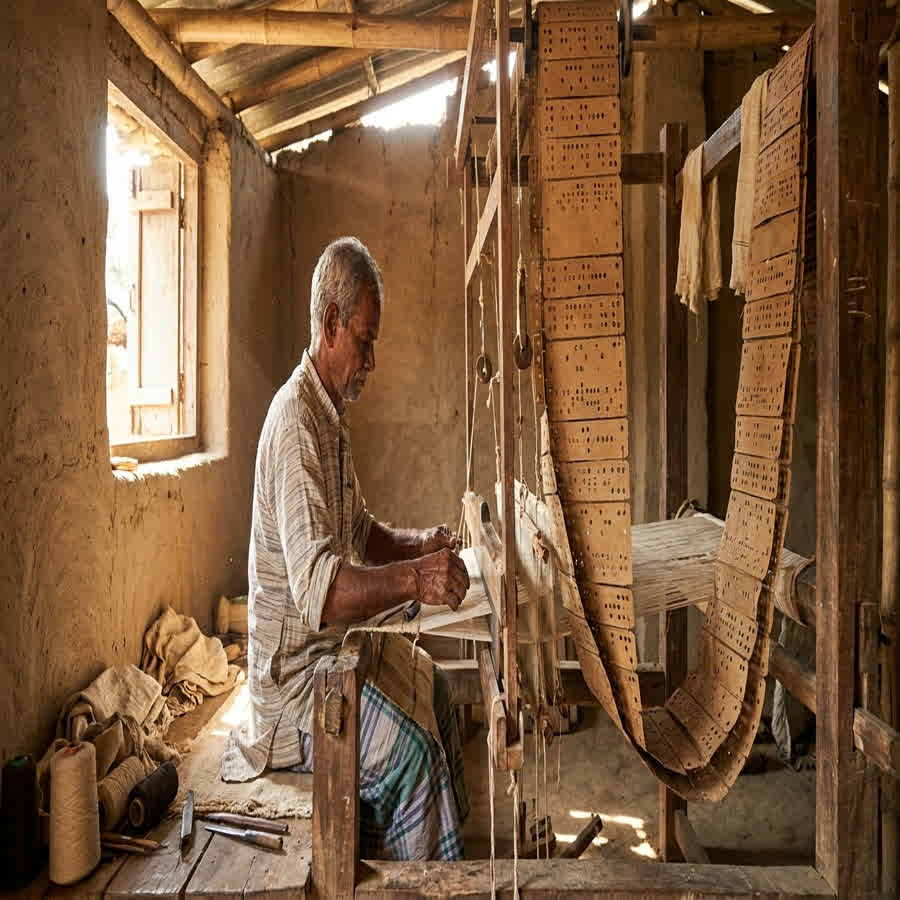
- Gentle yarn handling preserves the natural soft, breathable hand-feel of organic fibers.
- Micro-variations in tension create a distinct artisanal texture that cannot be replicated by computers.
- Immediate quality control occurs as the weaver inspects every single pick of the weft as it is laid down.
Environmental Impact and Energy Consumption
Industrial jacquard production relies heavily on computerized, power-driven looms optimized for high-speed synthetic mass production. These factories consume massive amounts of electricity and often enforce prohibitive minimums that lead to deadstock waste. In contrast, our decentralized artisan network operates entirely off the grid.
By utilizing human-powered pit and frame looms, the weaving process generates zero carbon emissions. This method supports a highly sustainable supply chain, aligning perfectly with the sourcing goals of eco-conscious designers. The resulting jacquard fabric carries a verifiable story of low-impact production and rural economic empowerment.
Why Jacquard Fabric Cotton is a strong Sustainable Choice
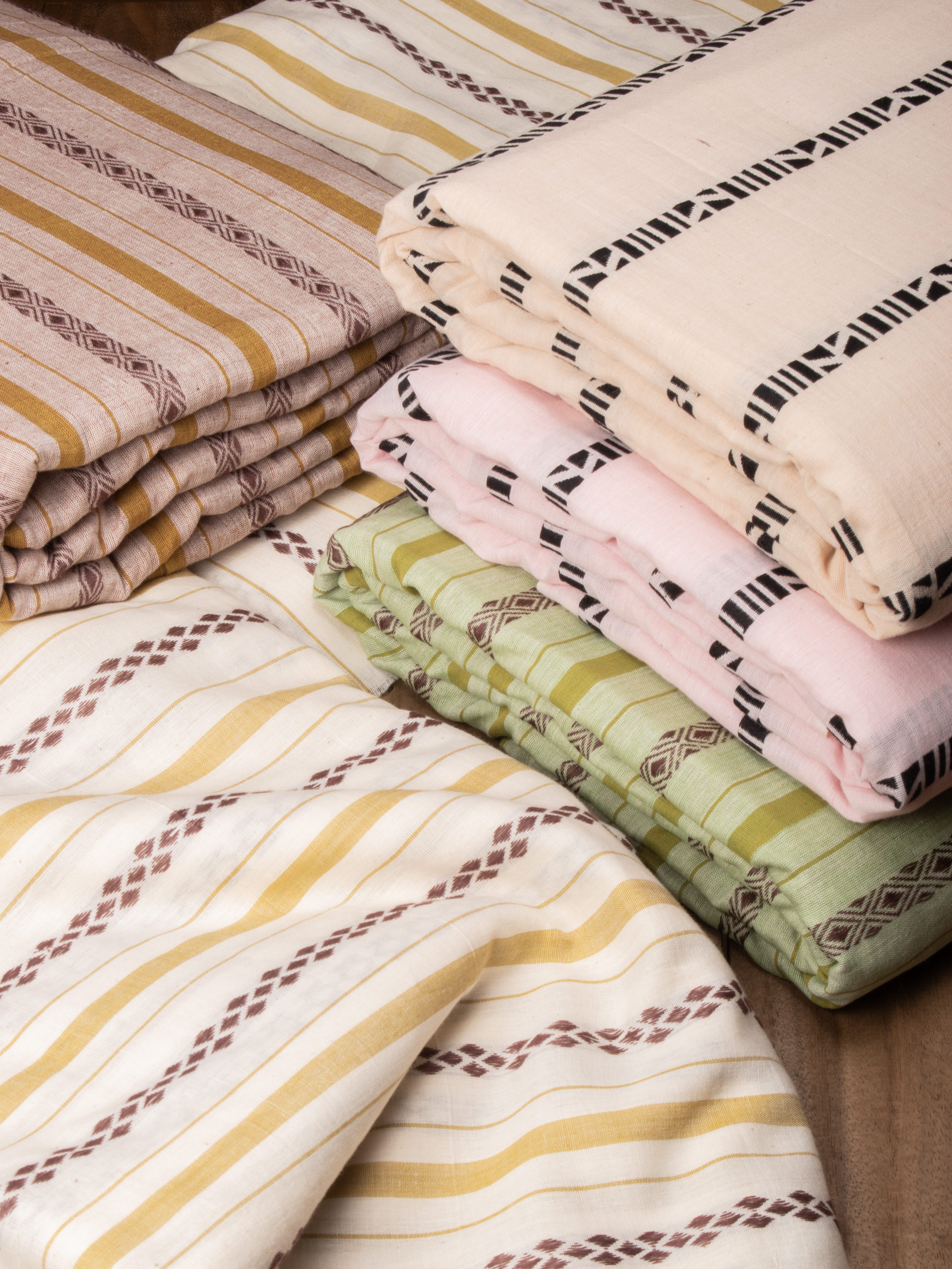
Jacquard fabric cotton stands out as a highly sustainable choice because it combines the biodegradable, breathable properties of natural cellulosic fibers with a structurally woven pattern that eliminates the need for toxic surface printing inks. This material science synergy results in a durable textile that avoids the microplastic shedding associated with synthetic brocades. For B2B buyers focused on environmental responsibility, specifying natural cotton for complex weaves offers a clear path to cleaner garment lifecycles.
Material Science and GSM Versatility
The physical properties of cotton make it exceptionally well-suited for the varying tensions of the jacquard loom. Depending on the specific yarn count and the density of the weave, the resulting fabric can be engineered for vastly different end uses. This versatility allows a single weaving cluster to supply both lightweight apparel brands and heavy-duty interior designers.
- 120 to 150 GSM constructions provide a light, airy drape ideal for summer shirting and dresses.
- 200 to 250 GSM weights offer the necessary structure for tailored jackets and transitional outerwear.
- 300 to 500+ GSM densities deliver extreme abrasion resistance required for premium upholstery and cushion covers.
Breathability and Tensile Strength
Synthetic jacquards often trap heat and moisture, making them uncomfortable for extended wear. A pure cotton jacquard pattern maintains the inherent breathability of the natural fiber, allowing air to circulate freely through the interlaced yarns. The structural binding of the warp and weft also enhances the overall tensile strength of the cloth.
Because the design is woven rather than printed, the fabric does not require chemical binders or synthetic topcoats that degrade over time. This ensures the textile remains entirely biodegradable at the end of its useful life. Brands sourcing these materials can confidently market their collections based on both technical longevity and strict zero-waste credentials.
Customizing Your Jacquard Design: From Punch Card to Loom
Customizing a jacquard design requires translating a digital motif into a physical sequence of perforated punch cards, which then dictate the exact lifting of warp threads on the artisan's loom. This bespoke setup phase allows designers to engineer highly specific, culturally rich patterns directly into the weave structure. We guide B2B buyers through this precise technical translation to ensure their unique vision aligns with the physical constraints of the handloom.
Translating Digital Motifs to Physical Cards
The customization process begins with a flat digital file or a hand-drawn sketch. A specialized master weaver, known as a grapher, translates this artwork onto grid paper, where every single square represents one intersection of warp and weft. This grid serves as the exact blueprint for the card punching process.
- Graphing the motif determines the scale and the necessary yarn density for the final fabric.
- Punching the cards involves manually cutting holes into stiff cardboard strips based on the graphed grid.
- Lacing the sequence connects hundreds or thousands of individual cards into a continuous loop that feeds into the loom.
Engineering the Weave Structure
Once the cards are laced and mounted onto the jacquard head above the loom, the artisan must prepare the warp. This involves threading thousands of individual vertical yarns through the specific heddles controlled by the punch cards. The setup is labor-intensive and requires meticulous attention to detail to prevent pattern errors.
After the loom is fully dressed, the actual weaving begins. The physical cards mechanically select the warp threads for every single pass of the weft. This direct translation from card to cloth allows independent brands to source exclusive, proprietary textures without relying on generic, off-the-shelf fabrics.
Sourcing Artisanal Jacquard: MOQs, Lead Times, and Traceability
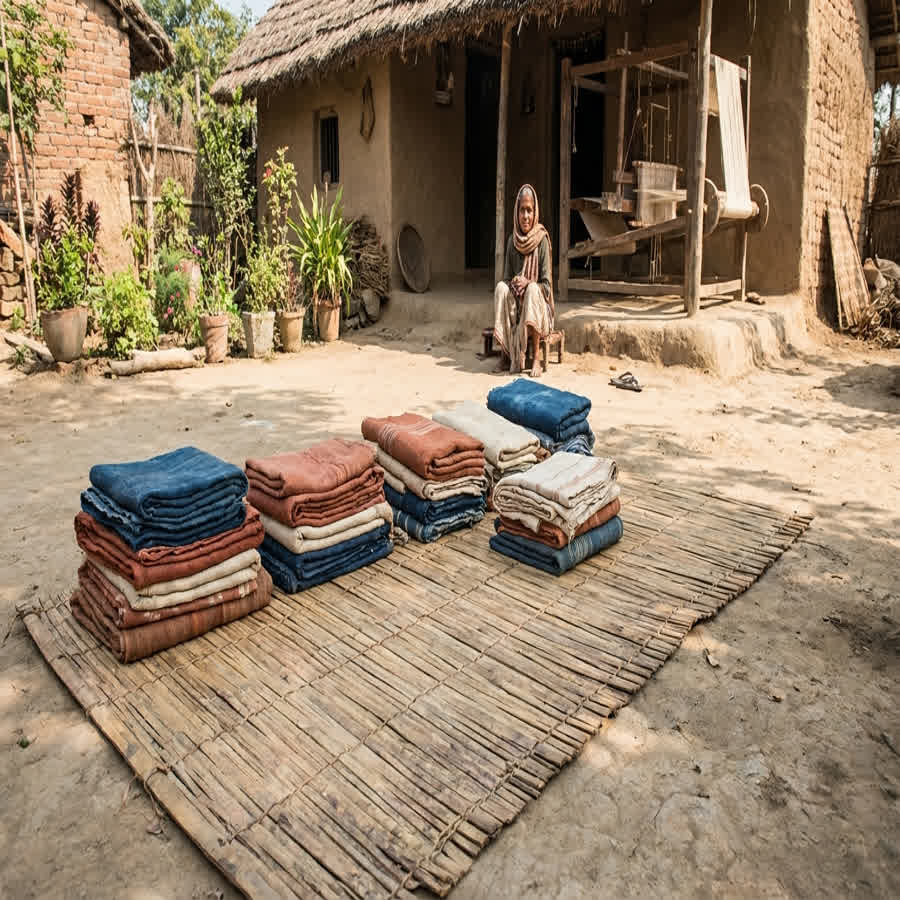
Sourcing artisanal jacquard material through a decentralized network offers B2B buyers significantly lower Minimum Order Quantities (MOQs) and complete supply chain traceability, though it requires accommodating the naturally slower lead times of human-powered weaving. We structure our production to support independent brands needing bespoke yardage without the massive volume demands of industrial mills. Understanding these logistical realities is essential for planning successful, sustainable collections.
Manage Minimum Order Quantities
Industrial powerloom factories typically demand MOQs in the thousands of meters to justify the setup costs of computerized machinery. This forces smaller brands into overproduction and ties up crucial capital in excess inventory. Handloom clusters operate on a fundamentally different economic model.
- Low initial MOQs allow boutique designers to test custom patterns with minimal financial risk.
- Flexible scaling means production can increase gradually as a brand verifies market demand.
- Reduced deadstock aligns directly with sustainable inventory management practices.
Ensuring Ethical Wages and Transparent Origins
Because handloom weaving is inherently slower than machine production, buyers must build adequate lead times into their sourcing calendars. The time required to graph the design, punch the cards, and physically weave the cloth reflects the genuine human effort involved. We prioritize transparent communication regarding these timelines to ensure production schedules remain realistic.
Working directly with rural Indian handloom weavers provides absolute traceability back to the specific village cluster. This transparency guarantees that artisans receive fair, ethical wages for their highly specialized skills. By choosing artisanal jacquard, B2B sourcing managers actively invest in the preservation of heritage craft while securing a premium, technically superior textile for their collections.
Explore Our Collection
Anuprerna works directly with handloom artisan clusters to weave jacquard fabric for designers and brands building considered collections. To source it for your next line, explore the range below.
frequently asked questions
What makes a textile a true jacquard material?
A true jacquard material has its pattern woven directly into the fabric using a specialized jacquard loom attachment, rather than being printed, dyed, or embroidered onto the surface. This structural interlacing of warp and weft results in a highly durable, often reversible textile. The pattern is an inherent part of the cloth's physical construction.
Can we customize a jacquard pattern for our brand?
Yes. In our decentralized handloom network, custom jacquard designs are translated into physical punch cards. This allows for highly bespoke motifs, though it requires a setup phase for the artisan to configure the loom and punch the cards. Once the cards are created, the exclusive pattern can be woven repeatedly.
What is the typical GSM range for jacquard fabric cotton?
Jacquard fabric cotton can range from lightweight 100-120 GSM suitable for summer apparel and shirting, to heavier 250-300+ GSM weaves ideal for structured jackets, home textiles, and upholstery, depending entirely on the yarn count and weave density chosen. The loom setup dictates the final weight and drape of the material.
How does handloom jacquard weaving differ from industrial jacquard?
Handloom jacquard relies on human-powered looms and traditional punch cards, offering unique artisanal textures, zero carbon emissions during weaving, and the ability to process natural, delicate fibers. Industrial jacquard is computerized, power-driven, and optimized for high-speed, high-MOQ synthetic mass production. The handloom process preserves the natural integrity of the yarn.
How does the structural integration of a jacquard weave affect garment longevity?
The structural integration of a jacquard weave significantly increases garment longevity by binding the pattern directly into the base textile, preventing the design from fading, cracking, or peeling under tension. Because the motif is created by interlacing high-tensile warp and weft yarns, the fabric resists abrasion far better than topically printed alternatives. This makes it an ideal choice for high-wear applications.
More Blogs
advanced weaving techniques: beyond the plain, twill, and satin weaves
mastering the satin weave pattern: characteristics and uses
wholesale earthy-tone handloom cotton for designers
buying khadi cotton fabric online: what “authentic” really means and how to choose fabric that lasts
why organic fabric suppliers are growing in india
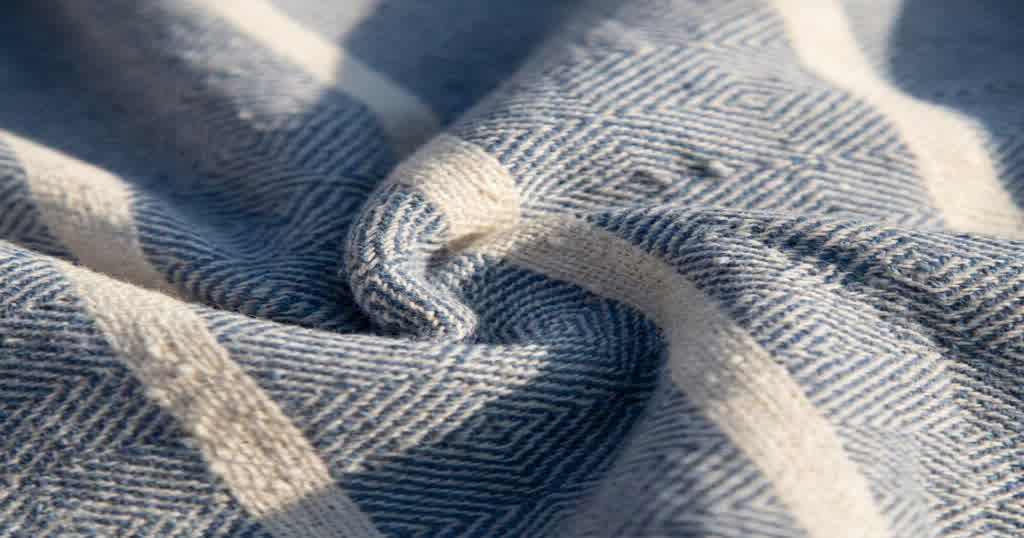
jacquard fabric in modern fashion