Jacquard Fabric Supplier: A Guide for Designers & Fashion Brands

Finding a reliable jacquard fabric supplier often forces a choice between massive industrial minimums and compromising on custom design. Designers seeking highly textured, structural weaves are frequently pushed toward synthetic, mass-produced poly-blends that lack the tactile depth of natural fibers. This creates a significant sourcing bottleneck for boutique brands that require exclusive motifs but cannot commit to the thousands of meters demanded by conventional mills.
The market is shifting away from flat, digitally printed yardage toward materials that convey luxury through physical construction. Sourcing bespoke, low-MOQ jacquard textiles from decentralized rural handloom clusters allows a brand to build collections grounded in superior tensile strength and authentic craftsmanship. By partnering with an artisan-driven network, sourcing managers can secure traceable, high-quality materials that directly support rural livelihoods while meeting exact technical specifications.
What is Jacquard Fabric? Decoding the Weave and Its Meaning
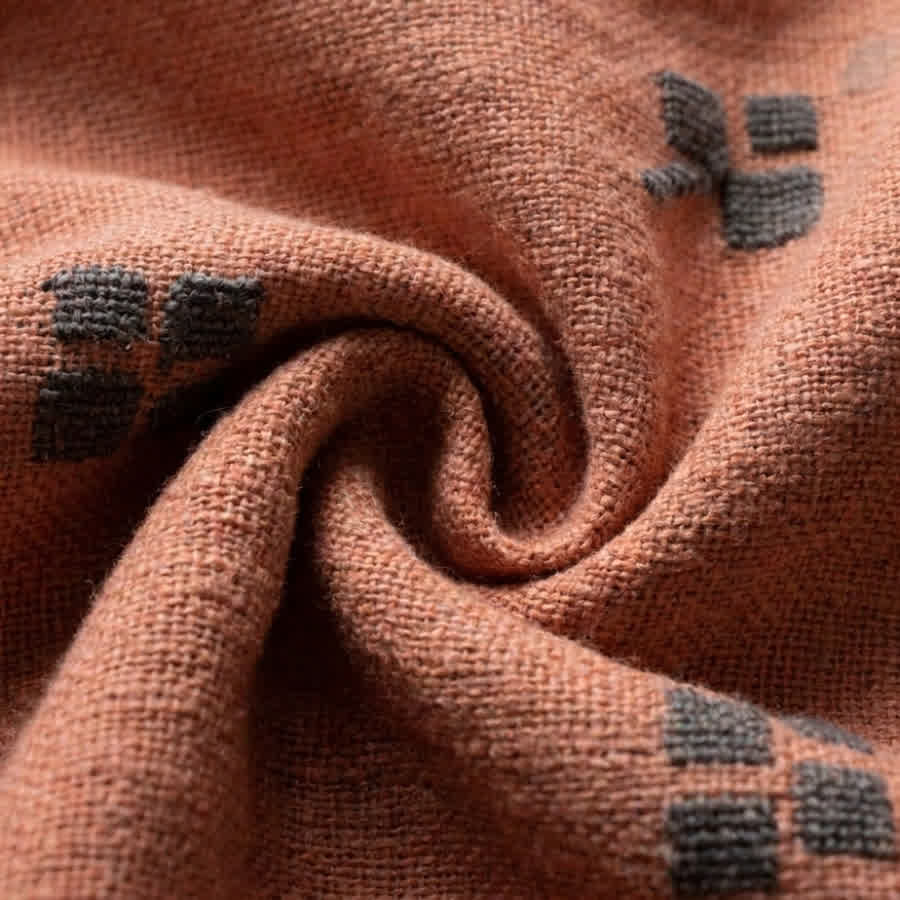
The jacquard fabric meaning refers to a structural weaving method where complex patterns are woven directly into the material's matrix using individually controlled warp threads, rather than being printed or stamped on the surface. This mechanical innovation allows for the creation of highly intricate, raised motifs that are physically integrated into the textile.
The Mechanics of the Jacquard Loom
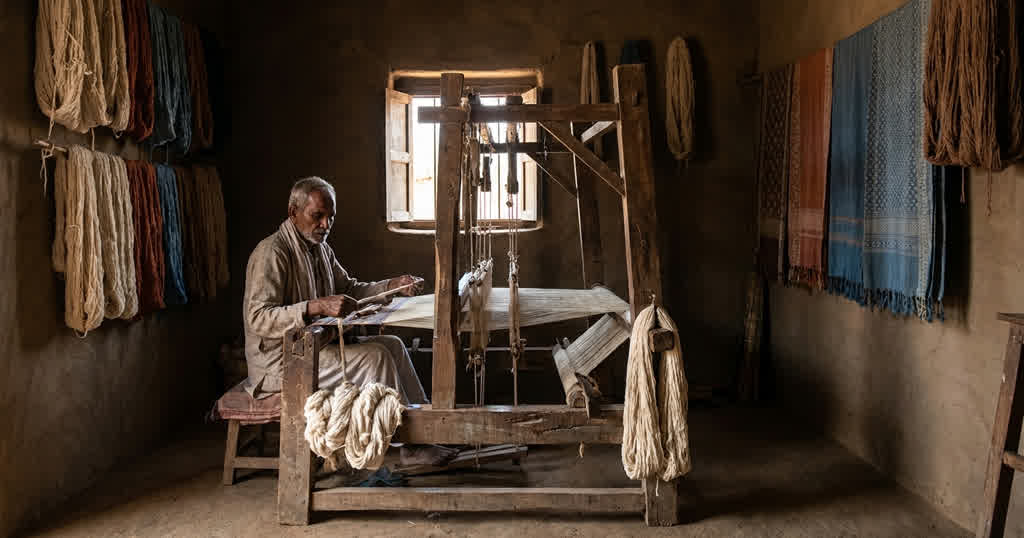
To fully grasp what is jacquard fabric, one must look at the technology behind the loom. The jacquard mechanism, invented by Joseph Marie Jacquard in 1804, revolutionized weaving by using a series of punched cards to control individual warp threads. In rural India, this technology was ingeniously adapted to traditional handlooms. This adaptation allowed artisans to weave complex geometric patterns and traditional motifs, such as Banarasi brocades, without the painstaking manual lifting of threads.
This merging of industrial innovation with heritage craftsmanship creates a highly efficient yet artisanal production method. The loom reads the pattern and lifts the precise warp and weft interlacing required for that specific micro-section of the design. Because the pattern is structural, the resulting textile exhibits exceptional dimensional stability and resistance to wear.
Material Science and Structural Integrity
Jacquard is a structural weave, not a specific fiber category. It can be woven using a variety of natural yarns, depending on the desired drape and end-use. Because the design is built into the fabric matrix, these textiles offer significant technical advantages over flat-woven printed alternatives.
- Fiber Versatility: We frequently weave jacquard using organic cotton, peace silk, linen, or natural bast fiber blends.
- Tensile Strength: The complex interlacing of yarns provides superior abrasion resistance and longevity, making it ideal for high-wear garments.
- Weight Range: The construction supports a wide variety of weights, typically ranging from a breathable 120 GSM for lightweight apparel up to 350+ GSM for structured jackets and upholstery.
- Dye Uptake: Natural fibers woven in this method exhibit excellent color retention, allowing for rich, deep hues that do not fade like surface prints.
The Artisan Advantage: Handloom vs. Machine-Milled Jacquard Textiles
Handloom jacquard fabric material offers superior tactile depth, micro-variations, and a significantly lower carbon footprint compared to energy-intensive, machine-milled industrial alternatives. While industrial mills prioritize speed and uniformity, hand-woven textiles prioritize structural character and environmental responsibility.
Tactile Superiority and Micro-Variations
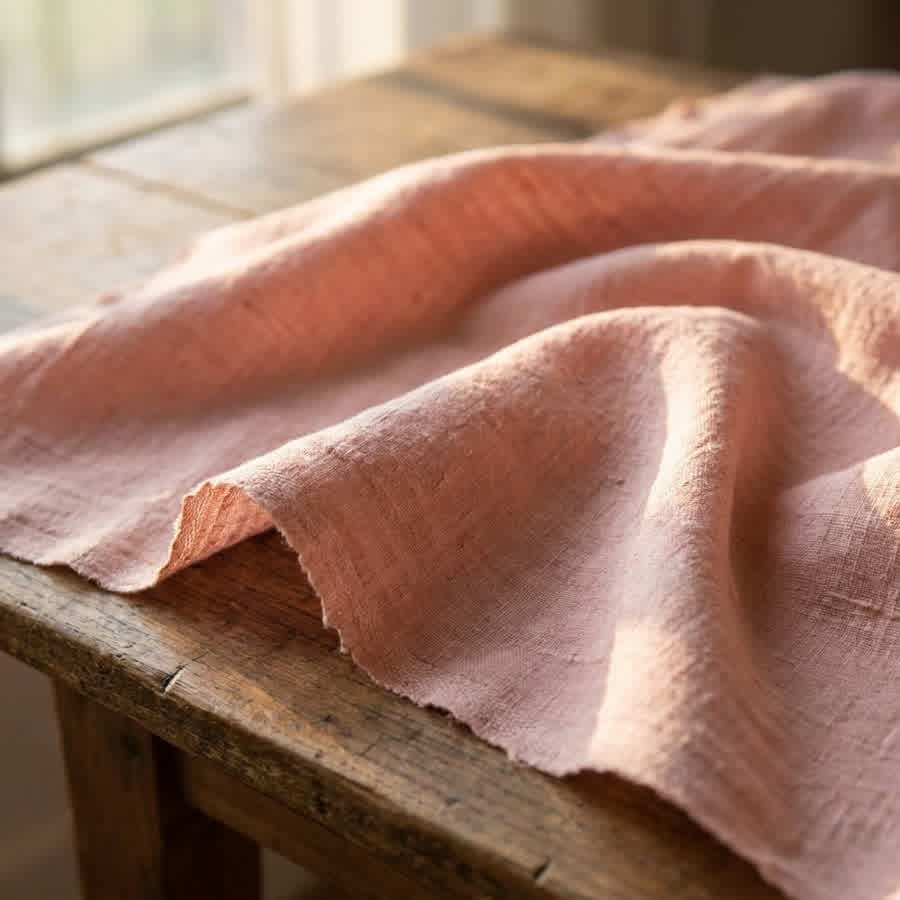
Modern B2B buyers are increasingly seeking materials that offer a distinct dry, crisp hand-feel or a rich, textured drape. Machine-milled jacquards, often woven with synthetic blends to prevent yarn breakage at high speeds, tend to feel flat and uniform. In contrast, handloom production allows for the use of delicate, high-character natural fibers that might snap under industrial tension.
The human element in hand-weaving introduces slight, beautiful micro-variations in the tension of the weft floats. These variations are not defects; they are the hallmark of authentic craftsmanship that luxury consumers actively seek. A decentralized jacquard fabric supplier can use these subtle textures to create textiles that feel inherently bespoke and exclusive.
Environmental Impact and Zero-Waste Credentials
Sourcing from rural handloom clusters offers a compelling sustainability narrative for conscious fashion brands. The environmental footprint of a hand-operated loom is a fraction of that of a mechanized factory.
- Energy Consumption: Handlooms operate entirely on human power, bypassing the heavy reliance on fossil fuels typical of industrial jacquard textiles production.
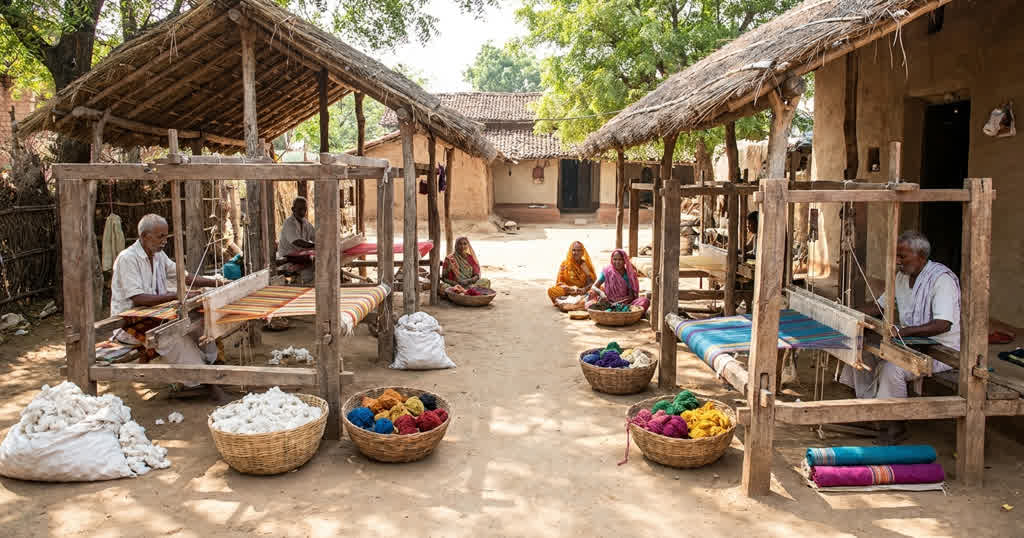
- Decentralized Production: Weaving takes place in the artisans' homes or small village clusters, preventing forced urban migration and supporting local micro-economies.
- Biodegradability: By focusing on natural fibers like peace silk and organic cotton, the final fabric retains its natural biodegradability.
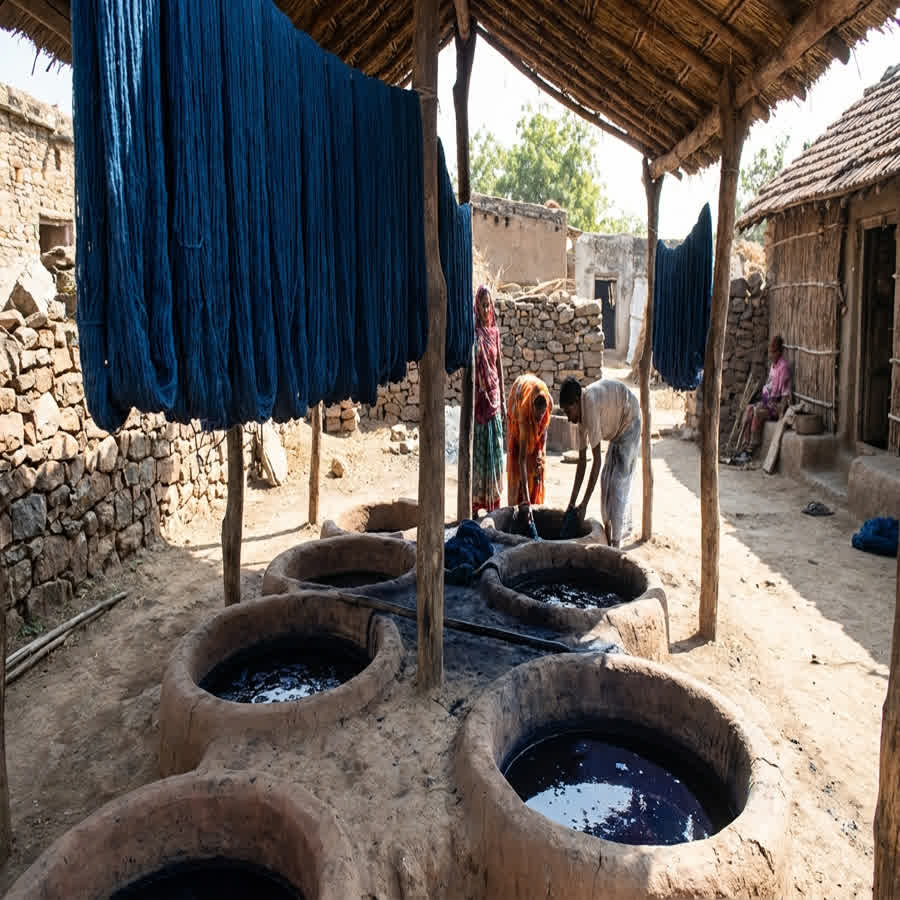
- Water Usage: Artisan clusters often utilize localized, low-impact dyeing methods that require significantly less water than massive industrial vats.
Manage Jacquard Fabric Wholesale: MOQs, Customization, and Lead Times
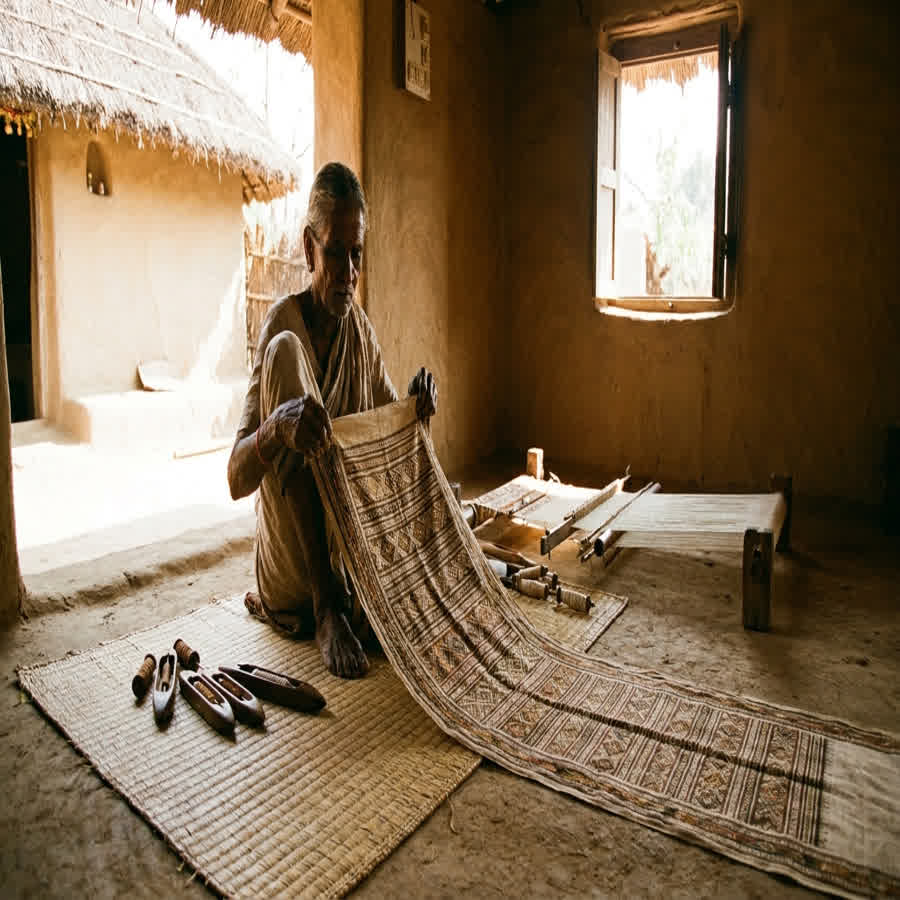
Sourcing wholesale jacquard fabric through decentralized artisan networks allows buyers to secure low Minimum Order Quantities (MOQs) and develop bespoke motifs without the massive volume commitments required by industrial mills. This flexibility fundamentally changes how independent designers plan their seasonal collections.
Overcoming High Volume Barriers
The standard industrial model for jacquard fabric wholesale is built on economies of scale. Conventional mills often demand MOQs of 1,000 to 3,000 meters per design to justify the setup costs of their high-speed looms. For a boutique fashion designer, committing to this volume for a single custom pattern is financially prohibitive and leads to deadstock waste.
Working with an artisan-driven jacquard fabric supplier flips this model. Because handlooms are manually set up and operated, the threshold for custom production is drastically lower. We routinely help brands develop exclusive runs starting at just 50 to 100 meters. This allows designers to test new woven-in patterns in the market without tying up their entire sourcing budget in a single fabric roll.
Developing Bespoke Woven Motifs
The true value of jacquard lies in its capacity for customization. Rather than selecting from a catalog of pre-existing, mass-market designs, brands can engineer their own structural motifs. The development process requires close collaboration between the designer and the weaving cluster.
- Artwork Translation: The designer's flat artwork is translated into a technical graph, which dictates the precise punch card sequence for the loom.
- Yarn Selection: Buyers select the exact fiber composition, balancing the drape and GSM required for the specific garment type.
- Strike-Offs: The artisan weaves a small physical sample, known as a strike-off, allowing the brand to verify the tactile depth and scale of the motif before full production.
- Lead Times: While hand-weaving is slower than machine production, the agile nature of decentralized clusters often results in faster initial prototyping, typically yielding strike-offs within a few weeks.
How to Vet and Choose the Right Jacquard Fabric Suppliers
Selecting ethical jacquard fabric suppliers requires evaluating their supply chain transparency, fair trade practices, and direct integration with rural weaving clusters. A supplier must provide more than just a beautiful textile; they must provide verifiable data regarding origin, fiber content, and artisan welfare.
Evaluating Supply Chain Transparency
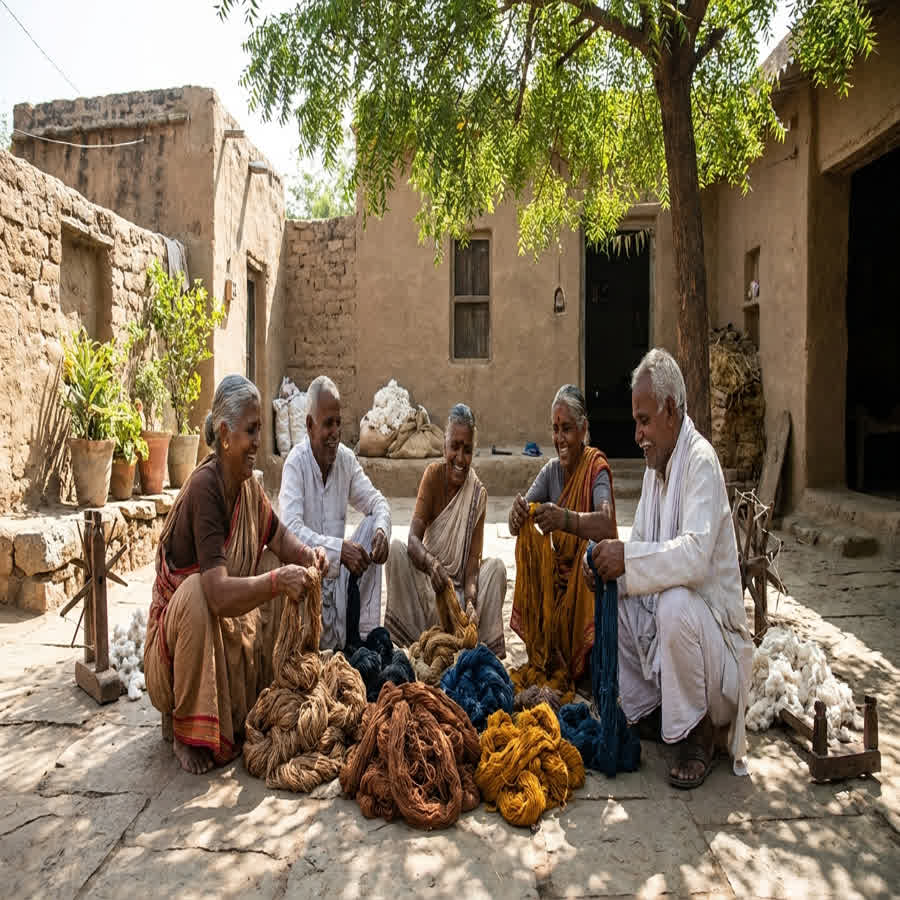
The term sustainability is frequently misused in textile sourcing. To ensure authenticity, a sourcing manager must demand strict traceability from their jacquard fabric supplier. You need to know exactly where the yarn was spun, how it was dyed, and which specific village cluster wove the final yardage.
A reliable supplier operates with complete transparency, acting as a direct bridge between the brand and the artisan. We currently work with numerous distinct weaving communities across rural India, and we document the journey of the fiber from the farm to the final selvedge edge. This level of detail is increasingly required by regulatory bodies and conscious consumers who want to verify the ethical claims of the garments they purchase.
Assessing Technical Capability and Fiber Quality
Beyond ethics, the supplier must possess the technical expertise to execute complex structural weaves consistently. Vetting a supplier involves reviewing their historical output and understanding their quality control processes.
- Fiber Purity: Ensure the supplier uses high-quality natural yarns rather than cutting costs with hidden synthetic binders, which compromise the tensile strength and biodegradability of the fabric.
- Dyeing Standards: Verify that the supplier uses AZO-free or natural dyes, ensuring the colorfastness of the intricate motifs without relying on toxic heavy metals.
- Defect Management: Ask about their inspection protocols for identifying and correcting dropped threads or uneven warp tension before the fabric ships.
- Communication: A strong supplier provides clear, technical communication regarding lead times, shrinkage rates, and care instructions for the specific fiber blend chosen.
frequently asked questions
Q: What is the typical MOQ for custom handloom jacquard fabric?
Unlike industrial mills that require thousands of meters, a decentralized artisan jacquard fabric supplier can often accommodate MOQs as low as 50 to 100 meters per design. This flexibility is ideal for boutique brands testing new collections without committing to massive, capital-intensive production runs.
Q: Can any natural fiber be used to weave jacquard fabric material?
Yes. Because 'jacquard' refers to the weaving mechanism and not the fiber itself, it can be woven using organic cotton, peace silk, linen, or natural blends. This allows for a versatile range of weights, typically from 120 GSM to over 300 GSM, depending on the specific yarn chosen.
Q: How does the jacquard loom impact the fabric's tensile strength?
The jacquard weave integrates the pattern directly into the fabric's structural matrix through tightly interlaced warp and weft floats. This results in a denser, more durable textile with higher tensile strength, dimensional stability, and longevity compared to surface-printed fabrics.
Q: What is the difference between brocade, damask, and standard jacquard textiles?
Standard jacquard is the umbrella term for any fabric woven on a jacquard loom. Damask is a specific type of reversible jacquard, typically monochromatic. Brocade is a richly decorative jacquard, often featuring floating wefts and metallic threads, giving it an embossed, highly textured appearance.
Q: How does the GSM affect the application of jacquard textiles?
The GSM (Grams per Square Meter) determines the fabric's weight and structural suitability, dictating whether it is used for lightweight apparel or heavy outerwear. A 120 GSM jacquard is ideal for breathable summer dresses, while a 350+ GSM weave provides the necessary rigidity and abrasion resistance for structured jackets and upholstery.
More Blogs
why organic fabric suppliers are growing in india
jacquard fabric in modern fashion
how silk manufacturers preserve traditional craftsmanship
indian fabric wholesale: a guide to sourcing handwoven textiles
how indian fabric exporters meet global quality standards
jacquard vs embroidery: what's the difference?