How to Source Ethical Raw Silk for Your Fashion Label

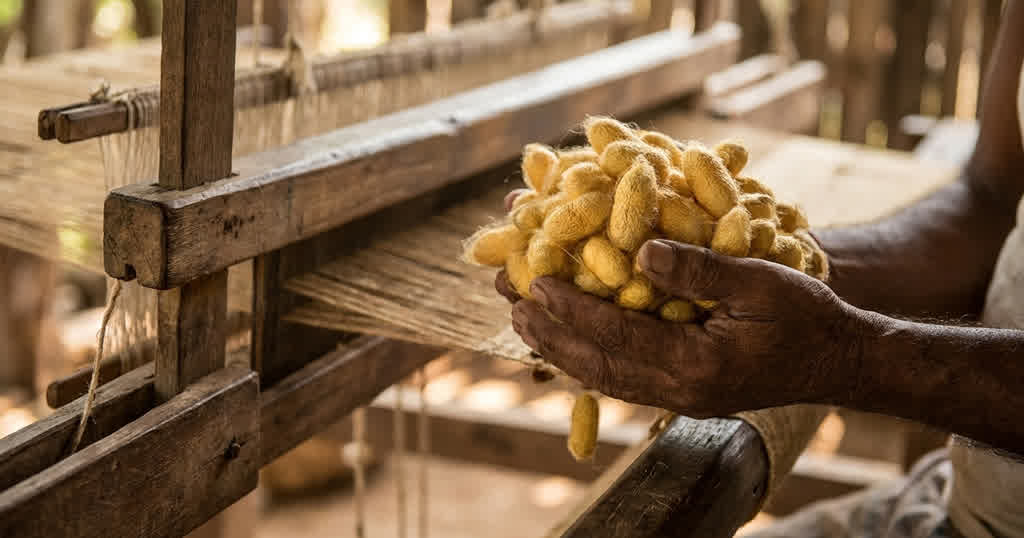
A designer looking at a swatch of Tussar silk is holding centuries of rural Indian sericulture in their hands. The process of sourcing raw silk fabric begins long before the loom, starting in the forests of Jharkhand and Assam where wild silk moths spin their cocoons. For independent labels, choosing this material is a deliberate move away from mass-produced synthetics toward textiles that carry a distinct, crisp hand-feel and a verifiable origin story. The pressure to prove supply chain transparency and reduce Scope 3 emissions is reshaping how collections are built.
Buying directly from decentralized artisan clusters ensures that the fabric retains its natural protein gum, while the surrounding communities retain their traditional livelihoods. This approach replaces opaque wholesale networks with a direct line to the weavers of Bengal, offering a low-carbon alternative that grounds a brand's sustainability claims in concrete reality.
Beyond Ahimsa: Defining Ethical Raw Silk in the Modern Supply Chain
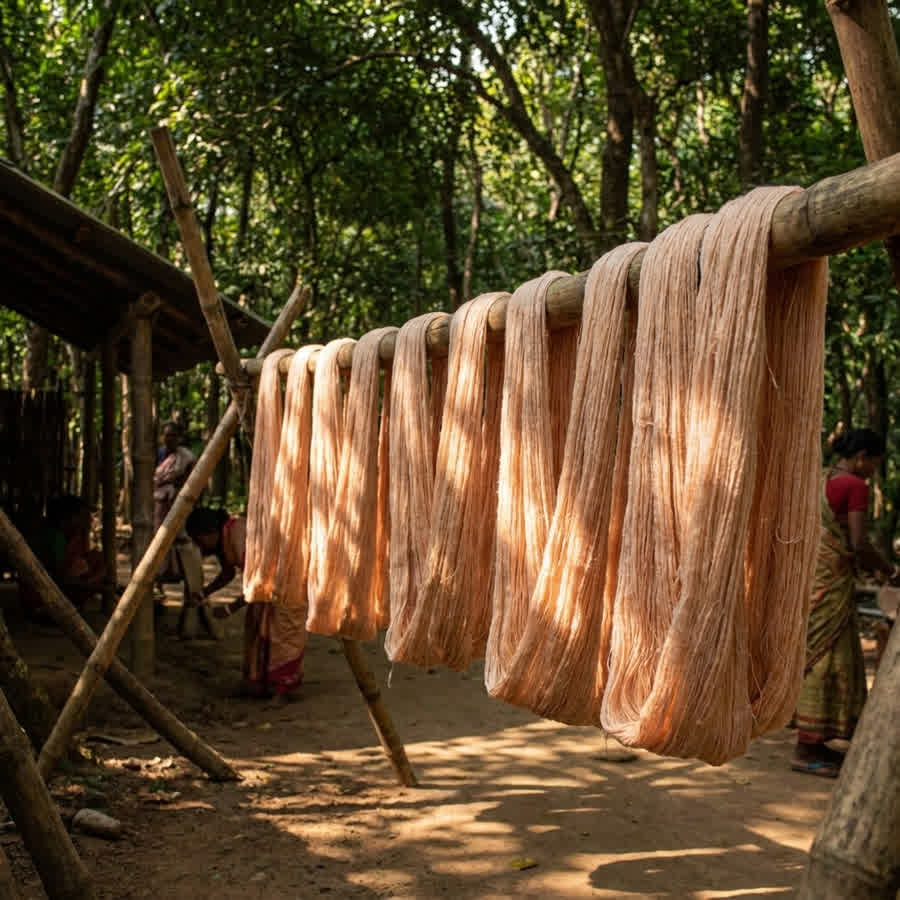
Ethical raw silk extends beyond cruelty-free extraction to encompass fair artisan wages, low carbon footprints, and decentralized production models.
While the term Ahimsa silk specifically denotes a non-violent extraction method where the moth hatches naturally, authentic ethical raw silk requires a much broader view. A fabric can be cruelty-free but still produced in exploitative, high-emission factories. We currently work with rural communities across Bengal and Jharkhand where ethical sourcing means preserving the entire ecosystem of the craft. This holistic approach ensures that the cultivation of wild silks respects local biodiversity while providing consistent, living wages to the spinners and weavers who rely on this seasonal work.
The Heritage of Wild Silks
India's ancient sericulture relies heavily on wild silk varieties like Tussar, Eri, and Matka. These fibers are cultivated and hand-spun by rural artisans using techniques passed down through generations. Unlike conventional mulberry silk, which requires controlled indoor environments and heavy resource inputs, these wild varieties thrive in natural forest settings.
Sourcing these specific fibers directly supports decentralized artisan clusters rather than centralized industrial mills. The resulting textiles carry unique textures and natural variations that mass manufacturing simply cannot replicate. For a designer, specifying Eri silk or Matka silk provides a tangible connection to this heritage, offering a compelling narrative for the end consumer.
Measuring True Supply Chain Impact
To claim authentic zero-waste credentials, a brand must look at the entire lifecycle of the fabric. Decentralized handloom weaving inherently operates with a low carbon footprint, relying on human energy rather than fossil-fuel-powered machinery.
When evaluating a supplier, buyers should look for specific indicators of impact:
- Geographical mapping: Knowing the exact district, such as Murshidabad or Malda, where the weaving takes place.
- Direct artisan engagement: Evidence that the supply chain bypasses exploitative master weavers to pay makers directly.
- Biodiversity protection: Farming practices that maintain the natural habitat of the wild silk moths without chemical intervention.
- Traceable origins: Documentation that tracks the fiber from the forest harvest through the spinning and weaving stages.
The Material Science of Raw Silk: Sericin, GSM, and Structural Integrity
Raw silk retains its natural sericin coating, giving the fabric a distinctive nubby texture, a typical GSM of 60 to 150, and high tensile strength of approximately 0.3 to 0.5 N/tex.
The defining characteristic of this textile is sericin retention. Sericin is the natural protein gum secreted by the silkworm, which accounts for 20 to 30 percent of the fiber's total weight. In conventional silk production, this gum is boiled off to create a smooth, shiny surface. By leaving the sericin intact, the resulting fabric maintains a dry, crisp hand-feel and exceptional durability, making it a highly sought-after material for structured fashion applications.
Understanding Sericin Retention
The presence of sericin fundamentally alters the physical properties of the fabric. It provides excellent thermoregulating properties and makes the material naturally hypoallergenic. Because the fibers are not subjected to harsh chemical degumming, they retain their maximum structural integrity, resulting in a durable textile that resists tearing and abrasion.
Understanding Sericin Retention (continued)
This retained protein layer also dictates the weight and drape of the final garment. Depending on the specific weave structure, the fabric typically falls within a GSM range of 60 to 150. This makes it highly versatile for designers, suitable for everything from structured jackets to lightweight, breathable summer wear, depending on the tightness of the handloom weave.
Dyeing and Finishing Considerations
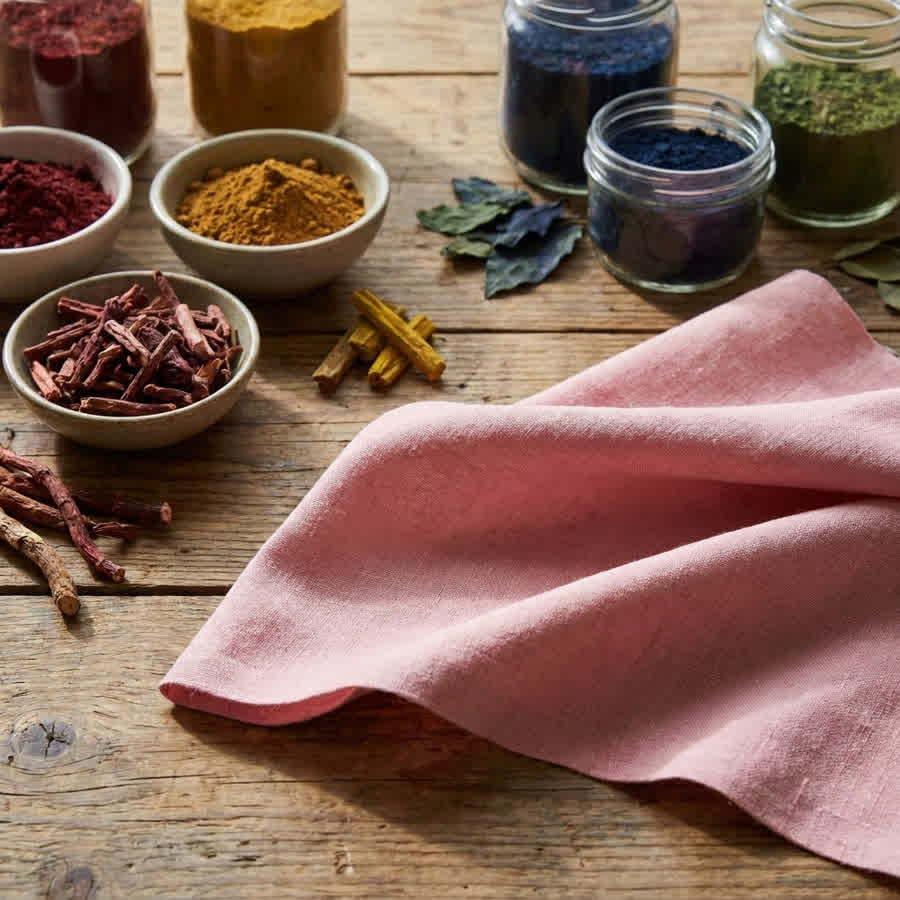
Because sericin resists liquid penetration, sourcing raw silk fabric requires an understanding of its unique dyeing requirements. The protein gum can prevent synthetic dyes from bonding evenly, which is why industrial mills often strip it away entirely.
To achieve vibrant colors without destroying the fiber's natural character, artisans employ specific techniques:
- Low-impact dyeing processes: Utilizing controlled temperatures to ensure colorfastness while protecting the delicate sericin layer.
- Partial degumming: Opening the fiber just enough to accept pigment without losing the characteristic nubby texture.
- Natural pigment application: Using plant-based dyes that bond harmoniously with the natural protein structure.
- Cold-water setting: Fixing the dyes without the use of heavy industrial heat, further reducing the fabric's energy footprint.
Direct Supply Chains: How to Avoid Middlemen When Sourcing Raw Silk Fabric
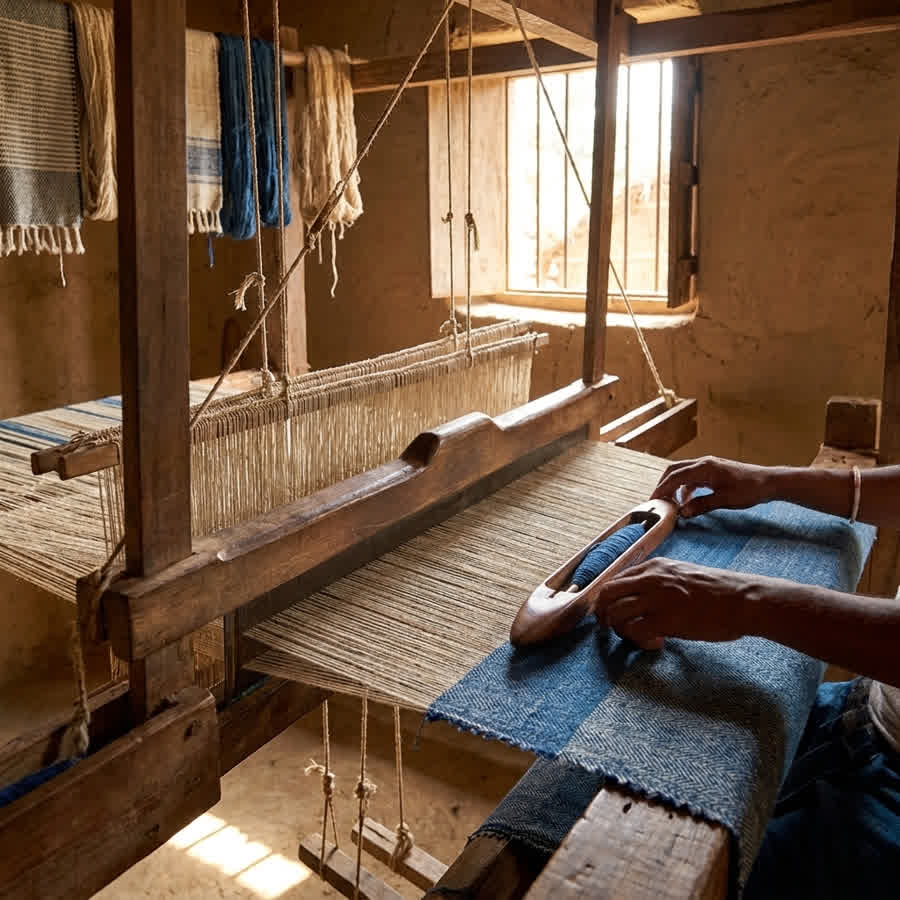
Bypassing opaque wholesale middlemen allows fashion labels to secure authentic ethical sourcing, reduce Scope 3 emissions, and directly fund rural weaving clusters.
The traditional textile market is built on layers of intermediaries, making it nearly impossible to trace a fabric back to its source. When a brand buys from opaque wholesale middlemen, they often lose visibility into the working conditions and environmental impact of the production. Partnering directly with a decentralized artisan supply chain like Anuprerna removes these blind spots. We connect designers straight to the handloom weavers, ensuring complete transparency, fair compensation, and a direct line of communication regarding material specifications.
The Cost of Opaque Sourcing
Relying on middlemen often forces brands into high minimum order quantities and generic, mass-produced fabrics. These intermediaries obscure the origin of the fiber, making it difficult for a label to verify its sustainability marketing claims. Additionally, the constant shipping between regional brokers, dyers, and finishing mills significantly inflates the carbon footprint of the final garment.
By cutting out these layers, designers gain access to highly textured, premium garments that stand out against flat, synthetic alternatives. Direct sourcing also allows for better communication regarding custom weaves, specific GSM requirements, and specialized dyeing techniques that middlemen typically refuse to accommodate.
The Decentralized Artisan Model
Working directly with rural clusters offers strategic and financial advantages for independent labels. It shifts the sourcing model from a transactional purchase to a collaborative partnership, ensuring that the financial benefits remain within the weaving communities.
This direct-to-artisan approach provides several distinct benefits for B2B buyers:
- Manageable MOQs: Handloom production allows for smaller runs, often starting between 50 to 100 meters, ideal for capsule collections.
- Authentic ethical sourcing: Direct funding of rural economies and the active preservation of traditional weaving skills.
- Customization capabilities: The ability to specify yarn twists, warp densities, and natural dye colors directly with the makers.
- Emission reduction: Lowering Scope 3 emissions by eliminating unnecessary transportation and warehousing steps.
Quality Control in Handloom Silk: Standardizing Artisanal Production
Standardizing artisanal handloom silk requires setting clear expectations around natural weave irregularities while implementing strict testing protocols for pure silk content across decentralized clusters.
Industrial mills achieve uniformity through automated machinery, but artisanal handloom silk is inherently characterized by human touch. For a B2B Textile Sourcing Manager, the challenge is balancing the desire for an authentic, textured handle with the need for consistent, commercial-grade quality. We manage this by establishing rigorous quality assurance protocols directly at the cluster level, ensuring that every meter meets commercial standards without losing its artisanal soul or structural integrity.
Managing B2B Expectations for Handloom
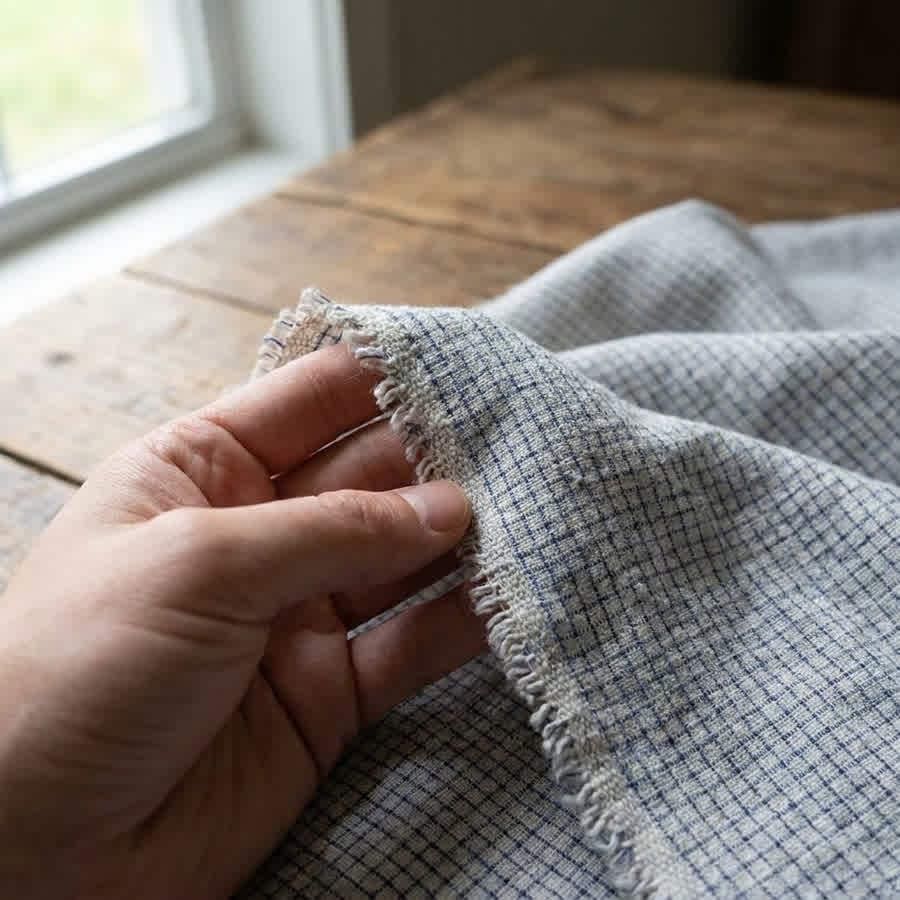
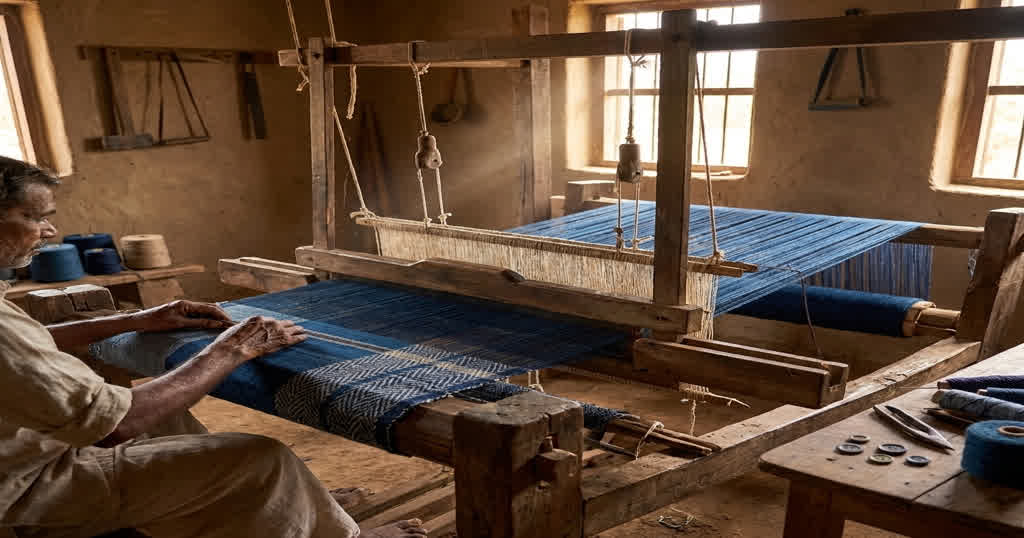
When sourcing raw silk fabric from handlooms, slight variations in the weave are not defects; they are proof of origin. The nubby texture and occasional slubs are direct results of the hand-spinning and hand-weaving processes. Educating design teams and end-consumers about these characteristics is a crucial part of the sustainability narrative, shifting the perception of perfection.
However, structural flaws that compromise garment construction must be prevented. We maintain consistency by standardizing the warp and weft tensions across our looms and conducting thorough visual inspections before the fabric leaves the village. This ensures the selvedge edges remain straight and usable for efficient pattern cutting.
Ensuring Fiber Purity and Consistency
Beyond visual inspections, verifying the material composition is critical for B2B buyers. Adulteration with synthetic fibers is a common issue in opaque supply chains, diluting the fabric's value and environmental benefits.
To guarantee the integrity of our textiles, we implement specific standardization measures:
- Burn testing protocols: Simple, effective tests conducted at the cluster to confirm 100 percent protein fiber content.
- GSM verification: Weighing sample swatches to ensure the fabric falls precisely within the agreed 60 to 150 GSM range.
- Colorfastness checks: Testing dyed batches to ensure the low-impact dyes hold up to commercial washing standards.
- Tensile strength evaluation: Ensuring the yarn maintains its 0.3 to 0.5 N/tex strength rating prior to weaving.
Explore Our Collection
Anuprerna works directly with handloom artisan clusters to weave sourcing raw silk fabric for designers and brands building considered collections. To source it for your next line, explore the range below.
frequently asked questions
What is the technical difference between raw silk and peace silk (Ahimsa silk)?
**Raw silk** refers to silk yarn that has not been fully degummed, meaning it retains its natural sericin coating, resulting in a coarser, textured handle. **Peace silk** (Ahimsa) refers strictly to the **extraction method**, where the silkworm is allowed to hatch from the cocoon before the silk is harvested. While raw silk can be peace silk (like Eri silk), the terms refer to different aspects of production.
How does the presence of sericin affect the dyeing process of raw silk fabric?
**Sericin resists dye penetration**, meaning raw silk requires specialized dyeing techniques to achieve **uniform coloration**. To achieve uniform colors without losing the characteristic nubby texture, artisans often use controlled, low-temperature natural dyeing processes, or a **partial degumming process** that opens the fiber just enough to accept the pigment while retaining its structural integrity.
What are the typical minimum order quantities (MOQs) when sourcing raw silk fabric from artisan clusters?
Typical **minimum order quantities** from **decentralized artisan networks** often start between 50 to 100 meters, which is significantly lower than industrial mills. Unlike industrial mills that require thousands of meters per run, decentralized artisan networks like Anuprerna operate on handlooms, allowing for much lower MOQs. This flexibility is highly advantageous for independent labels, **capsule collections**, and bespoke B2B orders.
How can B2B buyers verify the ethical sourcing credentials of raw silk?
Buyers can verify **ethical sourcing credentials** by demanding **end-to-end traceability**, including geographical mapping of weaving clusters and evidence of direct artisan engagement. This includes bypassing master weavers who exploit labor, and adherence to **fair trade principles**. Certifications like Craftmark or transparent impact reports provided by the supplier are strong indicators of ethical compliance.
What is the typical tensile strength of raw silk compared to degummed silk?
Raw silk generally exhibits a higher **tensile strength**, approximately 0.3 to 0.5 N/tex, because the **protective sericin layer** remains intact. Degumming removes this protein coating, which can slightly weaken the **structural integrity** of the fiber, making raw silk a more durable option for structured garments.
More Blogs

how celebrities who care about the environment are changing fashion
life cycle assessment (lca) in fashion: measuring your brand's true impact
top commercial uses of natural dyes in sustainable fashion
how eco friendly celebrities are changing the fashion industry
how to become an ethical fashion designer: a sourcing guide
what makes an ethical fashion designer? core principles & practices