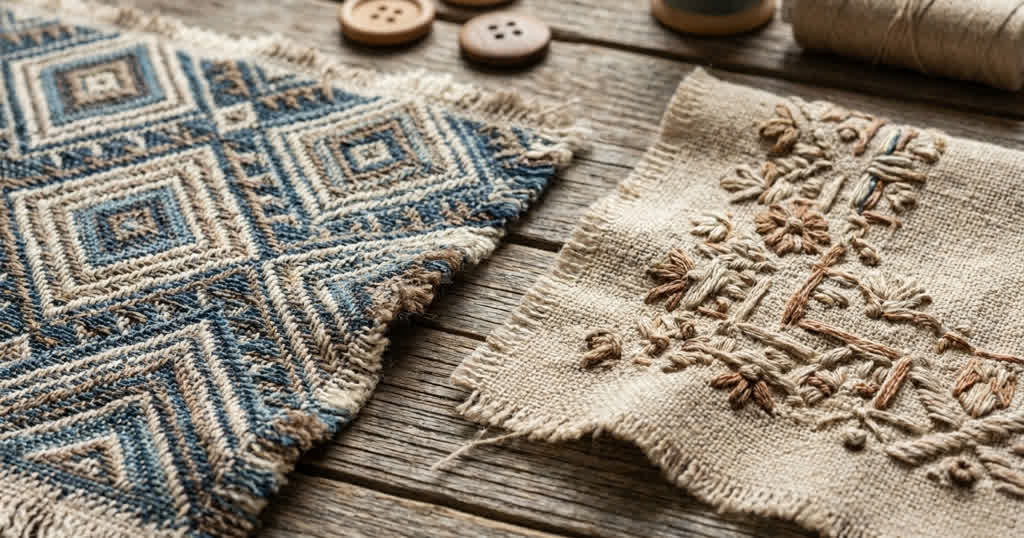
Jacquard vs Embroidery: What's the Difference?

Designers often face a critical structural choice when developing a new collection that requires intricate, textured patterning. The decision between jacquard vs embroidery dictates not only the visual aesthetic but also the physical behavior of the garment on the body. A heavy motif stitched onto a lightweight base can cause unwanted puckering, while a densely woven pattern might yield a stiffer silhouette than intended. Understanding the mechanical distinctions between these two techniques is essential for balancing garment longevity, production scalability, and the preservation of heritage crafts.
By examining how a jacquard textile integrates design into its very structure compared to the surface application of an embroidered textile, sourcing teams can make precise decisions that support both their technical specifications and decentralized artisan communities.
Jacquard Definition: The Architecture of the Jacquard Weave
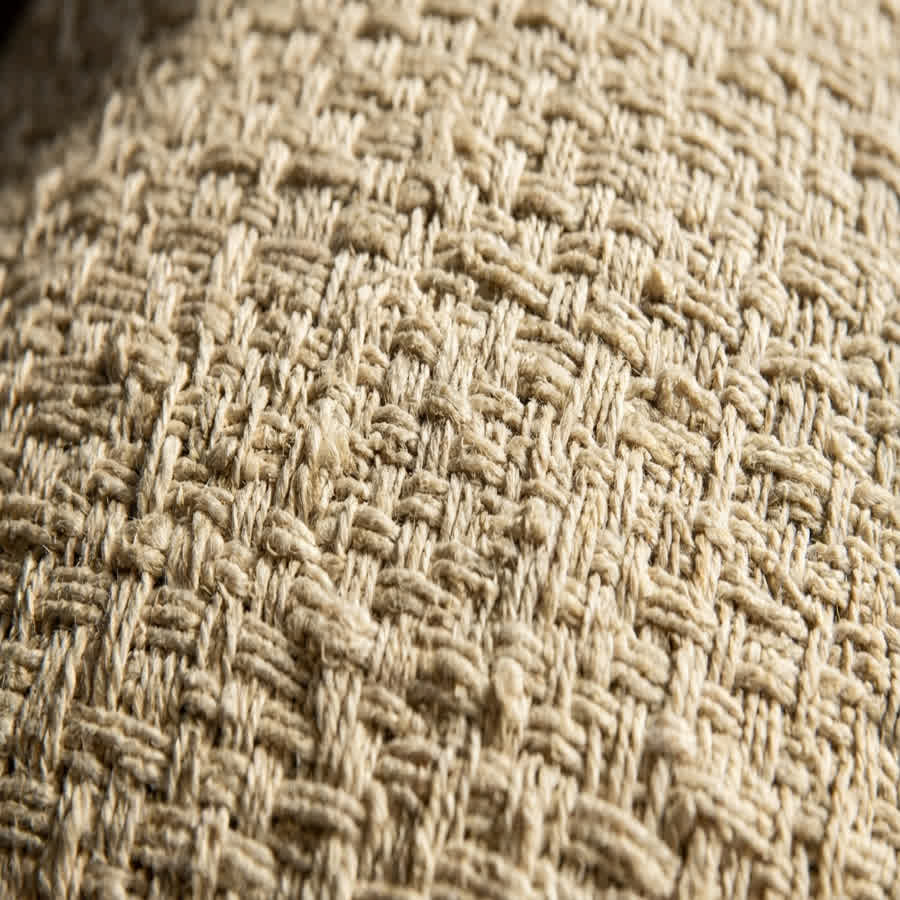
A jacquard weave is a fabric construction method where complex patterns are woven directly into the material using individually controlled warp yarns, rather than being printed or stitched on top. This structural integration ensures the design and the fabric are one continuous entity.
The jacquard definition traces back to Joseph Marie Jacquard, who in 1804 invented a notable punch-card loom. This system automated the lifting of individual warp threads, allowing artisans to create highly detailed, repeating motifs with mathematical precision.
The Mechanics of Structural Patterning
In a true jacquard fabric design, the motif is not an afterthought. The pattern emerges from the interlacing of the warp and weft yarns during the weaving process itself.
This method requires meticulous preparation before a single thread is thrown across the loom. Artisans translate the desired artwork into a series of punched cards or digital equivalents, which then dictate the exact sequence of yarn lifts.
- Uniform tensile strength: Because the pattern is part of the weave, the fabric maintains consistent durability across its entire surface.
- Integrated structural integrity: The yarns lock together tightly, preventing the motif from peeling, fading, or snagging easily.
- Consistent drape: A jacquard fabric typically falls evenly, as there are no heavy localized additions to distort the fabric's natural weight.
Handloom Jacquard in Practice
When working with rural Indian handloom weavers, the creation of a jacquard textile becomes a highly specialized craft. The loom setup is labor-intensive, requiring precise tensioning of the warp.
Once the loom is prepared, the weaving process itself relies on the jacquard mechanism to produce continuous, repeating motifs. The weaver follows the mechanical guidance of the loom, producing complex geometries or floral patterns meter by meter.
This efficiency makes handloom jacquard an excellent choice for designers needing consistent, repeatable patterns across larger yardages. The resulting textile offers a dry, crisp hand-feel and a structural richness that printed alternatives cannot replicate.
The Anatomy of an Embroidered Textile: Surface Embellishment
An embroidered textile is created by stitching decorative yarns onto the surface of an already completed base fabric, adding localized texture, weight, and dimension. Unlike weaving, this process treats the base material as a blank canvas for applied ornamentation.
The art of embroidery fabric design relies on the tension between the needle, the decorative thread, and the underlying woven structure. This surface application allows for extreme flexibility in placement, color variation, and textural depth.
The Physics of Stitched Ornamentation
Applying thread to a finished fabric fundamentally alters its physical properties. The base fabric, typically ranging from 80 to 200 GSM, must be carefully selected to support the added mass of the embroidery yarn.
If the base is too sheer or loosely woven, the tension of the stitches will cause the fabric to warp, pucker, or tear. A well-engineered embroidered fabric cotton balances the density of the stitch with the structural capacity of the ground cloth.
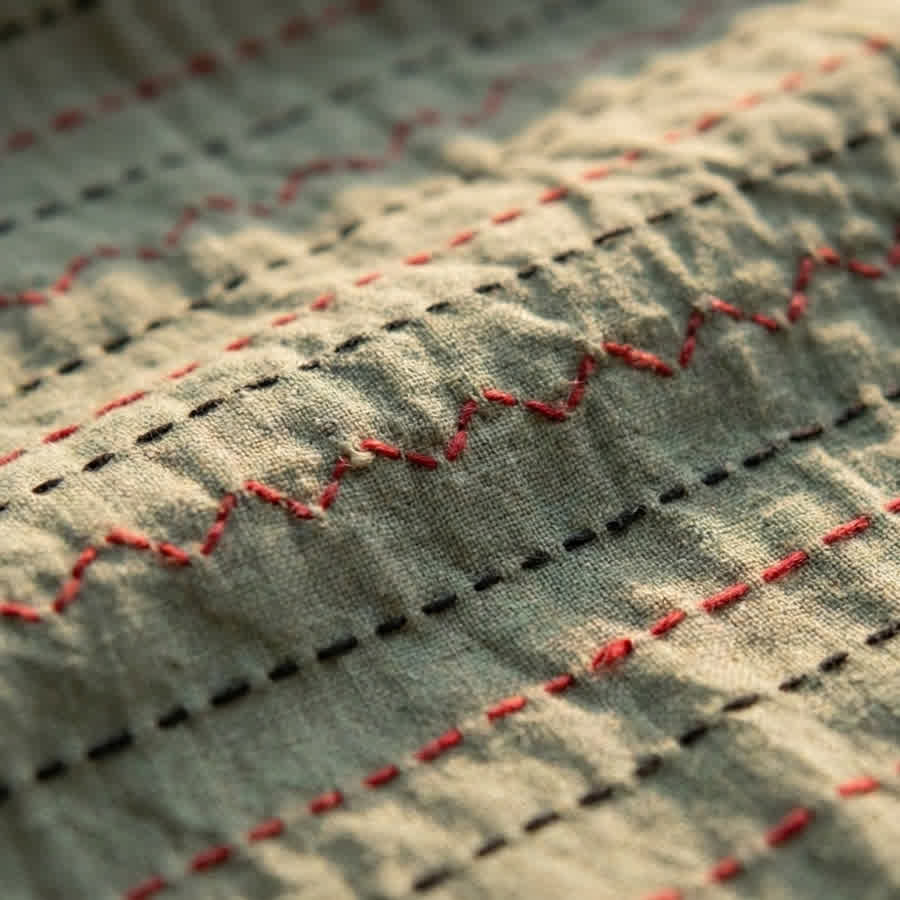
- Localized weight distribution: The stitched areas become heavier and stiffer than the unembellished sections of the fabric.
- Altered drape characteristics: The added mass changes how the fabric falls, often creating a more structured or weighted silhouette.
- Surface tension points: Each stitch introduces a micro-point of tension, requiring a stable base to prevent distortion over time.
Heritage Embroidery Traditions
India possesses millennia of localized, hand-stitched surface ornamentation traditions passed down through generations of artisans. Techniques like Kantha, Zardozi, and Chikankari represent the pinnacle of embroidery fabric india.
These artisanal methods rely heavily on decentralized labor. Artisans often work from their homes in rural clusters, using simple hoops and needles to transform plain yardage into intricate works of art.
Because the design is applied manually after weaving, hand embroidery offers distinctive customization. Designers can place motifs exactly where they need them on a garment panel, creating engineered placements that a continuous jacquard weave cannot easily achieve. The resulting textile carries a tactile, raised surface that speaks directly to the human hand behind its creation.
Jacquard vs Embroidery: A Comparative Analysis of Drape and Durability
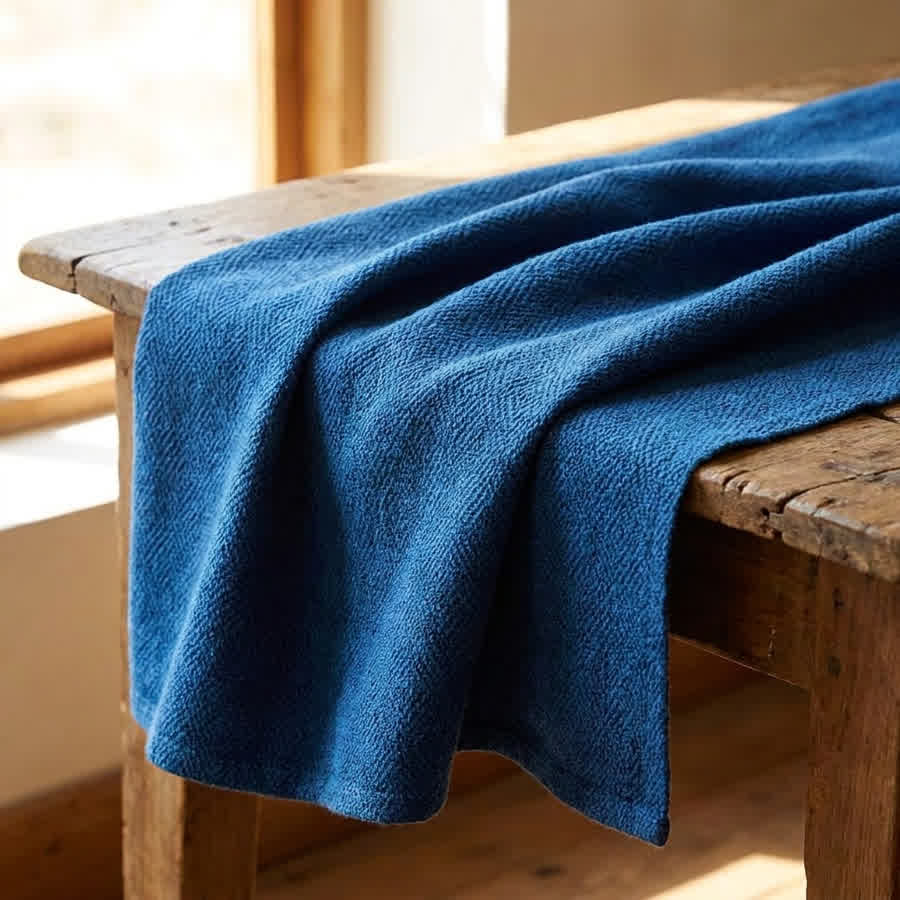
The primary technical difference between jacquard vs embroidery lies in how the pattern affects the fabric's structural integrity and drape. Jacquard maintains uniform strength and a consistent fall, while embroidery introduces localized weight and tension points that alter the fabric's natural behavior.
For B2B buyers, balancing these material science factors is crucial for successful garment construction. A mismatch between the patterning technique and the intended silhouette will result in poor fit and reduced garment longevity.
Tensile Strength and Structural Integrity
Because a jacquard textile integrates the pattern directly into the warp and weft, the fabric acts as a single, cohesive unit. The yarns share the physical stress of wear and washing evenly across the surface.
This structural unity makes jacquard highly durable, especially in heavier weights ranging from 120 to 300+ GSM. The motifs will not unravel unless the underlying fabric itself is compromised.
Conversely, an embroidered textile relies entirely on the strength of the surface threads and their anchor points in the base fabric.
- Abrasion resistance: Jacquard patterns resist friction better, as they are woven flat into the fabric surface.
- Snagging risks: Embroidery threads sit proud of the base fabric, making them more susceptible to catching and breaking.
- Tear resistance: Heavy embroidery on a lightweight base can create perforation lines, reducing the overall tear strength of the material.
Managing Drape and Silhouette
The way a fabric falls over the body dictates its end-use. A jacquard fabric offers a predictable, uniform drape. Whether it is a fluid silk or a structured cotton, the pattern does not interrupt the mechanical flow of the textile.
Embroidery, by definition, interrupts the drape. The dense clusters of stitched yarn create stiff zones within the fabric.
Designers must account for this when drafting patterns. A heavy Zardozi motif on a lightweight embroidered fabric cotton will pull the fabric downward, requiring careful placement to avoid distorting the garment's intended shape. Understanding these mechanics allows sourcing teams to specify the correct technique for their specific structural requirements.
Sourcing from India: Handloom Jacquard Fabric vs Artisanal Embroidery
Sourcing jacquard vs embroidery from India requires managing two distinct artisanal supply chains, each with unique lead times, scalability, and socio-economic impacts. Handloom jacquard demands significant upfront loom preparation but scales efficiently, whereas hand embroidery requires minimal setup but demands intensive labor hours per piece.
Anuprerna operates a decentralized artisan supply chain, connecting B2B fashion brands directly with rural Indian handloom weavers and embroidery clusters. This model ensures transparency and supports the preservation of heritage crafts.
Scalability and Production Lead Times
The timeline for producing a custom jacquard fabric design is heavily front-loaded. Translating a designer's artwork into punch cards and setting up the complex loom mechanism takes considerable time and expertise.
However, once the loom is ready, the weaving process allows for systematic production. A skilled weaver can produce several meters of patterned fabric per day.
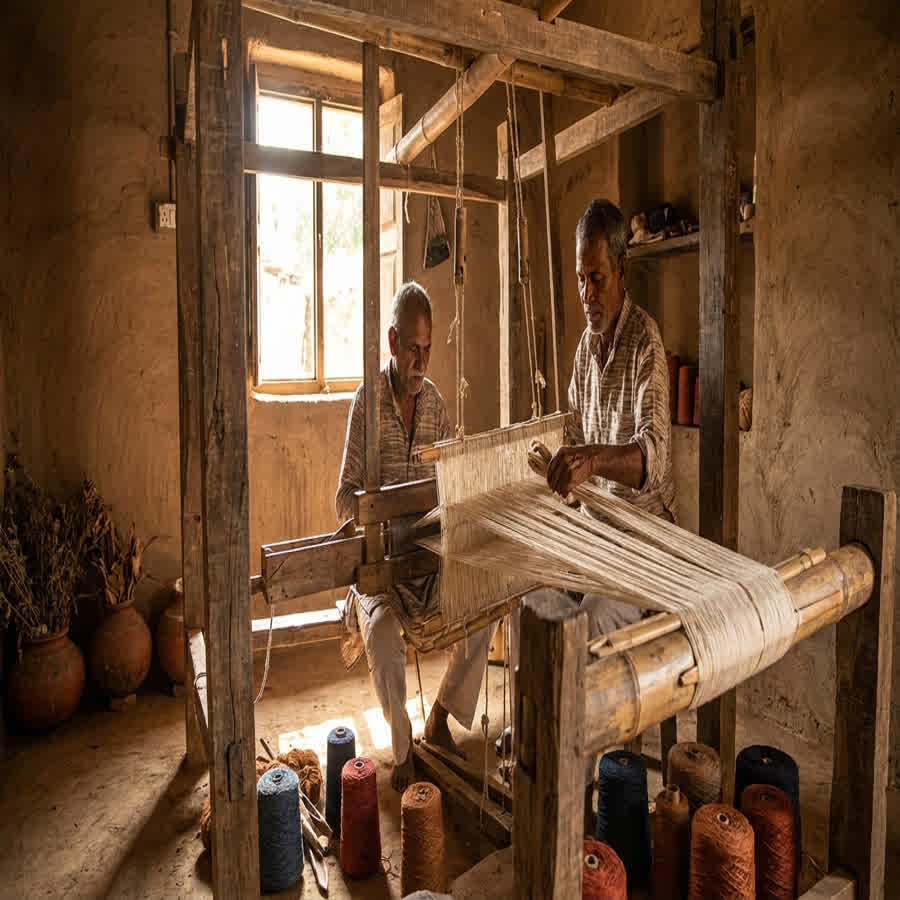
- High upfront setup: Jacquard requires time for punch-card creation and warp tensioning.
- Efficient yardage production: Once set, the loom produces continuous, repeatable patterns quickly.
- Lower labor per meter: The mechanical assistance of the jacquard loom speeds up the actual fabrication.
The Artisanal Embroidery Supply Chain
Sourcing embroidery fabric india operates on a completely different timeline. The setup is minimal, often requiring only the transfer of a stencil onto the base fabric.
The actual production, however, is entirely a manual production process. Every single stitch is placed by hand, meaning the lead time scales linearly with the design complexity and density.
This slow-fashion approach is highly valuable for sustainable brands looking to maximize their social impact. Hand embroidery distributes work across large networks of artisans, directly funding decentralized labor and ensuring that the human touch remains central to the textile sourcing strategy.
How to Choose: Jacquard Fabric Cotton vs Embroidered Fabric Cotton
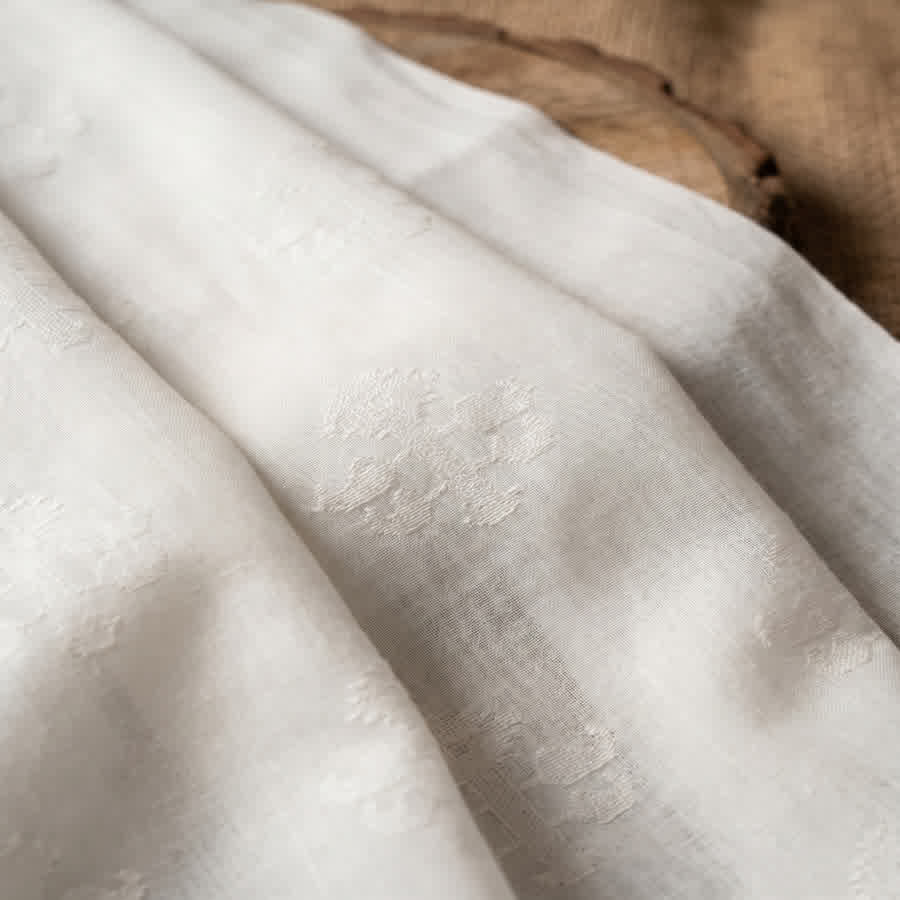
Choosing between jacquard fabric cotton and embroidered fabric cotton depends entirely on your target GSM, the required drape for your silhouette, and your production minimums. Jacquard is ideal for continuous, durable yardage with a uniform feel, while embroidery is best for engineered placements and highly textured, low-volume collections.
For a B2B sourcing manager, this decision matrix directly impacts both the technical performance of the garment and the efficiency of the supply chain.
Evaluating GSM and End-Use
Cotton is a highly versatile fiber, but its behavior changes drastically depending on the patterning technique. A jacquard fabric cotton is typically woven with fine yarns, such as 60s to 80s count, to maintain breathability while achieving complex motifs.
This makes cotton jacquard excellent for spring and summer collections, offering a dry, crisp hand-feel that suits warmer climates without excessive weight.
- Structured garments: Jacquard provides the uniform stability needed for tailored jackets, trousers, and structured dresses.
- Engineered placements: Embroidery allows designers to place motifs specifically on collars, cuffs, or hemlines without weaving custom yardage.
- Textural contrast: Embroidery provides a raised, tactile surface that catches the light differently than the flat base fabric.
Managing MOQs and Digital Sourcing
Minimum order quantities often dictate the sourcing strategy. Because of the intensive loom setup, custom jacquard typically requires higher MOQs to be cost-effective.
Conversely, hand embroidery can be executed on very small batches, making it ideal for capsule collections or bespoke pieces.
Today, brands can source jacquard fabric online through digital collaboration. At Anuprerna, we work closely with design teams to translate their digital files into traditional punch cards, ensuring that whether you choose a woven jacquard textile or a hand-stitched surface, the final product meets exact technical specifications.
Explore Our Collection
Anuprerna works directly with handloom artisan clusters to weave jacquard vs embroidery for designers and brands building considered collections. To source it for your next line, explore the range below.
frequently asked questions
Is jacquard fabric cotton breathable enough for spring and summer collections?
Yes, cotton jacquard offers excellent breathability and a lighter GSM when woven with fine cotton yarns. When woven with fine cotton yarns (e.g., 60s to 80s count), it avoids the heavy, insulating properties of traditional silk or synthetic brocades, making it highly suitable for warmer climates.
How does hand embroidery affect the structural integrity of the base fabric?
Embroidery adds localized weight and alters the drape of the base material. If the base fabric's GSM is too low for the embroidery thread's weight, it can cause puckering, create tension points, and significantly reduce the overall tear resistance of the textile.
What are the lead time differences between custom jacquard and custom embroidery?
Custom jacquard requires upfront time for punch-card creation and loom setup, but the weaving process scales quickly per meter. Hand embroidery has minimal setup time but requires significantly more labor hours per piece, making it a slower, highly artisanal process that scales linearly with design complexity.
Can I source custom jacquard fabric online through Anuprerna?
Yes, B2B buyers can collaborate digitally with our design team to translate custom patterns into punch cards for our rural handloom weavers. This digital-to-physical workflow ensures a transparent, sustainable, and efficient supply chain for custom woven textiles.
What is the ideal GSM for a base fabric used in hand embroidery?
The ideal base fabric for hand embroidery typically ranges from 80 to 200 GSM, depending on the weight of the decorative thread. A base fabric must possess enough structural density to anchor the stitches securely without warping, tearing, or puckering under the tension of the embroidery yarn.
More Blogs
how indian fabric exporters meet global quality standards
buy hemp fabric in bulk: what fashion brands need to know
khadi online shopping: what fabric details should you check?
a designer’s guide to sourcing silk from indian manufacturers
tussar silk fabric: characteristics, texture & a guide for designers
jacquard fabric supplier: a guide for designers & fashion brands