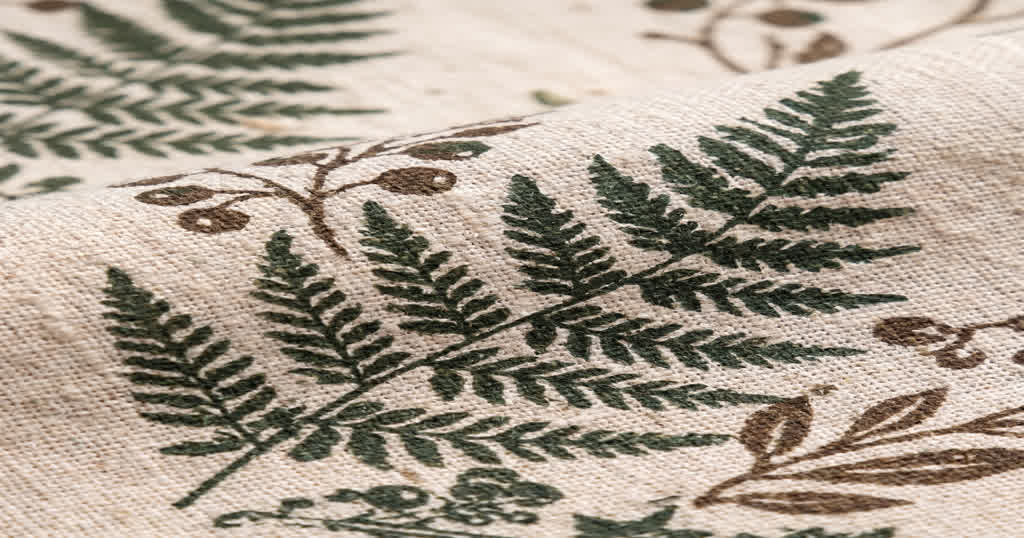
Screen Printing on Fabric: Techniques, Process & Applications in Fashion

Designers sourcing natural textiles often face a distinct challenge when scaling their collections. They need a surface ornamentation method that yields crisp, repeatable motifs on textured hand-spun yarns without resorting to heavy, plastic-like finishes. Screen printing offers a precise solution, originating in Song Dynasty China and evolving into a highly technical process that complements traditional Indian block printing. For a sustainable fashion brand, the decision to use fabric screen printing directly impacts garment breathability, dye longevity, and the ethical narrative of the supply chain.
By pairing eco-friendly, AZO-free inks with artisanal handlooms, sourcing leads can achieve commercial viability while preserving the soft, natural drape of the underlying fiber.
The Anatomy of Screen Printing on Fabric: From Mesh to Motif
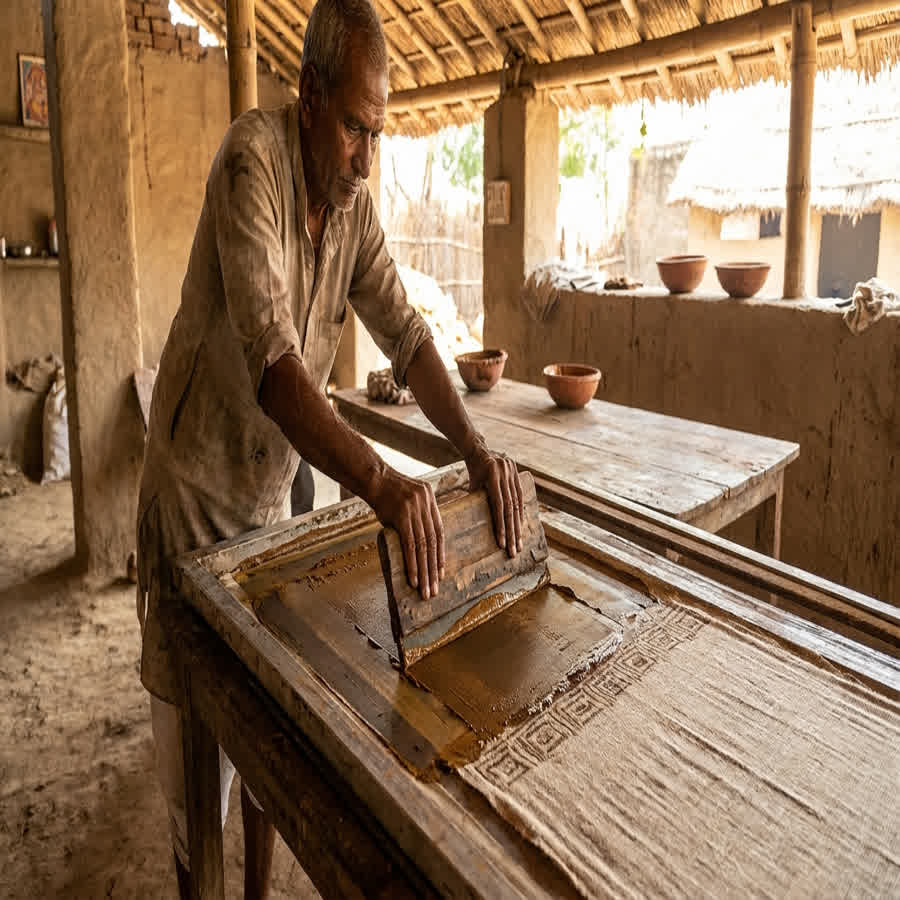
The anatomy of screen printing on fabric relies on forcing ink through a photo-emulsion coated mesh stencil using a squeegee, transferring a highly precise design onto the textile surface. This method allows for scalable, crisp motifs on hand-spun textiles while preserving artisanal involvement.
Preparing the Stencil and Mesh
The process begins by stretching a woven mesh tightly over a rigid frame. Artisans coat this mesh with a light-sensitive photo-emulsion, which hardens when exposed to ultraviolet light. A film positive of the design blocks the light, leaving the unexposed emulsion soft enough to be washed away. This creates a precise open-mesh stencil that dictates exactly where the pigment will strike the cloth.
For artisanal handloom textiles, this preparation requires careful calibration. The tension of the screen must remain uniform to prevent the fabric screen printing from distorting across wide yardages.
Squeegee Mechanics and Ink Transfer
Once the screen is registered over the fabric, the operator uses a squeegee to pull the ink across the stencil. The angle, pressure, and durometer (hardness) of the squeegee blade determine the ink deposit thickness.
A successful print run on natural fibers depends on several mechanical variables:
- Squeegee angle: A steeper angle deposits less ink, ideal for fine details on smooth silk fabrics.
- Blade pressure: Consistent downward force ensures the pigment penetrates the textured hand-spun yarns rather than sitting on the surface.
- Print stroke speed: A steady, controlled pull prevents bleeding and maintains crisp motif edges across the entire production run.
By mastering these mechanics, decentralized artisan networks can produce highly consistent yardages. This technical precision bridges the gap between commercial design fidelity and traditional craftsmanship. Originating in Song Dynasty China and popularized in the West during the 1910s, the technique evolved from simple stenciling to a highly precise art form. In India, it serves as a natural progression for clusters accustomed to block printing, offering a faster method to achieve scalable, crisp motifs on hand-spun textiles.
Matching Mesh Counts to Handloom Fabrics: A Material Science Approach
Selecting the correct mesh count for screen printing fabric requires matching the screen's thread density to the fabric's GSM and weave structure to ensure complete ink coverage without bleeding. Optimal results on natural fibers depend on balancing ink viscosity with the physical texture of the cloth.
Calibrating for Fabric GSM
Natural fibers like cotton, linen, silk, and Khadi typically range from 60 to 250 GSM. Each weight demands a specific screen density, measured in threads per centimeter (T) or inch. A lower mesh count features larger openings, allowing more ink to pass through onto heavier, textured textiles.
When working with varying fabric weights, sourcing managers must specify the correct parameters:
- 43T to 55T mesh: Ideal for heavyweight linen and textured handloom cottons, allowing thicker inks to penetrate the uneven surface.
- 77T to 90T mesh: Suited for medium-weight apparel fabrics, balancing ink flow and detail retention.
- 100T to 120T mesh: Necessary for fine silks and low-GSM muslins, preventing thin inks from flooding the delicate weave.
Managing Ink Viscosity and Tension
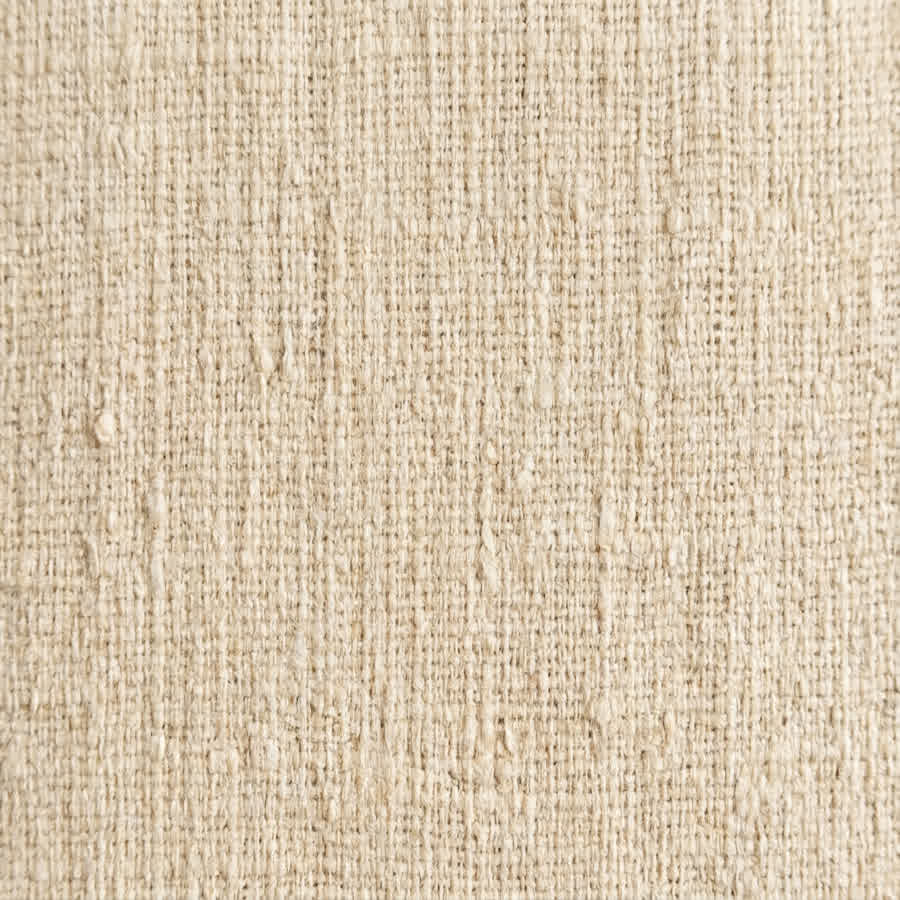
The relationship between the mesh and the ink is a core component of textile material science. If a highly viscous ink is pushed through a high-count mesh, the print will appear patchy and starved. Conversely, pushing a thin, watery pigment through a low-count mesh causes the design to bleed along the capillary channels of the yarn.
Artisans must also monitor screen tension during production. Handwoven fabrics possess natural irregularities and slubs that can catch on a loosely tensioned screen. A tightly stretched mesh ensures a clean snap-off, where the screen lifts immediately behind the squeegee stroke. This mechanical separation is vital for maintaining sharp design registration on textured organic cotton or wild silk.
By treating the selection process as a precise science, brands avoid costly sampling errors. Matching the exact mesh count specifications to the chosen handloom base guarantees that the final screen printing on fabric meets commercial quality standards.
Eco-Friendly Inks: Water-Based vs. Discharge in Sustainable Fashion
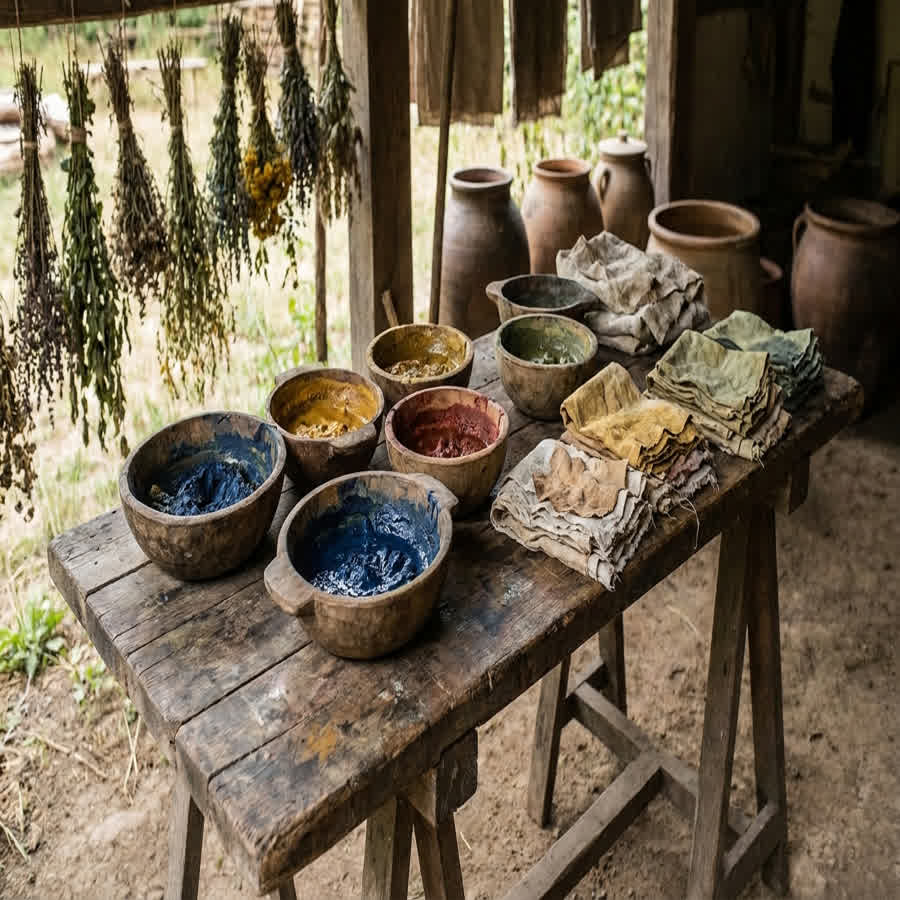
Sustainable fabric screen printing relies on water-based and discharge inks because they dye the natural fibers directly, ensuring high wash fastness and a soft hand-feel. These eco-friendly alternatives replace toxic plastisol inks, preserving the breathability and natural drape of the textile.
The Chemistry of Water-Based Pigments
Unlike petroleum-based plastisol that sits on top of the cloth like a plastic film, water-based inks penetrate the yarn. The water acts as a solvent carrying the pigment into the core of the natural cellulosic fibers. Once the water evaporates during curing, the binder locks the color into the fabric.
This chemical integration offers several distinct advantages for B2B fashion brands:
- Superior breathability: The open structure of the fabric remains unblocked, maintaining the thermal regulation properties of cotton and linen.
- Soft tactile experience: The printed area retains a dry, crisp hand-feel that is indistinguishable from the unprinted cloth.
- Zero-waste credentials: Equipment can be cleaned with water rather than harsh chemical solvents, supporting an ethical supply chain.
Discharge Printing on Natural Fibers
For printing light colors onto dark fabrics, discharge screen printing is the most effective sustainable method. The ink contains a discharging agent that chemically removes the fabric's original reactive base dye. Simultaneously, it deposits a new AZO-free pigment into the exact same space.
This technique is highly specific to material composition. It works exceptionally well on 100% natural cellulosic fibers but fails on synthetic blends or fabrics treated with resistant dyes. Because the original dye is extracted rather than covered up, the resulting motif feels completely integrated into the hand-spun textiles. Designers favor this method for dark, heavy fabrics where traditional water-based layers would become too thick or stiff.
Screen Printing Fabric at Scale: Bridging Artisanal Craft and B2B Production
Decentralized artisan networks execute screen printing fabric runs at scale by standardizing screen preparation and ink mixing across multiple rural clusters. This model bridges the gap between commercial viability and ethical sourcing, offering B2B brands low minimum order quantities (MOQs) without compromising design fidelity.
Decentralized Production Models
Scaling artisanal production requires a structured approach to supply chain management. Rather than relying on a single massive factory, production is distributed across specialized rural Indian handloom weavers and printing clusters. This decentralized framework allows for flexible capacity planning and protects the livelihoods of traditional craftspeople.
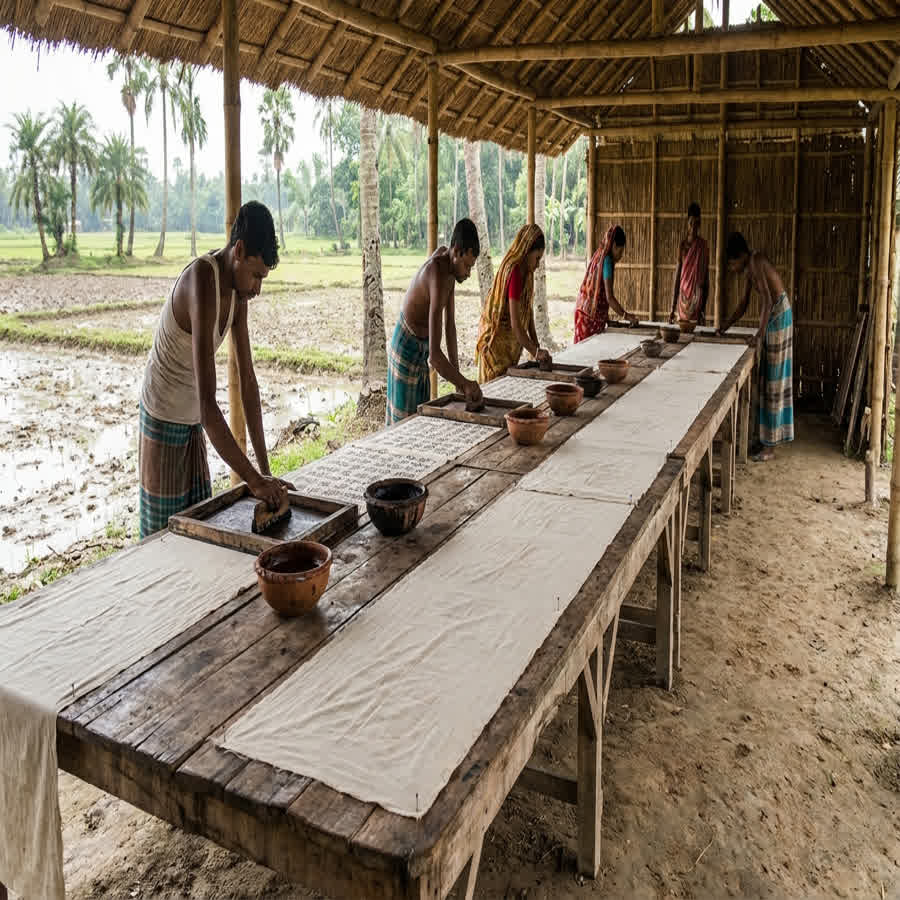
To make this system work for commercial buyers, several operational standards are enforced:
- Standardized color matching: Using Pantone references to mix eco-friendly, AZO-free inks consistently across different printing units.
- Centralized screen exposure: Preparing the photo-emulsion stencils in a controlled environment before distributing them to rural workshops.
- Flexible batch sizing: Allowing brands to test new collections with low MOQs before committing to large-scale yardage.
Maintaining Design Fidelity
A primary concern for sourcing managers is whether artisanal methods can replicate complex digital designs. By utilizing high-tension aluminum frames and precise mesh count calibration, rural artisans achieve exact registration even on multi-color prints. The human element in fabric screen printing actually serves as an advantage here, as operators can adjust their squeegee pressure in real-time to accommodate the natural slubs of handwoven cloth.
This intersection of manual skill and technical standardization provides a powerful narrative. Brands receive high-quality, custom-printed collections that meet strict retail specifications. Simultaneously, they can market the transparent, ethical sourcing story of the artisans who crafted the textiles, adding significant value to the final garment.
Quality Control and Wash Fastness in Fabric Screen Printing
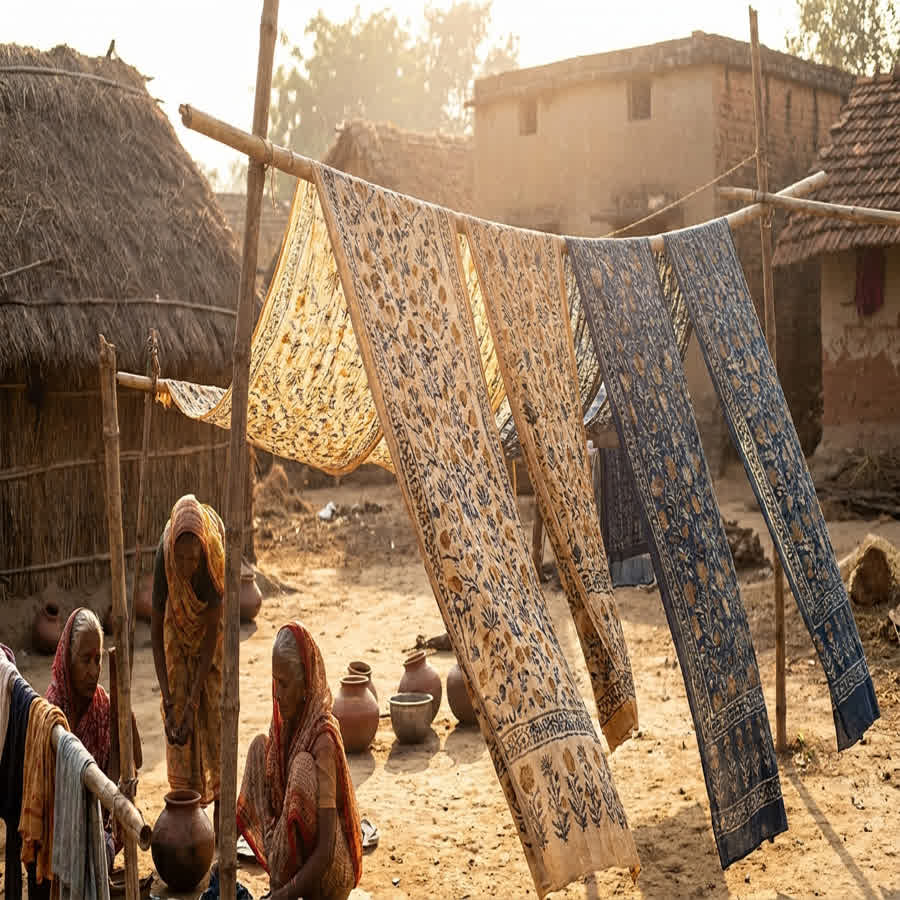
Ensuring longevity and color vibrancy in screen printing on fabric requires strict adherence to heat setting protocols and rigorous wash fastness testing. Proper curing binds the eco-friendly pigments to the natural fibers, preventing fading and degradation over the garment's lifecycle.
Heat Setting and Curing Protocols
The curing process is the most critical step in finalizing a print. Water-based and discharge inks require the complete evaporation of their water solvent before the binder can cross-link with the fabric. If the textile is removed from the heat source too quickly, the pigment will wash out during the first laundry cycle.
Standard curing parameters for sustainable textile printing involve precise time and temperature controls:
- Conveyor drying: Passing the printed yardage through a forced-air dryer at 160°C (320°F).
- Dwell time: Ensuring the fabric remains in the heating chamber for 2 to 3 minutes for complete moisture evaporation.
- Airflow management: Using high-volume air circulation to strip the evaporated water away from the printed natural fibers.
Testing for Longevity
Once cured, the fabric must undergo standardized testing to verify its durability. Sourcing leads require assurance that the custom-printed collections will withstand consumer use. Quality control teams perform wash tests, rubbing (crocking) tests, and light fastness evaluations on the production samples.
A successful print will exhibit minimal color transfer when rubbed with a dry or wet cloth. The AZO-free pigments must also resist fading when exposed to prolonged sunlight. By implementing these rigorous testing protocols at the cluster level, decentralized supply chains guarantee that their artisanal handloom textiles perform just as reliably as mass-produced commercial fabrics. This technical diligence protects the brand's reputation and ensures the physical longevity of the sustainable garment.
Explore Our Collection
Anuprerna works directly with handloom artisan clusters to weave Screen printing for designers and brands building considered collections. To source it for your next line, explore the range below.
frequently asked questions
What is the ideal mesh count for screen printing on textured handloom cotton?
For textured handloom cottons (80-150 GSM), a lower mesh count between 43T (110 US) and 55T (156 US) is ideal. This allows thicker, water-based inks to penetrate the uneven surface of the natural fibers without excessive bleeding, ensuring a *crisp print*.
How does water-based screen printing ink differ from plastisol in terms of fabric hand-feel?
Water-based inks dye the fabric fibers directly, resulting in a soft, breathable hand-feel that integrates directly with the textile. Plastisol sits on top of the fabric like a plastic film, reducing breathability and altering the drape, making water-based inks vastly superior for premium sustainable fashion.
Can discharge screen printing be used on all natural fabrics?
Discharge printing works best on 100% natural cellulosic fibers (like cotton and linen) that have been dyed with reactive dyes. It chemically removes the base dye and replaces it with the pigment, but it is ineffective on synthetics or fabrics treated with certain resistant dyes.
What are the curing requirements for water-based screen printing on fabric?
Water-based inks require the evaporation of the water solvent followed by heat curing to bind the pigment to the fibers. This typically involves passing the printed fabric through a conveyor dryer at 160°C (320°F) for 2 to 3 minutes to ensure maximum wash fastness and durability.
What types of natural fibers are best suited for water-based fabric screen printing?
Cotton, linen, silk, and Khadi with a GSM ranging from 60 to 250 are the most optimal natural fibers for water-based screen printing. These cellulosic and protein fibers possess high absorbency, allowing the eco-friendly pigments to penetrate the yarn core for vibrant, long-lasting color fastness.
More Blogs
how indian fabric exporters meet global quality standards
jacquard vs embroidery: what's the difference?
buy hemp fabric in bulk: what fashion brands need to know
khadi online shopping: what fabric details should you check?
a designer’s guide to sourcing silk from indian manufacturers
tussar silk fabric: characteristics, texture & a guide for designers